Artwork
Raghuraj Singh hunting tigers Datia,
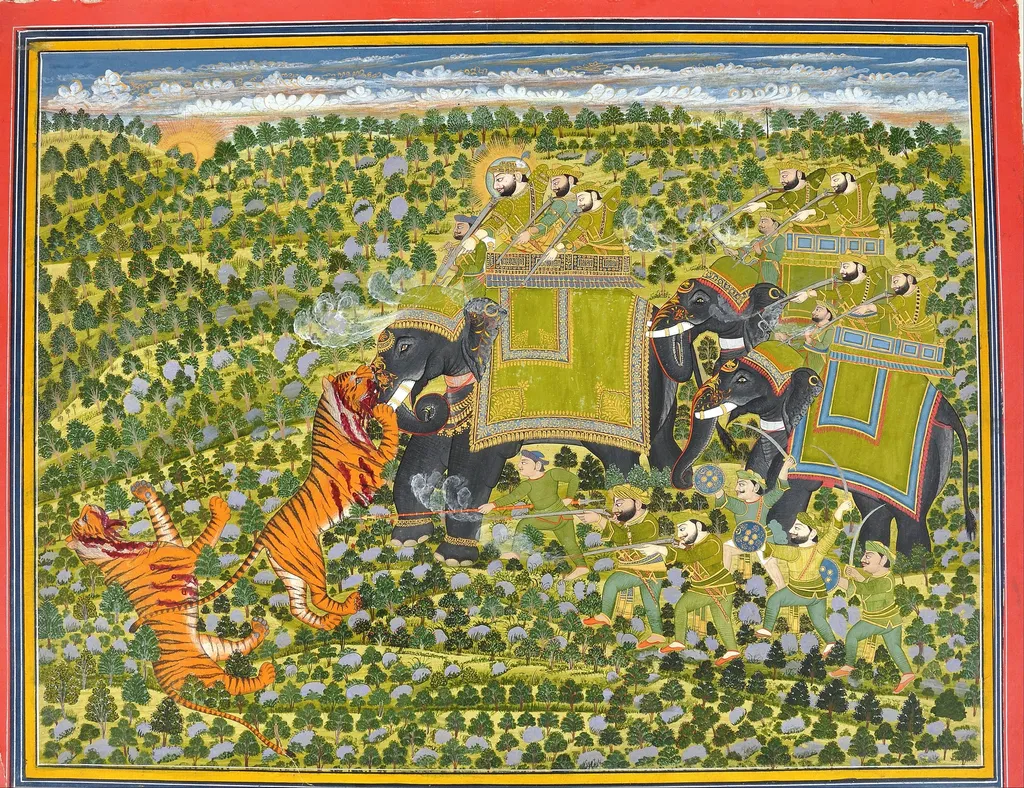
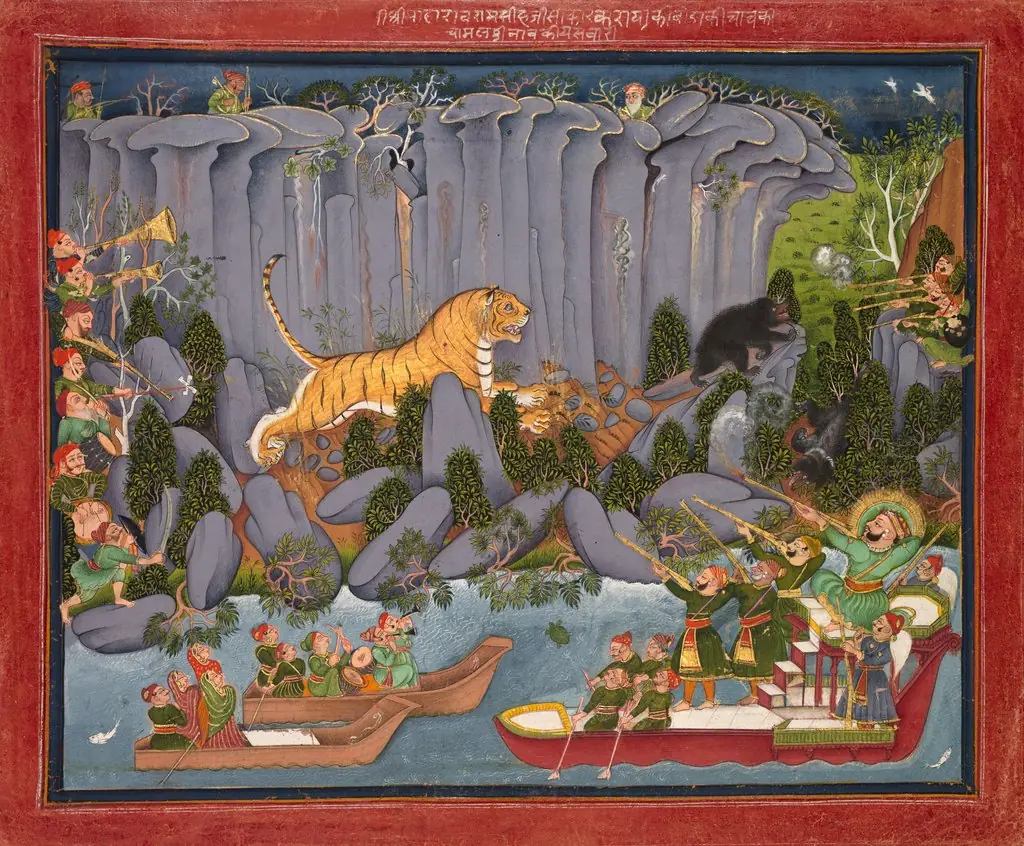
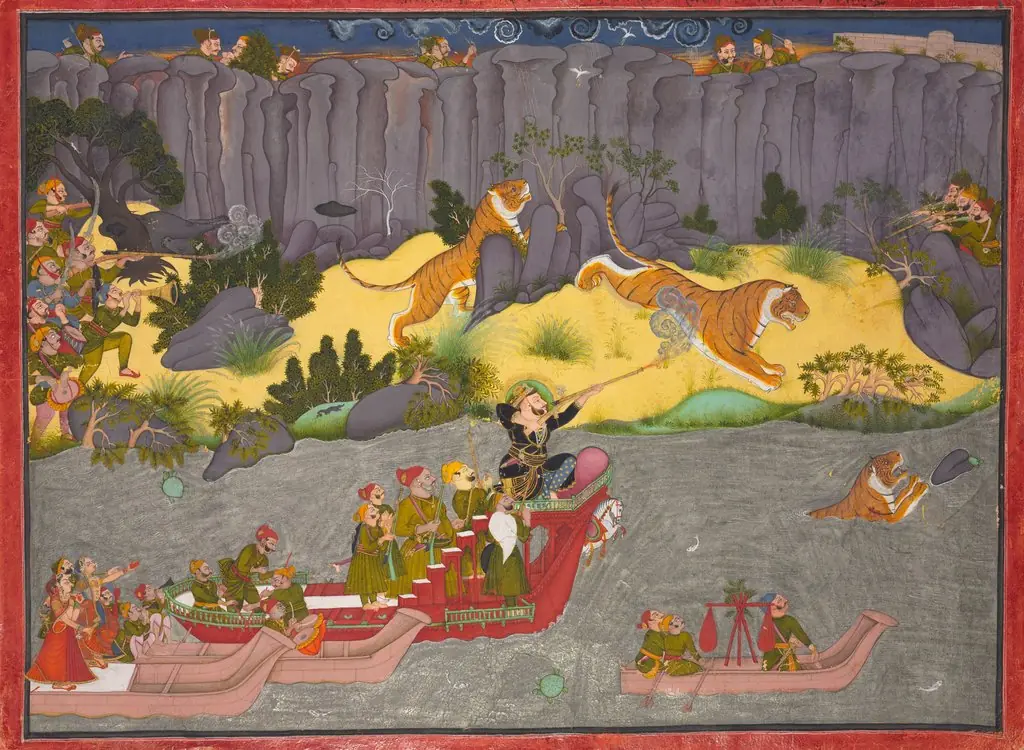
Raghuraj Singh hunting tigers Datia, is an unspecified painting by the Patna School of Painting artist Unknown. It dates from 1827 and is held in the collection of the National Museum. This painting depicts a royal tiger hunt in the forested landscape of Datia, likely commissioned by Raghuraj Singh, a local ruler.
About this work
Overview
This painting depicts a royal tiger hunt in the forested landscape of Datia, likely commissioned by Raghuraj Singh, a local ruler.
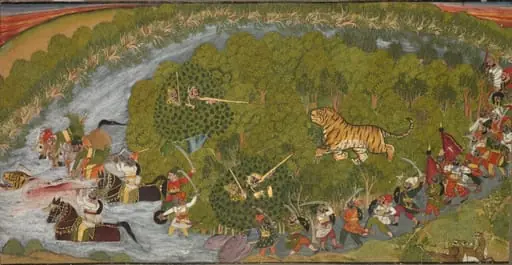
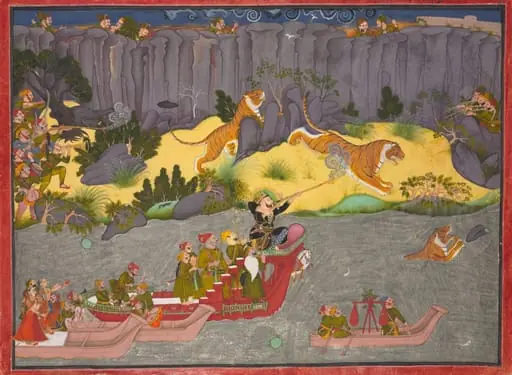
This painting depicts a royal tiger hunt in the forested landscape of Datia, likely commissioned by Raghuraj Singh, a local ruler. It captures a dynamic moment of aristocratic sport, with hunters mounted on elaborately adorned elephants, armed with spears and swords, engaging with wild tigers amid thick vegetation. The scene reflects the cultural importance of hunting as both recreation and display of power.
Subject & Meaning
The hunt serves as a symbolic assertion of authority, with the ruler and his retinue dominating the natural world. Tigers, portrayed in varied states—attacking, fleeing, or concealed—emphasize danger and unpredictability, heightening the nobility’s triumph. The composition reinforces hierarchy: humans, especially the central figure, command the scene, while animals respond to their presence.
Technique & Style
The painting employs rich pigments and fine brushwork to render intricate details in clothing, elephant trappings, and foliage. Colors are vivid but controlled, with gold and green dominating the figures against a dense, layered green backdrop. Spatial depth is suggested through overlapping trees and diminishing scale, though perspective remains stylized, consistent with regional Rajput traditions.
History & Provenance
Created in Datia, a princely state in central India, the work likely dates to the late 18th or early 19th century. It entered the collection of the National Museum in New Delhi, where it is preserved as an example of courtly painting from the Bundelkhand region. Its origin is tied to the patronage of local rulers who commissioned such scenes to document their exploits.
Context
Tiger hunting was a ritualized activity among Indian royalty, blending sport, political display, and spiritual symbolism. Paintings like this reinforced the ruler’s role as protector and master of the realm. Similar scenes appear across Rajput and Mughal courts, though Datia’s version retains a distinct local flavor in costume and composition, less influenced by Persian norms.
Legacy
The painting contributes to the understanding of regional artistic practices in pre-colonial India, illustrating how courtly life was visually documented. It remains a key reference for scholars studying the intersection of power, nature, and art in 18th–19th century central India, valued for its specificity rather than its stylistic innovation.
Artist & collection

 Domestic Scene
 Giacomo and Cardinal Marco, investing Andrea, Abbot of San Zeno, with his Benefice
 The Nymph of Fontainebleau
 Portrait of a Woman
 Madonna and Child with Saints in the Enclosed Garden
 Venus and Minerva
 Family Group of Four on Sofa
 Wall painting from Room H of the Villa of P. Fannius Synistor at Boscoreale