Artwork
Krajobraz
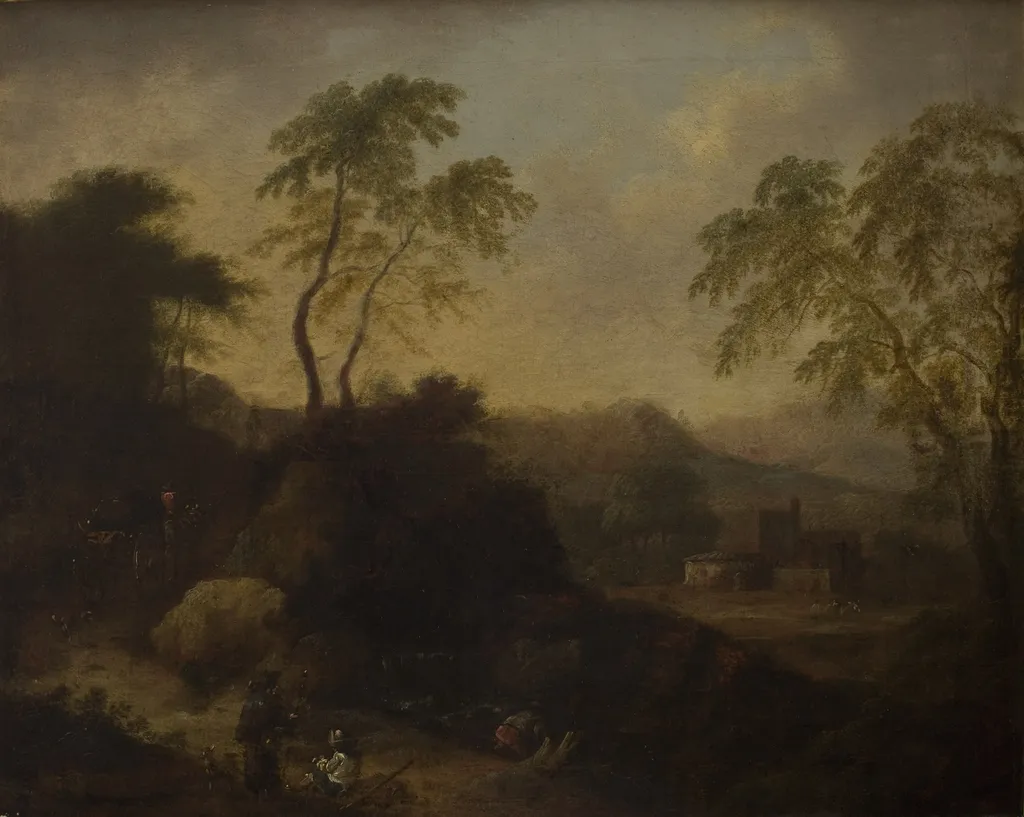
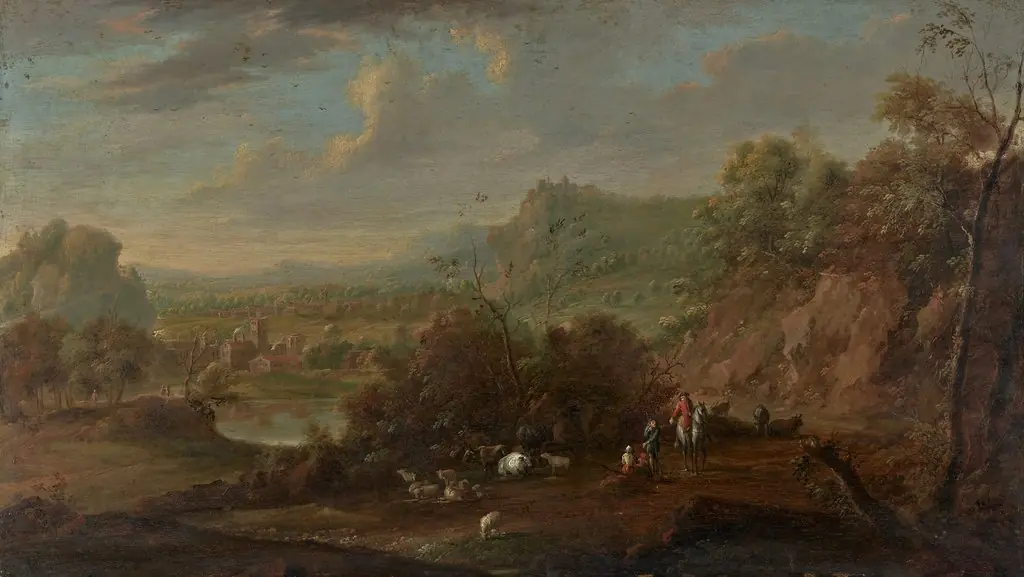
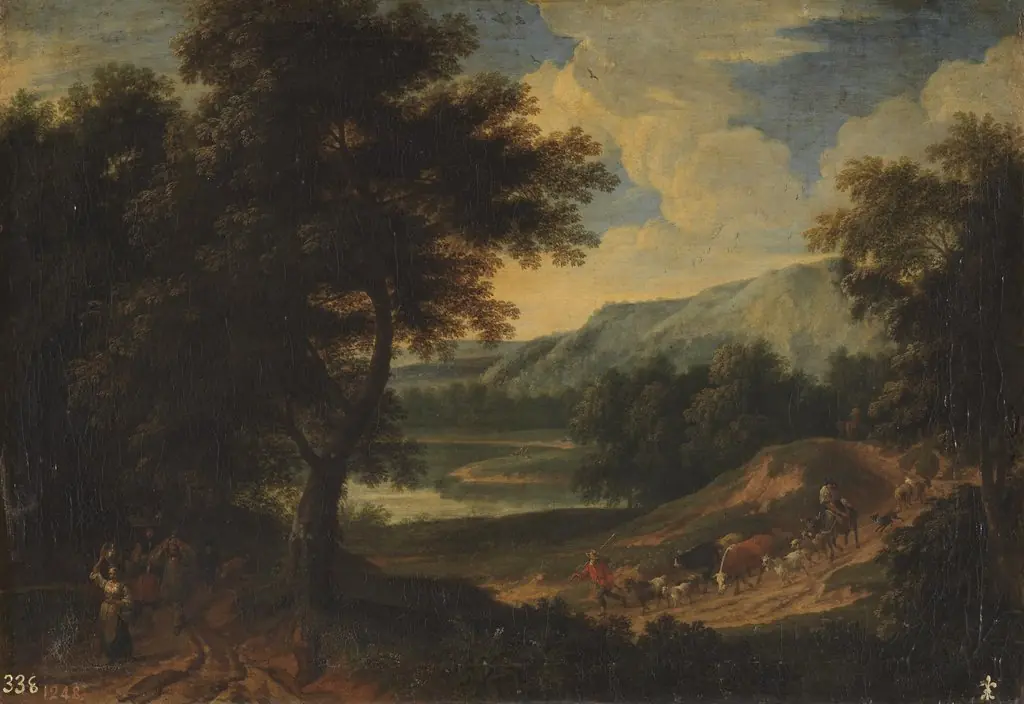
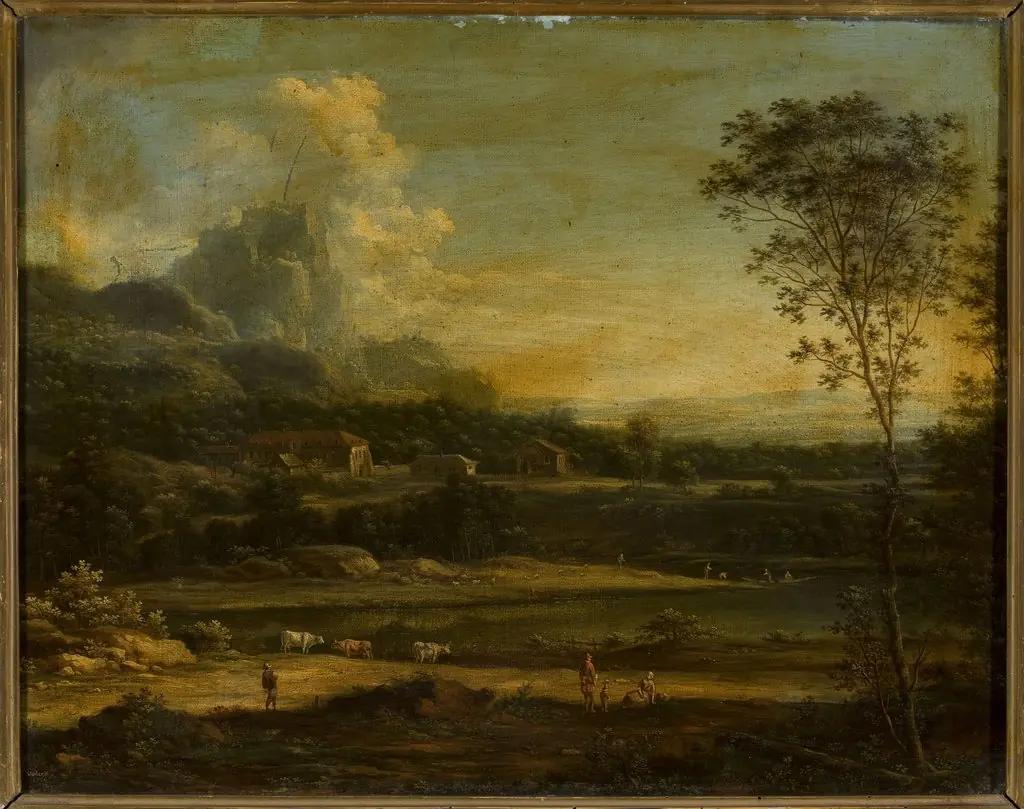
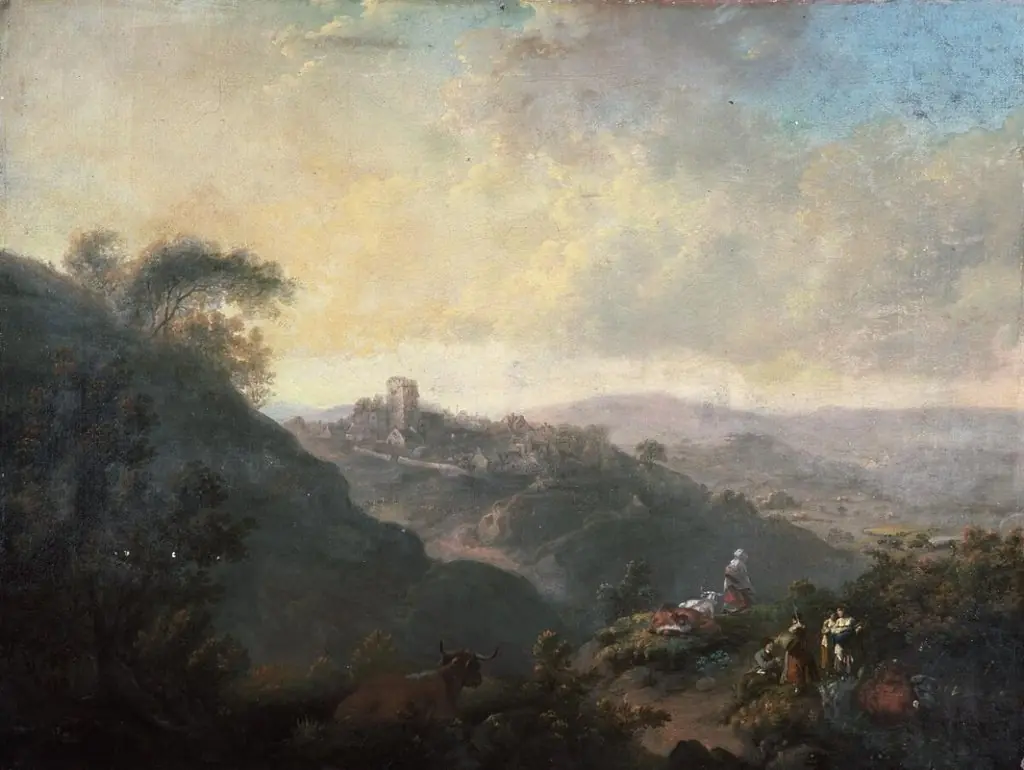
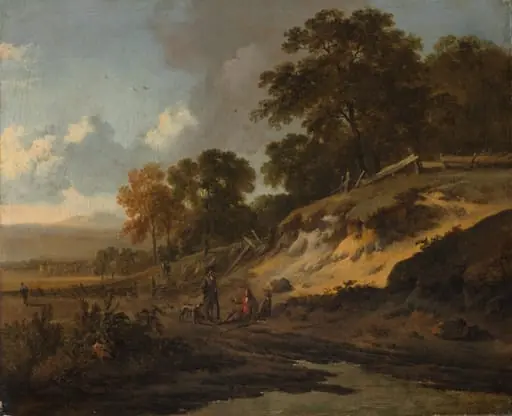
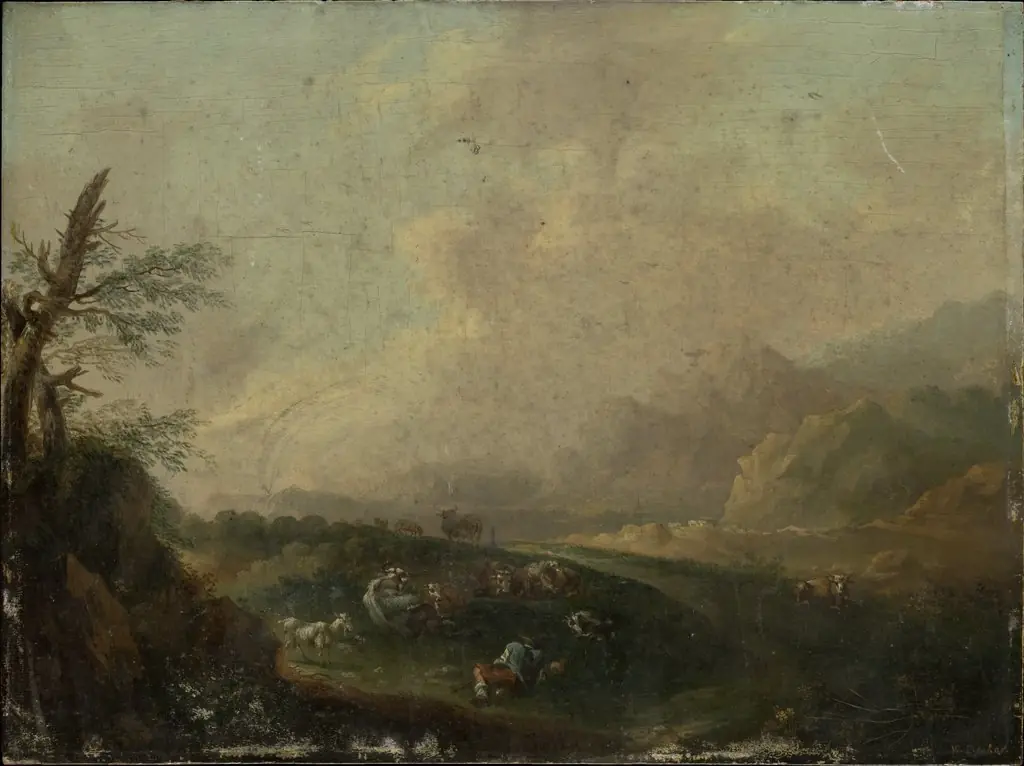
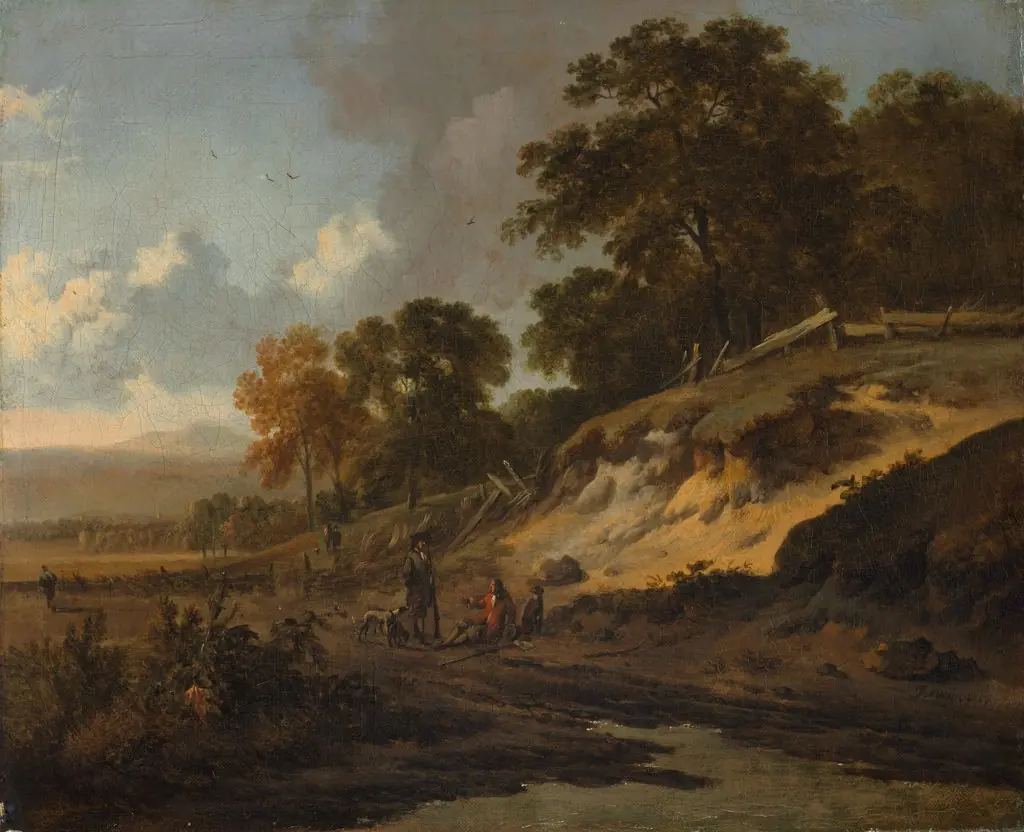
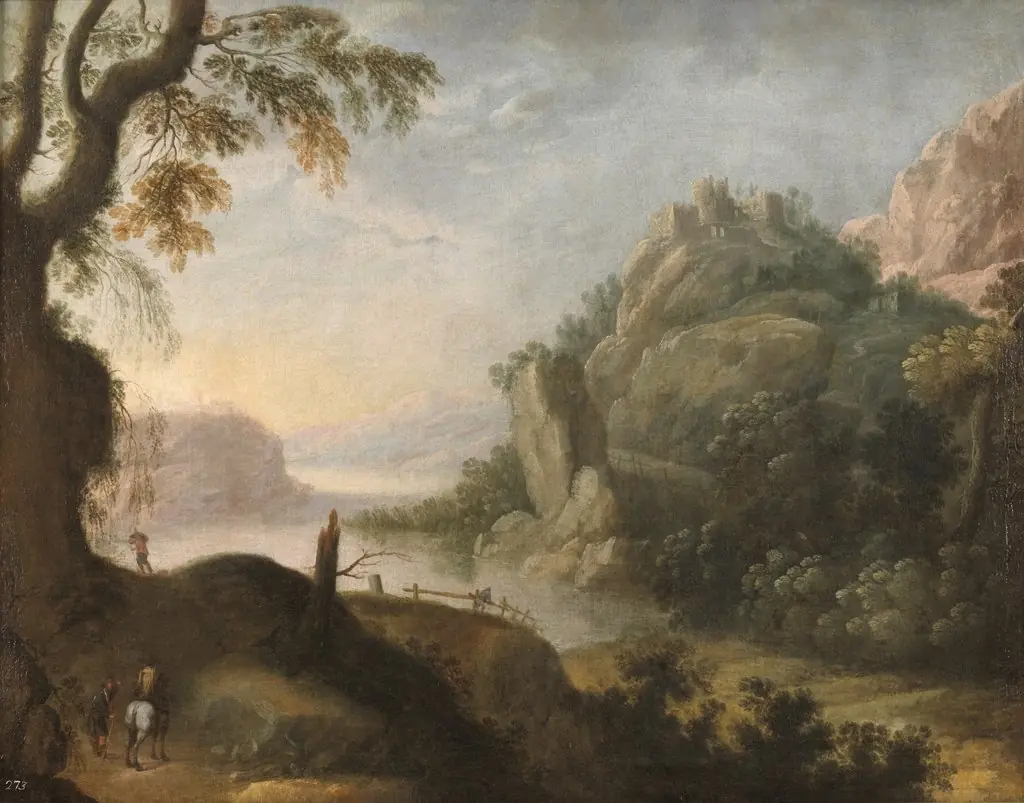
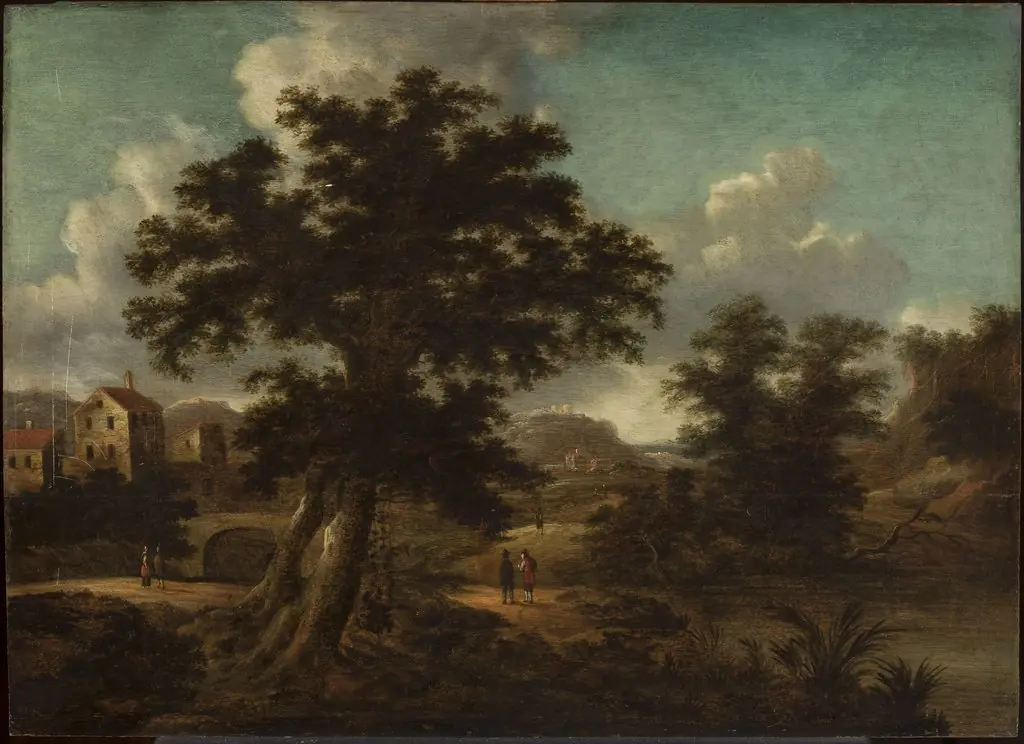
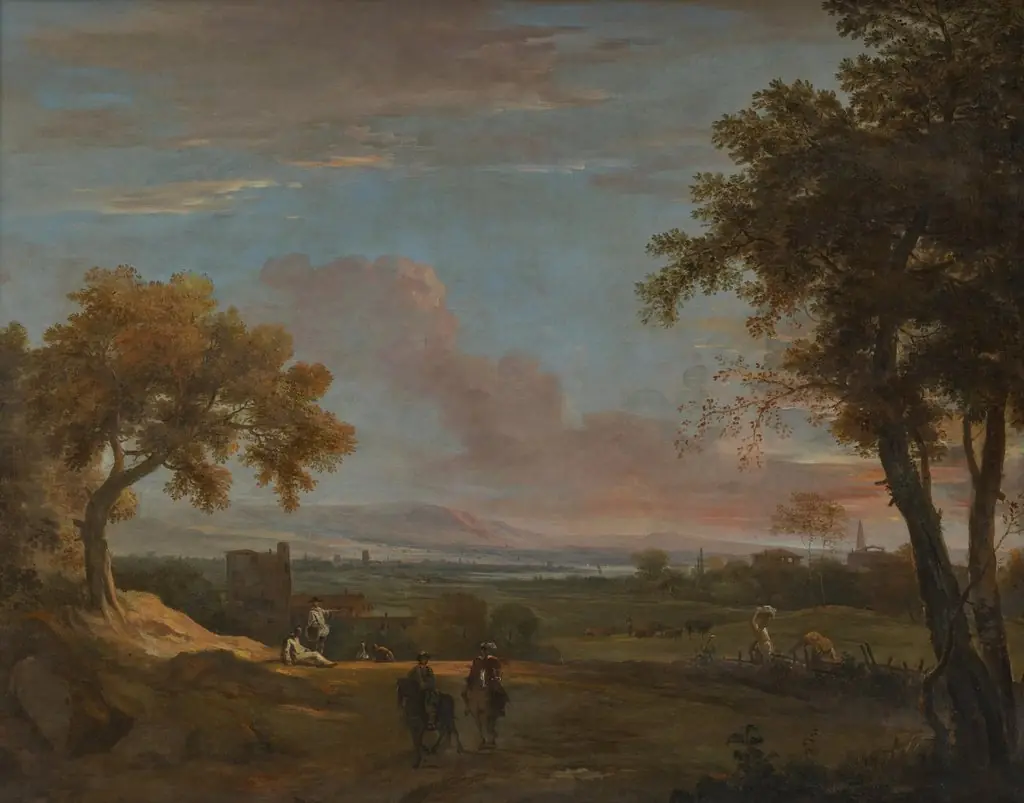
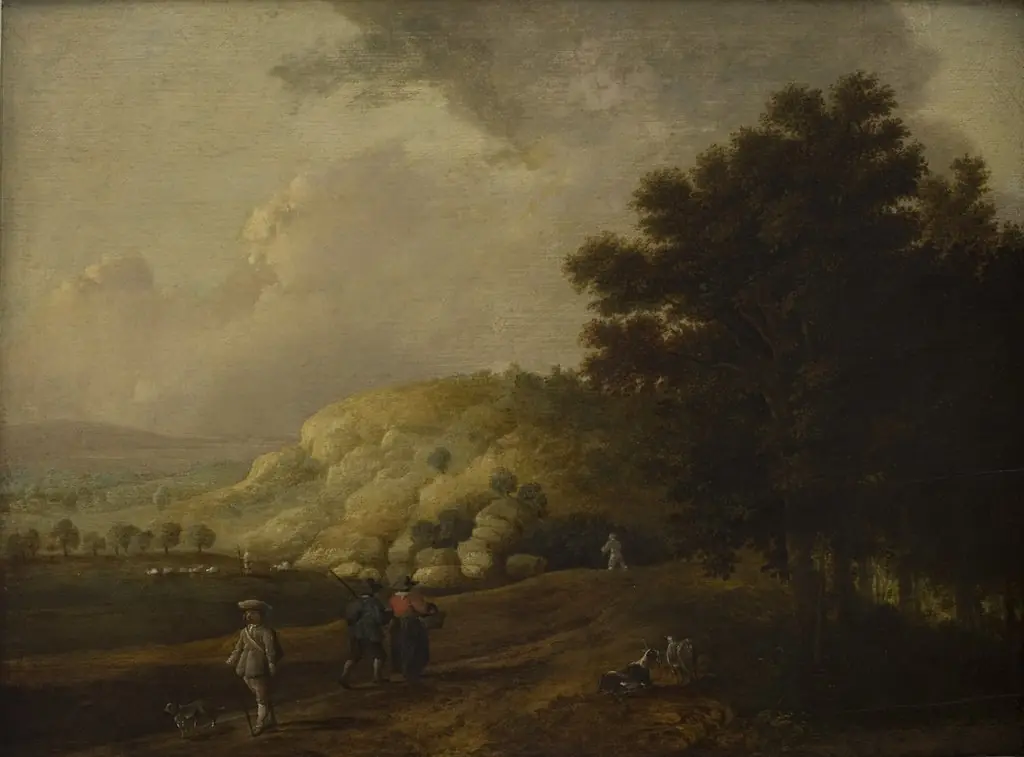
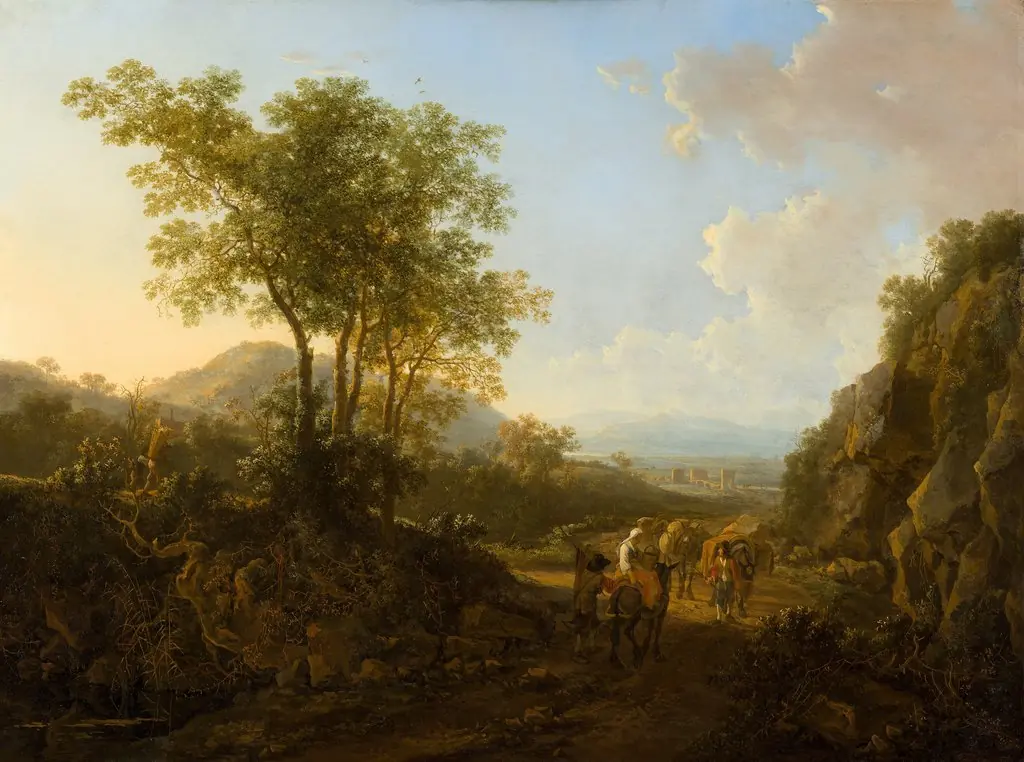
Krajobraz is an oil painting by the Barbizon school artist Unknown. It dates from 1650 and is held in the collection of the National Museum in Kraków. This oil painting depicts a rural landscape with rolling hills and dense trees in the distance.
About this work
Overview
This oil painting depicts a rural landscape with rolling hills and dense trees in the distance. In the foreground, figures and livestock are arranged near a modest structure on the right. The composition balances natural elements with human presence, creating a quiet, grounded scene. The medium allows for layered pigments that enhance the warmth and texture of the environment.
Subject & Meaning
The scene portrays everyday rural life, with people and animals engaged in quiet activity amid the landscape. No dramatic narrative is evident; instead, the focus lies in the harmony between human habitation and the natural world. The building suggests domesticity, while the figures imply labor or rest, reinforcing a sense of ordinary, unidealized existence.
Technique & Style
The artist employs chiaroscuro to model forms through sharp contrasts between light and shadow, lending volume to figures and terrain. Oil paint enables subtle transitions and rich tonal depth, particularly in the foliage and atmospheric perspective of the hills. Brushwork is deliberate but not overly detailed, favoring overall cohesion over fine precision.
History & Provenance
The painting resides in the National Museum in Kraków, where it has been part of the collection since at least the early 20th century. Its origins are tied to regional artistic traditions, though the artist’s identity remains unconfirmed in public records. It was likely acquired as part of a broader effort to preserve local pictorial heritage.
Context
Created during a period when rural life was increasingly idealized in Central European art, this work avoids romanticism. It reflects a regional tendency to depict the countryside with observational honesty, aligning with broader 19th-century movements that valued authenticity over grandeur in landscape representation.
Legacy
Though not widely reproduced or studied beyond regional circles, the painting contributes to an understanding of local artistic practices in Poland. Its preservation in a national institution underscores its value as a document of everyday visual culture, offering insight into how ordinary scenes were rendered in oil during its time.
Artist & collection

 Domestic Scene
 Giacomo and Cardinal Marco, investing Andrea, Abbot of San Zeno, with his Benefice
 The Nymph of Fontainebleau
 Portrait of a Woman
 Madonna and Child with Saints in the Enclosed Garden
 Venus and Minerva
 Family Group of Four on Sofa
 Wall painting from Room H of the Villa of P. Fannius Synistor at Boscoreale