Artwork
Eleven-Headed Kannon (Jūichimen Kannon)
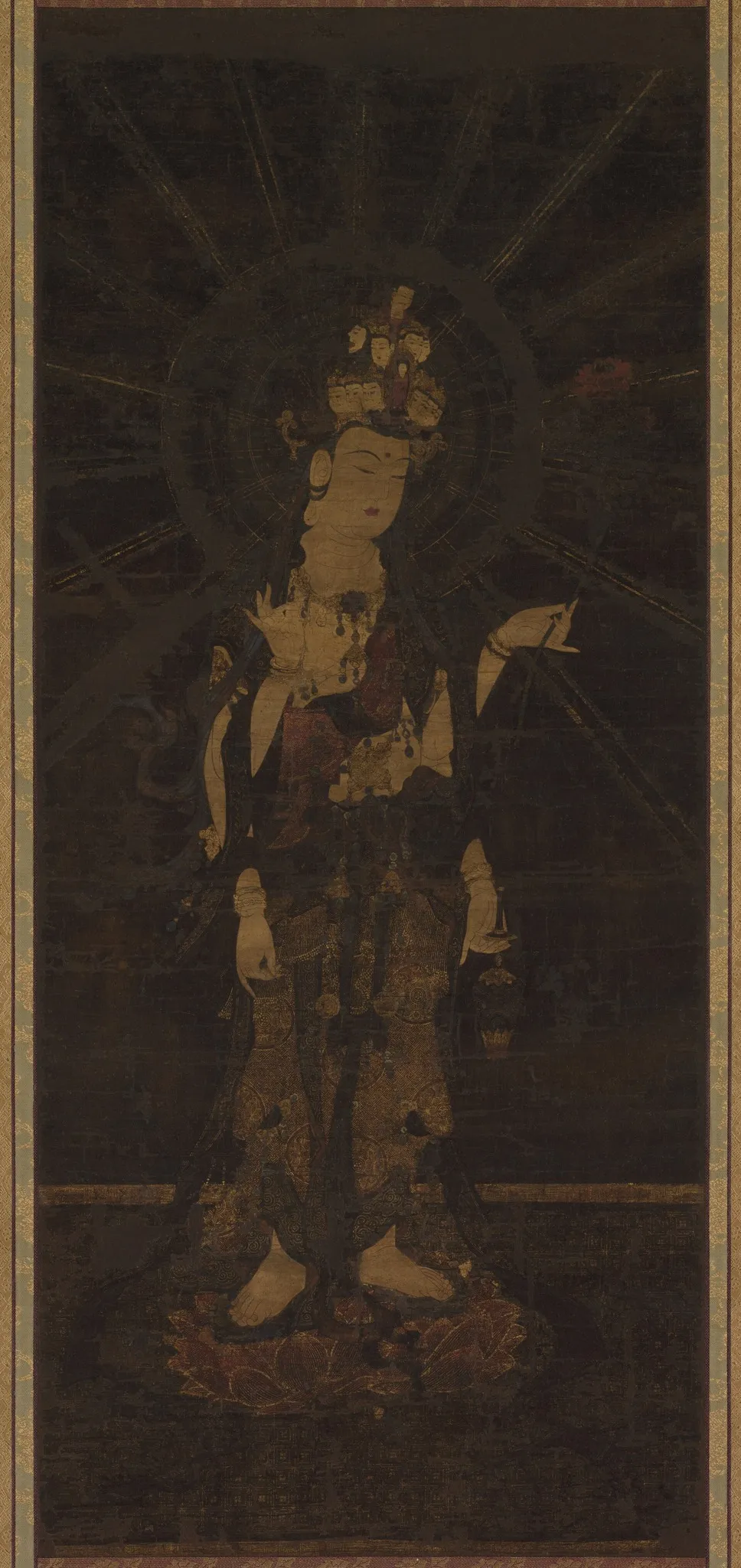
Eleven-Headed Kannon (Jūichimen Kannon) is an unspecified painting. It dates from 1249 and is held in the collection of the Cleveland Museum of Art.
About this work
Overview
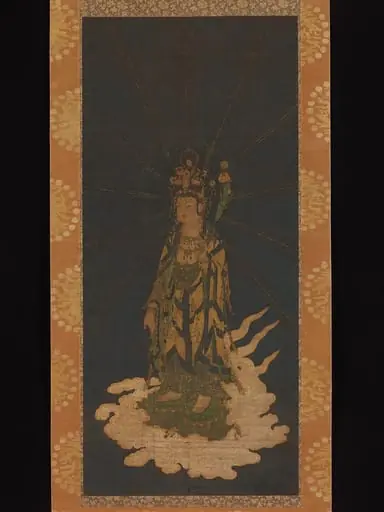
A distinctive feature is the stack of eleven smaller faces atop the main head, each oriented outwards, signifying a broad and encompassing awareness.
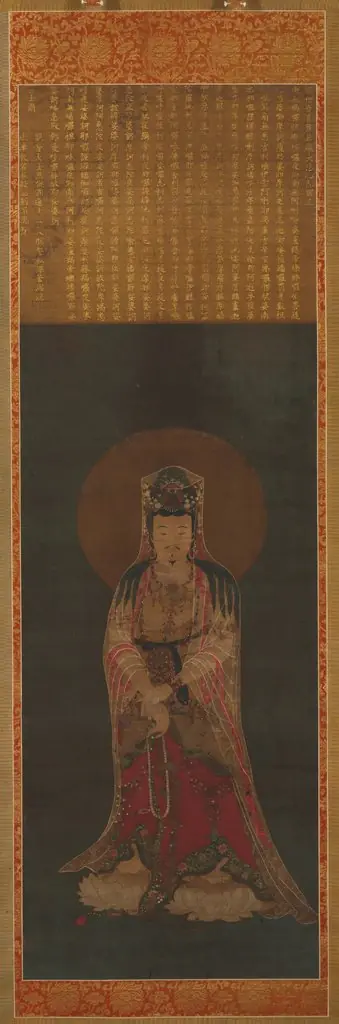
This painting depicts the Eleven-Headed Kannon (Jūichimen Kannon), a revered Buddhist deity. The central figure is presented as tall and serene, characterized by a calm main face and a subtle smile. Adorned in flowing robes and elaborate jewelry, the deity appears to float upon a lotus pedestal. A distinctive feature is the stack of eleven smaller faces atop the main head, each oriented outwards, signifying a broad and encompassing awareness.
Subject & Meaning
The Eleven-Headed Kannon embodies boundless compassion, a quality visually represented by the multiple faces. These additional countenances symbolize the deity's ability to perceive and respond to the suffering of all beings across various realms. In its hands, the figure holds symbolic attributes, including a lotus flower, often associated with purity and spiritual awakening, and a scroll, which may represent wisdom or sacred teachings.
Technique & Style
The artist rendered the Kannon with a smooth, pale complexion, contributing to its tranquil demeanor. The deity's long, draping garment features intricate patterns in muted gold and blue tones, complemented by an array of decorative jewelry. Against a dark, unadorned background, the figure appears to emanate light, creating a luminous effect that emphasizes its divine presence and draws the viewer's focus to the detailed rendering of its form.
Artist & collection