Artwork
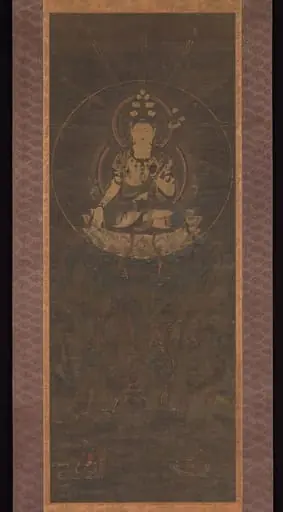
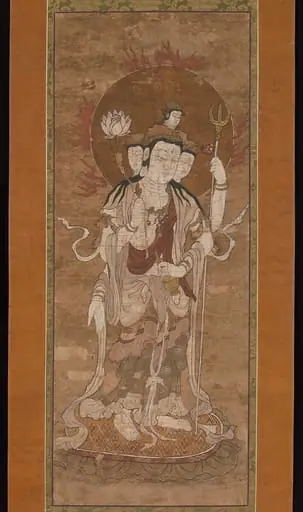
十一面観音来迎図|Descent of Eleven-Headed Kannon
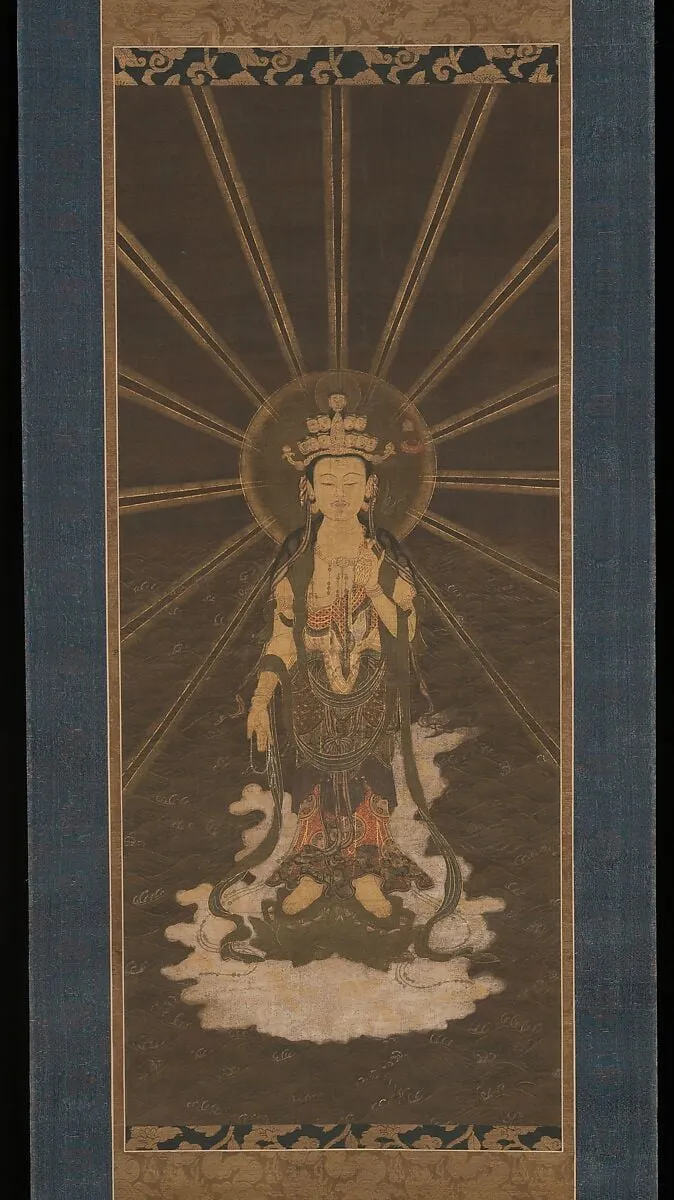
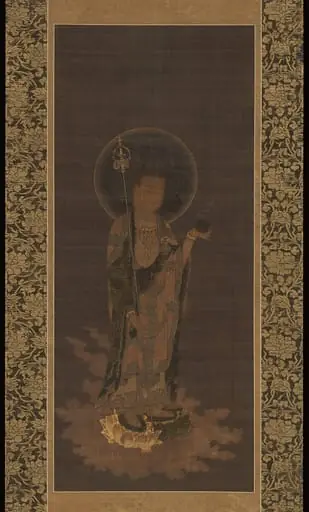
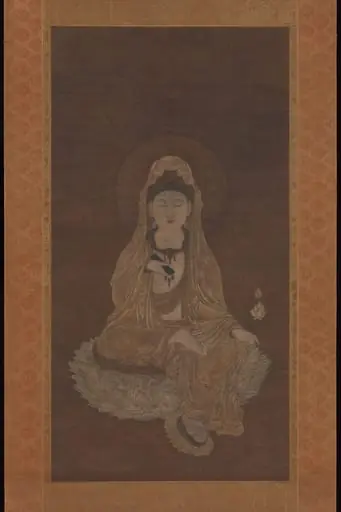
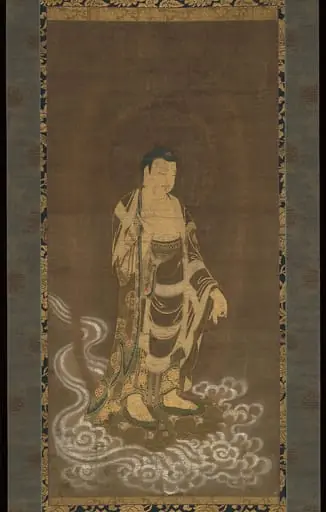
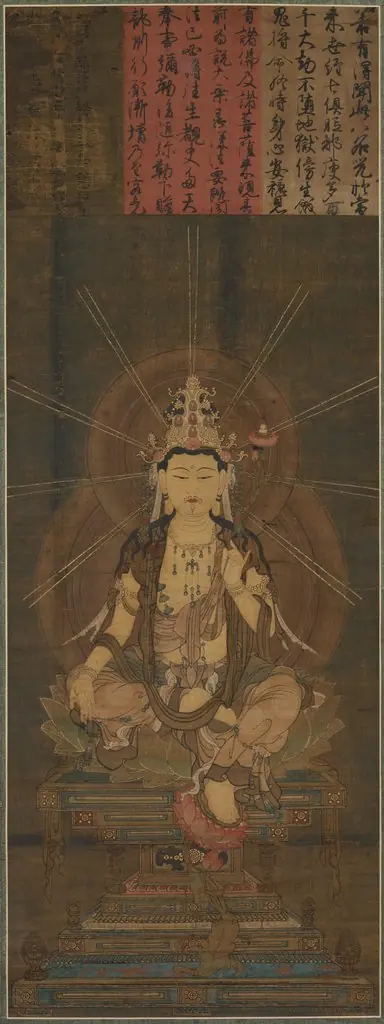
十一面観音来迎図|Descent of Eleven-Headed Kannon is an ink painting. It dates from 1553 and is held in the collection of the Metropolitan Museum of Art. The "Descent of Eleven-Headed Kannon" is a hanging scroll crafted with ink, color, and gold on silk.
About this work
Overview
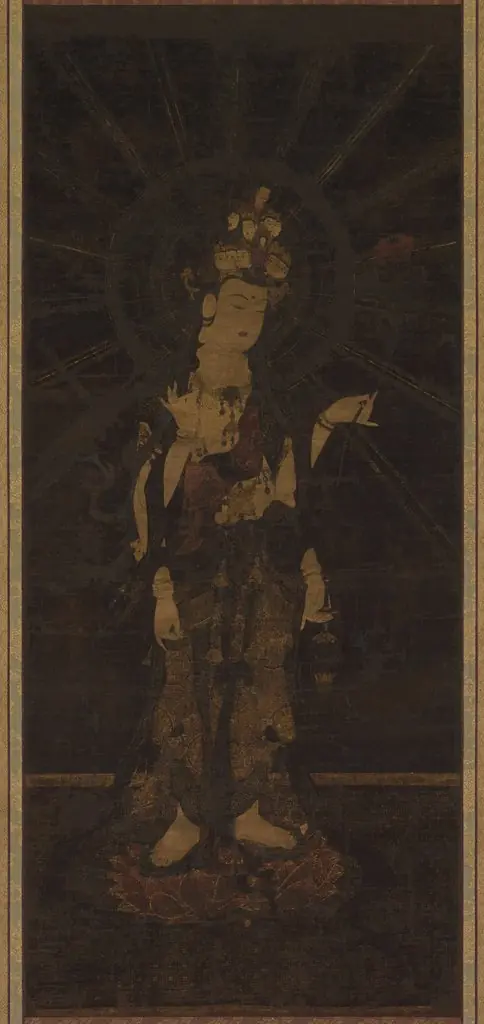
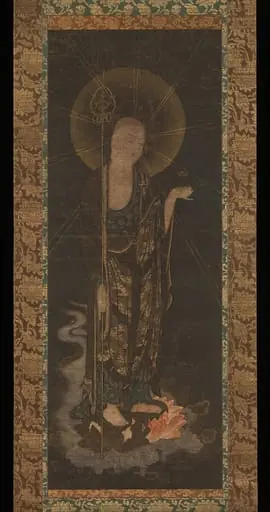
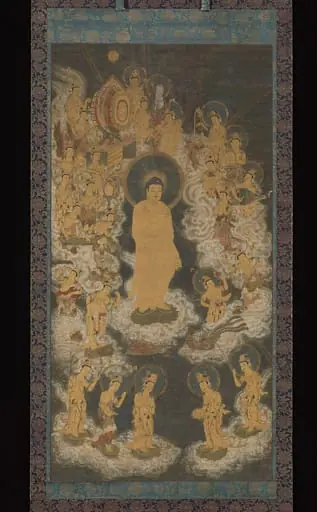
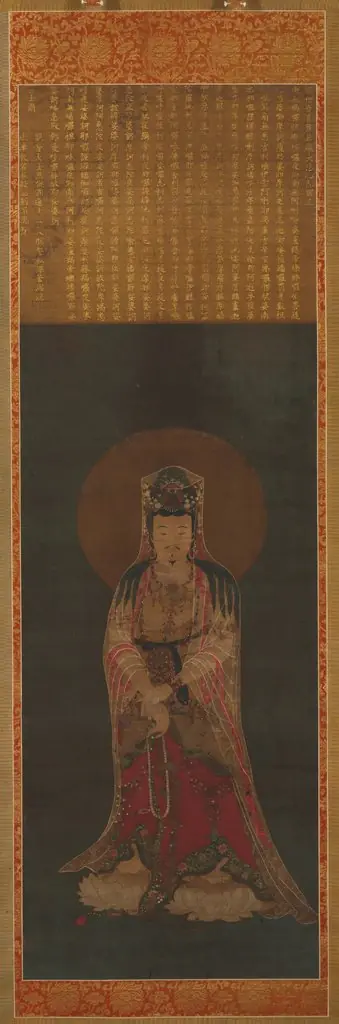
This painting depicts a radiant, multi-headed figure descending towards a kneeling devotee, enveloped entirely in gold leaf.
The "Descent of Eleven-Headed Kannon" is a hanging scroll crafted with ink, color, and gold on silk. This painting depicts a radiant, multi-headed figure descending towards a kneeling devotee, enveloped entirely in gold leaf. Its creation by a Mexican artist, engaging with a traditionally Japanese Buddhist subject, makes it a notable and unusual work, bridging distinct cultural and religious artistic practices.
Subject & Meaning
The central figure is Kannon, the bodhisattva of compassion, characterized by her eleven heads. This deity is typically revered and depicted within Japanese Buddhist traditions, making the artwork's origin outside of Japan particularly distinctive. The scene likely illustrates Kannon's benevolent descent to offer solace or guidance to a worshiper, a common theme in East Asian devotional art.
Technique & Style
The scroll is distinguished by its extensive use of gold leaf, which saturates the entire composition, including the background, creating a luminous effect. The artist rendered the robes of the central figure with a cross-hatching technique, evoking the textural quality often seen in Japanese woodblock prints. Small blue waves are visible at the base of the silk, adding a subtle detail to the gilded scene.
Context
This artwork represents a rare cross-cultural interpretation, as it was produced by a Mexican artist who adopted a subject traditionally central to Japanese Buddhism. Kannon, the compassionate bodhisattva, is almost exclusively depicted in East Asian art. This unusual provenance highlights a unique intersection of artistic practice and religious iconography across continents, suggesting a broader exchange of ideas.
History & Provenance
This hanging scroll is part of the collection at the Metropolitan Museum of Art in New York. Its presence there allows for scholarly study and public appreciation of this distinctive example of cross-cultural artistic exchange and religious devotion, offering insight into global artistic connections.
Artist & collection