Artwork
Samantabhadra
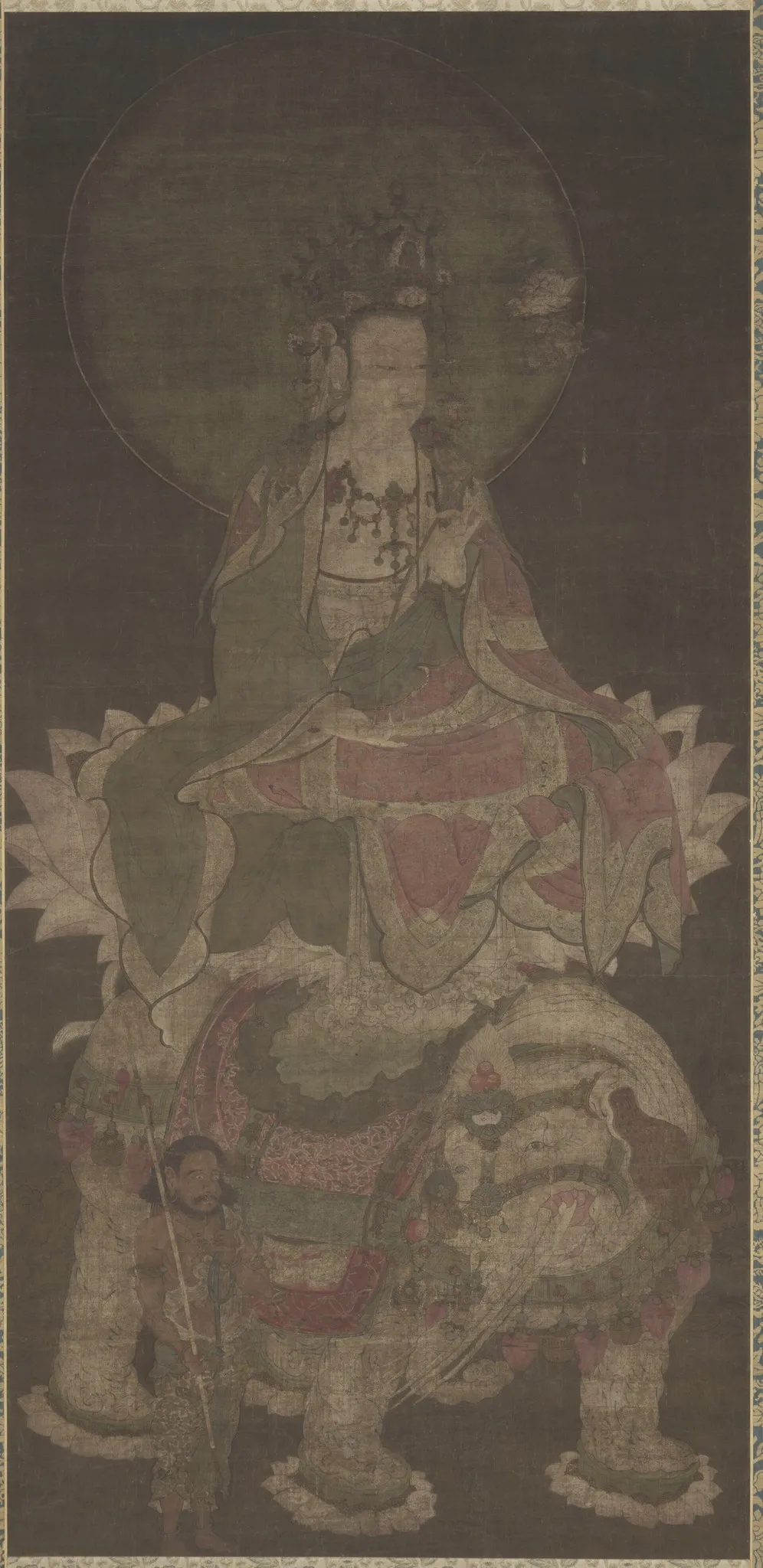
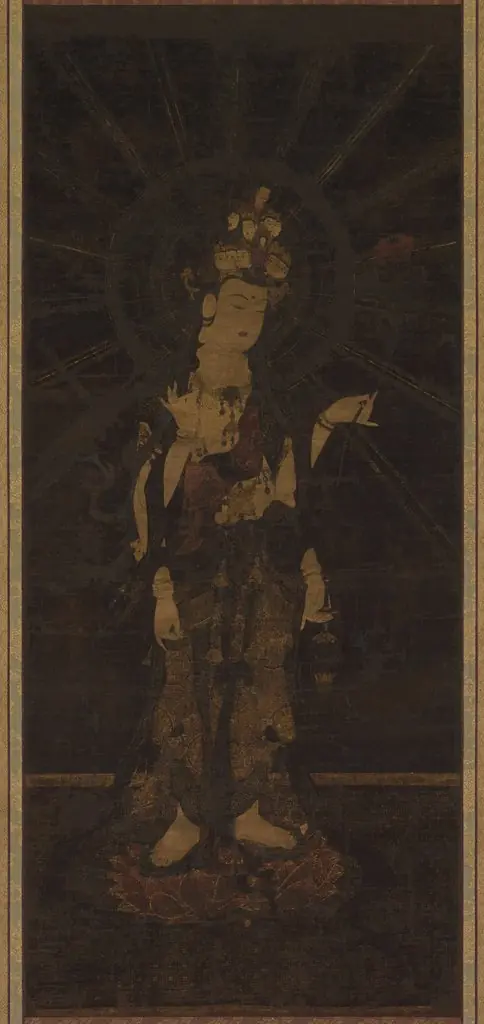
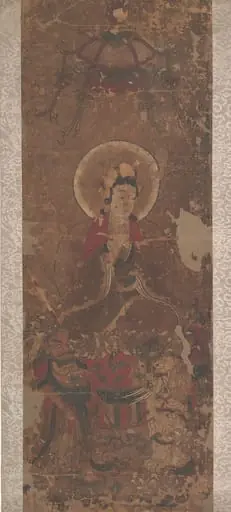
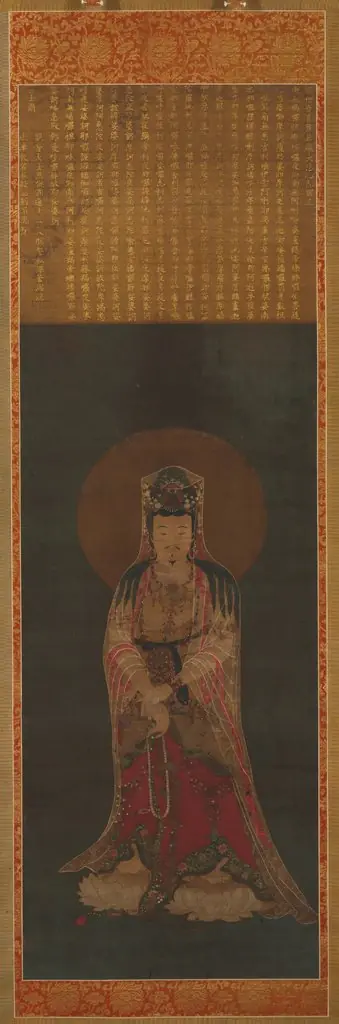
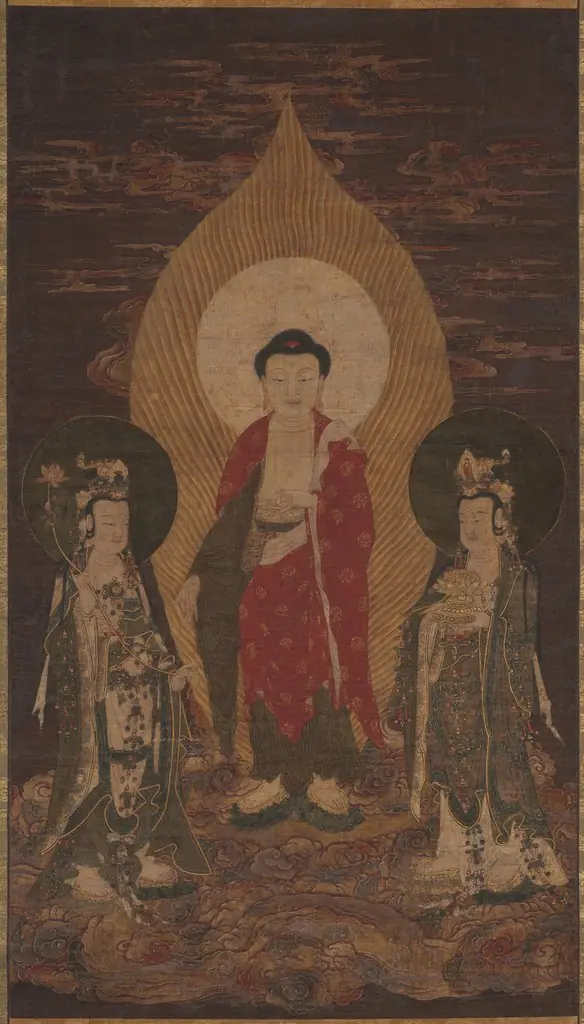
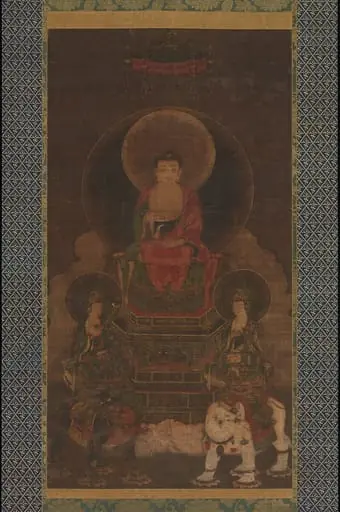
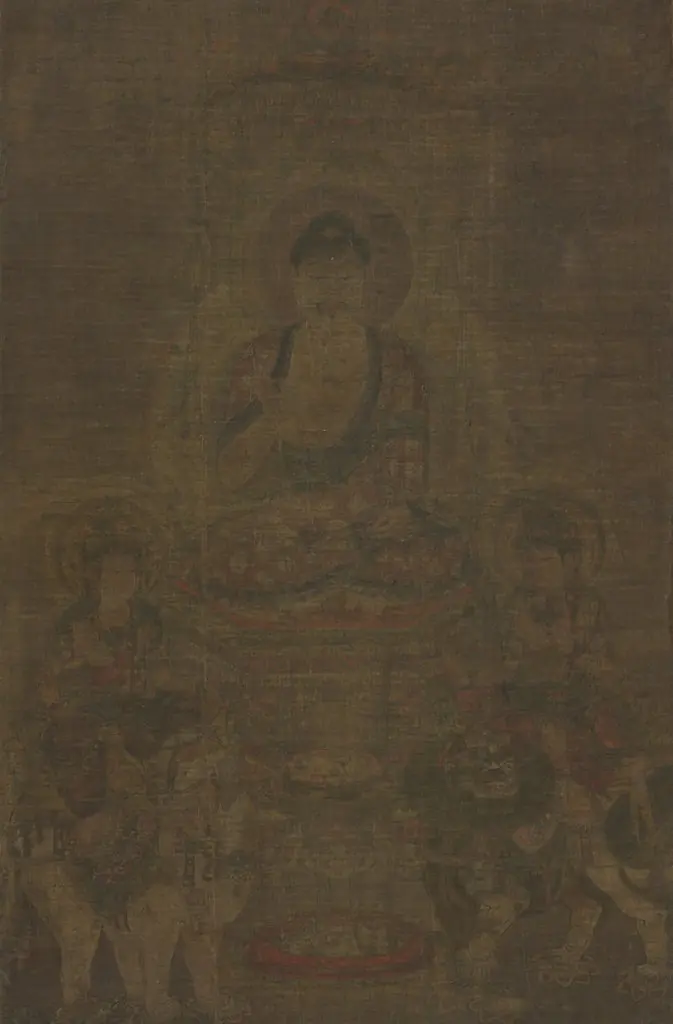
Samantabhadra is an unspecified painting. It dates from 1163 and is held in the collection of the Cleveland Museum of Art. The work depicts a seated figure clothed in bright robes, positioned upon a lotus blossom against a dark backdrop.
About this work
Overview
The work depicts a seated figure clothed in bright robes, positioned upon a lotus blossom against a dark backdrop. The central figure holds a fan and wears a beaded necklace, while a smaller attendant stands nearby, grasping a staff. Although the pigments have faded over time, the remaining colors retain contrast with the surrounding darkness.
Subject & Meaning
The seated individual is identified as Samantabhadra, a bodhisattva associated with practice and vows in Buddhist tradition. The lotus base signifies purity, and the fan may symbolize the spreading of teachings. The attendant’s staff suggests support or guidance, reinforcing the theme of compassionate activity.
Technique & Style
The composition employs chiaroscuro, using strong contrasts between illuminated figures and the enveloping dark space to model form and create depth. The brushwork suggests a careful rendering of textile folds and ornamental details, while the faded palette indicates an original richness now softened by age.
Context
Paintings of Samantabhadra were common in East Asian Buddhist art, often serving devotional purposes within temples or monastic settings. The use of a lotus throne and attendant aligns with iconographic conventions that convey the bodhisattva’s enlightened qualities.
Artist & collection