Artwork
Virgin and Child enthroned; Annunciation
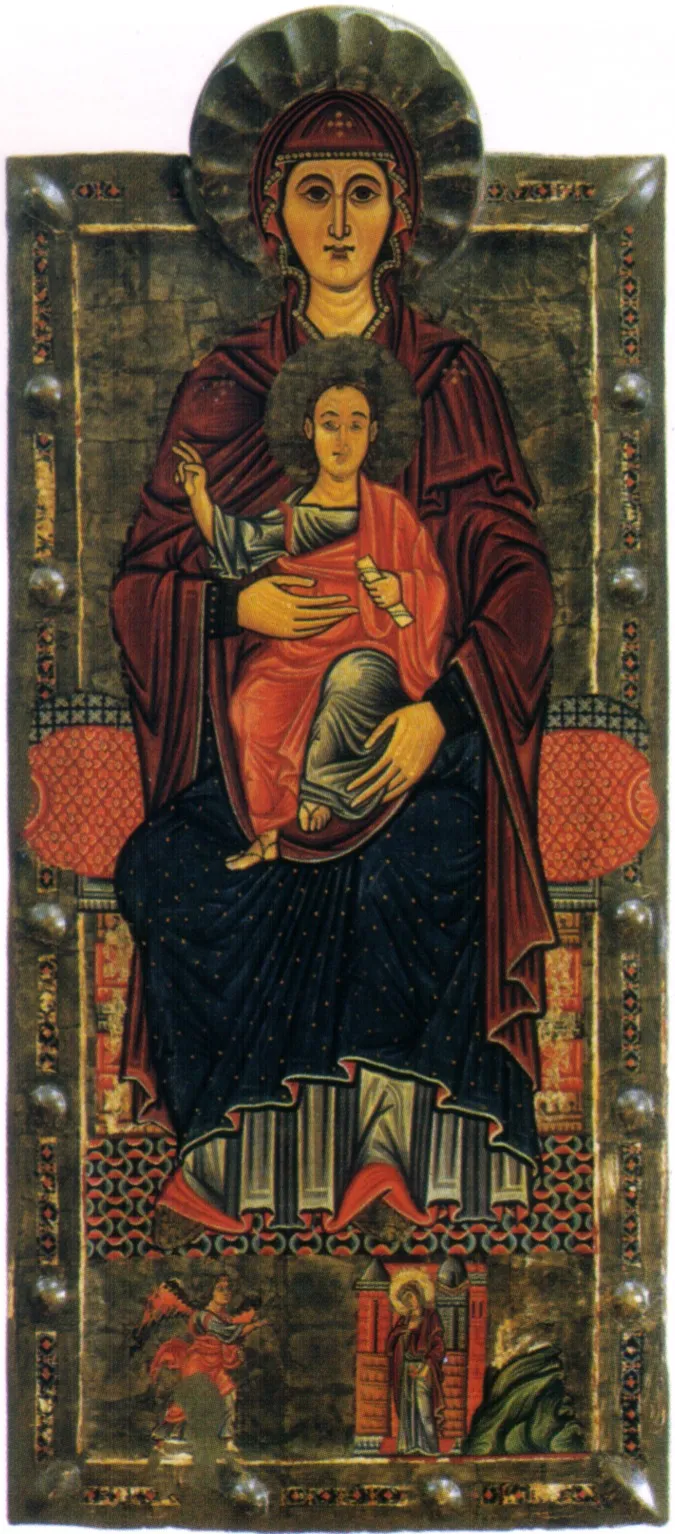
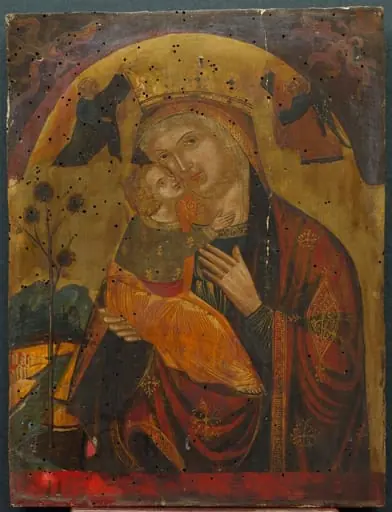
Virgin and Child enthroned; Annunciation is a tempera painting by the Byzantine icon painting artist Unknown. It dates from 1300 and is held in the collection of the Uffizi Gallery. The work depicts a seated Virgin holding the infant Christ on her lap, both framed by a gold‑leafed throne.
About this work
Overview
The work depicts a seated Virgin holding the infant Christ on her lap, both framed by a gold‑leafed throne. The Virgin is clothed in a deep blue mantle topped with a red cloak, while the child wears a red tunic and grasps a small object. Two diminutive figures stand at the foot of the throne, and a patterned floor supports the scene, which is set against a gold background.
Subject & Meaning
The central figures represent the theological pairing of Mary and the Christ Child, a common motif in medieval devotional art. The halo surrounding the Virgin signals her sanctity, while the child's object—often interpreted as a symbol of his future sacrifice—adds a narrative layer. The attendant figures may be saints or angels, serving to emphasize the holy presence of the enthroned pair.
Technique & Style
Executed in tempera, the painting employs the medium’s characteristic fine brushwork and luminous color palette. The use of gold leaf for the throne and background creates a radiant, otherworldly atmosphere typical of Byzantine‑influenced iconography. The figures are rendered with stylized facial features—large eyes and a serene smile—reflecting the conventions of the period’s devotional imagery.
Context
The composition aligns with the tradition of enthroned Virgin and Child panels that circulated in medieval Europe, particularly in regions where Byzantine artistic conventions merged with local styles. The inclusion of narrative miniatures in the background, though difficult to discern, suggests an intent to situate the holy figures within a broader sacred story, a practice common in liturgical settings of the time.
Artist & collection

 Domestic Scene
 Giacomo and Cardinal Marco, investing Andrea, Abbot of San Zeno, with his Benefice
 The Nymph of Fontainebleau
 Portrait of a Woman
 Madonna and Child with Saints in the Enclosed Garden
 Venus and Minerva
 Family Group of Four on Sofa
 Wall painting from Room H of the Villa of P. Fannius Synistor at Boscoreale
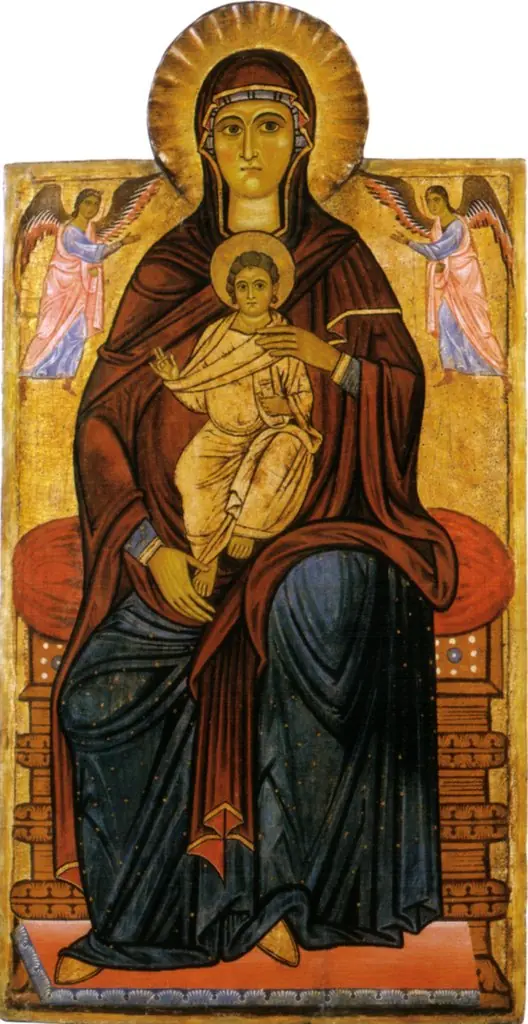 Madonna with Child enthroned with two Angels
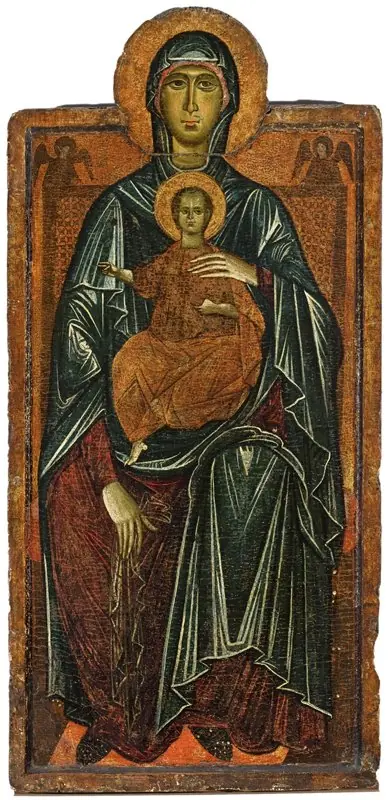 Maestà attributed to the Master of Bigallo
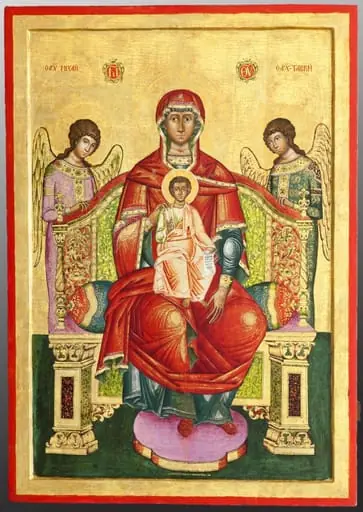 Maica Domnului cu Pruncul - Stăpâna Îngerilor
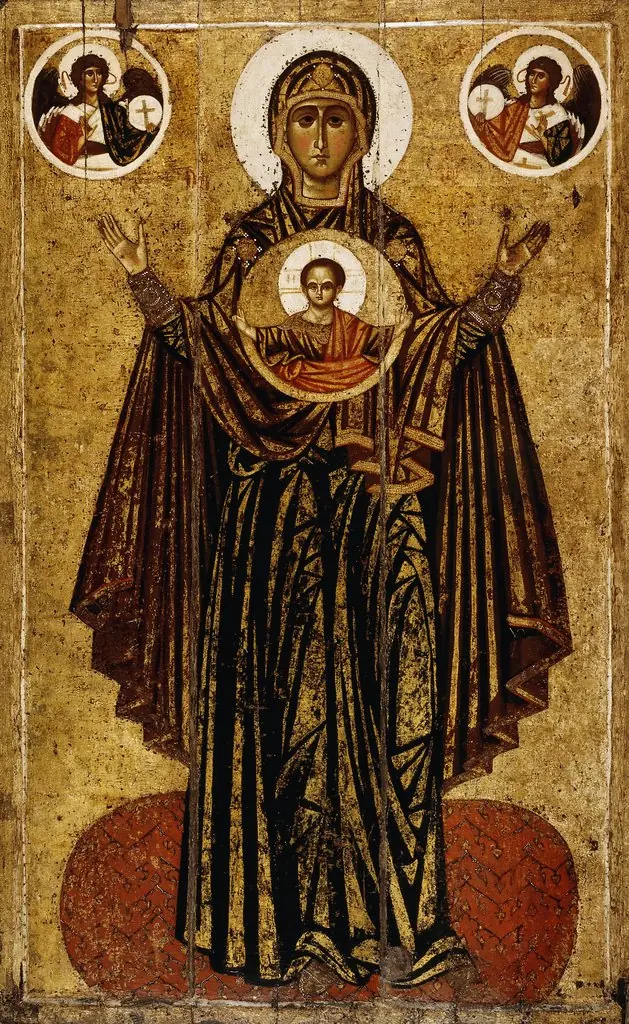 Our Lady of the Great Panagiya
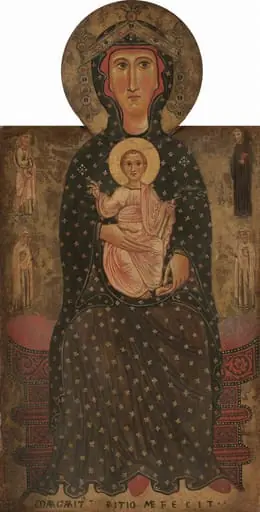 Madonna and Child Enthroned with Four Saints
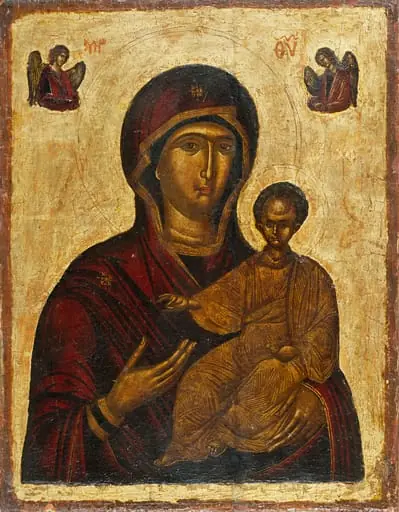 Jumalanäiti, Hodigitria - Tiennäyttäjä, bysanttilainen ikoni
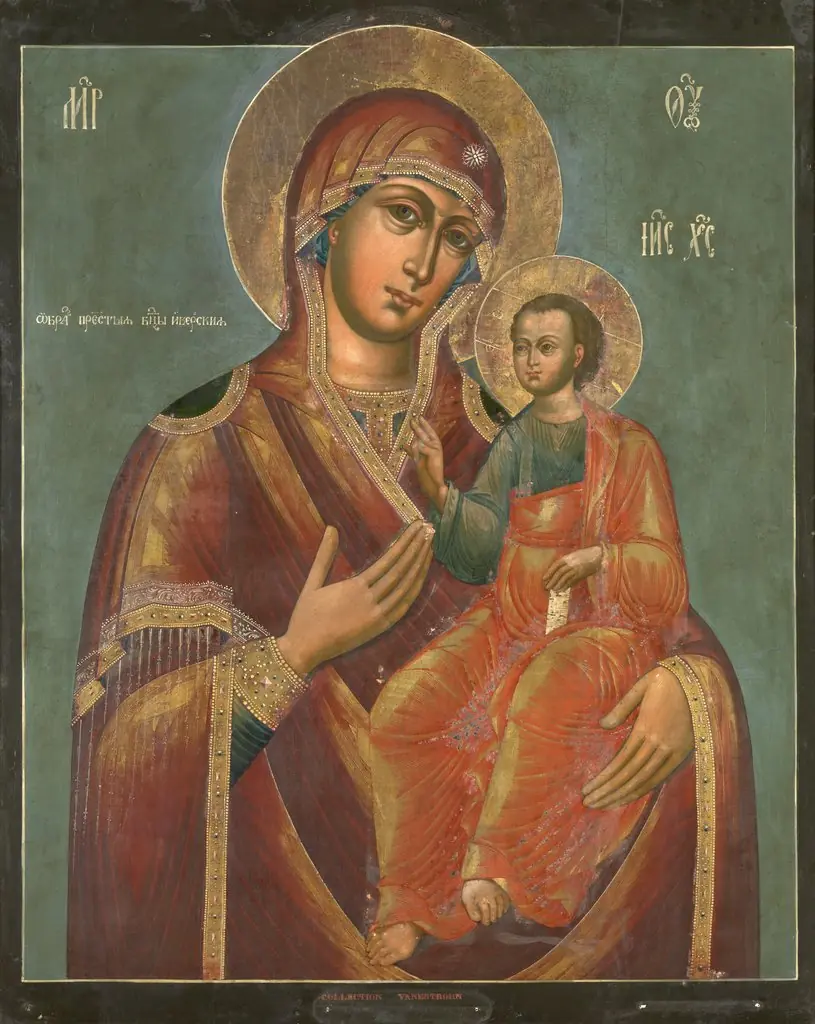 Mother of God from Iviron
 Maica cu Pruncul-Axionița
 Virgin Eleousa of Kykkos
 Virgin and Child
 Maica Domnului cu Pruncul
 Virgin and Child