Artwork
Our Lady of the Great Panagiya
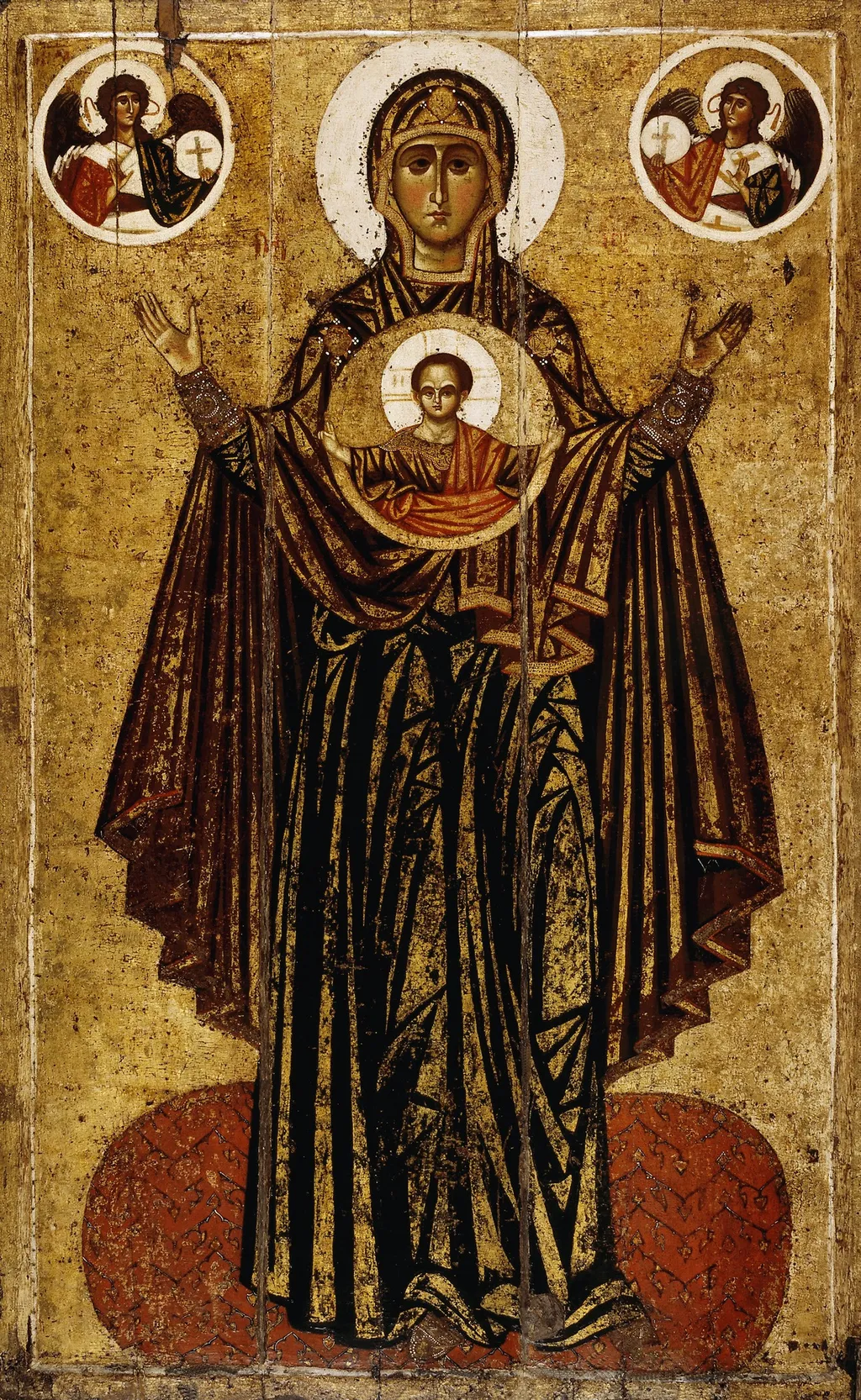
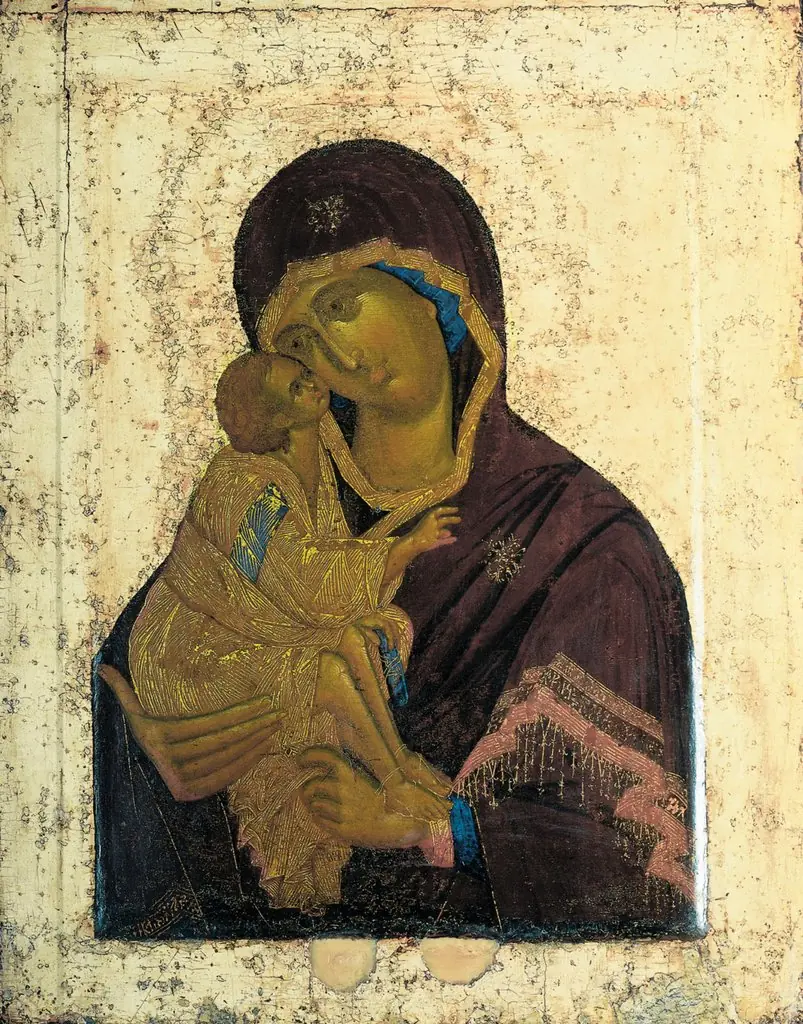
Our Lady of the Great Panagiya is a tempera painting by the Byzantine icon painting artist Unknown. It dates from 1200 and is held in the collection of the Tretyakov Gallery.
About this work
Overview
Our Lady of the Great Panagiya is a tempera painting depicting a female figure in a long, dark robe trimmed with gold. She stands before a flat gold background, her head covered, and cradles a circular portrait of a man. Flanking her head are two smaller winged male figures rendered as round icons.
Subject & Meaning
The central woman is presented as a venerable, possibly saintly, figure, suggested by her modest attire and the reverential pose. The central circular image she holds may represent a holy person, while the winged figures on either side could symbolize angelic attendants, reinforcing a devotional theme.
Technique & Style
Executed in egg‑tempera, the work displays the medium’s characteristic matte finish and fine, layered brushwork. The dark robe’s subtle sheen hints at a richly textured fabric, while the gold background and gilded accents create a luminous, flat surface typical of Byzantine‑influenced iconography.
History & Provenance
The painting’s title and iconographic elements link it to Eastern Orthodox traditions, where “Panagiya” denotes the Virgin Mary. Its precise origin and ownership trail are not documented in the supplied data, indicating that further archival research would be required to trace its provenance.
Context
The composition reflects a synthesis of Eastern liturgical art and Western tempera practice, a crossover common in regions where Byzantine and Latin cultures intersected. The use of gold and stylized figures aligns with devotional images intended for private or chapel display.
Artist & collection

 Domestic Scene
 Giacomo and Cardinal Marco, investing Andrea, Abbot of San Zeno, with his Benefice
 The Nymph of Fontainebleau
 Portrait of a Woman
 Madonna and Child with Saints in the Enclosed Garden
 Venus and Minerva
 Family Group of Four on Sofa
 Wall painting from Room H of the Villa of P. Fannius Synistor at Boscoreale
 Virgin and Child enthroned; Annunciation
 Madonna with Child enthroned with two Angels
 Jumalanäiti, Hodigitria - Tiennäyttäjä, bysanttilainen ikoni
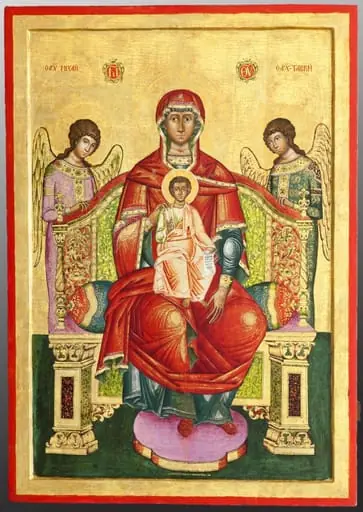 Maica Domnului cu Pruncul - Stăpâna Îngerilor
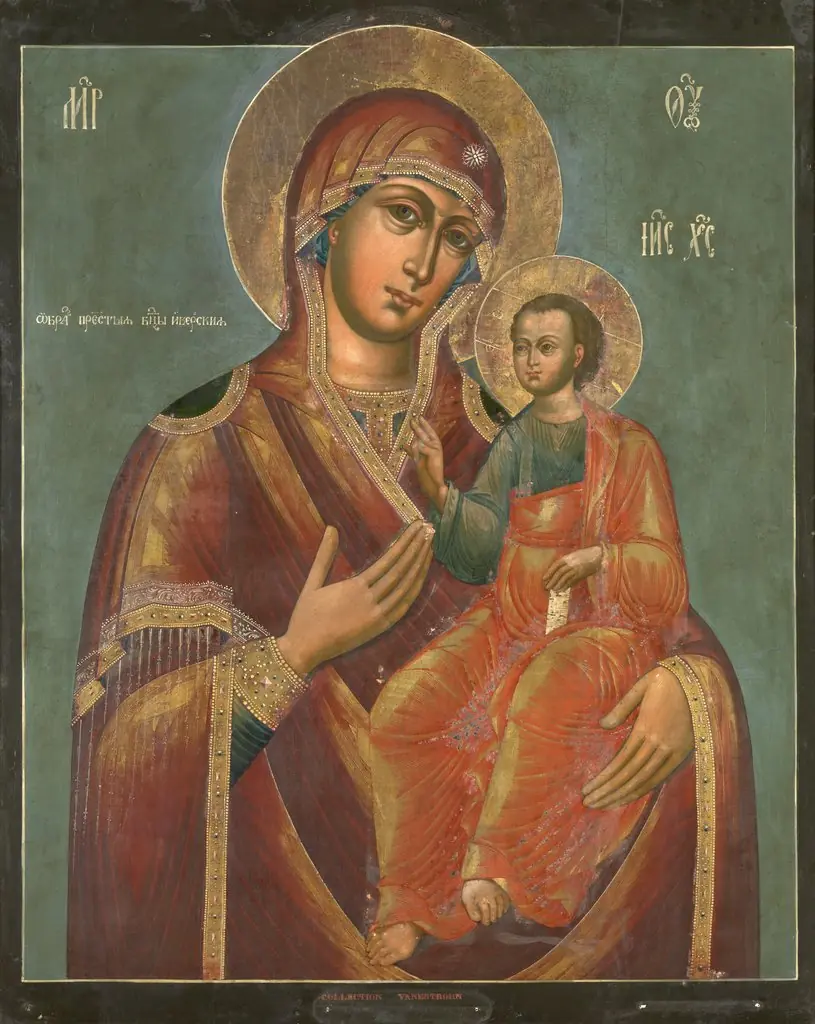 Mother of God from Iviron
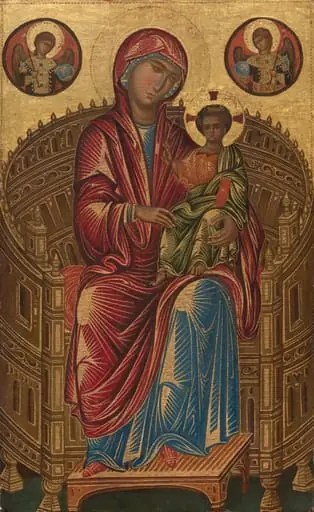 Madonna and Child on a Curved Throne
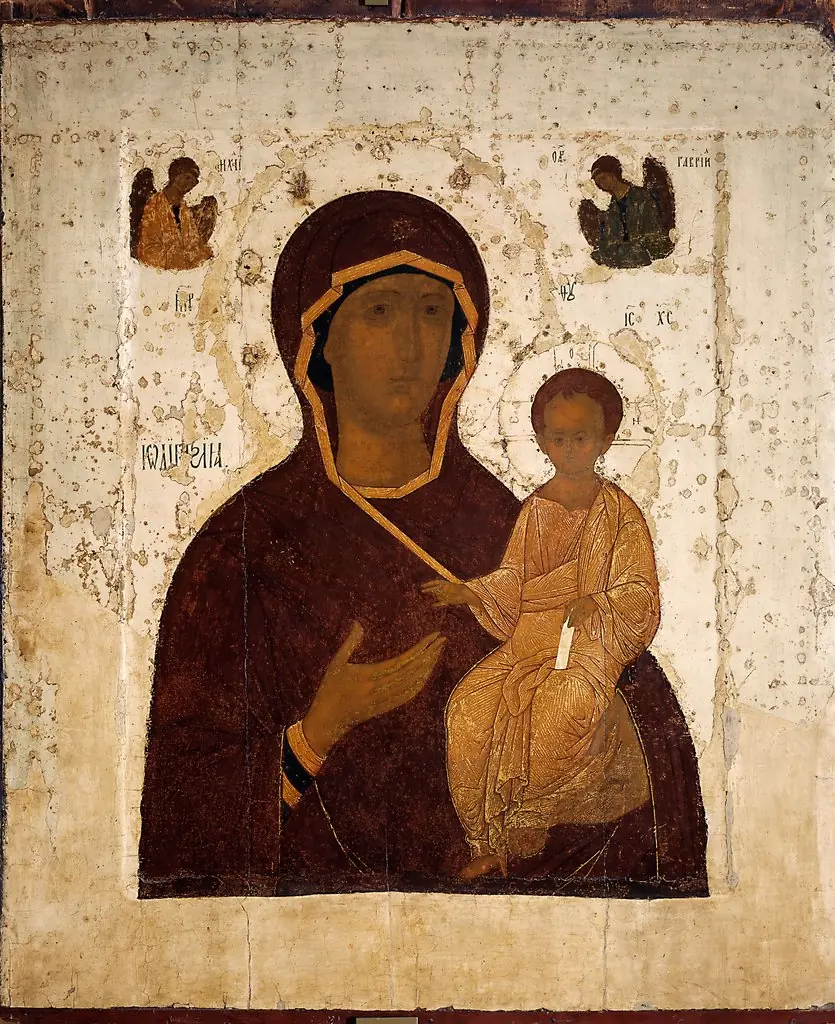 Our Lady of Guide of Wayfarers (Odigitria)
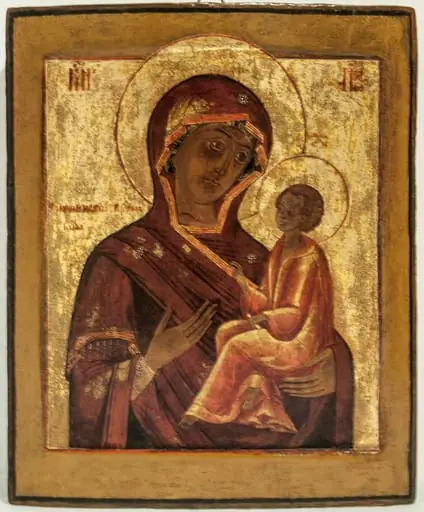 Icoa cee
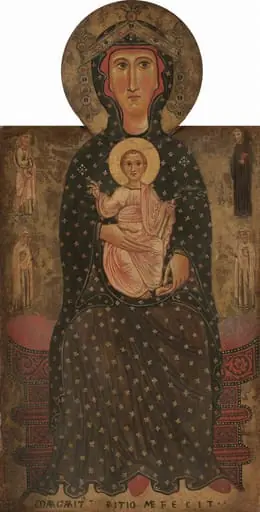 Madonna and Child Enthroned with Four Saints
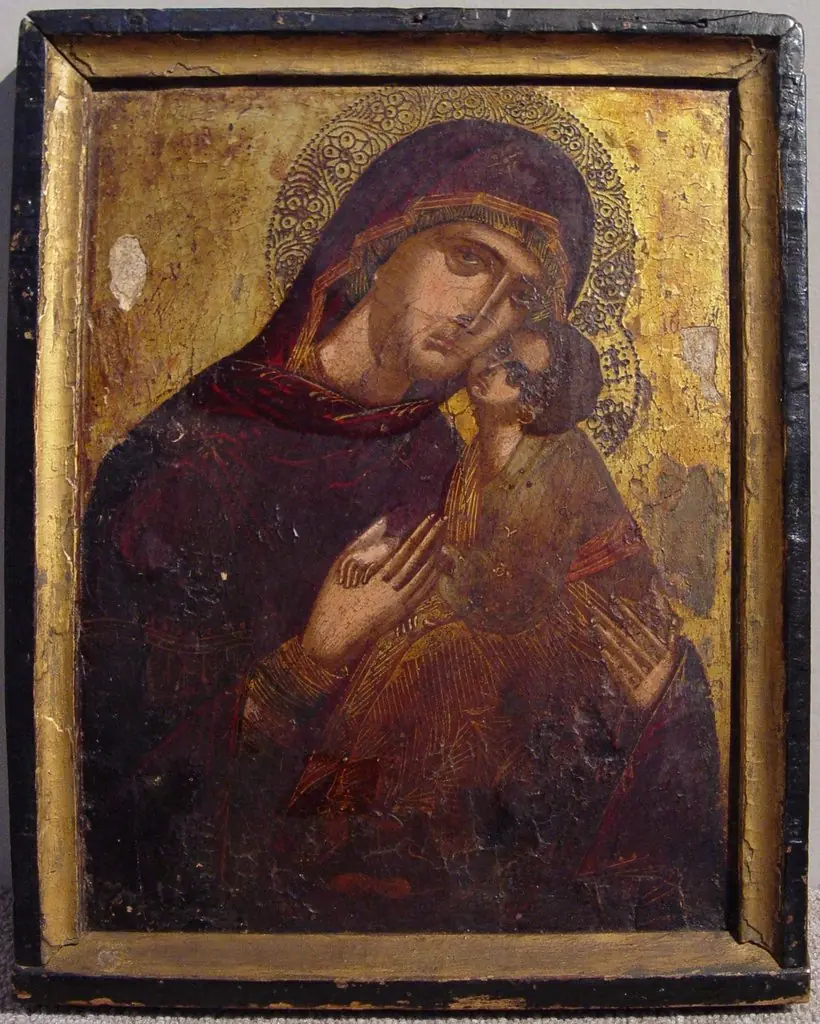 Icon with the Virgin and Child
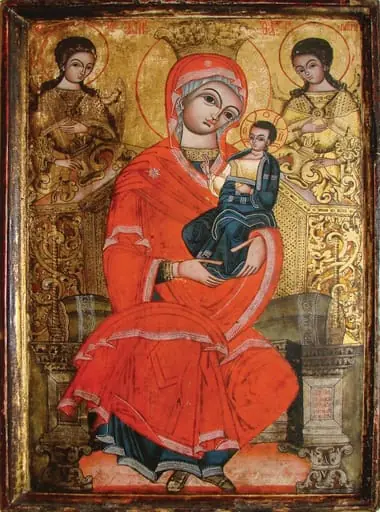 Maica Domnului cu Pruncul
 Our Lady of the Don