Artwork
Vesuvius from Posilipo, Italy
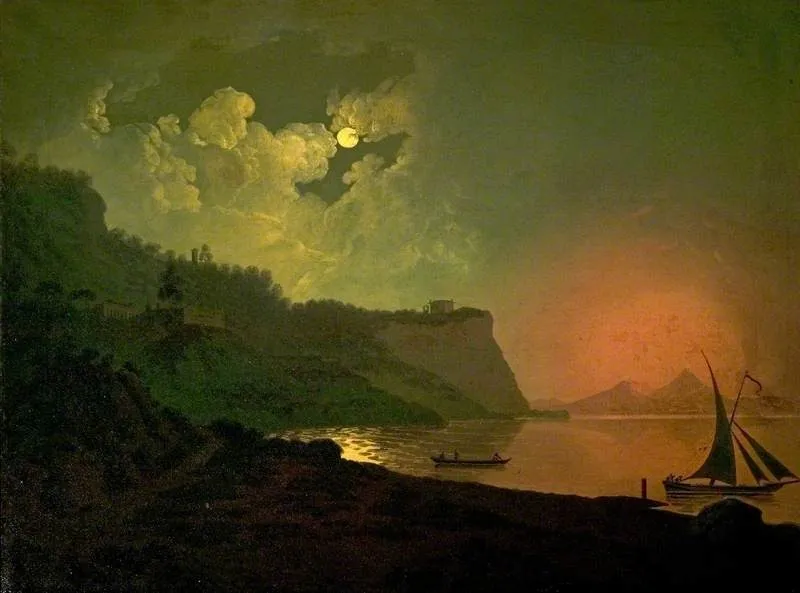
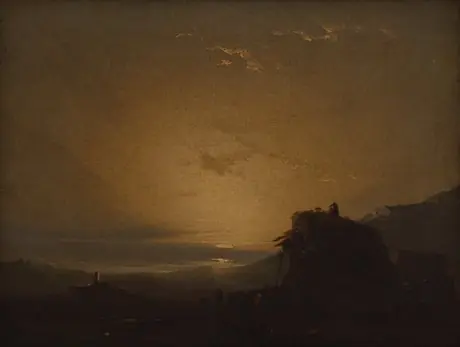
Vesuvius from Posilipo, Italy is an oil painting by Unknown. It dates from 1800 and is held in the collection of the Derby Museum and Art Gallery. This oil painting captures a quiet nocturnal view from Posilipo overlooking Mount Vesuvius.
About this work
Overview
The composition emphasizes stillness, using subtle contrasts of light and shadow to guide attention toward the distant mountain.
This oil painting captures a quiet nocturnal view from Posilipo overlooking Mount Vesuvius. The scene is dominated by a dark, cloud-streaked sky lit by moonlight, with the volcanic peak rising faintly in the distance. A small boat glides across calm water in the foreground, its occupants barely discernible. The composition emphasizes stillness, using subtle contrasts of light and shadow to guide attention toward the distant mountain.
Subject & Meaning
The painting presents Vesuvius not as a threat but as a silent, distant presence, softened by nightfall. The boat and its figures suggest human quietude amid nature’s grandeur, reinforcing a mood of contemplative solitude. The absence of dramatic action or visible danger shifts focus from eruption to endurance, framing the volcano as a timeless landmark rather than a force of destruction.
Technique & Style
The artist employs chiaroscuro to model forms with delicate gradations of light and shadow, enhancing spatial depth without harsh lines. The moon’s glow filters through high clouds, casting a pale sheen on the water and the mountain’s slopes. Brushwork is restrained, favoring smooth transitions over texture, which contributes to the scene’s hushed, dreamlike quality.
History & Provenance
Painted during the late 18th or early 19th century, the work likely originated from a period when travelers to southern Italy sought tranquil landscapes as souvenirs of their Grand Tour. Its subject aligns with the aesthetic preferences of European patrons drawn to the region’s atmospheric views. The painting’s early ownership remains undocumented, though its style suggests ties to British or German artists active in Naples.
Context
During the time of its creation, Vesuvius was both a scientific curiosity and a cultural symbol, frequently depicted in art and literature. While many works emphasized its eruptive power, this painting reflects a quieter, more introspective trend—favoring moonlit serenity over spectacle. It resonates with Romantic-era sensibilities that valued solitude and the sublime in nature’s quieter moments.
Legacy
The painting contributes to a lesser-known strand of landscape art that softened Vesuvius’s reputation, focusing on its enduring presence rather than its violence. It stands as an example of how natural landmarks were reimagined through mood and light, influencing later artists who sought emotional resonance over topographical accuracy in depicting the Italian countryside.
Artist & collection

 Domestic Scene
 Giacomo and Cardinal Marco, investing Andrea, Abbot of San Zeno, with his Benefice
 The Nymph of Fontainebleau
 Portrait of a Woman
 Madonna and Child with Saints in the Enclosed Garden
 Venus and Minerva
 Family Group of Four on Sofa
 Wall painting from Room H of the Villa of P. Fannius Synistor at Boscoreale
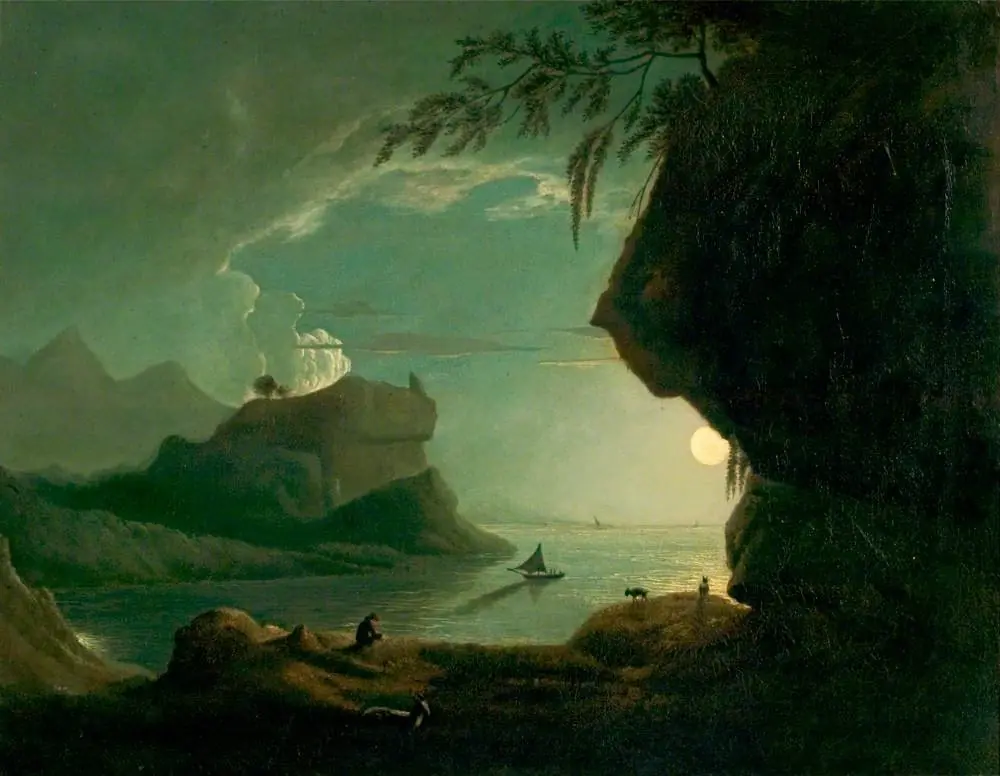 Scene near Naples, Italy, Moonlight
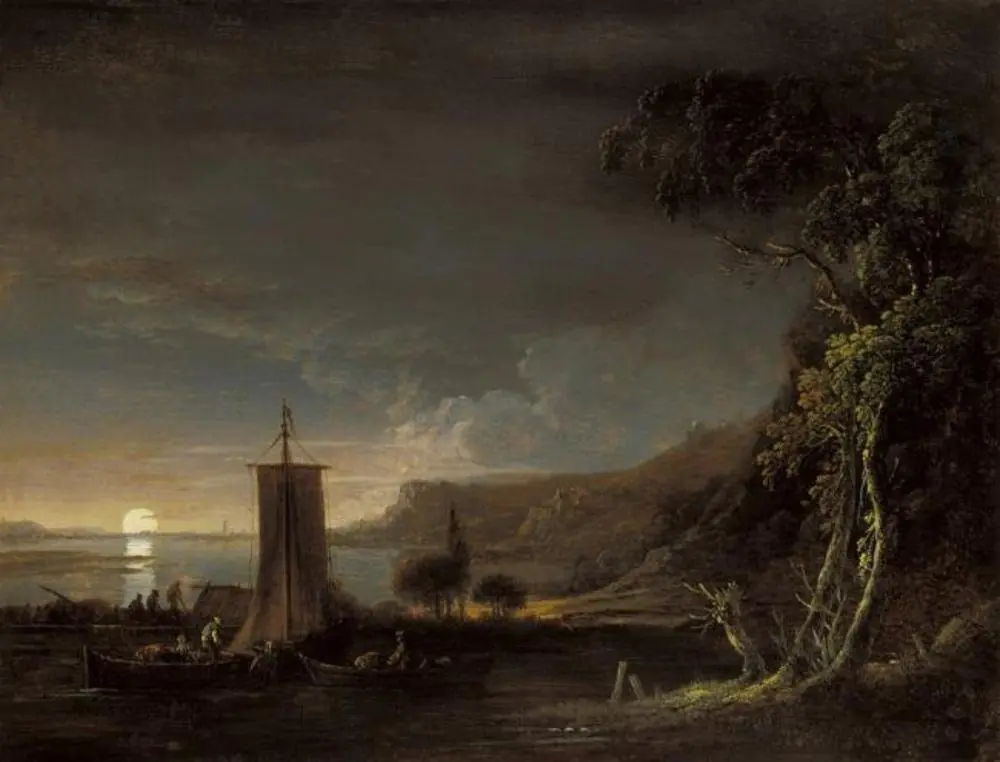 Moonlit river landscape
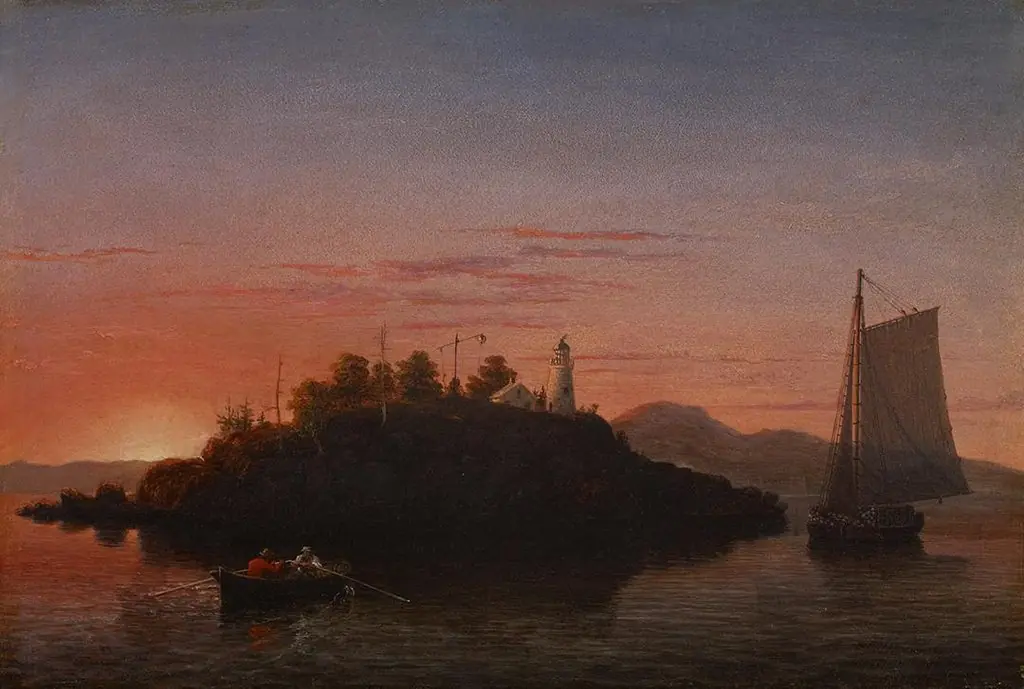 View of Camden Mountains from Penobscot Bay
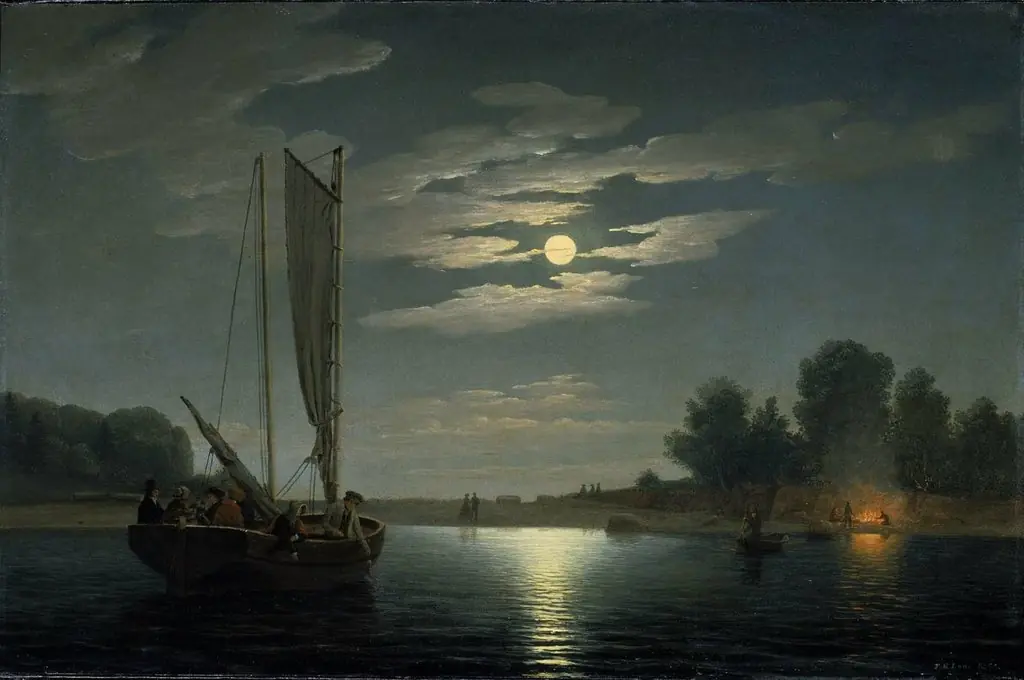 Fishing Party
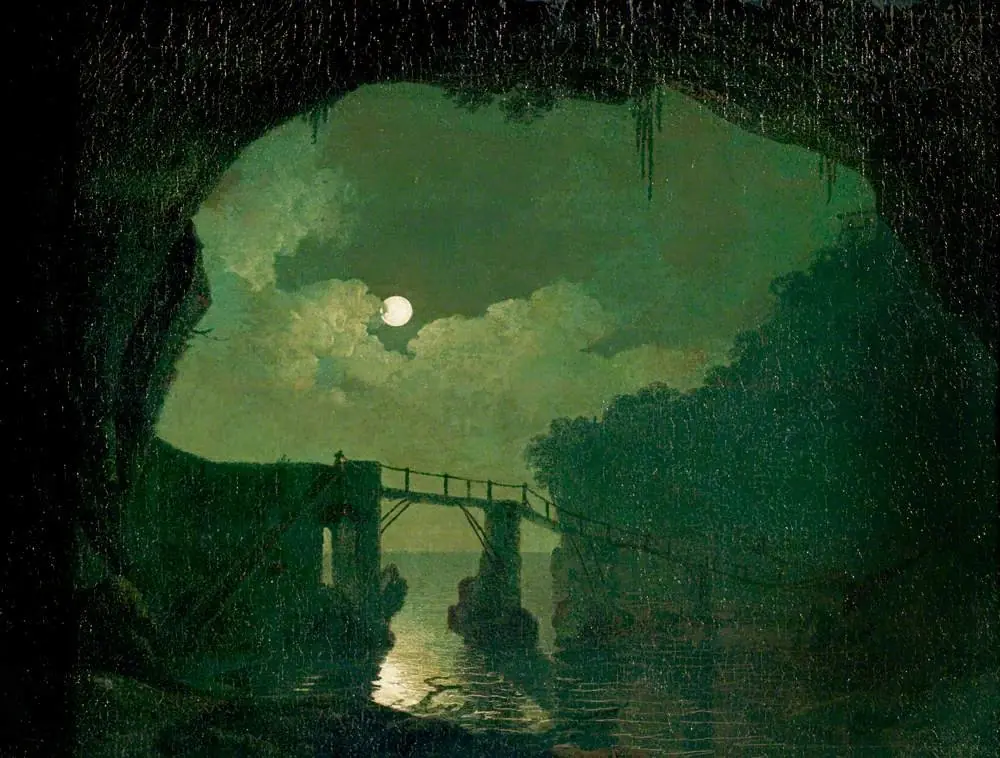 Bridge through a Cavern, Moonlight
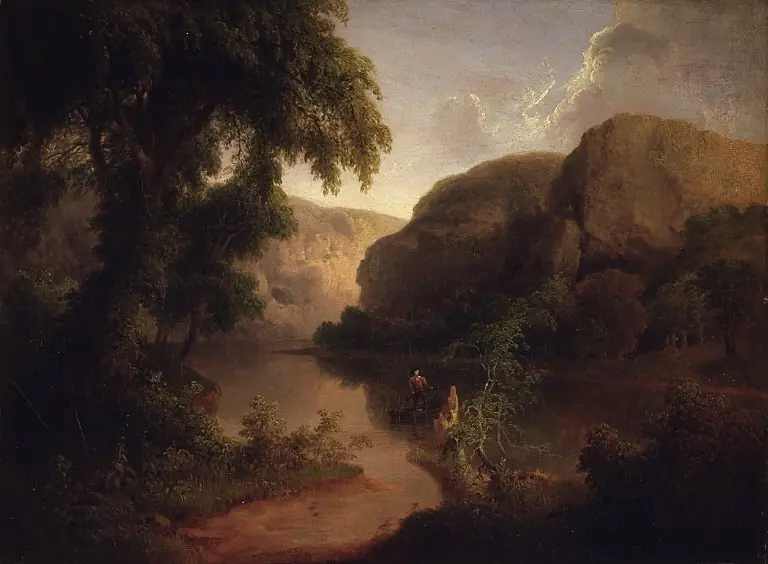 River between Rocks
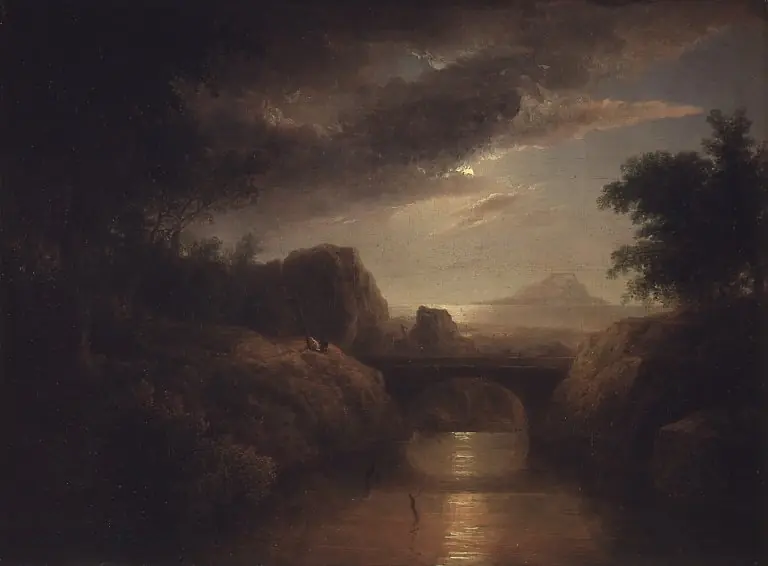 Moonlit Landscape
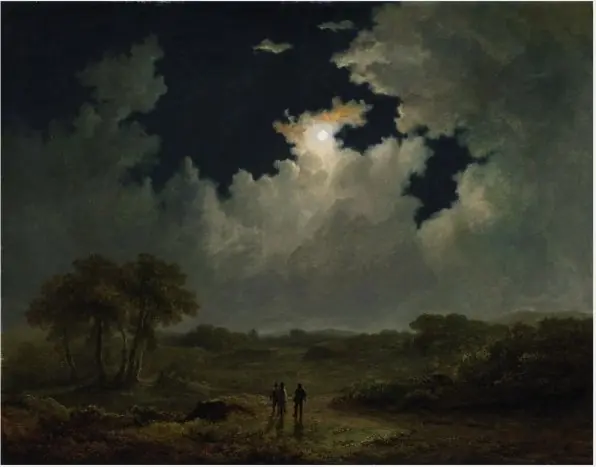 The Poachers
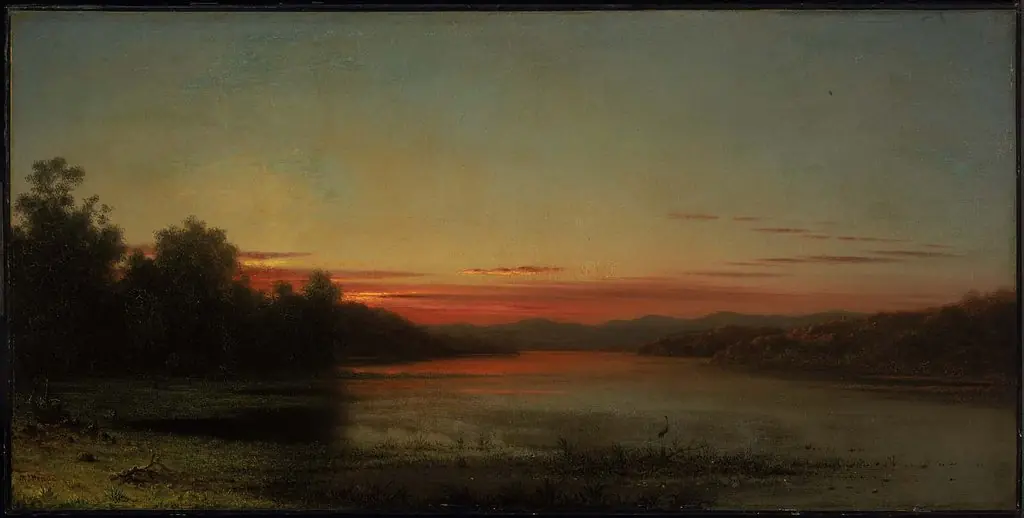 Sunset: Lake Champlain
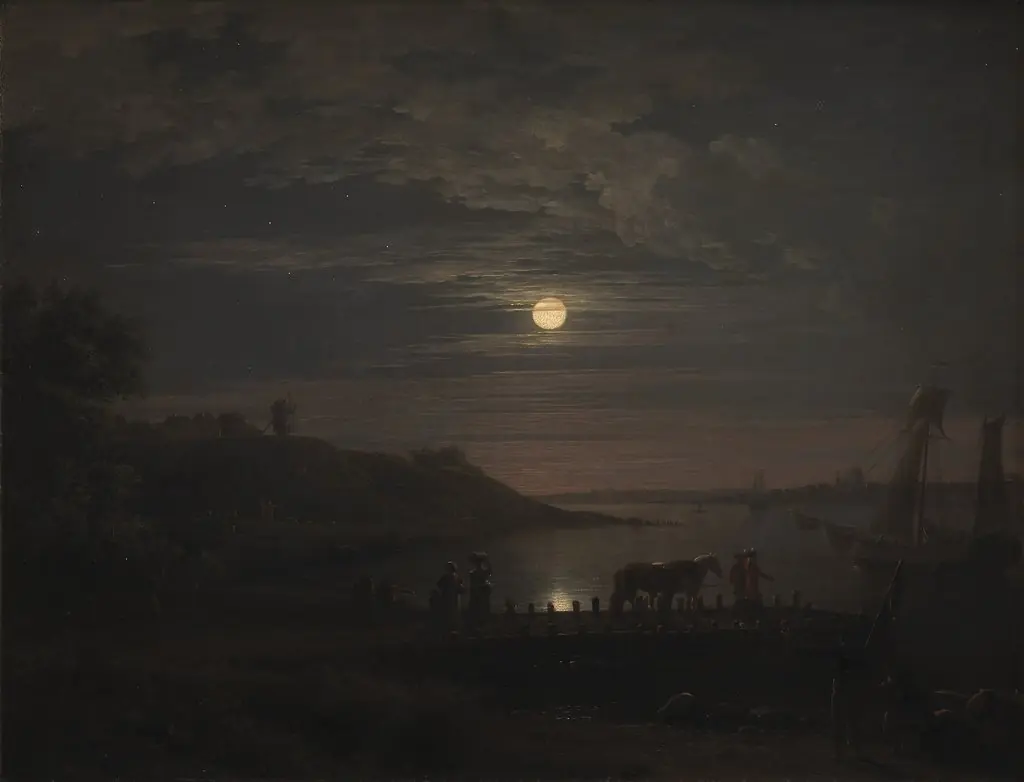 The Crossing over the Little Belt at Snoghøj. Moonrise
 The Crossing over the Little Belt at Snoghøj. Moonrise
 Sunset on the Sea