Artwork
Fishing Party
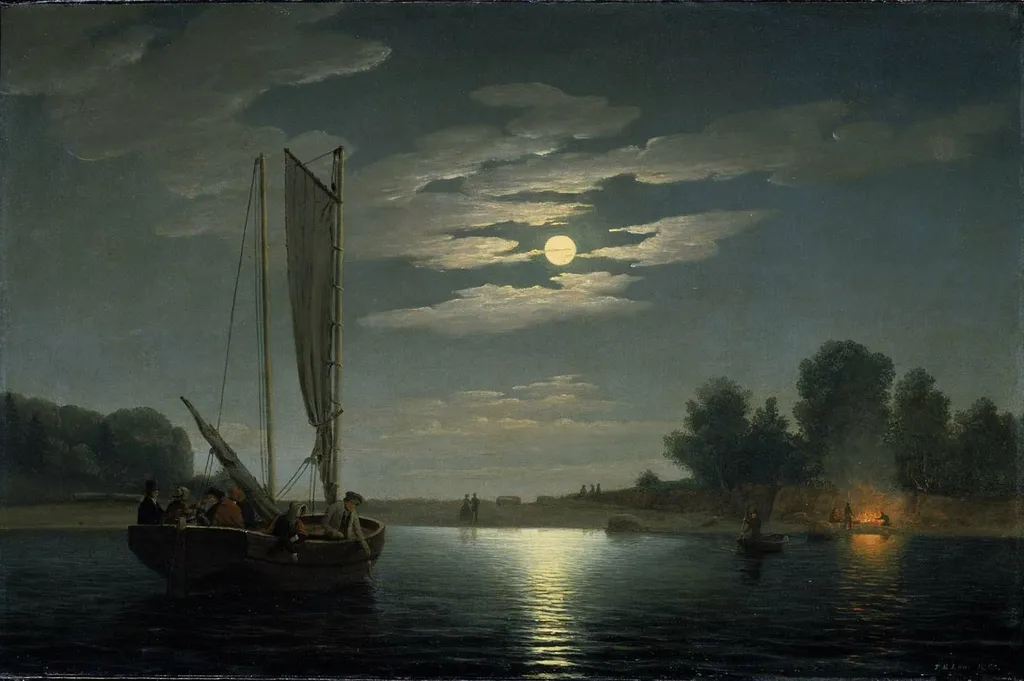
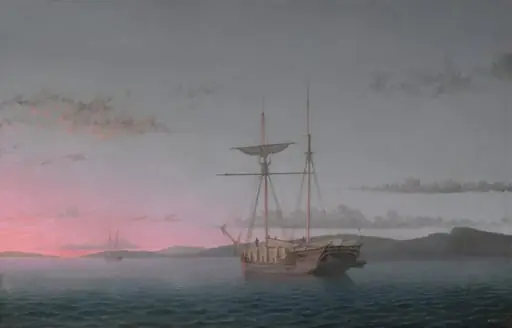
Fishing Party is an oil painting by the Hudson River School artist Fitz Henry Lane. It dates from 1850 and is held in the collection of the Museum of Fine Arts Boston.
About this work
Overview
The work belongs to the broader Hudson River School tradition, though it diverges in its focus on nocturnal calm rather than grand landscapes.
Fitz Henry Lane, born Nathaniel Rogers Lane, painted *Fishing Party* around 1850 in oil on canvas. The work belongs to the broader Hudson River School tradition, though it diverges in its focus on nocturnal calm rather than grand landscapes. It reflects Lane’s deep familiarity with the coastal environment of Gloucester, Massachusetts, where he lived and worked. The painting is now part of the Museum of Fine Arts, Boston’s permanent collection.
Subject & Meaning
The scene portrays a small boat carrying figures at rest under a full moon, their attention directed toward the horizon. No fishing activity is visible; instead, the moment emphasizes quiet contemplation. The absence of artificial light and the stillness of the water suggest a retreat from daily labor into solitude. The figures are incidental to the atmosphere, reinforcing the painting’s focus on nature’s quiet majesty rather than human narrative.
Technique & Style
Lane employed a luminist approach, using smooth brushwork and carefully graded tones to render the moon’s reflection on the water with exceptional clarity. The sky and sea are rendered in near-monochrome hues, with the moon serving as the sole source of illumination. Edges are softened, and details are minimized to enhance the sense of stillness. This technique avoids dramatic contrast, favoring subtle gradations that evoke a meditative mood.
History & Provenance
Created during Lane’s mature period, *Fishing Party* emerged from his sustained engagement with coastal New England. It was likely painted in his Gloucester studio, informed by direct observation and possibly sketches made at night. The painting entered the Museum of Fine Arts, Boston’s collection in the early 20th century, where it has remained since, representing Lane’s contribution to American landscape painting beyond his more famous daylight scenes.
Context
In mid-19th-century America, coastal scenes like this reflected growing interest in the relationship between humans and nature, particularly in regions undergoing industrial change. While the Hudson River School often celebrated wilderness, Lane’s nocturnal works like this one offered a quieter, more introspective vision. The absence of industry or human disruption underscores a cultural longing for tranquility amid rapid modernization.
Legacy
Though less widely known than his daylight harbor paintings, *Fishing Party* exemplifies Lane’s unique ability to convey stillness through light and atmosphere. It influenced later American artists interested in mood over narrative, and remains a key example of luminism’s capacity to evoke emotional resonance through minimal means. Its quiet power continues to inform interpretations of American landscape art beyond grandeur and spectacle.
Own this work as a print
Artist & collection
Artist
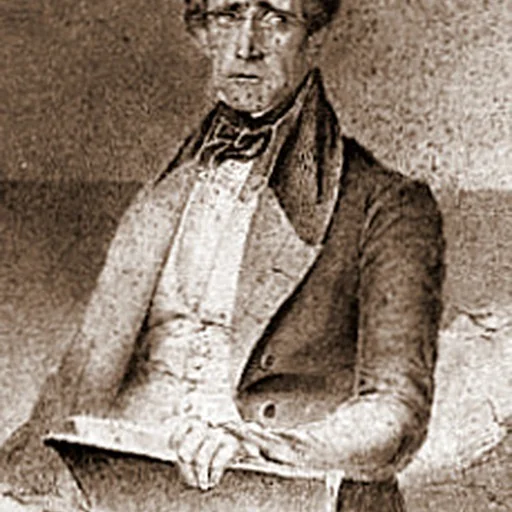
Fitz Henry Lane (born Nathaniel Rogers Lane; also formerly, mistakenly, known as Fitz Hugh Lane; December 19, 1804 – August 14, 1865) was an American painter and printmaker of a style that would later be called Luminism, for its use of…

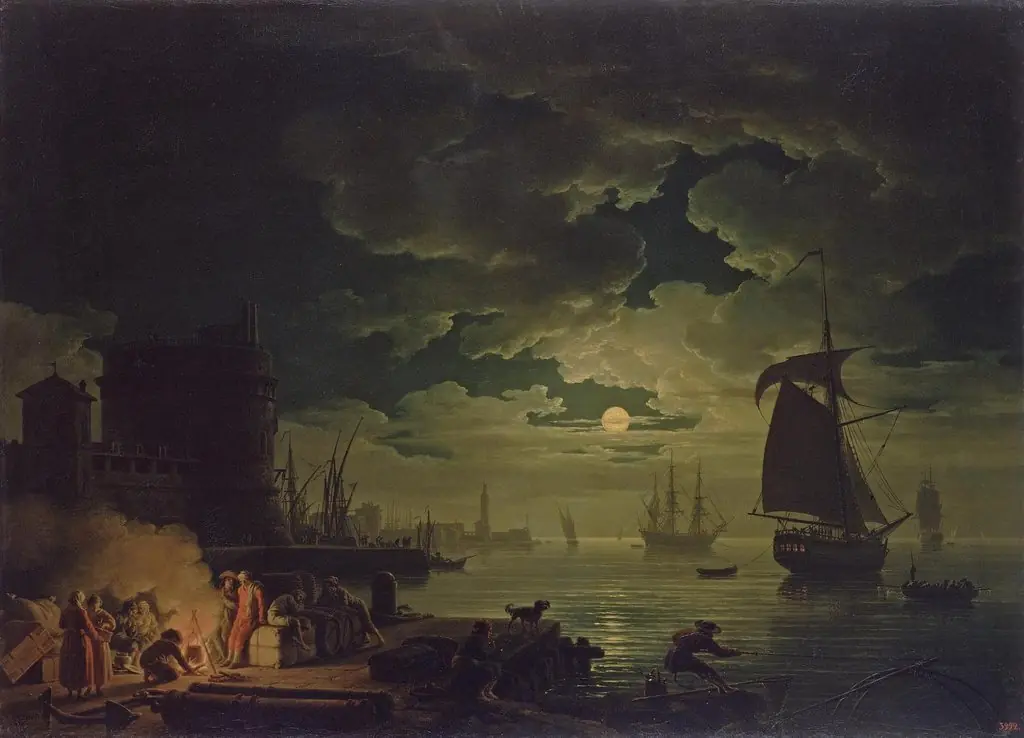 Entrance to the Port of Palermo by Moonlight
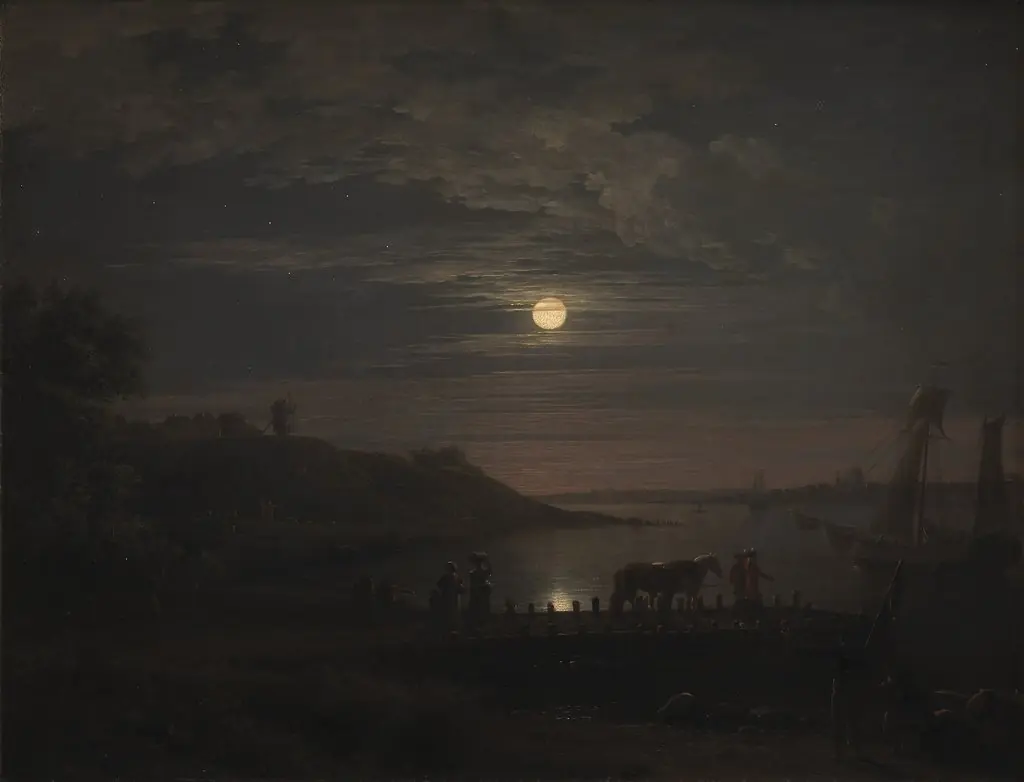 The Crossing over the Little Belt at Snoghøj. Moonrise
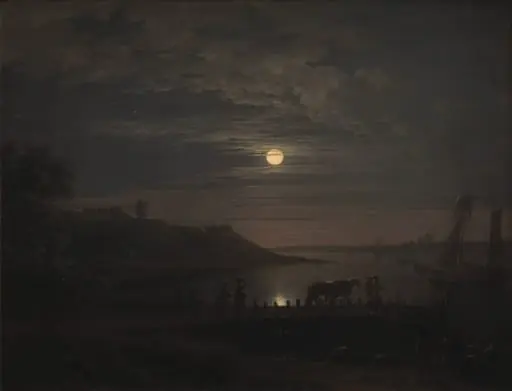 The Crossing over the Little Belt at Snoghøj. Moonrise
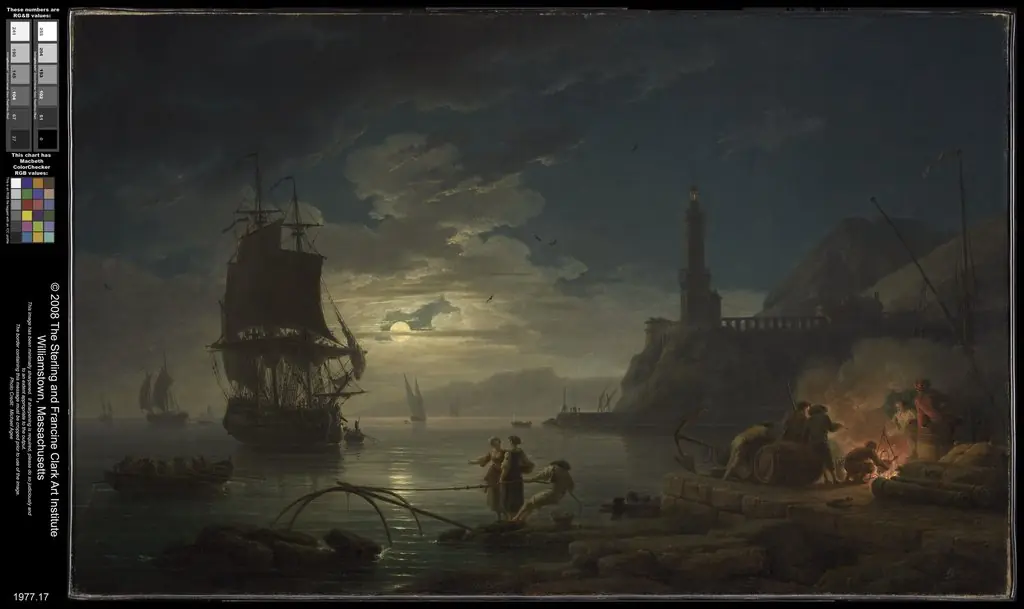 Coastal Scene in Moonlight
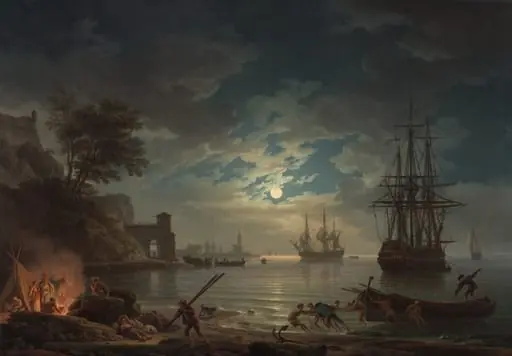 Moonlight
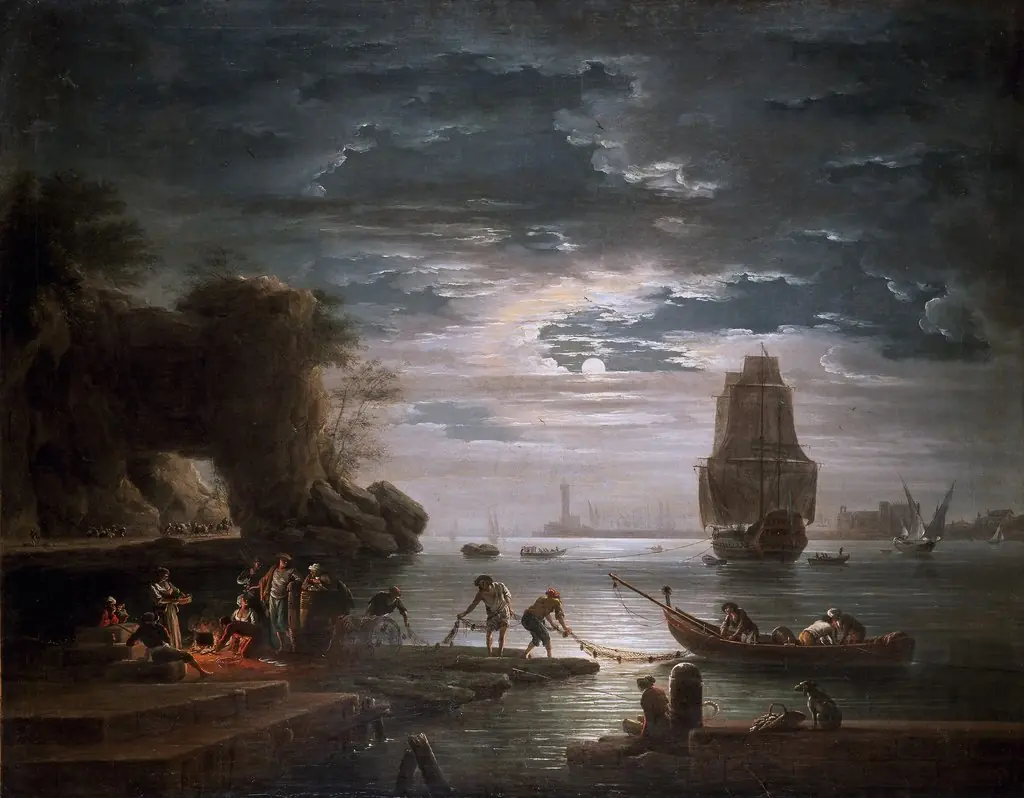 The Night
 Moonlight
 Fishing port at dawn (Morning)
 Coastal Landscape with Fishermen
 Moonlit river landscape
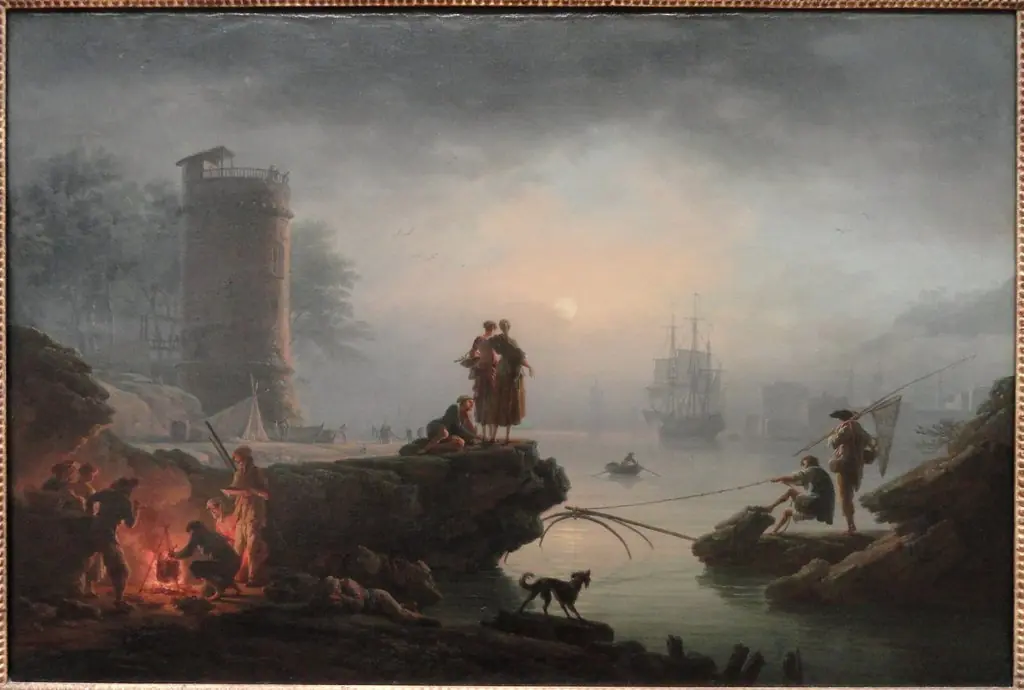 Morning
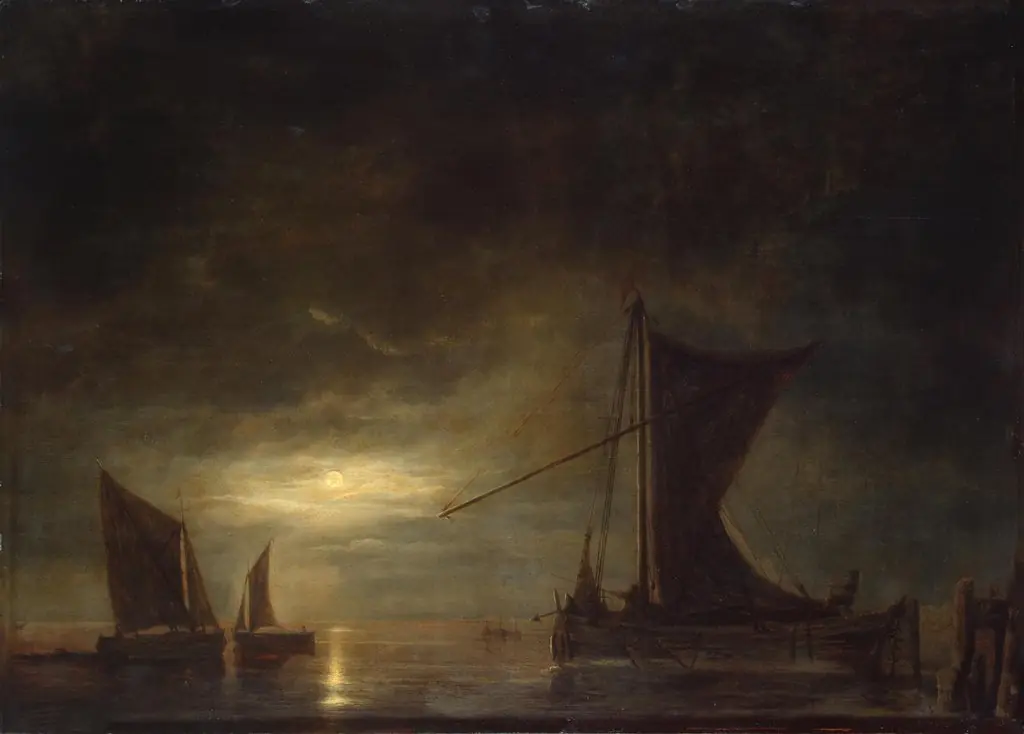 Sea by Moonlight