Artwork
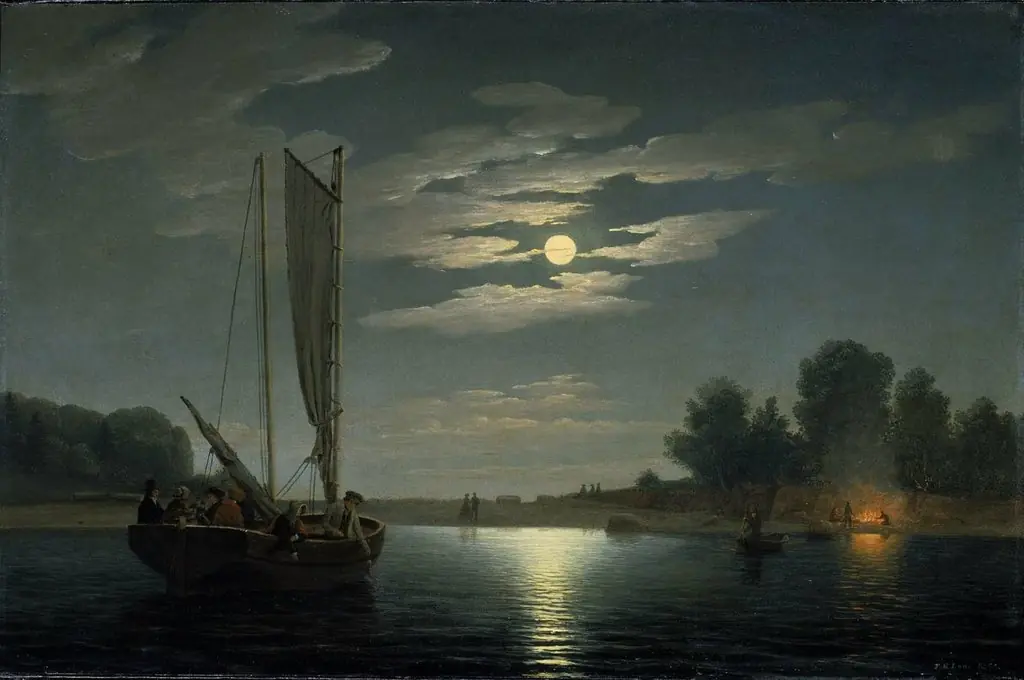
The Crossing over the Little Belt at Snoghøj. Moonrise
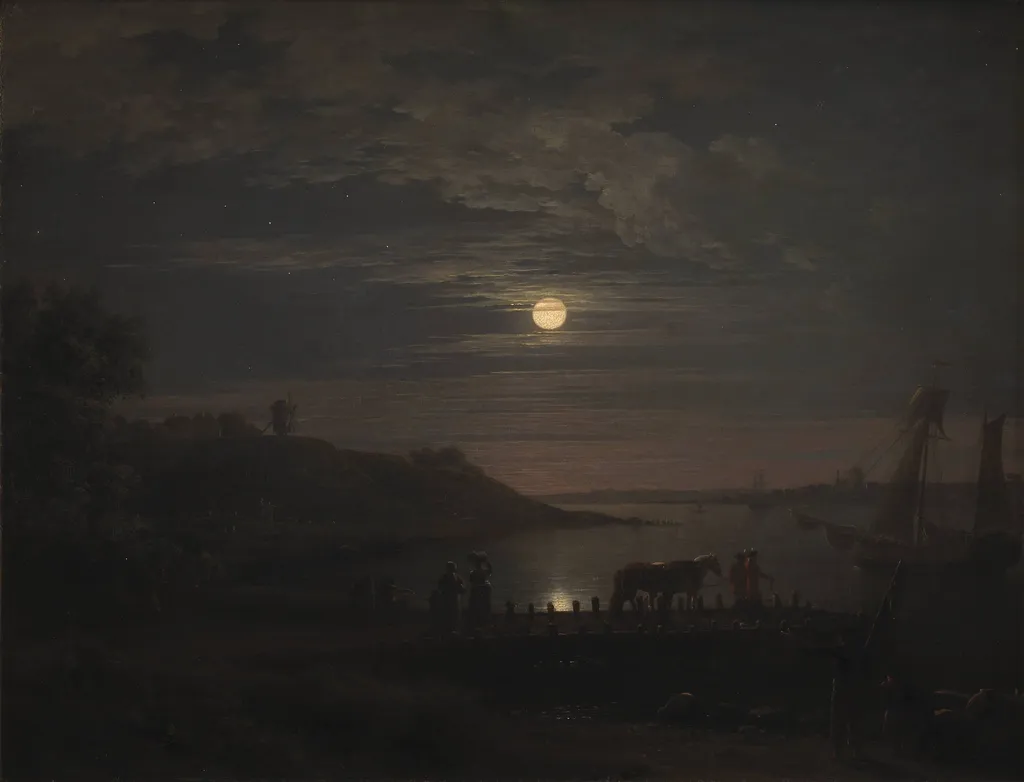
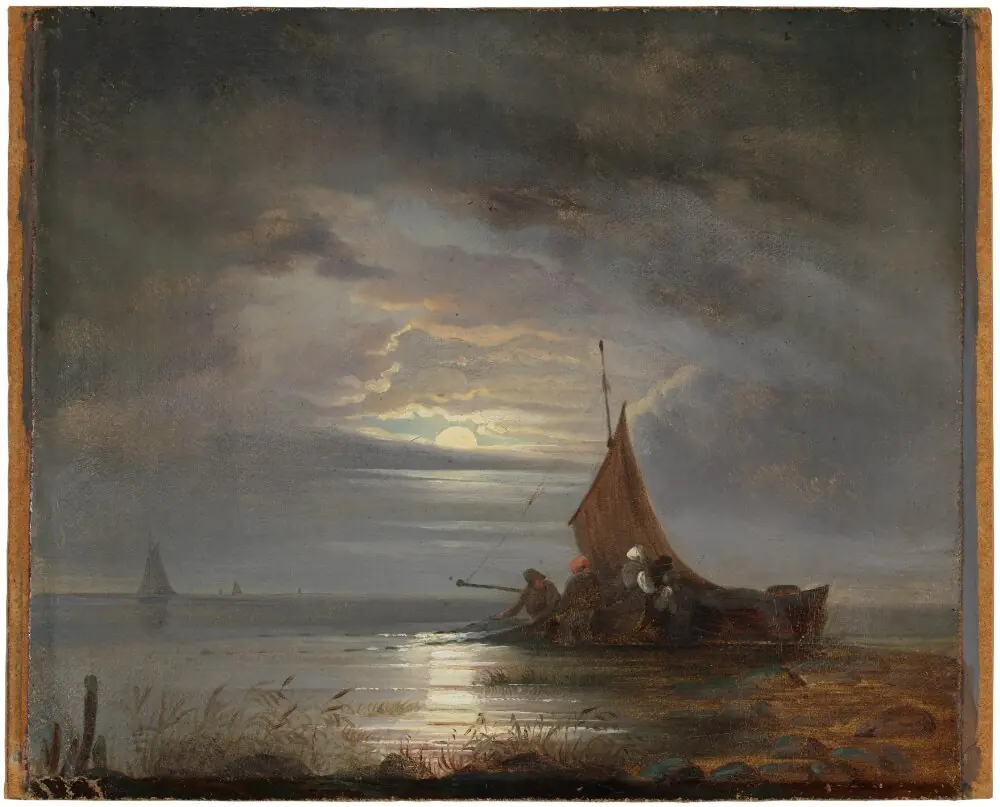
The Crossing over the Little Belt at Snoghøj. Moonrise is a photography by the Romanticist artist Unknown. It dates from 1787 and is held in the collection of the Statens Museum for Kunst. Painted in 1787, this work depicts a quiet moment at Snoghøj along the Little Belt, where moonlight bathes the water and shoreline.
About this work
Overview
It resides today in the Museum of Ethnography, where its quiet composition contrasts with the institution’s broader ethnographic focus.
Painted in 1787, this work depicts a quiet moment at Snoghøj along the Little Belt, where moonlight bathes the water and shoreline. The scene captures a small group of figures near the water’s edge, accompanied by a solitary horse. Though the artist’s identity is recorded as 1092_person, the painting’s attribution remains tied to archival records rather than established biographical detail. It resides today in the Museum of Ethnography, where its quiet composition contrasts with the institution’s broader ethnographic focus.
Subject & Meaning
The scene portrays a moment of stillness between travel and rest, suggesting a crossing in progress under lunar light. The figures, neither engaged in overt action nor clearly identifiable by dress or role, evoke anonymity and universality. The horse, poised but not moving, reinforces a pause in motion. The absence of narrative detail invites contemplation rather than storytelling, aligning with a contemplative, pre-Romantic sensibility focused on nature’s quiet presence.
Technique & Style
The painting employs subtle chiaroscuro to model form and space, with the moon’s glow diffusing across the water and land in soft gradients. Darker tones frame the illuminated areas, enhancing depth without dramatic contrast. Brushwork is restrained, favoring atmospheric blending over detail. The effect is one of calm luminosity, where light functions not as spectacle but as a quiet unifier of the landscape and its minimal human presence.
History & Provenance
The work entered the Museum of Ethnography’s collection in the late 19th century, though its earlier ownership is undocumented. Its presence there—rather than in a fine arts institution—suggests it may have been acquired as an ethnographic record of regional life, despite its lack of cultural specificity. No exhibition or publication history from the 18th or early 19th centuries is known, and its survival appears to rely on institutional preservation rather than contemporary acclaim.
Context
Created during a period when Nordic artists increasingly turned to local landscapes and nocturnal scenes, the painting reflects a growing interest in nature’s emotional resonance. While not overtly aligned with later Romanticism, its emphasis on mood and lunar atmosphere anticipates trends emerging in Denmark and Germany. It stands apart from grand historical or mythological subjects, instead valuing the ordinary moment under natural light.
Legacy
The painting remains a quiet example of late 18th-century Nordic landscape observation. It has not been widely reproduced or studied, and its influence on later artists is unrecorded. Its significance lies in its restraint and atmospheric precision, offering a glimpse into how everyday scenes were rendered with contemplative care before the full rise of Romantic idealism.
Artist & collection

 Domestic Scene
 Giacomo and Cardinal Marco, investing Andrea, Abbot of San Zeno, with his Benefice
 The Nymph of Fontainebleau
 Portrait of a Woman
 Madonna and Child with Saints in the Enclosed Garden
 Venus and Minerva
 Family Group of Four on Sofa
 Wall painting from Room H of the Villa of P. Fannius Synistor at Boscoreale