Artwork
Triptych with Adoration of the Magi
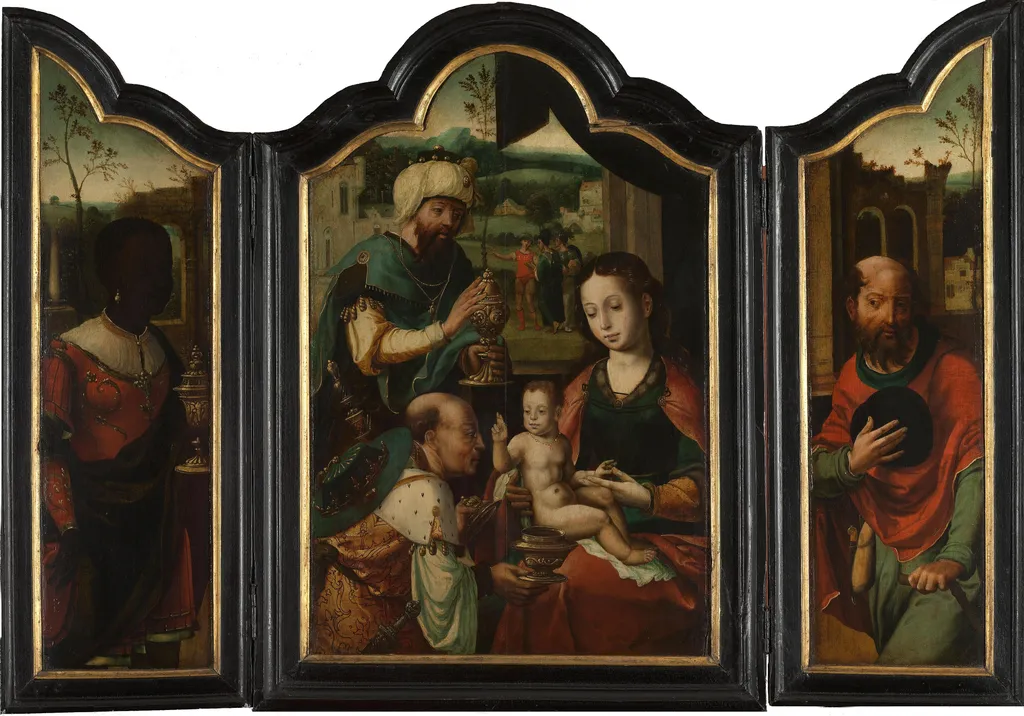
Triptych with Adoration of the Magi is an oil painting. It dates from 1550 and is held in the collection of the Rijksmuseum.
About this work
Overview
This oil on panel triptych, titled Triptych with Adoration of the Magi, dates to approximately 1530. It was produced by the workshop of the Flemish artist Pieter Coecke van Aelst and depicts the Nativity scene, specifically the Adoration of the Magi. The multi-panel artwork is currently housed in the collection of the Rijksmuseum in Amsterdam.
Subject & Meaning
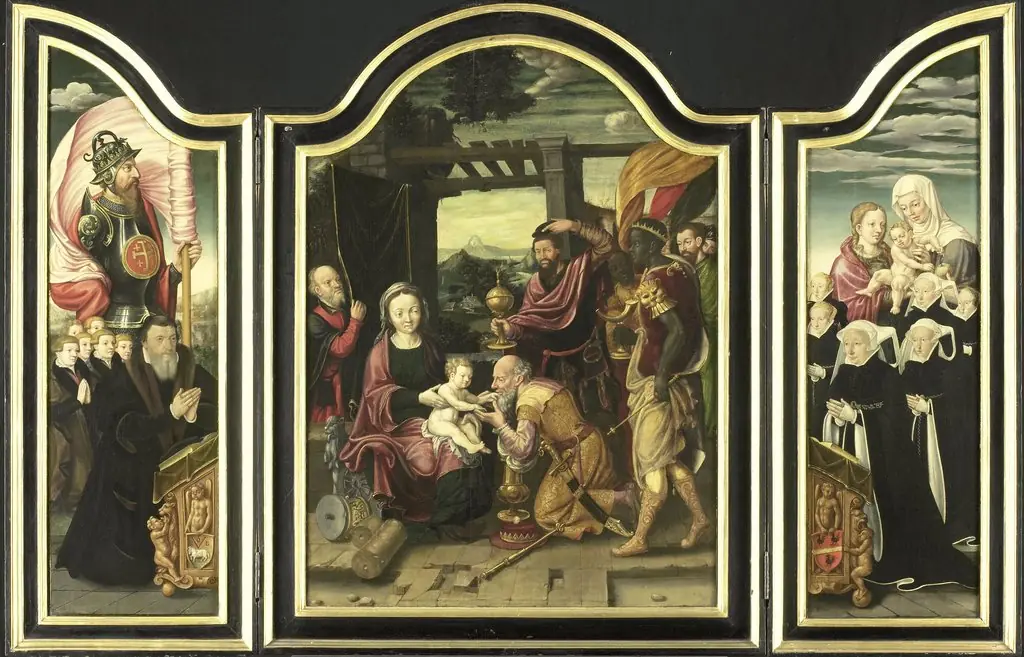
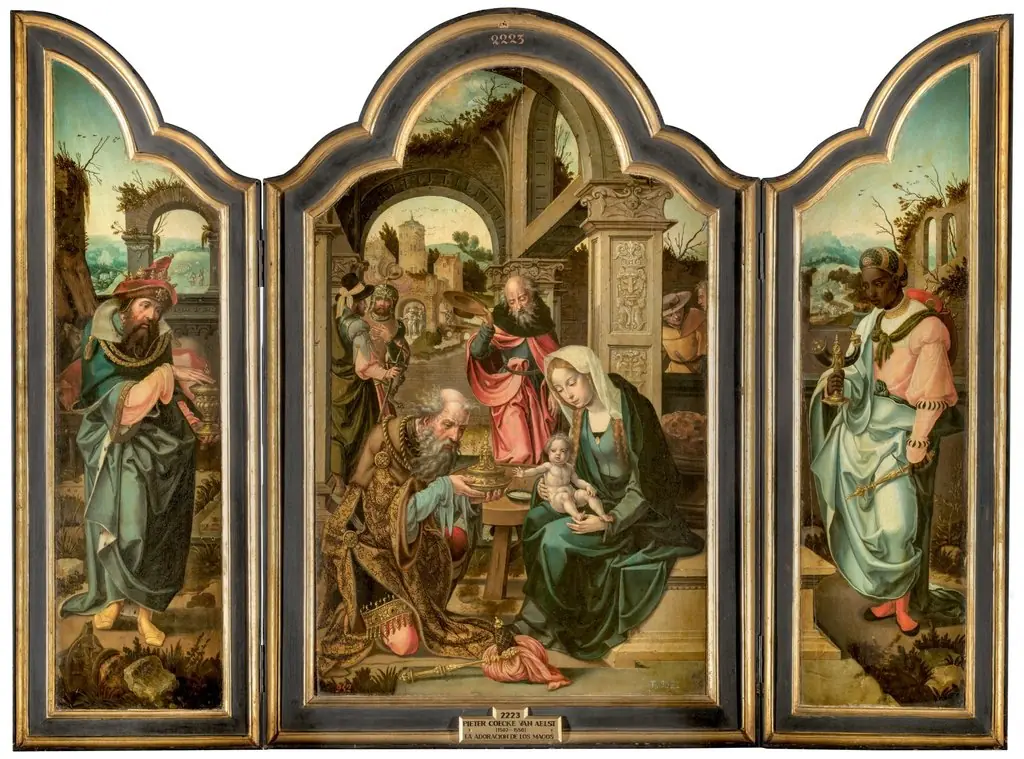
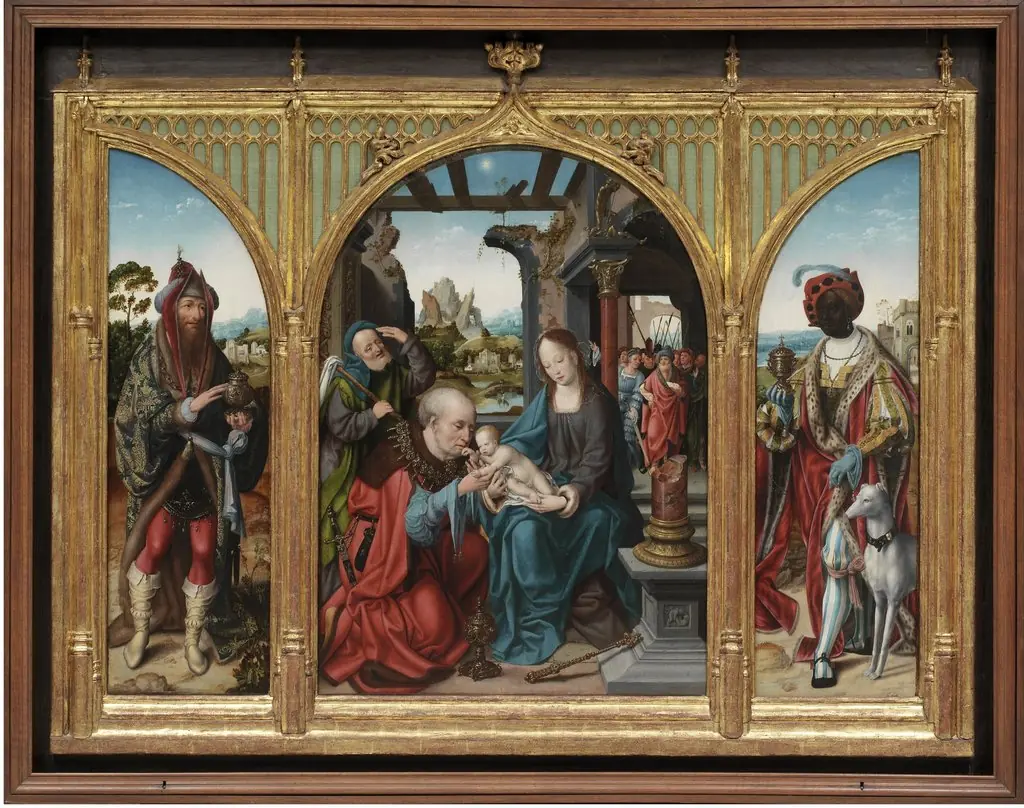
The central panel of the triptych illustrates the biblical Adoration of the Magi, where three kings present gifts to the infant Jesus, held by the Virgin Mary.
The central panel of the triptych illustrates the biblical Adoration of the Magi, where three kings present gifts to the infant Jesus, held by the Virgin Mary. One king kneels, offering a golden vessel, while others are positioned on the side panels, also bearing offerings. The scene conveys reverence and the recognition of Christ's divinity by the Gentile world, set against a backdrop featuring a small town and natural elements.
Technique & Style
Executed in oil paint on wooden panels, this triptych format allowed for a narrative presentation across three distinct yet connected scenes. The palette employs bright, yet subdued, colors reminiscent of aged textiles, contributing to a sense of historical depth. The composition utilizes light and shadow to define forms and create spatial recession, a characteristic approach in Flemish painting of the period. The detailed rendering of figures and their elaborate attire reflects the workshop's meticulous craftsmanship.
History & Provenance
Created around 1530, this painting emerged from the active workshop of Pieter Coecke van Aelst, a prominent Flemish painter, draftsman, and designer of tapestries and stained glass. The production by a workshop indicates a collaborative effort, common for significant commissions of the era. The Triptych with Adoration of the Magi is now part of the permanent collection at the Rijksmuseum in Amsterdam, where it represents a significant example of early 16th-century Northern European religious art.
Artist & collection