Artwork
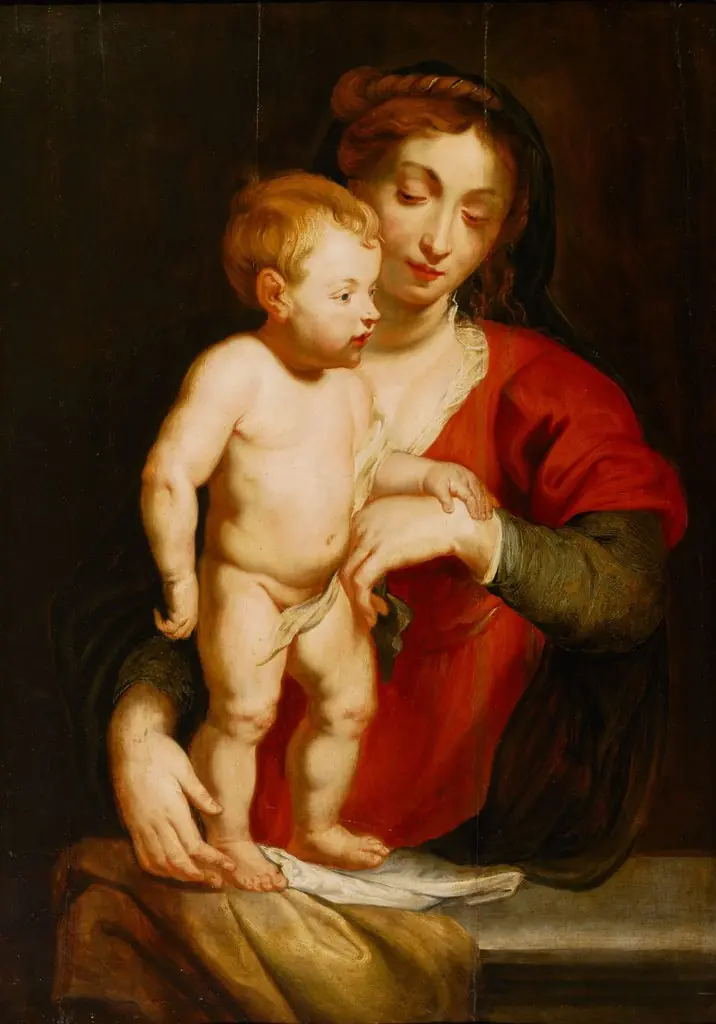
Virgin and child
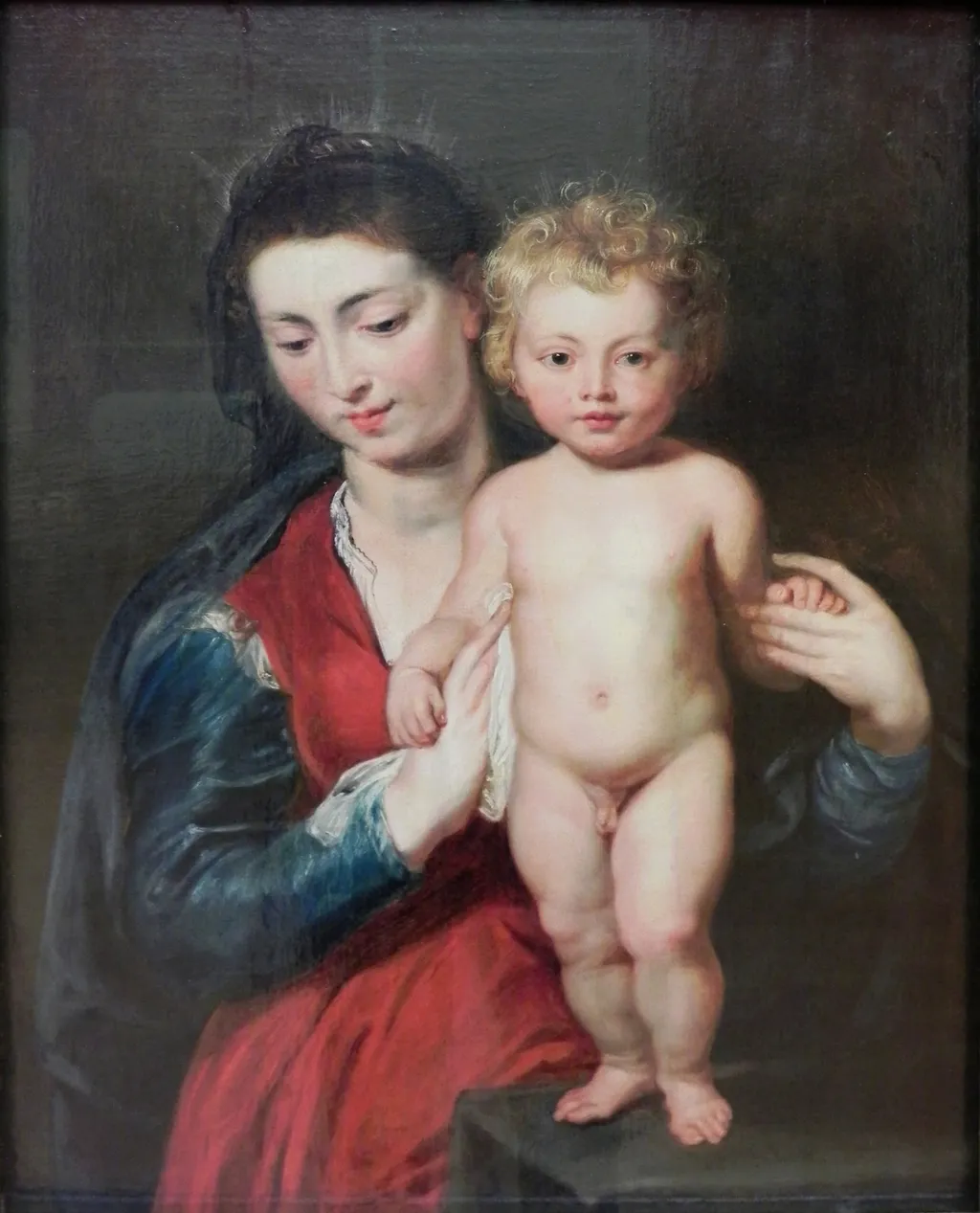
Virgin and child is an oil painting by the Flemish Baroque painting artist Peter Paul Rubens. It dates from 1630 and is held in the collection of the Hermitage Museum.
About this work
Overview
Created in 1630 by the Flemish painter and diplomat Peter Paul Rubens, this oil painting presents a seated Virgin with the infant Jesus. The composition is dominated by a deep, almost black background that isolates the figures, allowing their forms and colors to stand out sharply. The work is part of the State Hermitage Museum’s collection in St. Petersburg.
Subject & Meaning
The image portrays the traditional Christian theme of the Madonna and Child, with the mother rendered in a rich red garment and the newborn Christ cradled on her lap. The serene expression on the Virgin’s face and the direct gaze of the child convey a sense of intimate devotion, reflecting the Counter‑Reformation emphasis on personal piety and the humanity of holy figures.
Technique & Style
Rubens employs the Baroque hallmark of dramatic chiaroscuro, using a stark contrast between the illuminated figures and the surrounding darkness to model volume and convey depth. The luminous flesh tones of the infant juxtapose with the saturated red of the Virgin’s dress, while soft shadows under the eyes and around the folds of fabric reveal Rubens’s skill in rendering texture and light.
History & Provenance
Executed during the later phase of Rubens’s career, the painting exemplifies his mature Baroque style. After changing hands among private collectors, it entered the State Hermitage Museum, where it remains on display as a representative example of Flemish religious art from the early 17th century.
Own this work as a print
Artist & collection
Artist
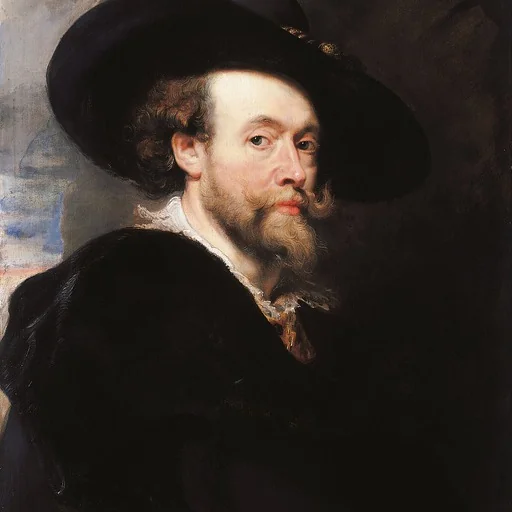
Sir Peter Paul Rubens ( ROO-bənz; Dutch: ; 28 June 1577 – 30 May 1640) was a Flemish artist and diplomat.