Artwork
Durga
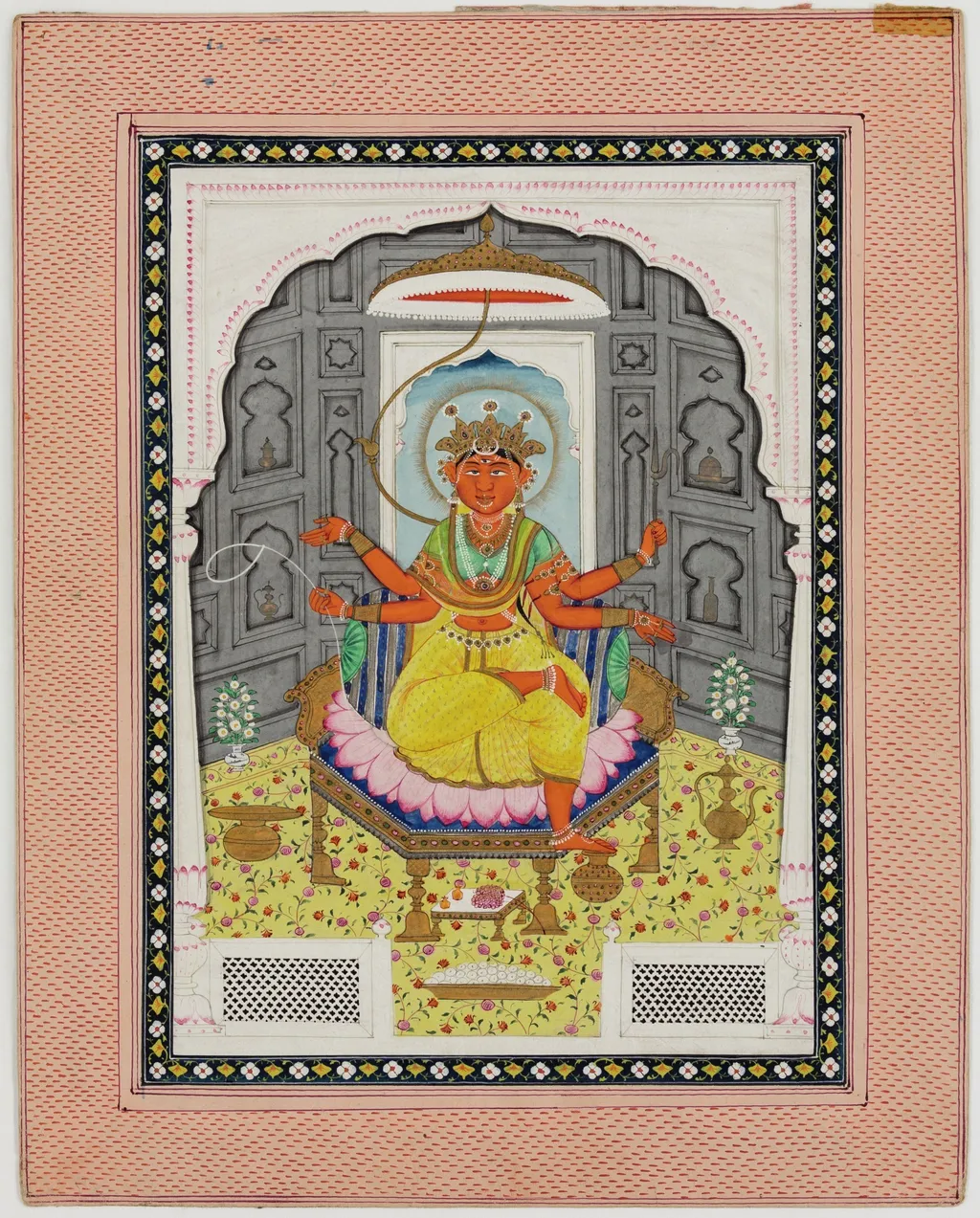
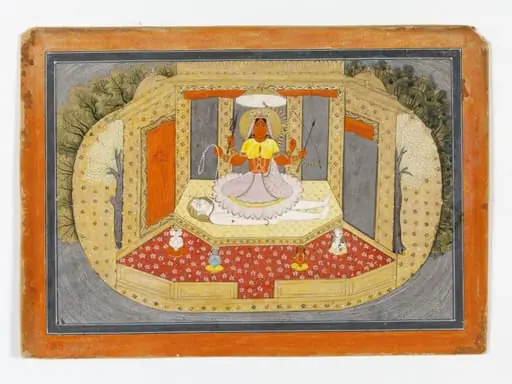
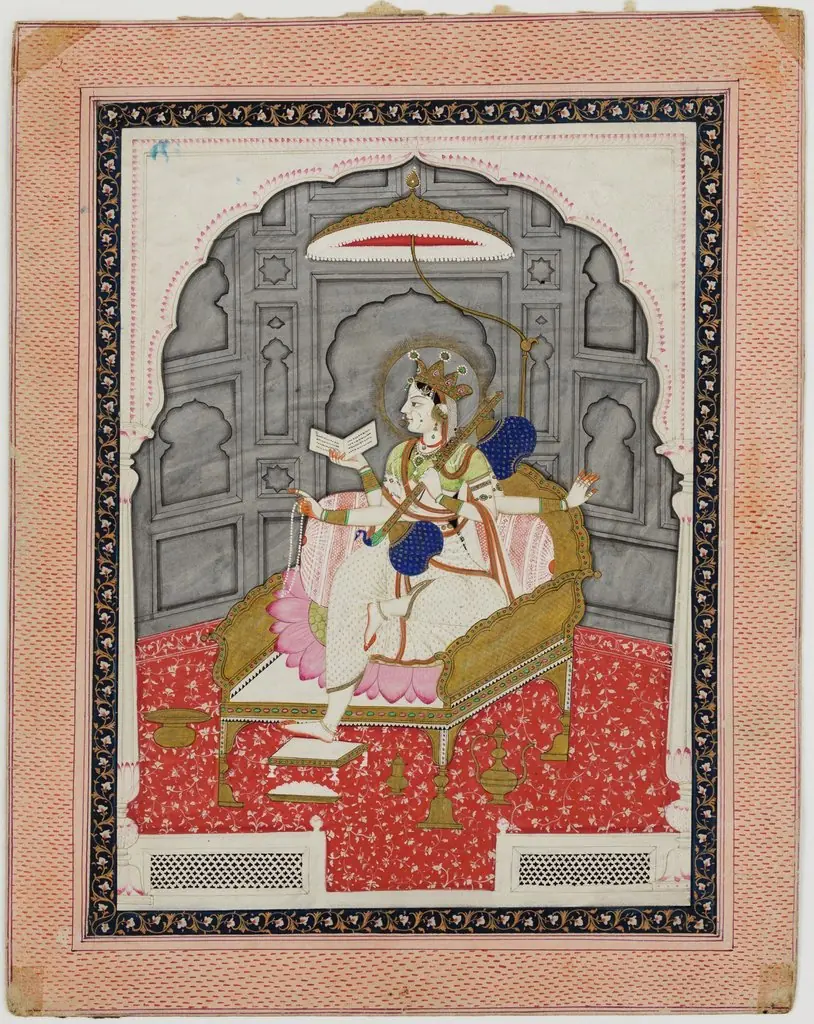
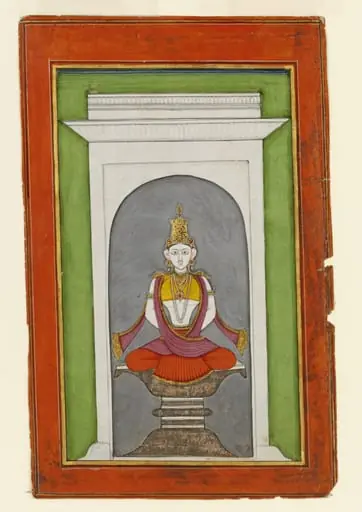
Durga is an unspecified painting by Unknown. It dates from 1800 and is held in the collection of the Detroit Institute of Arts. The work portrays a seated female deity on an ornate throne, crowned and surrounded by a luminous halo.
About this work
Overview
The work portrays a seated female deity on an ornate throne, crowned and surrounded by a luminous halo. Her attire consists of a yellow skirt and a green upper garment, while the throne is embellished with blue and gold detailing. The setting includes a gray stone wall with elaborate carvings and a floor patterned with yellow floral motifs, conveying a composed and refined ambience.
Subject & Meaning
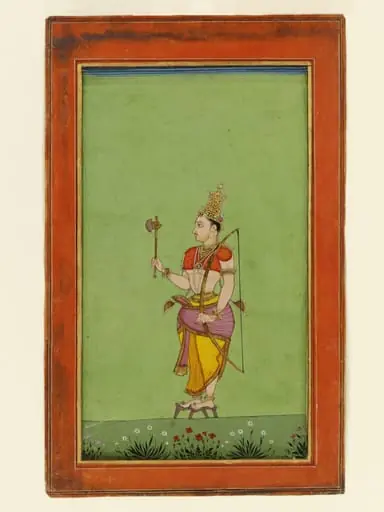
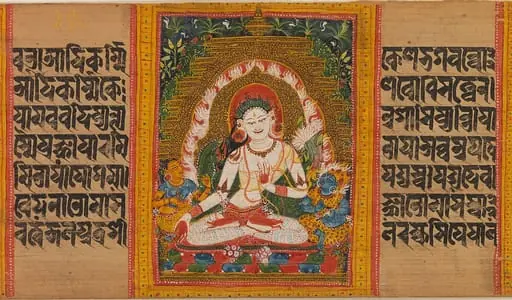
The figure represents the Hindu goddess Durga, identified by her multiple arms and the assortment of symbolic objects she holds, each denoting aspects of power, protection, and divine authority. The crown and halo emphasize her celestial status, while the serene pose reflects her role as a benevolent protector.
Technique & Style
Rendered in a realistic yet stylized manner, the painting employs a balanced palette of vibrant yellows, greens, blues, and golds against muted gray stone. Fine brushwork delineates the intricate wall carvings and the floral floor design, while the halo is achieved through subtle glazing to suggest a radiant aura.
History & Provenance
The piece originates from a contemporary Indian artist who draws on traditional iconography while employing modern studio practices. It entered the museum’s collection through a donation from a private patron in the early 2000s, having previously been exhibited in regional galleries focusing on devotional art.
Context
Durga, a central figure in Hindu mythology, is frequently depicted in multi‑armed forms to illustrate her capacity to combat evil. This painting aligns with a long lineage of visual representations that blend ritual symbolism with secular artistic conventions, reflecting ongoing cultural reverence.
Legacy
The work contributes to the broader dialogue on the reinterpretation of mythological subjects in contemporary visual culture. It is cited in scholarly discussions on the adaptation of traditional religious motifs within modern artistic frameworks, influencing subsequent depictions of divine femininity.
Artist & collection

 Domestic Scene
 Giacomo and Cardinal Marco, investing Andrea, Abbot of San Zeno, with his Benefice
 The Nymph of Fontainebleau
 Portrait of a Woman
 Madonna and Child with Saints in the Enclosed Garden
 Venus and Minerva
 Family Group of Four on Sofa
 Wall painting from Room H of the Villa of P. Fannius Synistor at Boscoreale