Artwork
Kali on the prostrate body of Shiva
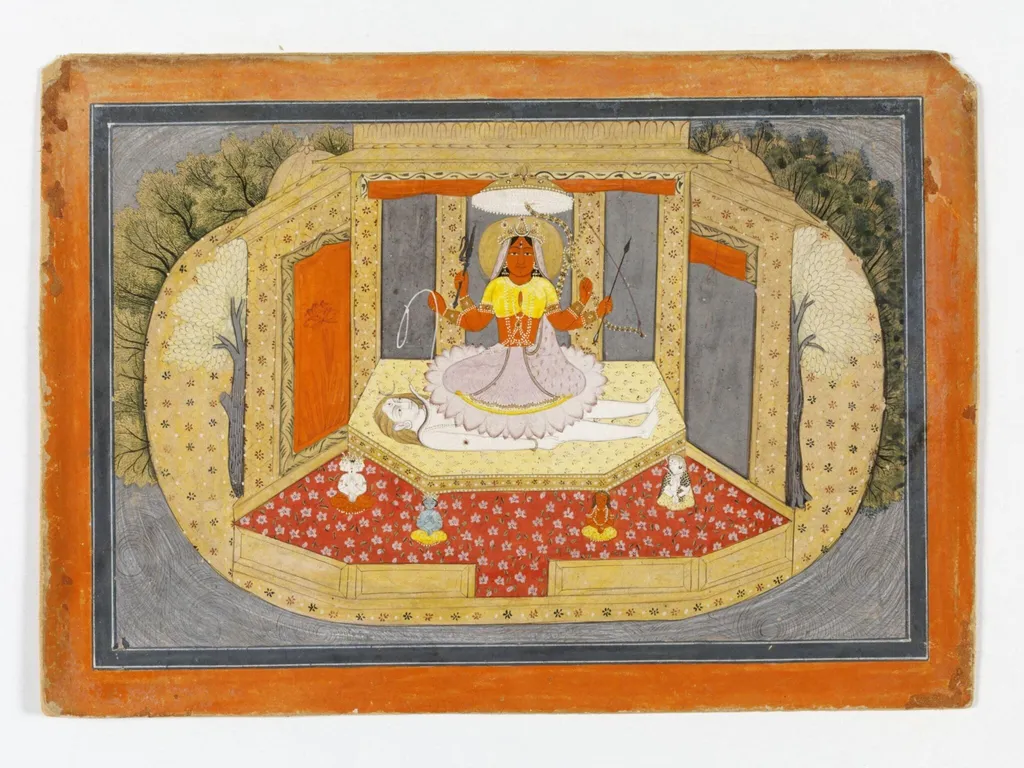
Kali on the prostrate body of Shiva is a paint painting by the Romanticist artist Unknown. It dates from 1825 and is held in the collection of the Victoria and Albert Museum.
About this work
Overview
The work portrays the Hindu deity Kali, shown with a reddish complexion and four arms, seated upon a lotus throne that rests on the recumbent form of Shiva. Rendered in opaque watercolour on paper, the composition is set inside an interior that suggests a palace, with a glimpse of an exterior landscape beyond the doorway.
Subject & Meaning
Kali, depicted with a darkened face, crown, and elaborate jewelry, holds a variety of symbolic objects in her four hands while a white cloth drapes over her head. Shiva lies beneath her, his eyes closed and body relaxed, embodying the mythic motif of the goddess triumphing over the inert divine principle.
Technique & Style
The artist employed opaque watercolour, allowing for vivid, flat areas of colour such as the red skin of Kali, the white body of Shiva, and the yellow‑toned background adorned with red and white floral motifs. The use of a lotus throne and a richly patterned red carpet adds decorative depth to the flat pictorial space.
Context
The scene draws on a well‑known Hindu narrative in which Kali, the fierce aspect of the divine feminine, is shown atop Shiva, symbolising the dynamic interplay of creation and destruction. The palace‑like setting and surrounding foliage reflect traditional Indian artistic conventions for divine encounters.
History & Provenance
Created as a painting on paper, the piece is executed in the opaque watercolour technique typical of certain South Asian manuscript and panel traditions. Further details of its ownership history or dating are not provided in the available information.
Artist & collection

 Domestic Scene
 Giacomo and Cardinal Marco, investing Andrea, Abbot of San Zeno, with his Benefice
 The Nymph of Fontainebleau
 Portrait of a Woman
 Madonna and Child with Saints in the Enclosed Garden
 Venus and Minerva
 Family Group of Four on Sofa
 Wall painting from Room H of the Villa of P. Fannius Synistor at Boscoreale
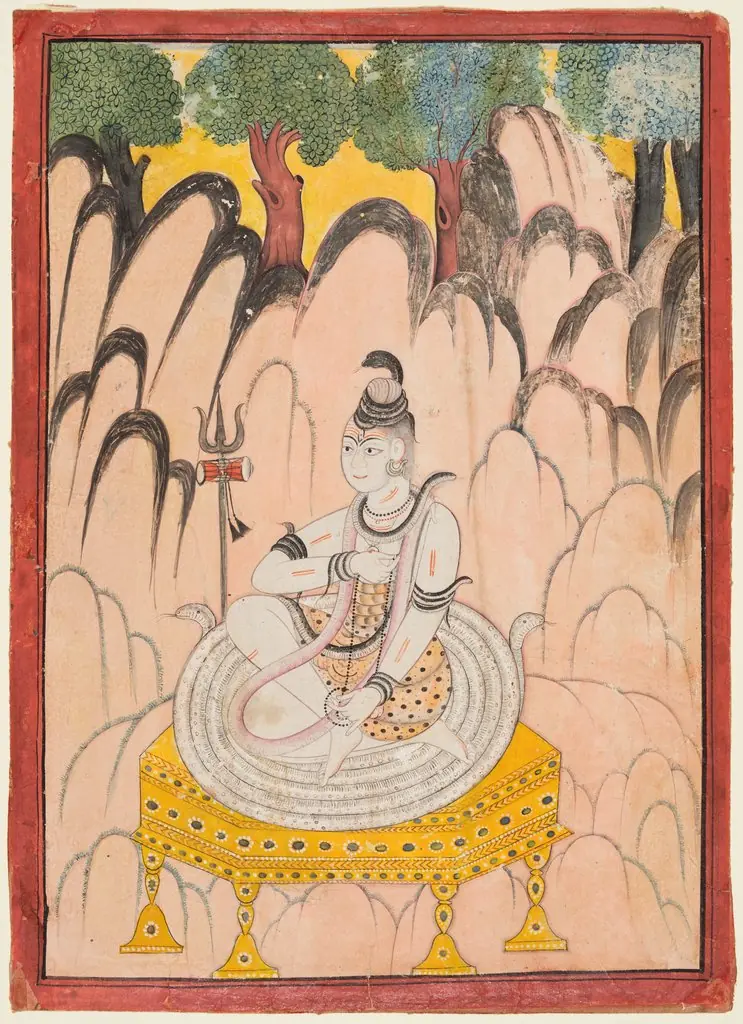 Shiva Seated on a Throne in a Landscape
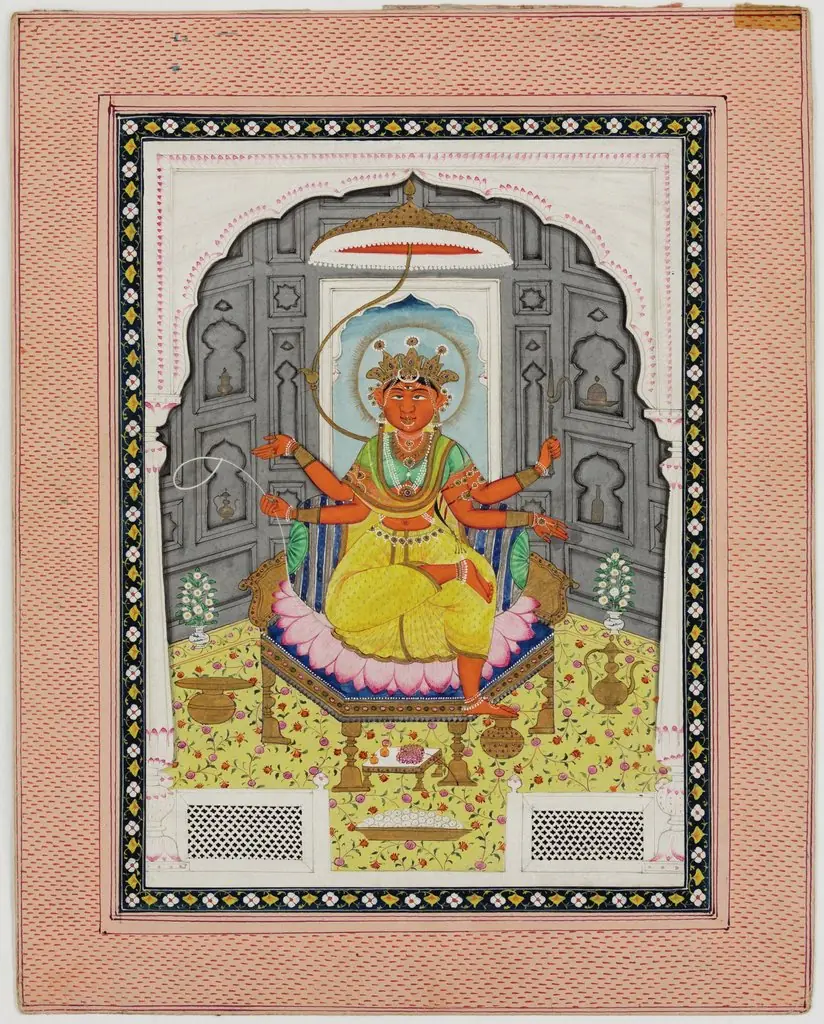 Durga
Durga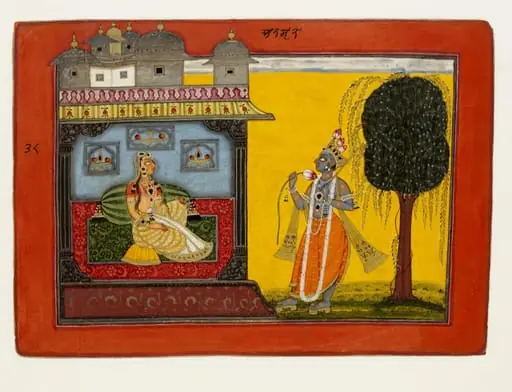 Krishna and Radha
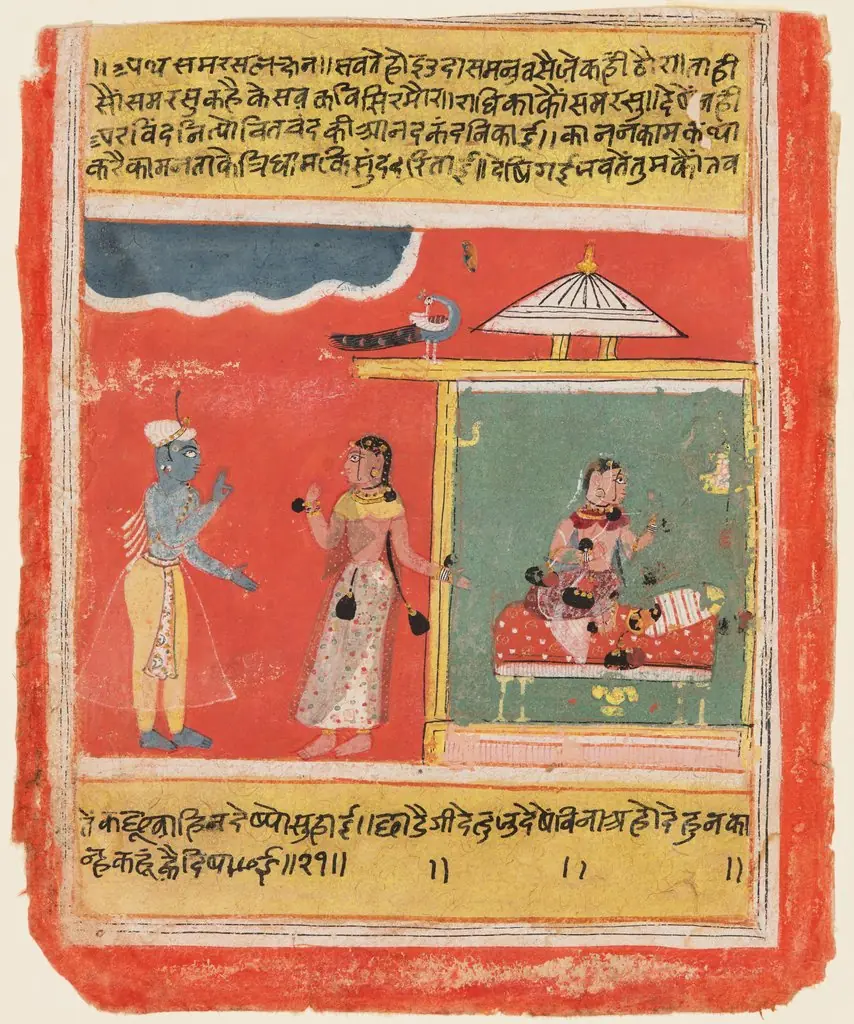 The Sentiment of Peace: Sama Rasa, from a Rasikapriya
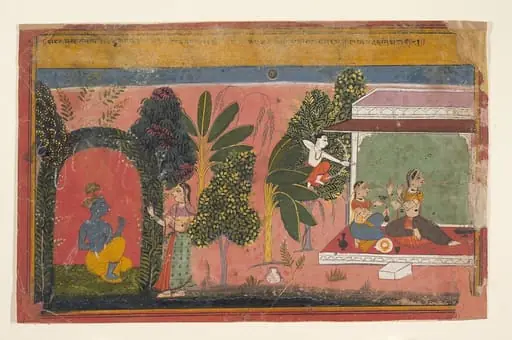 Untitled
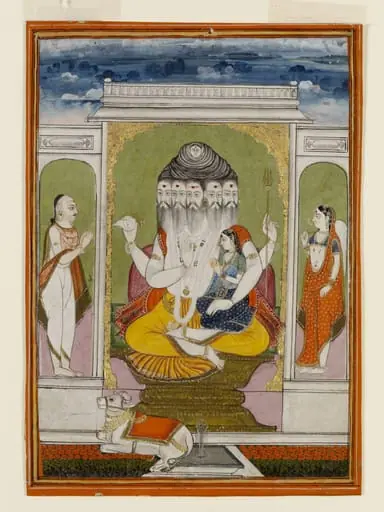 Shiva, Parvati and Nandi
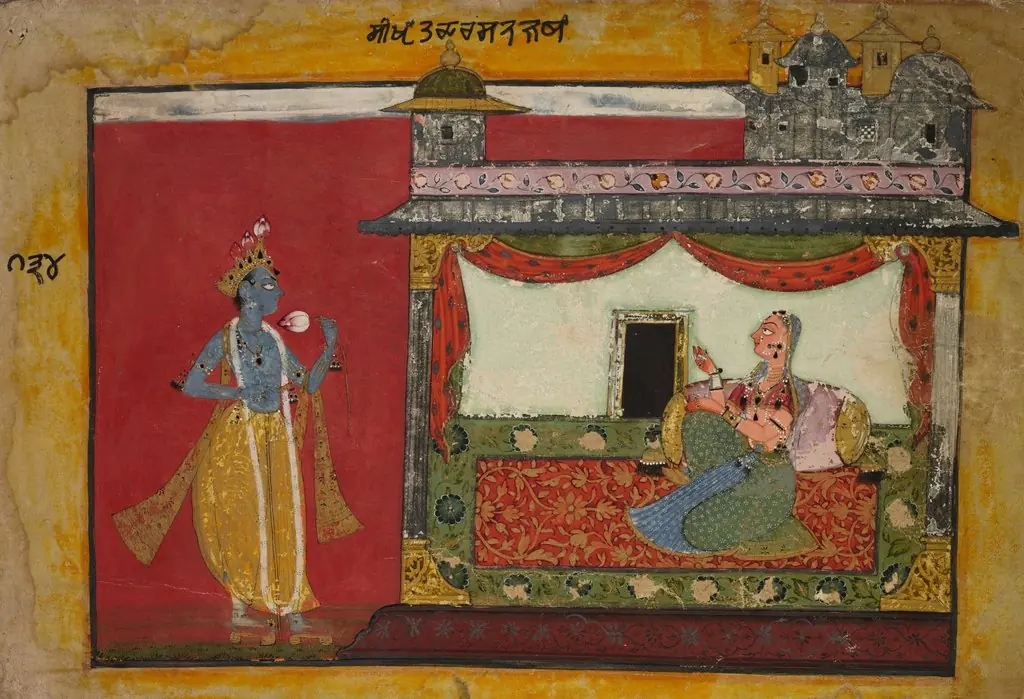 The Approach of Krishna. Page from a Rasamanjari
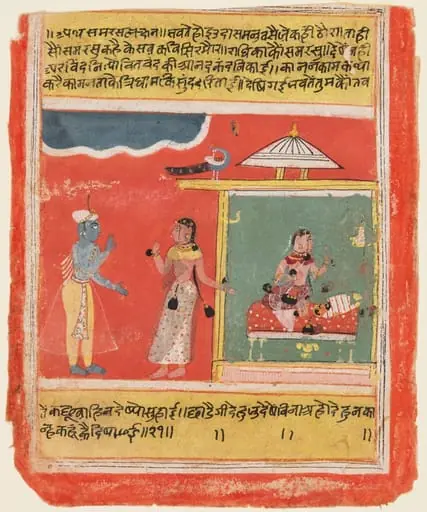 The Sentiment of Peace: Sama Rasa, from a Rasikapriya
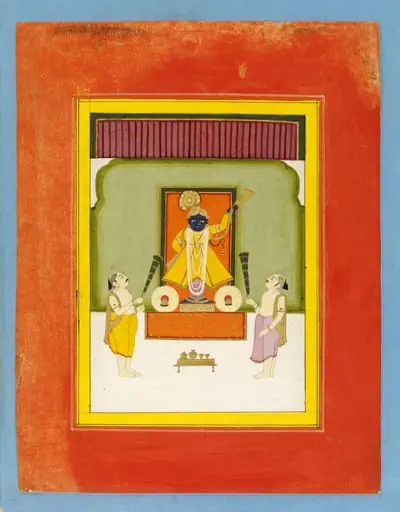 Sri Nathji
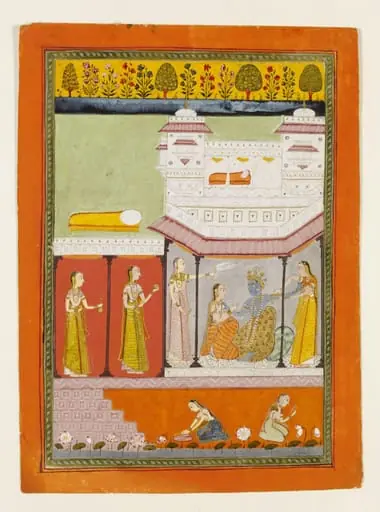 Bhairava Raga
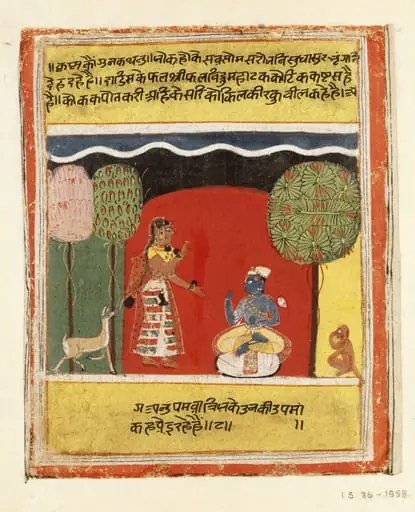 Radha and Krishna
 Krishna and Radha