Artwork
The Sacred Face of Christ (Vera Icon)
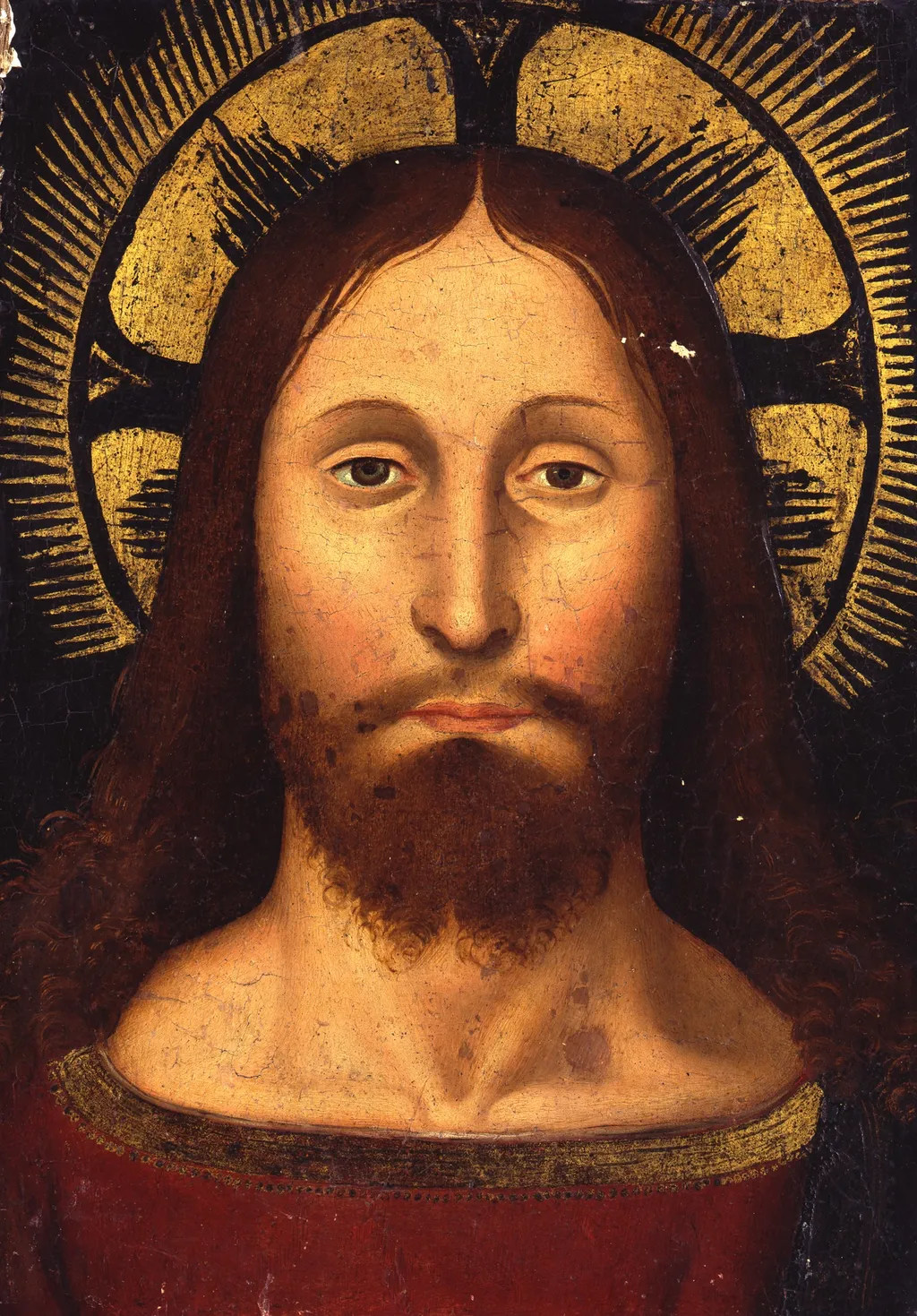
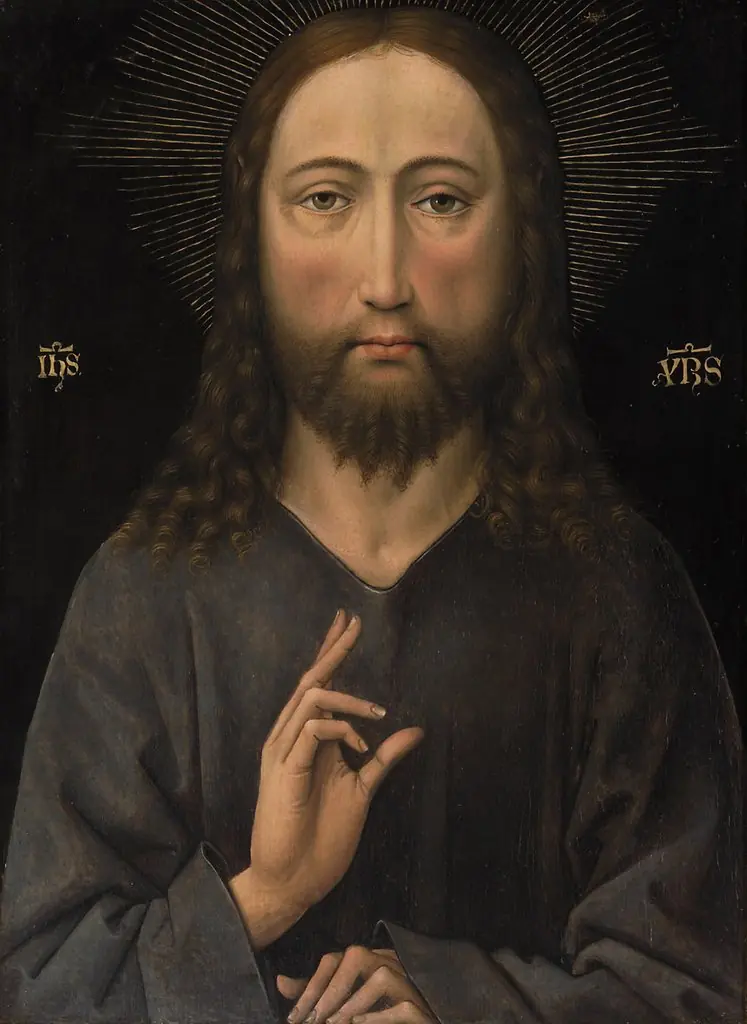
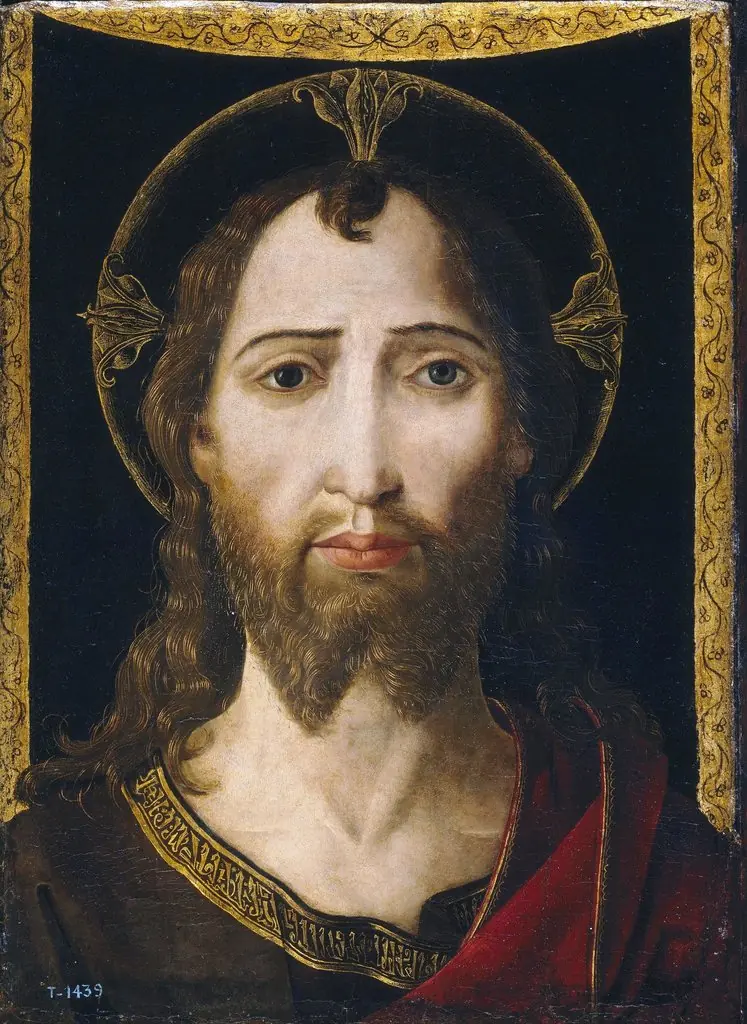
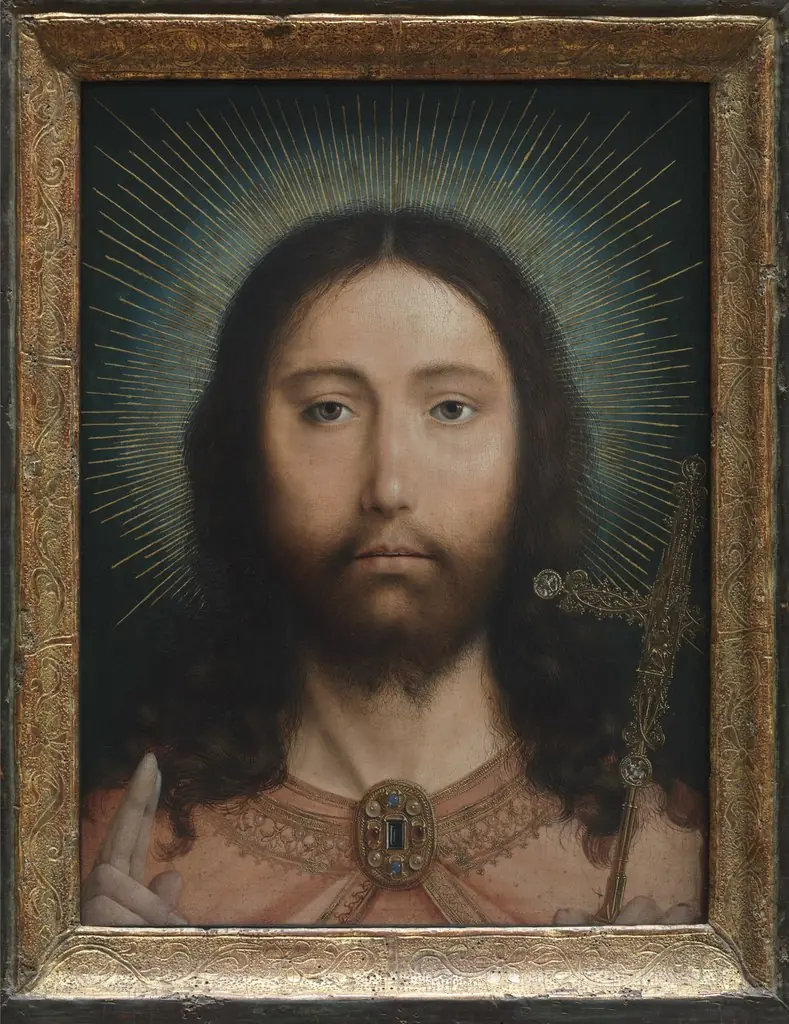
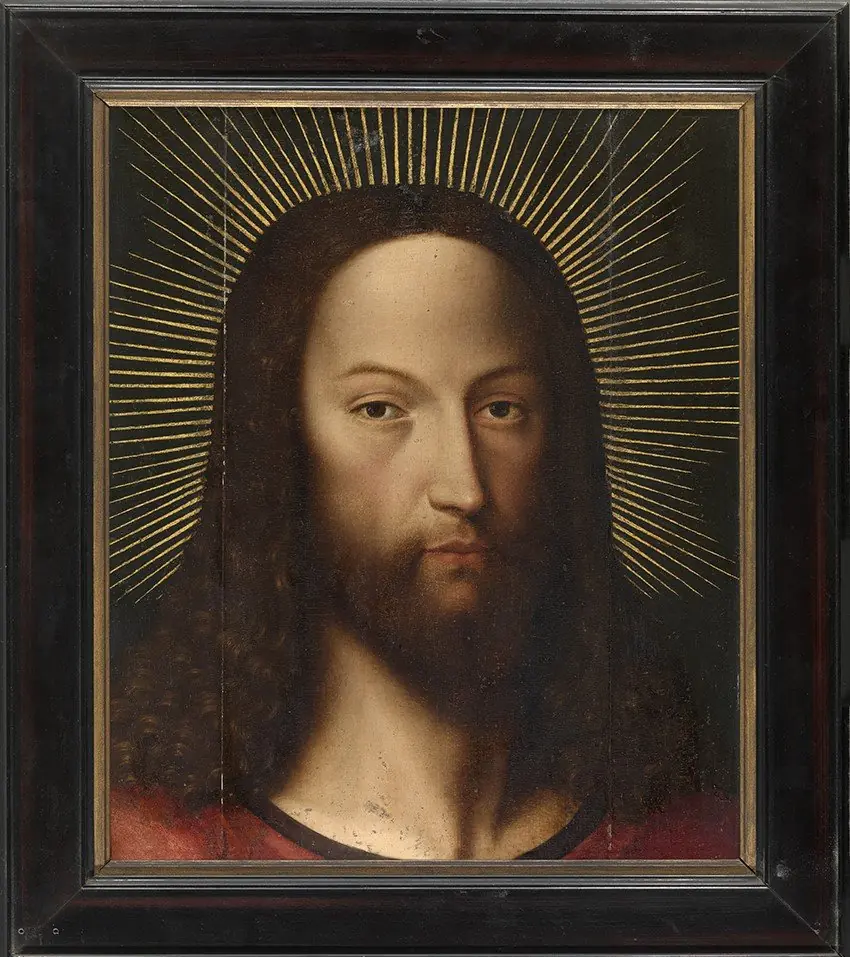
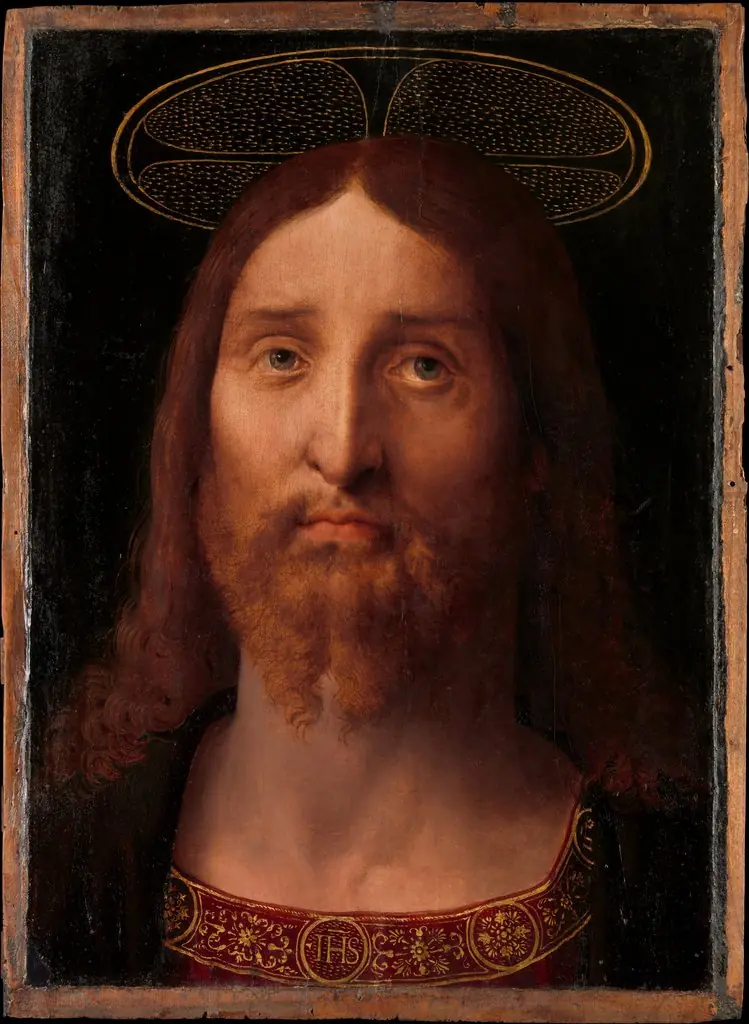
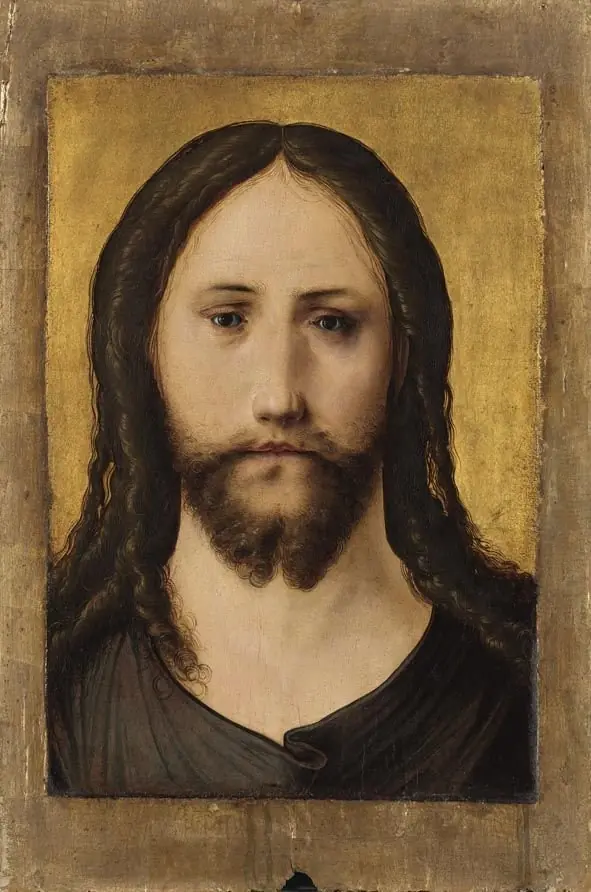
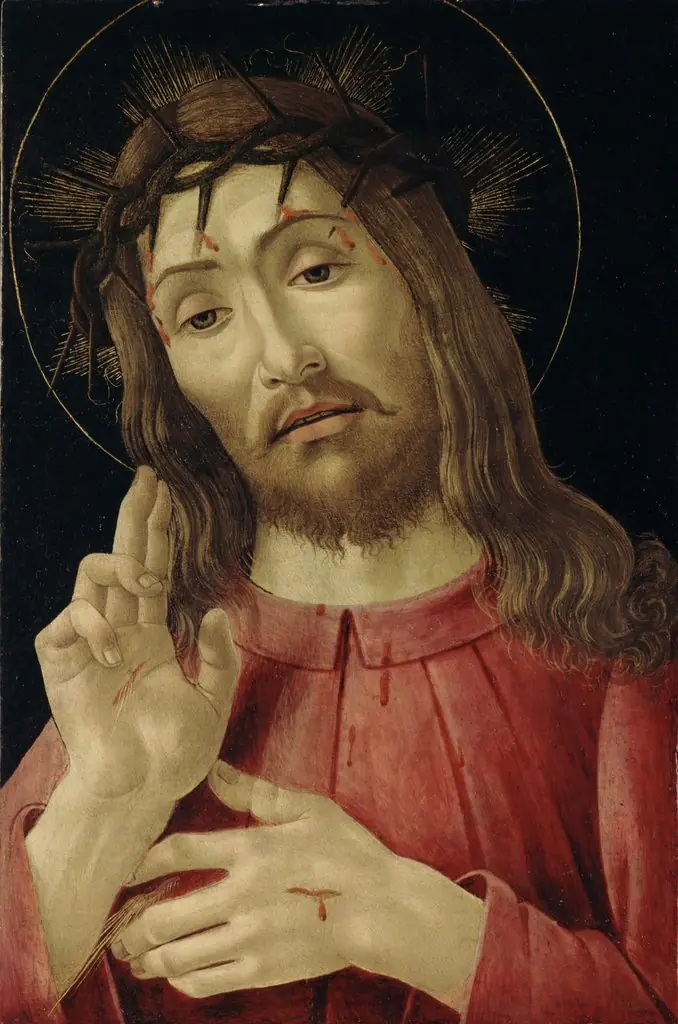
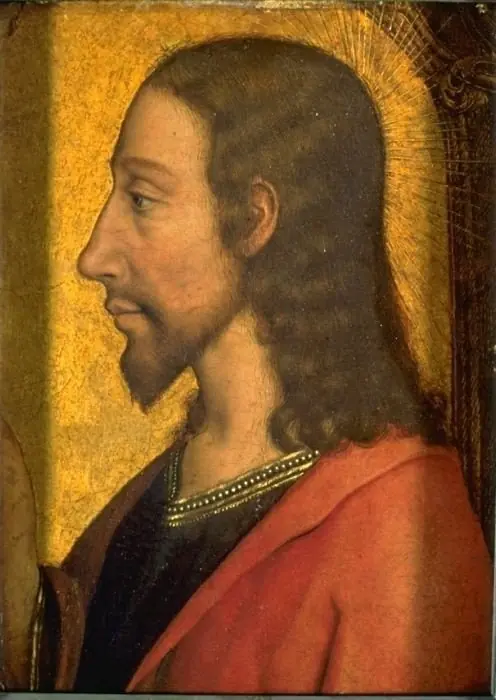
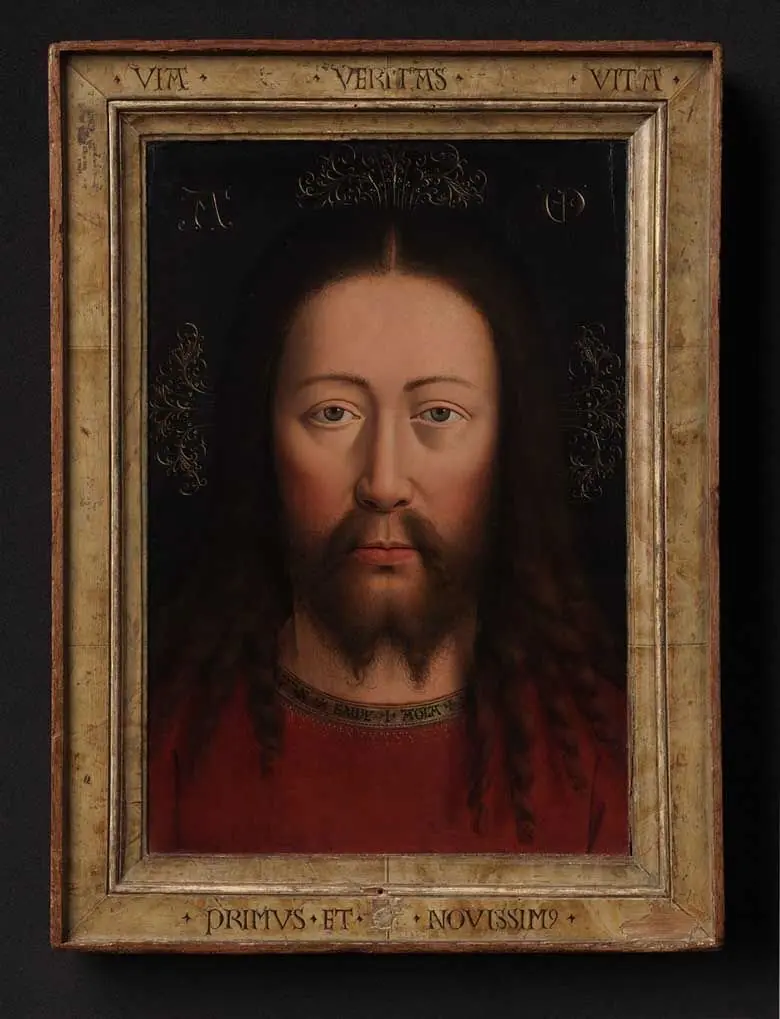
The Sacred Face of Christ (Vera Icon) is a paint painting by the Byzantine icon painting artist Unknown. It dates from 1475 and is held in the collection of the Gemäldegalerie Berlin. The work presents a close‑up portrait of a bearded man with long dark hair, his shoulders draped in a red garment edged in gold.
About this work
Overview
The work presents a close‑up portrait of a bearded man with long dark hair, his shoulders draped in a red garment edged in gold. A golden halo bearing a dark cross frames his head, emphasizing his sacred status. The painting’s surface shows age, with visible cracking, while the deep, saturated reds and golds retain a rich visual intensity.
Subject & Meaning
The figure is identified as Christ, rendered in the traditional “vera icon” format that emphasizes his divine presence through the halo and solemn expression. The red robe signifies martyrdom and sacrifice, while the gold trim and halo underscore his heavenly authority.
Technique & Style
Executed in paint on a panel, the artist employed layered glazing to achieve the deep coloration of the robe and the luminous quality of the gold elements. The handling of light on the face and the subtle modeling of the beard reveal a careful study of form typical of late medieval devotional images.
History & Provenance
The painting dates from an early period of iconographic production, evident in its aged craquelure and the stylistic conventions of the era. Its provenance traces through several private collections before entering a museum setting, where it has been conserved to stabilize the cracked surface.
Context
Created within the tradition of Christian iconography, the work reflects the theological emphasis on the tangible, human aspect of Christ alongside his divine nature. Such images were intended for personal devotion, offering believers a visual focus for prayer.
Legacy
As an example of the vera icon genre, the painting informs contemporary understanding of medieval devotional practices and the visual language used to convey sanctity. Its preservation allows scholars to study material techniques and iconographic choices of the period.
Artist & collection

 Domestic Scene
 Giacomo and Cardinal Marco, investing Andrea, Abbot of San Zeno, with his Benefice
 The Nymph of Fontainebleau
 Portrait of a Woman
 Madonna and Child with Saints in the Enclosed Garden
 Venus and Minerva
 Family Group of Four on Sofa
 Wall painting from Room H of the Villa of P. Fannius Synistor at Boscoreale