Artwork
Christ blessing
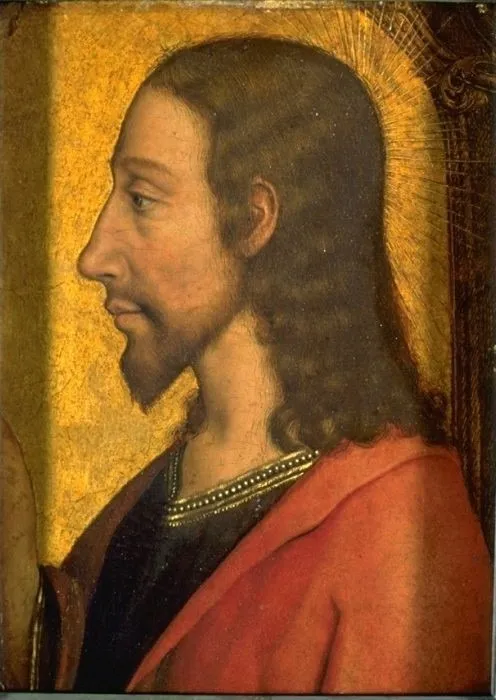
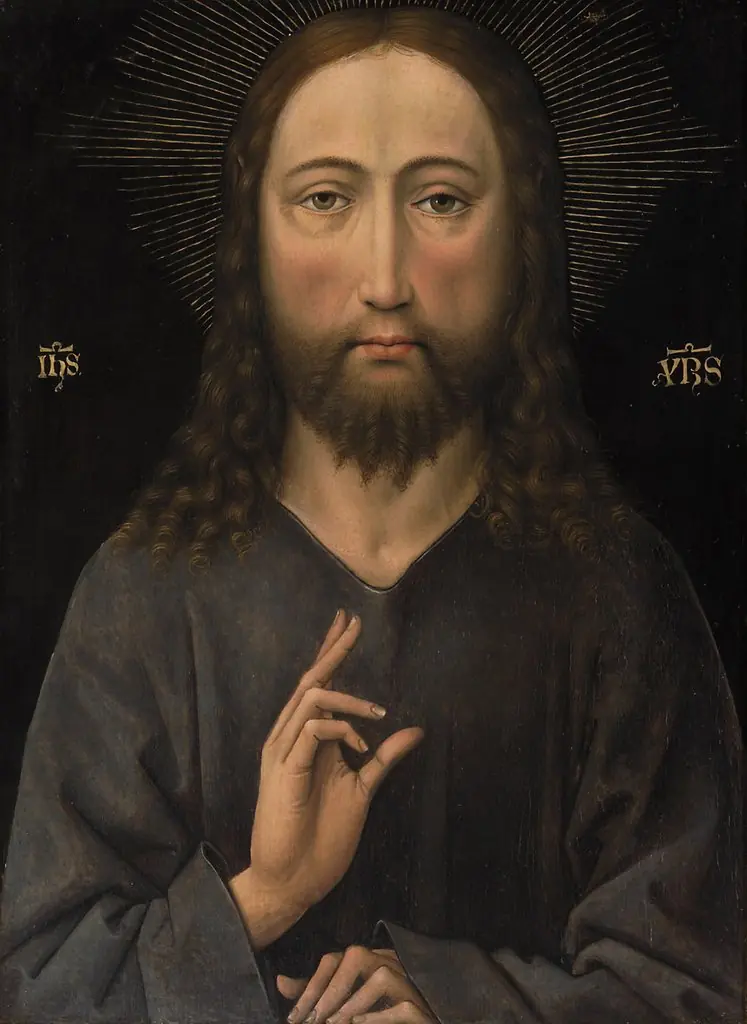
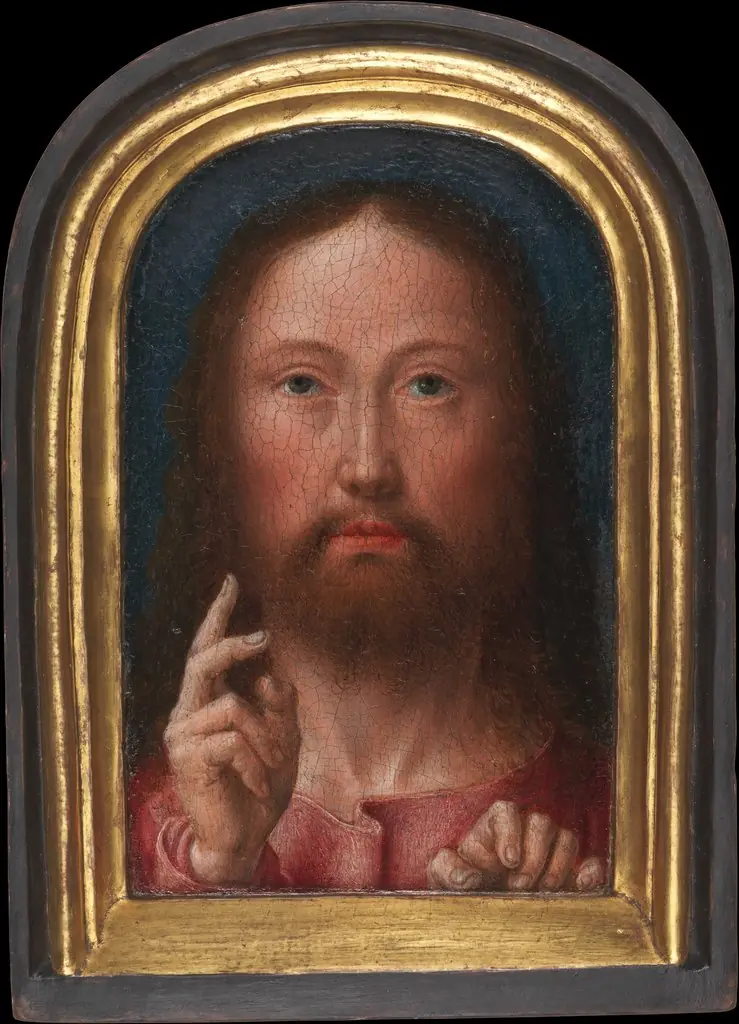
Christ blessing is a paint painting by the Northern Renaissance artist Master of 1499. It dates from 1500 and is held in the collection of the Gemäldegalerie Berlin. Painted around 1500, this devotional panel depicts Christ in a formal blessing gesture.
About this work
Overview
Painted around 1500, this devotional panel depicts Christ in a formal blessing gesture. Attributed to the Master of 1499, an anonymous Flemish painter known from a signed diptych dated 1499, the work reflects the quiet intensity of late Northern Renaissance religious art. It resides today in the Gemäldegalerie, Berlin, as part of a collection emphasizing early Netherlandish painting traditions.
Subject & Meaning
The dark object to his right may represent a symbolic element from liturgical practice or a fragment of a lost companion panel.
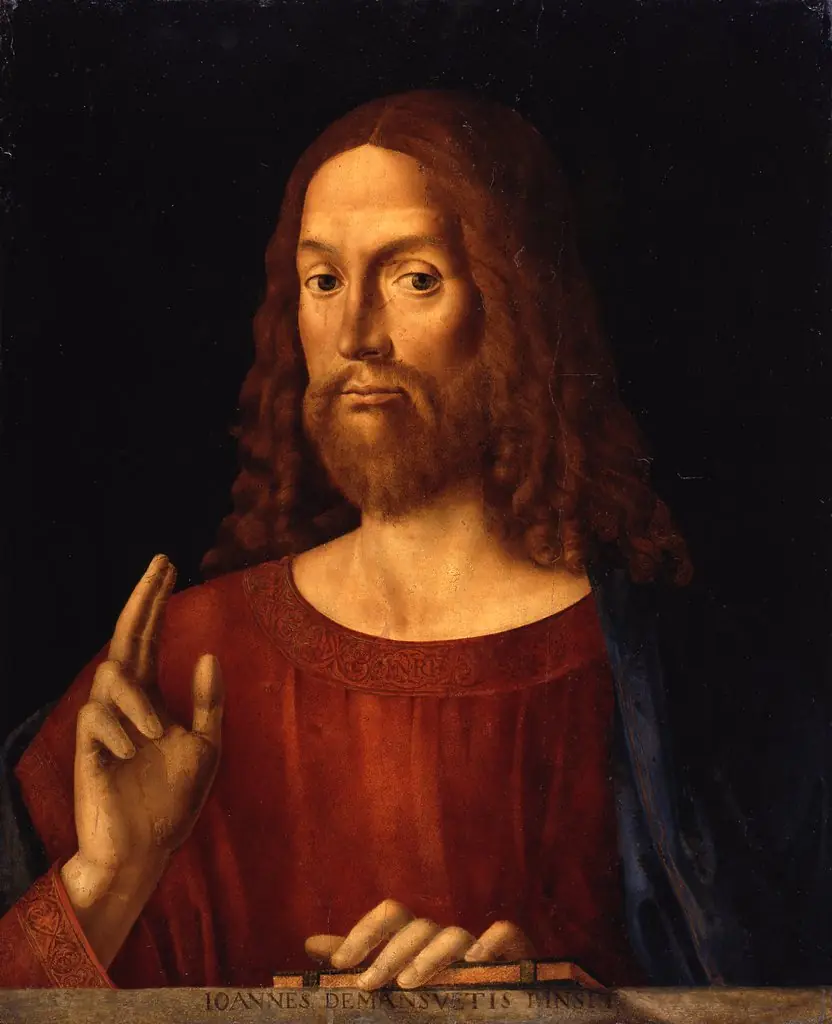
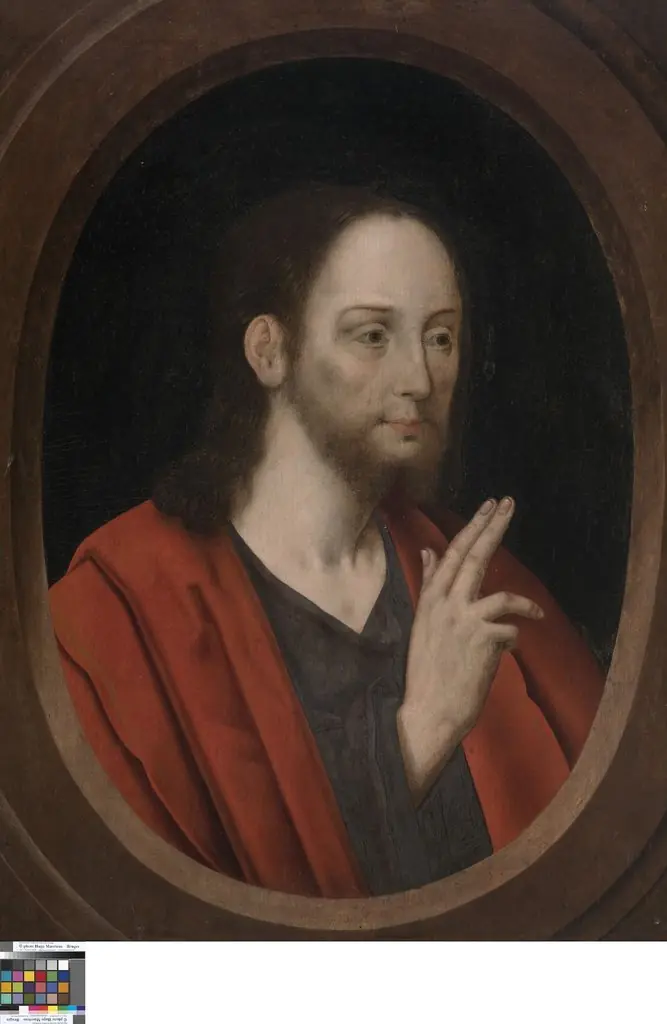
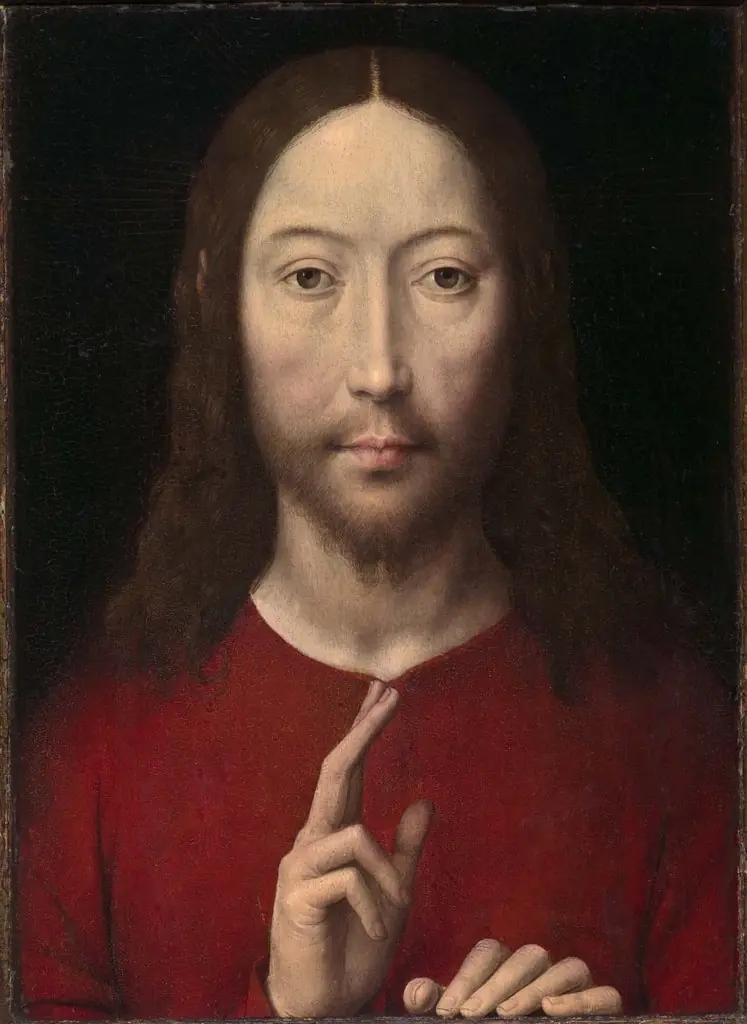
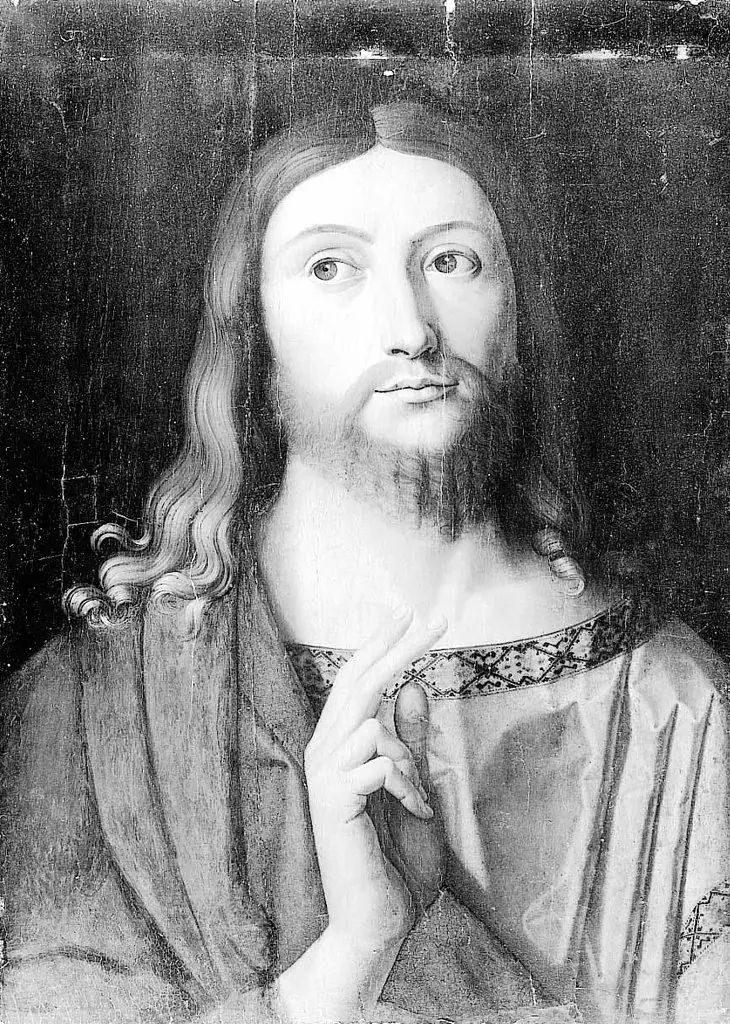
The figure of Christ, bearded and with long brown hair, is shown facing left, eyes lowered in solemn contemplation. His raised right hand issues a blessing, while the golden halo behind his head affirms his divine status. The dark object to his right may represent a symbolic element from liturgical practice or a fragment of a lost companion panel. The composition invites quiet reverence rather than dramatic narrative.
Technique & Style
The artist employs fine brushwork and subtle chiaroscuro to model Christ’s face and drapery, creating a sense of volume against the flat gold background. The red robe and black undergarment are rendered with meticulous attention to texture, echoing the detailed realism of Jan van Eyck. The gold ground, typical of earlier altarpieces, enhances the sacred atmosphere while contrasting with the naturalistic rendering of the figure.
History & Provenance
The painting’s origins are tied to the workshop practices of late 15th-century Flanders, where anonymous masters often worked in the style of more famous contemporaries. It was likely created for private devotion, possibly as part of a diptych or triptych. Acquired by the Gemäldegalerie Berlin in the 19th century, its attribution to the Master of 1499 was established through stylistic comparison with a documented 1499 work.
Context
This image emerged during a period when Northern European artists were refining devotional imagery for intimate spiritual use. While Italian Renaissance art emphasized spatial illusion and classical harmony, Flemish painters like the Master of 1499 prioritized emotional restraint and tactile detail. The work aligns with the legacy of Hugo van der Goes, whose psychological depth influenced many regional painters of the era.
Legacy
Though the artist’s identity remains unknown, his work contributes to understanding the diversity of Flemish painting beyond major names. The painting exemplifies how anonymous masters sustained devotional traditions through careful technique and quiet expression. Its preservation in a major European collection ensures continued study of late medieval religious iconography and the evolution of portraiture in sacred contexts.
Artist & collection
Artist
The Master of 1499, sometimes called the Bruges Master of 1499, was a Flemish painter active at the end of the fifteenth century, known from four paintings, all closely related to earlier works by others, and one dated "1499".