Artwork
Mahakala and his Entourage
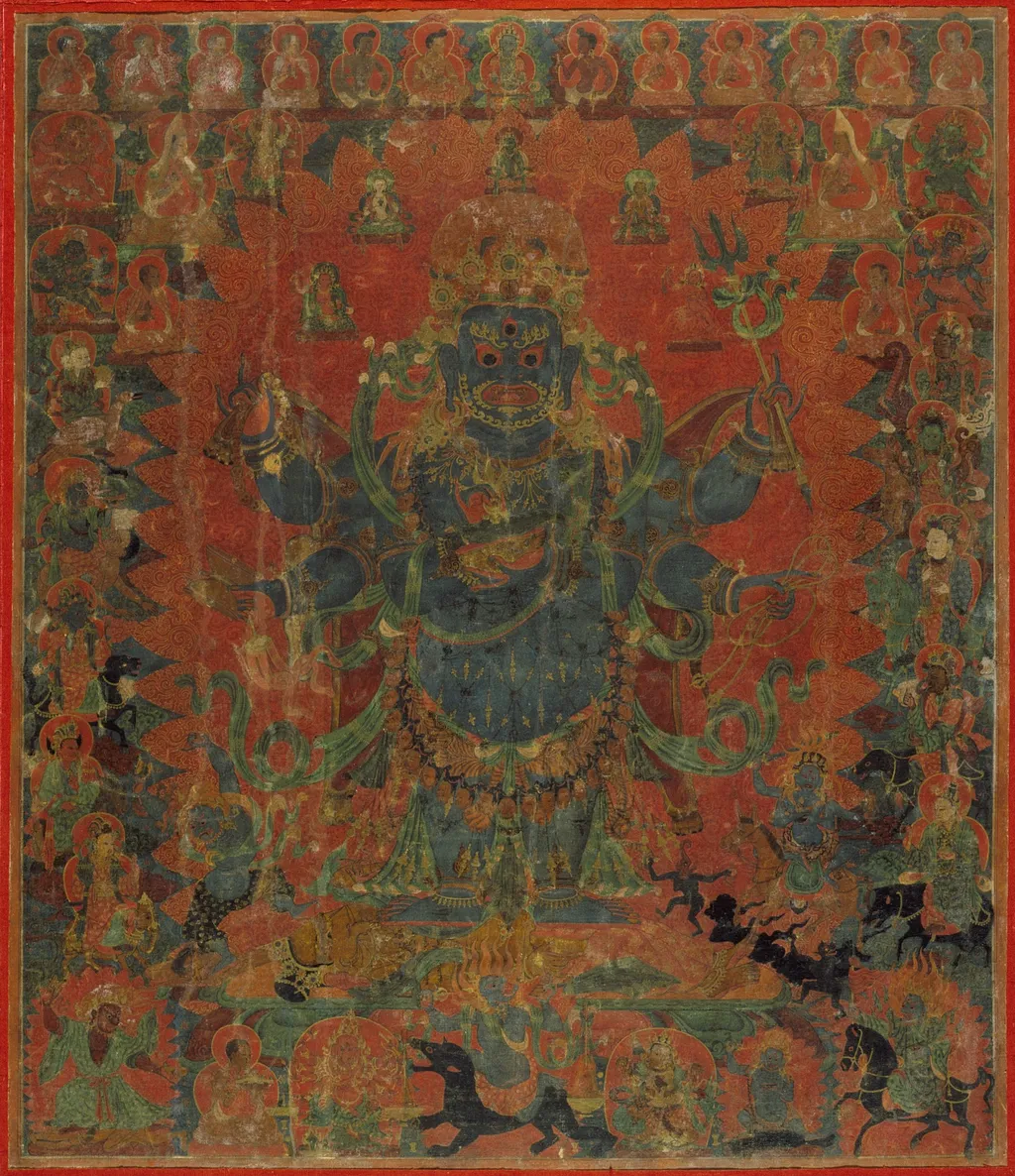
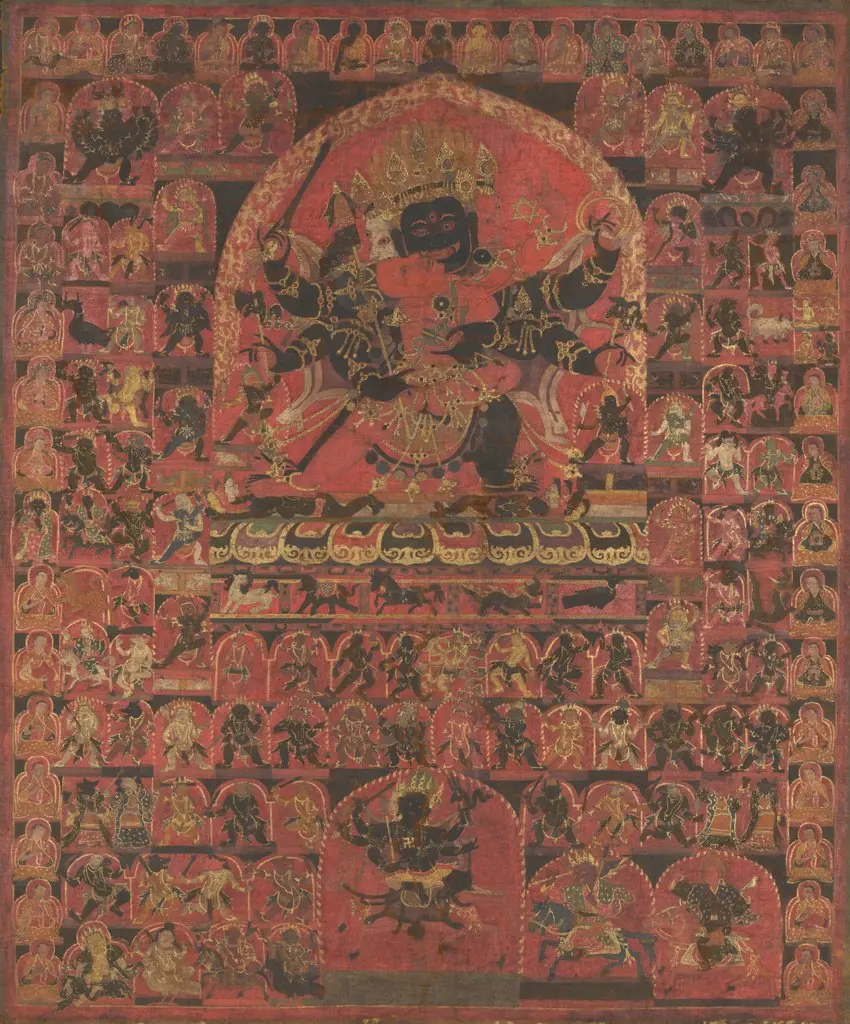
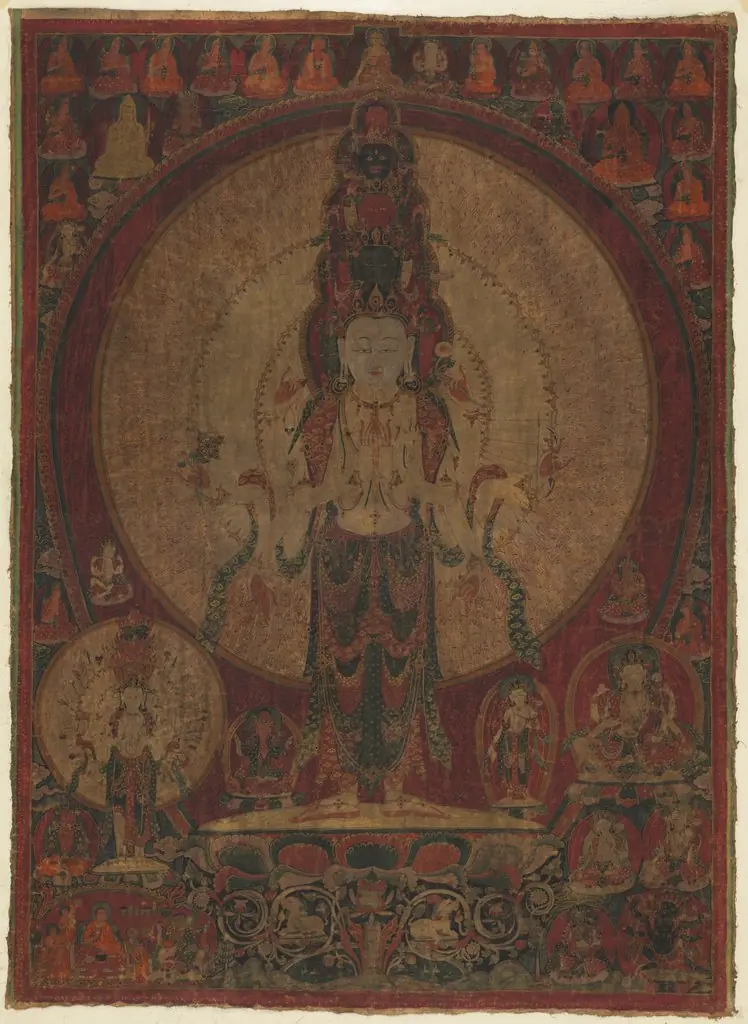
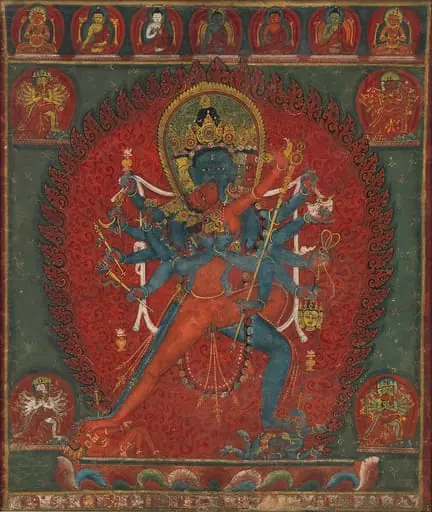
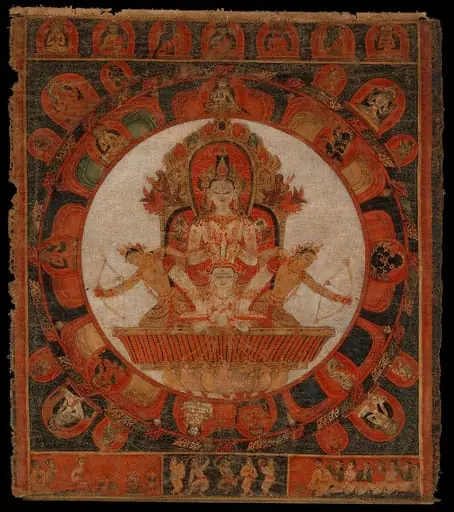
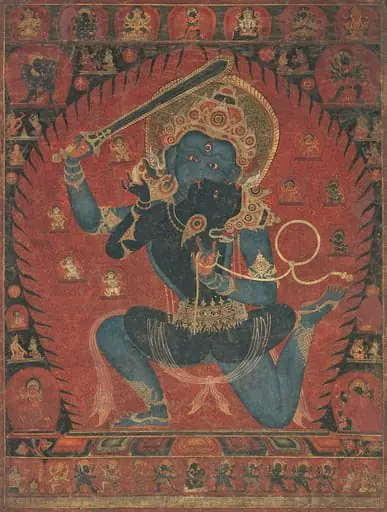
Mahakala and his Entourage is an unspecified painting by Unknown. It dates from 1500 and is held in the collection of the Los Angeles County Museum of Art. This Tibetan Buddhist painting depicts Mahakala, a fierce protective deity, surrounded by attendants and symbolic figures.
About this work
Overview
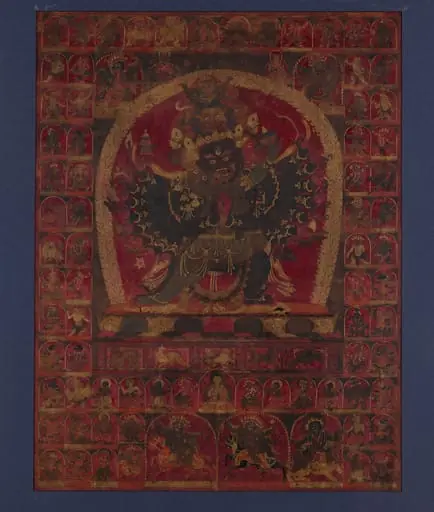
This Tibetan Buddhist painting depicts Mahakala, a fierce protective deity, surrounded by attendants and symbolic figures. Executed in mineral pigments on cotton, it follows the conventions of thangka art, designed for ritual use and meditative focus. The composition is densely packed, with precise lines and vivid colors guiding the viewer’s gaze toward the central figure.
Subject & Meaning
Mahakala, shown dark blue and wrathful, embodies the protective power of enlightened wisdom. His entourage includes attendants, animals, and celestial beings, each representing aspects of spiritual protection and the subjugation of obstacles. The imagery is not meant to inspire fear but to convey the force required to overcome ignorance and inner turmoil in the path to enlightenment.
Technique & Style
The painting employs traditional Tibetan techniques: fine brushwork, flat planes of color, and gold outlining to define forms. Pigments derived from minerals and plants ensure longevity. The figures are stylized according to iconometric grids, ensuring doctrinal accuracy. Background elements are minimal, emphasizing the deities and their symbolic attributes.
History & Provenance
Created likely in the 17th or 18th century in Tibet, the work was probably commissioned for a monastery or high-ranking lama’s private chapel. Its survival suggests careful preservation within a religious context. It entered a Western collection in the early 20th century, possibly through trade or diplomatic exchange, though its exact provenance before that remains undocumented.
Context
Thangka paintings like this were central to Tibetan Buddhist practice, used in rituals, teaching, and meditation. Mahakala was especially revered in Gelug and Kagyu lineages as a guardian of the Dharma. The painting’s presence in monastic settings reinforced doctrinal teachings and served as a visual aid for practitioners cultivating courage and detachment.
Legacy
This work exemplifies the enduring role of thangka art in preserving Tibetan Buddhist iconography. Though production methods have evolved, the symbolic language and devotional purpose remain intact in contemporary practice. As cultural artifacts, such paintings continue to inform scholarly understanding of Himalayan religious life and artistic tradition.
Artist & collection

 Domestic Scene
 Giacomo and Cardinal Marco, investing Andrea, Abbot of San Zeno, with his Benefice
 The Nymph of Fontainebleau
 Portrait of a Woman
 Madonna and Child with Saints in the Enclosed Garden
 Venus and Minerva
 Family Group of Four on Sofa
 Wall painting from Room H of the Villa of P. Fannius Synistor at Boscoreale