Artwork
Celebrations of Krishna’s birth
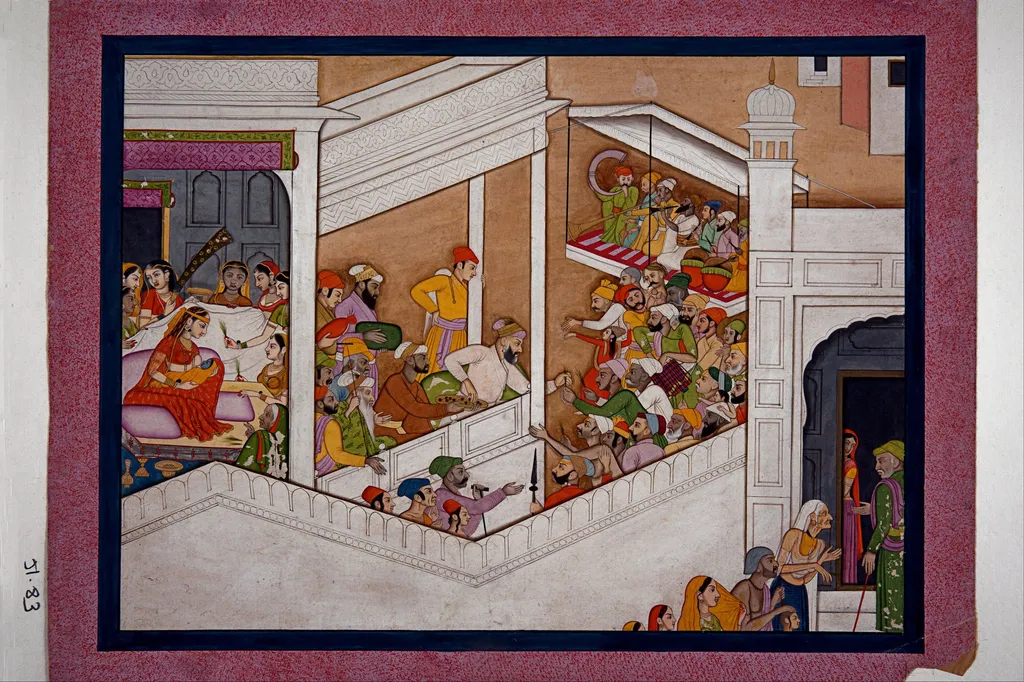
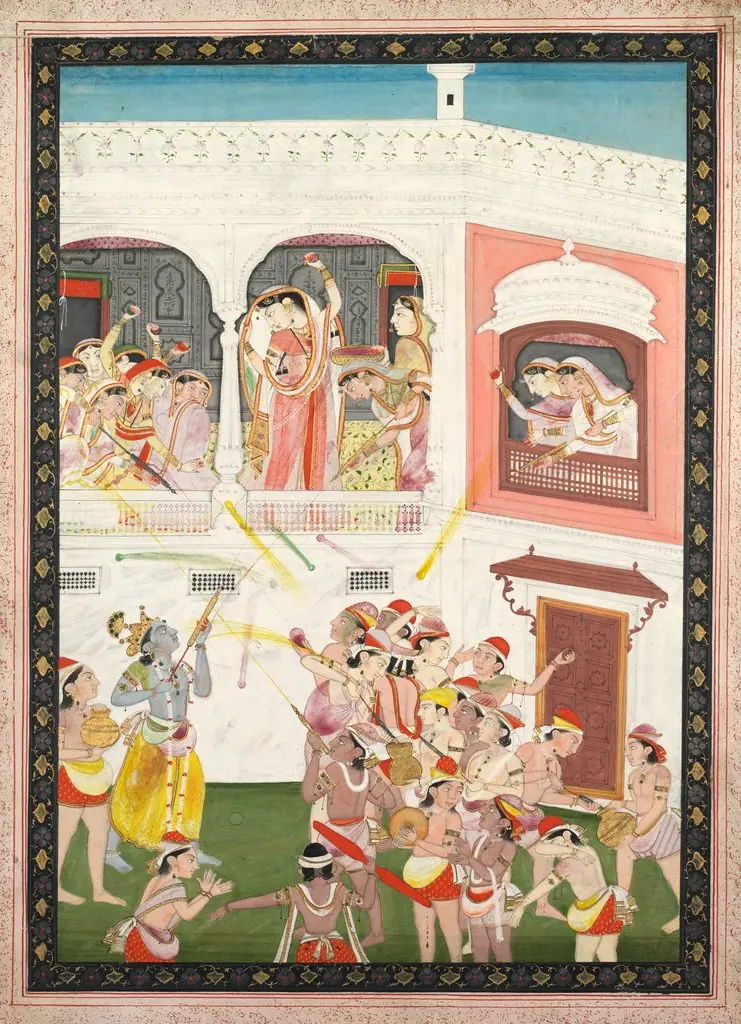
Celebrations of Krishna’s birth is an unspecified painting by the Rococo painting artist Unknown. It dates from 1790 and is held in the collection of the National Museum. This painting captures a moment from the Hindu festival of Janmashtami, commemorating the birth of Krishna.
About this work
Overview
Rendered in vivid pigments and fine brushwork, it portrays a crowded interior filled with revelers, musicians, and attendants gathered around the infant deity.
This painting captures a moment from the Hindu festival of Janmashtami, commemorating the birth of Krishna. Rendered in vivid pigments and fine brushwork, it portrays a crowded interior filled with revelers, musicians, and attendants gathered around the infant deity. The composition emphasizes communal joy through layered figures, rich textiles, and ornate architecture, reflecting devotional traditions of the Indian subcontinent.
Subject & Meaning
The scene centers on the newborn Krishna, reclining on a bed as family and devotees celebrate his arrival. Surrounding figures play instruments, chant, and offer gifts, symbolizing divine blessing and communal devotion. The imagery aligns with textual accounts of Krishna’s birth in Mathura, where his parents, Vasudeva and Devaki, were protected from tyranny by divine intervention, making this moment both sacred and joyous.
Technique & Style
The artist employs detailed brushwork to render intricate patterns on garments, wall hangings, and jewelry, using mineral pigments to achieve luminous reds, blues, and golds. Figures are arranged in overlapping planes to suggest depth within a confined space, while expressive gestures and varied postures convey dynamic energy. The style reflects regional Pahari or Rajasthani miniature traditions, known for precision and emotional resonance.
History & Provenance
The painting likely originated in a royal or temple-associated atelier during the 17th or 18th century, a period when devotional themes flourished under patronage of Hindu rulers and aristocrats. Its survival suggests it was preserved in a collection, possibly within a palace or religious institution, though specific ownership records remain undocumented.
Context
Depictions of Krishna’s birth were common in devotional art across North India, particularly in regions influenced by Bhakti movements. Such paintings served both ritual and educational purposes, reinforcing narratives of divine incarnation and moral order. Festivals like Janmashtami, with music, dance, and communal feasting, were visually translated into these works to inspire devotion.
Legacy
This painting exemplifies how religious narratives were sustained through visual culture in pre-modern India. Its detailed aesthetics influenced later regional styles and continue to inform contemporary interpretations of Krishna’s life. While the artist’s name is lost, the work stands as part of a broader tradition of devotional illustration that remains culturally significant.
Artist & collection

 Domestic Scene
 Giacomo and Cardinal Marco, investing Andrea, Abbot of San Zeno, with his Benefice
 The Nymph of Fontainebleau
 Portrait of a Woman
 Madonna and Child with Saints in the Enclosed Garden
 Venus and Minerva
 Family Group of Four on Sofa
 Wall painting from Room H of the Villa of P. Fannius Synistor at Boscoreale
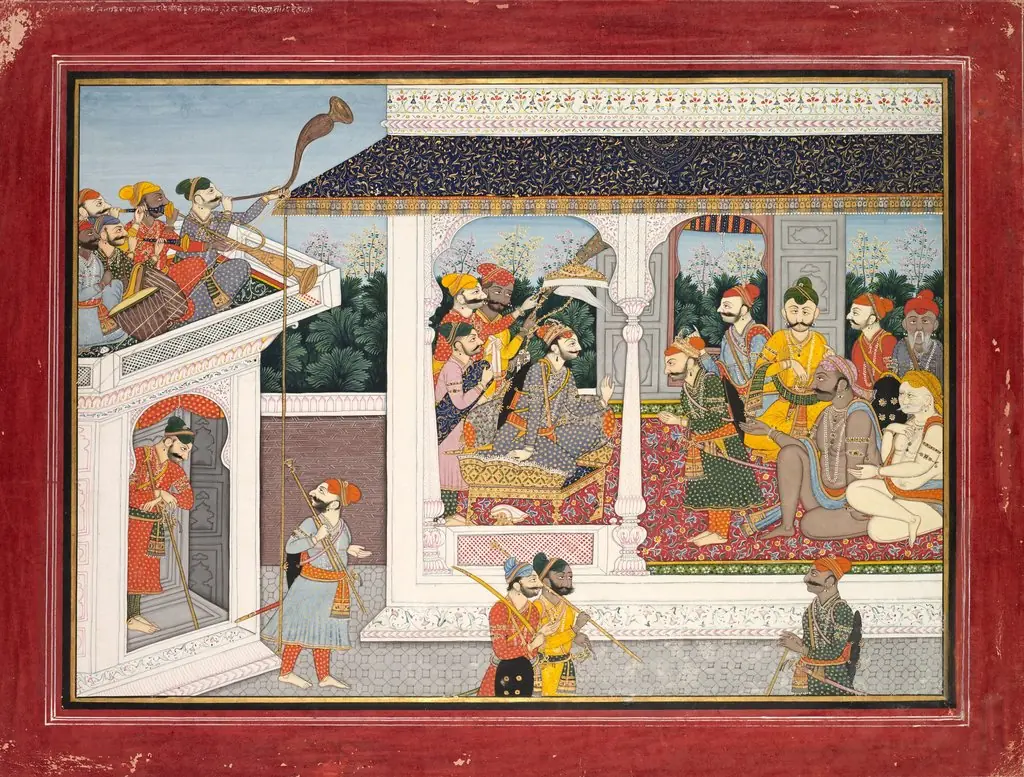 Kamsa deploys Akrura and Keshi to Braj, from a Bhagavata Purana
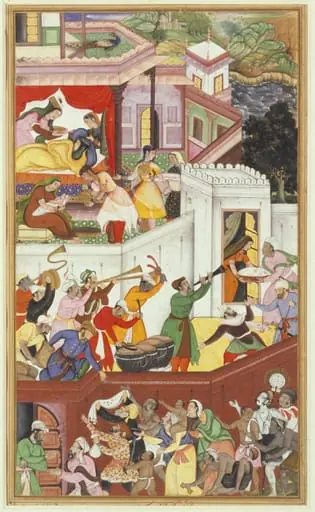 Prince Salim
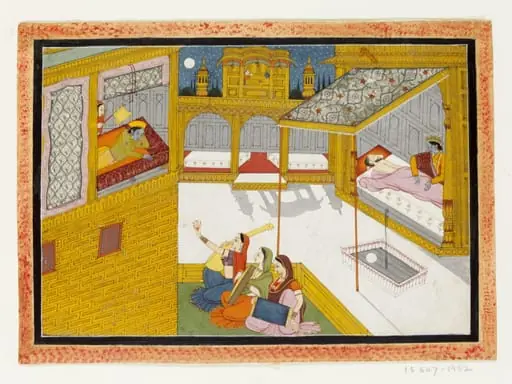 Sudama and Krishna
 Untitled
 Kamsa deploys Akrura and Keshi to Braj, from a Bhagavata Purana
 Illustrations to Life of Dhurva Maharaj: #1 Durbar of King Uttan Pad
 Akbar celebrates the birth of his second son
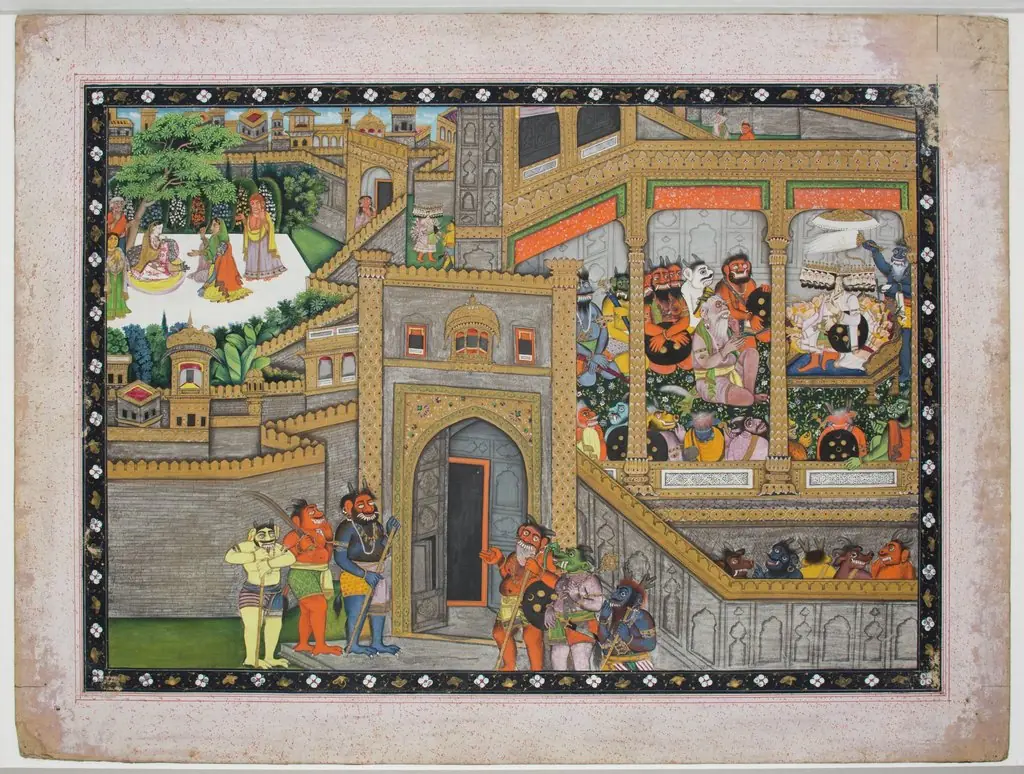 Sita Imprisoned at Ravana's Palace, Ravana Holding Court (Illustration to the Ramayana)
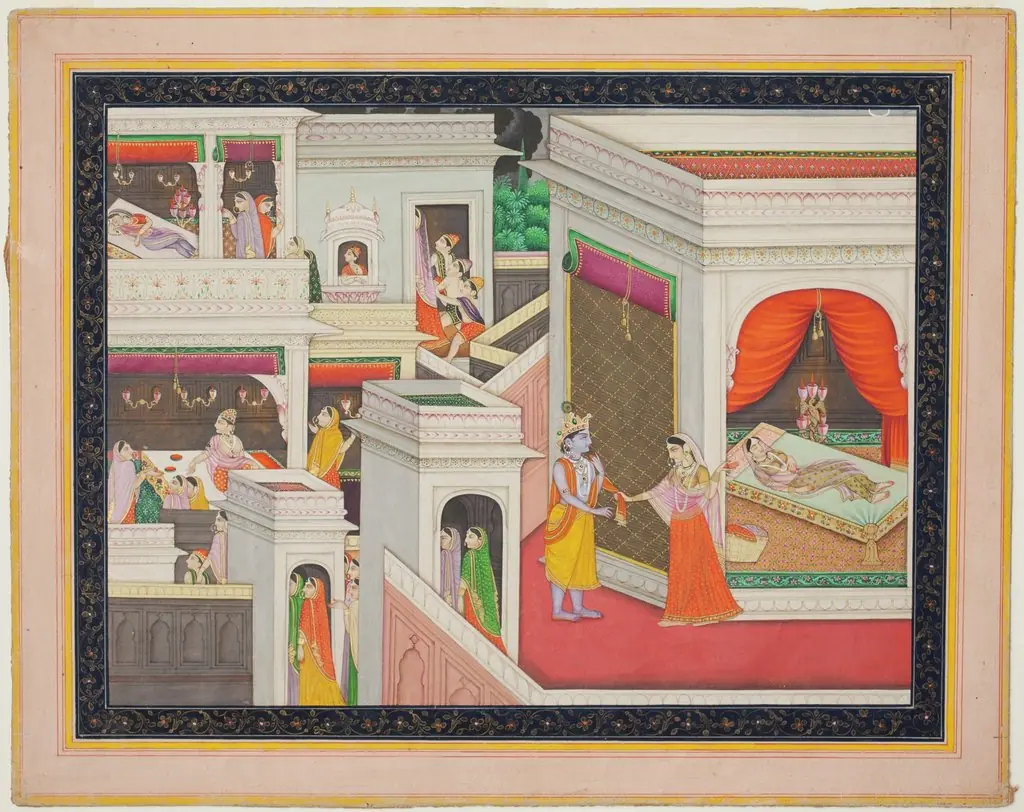 Palace Scene at Night
 Ala-ud-din
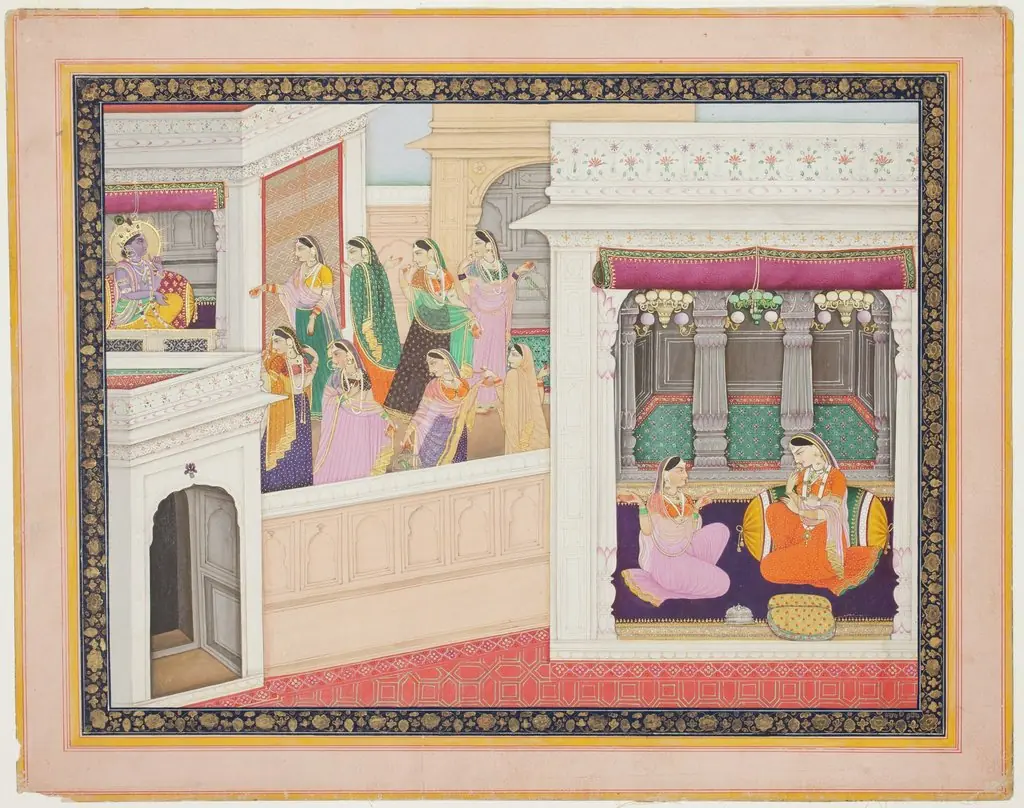 Krishna and Radha: Court Scene
 Radha and Hindu God Krishna Celebrating the Festival Holi