Artwork
Ala-ud-din
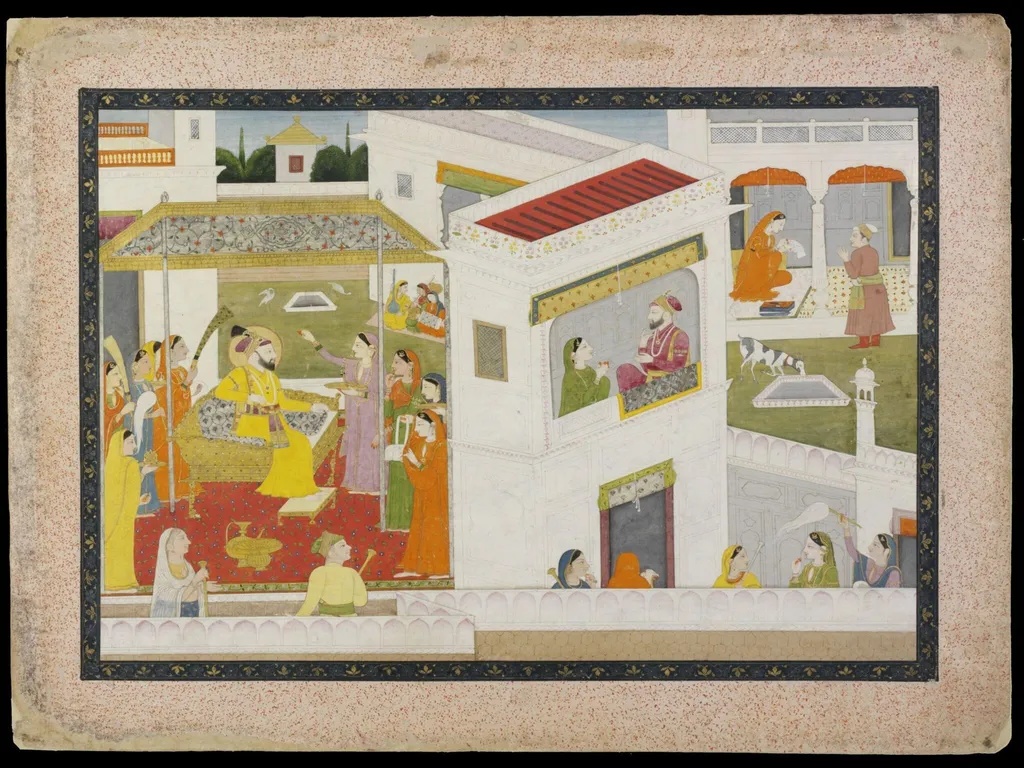
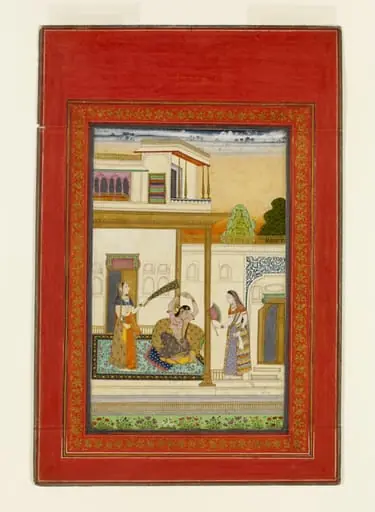
Ala-ud-din is a paint painting by the Romanticist artist Unknown. It dates from 1800 and is held in the collection of the Victoria and Albert Museum. Created in 1800, this painting is executed in opaque watercolour on paper, belonging to the Hamir Hath series.
About this work
Overview
The composition is densely populated, with figures arranged across multiple levels of a courtyard, suggesting a ceremonial or social gathering.
Created in 1800, this painting is executed in opaque watercolour on paper, belonging to the Hamir Hath series. It depicts a courtly scene centered on Ala-ud-din, a figure associated with Rajput royal narratives. The composition is densely populated, with figures arranged across multiple levels of a courtyard, suggesting a ceremonial or social gathering. The use of vibrant pigments and fine brushwork reflects regional painting traditions of early 19th-century North India.
Subject & Meaning
Ala-ud-din, shown in a yellow robe beneath a pavilion and holding a staff, is the focal point among a group of attendants and women. The presence of multiple figures, including those on balconies and near windows, implies a structured court environment. The scene likely illustrates a moment of royal leisure or ritual, common in illustrated manuscripts of the period. The dog near the pool adds a subtle, naturalistic detail, grounding the scene in everyday observation despite its formal setting.
Technique & Style
The artist employed opaque watercolour with meticulous attention to pattern and color, using bold reds, blues, and golds to define textiles and architecture. Architectural elements like the pavilion and arched windows are rendered with precise lines, while figures are stylized with elongated proportions and expressive gestures. The flat perspective and layered spatial arrangement are characteristic of Rajput painting, prioritizing narrative clarity over illusionistic depth.
History & Provenance
This work is part of the Hamir Hath series, a collection of illustrated folios linked to Rajput courtly traditions, likely produced in a workshop in Rajasthan or nearby regions. Though specific patronage details are unrecorded, such paintings were typically commissioned by nobility for personal or ceremonial use. The painting’s survival suggests it was carefully preserved, possibly within a royal collection before entering institutional or private hands in the 20th century.
Context
Produced during a period when Rajput courts maintained distinct artistic identities despite Mughal influence, this painting reflects a local aesthetic rooted in devotional and heroic literature. The Hamir Hath series draws from regional ballads celebrating warrior kings and their courts. Similar works from this era often paired poetic texts with vivid imagery, serving both as entertainment and as cultural memory for elite audiences.
Legacy
The painting contributes to a broader corpus of Indian miniature art that continues to inform scholarly understanding of regional visual culture. Its preservation in museum collections allows for comparative study with other Rajput and Pahari works. While not widely exhibited, it remains a reference point for researchers examining the intersection of narrative, courtly life, and artistic technique in early 19th-century North India.
Artist & collection

 Domestic Scene
 Giacomo and Cardinal Marco, investing Andrea, Abbot of San Zeno, with his Benefice
 The Nymph of Fontainebleau
 Portrait of a Woman
 Madonna and Child with Saints in the Enclosed Garden
 Venus and Minerva
 Family Group of Four on Sofa
 Wall painting from Room H of the Villa of P. Fannius Synistor at Boscoreale
 Untitled
 Usha viewing the portrait of Aniruddha
 Court Scene
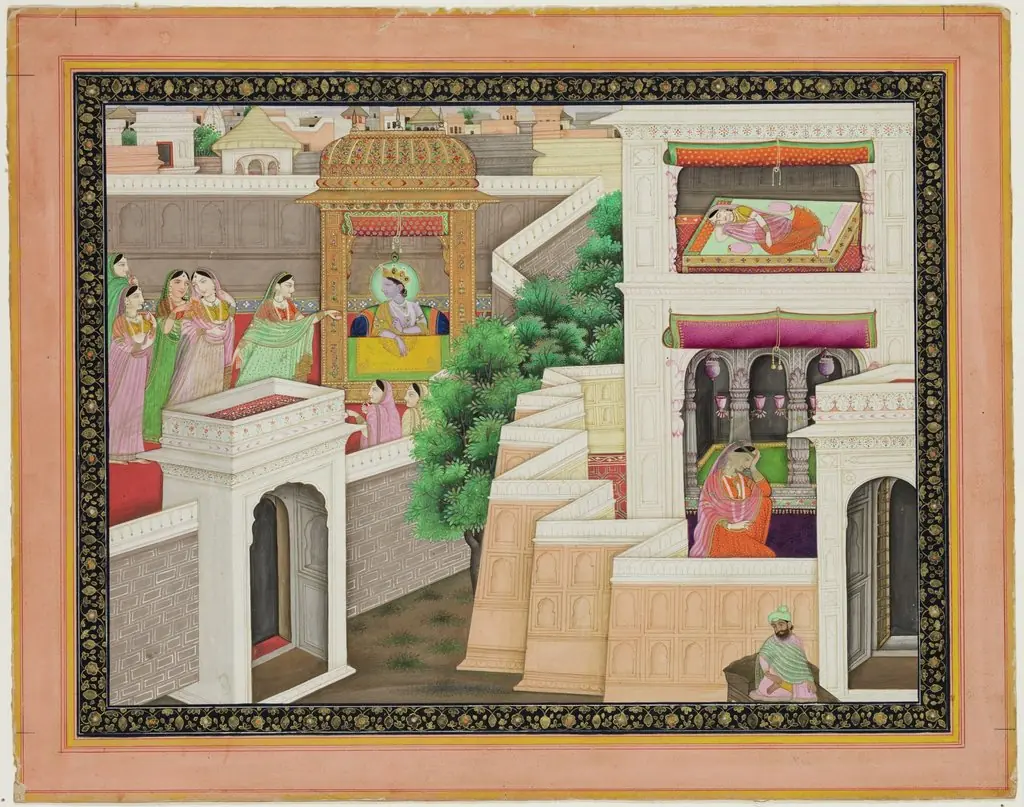 Story of Krishna and Radha
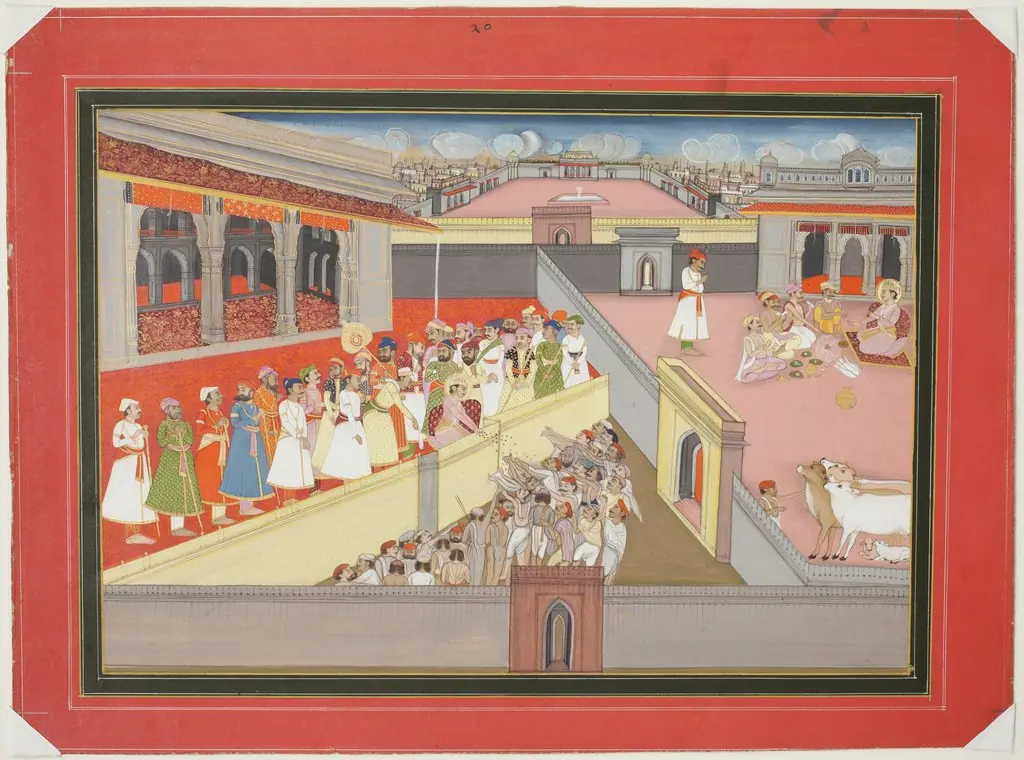 Court Scene
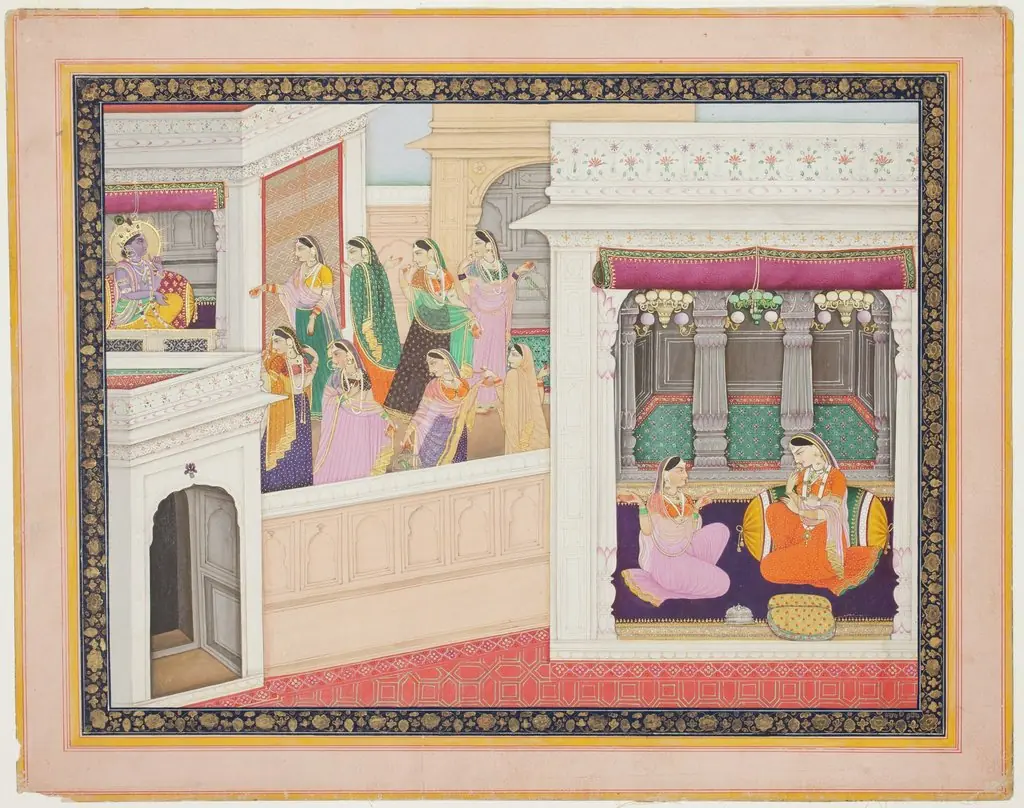 Krishna and Radha: Court Scene
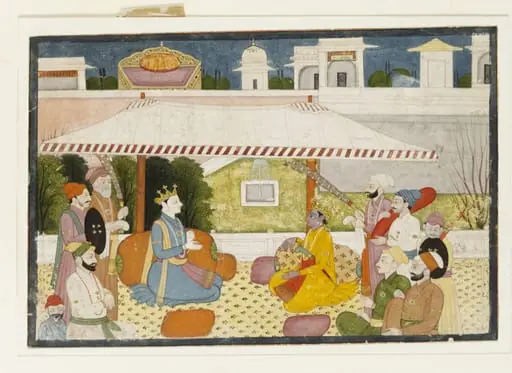 Krishna and Balarama
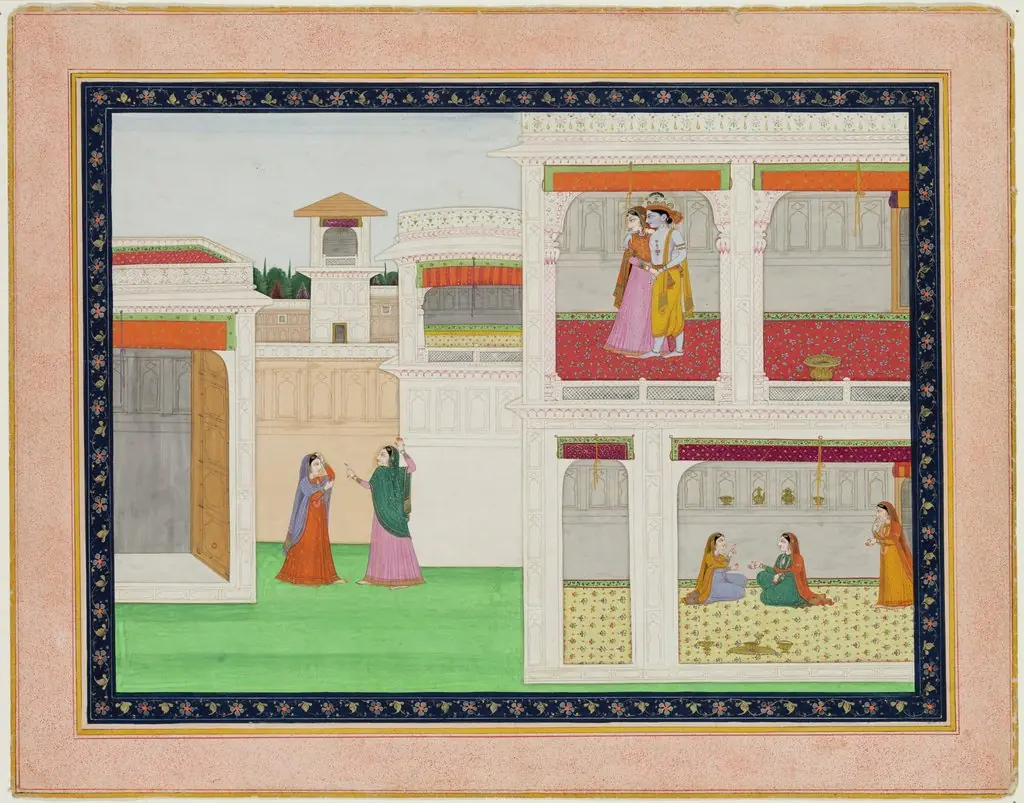 Story of Krishna and Radha
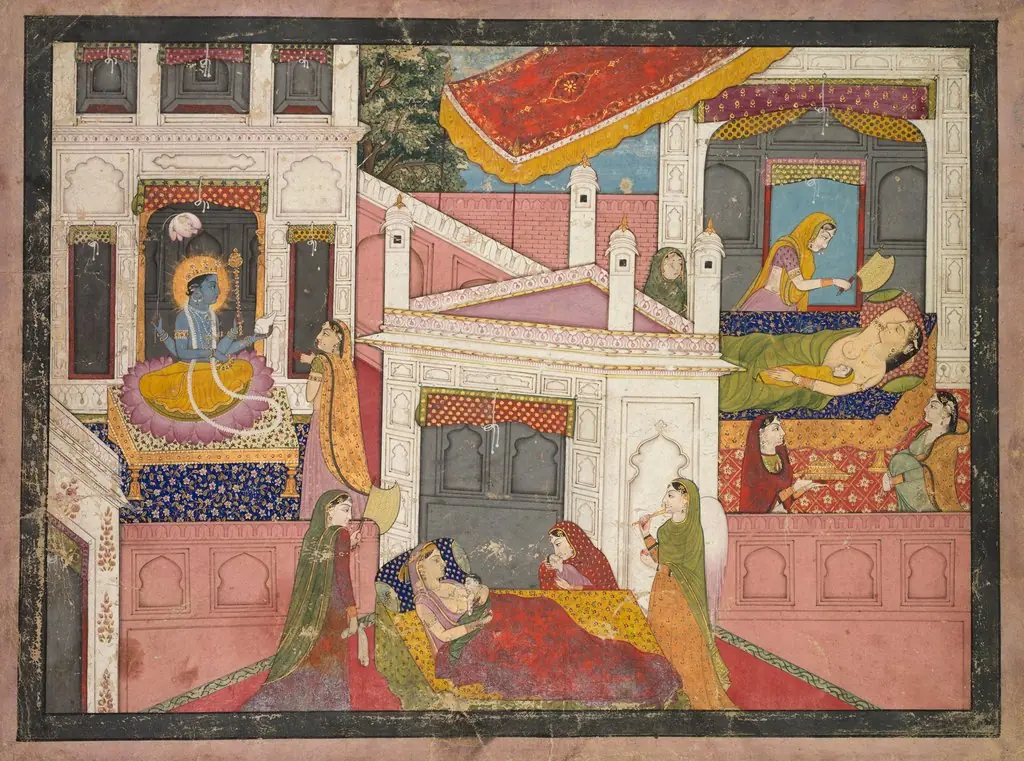 The birth of Rama and his brothers, from Chapter 17 of the Bala Kanda (Book of Childhood) of the Adhyatma Ramayana (Rama's Journey of the Supreme Spirit) from the Brahmanda Purana (Ancient Scripture of the Cosmic Egg)
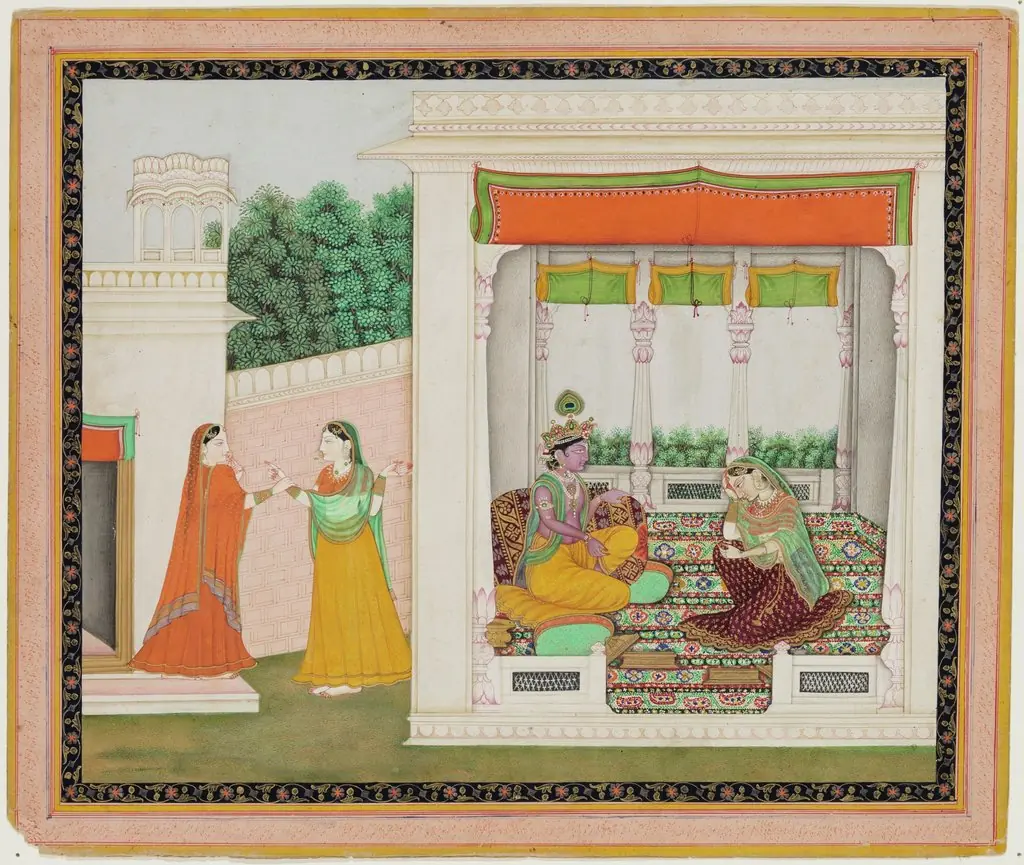 Story of Krishna and Radha
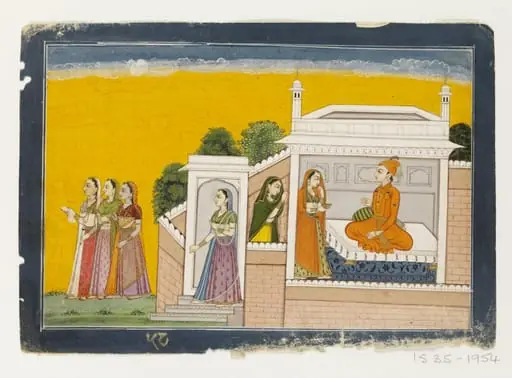 Nala and Damayanti
 Purvi Ragini