Artwork
Palace Scene at Night
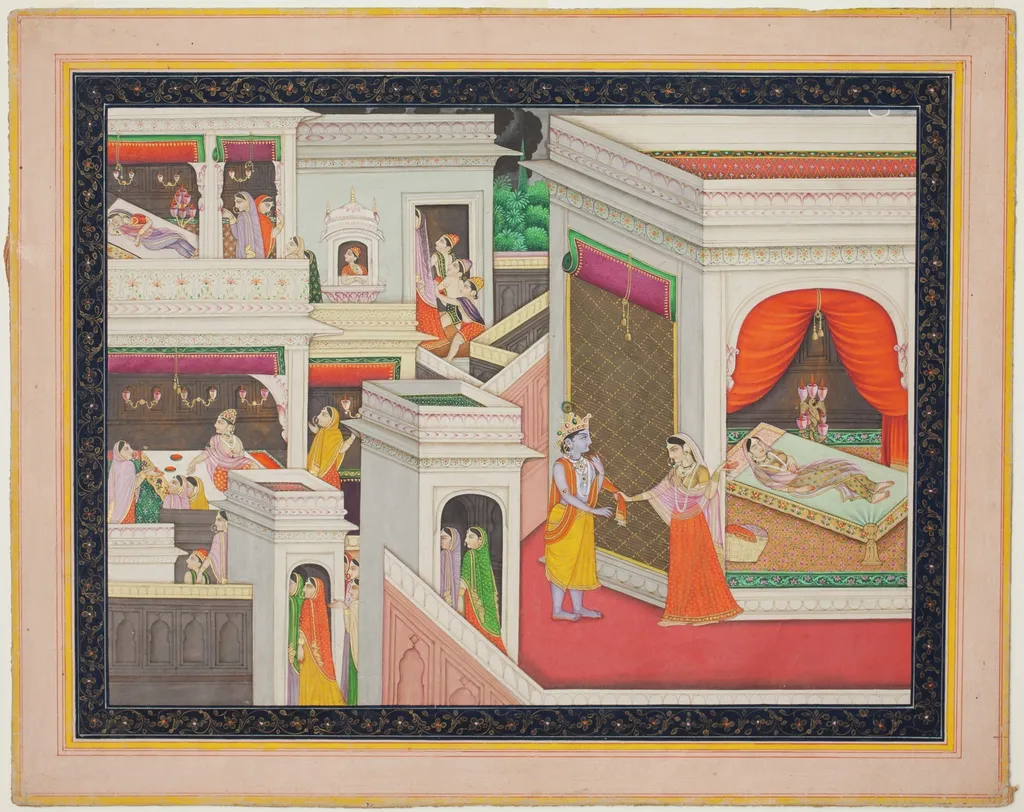
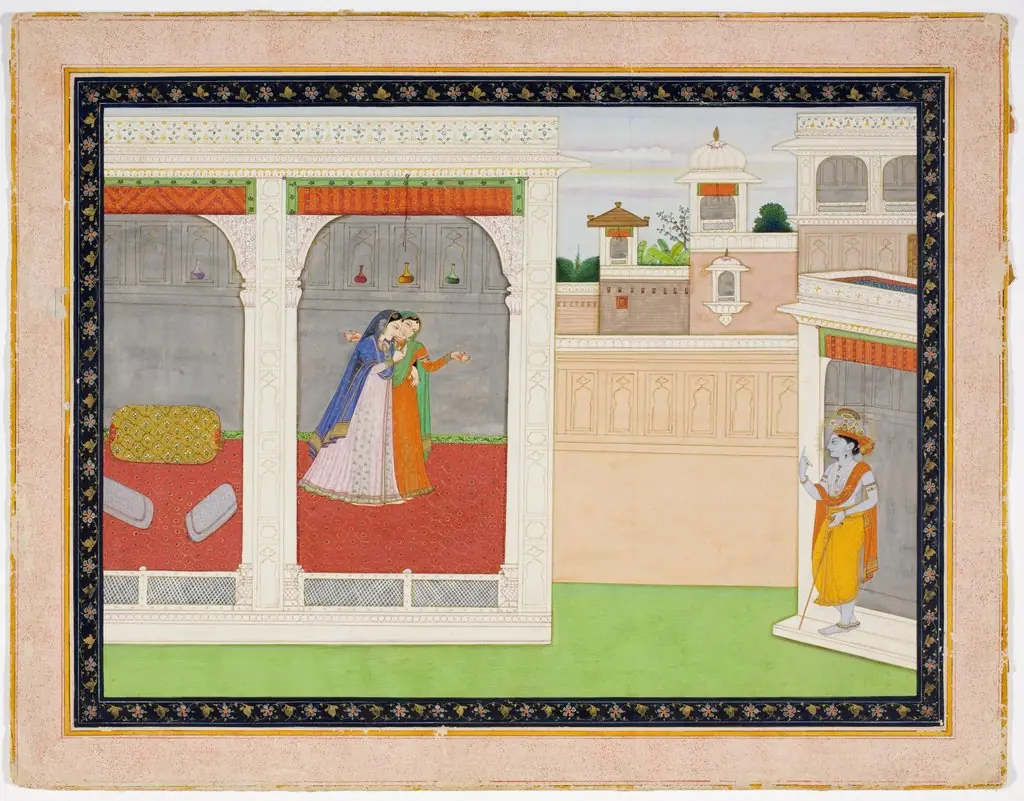
Palace Scene at Night is an unspecified painting by Unknown. It dates from 1800 and is held in the collection of the Detroit Institute of Arts. This painting depicts a nocturnal interior of a multi-tiered palace, alive with figures moving through its corridors and balconies.
About this work
Overview
The composition balances architectural grandeur with intimate human moments, all rendered in a vibrant palette of reds, yellows, greens, and whites.
This painting depicts a nocturnal interior of a multi-tiered palace, alive with figures moving through its corridors and balconies. The scene is richly detailed, with architecture layered in depth and illuminated by ambient light. Figures are arranged in casual groupings, some engaged in quiet interaction, others absorbed in solitude. The composition balances architectural grandeur with intimate human moments, all rendered in a vibrant palette of reds, yellows, greens, and whites.
Subject & Meaning
The central figures—a woman in red and a man in yellow—appear to share a moment of mutual attention, their exchange subtly anchoring the scene. The basket she holds suggests domestic or ceremonial function, while the open window reveals a darkened garden, hinting at the boundary between private life and the natural world. The varied gazes of surrounding figures imply a complex social environment, where connection and detachment coexist without clear narrative resolution.
Technique & Style
The artist employs fine brushwork to render intricate patterns on textiles, architectural moldings, and curtain folds. Color is used expressively rather than naturalistically, with saturated hues defining spatial zones and emotional tone. The lighting is diffuse, suggesting moonlight or lantern glow, casting soft shadows that enhance depth without harsh contrast. Details are meticulously rendered, inviting close observation without overwhelming the overall composition.
History & Provenance
The painting’s origins are not definitively recorded, but its stylistic elements align with late medieval or early Renaissance courtly art from regions where polychrome interior scenes were favored. No documented ownership chain or artist attribution exists in public records. Its survival suggests it was preserved within a private or institutional collection, possibly as a decorative panel or devotional companion piece.
Context
This work reflects a tradition in which palace interiors served as settings for depicting social hierarchy and quiet ritual. The inclusion of a garden through the window echoes literary and visual motifs of the time, symbolizing harmony, retreat, or the passage of time. The absence of overt religious or political symbols points to a focus on everyday aristocratic life, rendered with attention to texture, color, and spatial nuance.
Legacy
Though not widely exhibited or studied, the painting contributes to a lesser-known body of nocturnal court scenes that emphasize atmosphere over narrative. Its detailed rendering and emotional subtlety offer insight into how non-dramatic moments were valued in pre-modern visual culture. It remains a quiet example of how domestic space could be imbued with quiet dignity through color, composition, and observation.
Artist & collection

 Domestic Scene
 Giacomo and Cardinal Marco, investing Andrea, Abbot of San Zeno, with his Benefice
 The Nymph of Fontainebleau
 Portrait of a Woman
 Madonna and Child with Saints in the Enclosed Garden
 Venus and Minerva
 Family Group of Four on Sofa
 Wall painting from Room H of the Villa of P. Fannius Synistor at Boscoreale
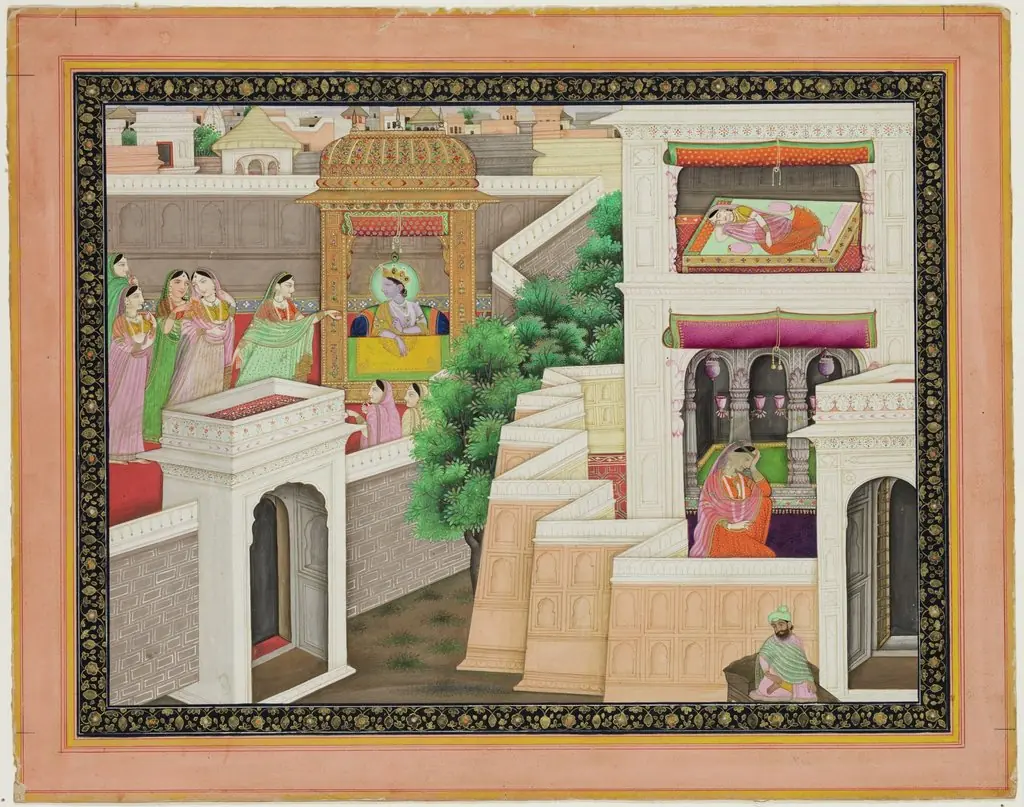 Story of Krishna and Radha
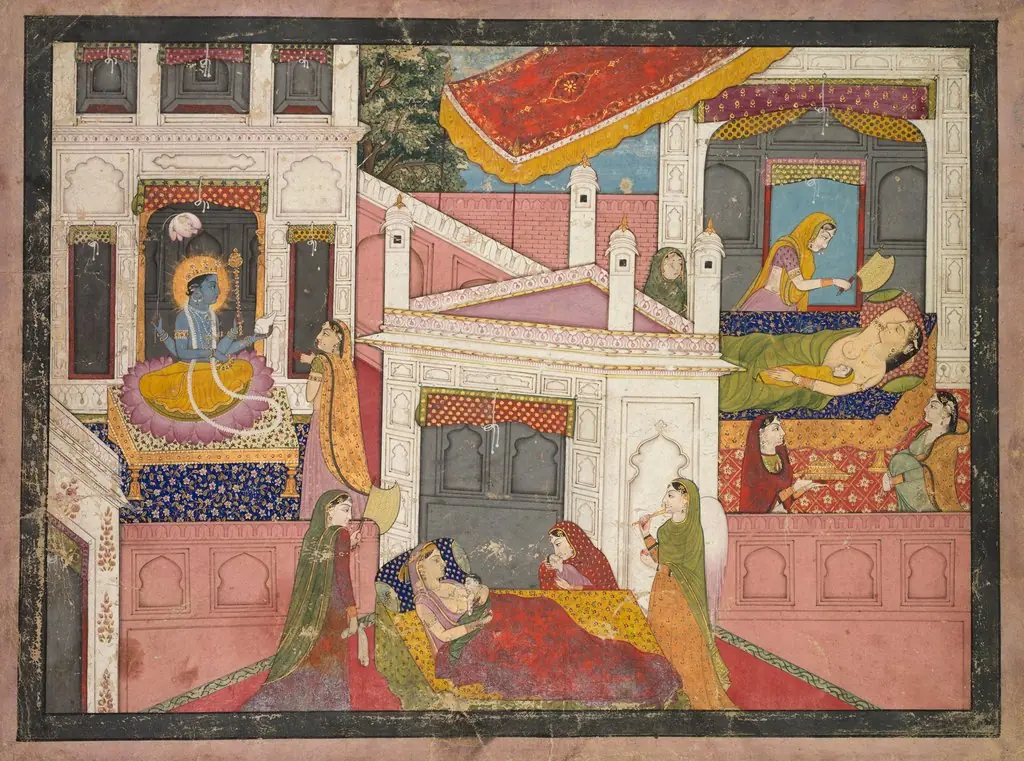 The birth of Rama and his brothers, from Chapter 17 of the Bala Kanda (Book of Childhood) of the Adhyatma Ramayana (Rama's Journey of the Supreme Spirit) from the Brahmanda Purana (Ancient Scripture of the Cosmic Egg)
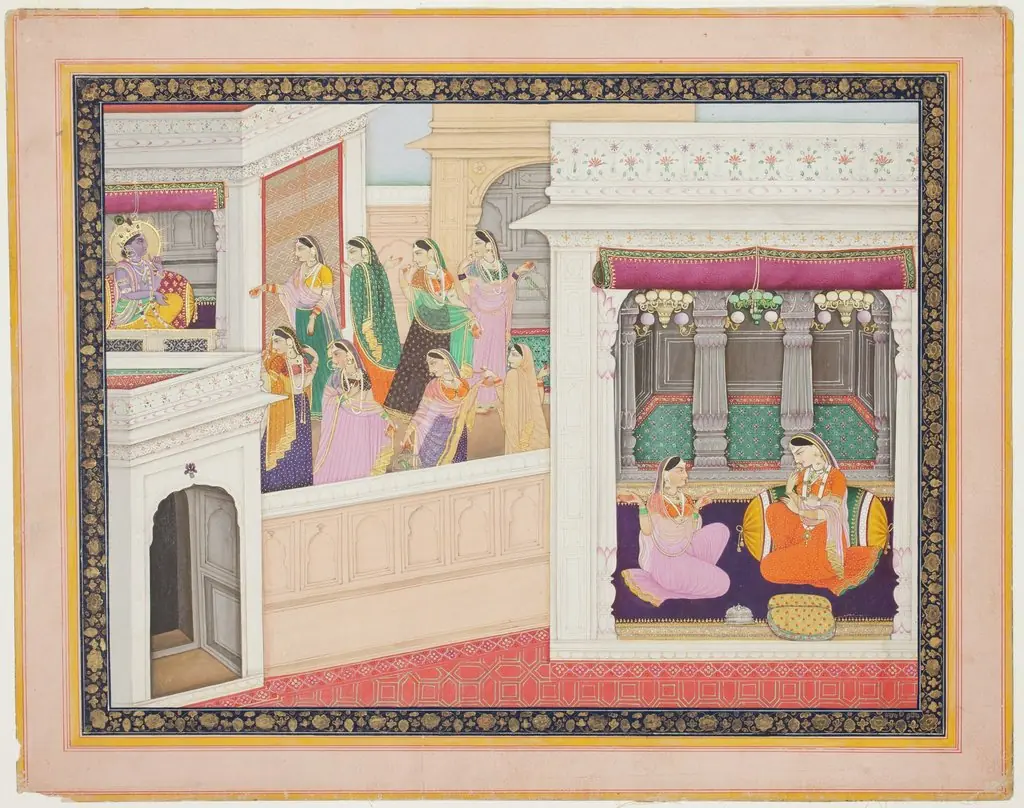 Krishna and Radha: Court Scene
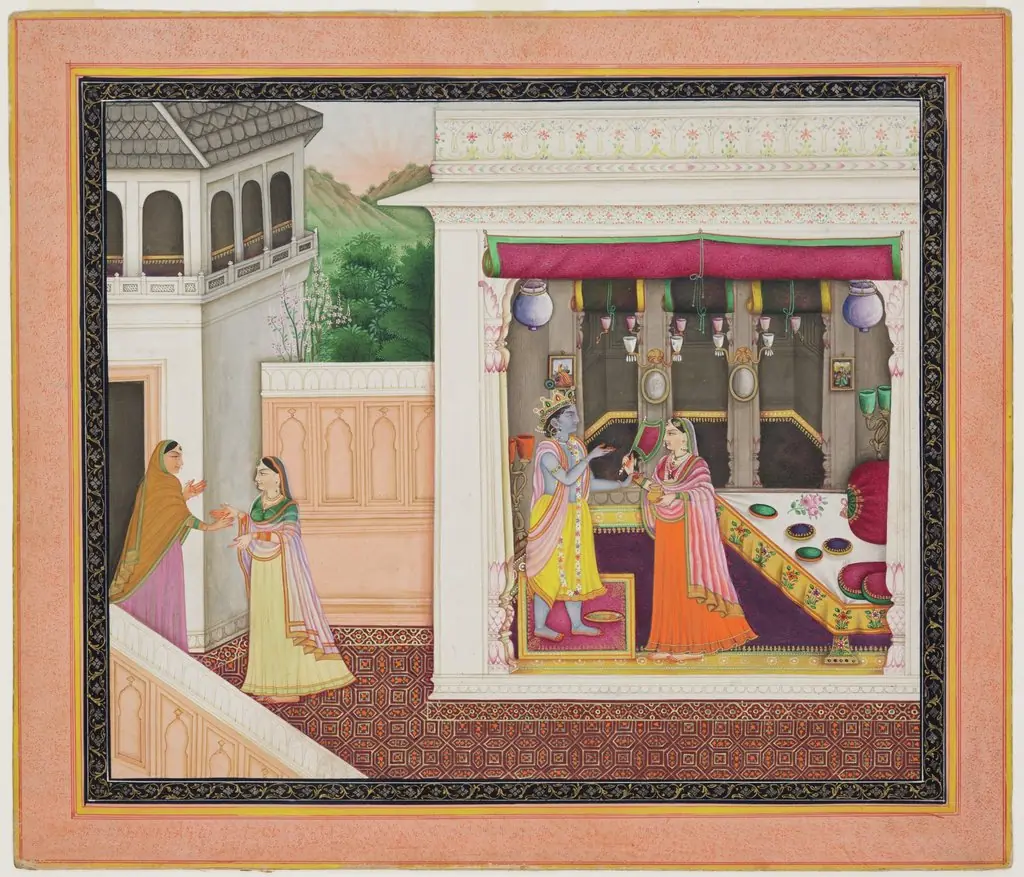 Story of Krishna and Radha
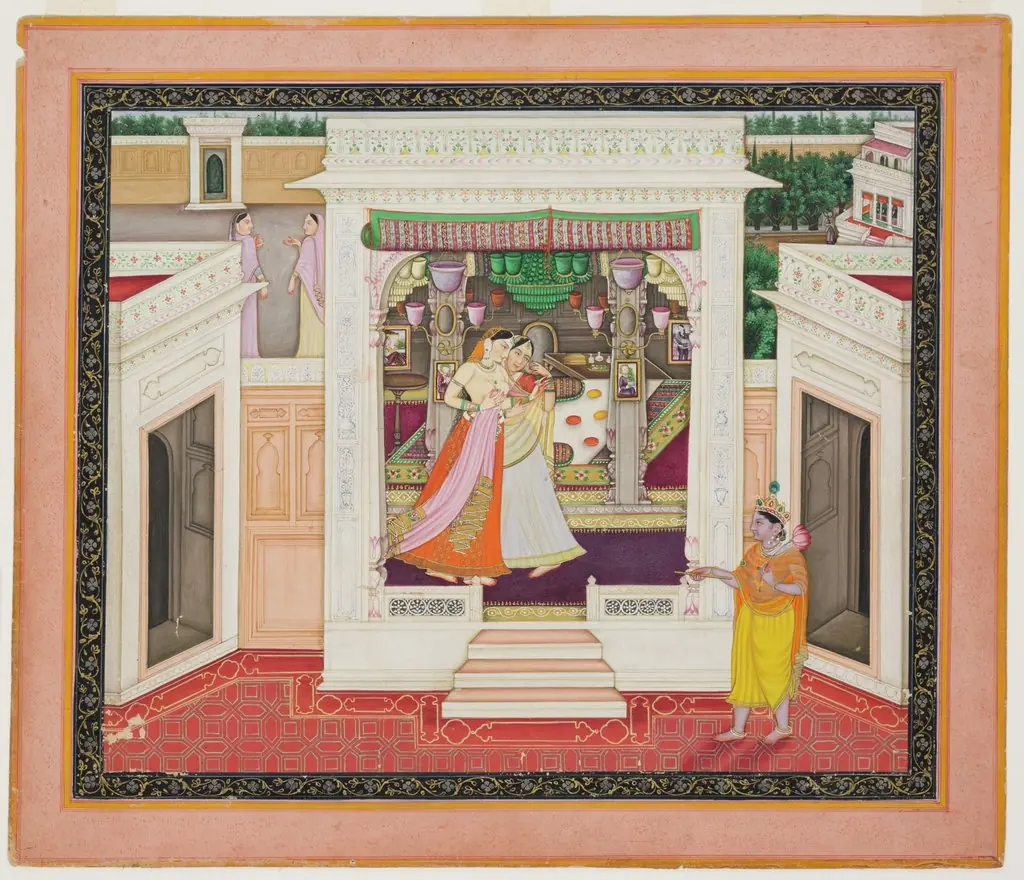 Story of Krishna and Radha
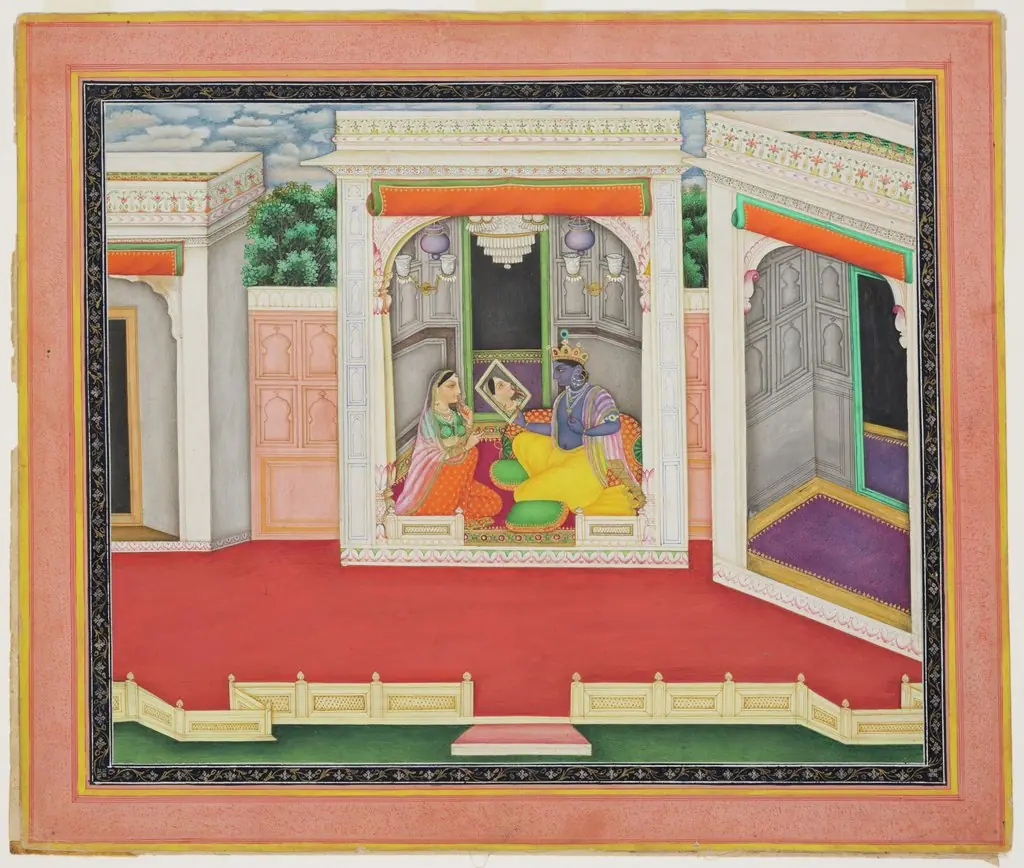 Story of Krishna and Radha
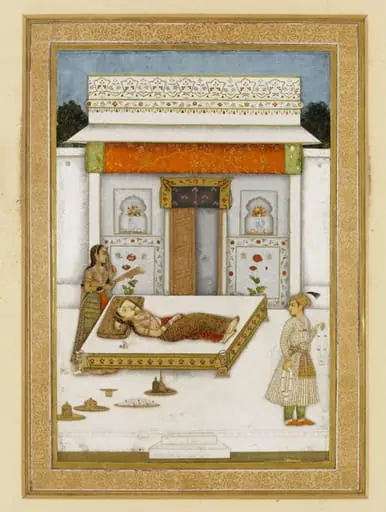 Lalita Ragini
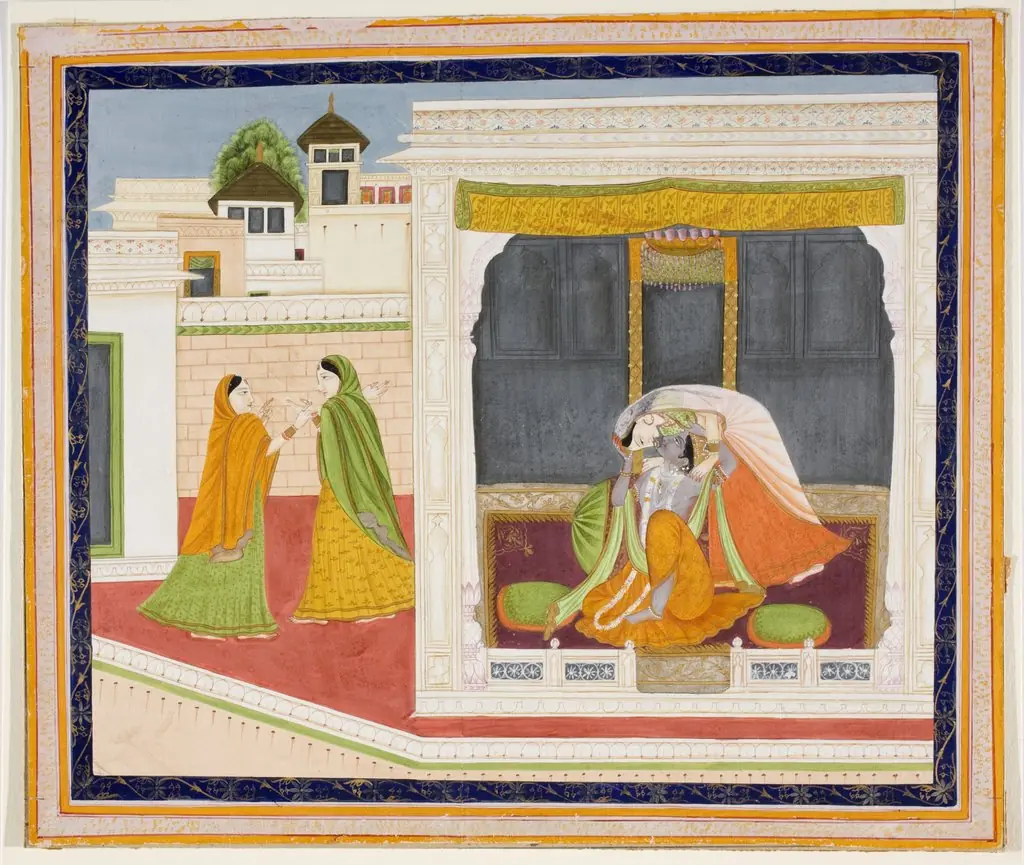 Radha and Krishna in Dalliance
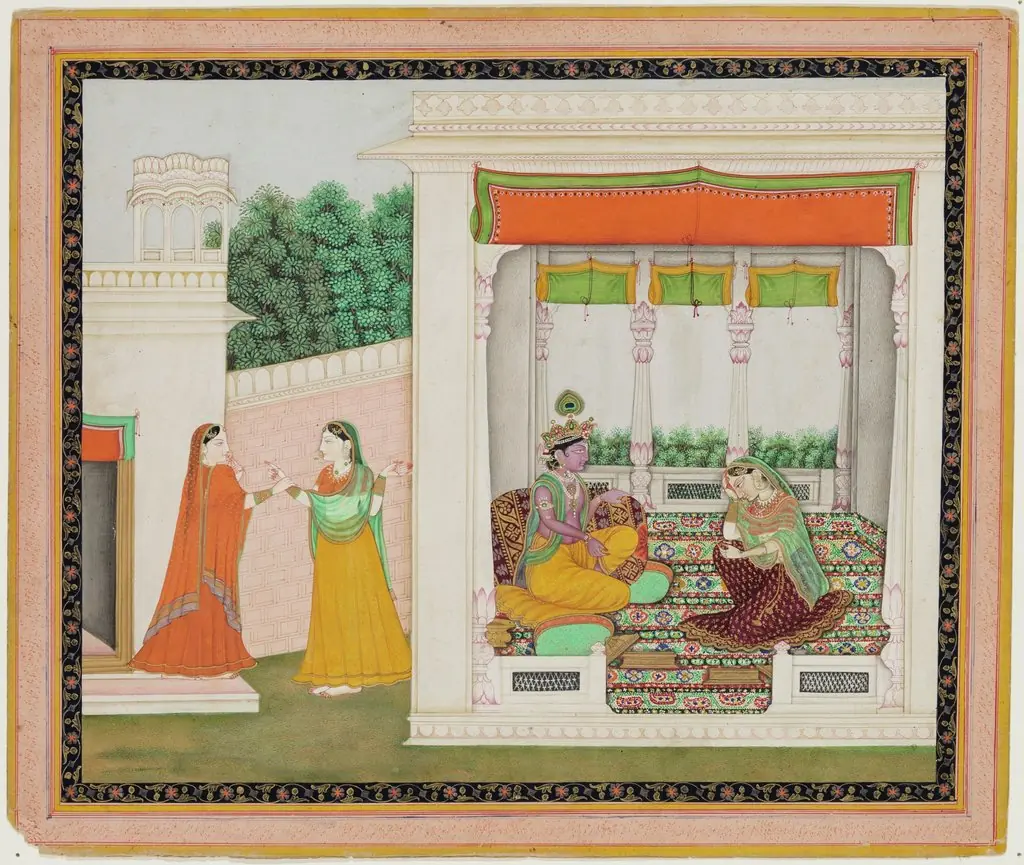 Story of Krishna and Radha
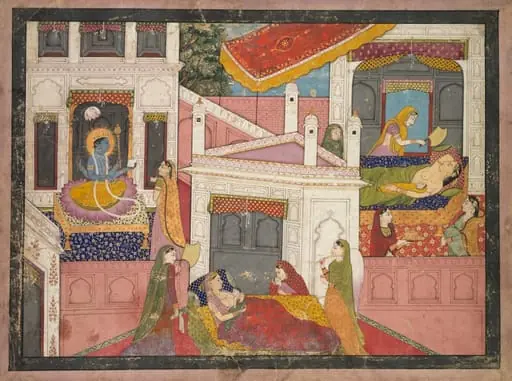 The birth of Rama and his brothers, from Chapter 17 of the Bala Kanda (Book of Childhood) of the Adhyatma Ramayana (Rama's Journey of the Supreme Spirit) from the Brahmanda Purana (Ancient Scripture of the Cosmic Egg)
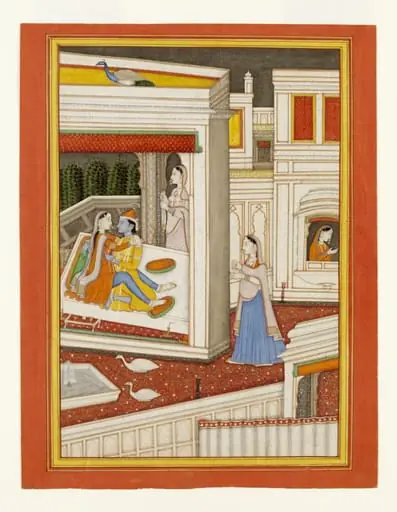 Untitled
 Krishna and Radha: Court Scene