Artwork
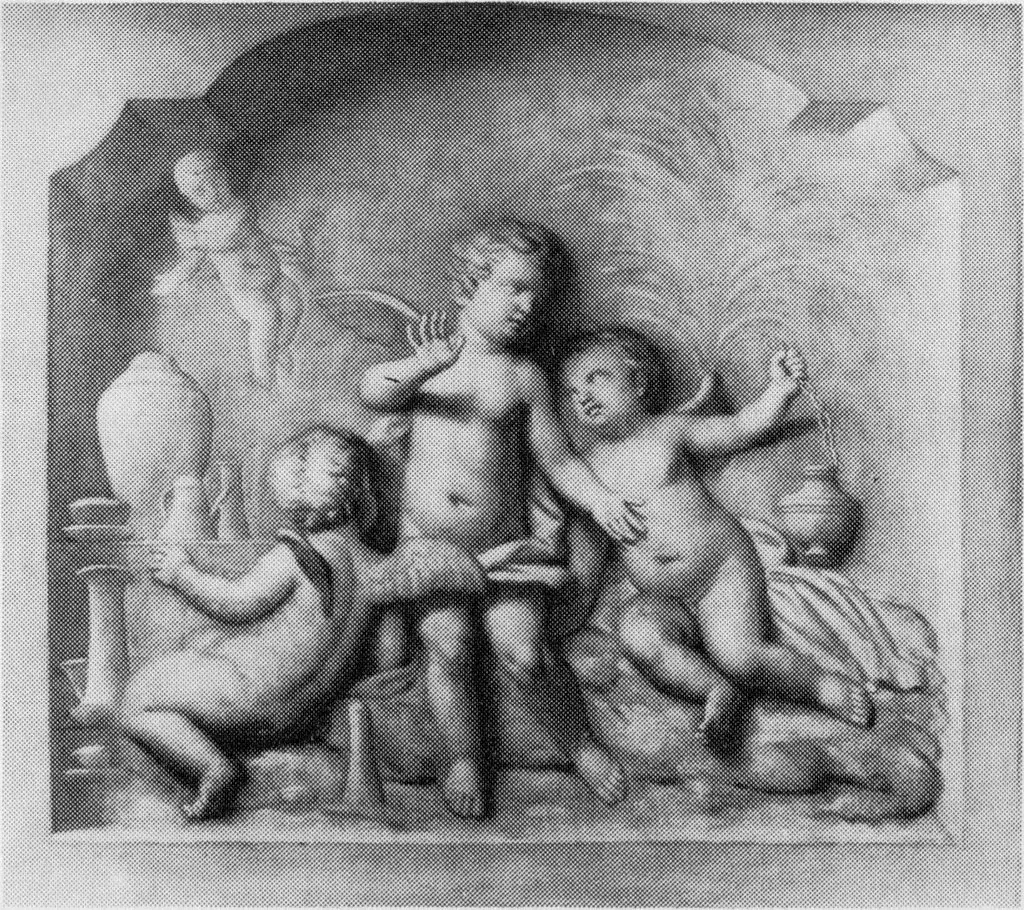
Decoratiestuk met drie putti
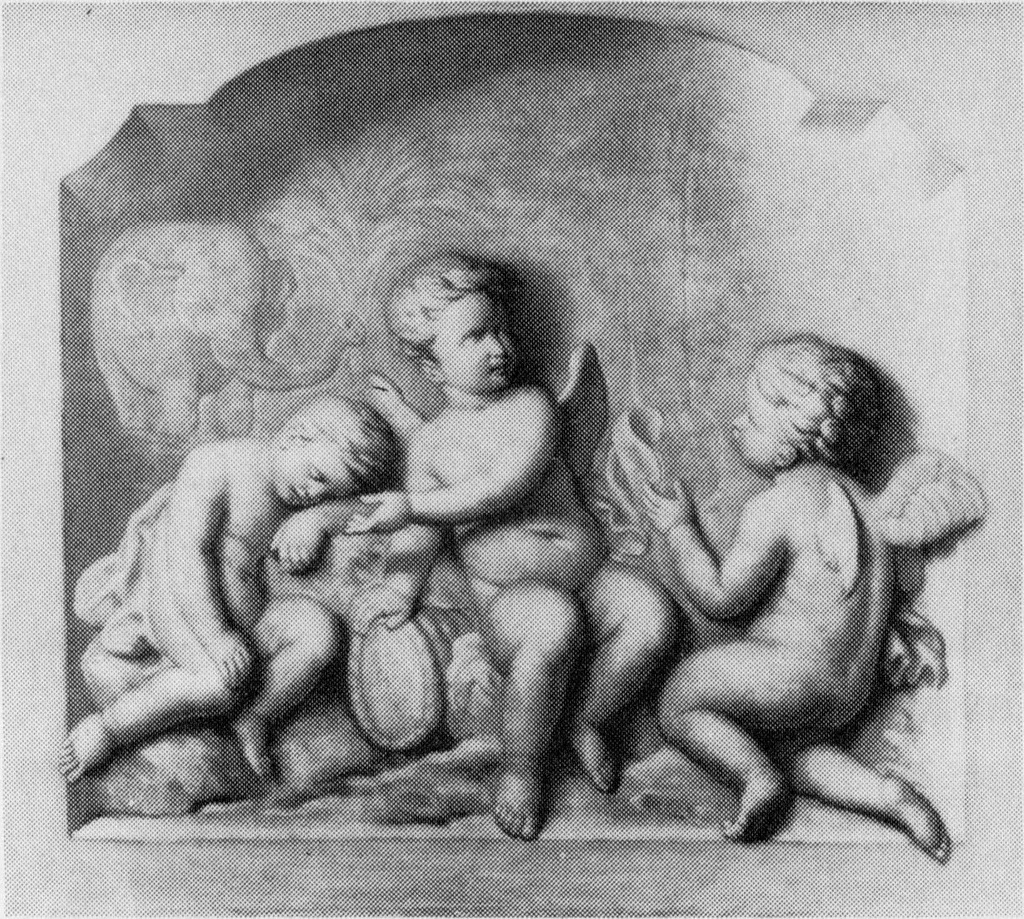
Decoratiestuk met drie putti is an oil painting by the Dutch Golden Age artist Unknown. It dates from 1696 and is held in the collection of the Rijksmuseum. The work is an oil painting that presents three diminutive, rounded figures known as putti.
About this work
Overview
The work is an oil painting that presents three diminutive, rounded figures known as putti. The children are intertwined in mid‑air, each displaying a casual pose: one grasps a scroll, another leans on a companion, while the third appears to support the pair. The composition lacks a discernible background, focusing attention entirely on the figures themselves.
Subject & Meaning
The putti, traditionally symbolic of innocence or divine presence, are rendered here in a lighthearted, almost mischievous manner. Their tangled arrangement suggests playful interaction rather than solemn allegory, and the inclusion of a scroll hints at a possible narrative element, perhaps alluding to learning or communication within a decorative context.
Technique & Style
The artist employs smooth gradations of tone to model the bodies, achieving a convincing three‑dimensional effect despite the flat, unadorned space. This approach, typical of late‑seventeenth‑century decorative panels, emphasizes surface charm and ornamental appeal, using subtle chiaroscuro to define volume while maintaining a gentle, harmonious palette.
Context
Paintings of putti were popular in the decorative arts of the late 1600s, often used to enliven interiors or fill architectural niches. Their presence in such works reflects a broader aesthetic trend that favored whimsical, mythological figures to add visual interest without overt narrative weight, aligning with the period’s taste for elegant, light decorative motifs.
Artist & collection

 Domestic Scene
 Giacomo and Cardinal Marco, investing Andrea, Abbot of San Zeno, with his Benefice
 The Nymph of Fontainebleau
 Portrait of a Woman
 Madonna and Child with Saints in the Enclosed Garden
 Venus and Minerva
 Family Group of Four on Sofa
 Wall painting from Room H of the Villa of P. Fannius Synistor at Boscoreale
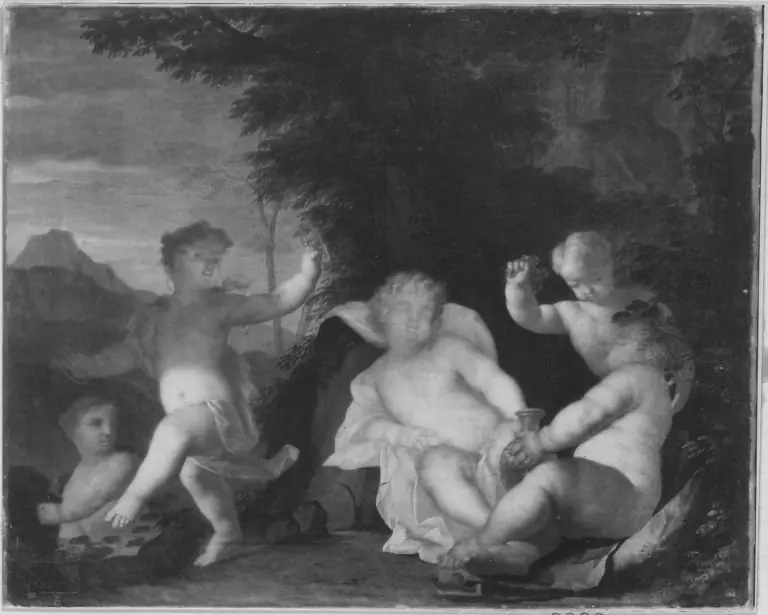 Der Herbst
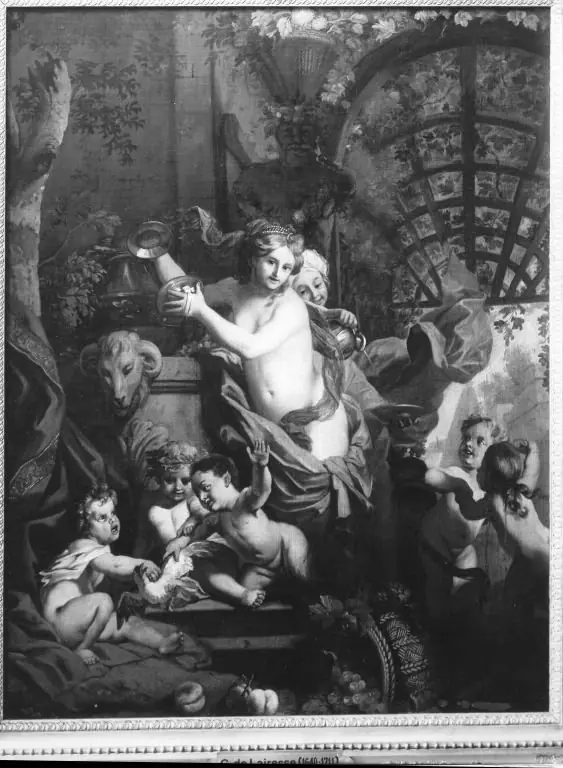 Ein bacchantisches Fest (zugeschrieben)
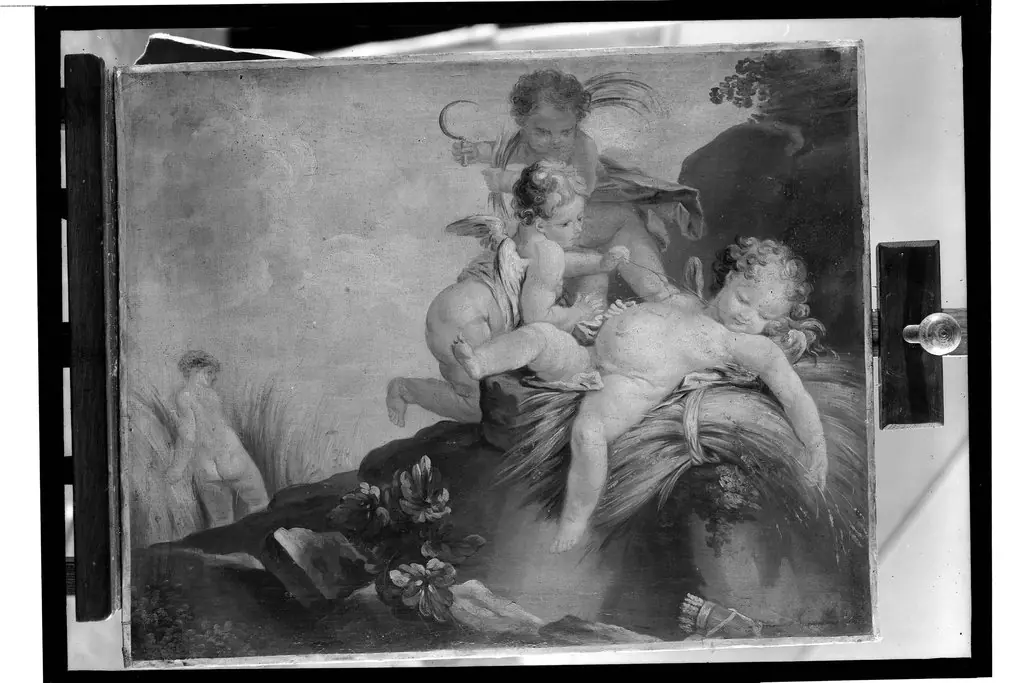 Putta playing in the grain field (L'amour moissonneur)
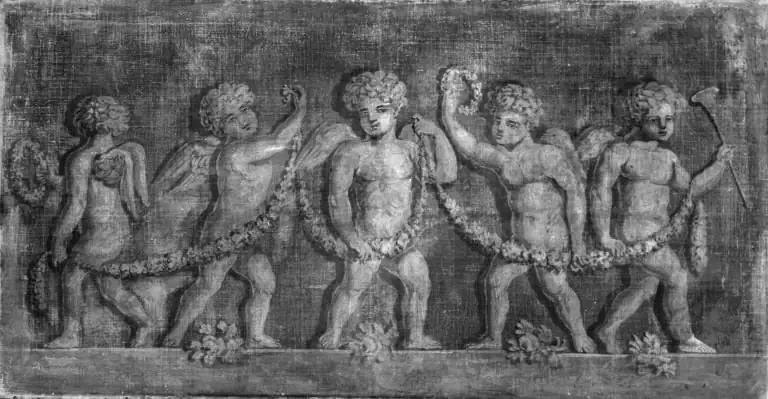 Fem genier med guirlander
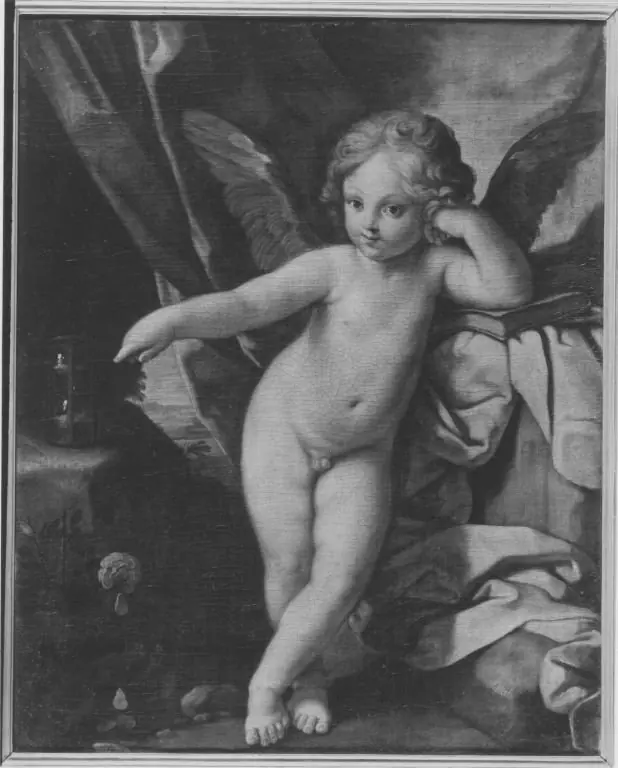 Genius of Transience
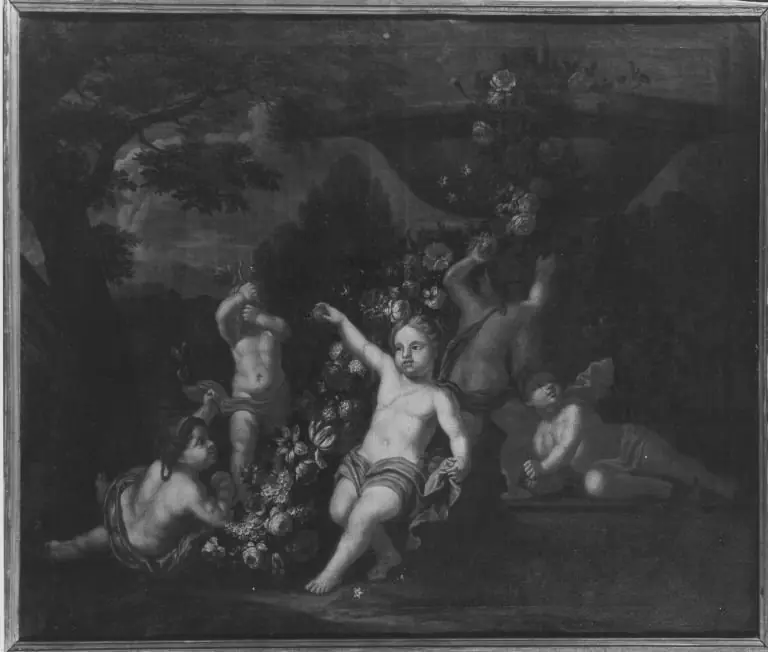 Puttengruppe mit Blumen (?)
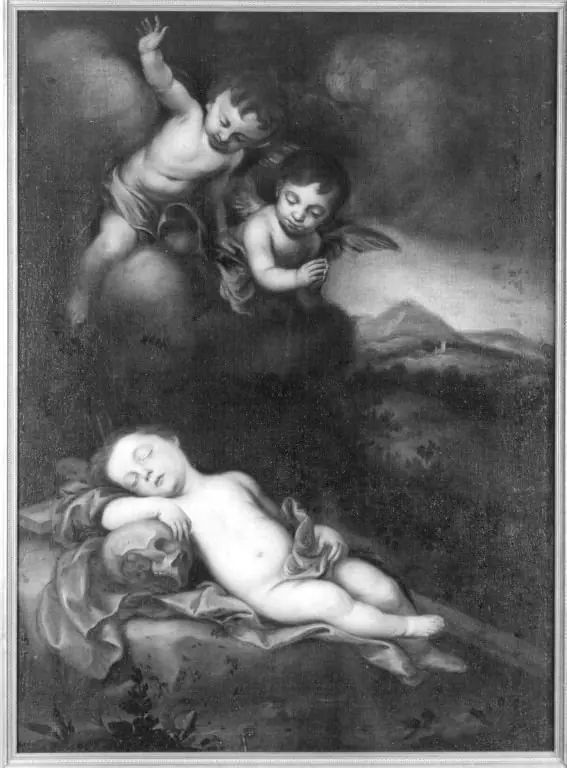 Schlafender Jesusknabe mit Engeln (Nachfolger)
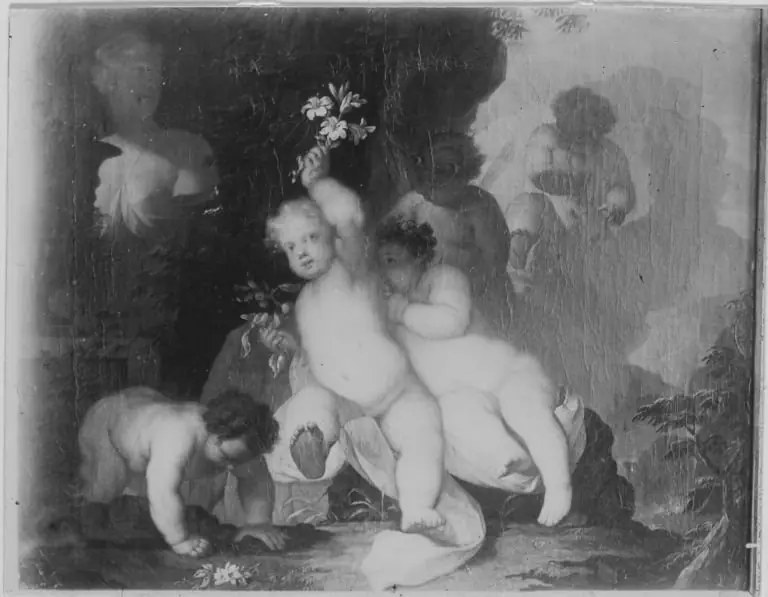 Der Frühling
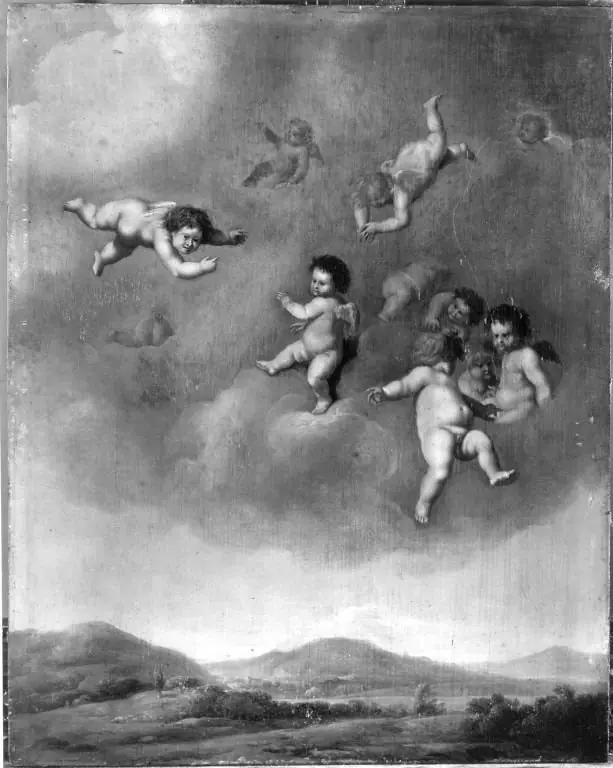 Putten am Himmel
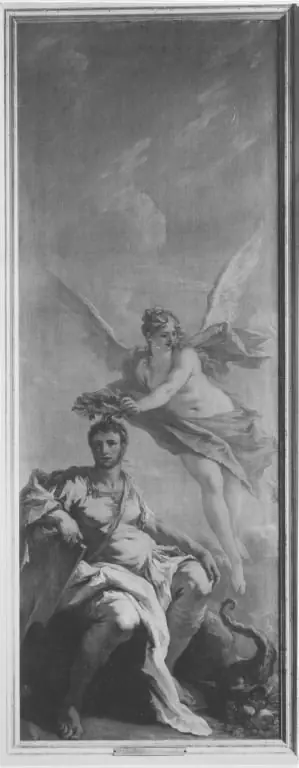 Die Krönung des Siegers
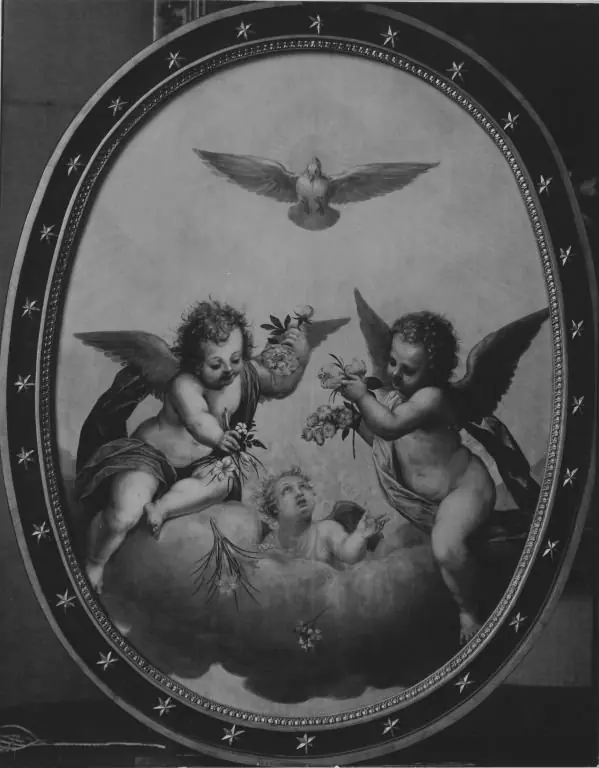 Die Taube des Heiligen Geistes mit blumenstreuenden Engeln (und Werkstatt)
 Decoratiestukken met drie putti