Artwork
Page from Tales of a Parrot (Tuti-nama): text page
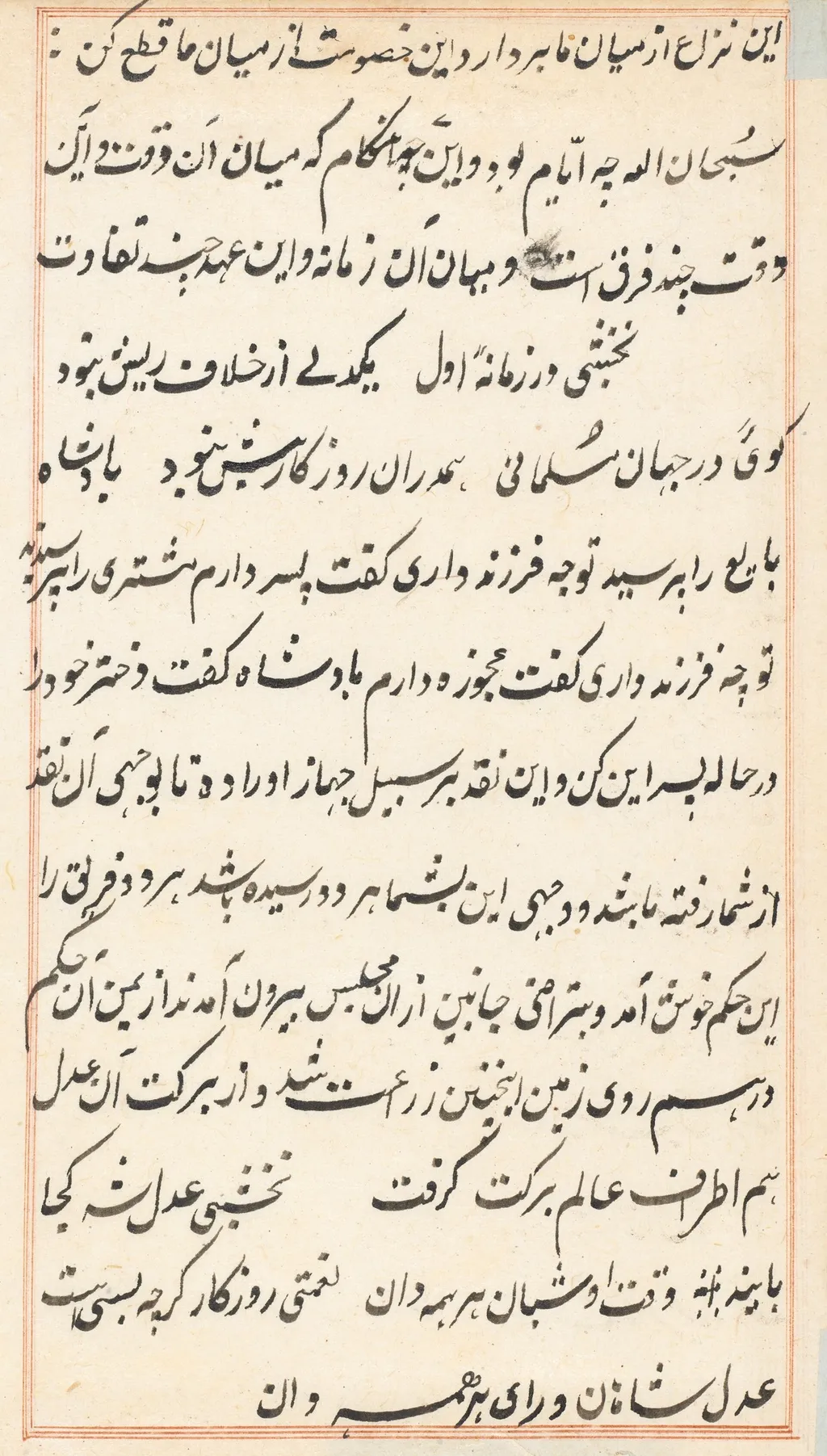
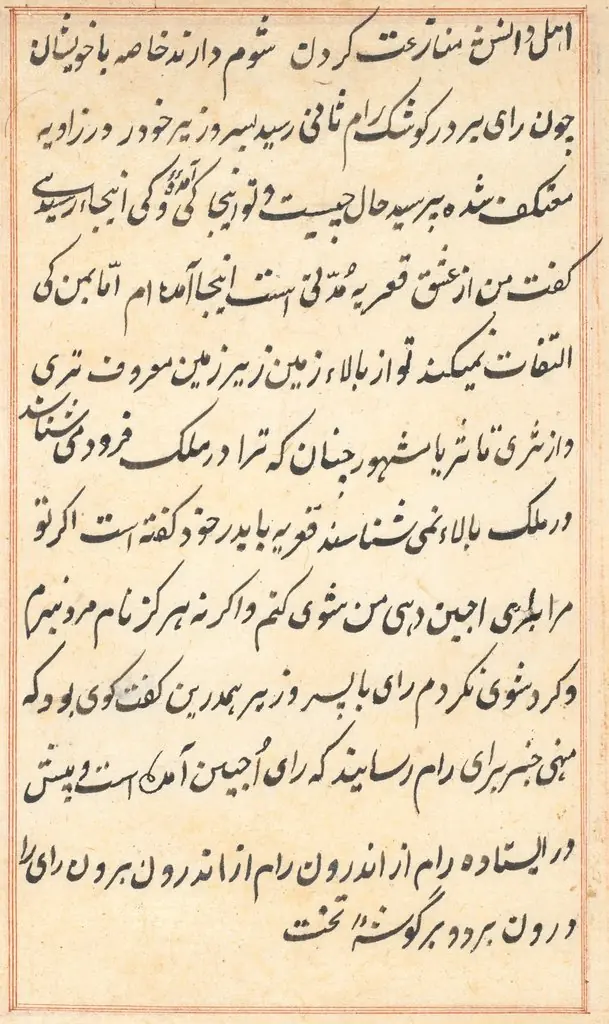
Page from Tales of a Parrot (Tuti-nama): text page is an unspecified painting. It dates from 1560 and is held in the collection of the Cleveland Museum of Art. The object is a single page from the Persian manuscript known as *Tuti‑nama* (Tales of a Parrot).
About this work
Overview
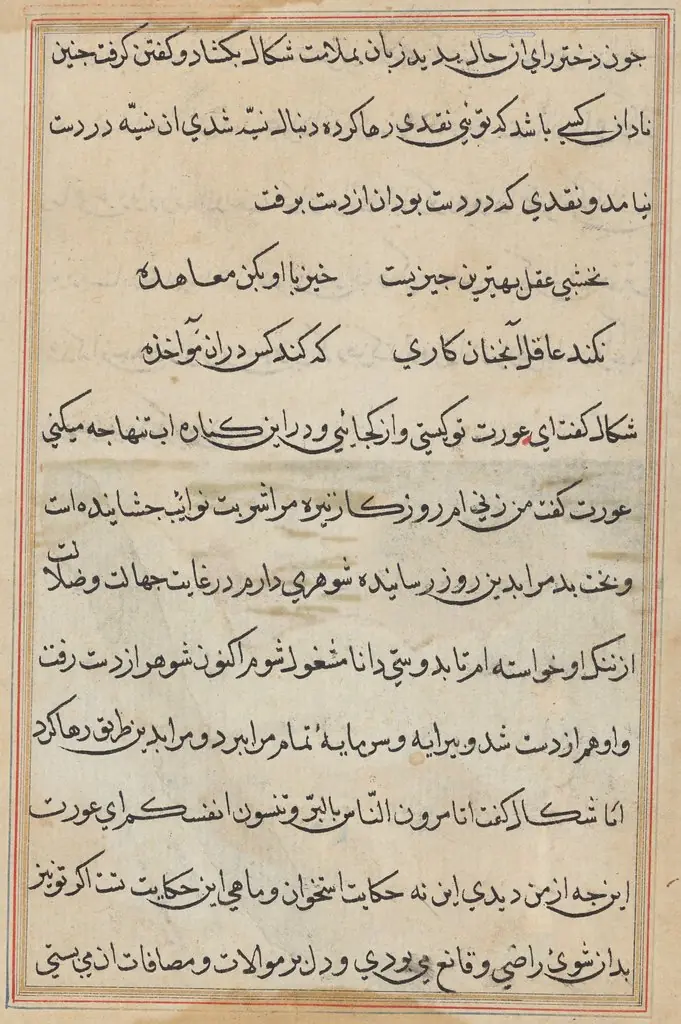
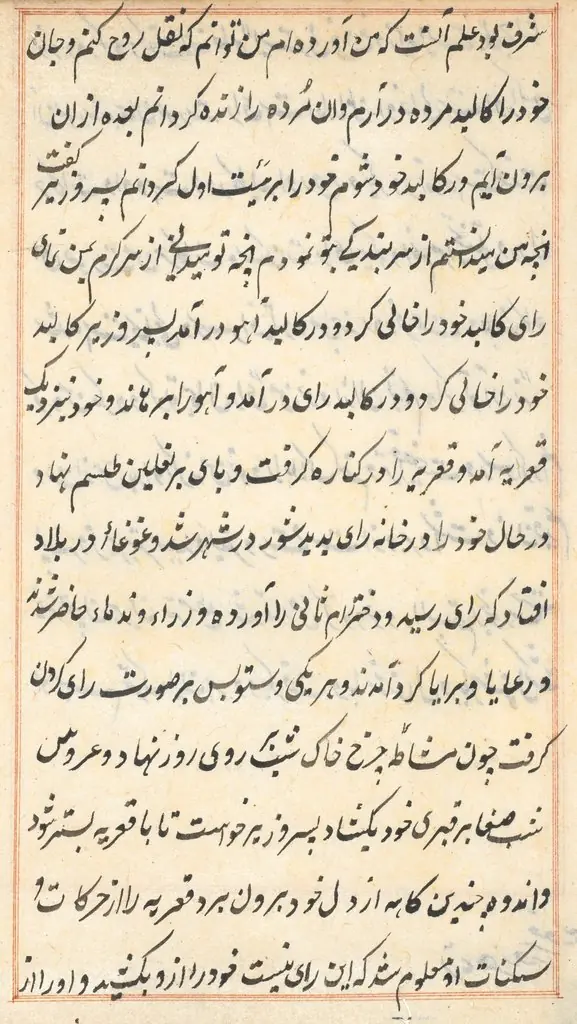
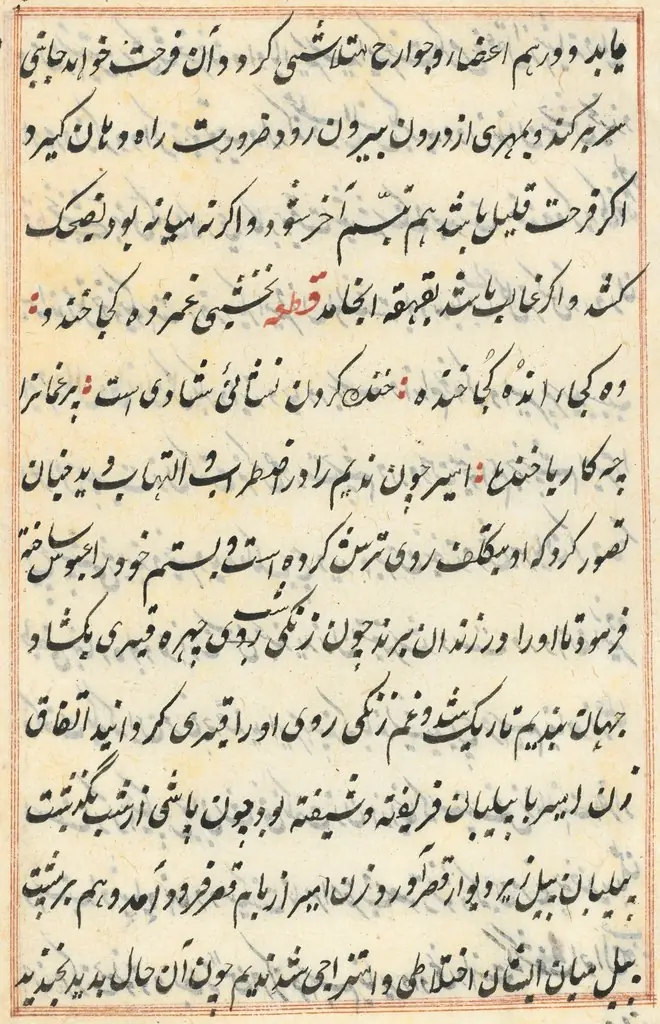
The object is a single page from the Persian manuscript known as *Tuti‑nama* (Tales of a Parrot). Rendered entirely in black ink on a light‑coloured, slightly yellowed paper, the page contains only calligraphic text without any accompanying illustrations. A thin red line borders the margin, giving the sheet a modest decorative edge.
Subject & Meaning
The page presents a passage from the *Tuti‑nama*, a collection of moral and didactic stories traditionally used for instruction. The text, rendered in a flowing, ornamental script, conveys the narrative’s ethical themes through its literary content rather than visual imagery.
Technique & Style
The calligraphy is executed by hand, displaying subtle variations in line thickness that indicate a skilled brush technique. The script is tightly set, filling the surface efficiently while maintaining legibility. The red border is applied with a fine brush, providing a restrained contrast to the monochrome text.
History & Provenance
This leaf originates from a Persian manuscript tradition dating to the late medieval period, when illuminated books were produced for elite patrons. The specific copy of the *Tuti‑nama* from which this page derives is part of a collection that entered the Cleveland Museum of Art, though the exact acquisition details are not provided.
Context
Manuscript pages such as this illustrate the importance of calligraphic art in Persian cultural production, where the visual presentation of text was considered an aesthetic achievement. The use of a red marginal line reflects a common decorative practice to delineate the written area without employing full illumination.
Legacy
Pages like this serve as primary evidence of the interplay between literary content and visual form in Persian book arts, informing contemporary scholarship on manuscript production, calligraphic styles, and the transmission of moral literature across the Islamic world.
Artist & collection

 Page from Tales of a Parrot (Tuti-nama): text page
 Page from Tales of a Parrot (Tuti-nama): text page
 Page from Tales of a Parrot (Tuti-nama): text page
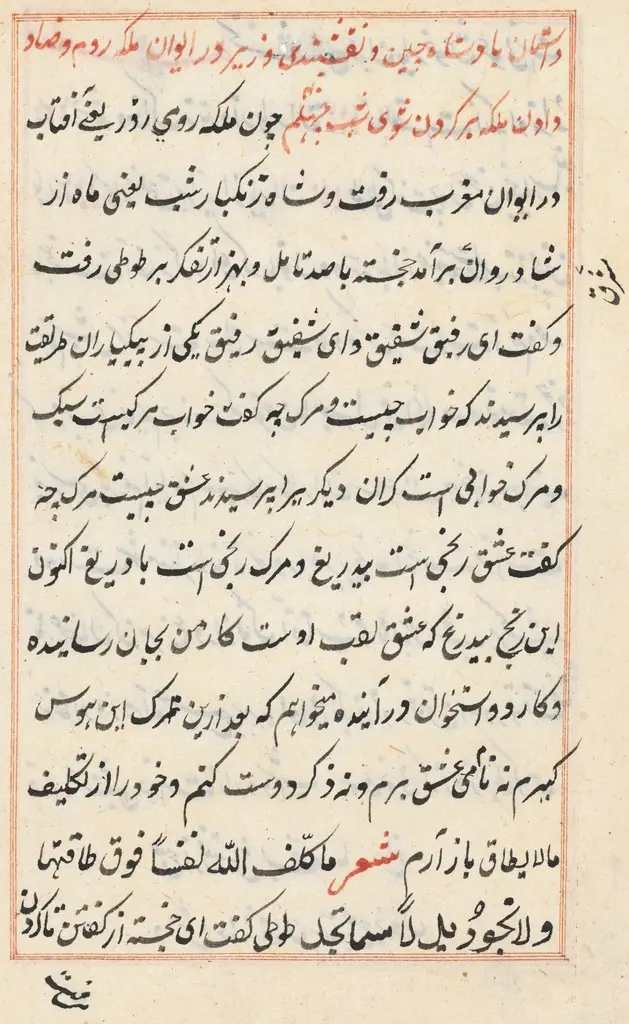 Page from Tales of a Parrot (Tuti-nama): text page
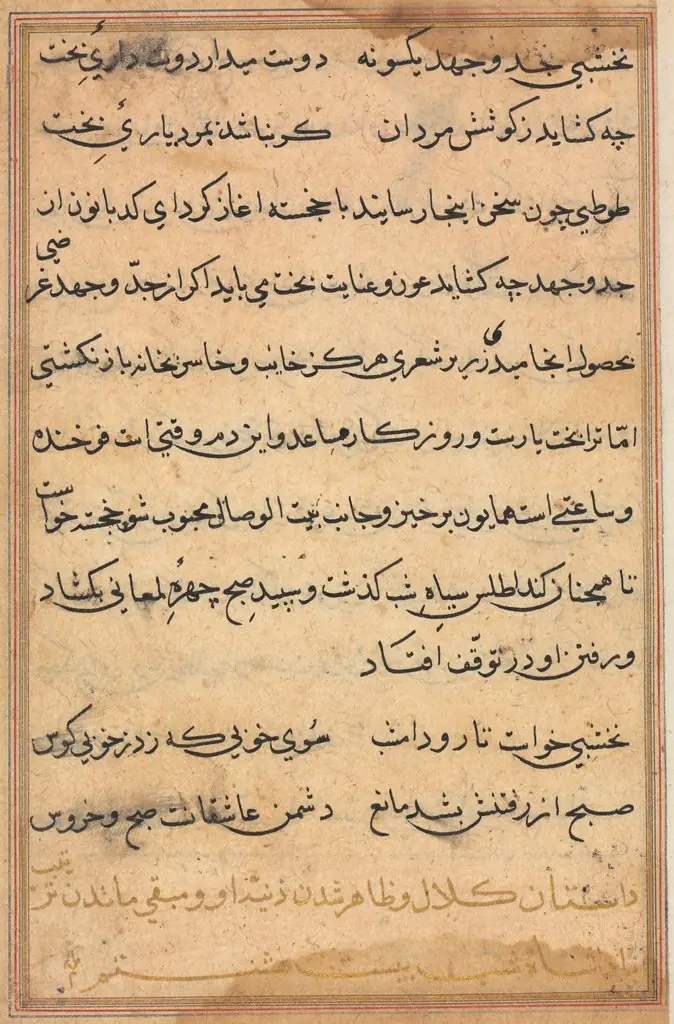 Page from Tales of a Parrot (Tuti-nama): text page
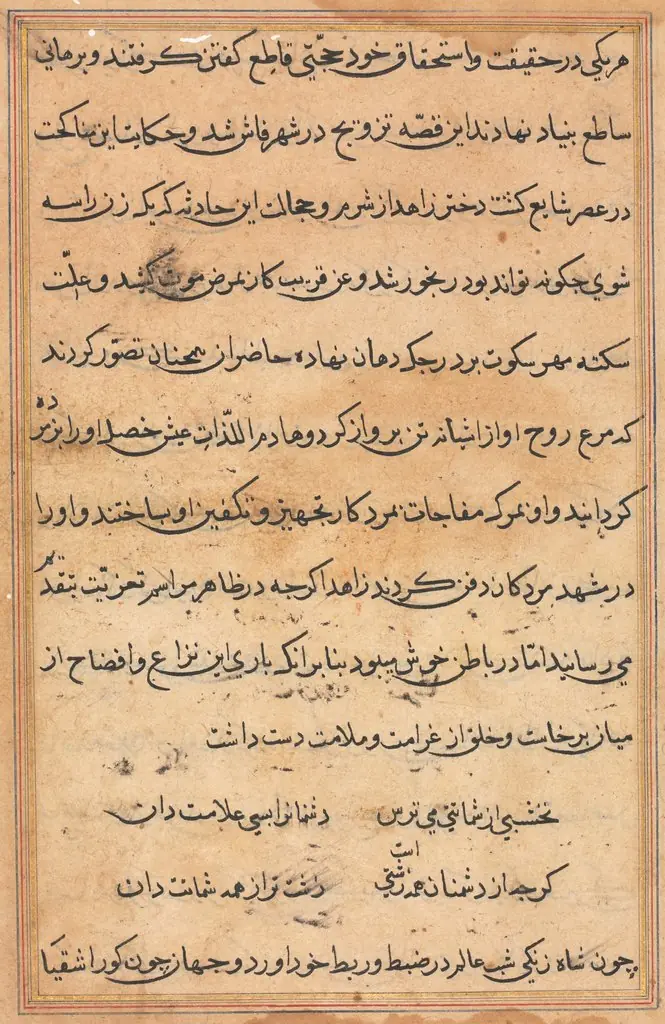 Page from Tales of a Parrot (Tuti-nama): text page
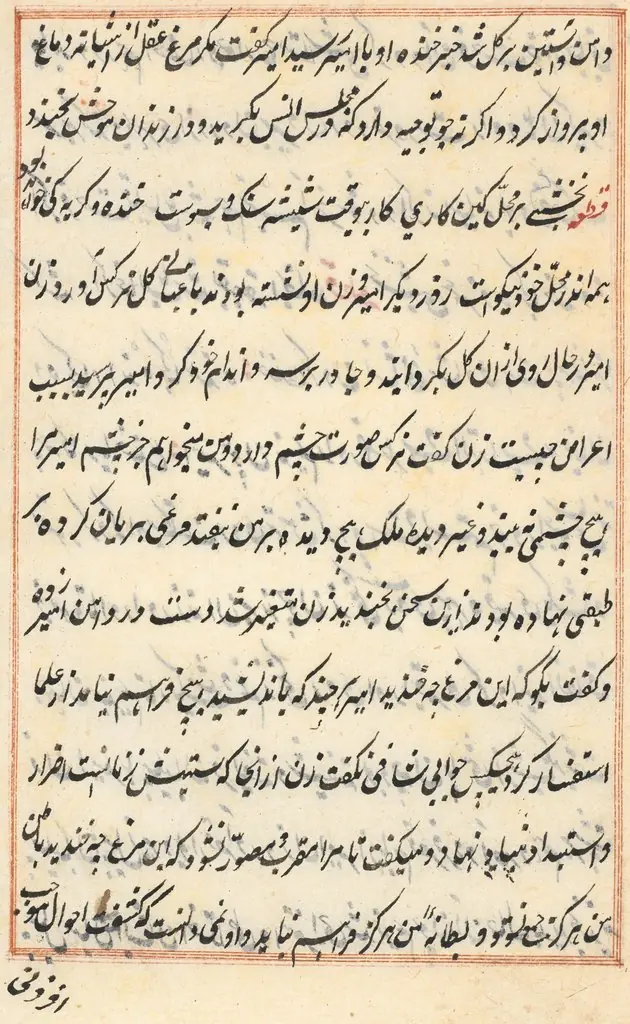 Page from Tales of a Parrot (Tuti-nama): text page
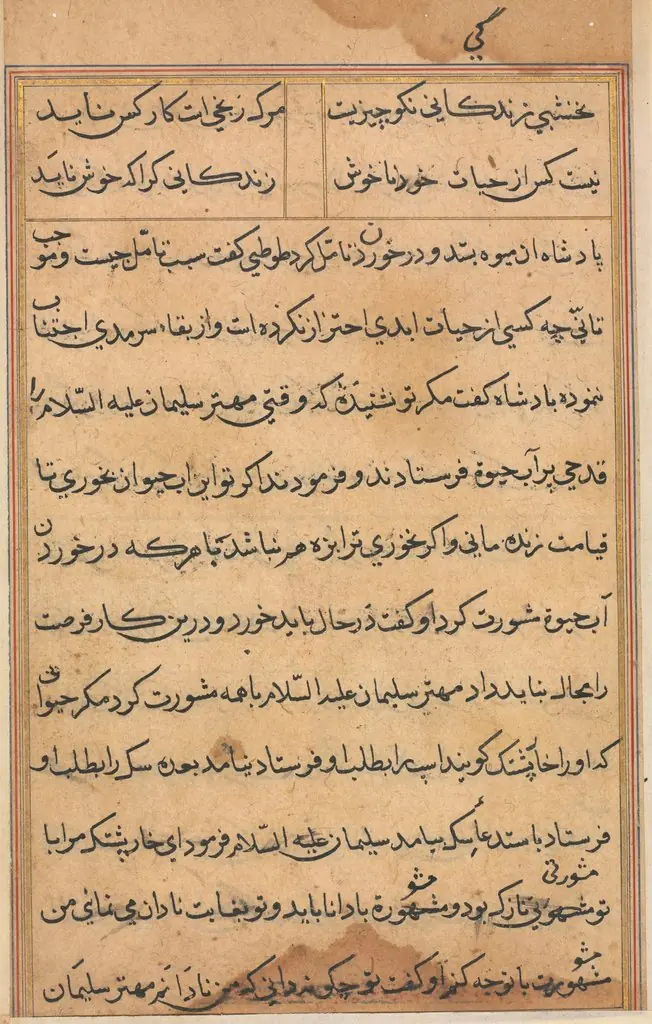 Page from Tales of a Parrot (Tuti-nama): text page
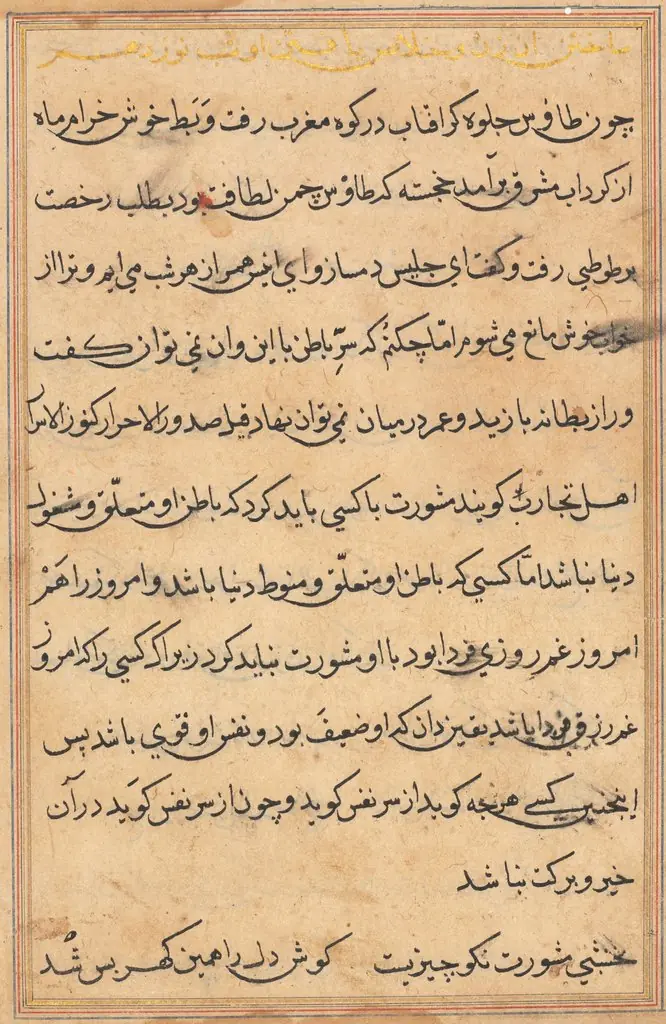 Page from Tales of a Parrot (Tuti-nama): text page
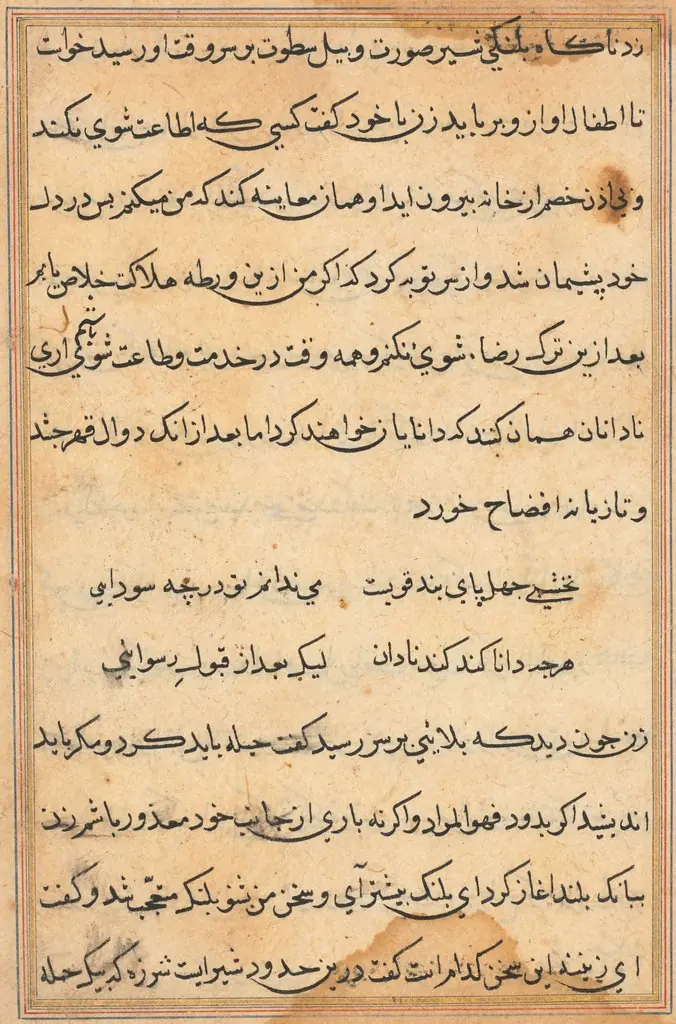 Page from Tales of a Parrot (Tuti-nama): text page
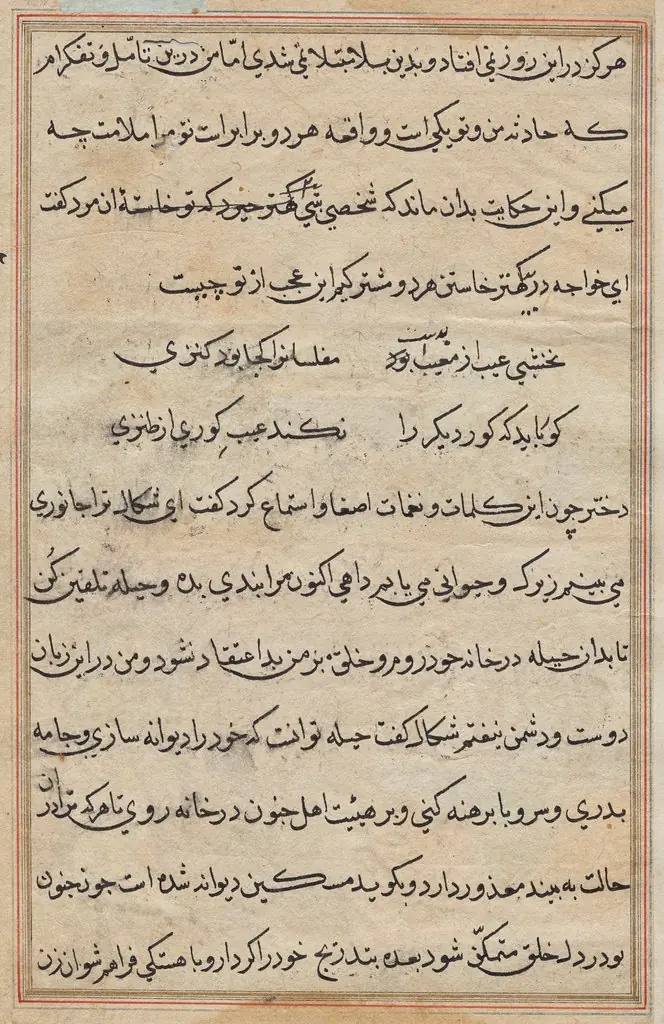 Page from Tales of a Parrot (Tuti-nama): text page
 Page from Tales of a Parrot (Tuti-nama): text page