Artwork
Page from Tales of a Parrot (Tuti-nama): text page
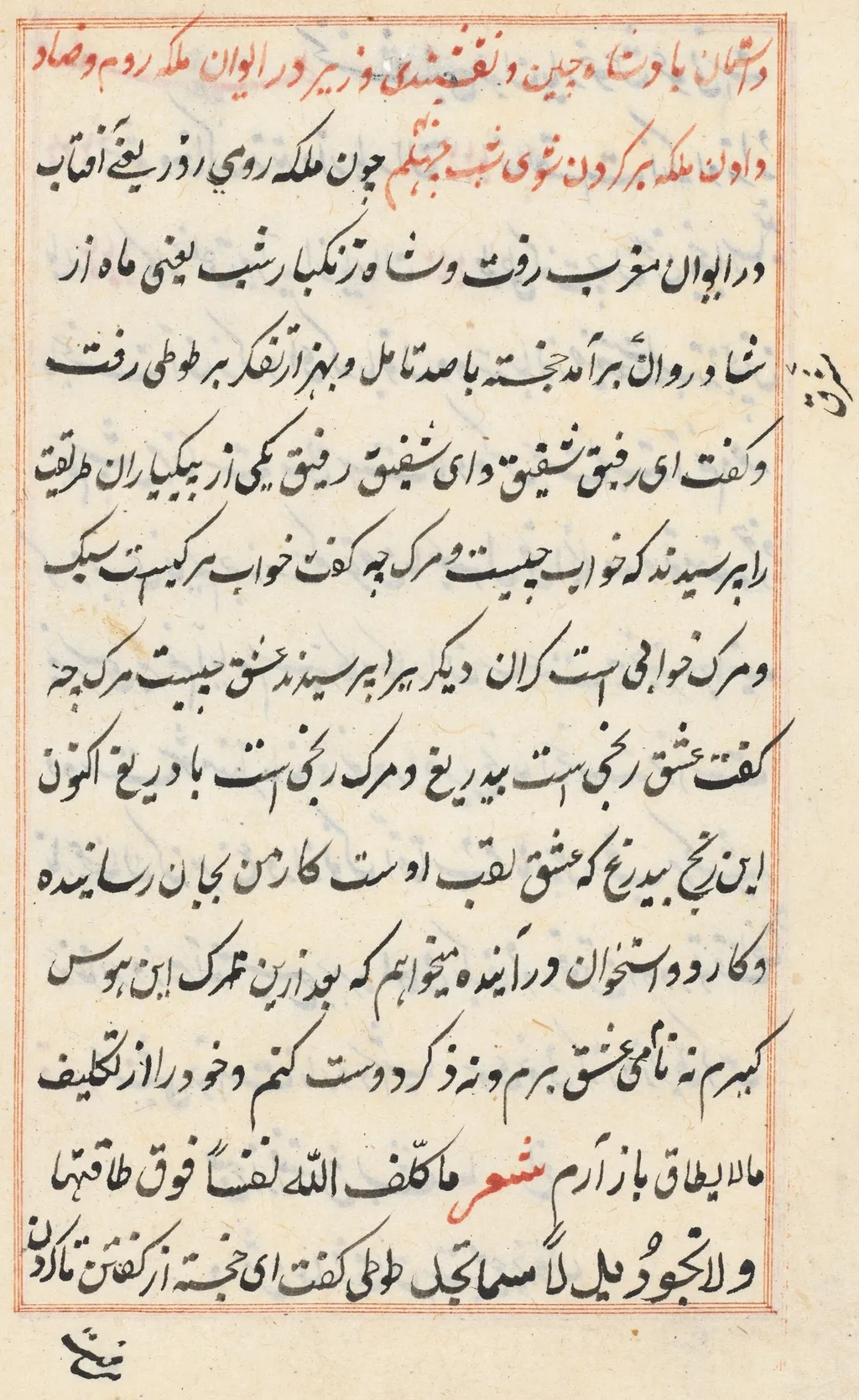
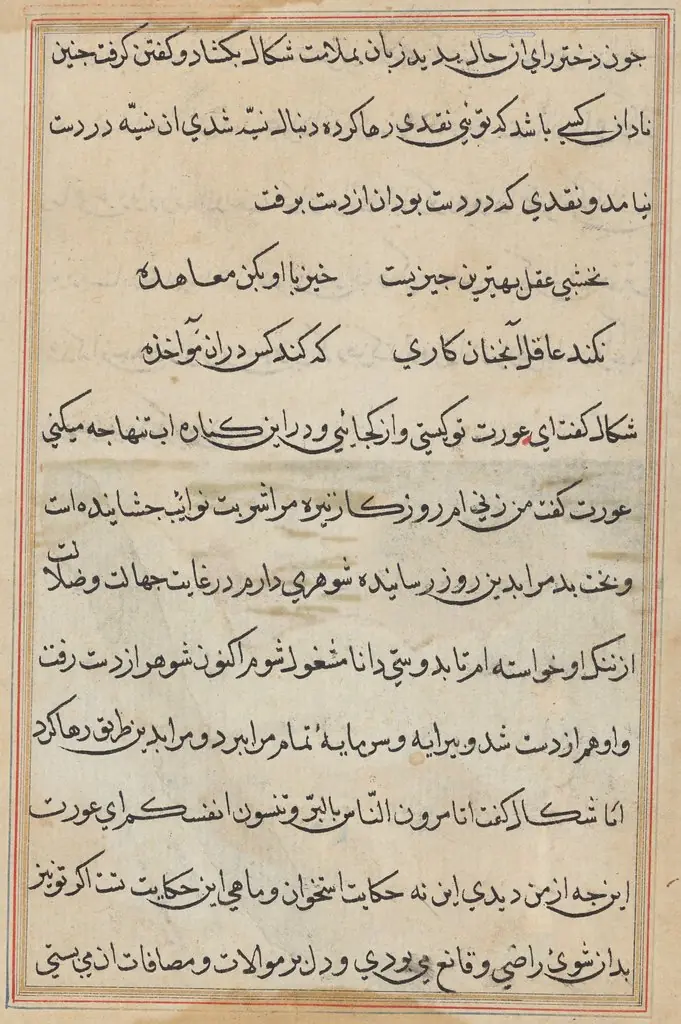
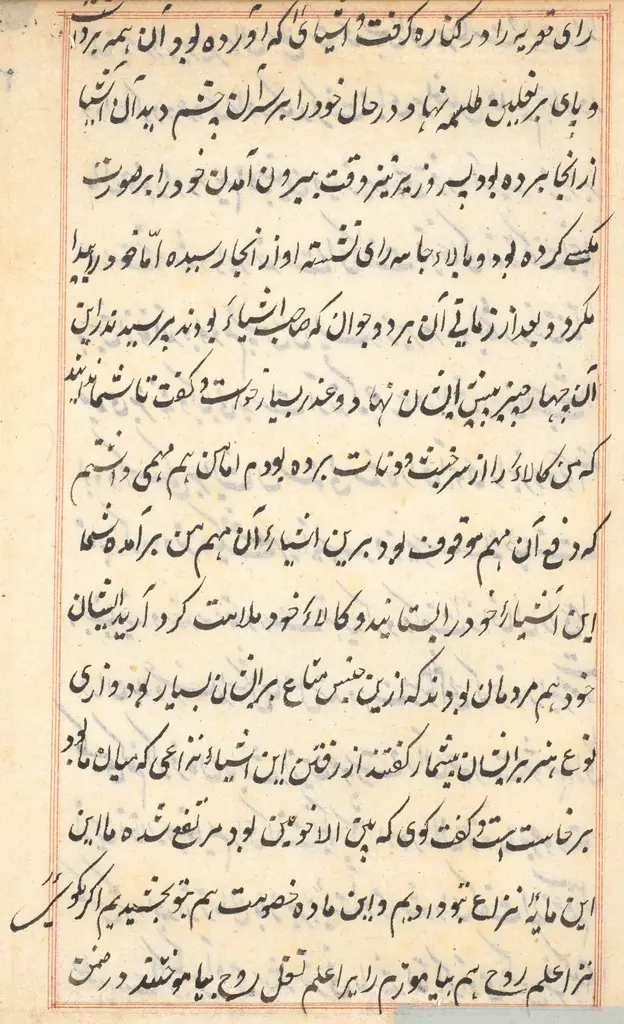
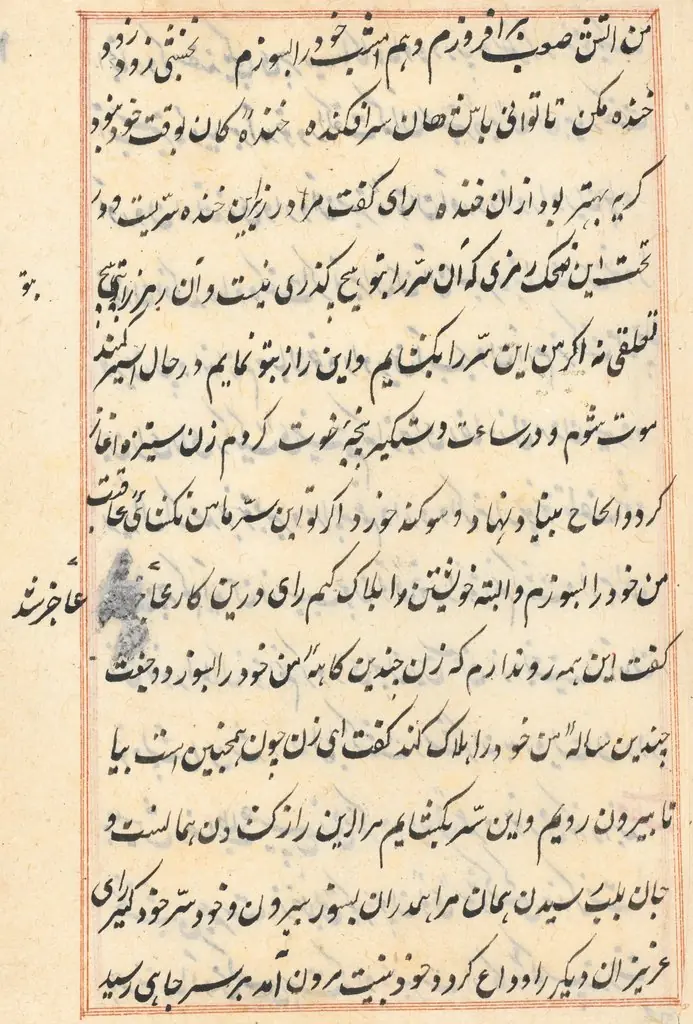
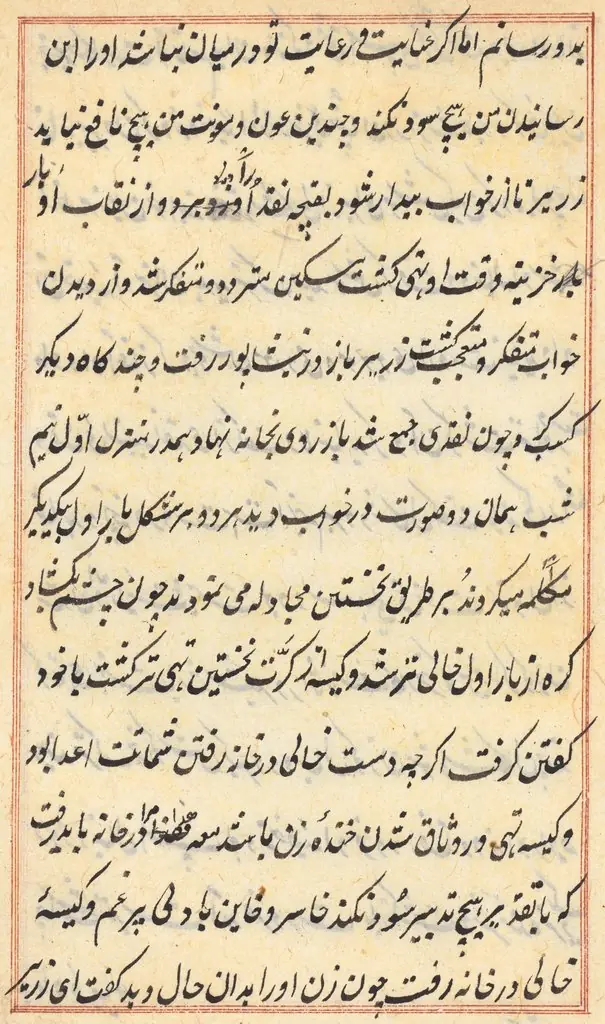
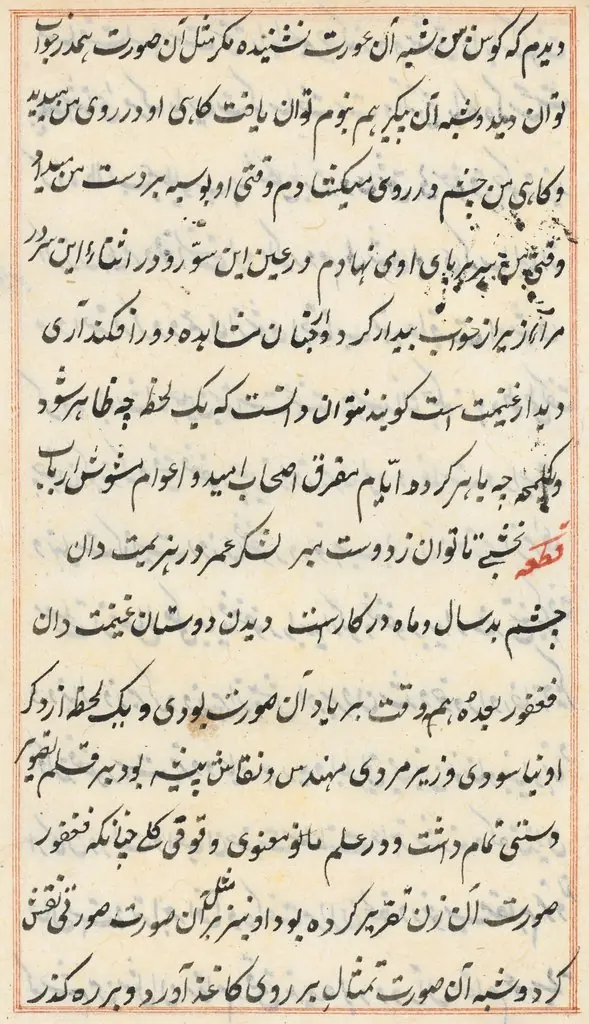
Page from Tales of a Parrot (Tuti-nama): text page is an unspecified painting. It dates from 1560 and is held in the collection of the Cleveland Museum of Art. This object is a single folio from the Persian illustrated manuscript known as the Tales of a Parrot, or Tuti‑nama.
About this work
Overview
This object is a single folio from the Persian illustrated manuscript known as the Tales of a Parrot, or Tuti‑nama. The page consists of dense calligraphic text rendered in black ink, with strategic red highlights that draw attention to particular words or punctuation. A thin red line frames the page, providing a modest border.
Subject & Meaning
The text on the page is part of a larger narrative collection that blends moral anecdotes with poetic storytelling, a genre popular in medieval Persian literature. The red markings serve to emphasize key passages, guiding the reader through the moral or rhetorical highlights of the story.
Technique & Style
The calligraphy is executed in a flowing script, alternating between larger and smaller letterforms to create visual rhythm. Black ink forms the main body of the text, while a vivid red pigment—applied with a fine brush—highlights punctuation and important words. The background bears a subtle blue‑gray wash, providing contrast without overwhelming the script.
History & Provenance
The folio originates from a hand‑copied manuscript tradition that flourished in the Persianate world between the 14th and 16th centuries. It entered the collection of the Cleveland Museum of Art through acquisition in the 20th century, where it now resides as part of the museum’s Asian art holdings.
Context
Manuscript pages such as this were often produced in courtly workshops, where scribes and illuminators collaborated to create richly decorated books for elite patrons. The use of red ink for emphasis reflects a broader scribal convention in Islamic manuscripts, intended to aid oral recitation and private study.
Artist & collection

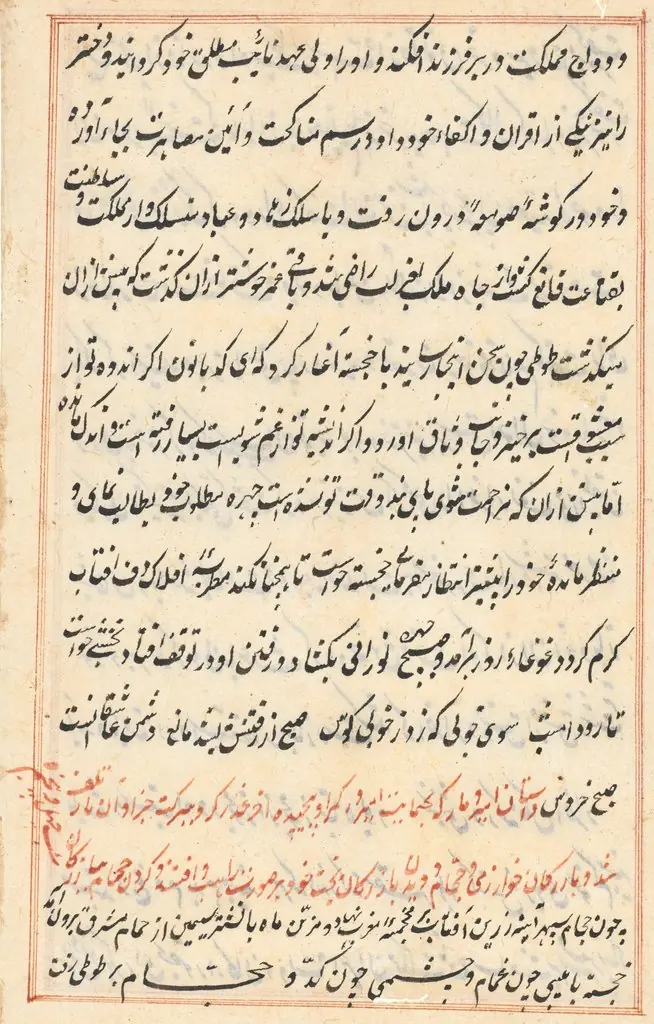 Page from Tales of a Parrot (Tuti-nama): text page
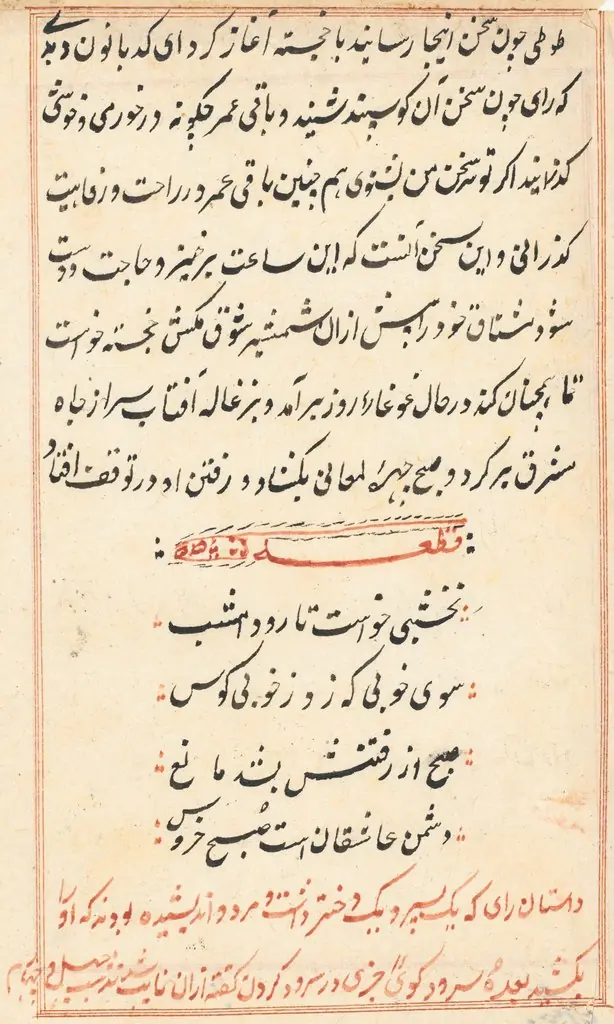 Page from Tales of a Parrot (Tuti-nama): text page
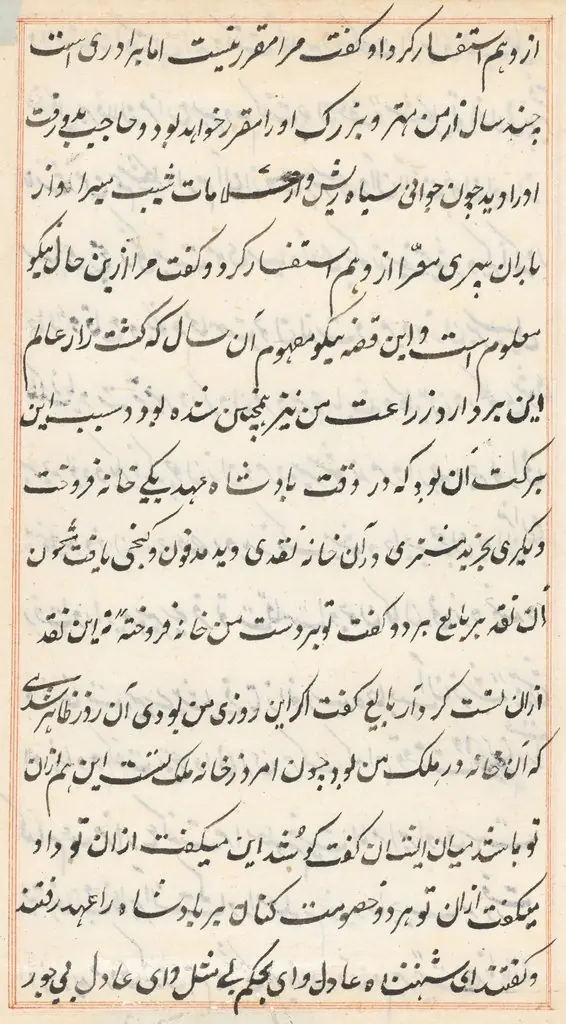 Page from Tales of a Parrot (Tuti-nama): text page
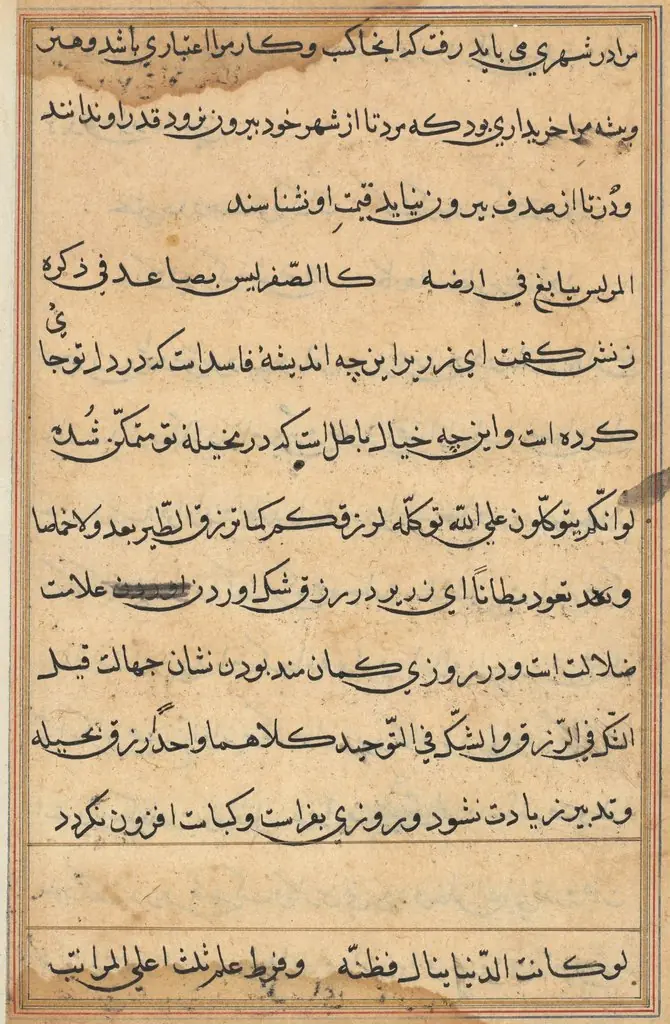 Page from Tales of a Parrot (Tuti-nama): text page
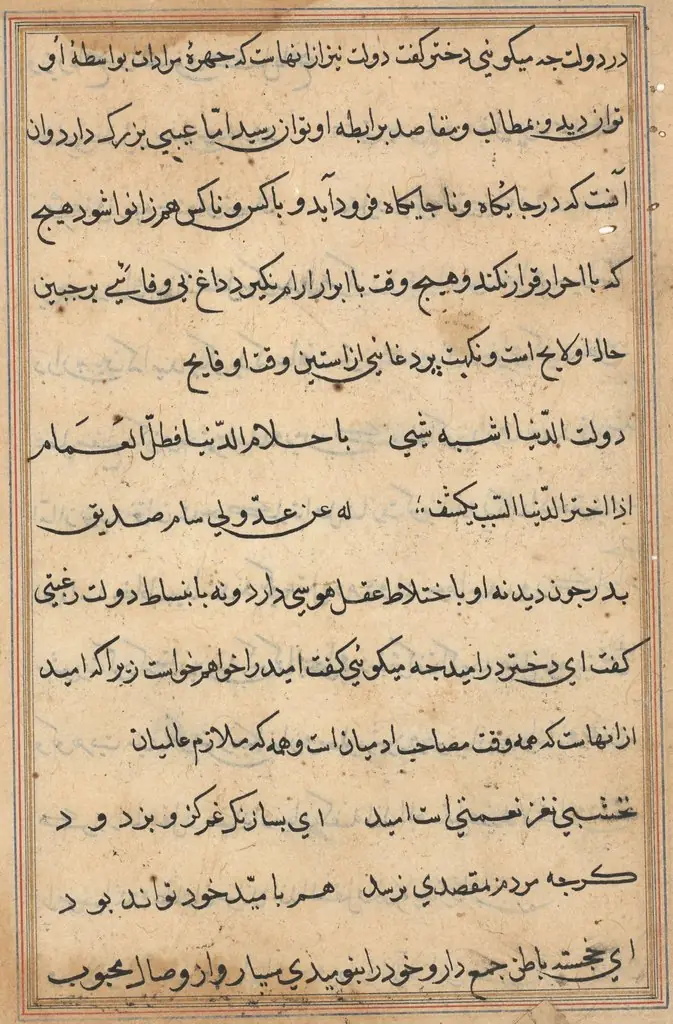 Page from Tales of a Parrot (Tuti-nama): text page
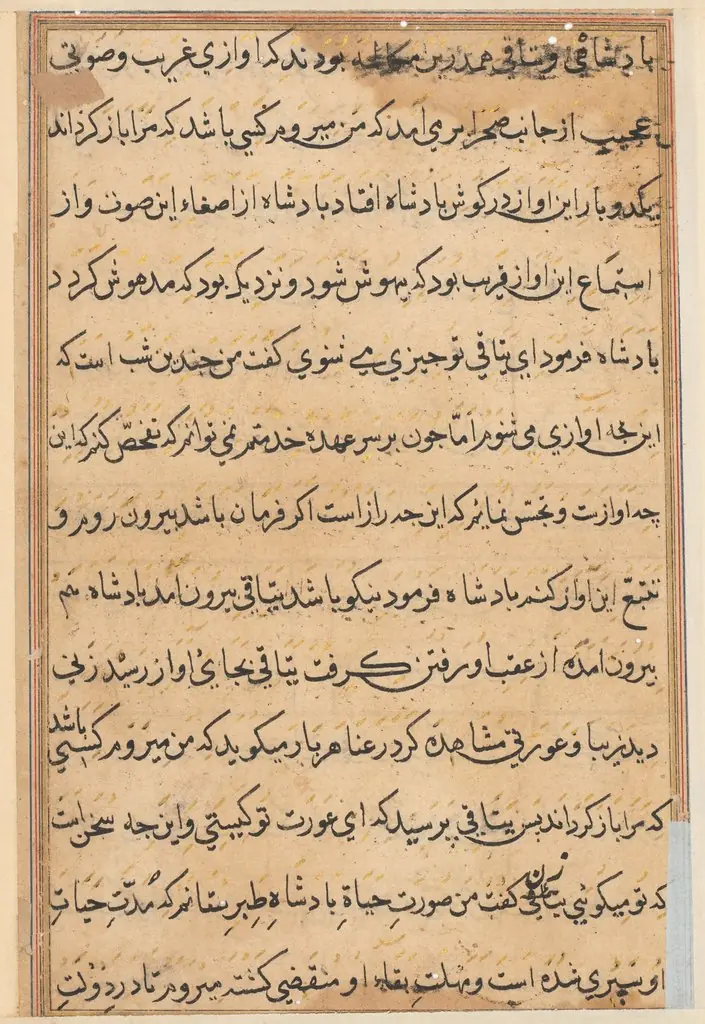 Page from Tales of a Parrot (Tuti-nama): text page
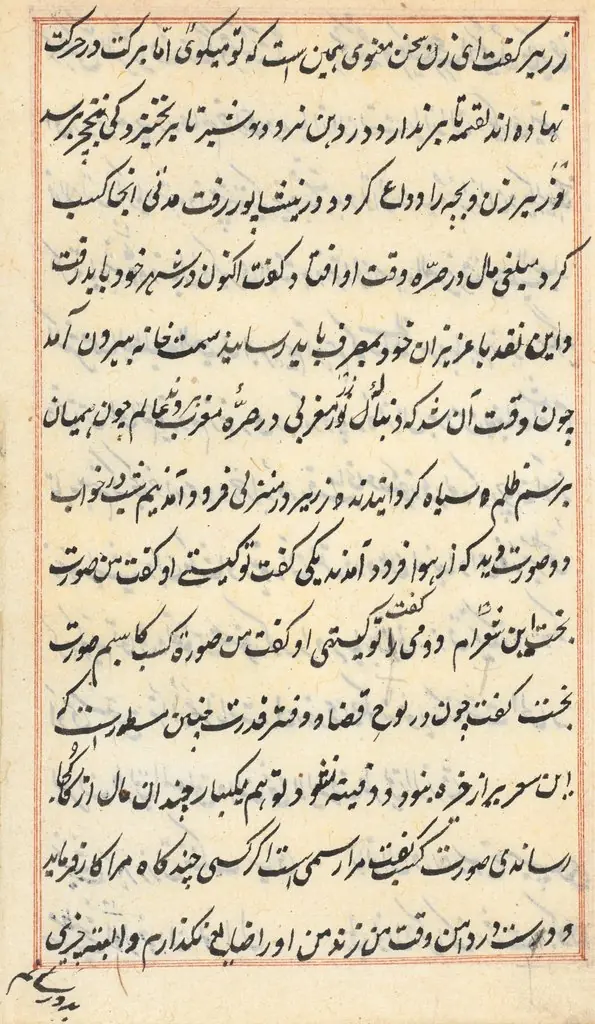 Page from Tales of a Parrot (Tuti-nama): text page
 Page from Tales of a Parrot (Tuti-nama): text page
 Page from Tales of a Parrot (Tuti-nama): text page
 Page from Tales of a Parrot (Tuti-nama): text page
 Page from Tales of a Parrot (Tuti-nama): text page
 Page from Tales of a Parrot (Tuti-nama): text page