Artwork
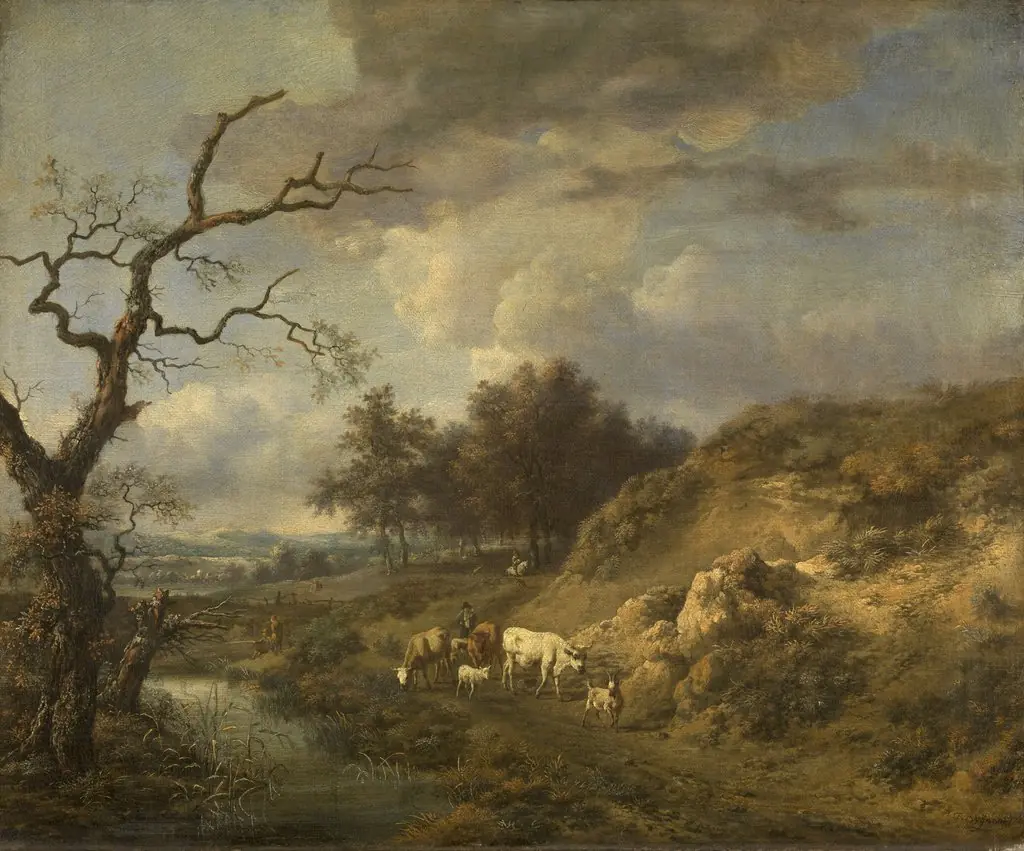
Wooded Hillside with Cattle
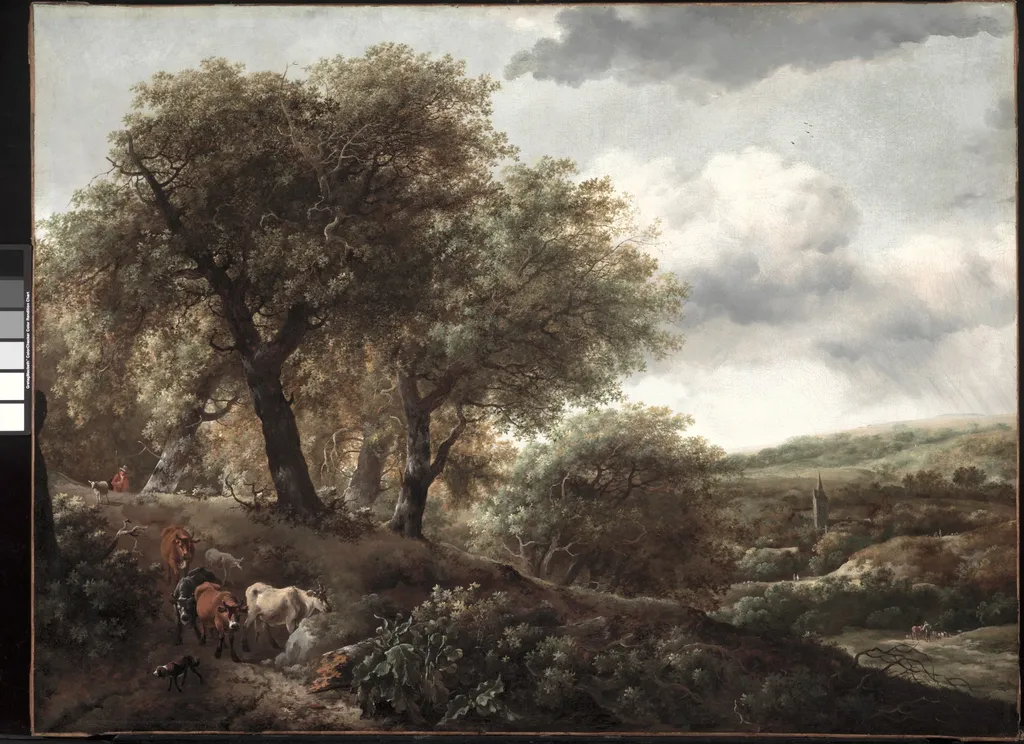
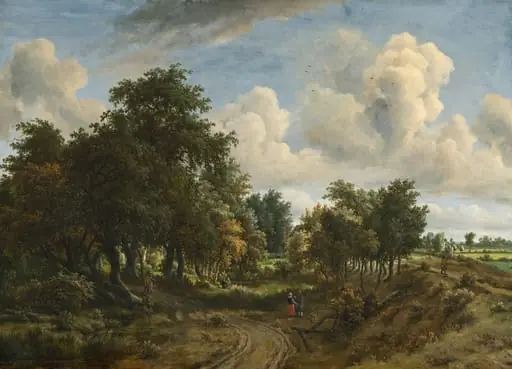
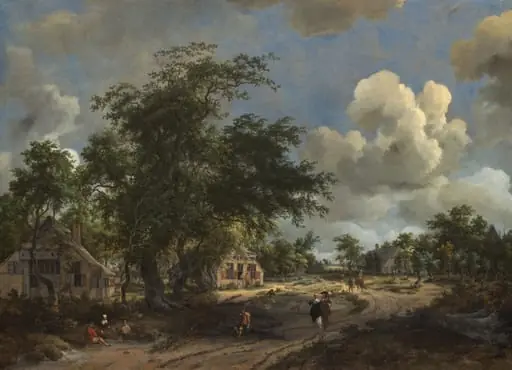
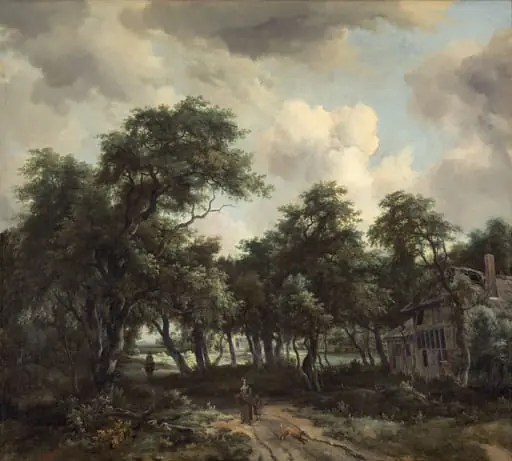
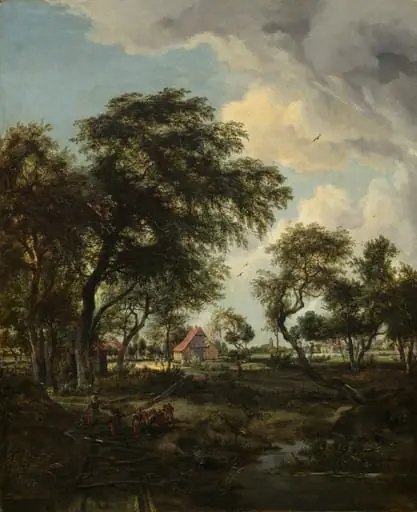
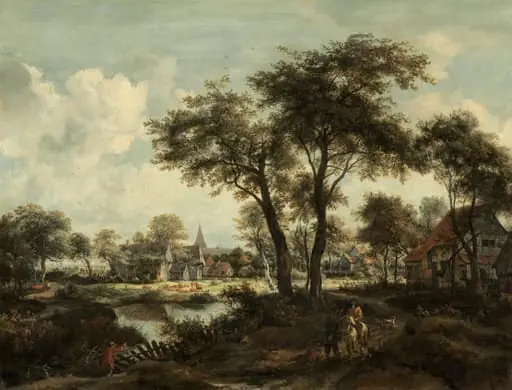
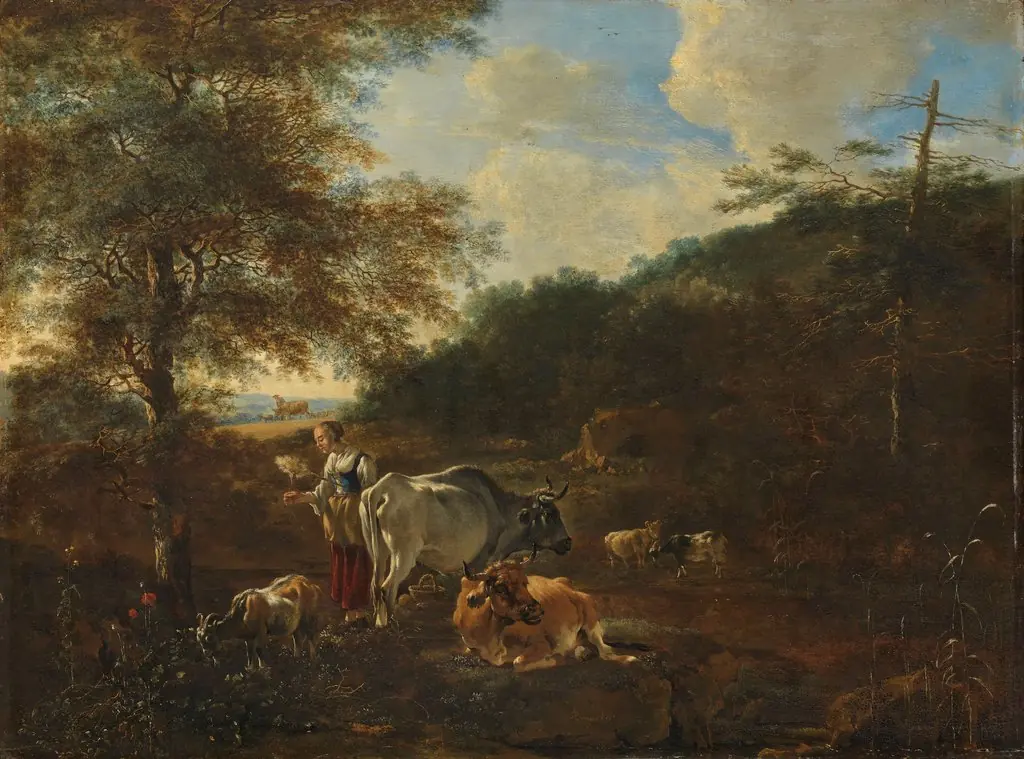
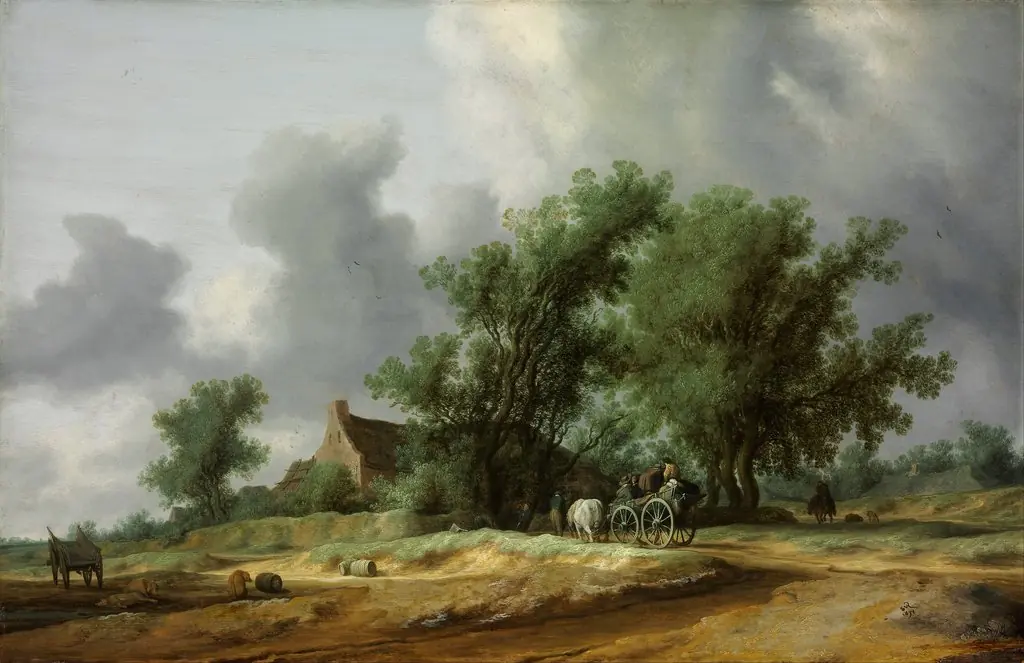
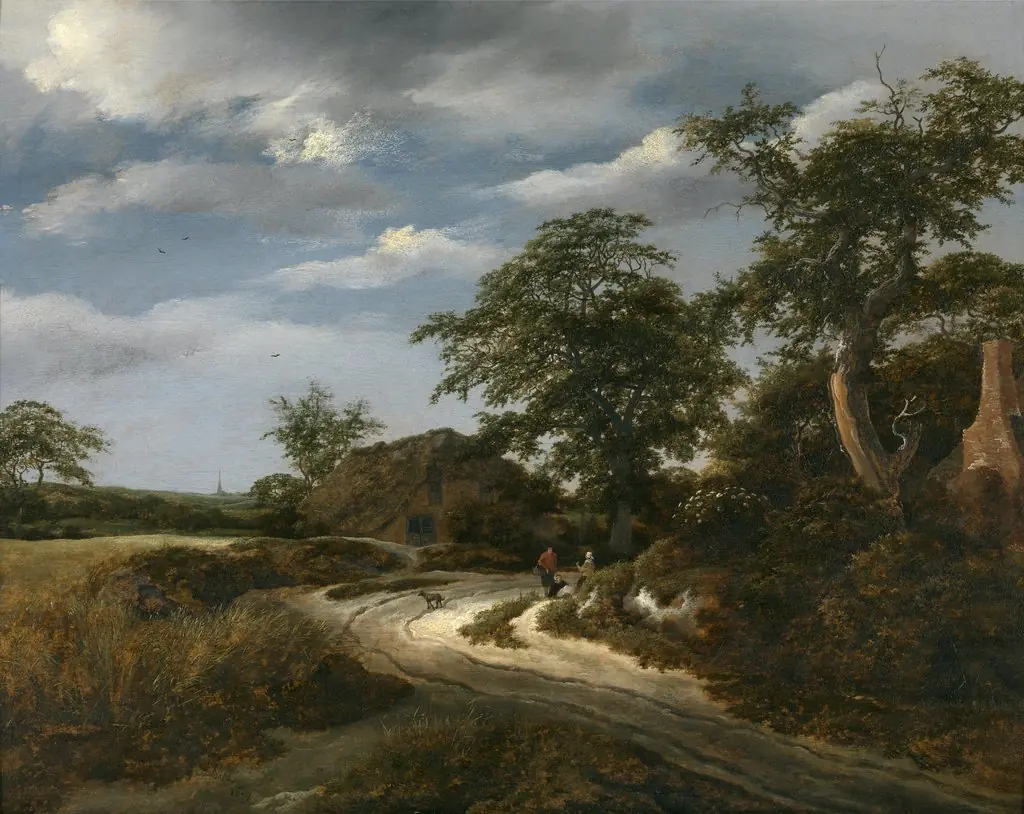
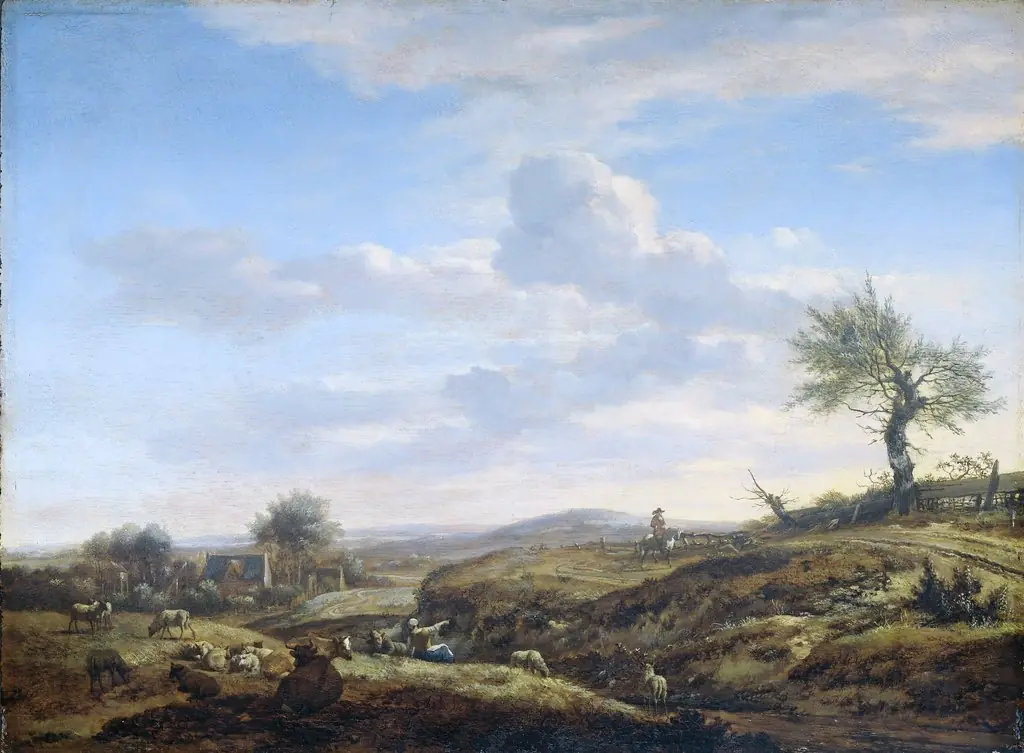
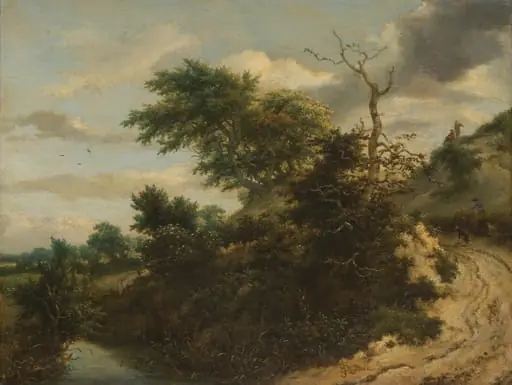
Wooded Hillside with Cattle is an oil painting by the Dutch Golden Age artist Meindert Hobbema. It dates from 1650 and is held in the collection of the Detroit Institute of Arts.
About this work
Overview
The work exemplifies the Dutch Golden Age’s preference for naturalistic, unidealized views of the countryside, emphasizing atmosphere over narrative.
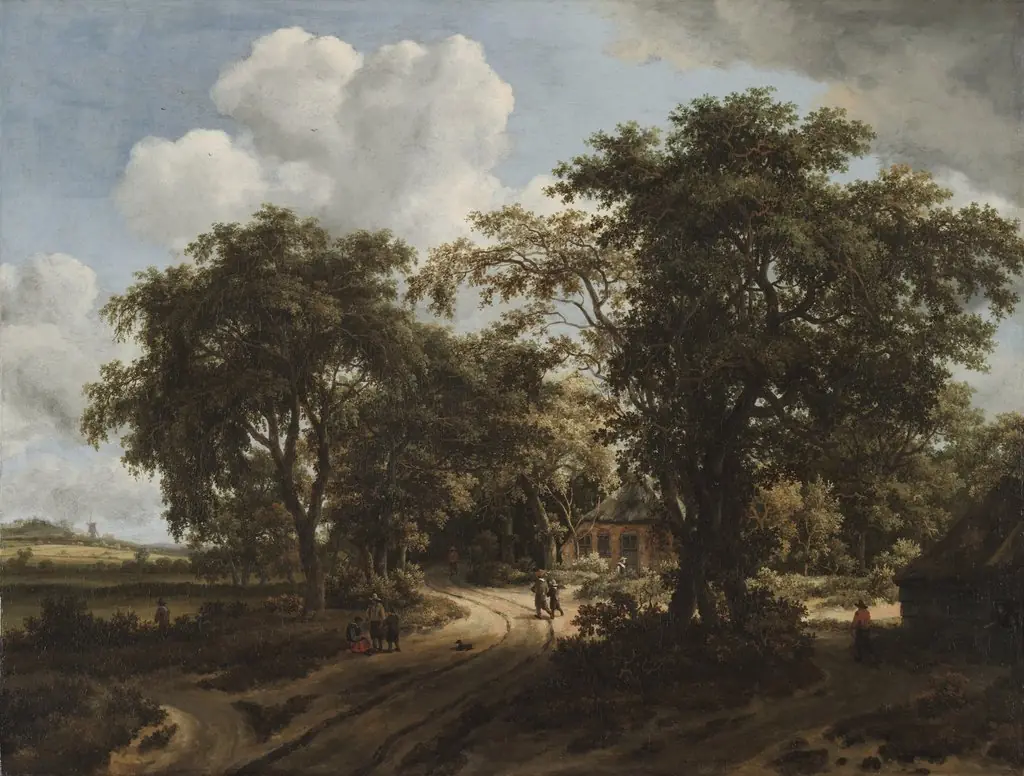
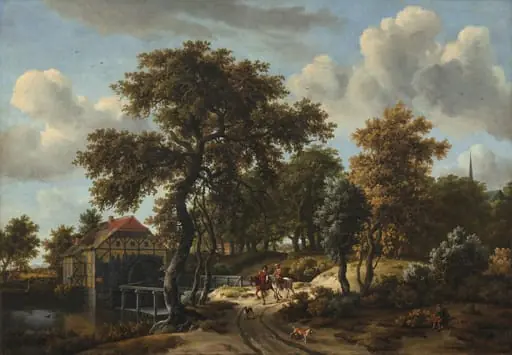
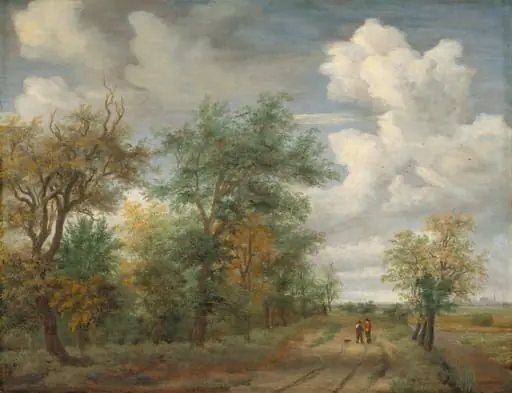
Painted around 1650, *Wooded Hillside with Cattle* is an oil-on-canvas landscape by Meindert Hobbema, a Dutch artist known for his quiet, meticulously observed rural scenes. As a student of Jacob van Ruisdael, Hobbema refined a focus on wooded terrain, moving beyond his teacher’s broader topographical interests. The work exemplifies the Dutch Golden Age’s preference for naturalistic, unidealized views of the countryside, emphasizing atmosphere over narrative.
Subject & Meaning
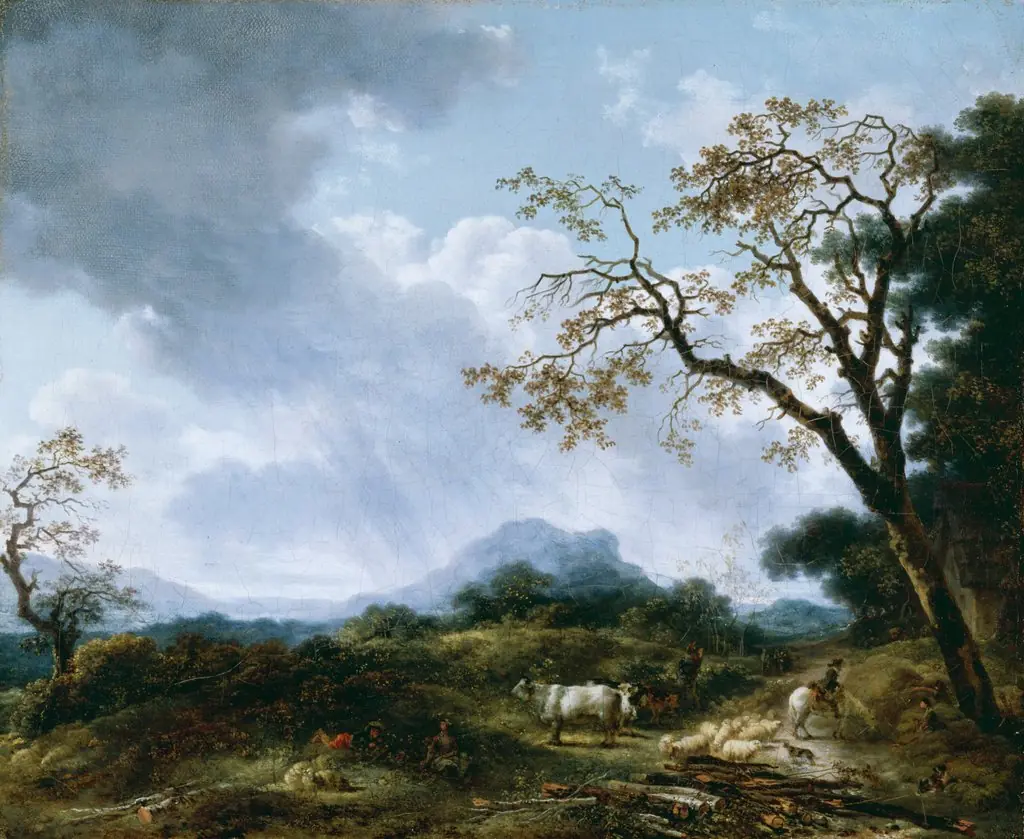
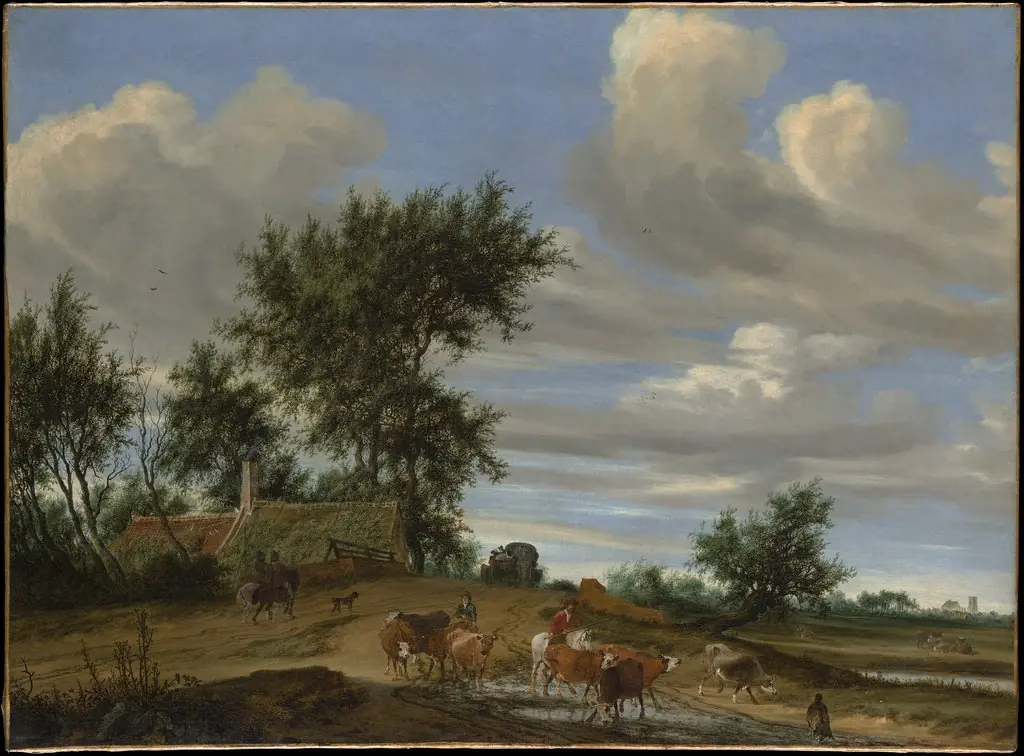
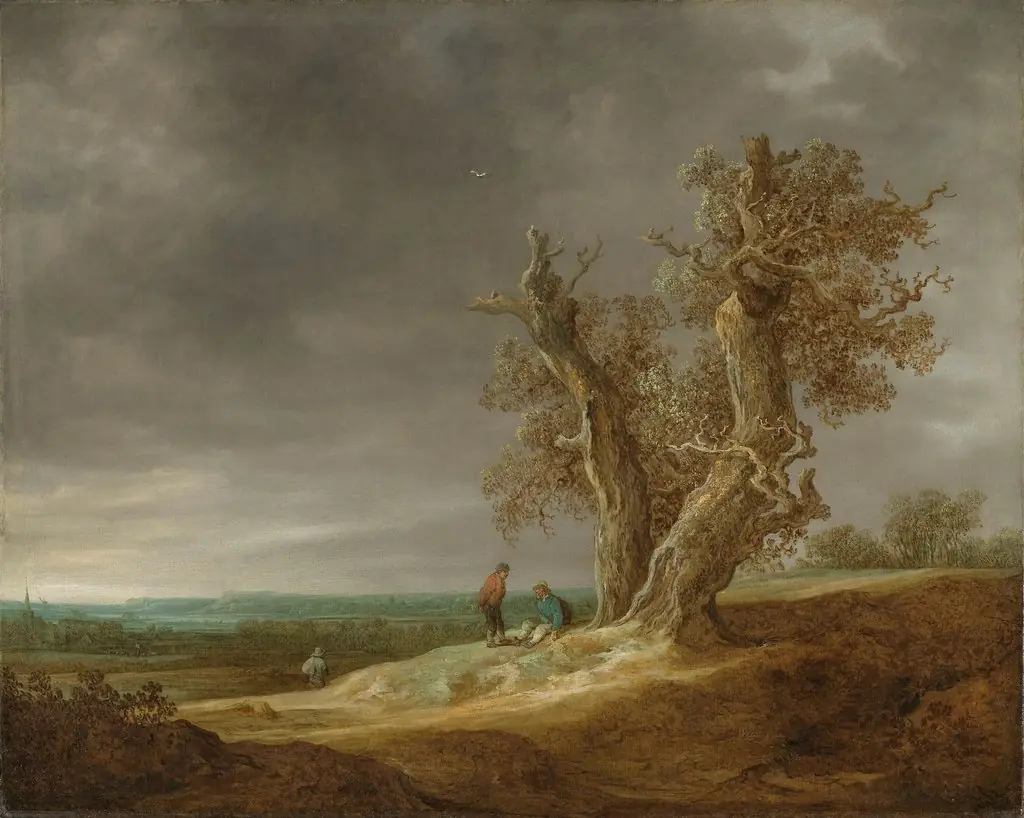
The painting presents a tranquil woodland slope where cattle graze near a winding path and small pond. Distant buildings hint at human habitation without disrupting the sense of solitude. The animals are integrated as part of the landscape’s rhythm, not as central figures. This quiet harmony between livestock and nature reflects the period’s appreciation for orderly, productive rural life, grounded in observation rather than symbolism.
Technique & Style
Hobbema employs fine brushwork to render the textures of foliage, earth, and animal hides. Light filters through the canopy in soft, dappled patterns, creating subtle contrasts that model form and depth. The composition uses receding planes—foreground grasses, midground trees, and distant structures—to guide the eye without dramatic perspective. His palette is muted, dominated by greens and browns, enhancing the painting’s sense of quiet realism.
History & Provenance
Created during Hobbema’s most active period as a landscape painter, the work likely originated in the Netherlands and remained within Dutch collections for much of its early history. While its exact early ownership is undocumented, it aligns with the tastes of mid-17th-century Dutch burghers who collected modest, intimate landscapes. The painting entered public collections in the 19th or early 20th century, where it is now preserved as a representative example of Hobbema’s mature style.
Context
In the Dutch Golden Age, landscape painting flourished as a distinct genre, divorced from religious or mythological themes. Artists like Hobbema responded to a growing urban middle class that valued depictions of familiar, cultivated nature. His focus on wooded hillsides and pastoral life contrasted with coastal or urban scenes, offering viewers a contemplative vision of the countryside as a place of quiet continuity and seasonal rhythm.
Legacy
Hobbema’s influence extended to later landscape painters who admired his sensitivity to light and spatial depth. Though less celebrated than Ruisdael in his own time, his works gained renewed attention in the 18th and 19th centuries for their atmospheric precision. *Wooded Hillside with Cattle* remains a quiet testament to his ability to convey the stillness and structure of the natural world through careful observation and restrained technique.
Artist & collection
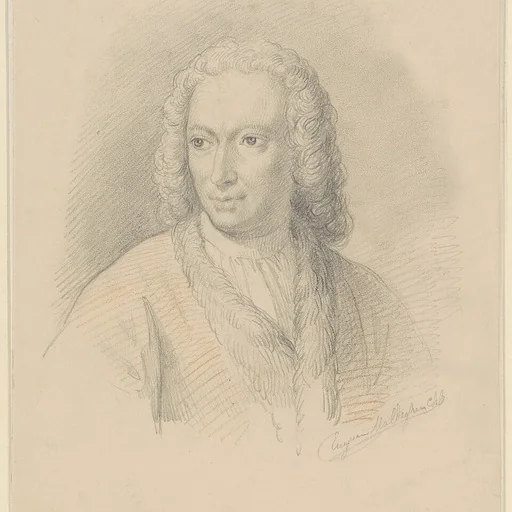
Artist
Meindert Lubbertszoon Hobbema (bapt. 31 October 1638 – 7 December 1709) was a Dutch Golden Age painter of landscapes, specializing in views of woodland, although his most famous painting, The Avenue at Middelharnis…