Artwork
White-Robed Kannon (Byakue Kannon)
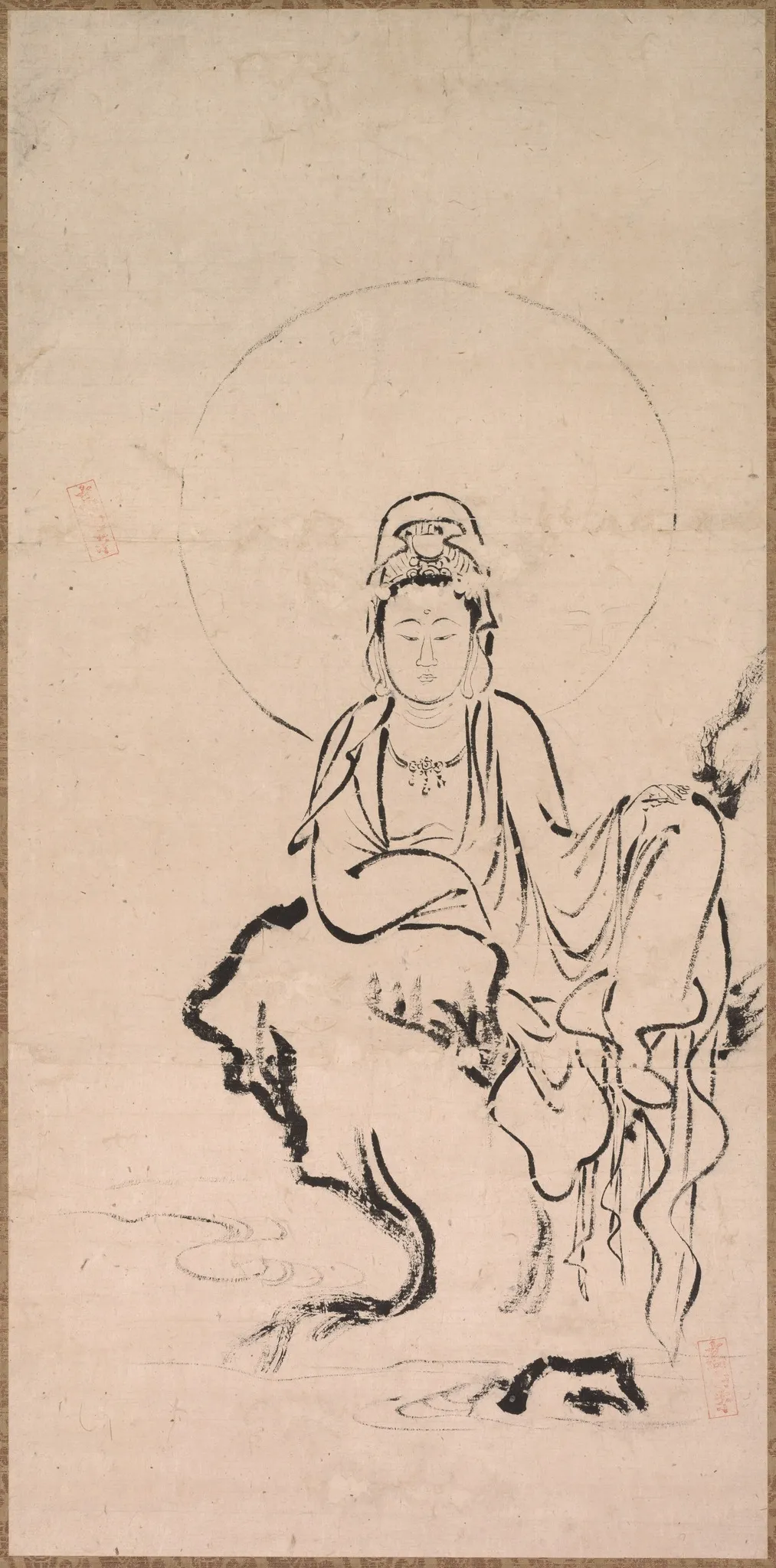
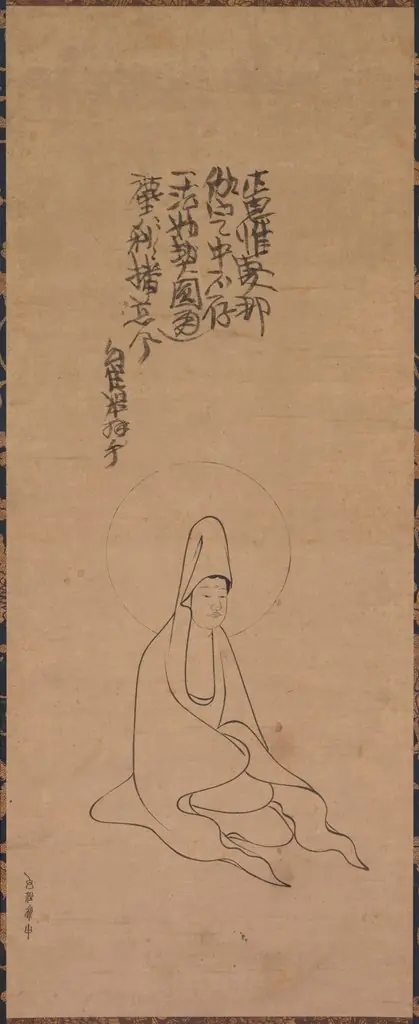
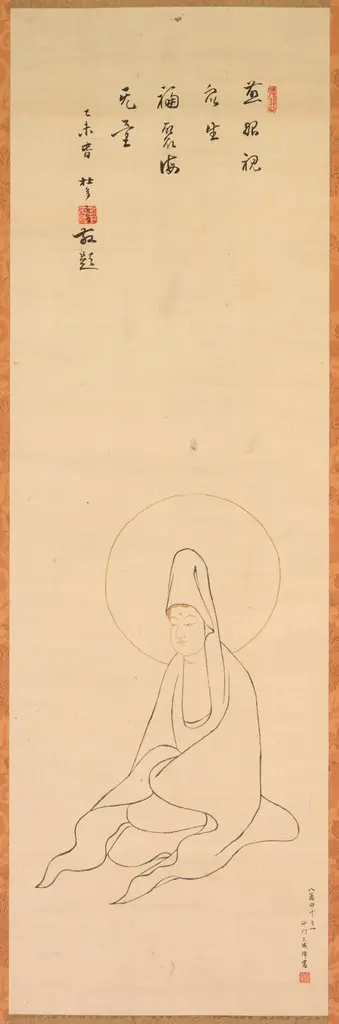
White-Robed Kannon (Byakue Kannon) is an unspecified painting. It dates from 1200 and is held in the collection of the Cleveland Museum of Art. This painting depicts a tranquil, haloed figure, identified as White-Robed Kannon, positioned on a rocky perch.
About this work
Overview
This painting depicts a tranquil, haloed figure, identified as White-Robed Kannon, positioned on a rocky perch. Draped in flowing garments and adorned with a necklace, the figure exhibits a calm countenance with downcast eyes, hands resting gently in the lap. The composition conveys an immediate sense of peace, drawing the viewer into its quiet contemplation.
Subject & Meaning
The white robes symbolize spiritual purity, reinforcing the deity's role as a source of solace and spiritual guidance within Buddhist iconography.
The central figure is Byakue Kannon, a manifestation of the bodhisattva Avalokiteshvara, often associated with purity and compassion. Her serene posture, gentle expression, and downward gaze suggest a state of profound meditation and benevolent observation. The white robes symbolize spiritual purity, reinforcing the deity's role as a source of solace and spiritual guidance within Buddhist iconography.
Technique & Style
The artist employs delicate lines and a palette of soothing colors to cultivate the painting's tranquil atmosphere. A soft, muted background recedes, allowing the haloed figure to command focus and enhancing its peaceful demeanor. This considered use of visual elements guides the viewer's attention, fostering an immersive experience of the artwork's quietude.
Artist & collection