Artwork
White-Robed Guanyin
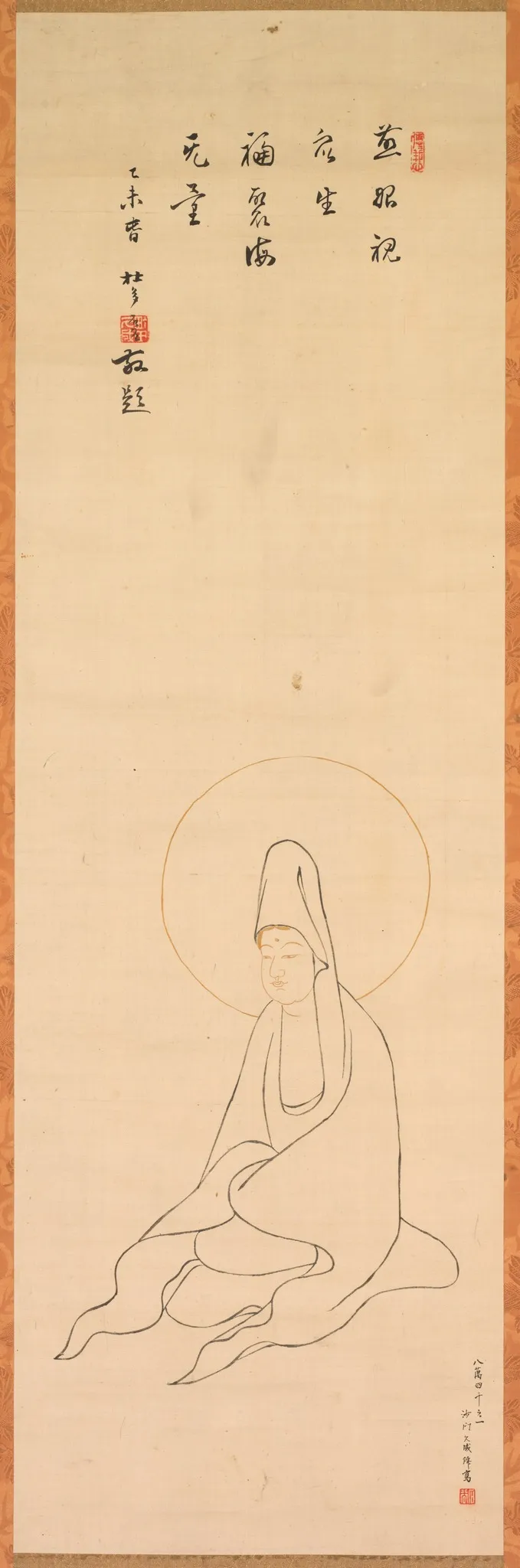
White-Robed Guanyin is an unspecified painting. It dates from 1300 and is held in the collection of the Cleveland Museum of Art. White‑Robed Guanyin is a painting that presents a solitary figure seated in a relaxed posture, wrapped in a loosely draped robe.
About this work
Overview
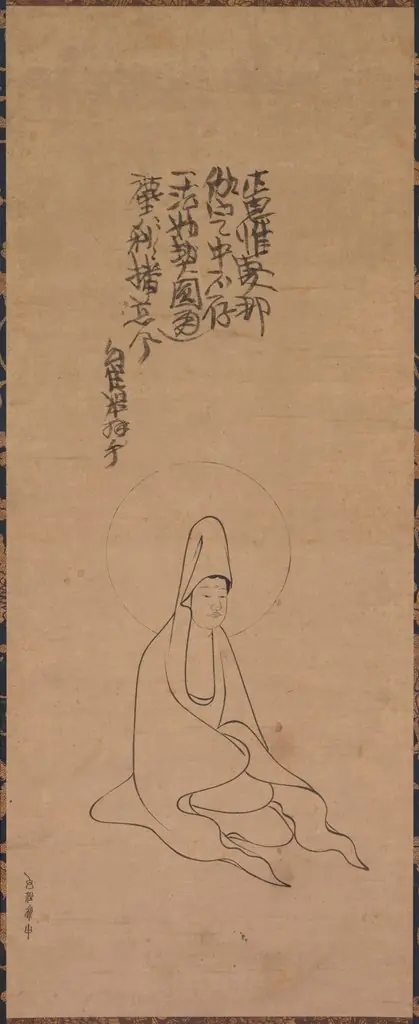
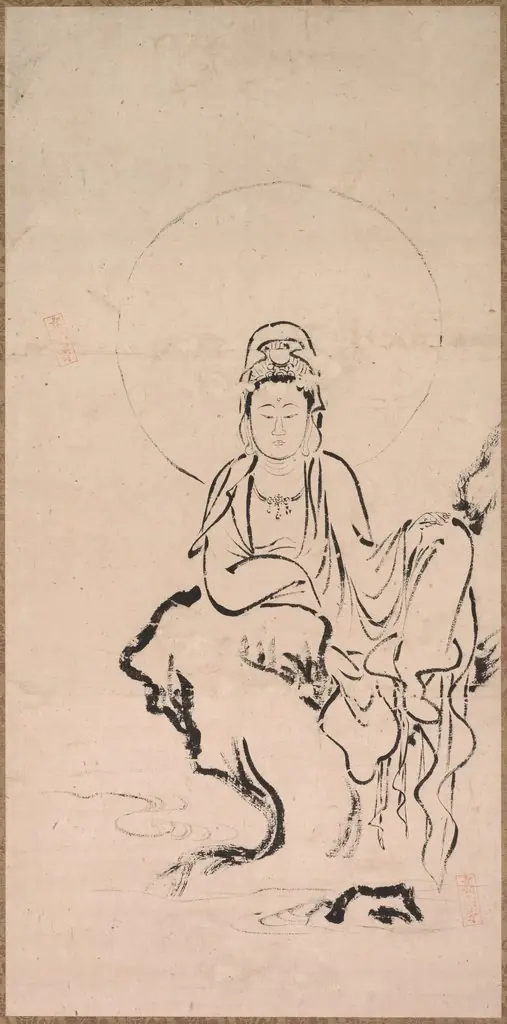
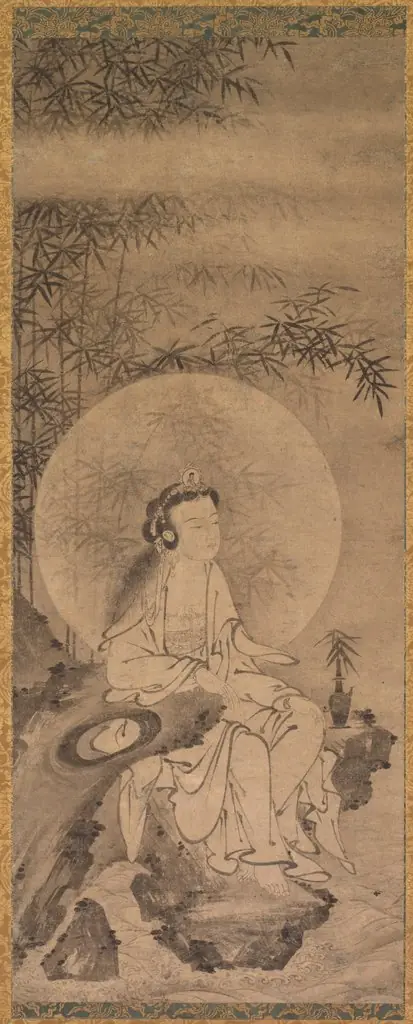
White‑Robed Guanyin is a painting that presents a solitary figure seated in a relaxed posture, wrapped in a loosely draped robe. The subject’s expression is gentle, and the composition is framed by a largely empty background, punctuated only by a few red seals and brief black calligraphic marks at the top.
Subject & Meaning
The central figure represents Guanyin, the Buddhist bodhisattva of compassion, depicted in a serene, meditative pose. The calm demeanor, cross‑legged stance, and subtle halo of light around the head convey spiritual tranquility and the compassionate presence associated with the deity.
Technique & Style
The work relies on smooth, unmodulated lines and a restrained palette, emphasizing clean outlines over heavy shading. Light is suggested through a faint glow surrounding the head, rather than through dramatic chiaroscuro, creating a quiet, luminous effect that underscores the figure’s peaceful aura.
Context
The painting’s minimal background and the inclusion of red seals and black textual strokes reflect traditional East Asian ink painting conventions, where artists often sign or annotate works with seals. The sparse setting directs focus to the figure’s form and spiritual significance, aligning with devotional art practices.
Artist & collection