Artwork
Mater Dolorosa (Sorrowing Virgin)
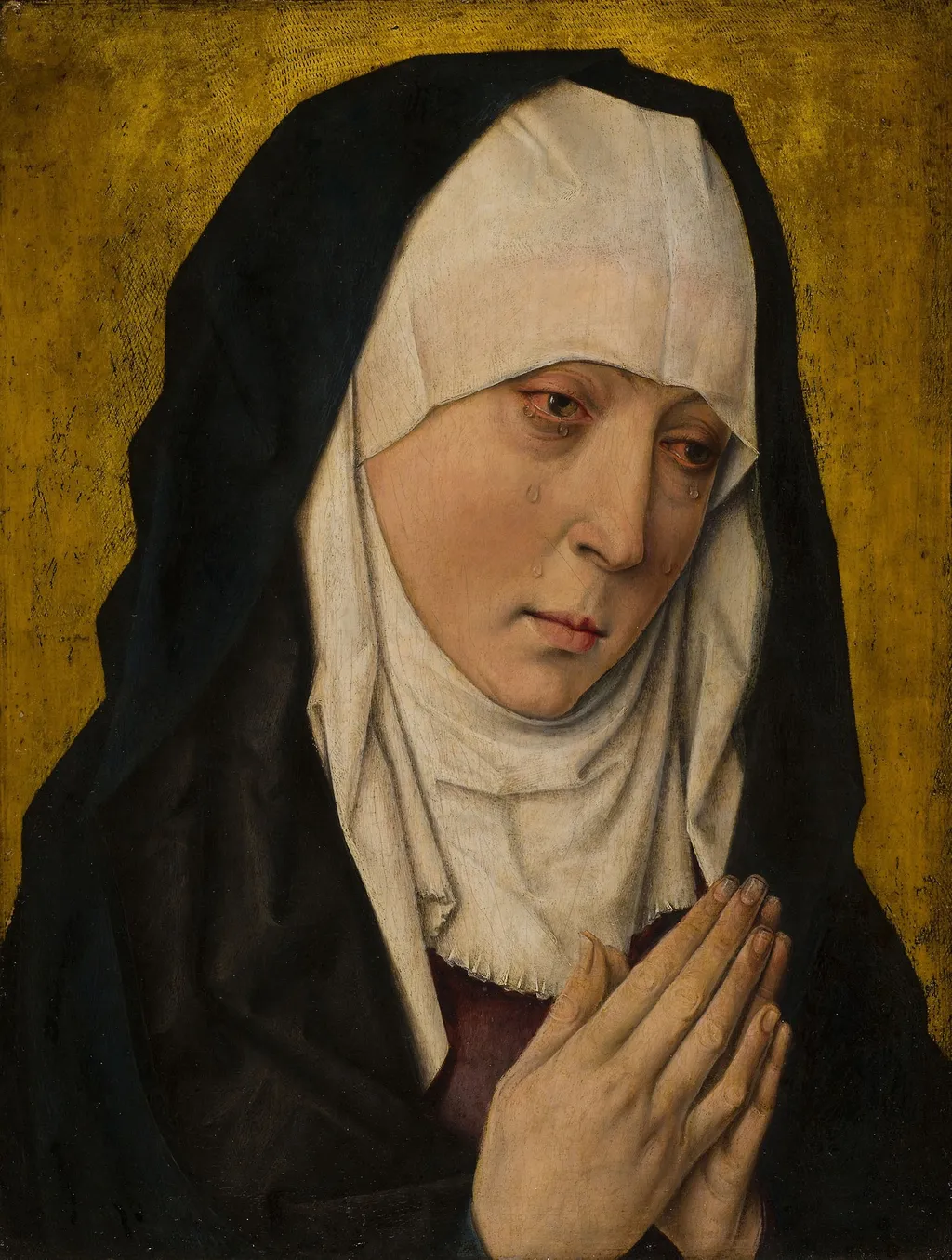
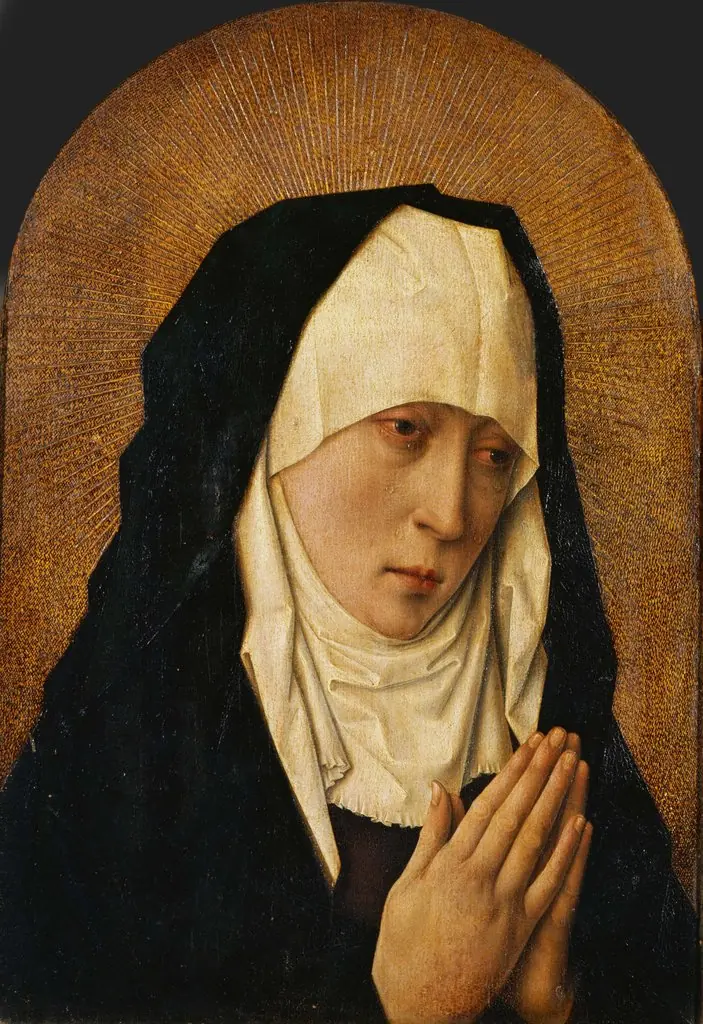
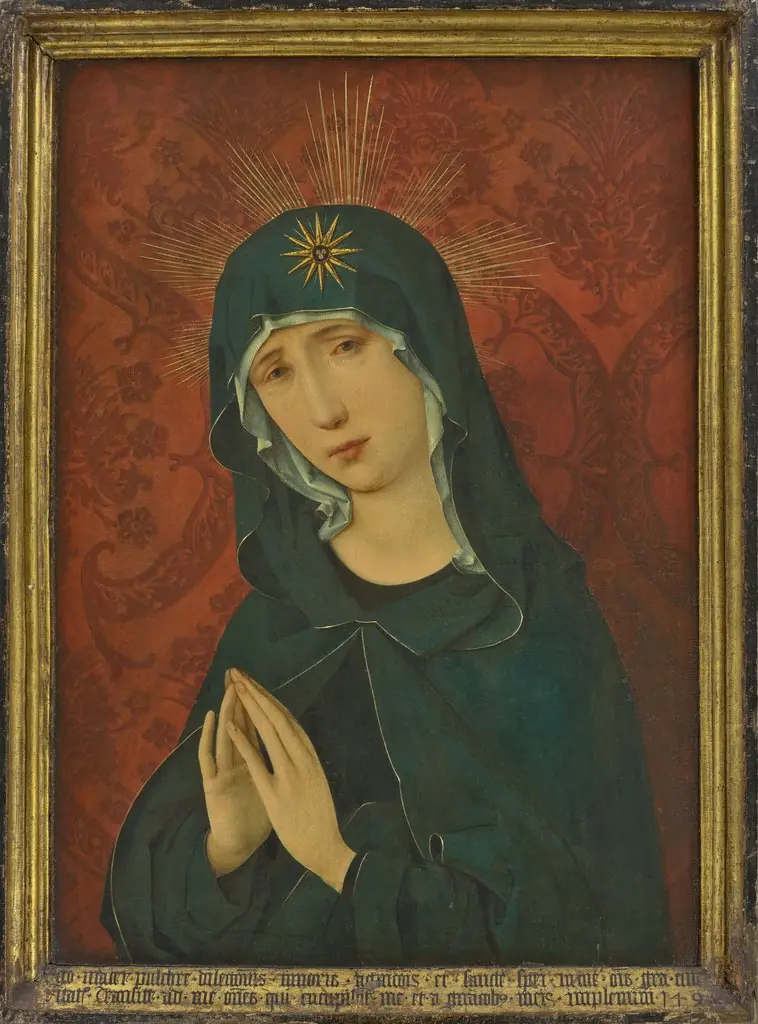
Mater Dolorosa (Sorrowing Virgin) is an oil painting by the Northern Renaissance artist Unknown. It dates from 1496 and is held in the collection of the Art Institute of Chicago. Mater Dolorosa, rendered in oil on canvas, presents a solitary female figure against a luminous gold backdrop.
About this work
Overview
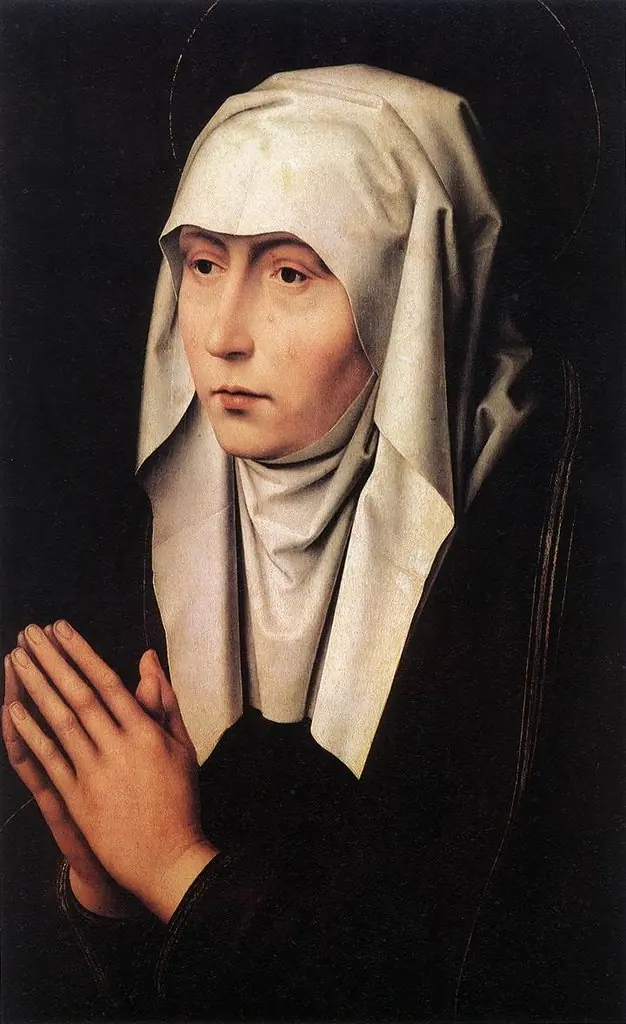
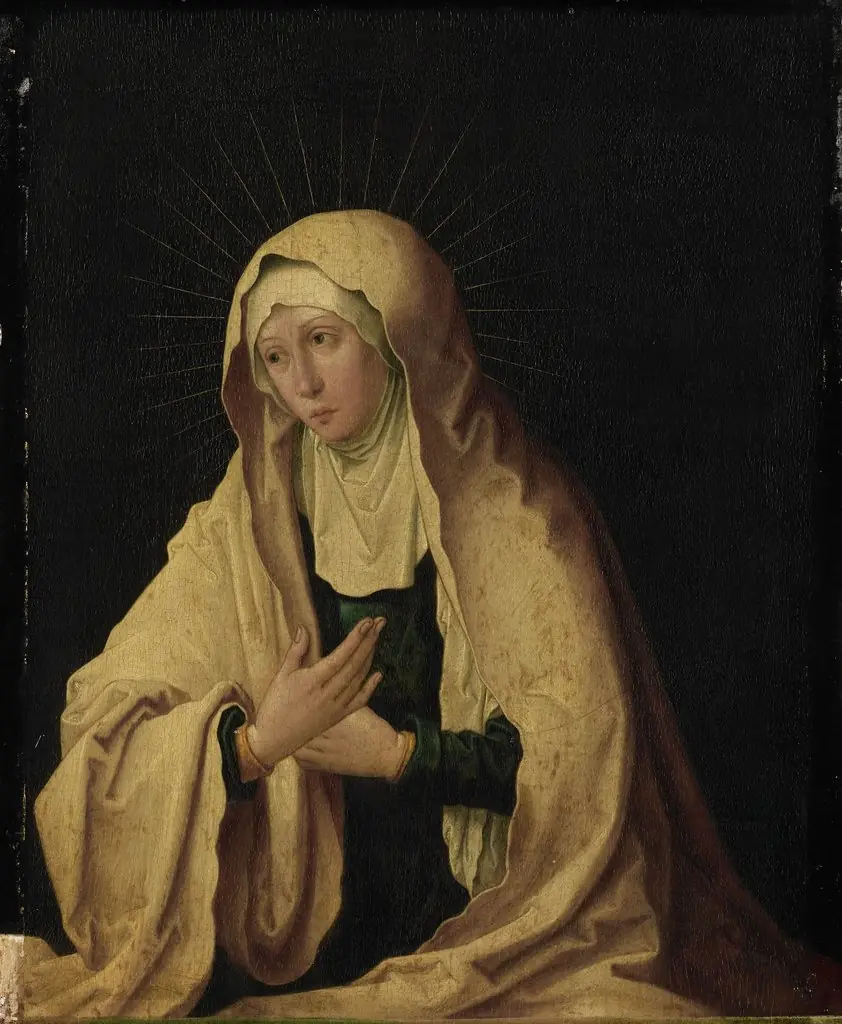
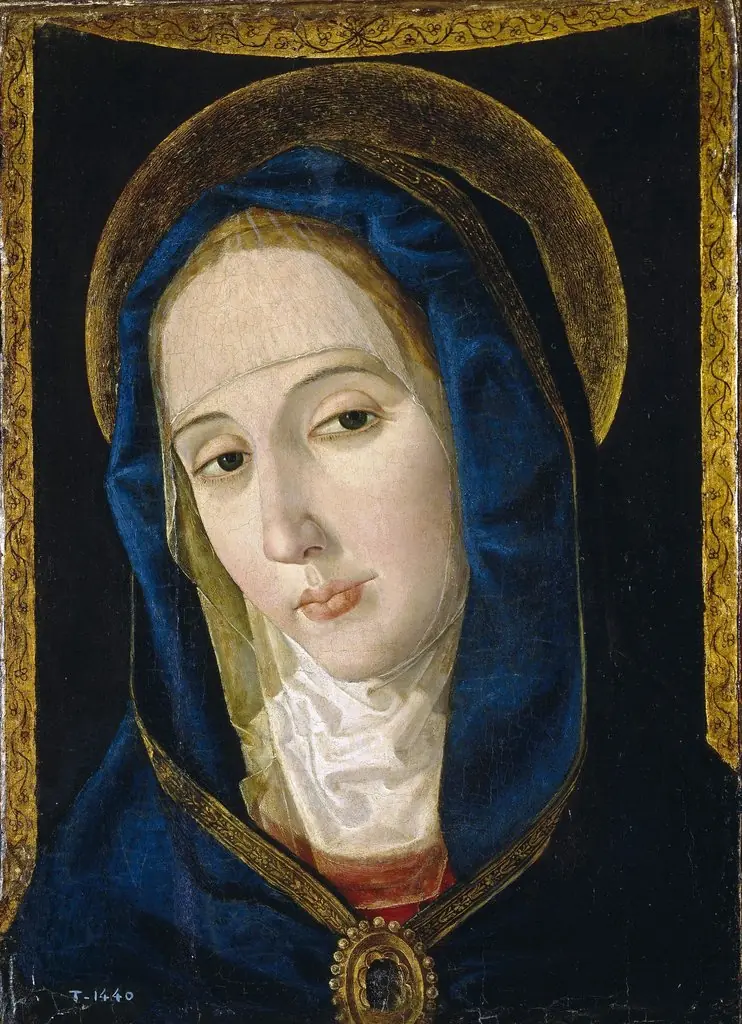
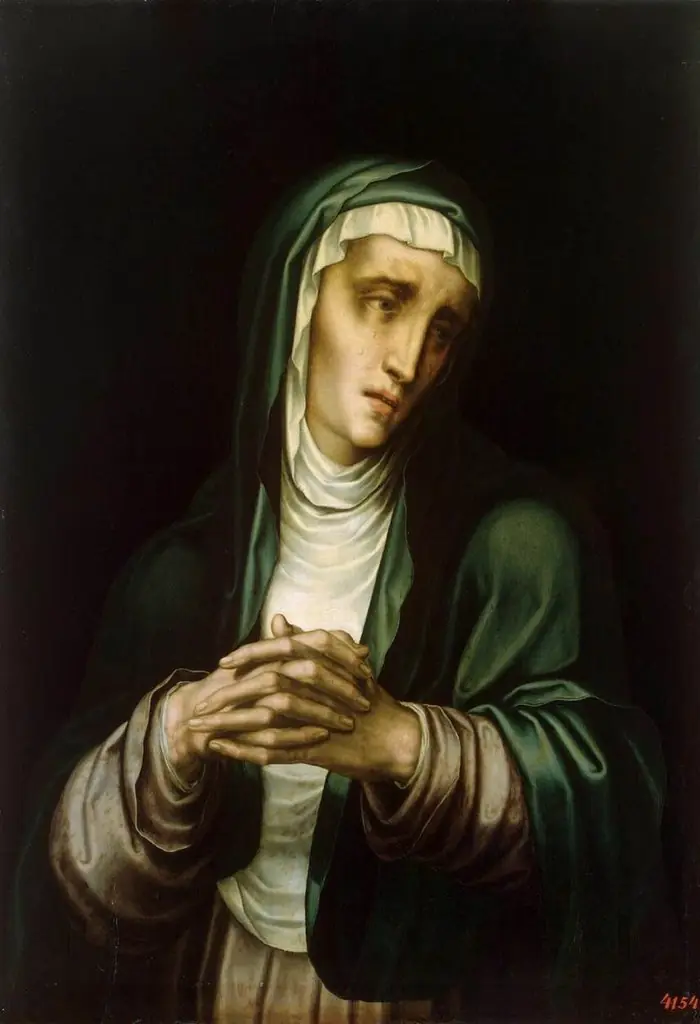
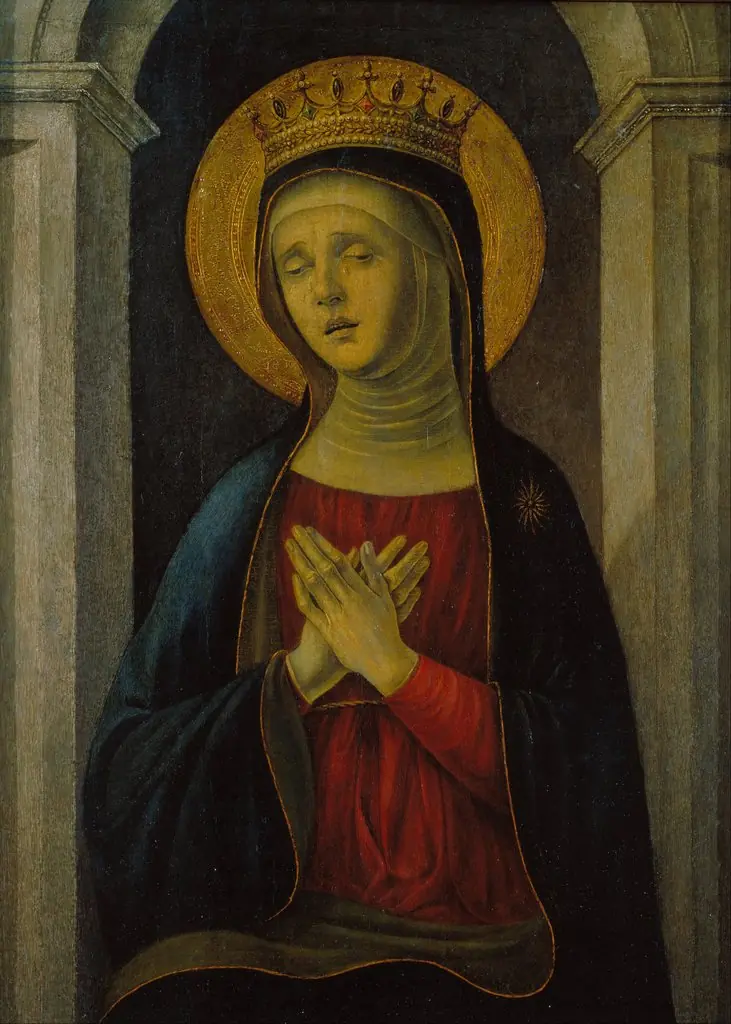
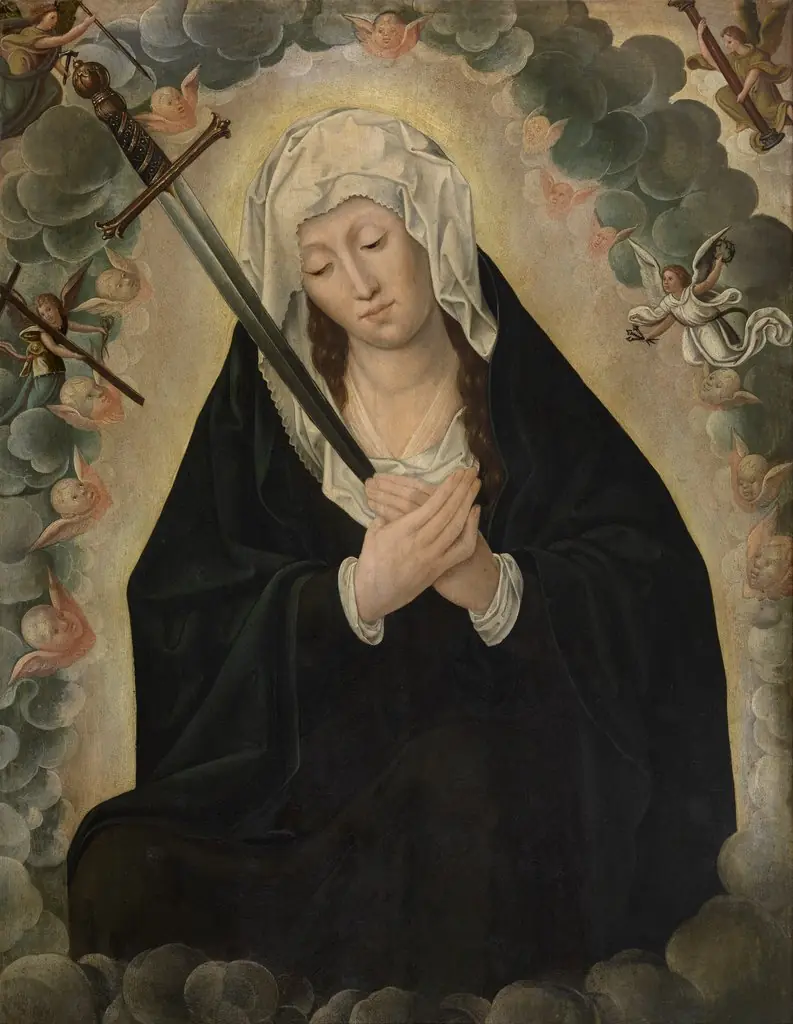
Mater Dolorosa, rendered in oil on canvas, presents a solitary female figure against a luminous gold backdrop. She is draped in a black robe topped by a white head covering, her hands clasped in prayer at her chest. The composition emphasizes her mournful expression, highlighted by tears and a downward gaze, conveying a solemn atmosphere.
Subject & Meaning
The work depicts the Sorrowful Virgin, a traditional Christian iconography of Mary grieving the Passion of Christ. Her folded hands and tear‑streaked face embody deep penitence and maternal anguish, inviting contemplation of sacrifice and compassion. The gold background reinforces a timeless, spiritual realm, removing earthly distraction and focusing attention on her inner sorrow.
Technique & Style
Executed in oil, the artist employed glazing—a method of applying thin, translucent layers of pigment—to achieve a luminous depth in the figure’s flesh tones and the shimmering gold field. This approach allows subtle modulation of light across the veil and robe, creating a delicate interplay between opacity and translucency characteristic of late medieval devotional painting.
Context
Mater Dolorosa belongs to a lineage of devotional images produced for private contemplation or liturgical settings, where the gold ground signified the divine. While the specific provenance is unknown, such works were commonly commissioned for personal chapels or as portable altarpieces during the period when oil glazing techniques were increasingly adopted to enhance emotional realism.
Artist & collection

 Domestic Scene
 Giacomo and Cardinal Marco, investing Andrea, Abbot of San Zeno, with his Benefice
 The Nymph of Fontainebleau
 Portrait of a Woman
 Madonna and Child with Saints in the Enclosed Garden
 Venus and Minerva
 Family Group of Four on Sofa
 Wall painting from Room H of the Villa of P. Fannius Synistor at Boscoreale