Artwork
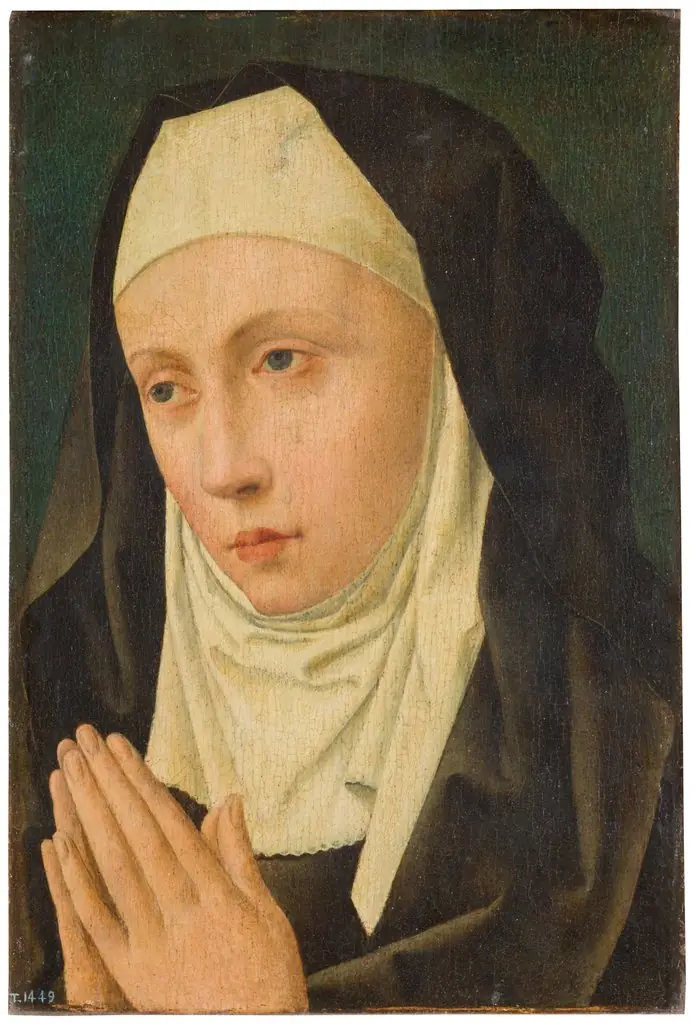
Mater Dolorosa
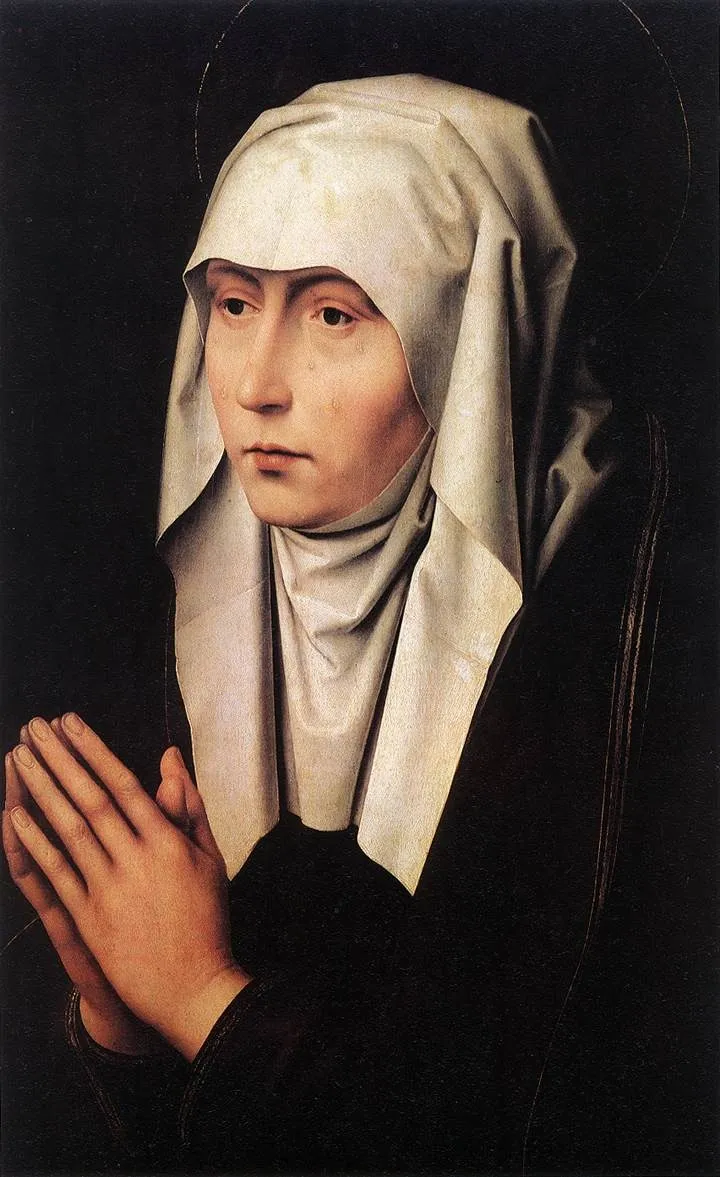
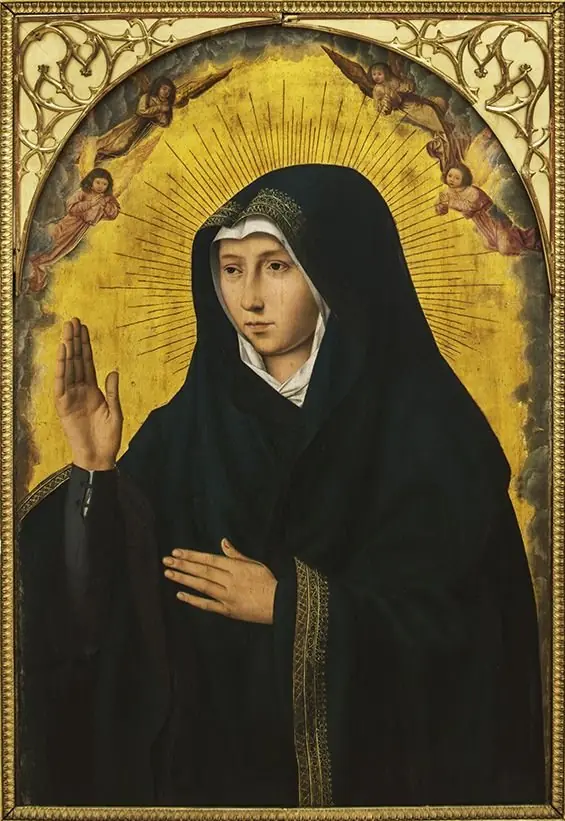
Mater Dolorosa is an oil painting by the Northern Renaissance artist Pietro Perugino. It dates from 1490 and is held in the collection of the Uffizi Gallery.
About this work
Overview
Created in 1490 by the Umbrian painter Pietro Perugino, *Mater Dolorosa* is an oil painting that depicts the sorrowful Virgin Mary. The work is part of the Uffizi Gallery’s collection and belongs to the religious genre, illustrating a moment of private devotion through a restrained composition.
Subject & Meaning
The figure is presented wearing a white veil that covers her head and shoulders, while a black garment drapes her body. Her hands are joined in prayer and her eyes look downward, conveying a contemplative grief associated with the title’s reference to the “sorrowful mother.” The subdued expression invites reflection on maternal suffering.
Technique & Style
Perugino employs chiaroscuro to model the figure, using a dark background that accentuates the luminous white of the veil and the folds of the clothing. The contrast creates a sense of three‑dimensionality and focuses attention on the face and hands. The handling of light and shade reflects stylistic currents that were spreading from the North into Italian art at the close of the 15th century.
History & Provenance
Although painted early in Perugino’s career, the work anticipates his later influence on the High Renaissance, a period in which his workshop trained artists such as Raphael. *Mater Dolorosa* entered the Uffizi’s holdings, where it remains on display, offering insight into the artist’s development and the transmission of stylistic ideas across regions.
Artist & collection
Artist
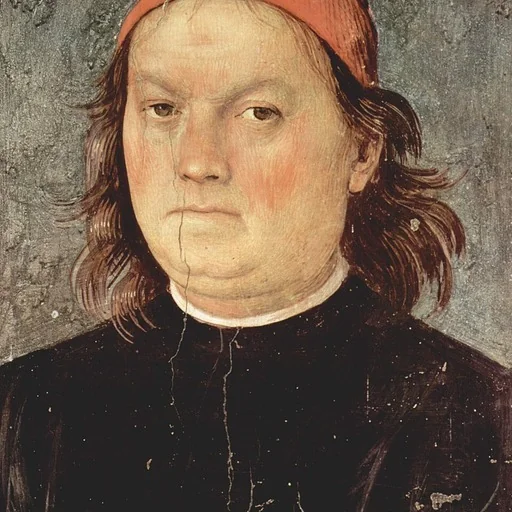
Pietro Perugino (US: PERR-ə-JEE-noh, -oo-; Italian: ; born Pietro Vannucci or Pietro Vanucci; c.