Artwork
Portrait of Philip IV, King of Spain
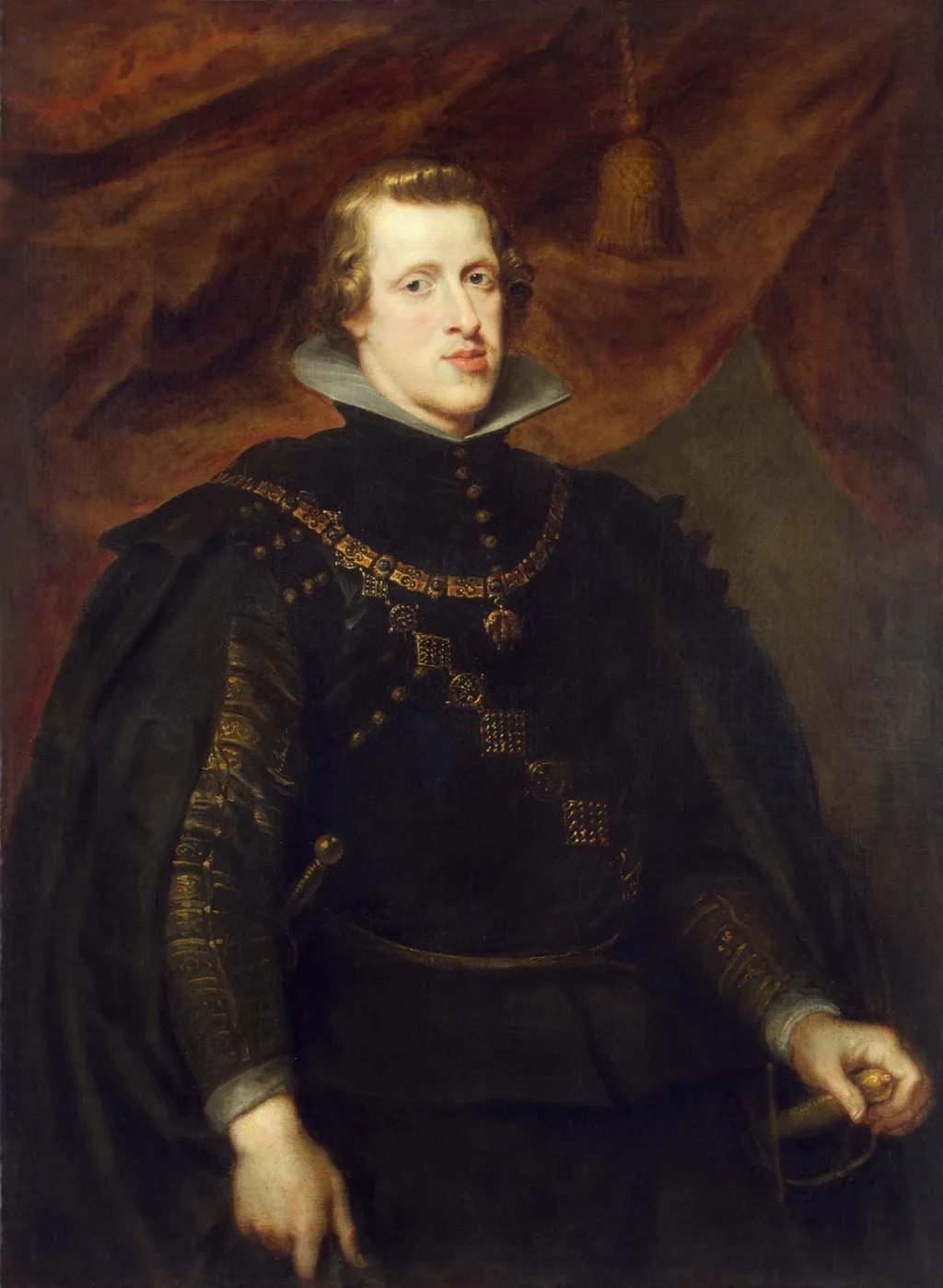
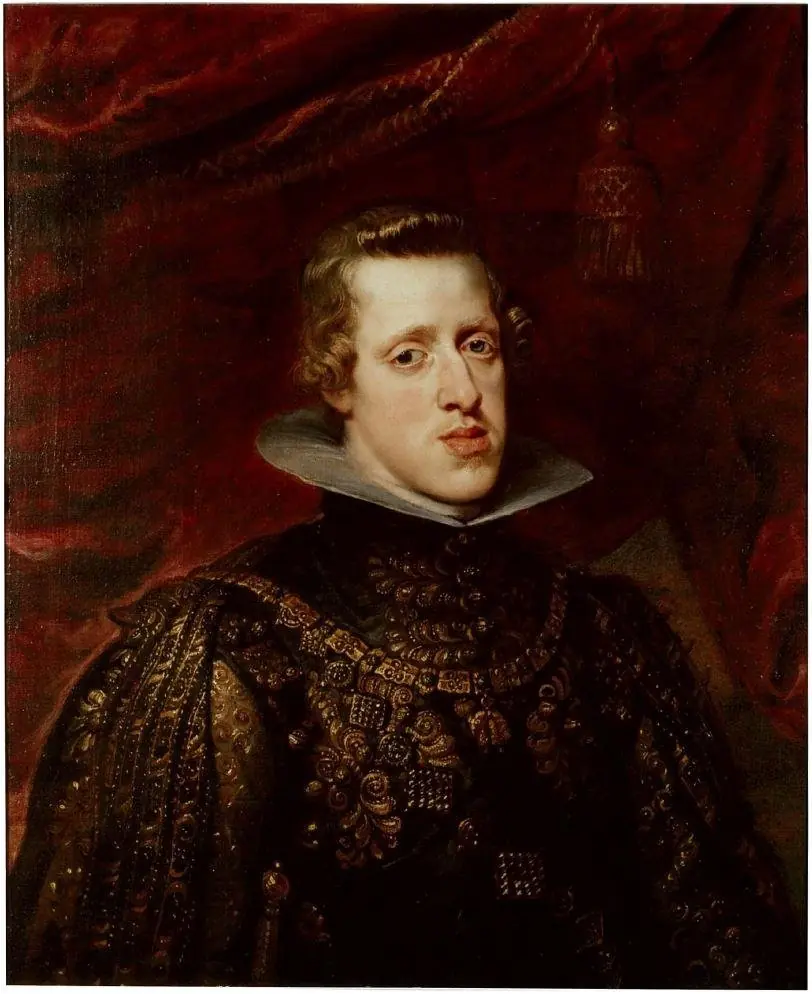
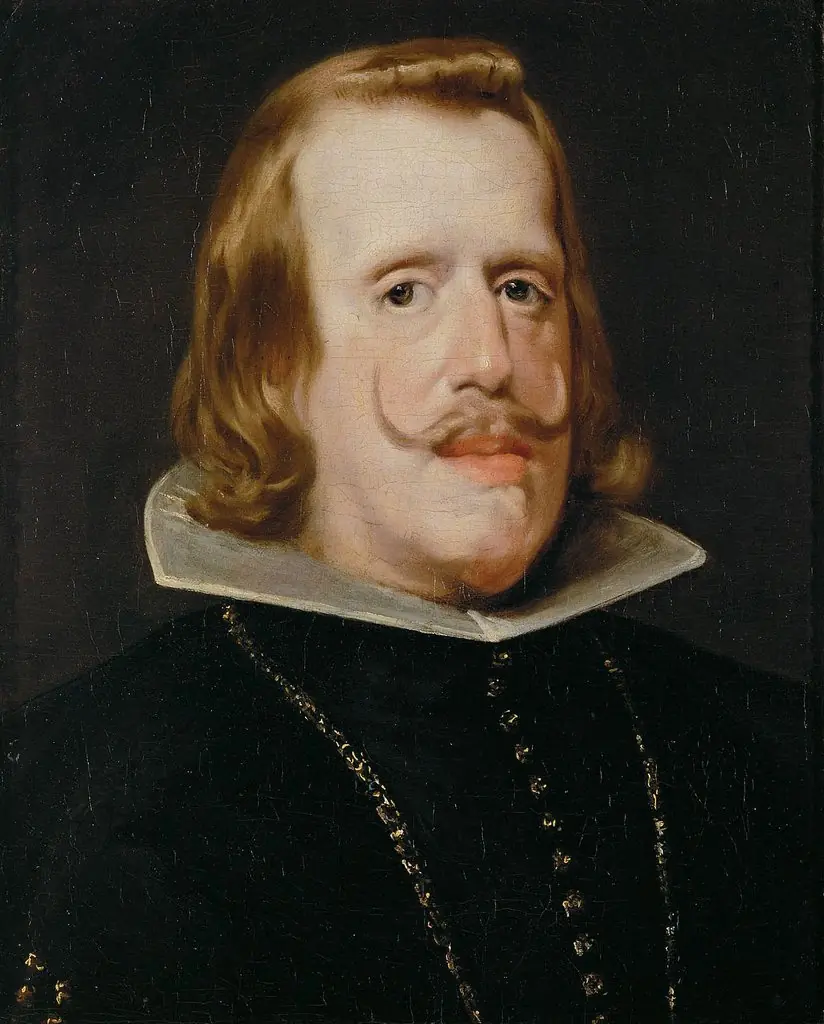
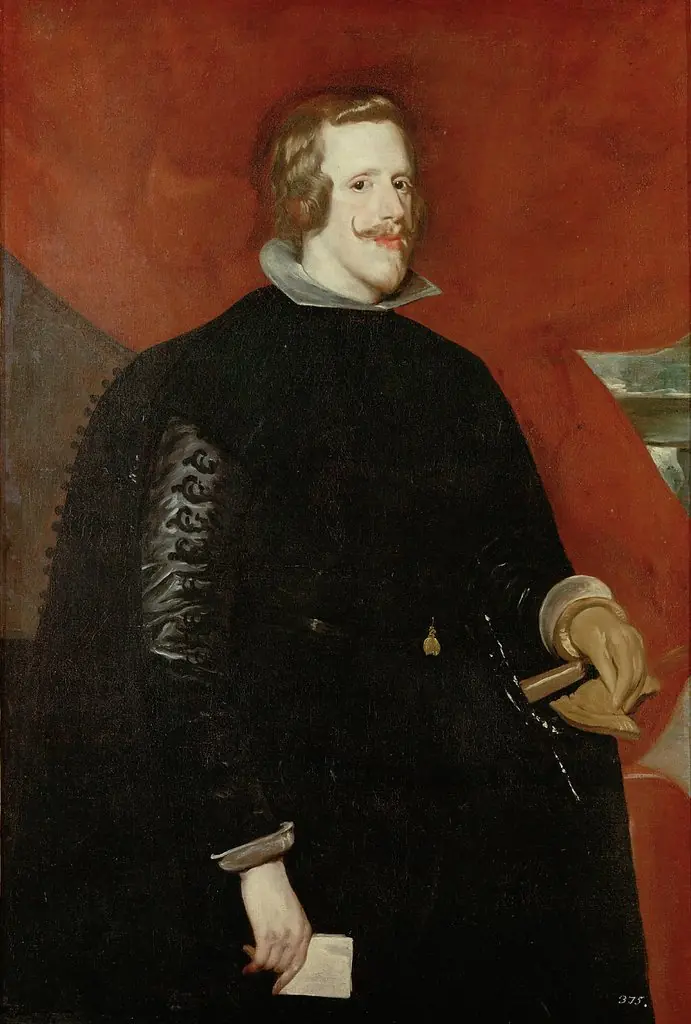
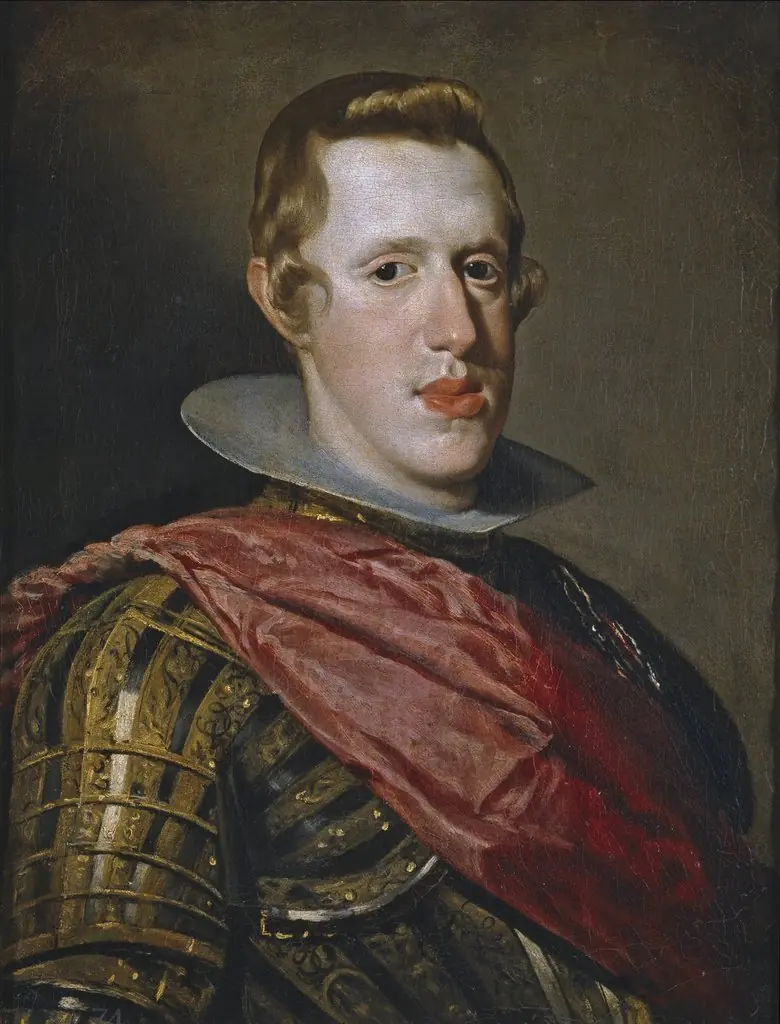
Portrait of Philip IV, King of Spain is an oil painting by Unknown. It dates from 1628 and is held in the collection of the Hermitage Museum. This oil painting depicts Philip IV of Spain in formal court attire, rendered with precise detail and controlled lighting.
About this work
Overview
The composition isolates the monarch against a dark, indistinct background, emphasizing his presence through contrast and focused illumination.
This oil painting depicts Philip IV of Spain in formal court attire, rendered with precise detail and controlled lighting. The composition isolates the monarch against a dark, indistinct background, emphasizing his presence through contrast and focused illumination. The work belongs to a series of royal portraits produced during his reign, intended to project authority and dignity through visual formality.
Subject & Meaning
Philip IV is portrayed in the somber black garments typical of Spanish royal dress, signaling restraint and solemnity. His hand resting on the chest suggests introspection or piety, while the small object in his other hand—possibly a glove or ring—hints at ceremonial function. The rigid posture and neutral expression reinforce the image of a ruler bound by duty, not personal emotion.
Technique & Style
The artist employs chiaroscuro to model the king’s face and clothing, using sharp contrasts between light and shadow to create volume and depth. Gold embroidery on the coat catches the light subtly, drawing attention without distraction. The background is deliberately blurred, minimizing context and directing focus to the figure’s presence and attire, a hallmark of court portraiture of the period.
History & Provenance
Painted during Philip IV’s reign in the mid-17th century, this portrait was likely produced in the Spanish court studio, possibly by Diego Velázquez or a close associate. It was part of a broader program of royal imagery used to assert Habsburg power across Europe. The painting remained in royal collections, later entering the Museo del Prado, where it is preserved as part of Spain’s national heritage.
Context
In mid-17th century Spain, portraiture served political ends as much as personal representation. The king’s image was circulated to reinforce legitimacy and divine right. The austerity of dress contrasted with the opulence of court life, reflecting a cultural preference for disciplined majesty. Such portraits were displayed in palaces and diplomatic settings to communicate stability amid political and economic strain.
Legacy
This portrait exemplifies the Spanish court’s visual language of authority, influencing later royal imagery across Europe. Its restrained elegance and psychological gravity set a standard for official representation. Though not widely reproduced in popular culture, it remains a key reference in studies of Habsburg iconography and the evolution of portraiture as a tool of statecraft.
Artist & collection

 Domestic Scene
 Giacomo and Cardinal Marco, investing Andrea, Abbot of San Zeno, with his Benefice
 The Nymph of Fontainebleau
 Portrait of a Woman
 Madonna and Child with Saints in the Enclosed Garden
 Venus and Minerva
 Family Group of Four on Sofa
 Wall painting from Room H of the Villa of P. Fannius Synistor at Boscoreale