Artwork
Decorative Painting with Imaginary Architecture
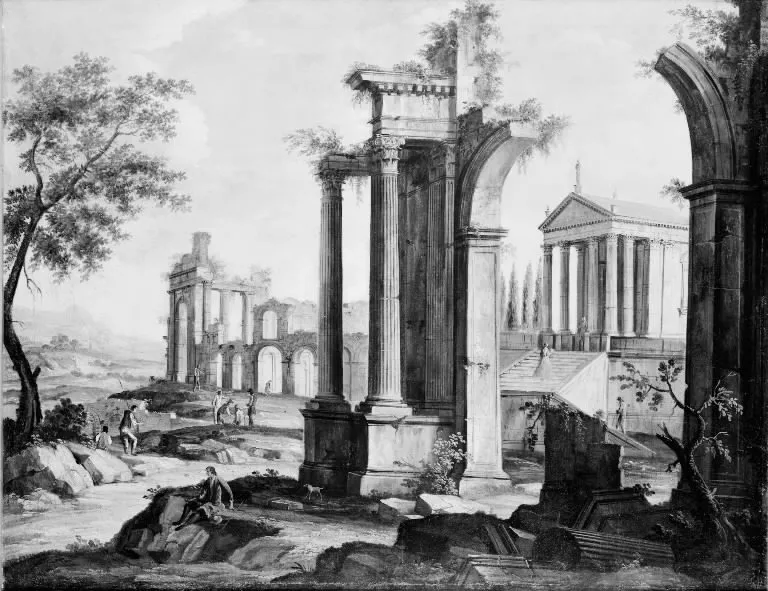
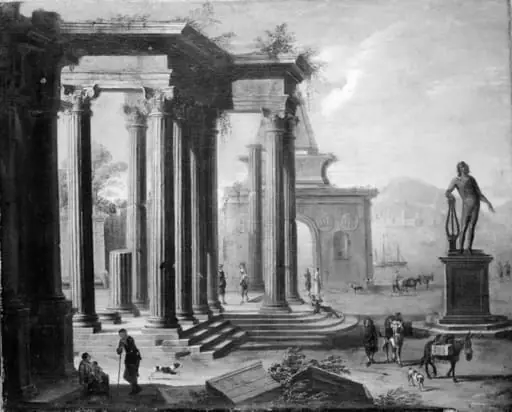
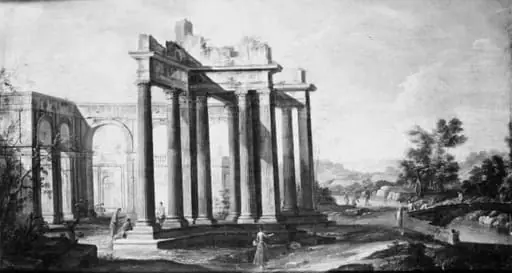
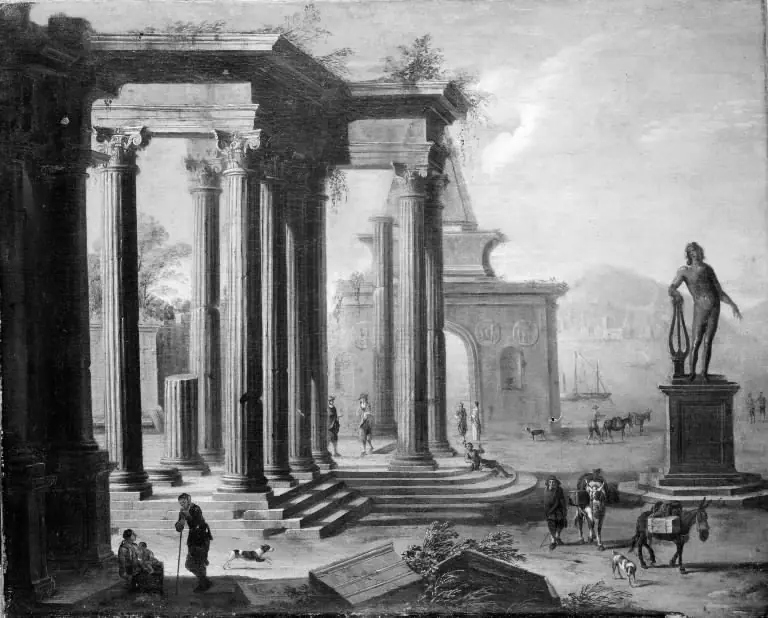
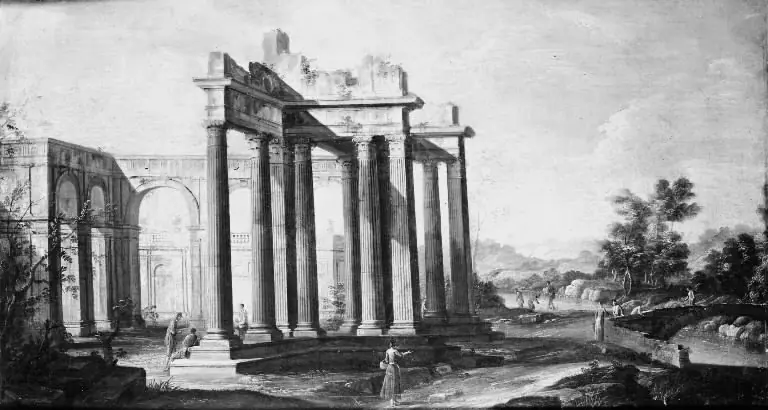
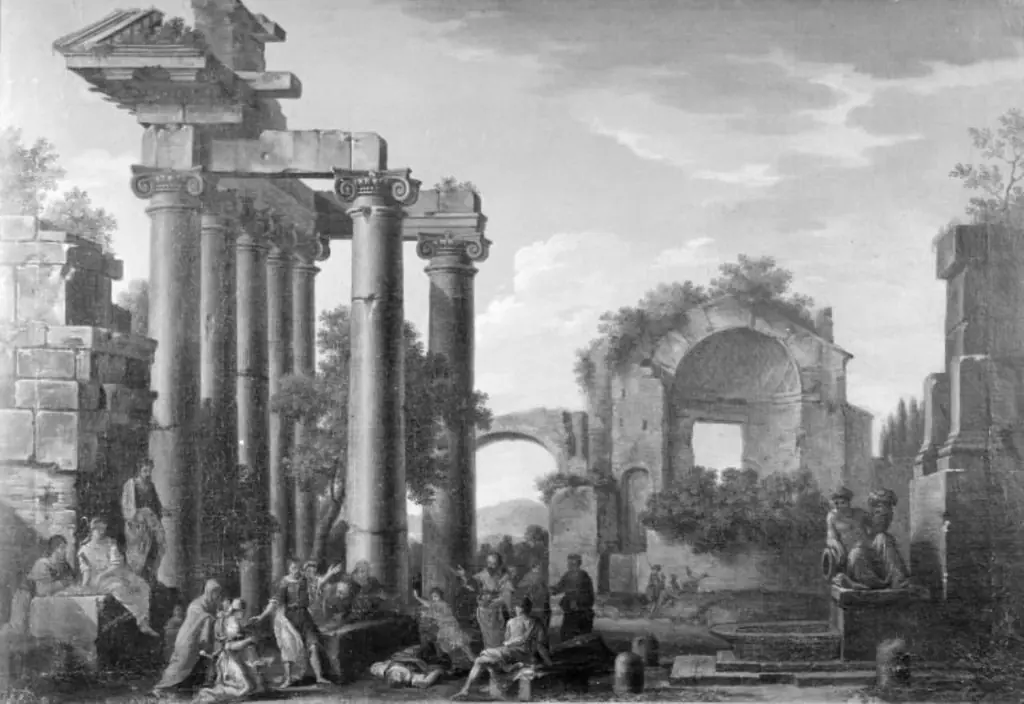
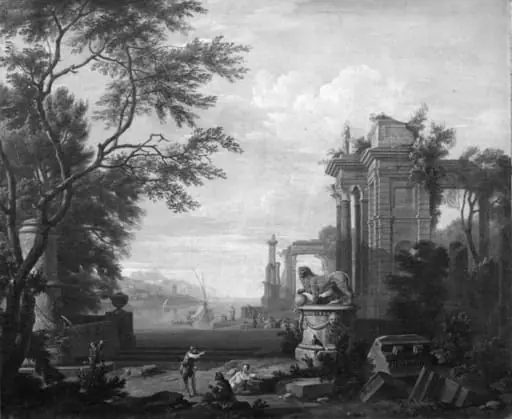
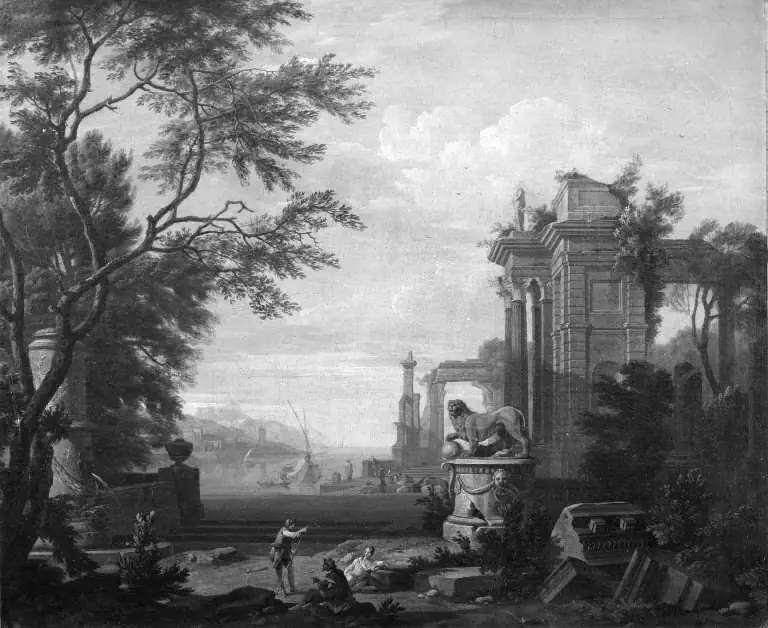
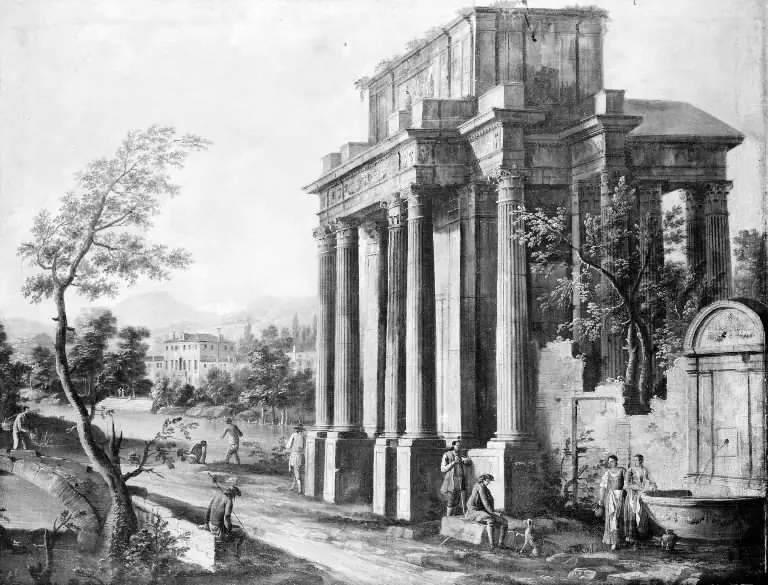
Decorative Painting with Imaginary Architecture is an oil painting by the Rococo painting artist Unknown. It dates from 1775 and is held in the collection of the Statens Museum for Kunst. This oil painting presents a tranquil landscape dominated by the remnants of classical architecture.
About this work
Overview
A solitary figure sits on a rock in the foreground, while another walks a dog nearby, adding quiet human presence without narrative emphasis.
This oil painting presents a tranquil landscape dominated by the remnants of classical architecture. Trees grow from cracked stone and broken columns, blending nature with the remnants of human construction. A solitary figure sits on a rock in the foreground, while another walks a dog nearby, adding quiet human presence without narrative emphasis. The composition favors stillness and atmospheric depth over action.
Subject & Meaning
The scene evokes contemplation of time and decay. The ruins, partially reclaimed by vegetation, suggest the passage of centuries and the impermanence of human achievement. The figures are small and unobtrusive, reinforcing the idea that nature endures beyond civilization. There is no clear mythological or historical reference—instead, the mood is meditative, inviting reflection on entropy and renewal.
Technique & Style
Oil paint is used to build subtle layers of texture and light, enhancing the tactile quality of weathered stone and foliage. The artist employs soft transitions between shadow and tone to create spatial depth, with distant elements rendered in cooler, muted hues. Details like crumbling arches and moss-covered bases are rendered with precision, yet the overall effect remains atmospheric rather than hyperrealistic.
History & Provenance
The painting’s origin is undocumented in public records, and no known exhibition history or collector lineage has been established. It is attributed to an anonymous or lesser-known artist active in the late 18th or early 19th century, a period when romanticized ruins were a common theme in European landscape painting. Its current location and acquisition details remain unverified.
Context
This work aligns with a broader 18th-century European fascination with classical antiquity and the picturesque ruin. Artists often depicted decaying architecture as symbols of both grandeur and decline, reflecting Enlightenment-era musings on history and mortality. Unlike grand historical scenes, this painting avoids drama, favoring quiet observation over moralizing or narrative.
Legacy
Though not widely recognized in major art historical narratives, the painting contributes to a quiet tradition of landscape painting that prioritizes mood over spectacle. Its restrained composition and focus on natural reclamation influenced later generations interested in the intersection of architecture and wilderness, particularly in Romantic and early modernist contexts.
Artist & collection

 Domestic Scene
 Giacomo and Cardinal Marco, investing Andrea, Abbot of San Zeno, with his Benefice
 The Nymph of Fontainebleau
 Portrait of a Woman
 Madonna and Child with Saints in the Enclosed Garden
 Venus and Minerva
 Family Group of Four on Sofa
 Wall painting from Room H of the Villa of P. Fannius Synistor at Boscoreale