Artwork
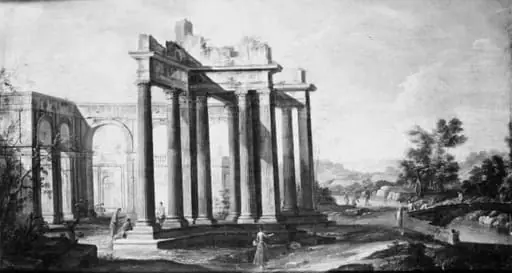
Ruiner af et græsk-romersk tempel med mange figurer
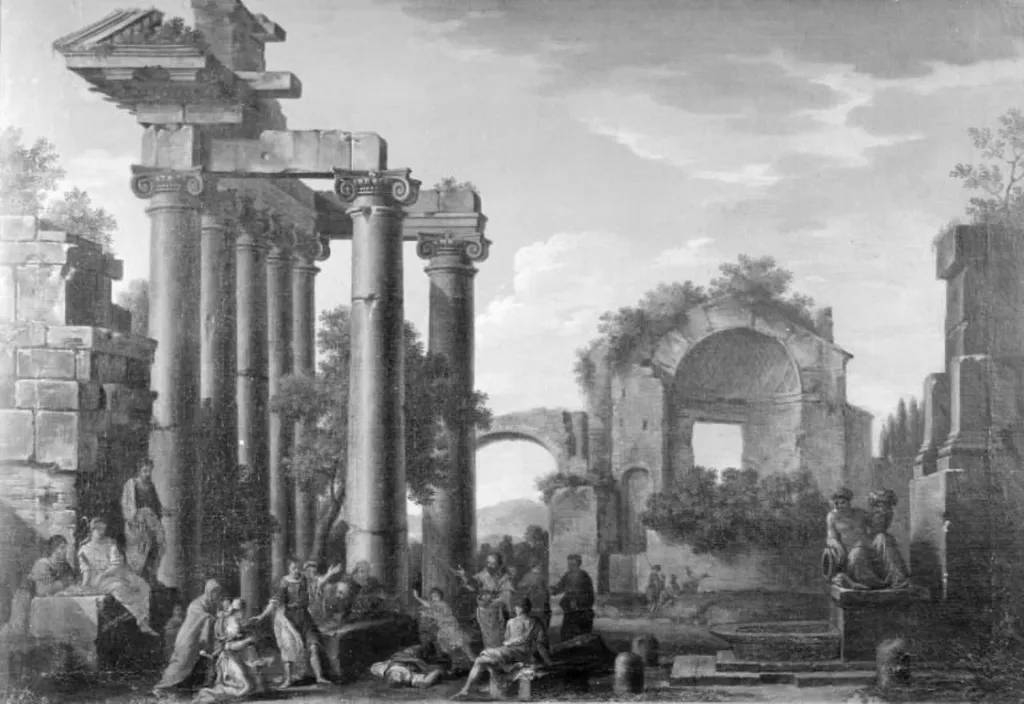
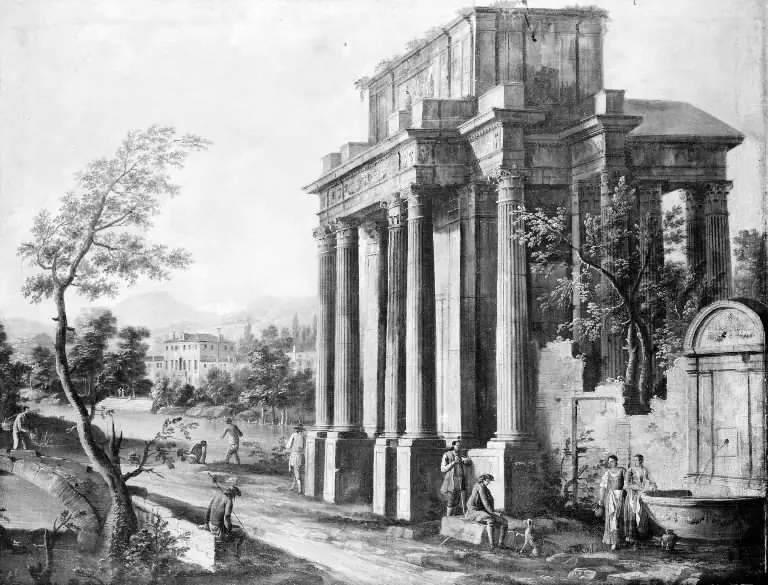
Ruiner af et græsk-romersk tempel med mange figurer is an oil painting by Unknown. It is held in the collection of the Statens Museum for Kunst. This oil painting depicts the decay of a classical temple, its columns and pediment rising from a landscape of scattered stone.
About this work
Overview
Oil paint is used to build texture and depth, with careful attention to the interplay of light and shadow across weathered surfaces.
This oil painting depicts the decay of a classical temple, its columns and pediment rising from a landscape of scattered stone. Figures in ancient robes move quietly around the ruins, engaged in daily tasks or rest. The sky, softly lit with clouds, frames the scene without distraction. Oil paint is used to build texture and depth, with careful attention to the interplay of light and shadow across weathered surfaces.
Subject & Meaning
The scene portrays the quiet aftermath of a once-sacred space, now reclaimed by time. Figures are neither in ritual nor celebration, but in mundane presence—suggesting continuity amid collapse. The absence of overt drama implies a meditation on impermanence, where human activity persists even as monumental architecture crumbles.
Technique & Style
Chiaroscuro defines the forms, with light falling sharply on stone surfaces and deep shadows pooling in crevices and beneath arches. The brushwork is deliberate, building layers of pigment to suggest erosion and age. The figures are rendered with restrained detail, blending into the environment rather than dominating it, reinforcing the theme of quiet decay.
History & Provenance
The work resides in the collection of Statens Museum for Kunst, though its origins before acquisition remain undocumented. No known artist is definitively linked to the piece, and it lacks a clear date or exhibition history. Its presence in the museum suggests it was acquired as part of a broader 19th-century interest in classical ruins.
Context
Created during a period when European artists frequently turned to antiquity for thematic inspiration, the painting reflects a fascination with ruins as symbols of cultural memory. Unlike grand historical narratives, this work avoids heroism or myth, instead focusing on the subtle, everyday life that lingers in the wake of empire.
Legacy
The painting contributes to a genre of 19th-century European art that valued contemplative ruin over dramatic spectacle. While not widely reproduced or studied, its quiet tone aligns with a quieter current in Romanticism—one that finds meaning not in grandeur, but in the persistence of human presence amid entropy.
Artist & collection

 Domestic Scene
 Giacomo and Cardinal Marco, investing Andrea, Abbot of San Zeno, with his Benefice
 The Nymph of Fontainebleau
 Portrait of a Woman
 Madonna and Child with Saints in the Enclosed Garden
 Venus and Minerva
 Family Group of Four on Sofa
 Wall painting from Room H of the Villa of P. Fannius Synistor at Boscoreale
 Decorative Painting with Imaginary Architecture
 Colonade in Ruins
 Decorative Painting with Imaginary Architecture
 Architectural Study with Columns and a Fountain
 Imaginary Architectural Monuments
 Landscape with the Colosseum and the Arch of Constantine
 Ruins in a Landscape
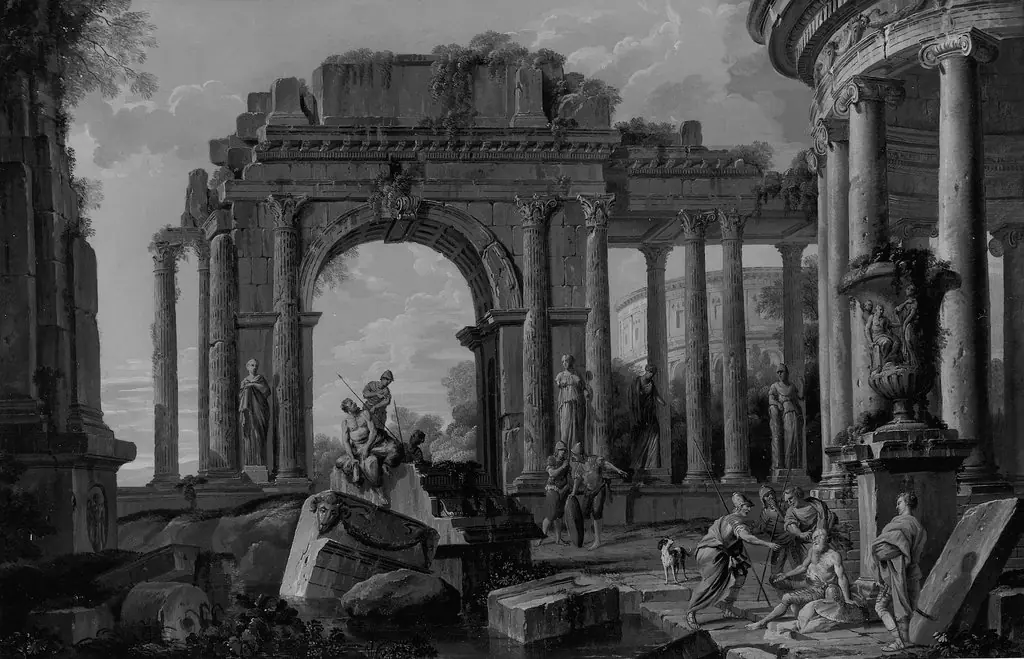 Architectural Landscape with Belisarius Receiving Alms
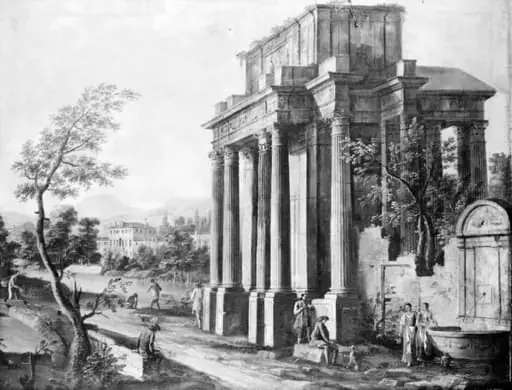 Architectural Study with Columns and a Fountain
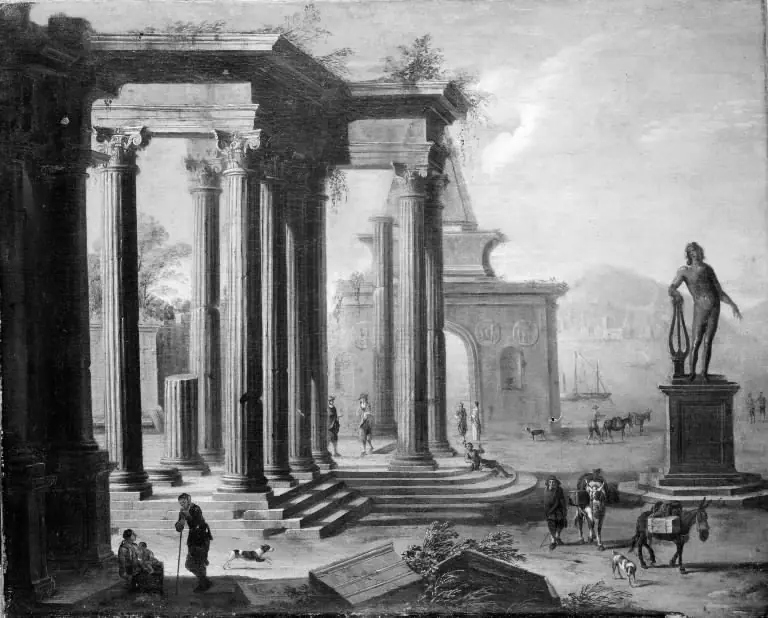 Colonade in Ruins
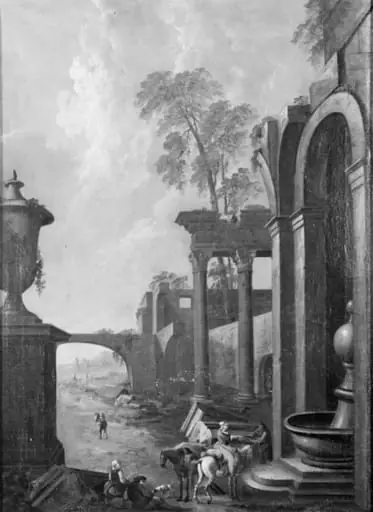 Ruins in a Landscape
 Landskab med ruiner