Artwork
Herzog Karl V. von Lothringen (1643-1690) als Feldherr zu Pferd
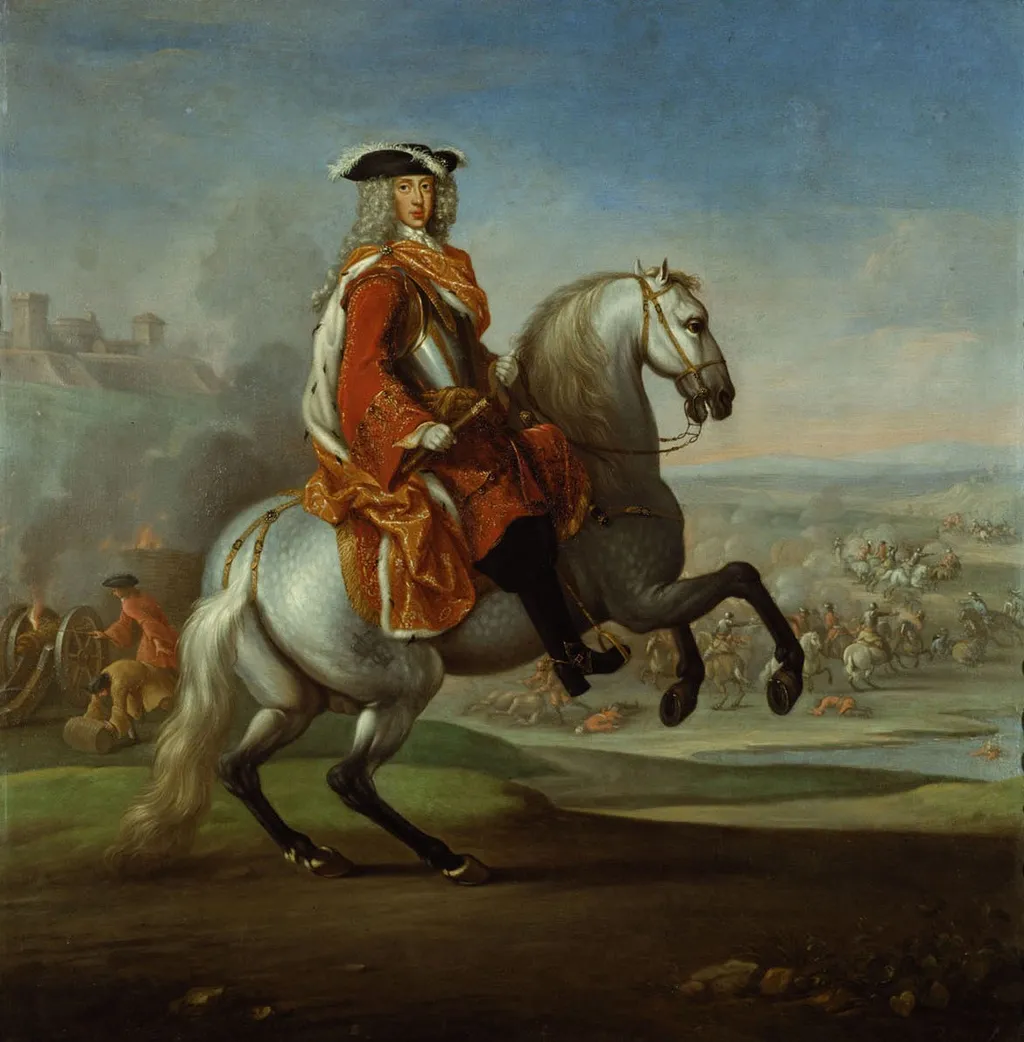
Herzog Karl V. von Lothringen (1643-1690) als Feldherr zu Pferd is a copper painting by the Flemish Baroque painting artist Unknown. It dates from 1690 and is held in the collection of the Kunsthistorisches Museum. The work depicts Karl V, Duke of Lorraine, portrayed as a military commander astride a gray horse.
About this work
Overview
The composition includes a backdrop of mounted troops advancing toward a distant fortress, with several figures on the ground engaged in rest or labor.
The work depicts Karl V, Duke of Lorraine, portrayed as a military commander astride a gray horse. Rendered on copper, the image presents the rider in a vivid red and white costume, his hat adorned with a large feather, and a flowing cape that emphasizes his forward motion. The composition includes a backdrop of mounted troops advancing toward a distant fortress, with several figures on the ground engaged in rest or labor.
Subject & Meaning
The portrait serves as a visual assertion of the duke’s martial authority, presenting him as a confident leader in the midst of a campaign. By placing him prominently against a scene of active soldiers and a fortified target, the artist underscores his role in defending and expanding his territories, while the relaxed figures below suggest the broader societal context of war.
Technique & Style
Executed on a copper plate, the artist exploits the metal’s smooth surface to achieve fine detail, particularly in the horse’s musculature and the intricate folds of the rider’s attire. Contrasting chiaroscuro highlights the central figure, while the softer, less defined background creates depth. Thick application of pigment on the horse enhances the illusion of three‑dimensional form.
History & Provenance
Created in the late seventeenth century, the piece reflects the period’s practice of commemorating noble patrons through portraiture. It entered the collection of the Kunsthistorisches Museum in Vienna, where it remains part of the museum’s holdings of Baroque-era works.
Context
During the 1600s, the Duchy of Lorraine was involved in numerous military engagements within the Holy Roman Empire. Portraits of rulers on horseback were common visual propaganda, aligning the sovereign with the chivalric ideals of bravery and command prevalent in contemporary court culture.
Legacy
The painting exemplifies the use of copper as a medium for detailed, luminous portraiture in the Baroque period. Its preservation in a major European museum allows scholars to study the intersection of political representation and artistic technique in late seventeenth‑century Central Europe.
Artist & collection

 Domestic Scene
 Giacomo and Cardinal Marco, investing Andrea, Abbot of San Zeno, with his Benefice
 The Nymph of Fontainebleau
 Portrait of a Woman
 Madonna and Child with Saints in the Enclosed Garden
 Venus and Minerva
 Family Group of Four on Sofa
 Wall painting from Room H of the Villa of P. Fannius Synistor at Boscoreale
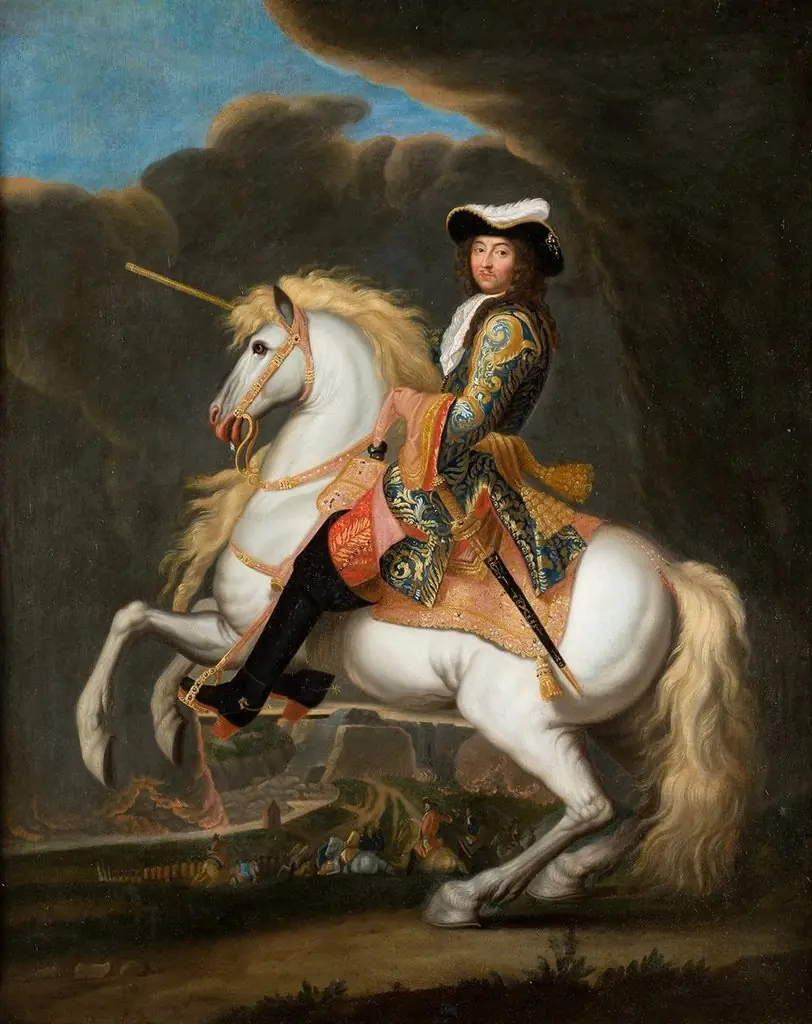 Retrato equestre de Luís XIV
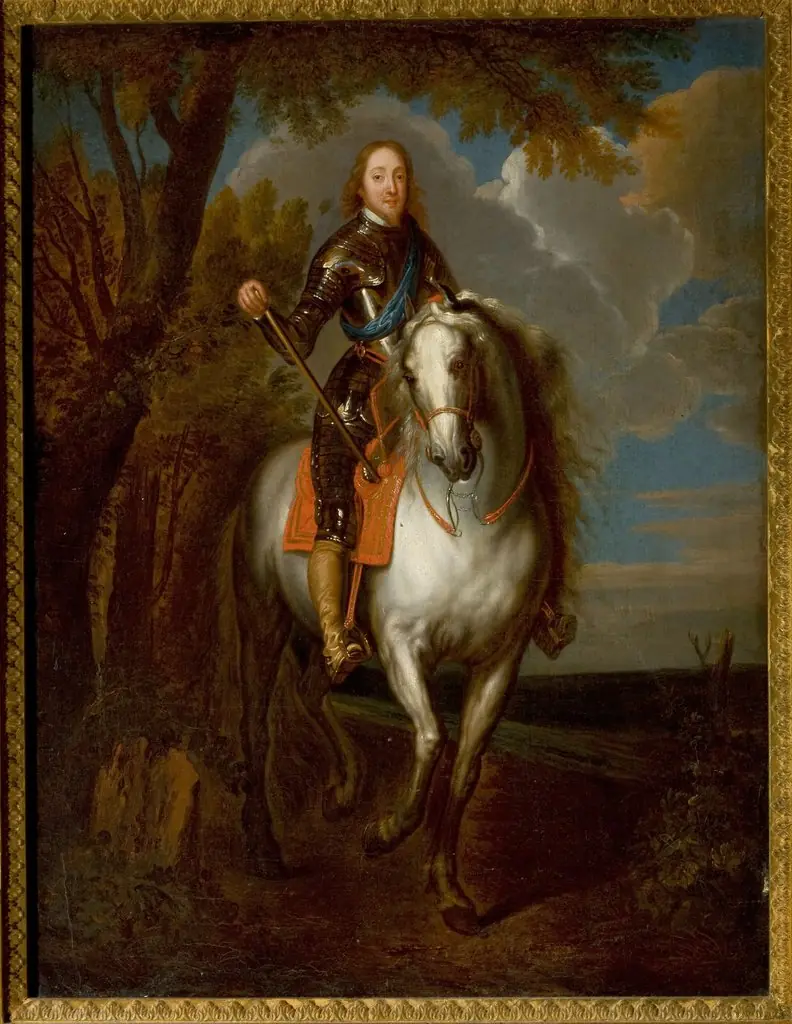 Equestrian Portrait of a Man in Armour
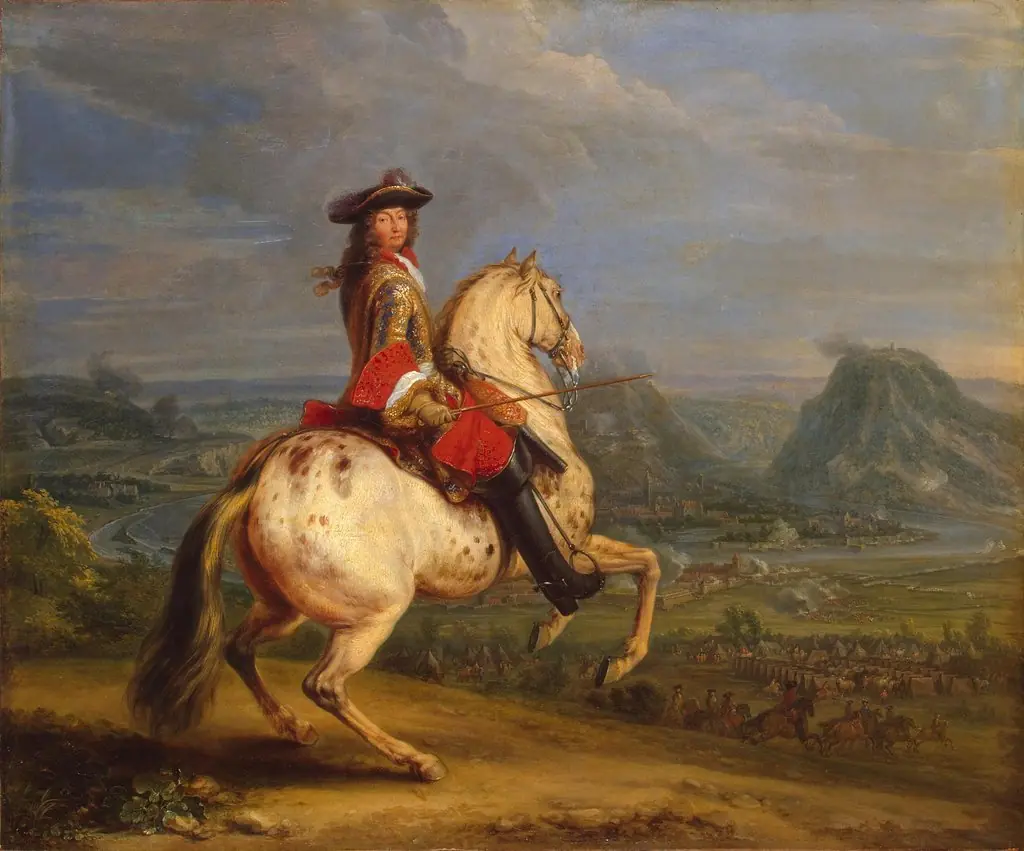 Louis XIV at the Taking of Besancon
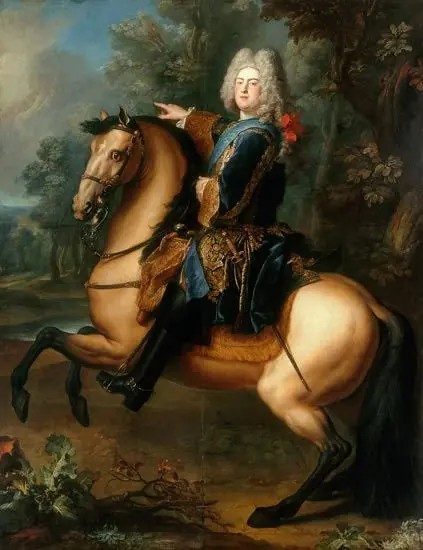 Kurprinz Friedrich August von Sachsen (1696-1763) zu Pferde
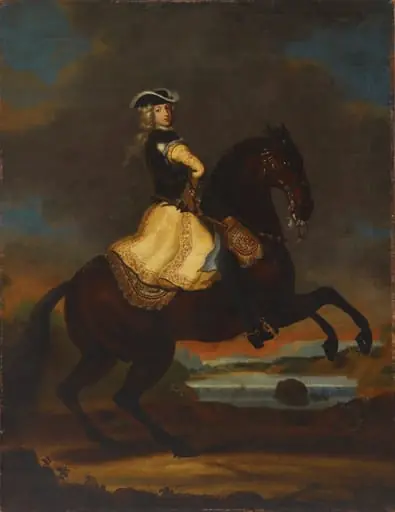 Kuningas Kaarle XII
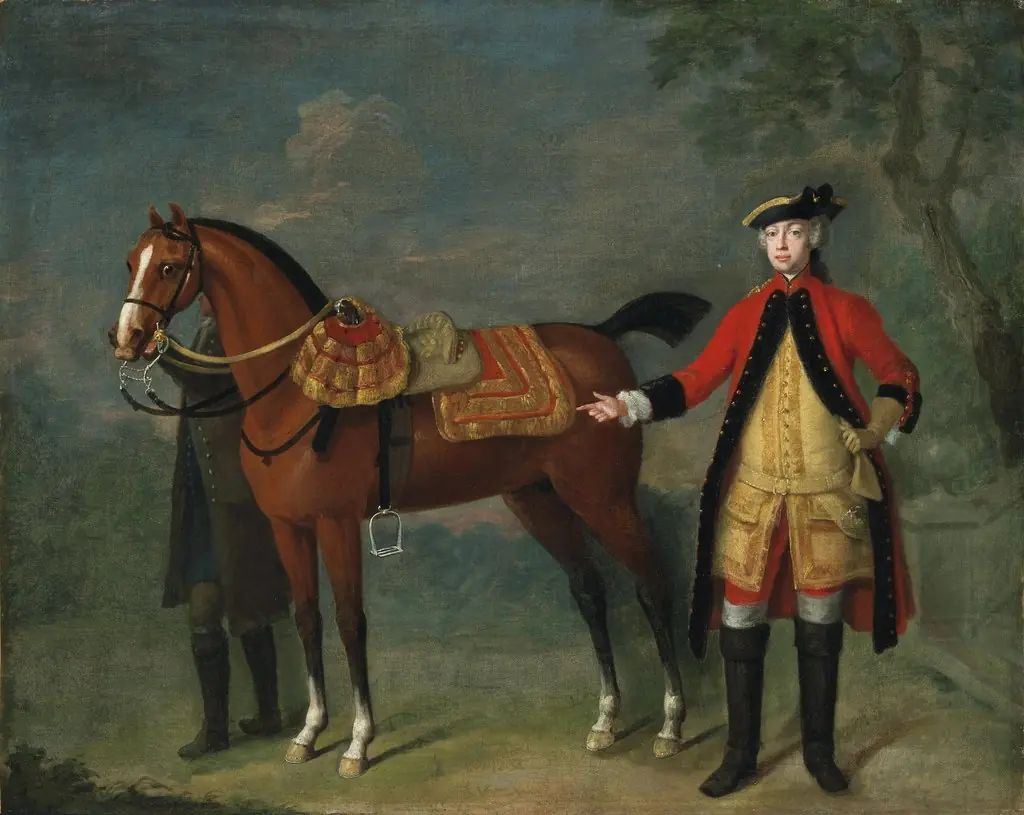 Portrait of Thomas Congreve (1714-1777)
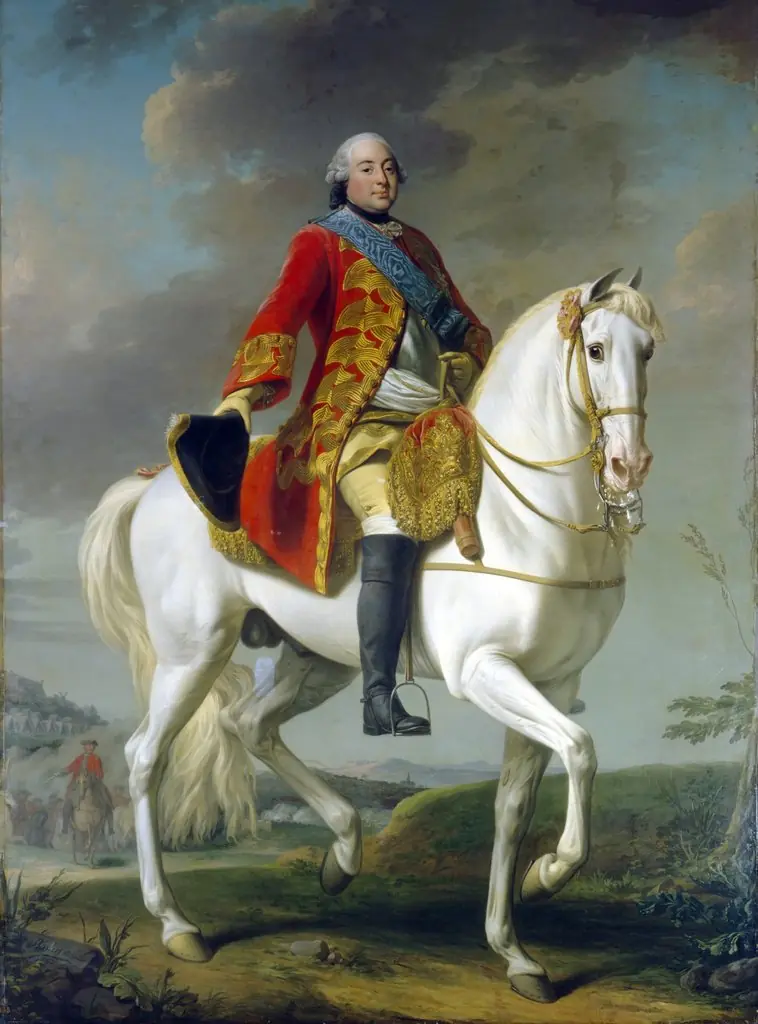 Louis-Philippe, Duc d'Orleans, Saluting his Army on the Battlefield
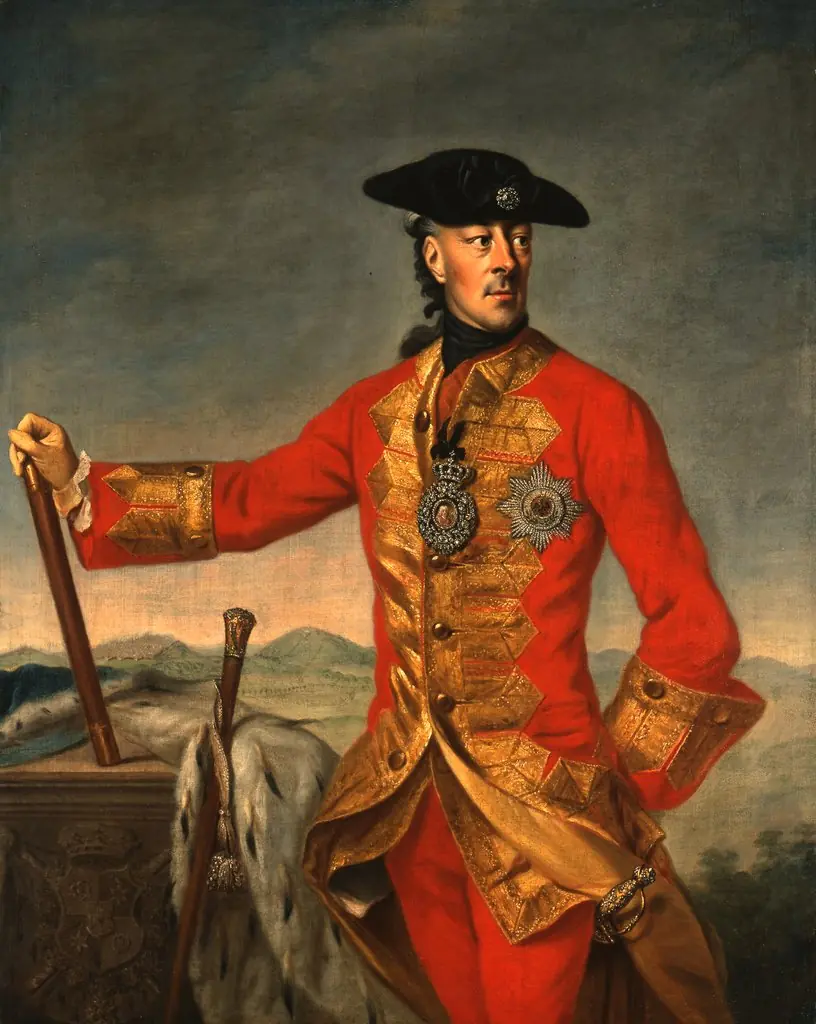 Count Wilhelm Friedrich Ernst of Schaumburg-Lippe (1724-1777)
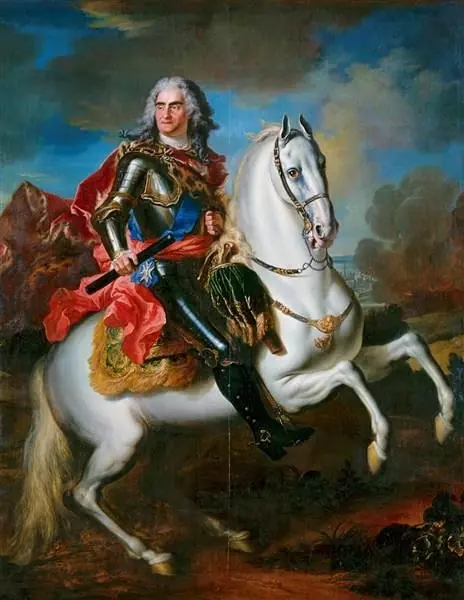 Equestrian portrait of August II the Strong (1670-1733)
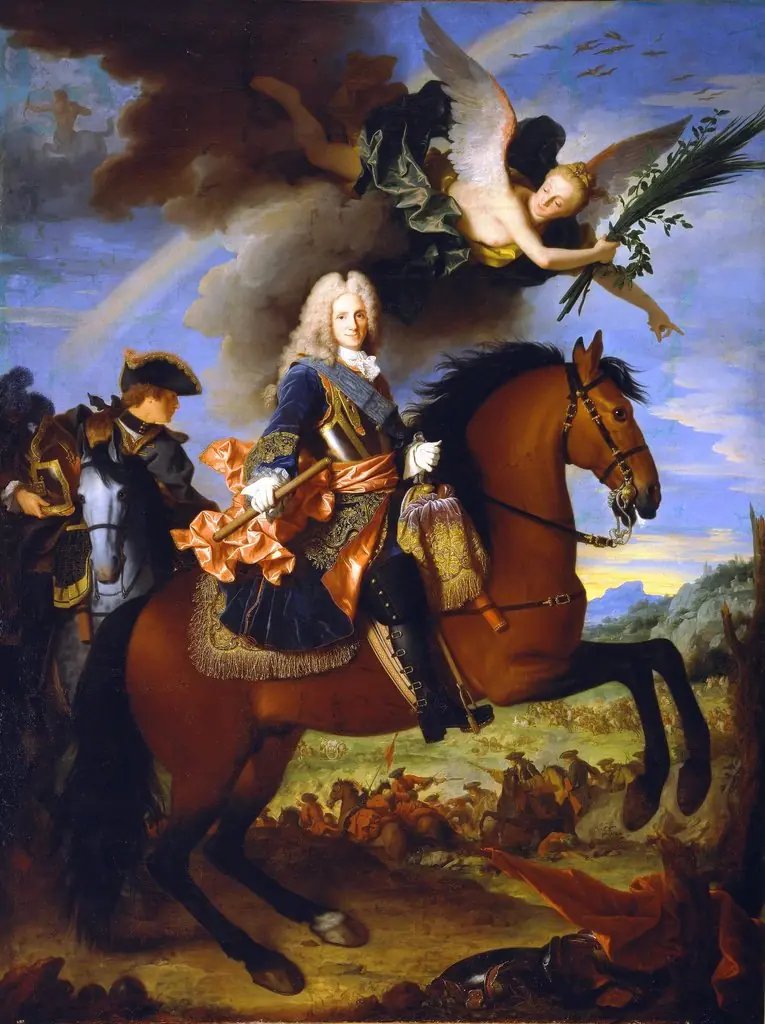 Philip V on Horseback
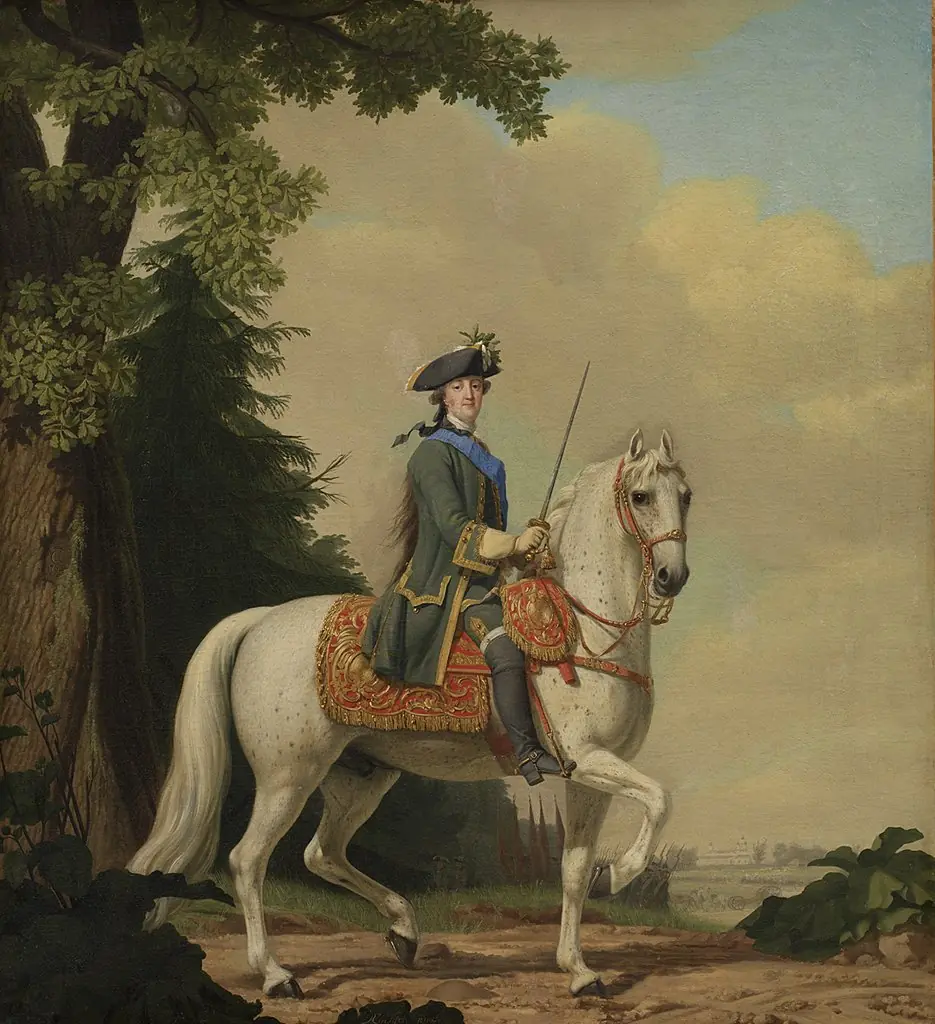 Catharina II of Russia and her stallion Brillante
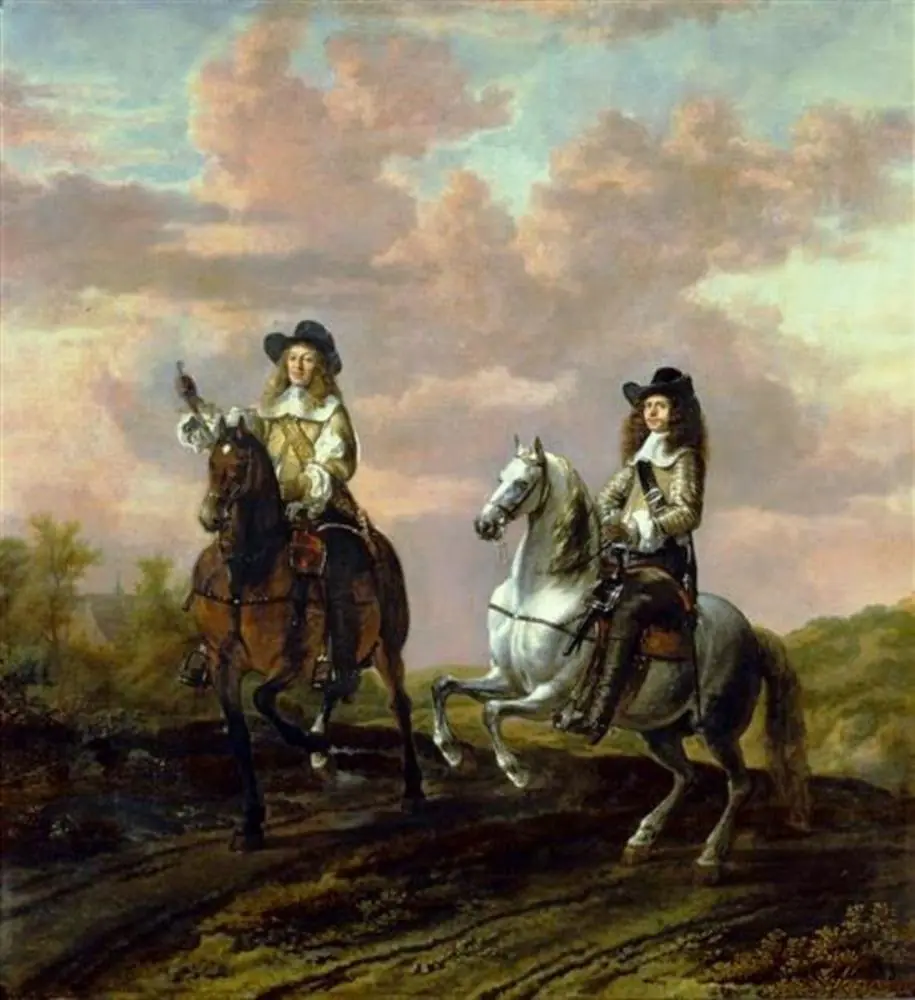 Portrait of two unknown man on horseback