Artwork
Mary and child enthroned with two saints
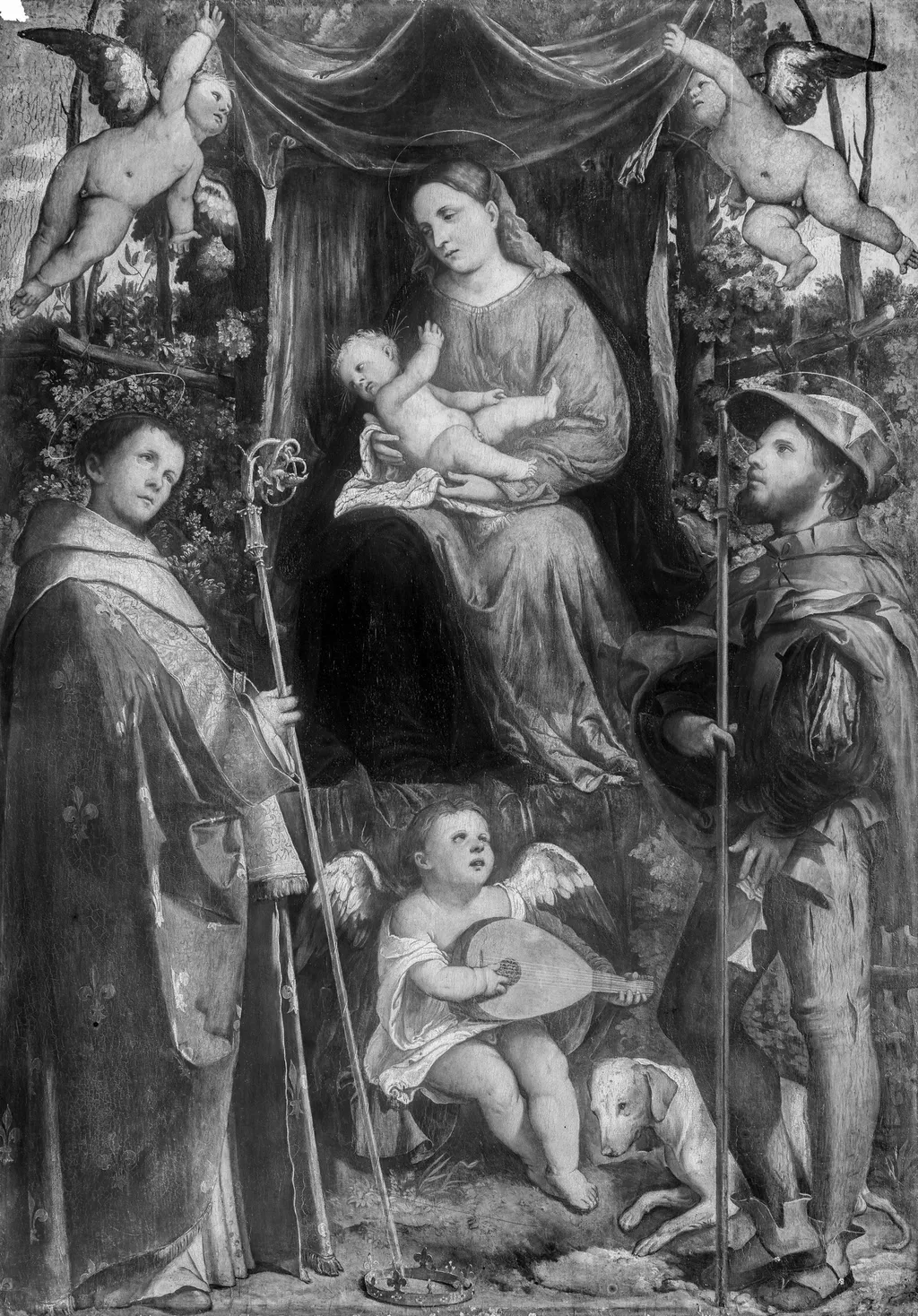
Mary and child enthroned with two saints is a paint painting by the Mannerist artist Girolamo Romanino. It dates from 1533 and is held in the collection of the Gemäldegalerie Berlin.
About this work
Overview
Painted around 1533 by Girolamo Romanino, this devotional work features the Virgin Mary seated on a throne with the Christ Child, flanked by two male saints.
Painted around 1533 by Girolamo Romanino, this devotional work features the Virgin Mary seated on a throne with the Christ Child, flanked by two male saints. Executed in oil on panel, the composition follows traditional sacred iconography but with a distinctive Mannerist sensibility. The painting resides in the Gemäldegalerie, Berlin, and reflects Romanino’s synthesis of Venetian colorism and Lombard naturalism during his mature period.
Subject & Meaning
The Virgin and Child occupy the central axis, symbolizing divine authority and maternal grace. The two saints, one in ecclesiastical robes and the other in armor, likely represent patron saints of the original commissioning institution or family. Below, a putto playing a lute suggests heavenly harmony, while the dog at Mary’s feet alludes to fidelity. The celestial cherubs reinforce the sacred atmosphere, framing the earthly throne as a portal to the divine.
Technique & Style
Romanino employs thick, tactile brushwork, particularly in the drapery and skin tones, creating a sculptural presence. The figures emerge sharply from a dark, atmospheric background through strong contrasts of light and shadow, anticipating chiaroscuro effects. The elongated proportions and slightly unnatural poses of the saints reflect Mannerist tendencies, diverging from High Renaissance balance while retaining emotional intensity and rich coloration.
History & Provenance
The painting was likely commissioned for a private chapel or religious confraternity in northern Italy, possibly near Brescia, where Romanino was active. It entered the Berlin collection in the 19th century, likely through the acquisition of works from Italian ecclesiastical collections dispersed during Napoleonic-era secularizations. Its survival in good condition suggests careful preservation by its early owners and later institutional custodians.
Context
Created during a period of religious upheaval, the painting reflects the enduring role of Marian devotion in Catholic communities despite growing Protestant critiques. Romanino’s style bridges the late Renaissance and emerging Mannerism, incorporating Venetian pigment richness with Lombard attention to tangible form. The inclusion of secular elements—like the dog and lute—hints at a humanized sacred space, common in regional altarpieces of the era.
Legacy
Though not widely reproduced, the work exemplifies Romanino’s ability to adapt regional styles into cohesive devotional imagery. Its presence in Berlin underscores the 19th-century European interest in Italian Mannerist painting beyond major centers like Florence or Rome. The painting remains a quiet testament to the persistence of traditional iconography amid evolving artistic currents in early 16th-century northern Italy.
Artist & collection
Artist
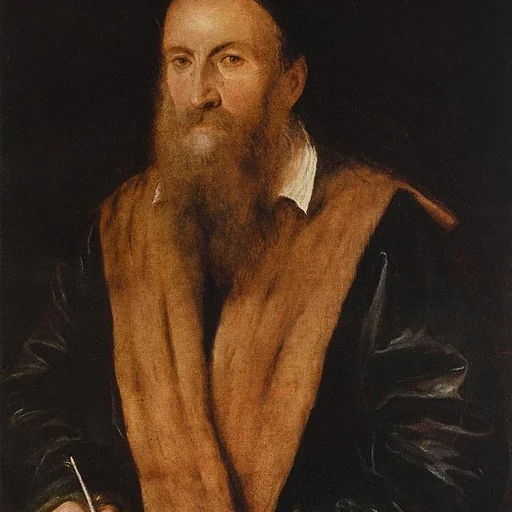
Girolamo Romani, known as Romanino (c. 1485 – c. 1566), was an Italian High Renaissance painter active in the Veneto and Lombardy, near Brescia. His long career brought forth several different styles.

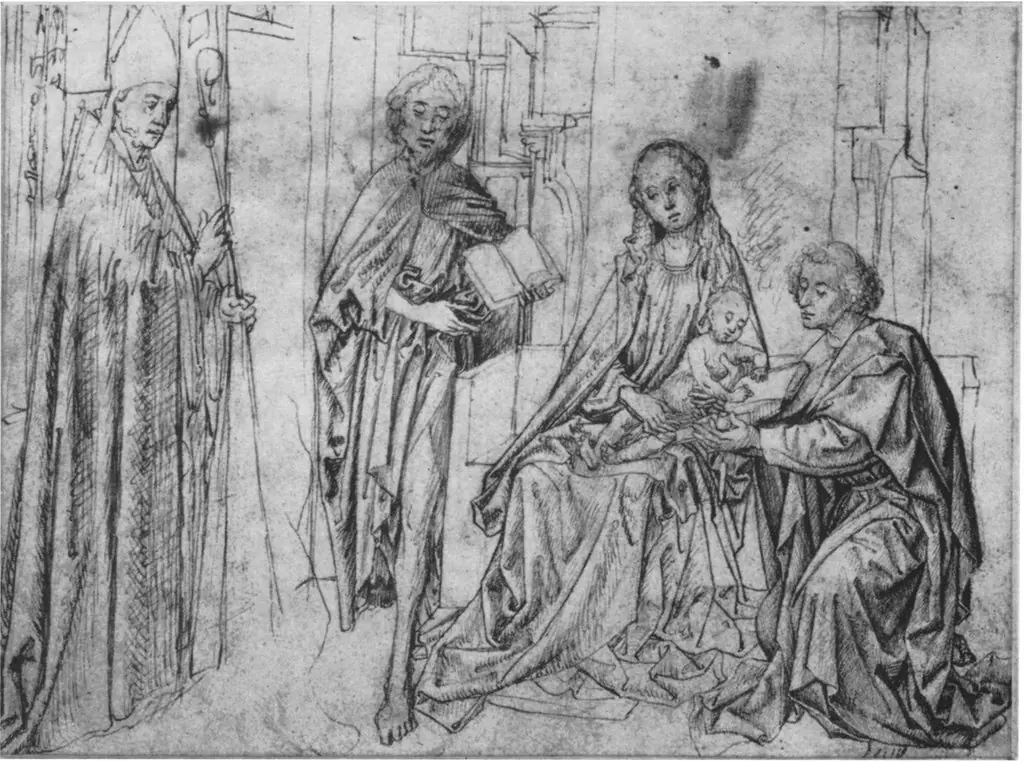 Virgin and Child with Saints
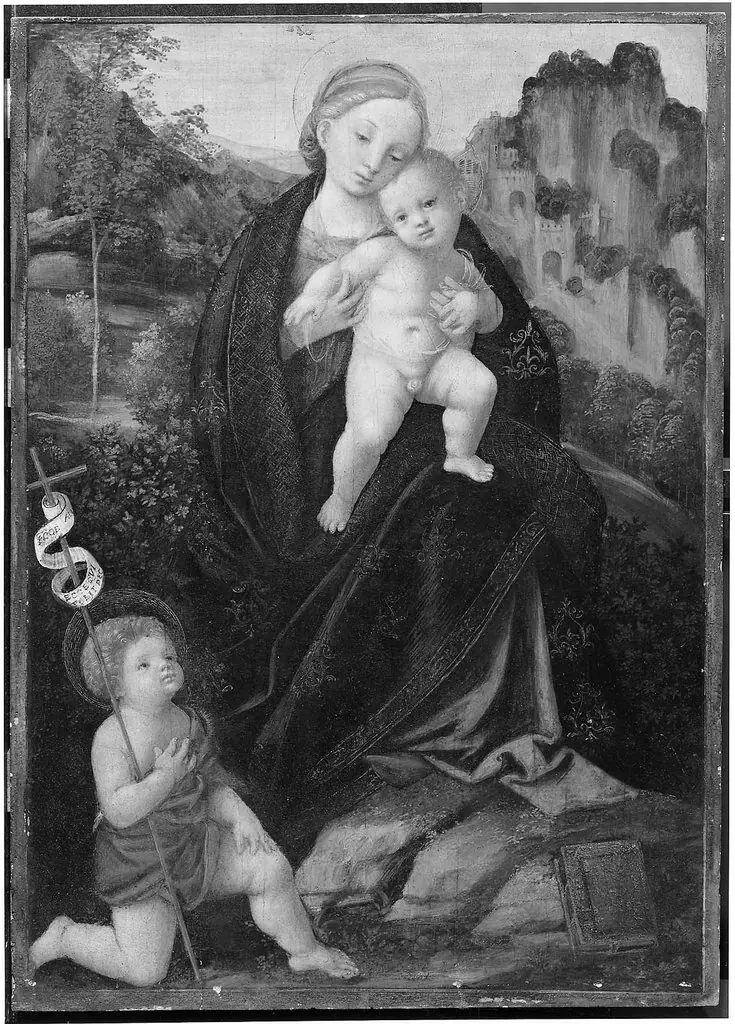 Virgin and Child with the Infant Saint John the Baptist
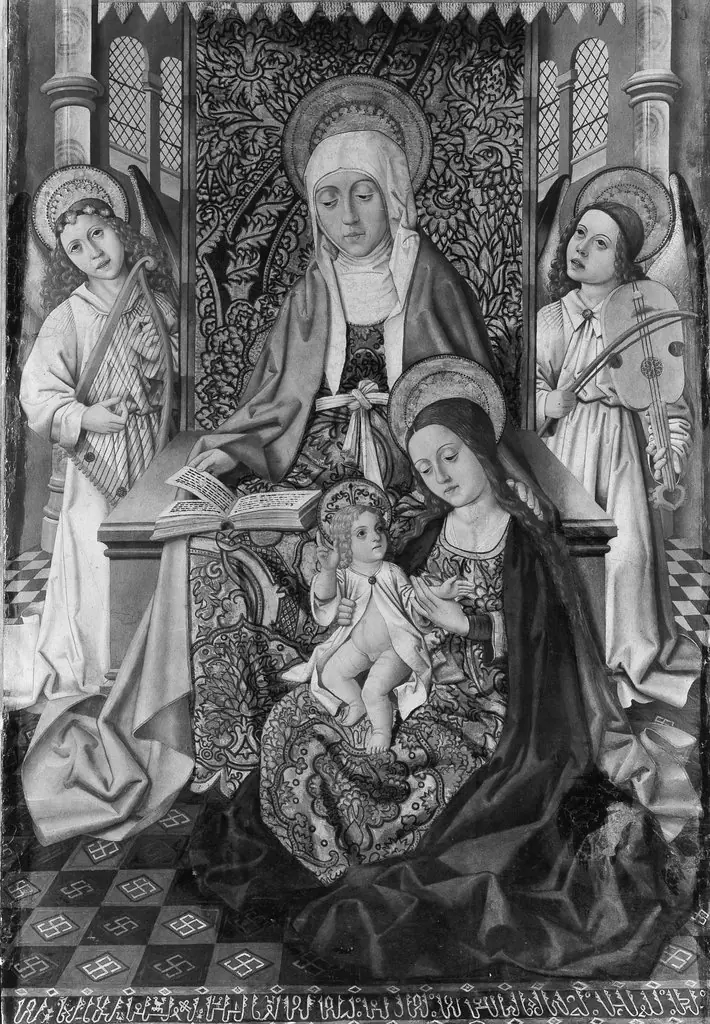 Saint Anne Enthroned with the Virgin and Child
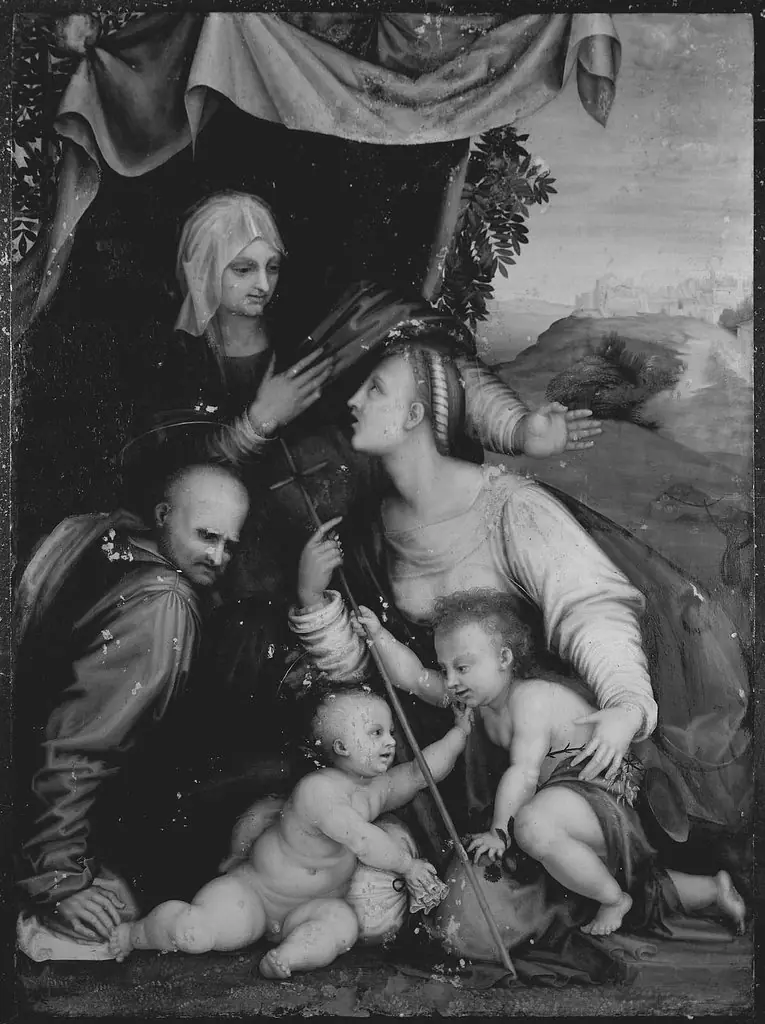 The Holy Family with St Anne and Young St John the Baptist
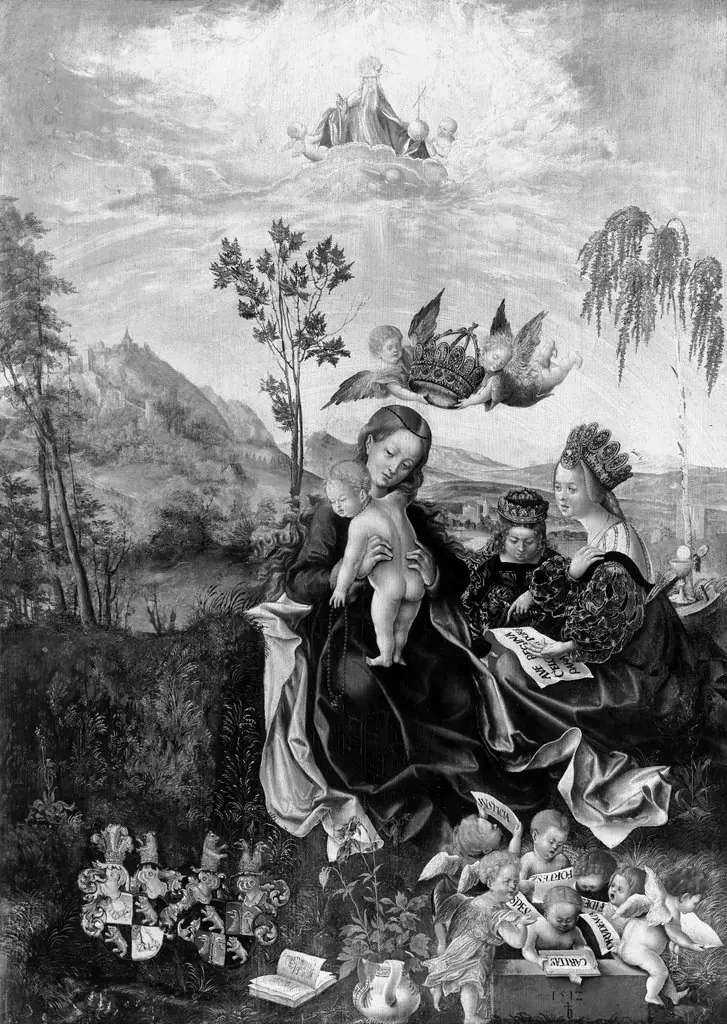 Mary with the child, Saint Catherine, Saint Barbara and angels
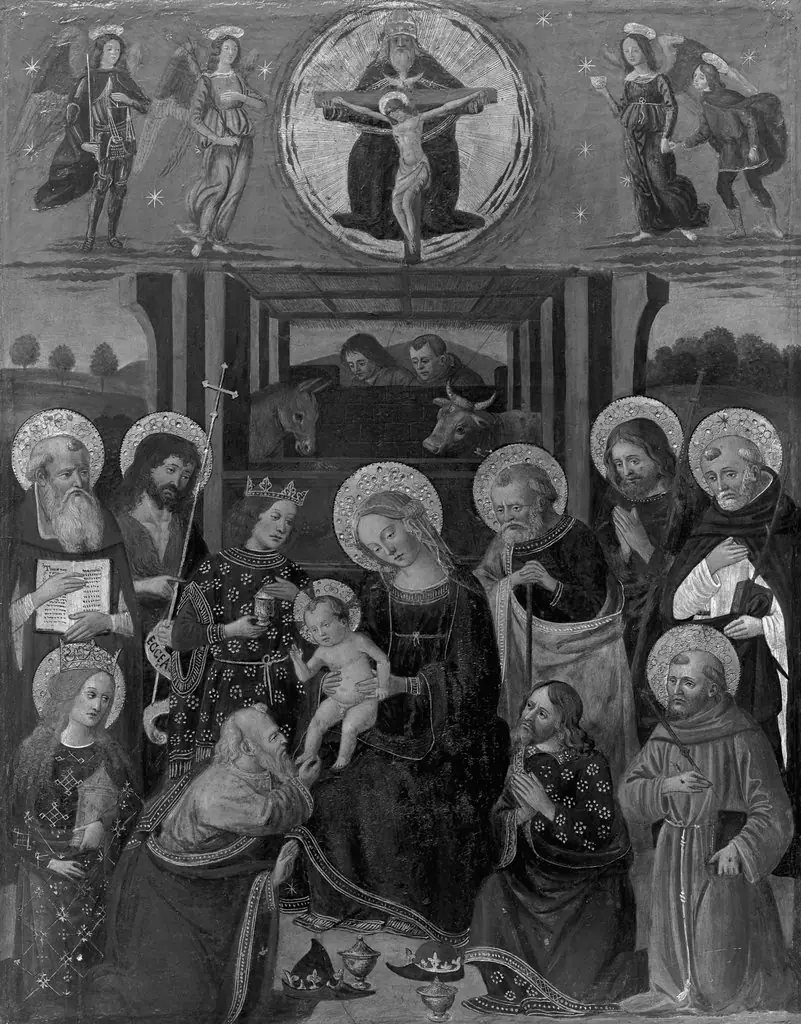 Adoration of the Kings
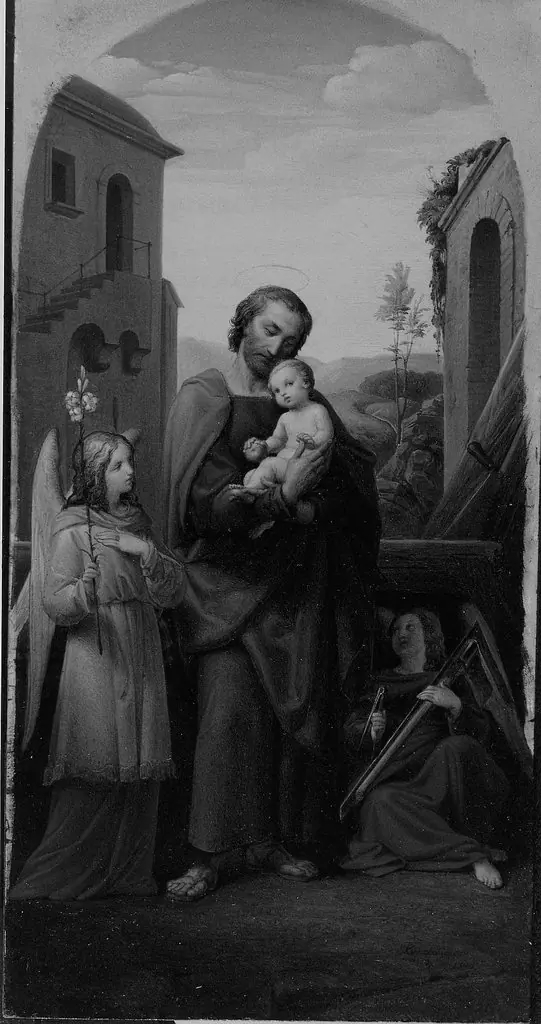 St. Joseph and Christ Child
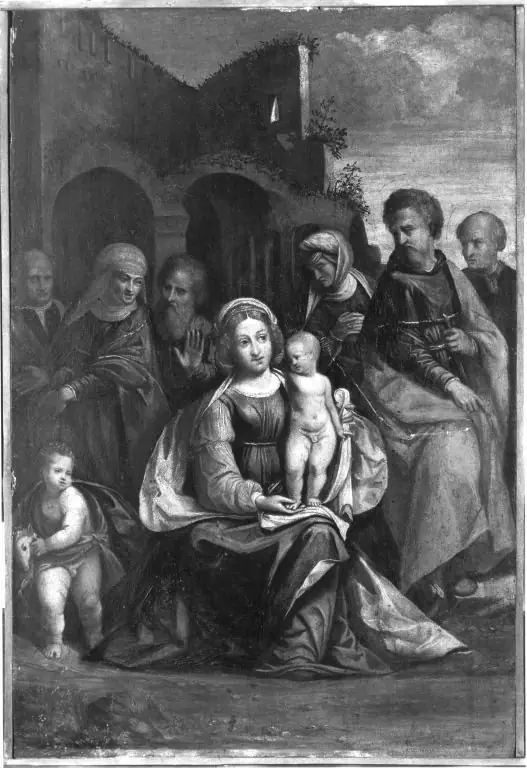 Hl. Sippe
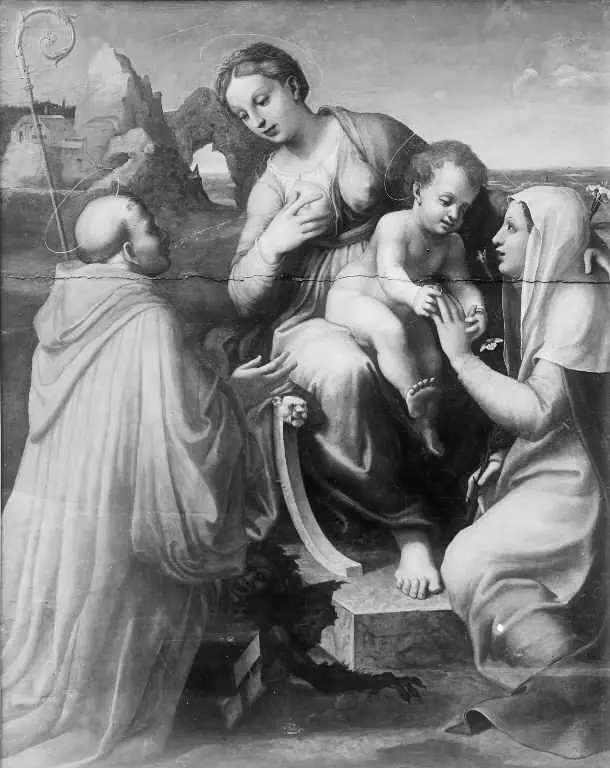 The Madonna and Child with Saints