Artwork
Crucifixion with the Virgin and Saint John the Evangelist
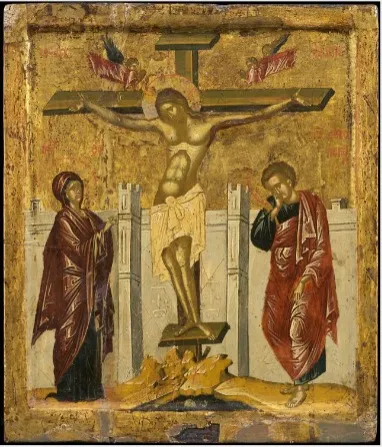
Crucifixion with the Virgin and Saint John the Evangelist is an unspecified painting by Unknown. It is held in the collection of the National Gallery of Ireland. This devotional panel portrays the crucifixion of Christ flanked by the Virgin Mary and Saint John the Evangelist.
About this work
Overview
The use of gold leaf and rich pigments signals the painting’s liturgical function and the status of its original patron.
This devotional panel portrays the crucifixion of Christ flanked by the Virgin Mary and Saint John the Evangelist. Set against a gold ground, the composition emphasizes spiritual solemnity over naturalistic space. The figures are arranged symmetrically around the central cross, their postures conveying grief and reverence. The use of gold leaf and rich pigments signals the painting’s liturgical function and the status of its original patron.
Subject & Meaning
The scene captures the moment of Christ’s death, with Mary and John as witnesses to his sacrifice. Mary, dressed in dark robes with a red head covering, embodies sorrow and maternal grief. John, in a red robe over a green tunic, represents the beloved disciple and the emerging Church. Their presence underscores the theological significance of Christ’s suffering as both personal loss and divine redemption.
Technique & Style
The artist employs tempera and gold leaf on wood, typical of late medieval panel painting. Fine brushwork defines the folds of fabric and the delicate features of the faces, while the flat, gold background avoids perspective to focus attention on sacred figures. The restrained palette and stylized forms reflect Byzantine influences, adapted to Western devotional conventions of the period.
History & Provenance
The painting likely originated in a monastic or private chapel during the 14th century, intended for private prayer or liturgical use. Its preservation suggests it was carefully maintained, possibly within a religious institution. Though its exact origin and early ownership remain undocumented, its materials and style align with workshop practices in regions such as Tuscany or the Rhineland.
Context
Created during a time when visual imagery played a central role in religious instruction, this panel reflects the widespread veneration of the Passion in medieval Christianity. Gold backgrounds were standard in sacred art to signify divine presence, while the inclusion of Mary and John followed established iconographic models derived from liturgical texts and theological writings of the era.
Legacy
Though not attributed to a named master, the painting exemplifies the enduring tradition of devotional panel painting before the rise of Renaissance naturalism. Its formal clarity and emotional restraint influenced later altarpieces and contributed to the visual language of Christian mourning imagery. Surviving examples like this one remain key to understanding pre-modern religious aesthetics.
Artist & collection

 Domestic Scene
 Giacomo and Cardinal Marco, investing Andrea, Abbot of San Zeno, with his Benefice
 The Nymph of Fontainebleau
 Portrait of a Woman
 Madonna and Child with Saints in the Enclosed Garden
 Venus and Minerva
 Family Group of Four on Sofa
 Wall painting from Room H of the Villa of P. Fannius Synistor at Boscoreale
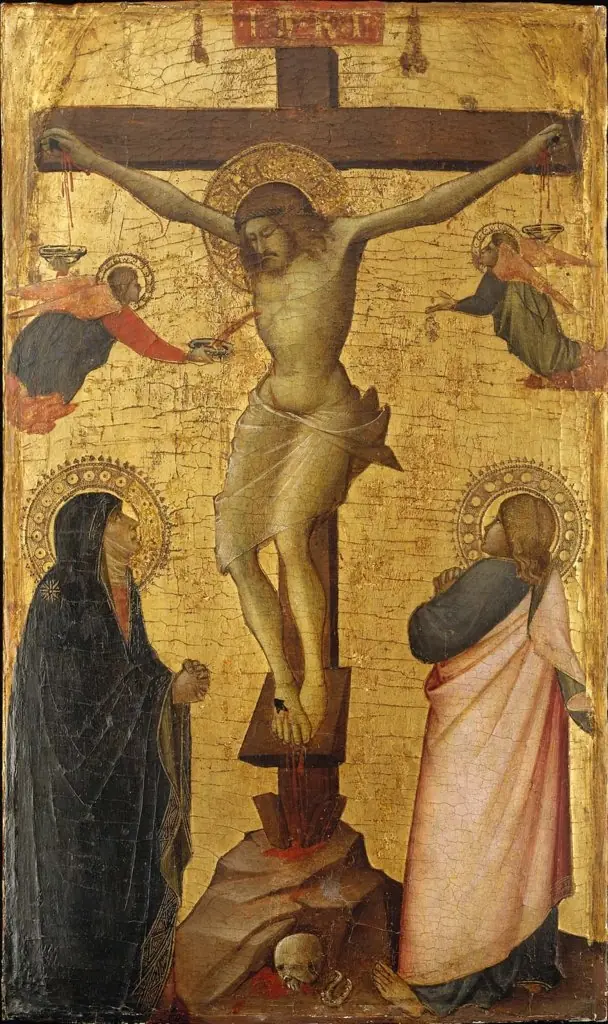 The Crucifixion with the Virgin and Saint John
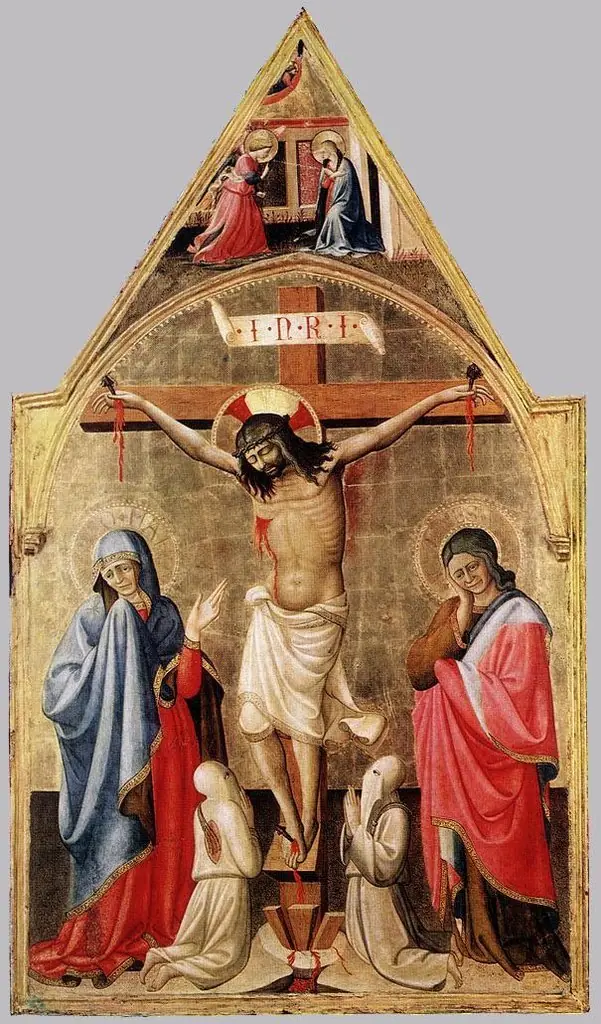 Crucifixion with Mary and St John the Evangelist
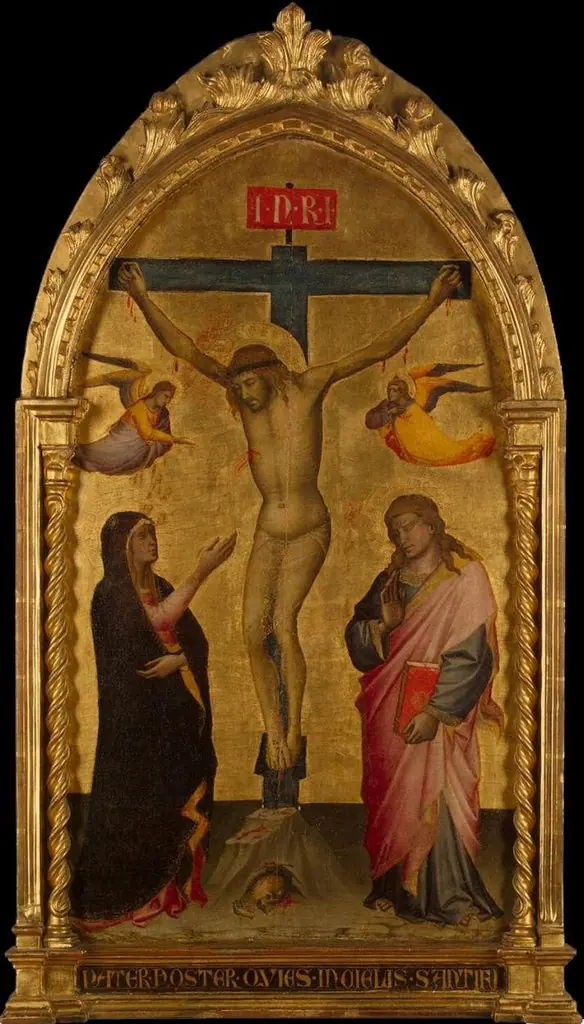 Crucifixion with the Virgin and St John
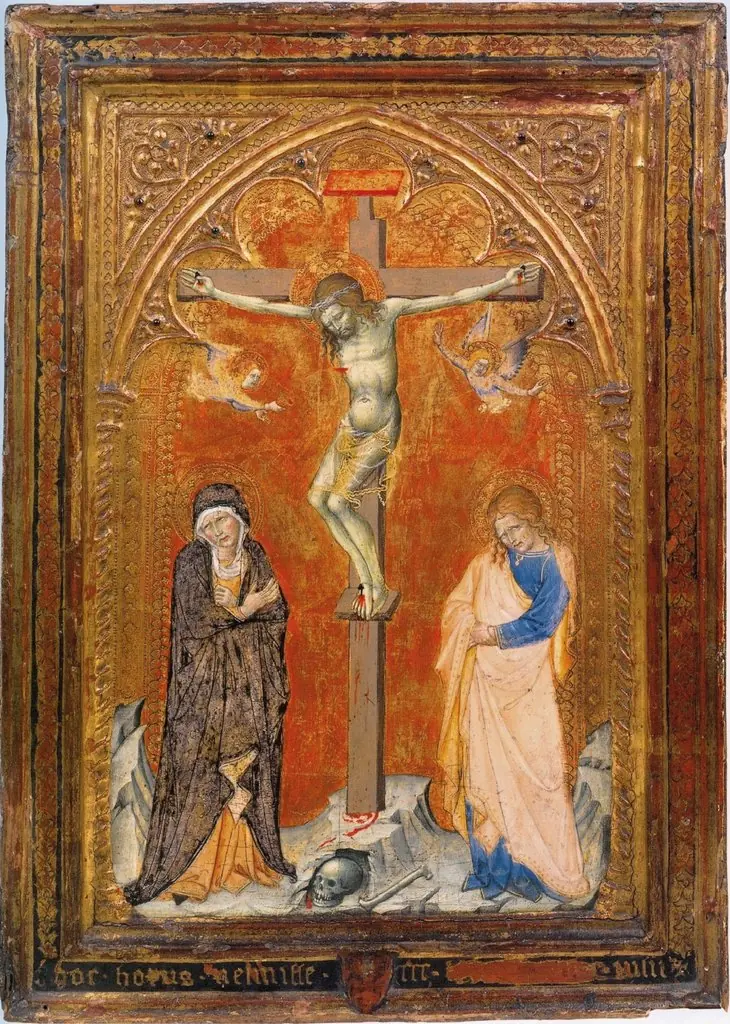 Crucifixion with the Virgin and Saint John the Evangelist
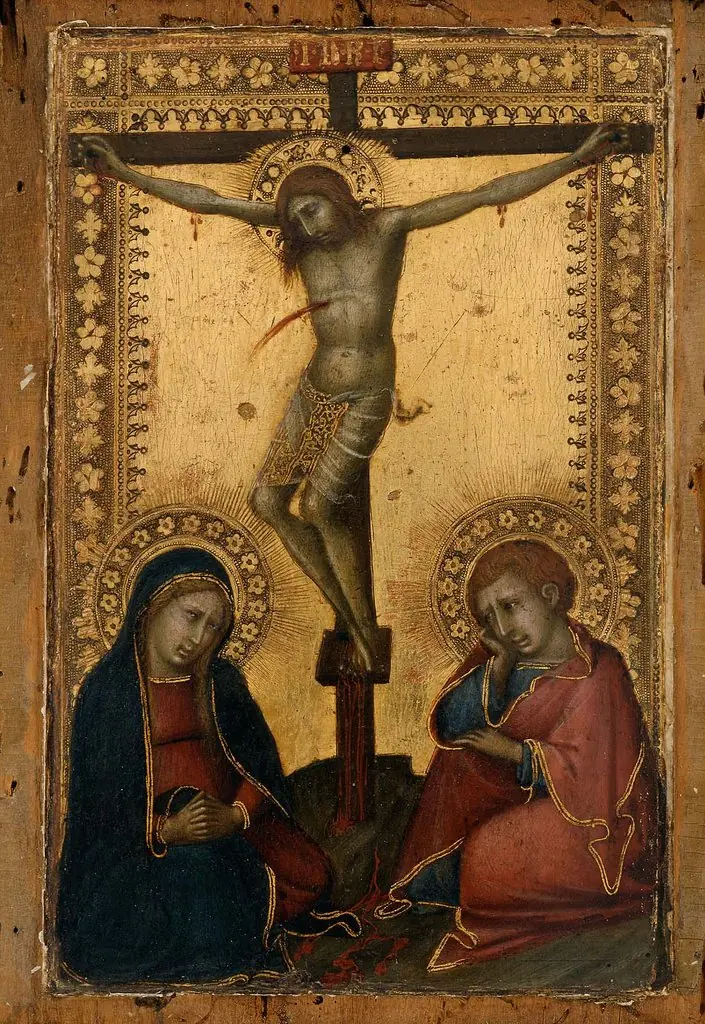 Crucified Christ with the Virgin and Saint John the Evangelist
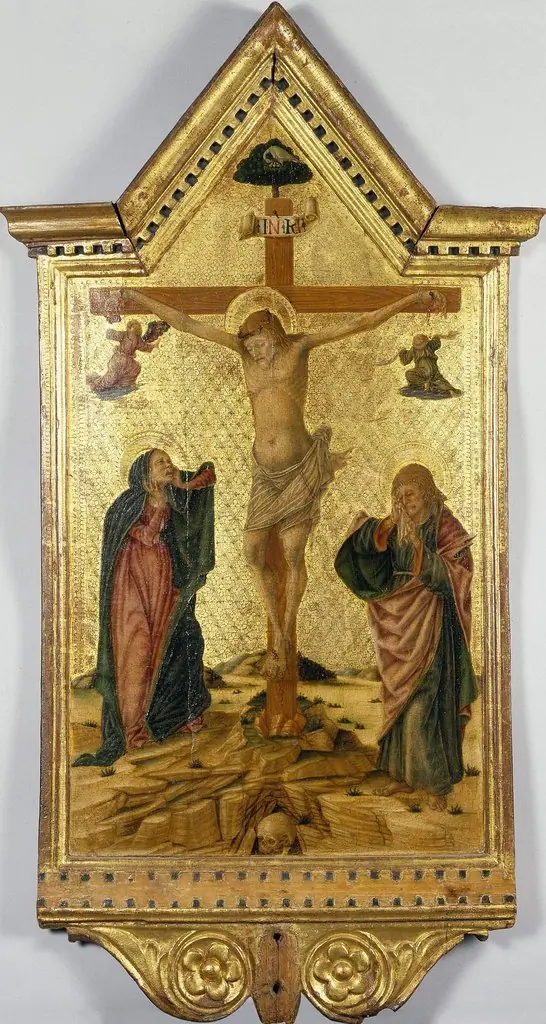 Crucifixion with the Virgin and St John
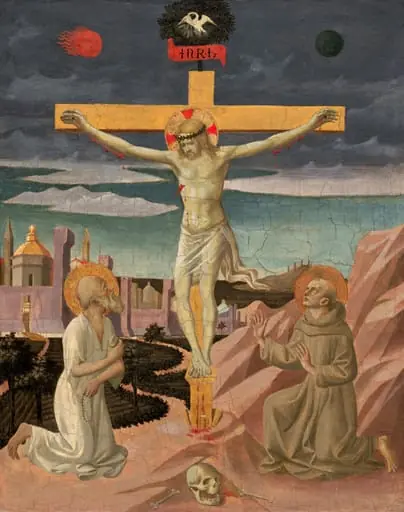 The Crucifixion with Saint Jerome and Saint Francis