Artwork
Crucifixion with the Virgin and St John
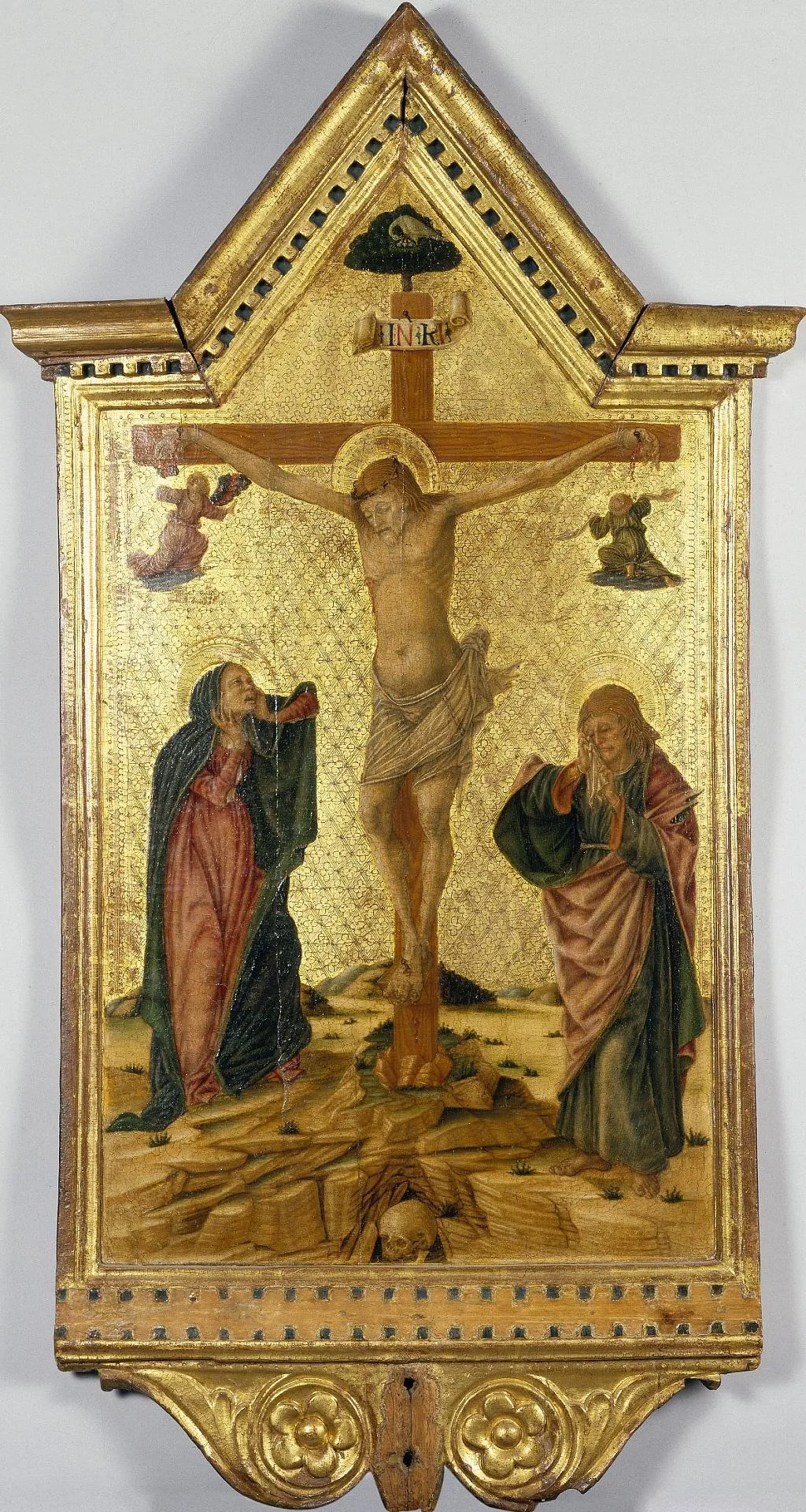
Crucifixion with the Virgin and St John is a tempera painting by the Early Renaissance artist Nicola di Maestro Antonio d'Ancona. It dates from 1475 and is held in the collection of the Hermitage Museum.
About this work
Overview
Crucifixion with the Virgin and St John is a tempera painting created in 1475 by Nicola di Maestro Antonio d'Ancona, currently housed at the State Hermitage Museum.
Subject & Meaning
The painting depicts the Crucifixion, with a central figure nailed to a cross, flanked by two key mourners: the Virgin (in red-and-blue robes, left) and St John (in green and red, right). A skull at the base of the rocky hill background alludes to Golgotha, while the "INRI" inscription above the cross identifies the crucified.
Technique & Style
Executed in tempera, the work features flat, bright colors reminiscent of stained glass, characteristic of the medium's pre-tube era application. The composition is framed by an ornate, aged gold frame with a scalloped edge and circular adornments.
History & Provenance
Created in 1475 by Nicola di Maestro Antonio d'Ancona, the painting's history prior to its current location is not detailed here. It is now part of the collection at the State Hermitage Museum.
Context
This work reflects the religious art traditions of its time, focusing on a central Christian narrative. The use of tempera and the stylistic choices align with 15th-century Italian artistic practices.
Legacy
While specific influences or notable impacts of this painting are not highlighted, it contributes to the broader understanding of 15th-century religious art and the oeuvre of Nicola di Maestro Antonio d'Ancona.
Artist & collection
Artist
Nicola di Maestro Antonio d'Ancona
Nicola di Maestro Antonio d'Ancona (1460–1511) was an artist, born in Ancona.


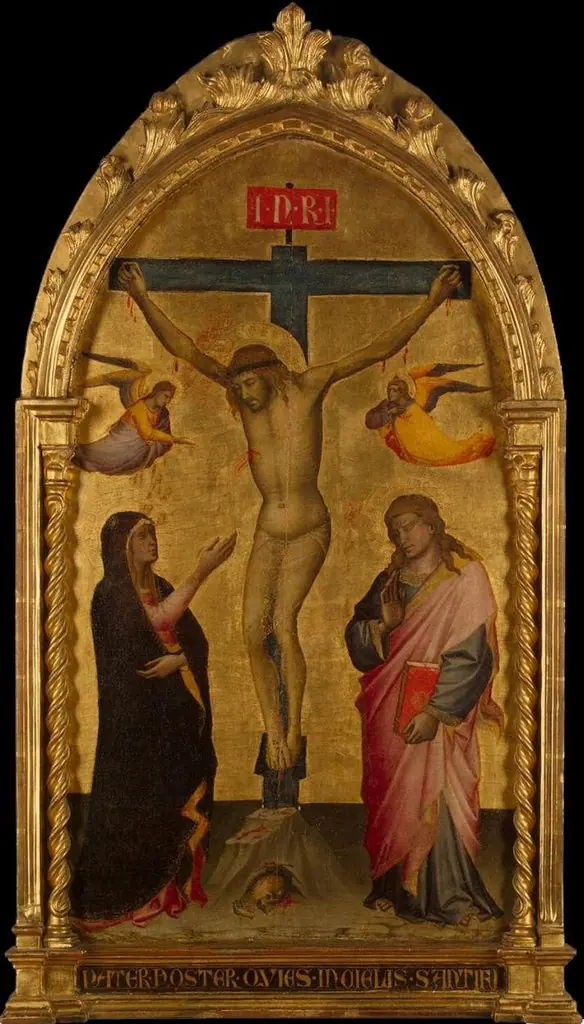 Crucifixion with the Virgin and St John
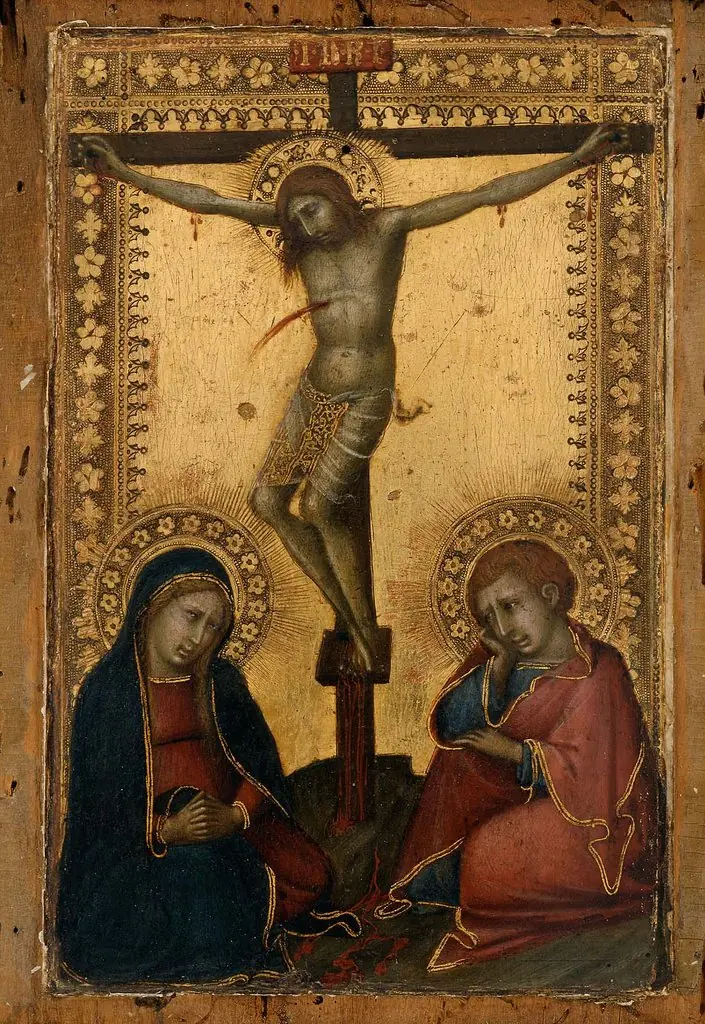 Crucified Christ with the Virgin and Saint John the Evangelist
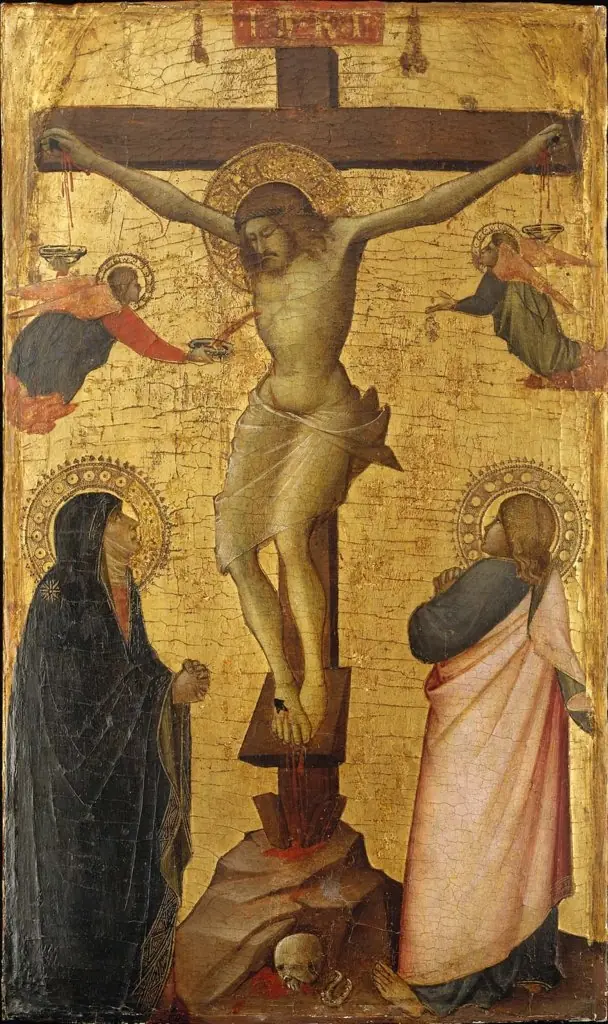 The Crucifixion with the Virgin and Saint John
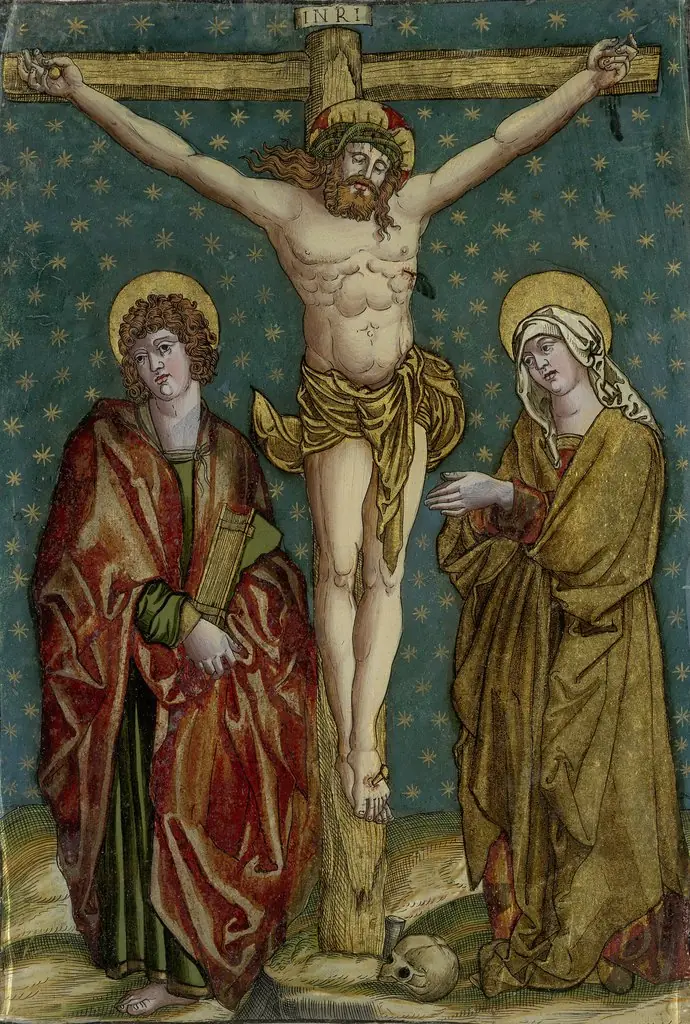 Crucifixion of Christ, with the Virgin and St John
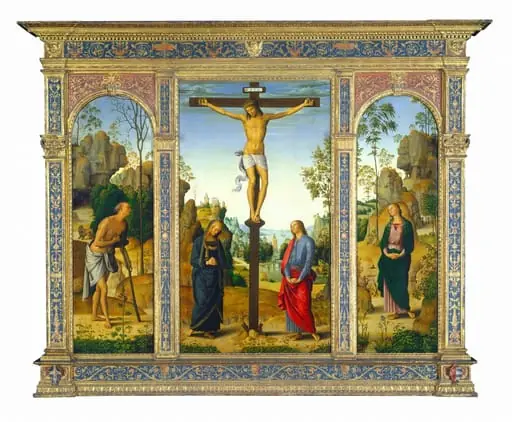 The Crucifixion with the Virgin, Saint John, Saint Jerome, and Saint Mary Magdalene
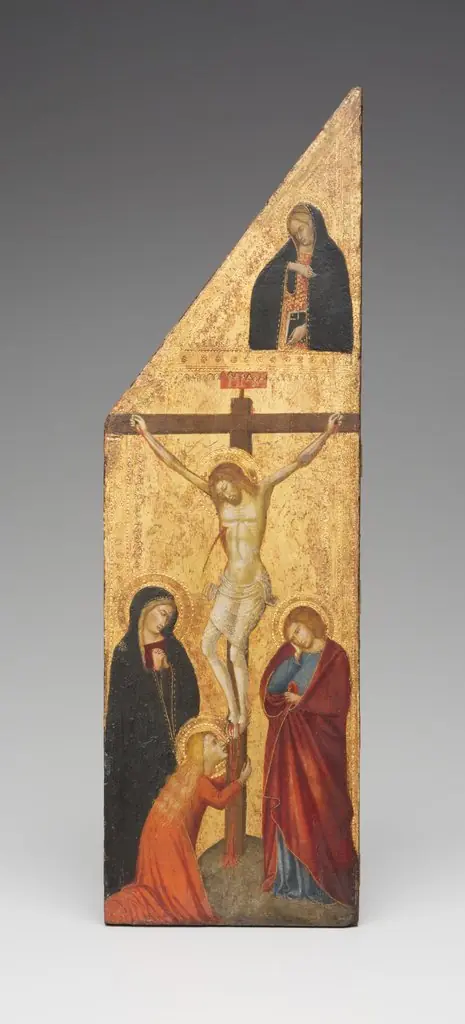 Crucifixion and the Virgin Annunciate
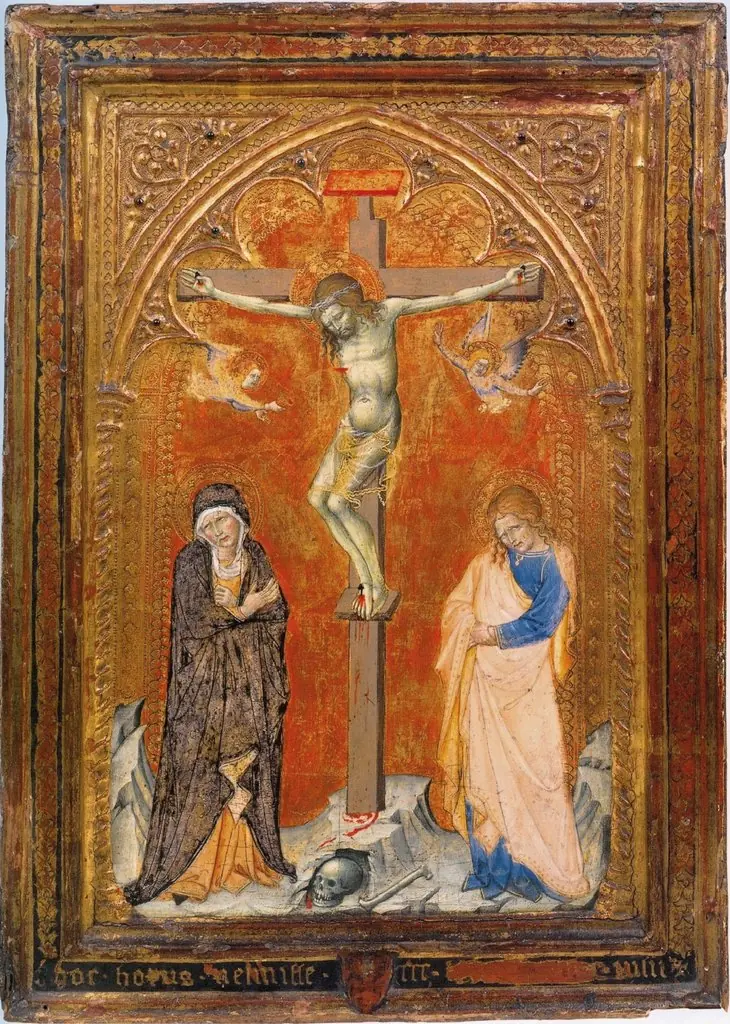 Crucifixion with the Virgin and Saint John the Evangelist
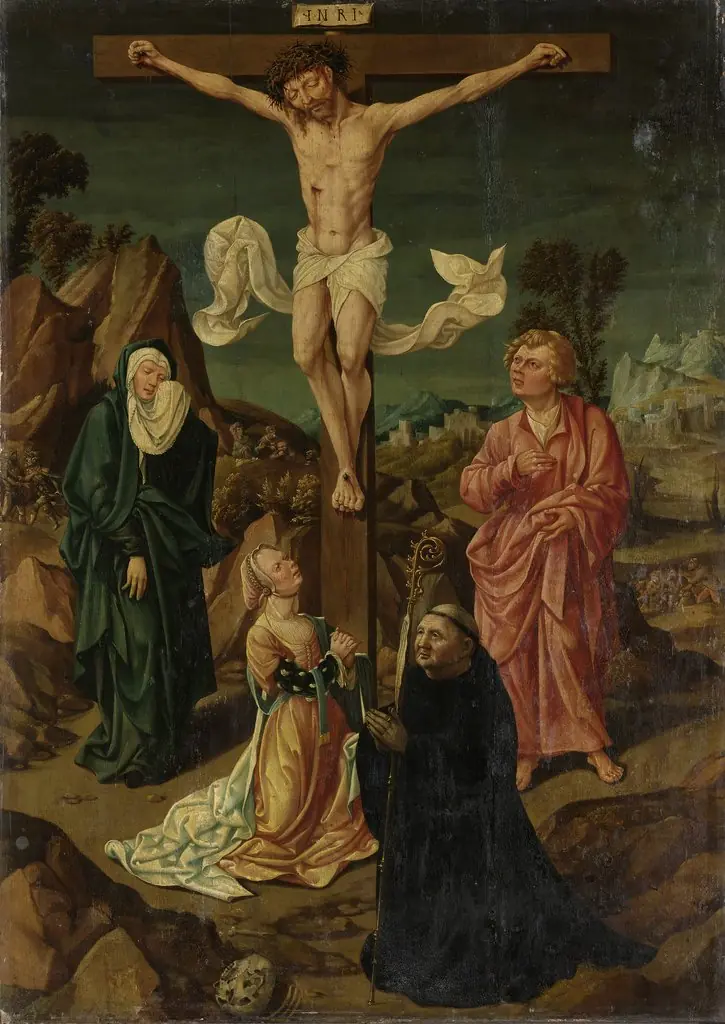 Crucifixion with the Virgin, Saint John, Mary Magdalene, a Donor