Artwork
The prince being taken away for execution on the false complaint of the handmaiden, from a Tuti-nama (Tales of a Parrot): Eighth Night
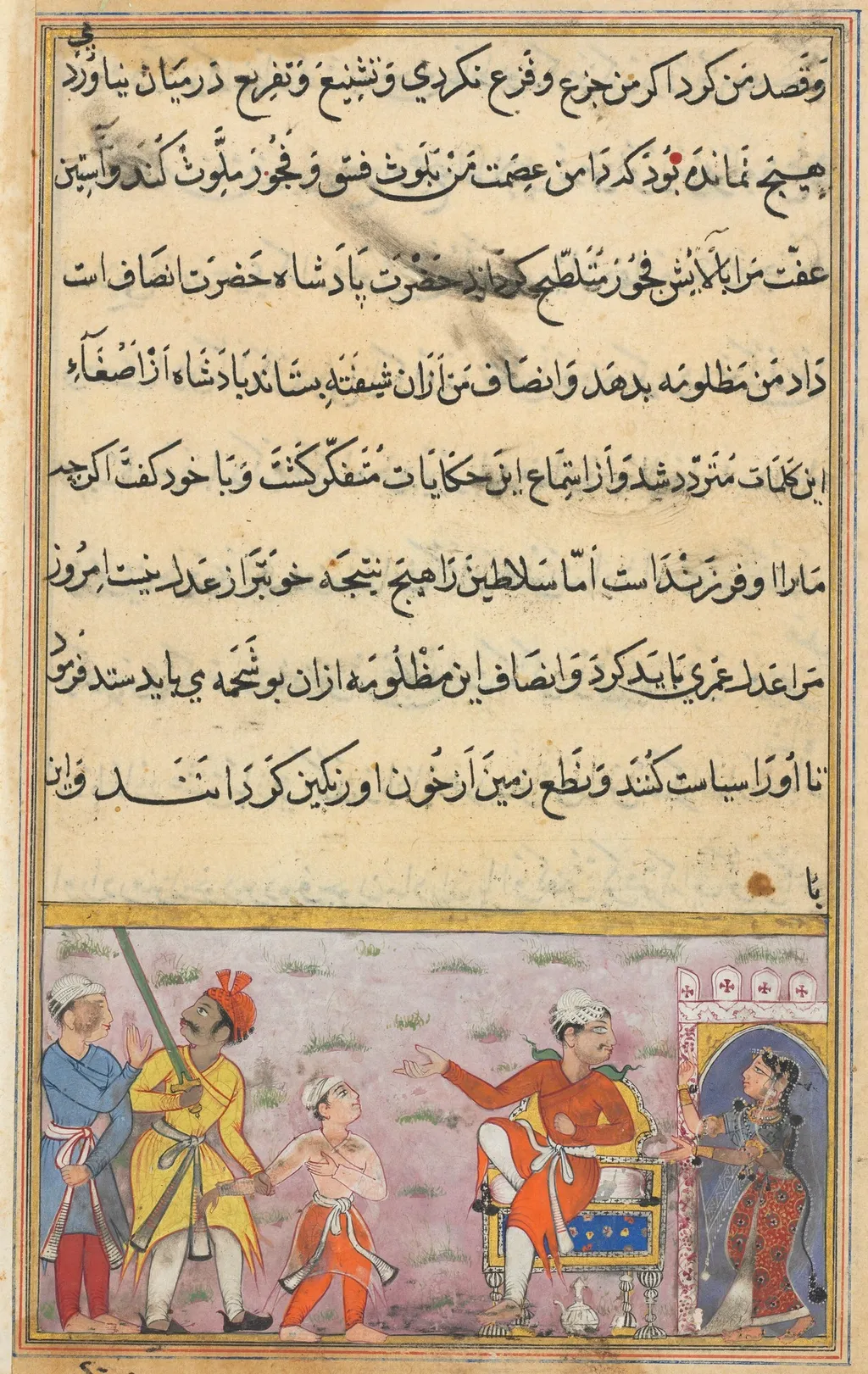
The prince being taken away for execution on the false complaint of the handmaiden, from a Tuti-nama (Tales of a Parrot): Eighth Night is an unspecified painting. It dates from 1560 and is held in the collection of the Cleveland Museum of Art.
About this work
Overview
The painting illustrates a tense episode from the eighth night of a Persian narrative collection, depicting a prince about to be executed on a false accusation. Central figures include a kneeling prince in red, a sword‑bearing official in yellow, a accusing handmaiden in a patterned red dress, and a spectator in blue, all set against a sparse landscape with a cross‑topped building.
Subject & Meaning
The scene captures the moment of injustice, emphasizing the prince’s composed demeanor despite the imminent threat. The handmaiden’s pointing gesture signals the false charge, while the surrounding characters convey authority and passive observation, underscoring themes of betrayal and the precariousness of royal power.
Technique & Style
Executed with vivid pigments and strong contour lines, the composition relies on bold color contrasts—red, yellow, and blue—to delineate the principal figures.
Executed with vivid pigments and strong contour lines, the composition relies on bold color contrasts—red, yellow, and blue—to delineate the principal figures. The background is rendered minimally, using flat fields of green and simple architectural forms, directing attention to the narrative action. Arabic calligraphy crowns the upper portion, framed by a thin gold border, integrating text and image.
History & Provenance
The work originates from a manuscript of the Tuti‑nama, a collection of moral tales illustrated for a courtly audience. It reflects the Persian miniature tradition of the early modern period, though specific dating and ownership details are not provided in the available description.
Context
Illustrations of the Tuti‑nama were commonly employed to convey ethical lessons through vivid storytelling. This particular vignette aligns with the broader literary motif of wrongful accusation, a recurrent theme in Persian didactic literature, and demonstrates the interplay between visual art and narrative prose in manuscript culture.
Artist & collection

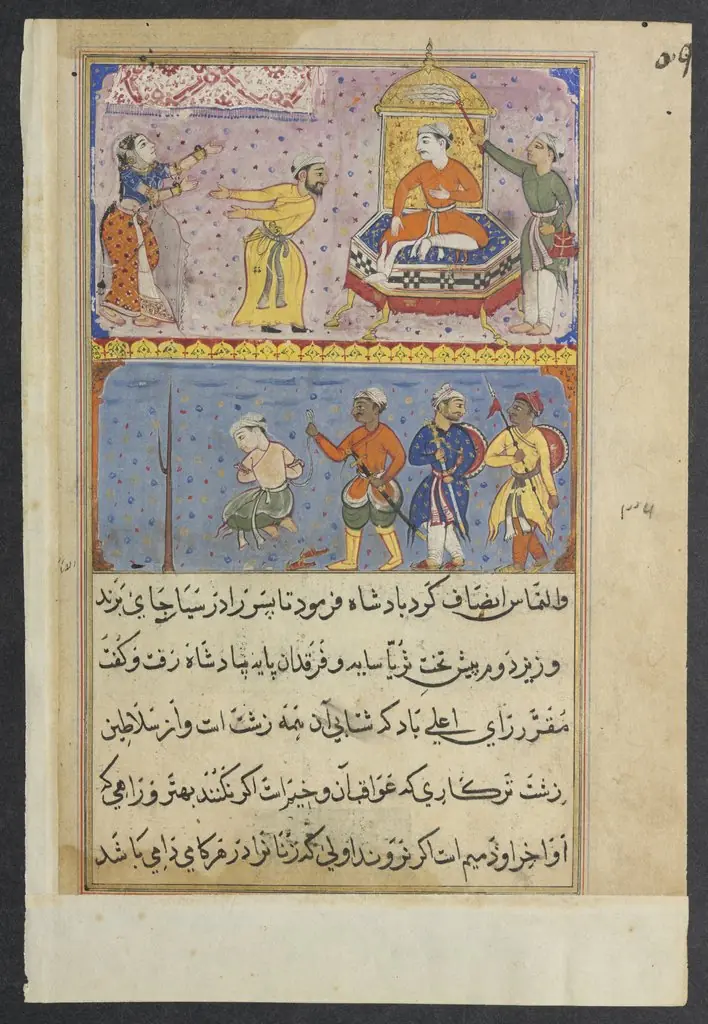 The prince, once reprieved, is returned to the palace of execution a second time on the plea of the king’s handmaiden, from a Tuti-nama (Tales of a Parrot): Eighth Night
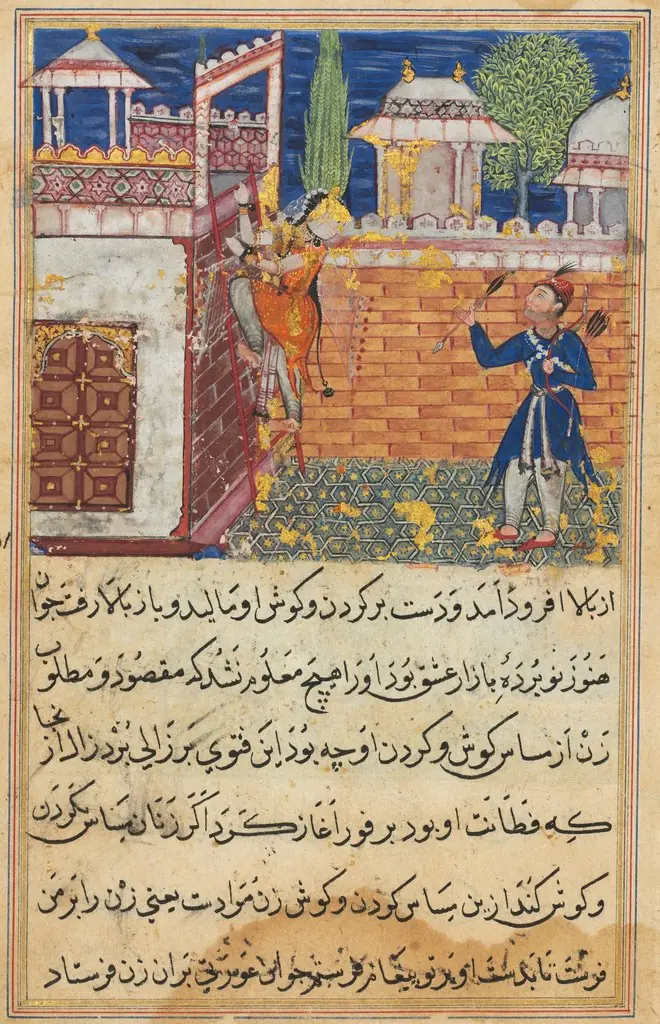 The deceitful wife returns to her terrace after caressing her lover, from a Tuti-nama (Tales of a Parrot): Eighth Night
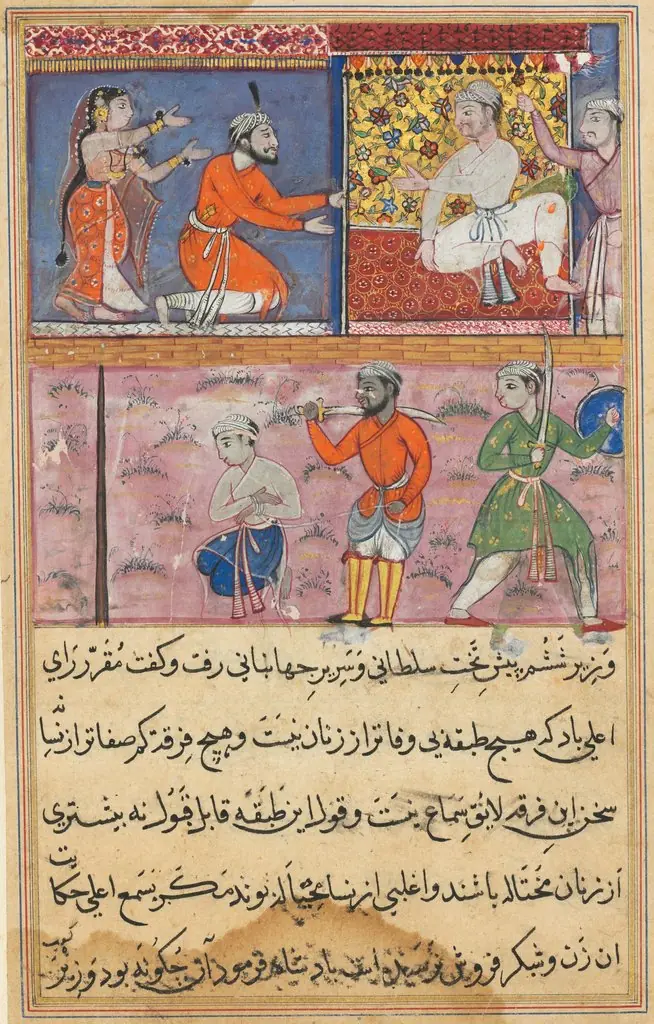 The prince sent back to the place of execution for the sixth time, from a Tuti-nama (Tales of a Parrot): Eighth Night
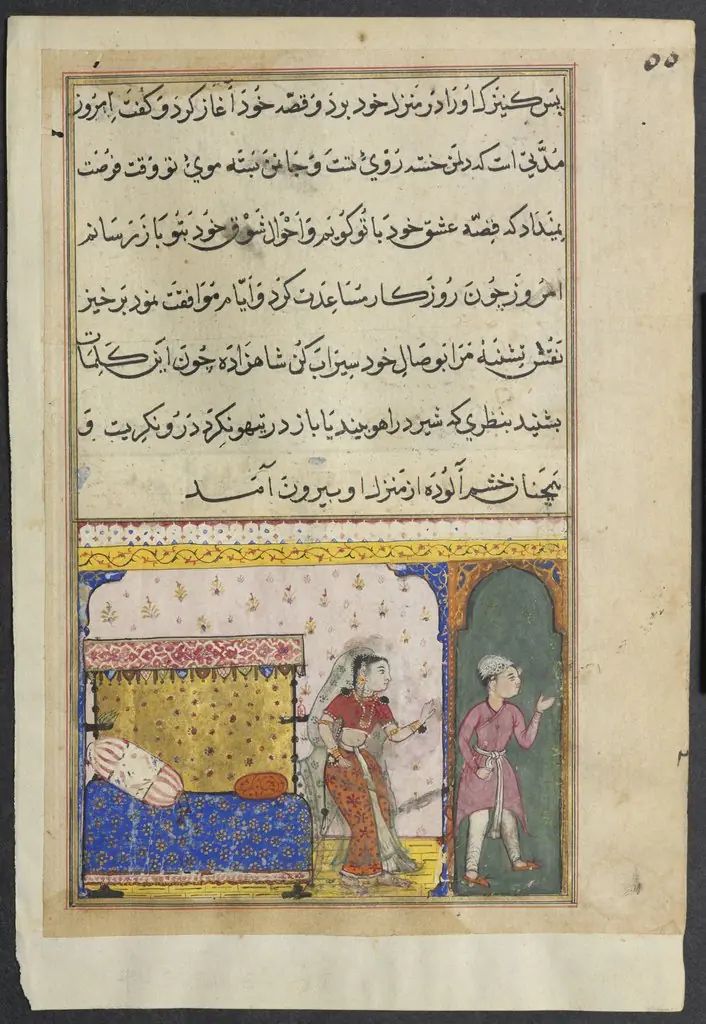 The prince rejects the amorous advances of the king’s handmaiden, from a Tuti-nama (Tales of a Parrot): Eighth Night
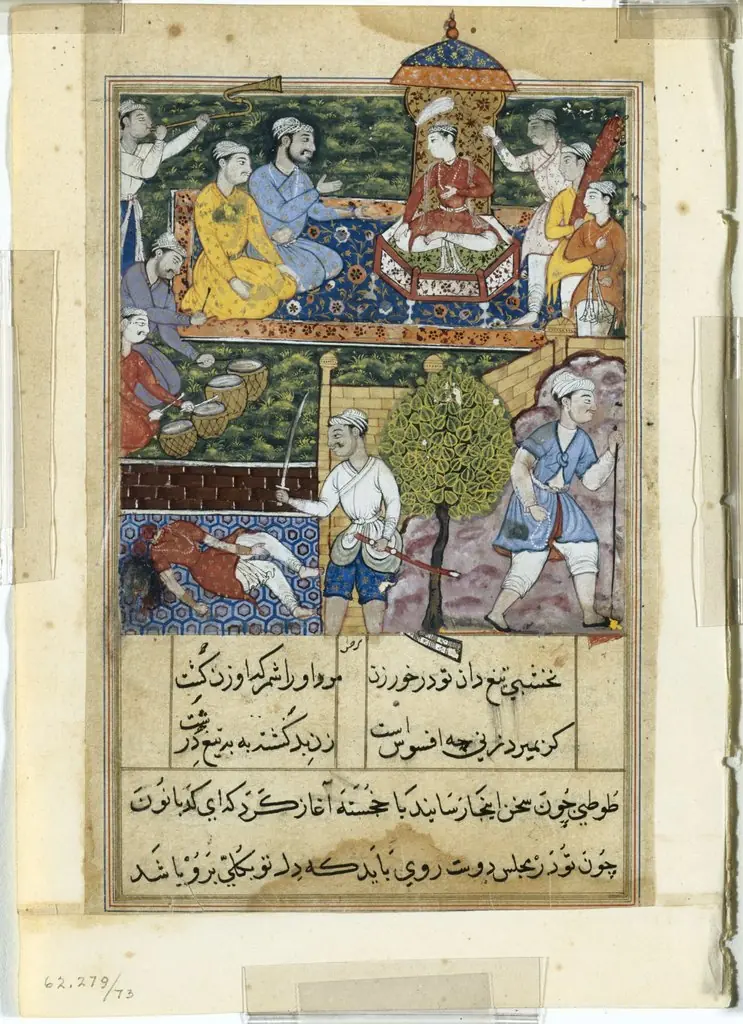 The young prince is crowned and the wicked handmaiden is executed, from a Tuti-nama (Tales of a Parrot): Eighth Night
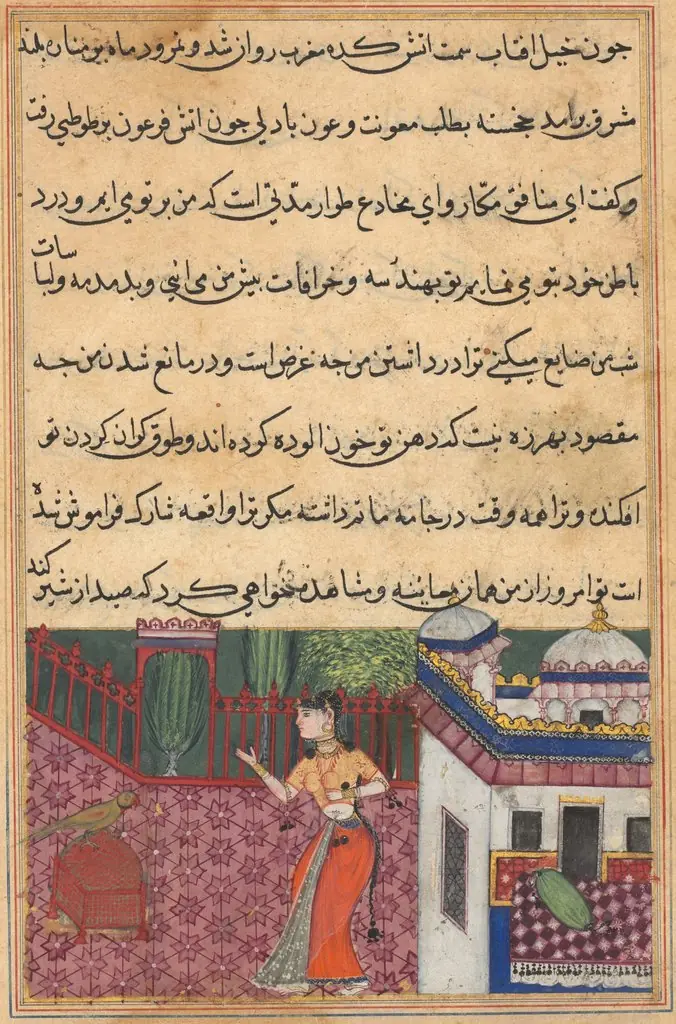 The parrot addresses Khujasta at the beginning of the thirty-third night, from a Tuti-nama (Tales of a Parrot)
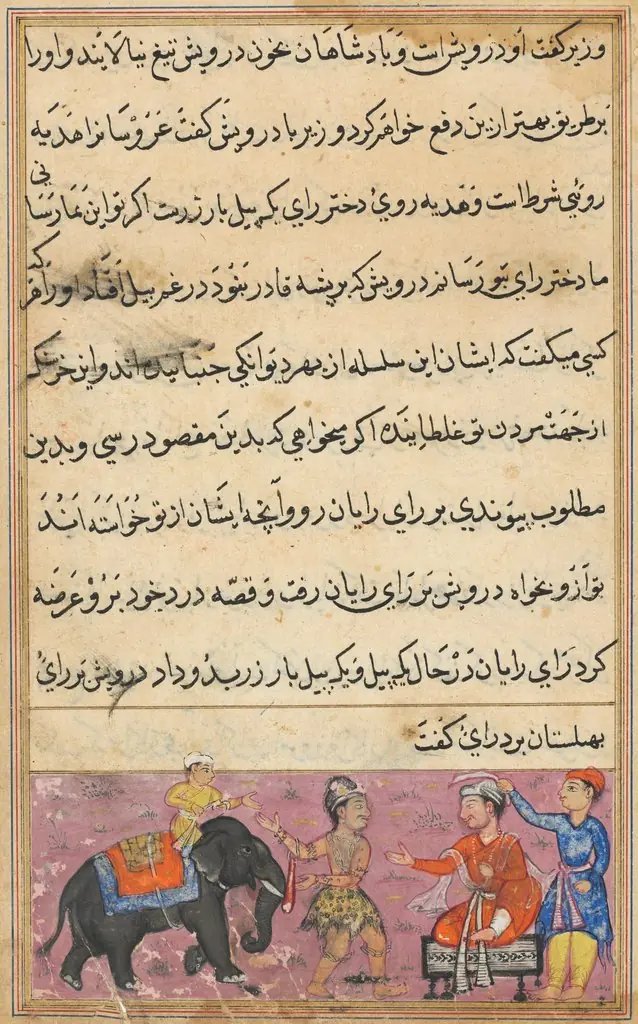 The dervish brings in as dowry an elephant laden with gold, from a Tuti-nama (Tales of a Parrot): Seventh Night
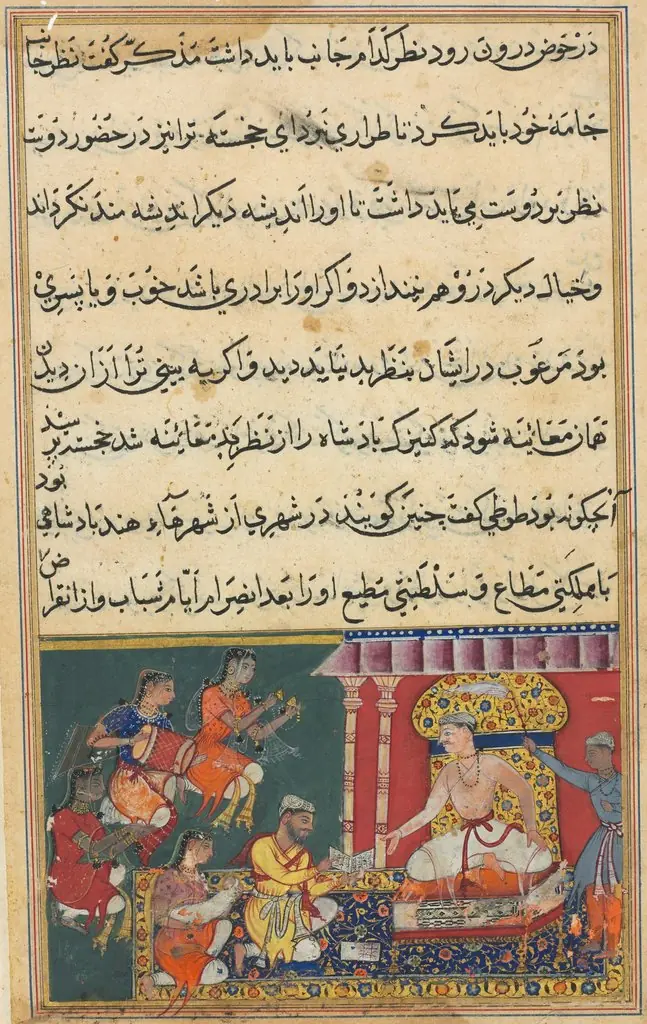 The astrologer predicts a calamity for the newly born prince in his thirteenth year, but one which he would be able to overcome, from a Tuti-nama (Tales of a Parrot): Eighth Night
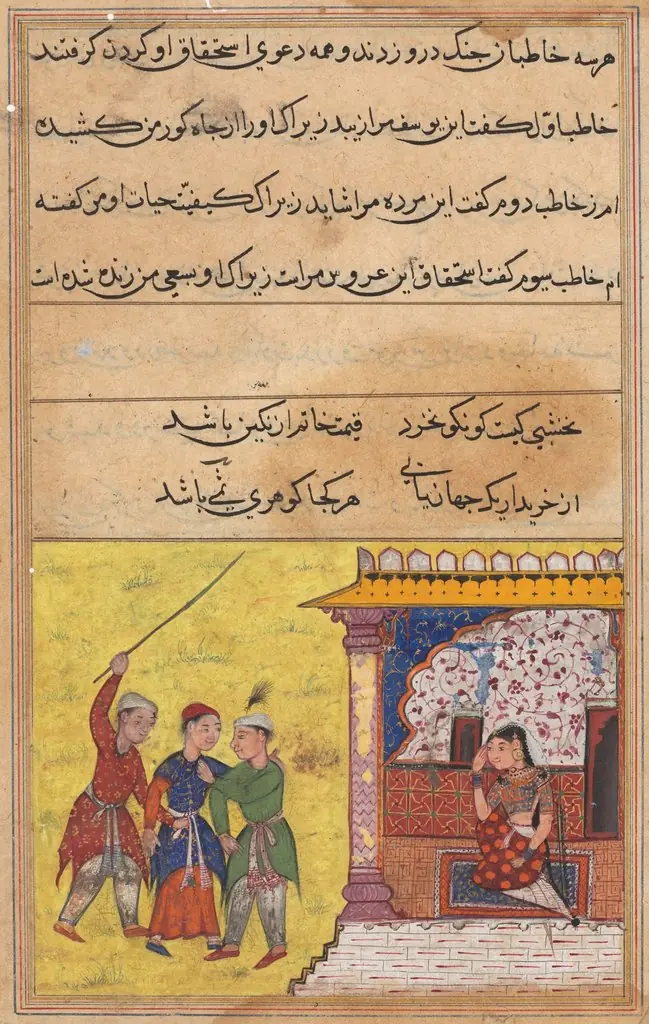 The three suitors again begin to quarrel among themselves for the hand of the devotee’s daughter, from a Tuti-nama (Tales of a Parrot): Twentieth Night