Artwork
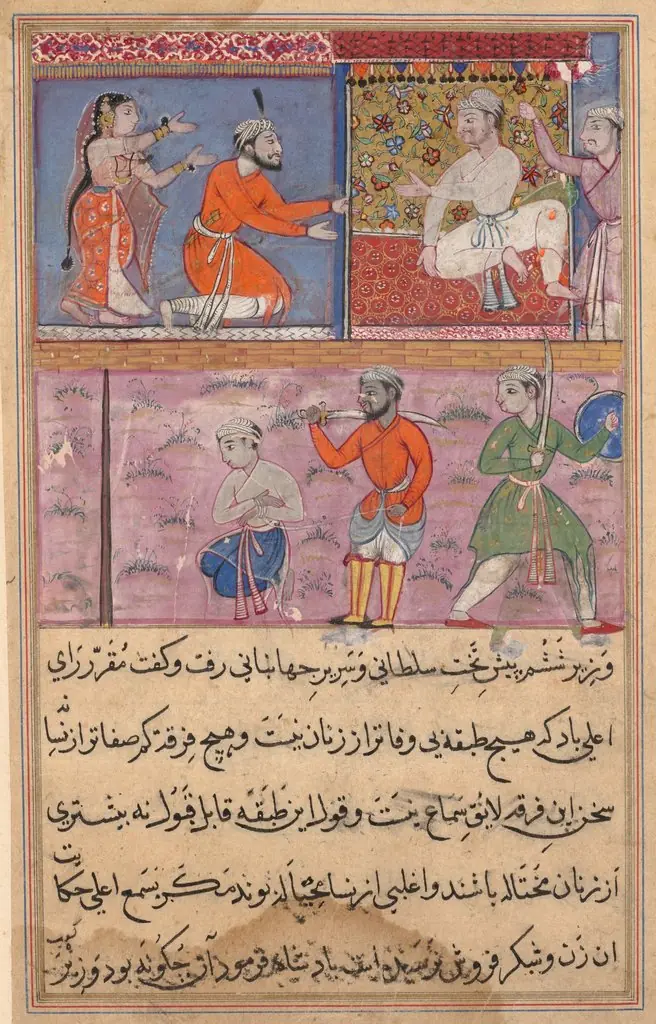
The prince, once reprieved, is returned to the palace of execution a second time on the plea of the king’s handmaiden, from a Tuti-nama (Tales of a Parrot): Eighth Night
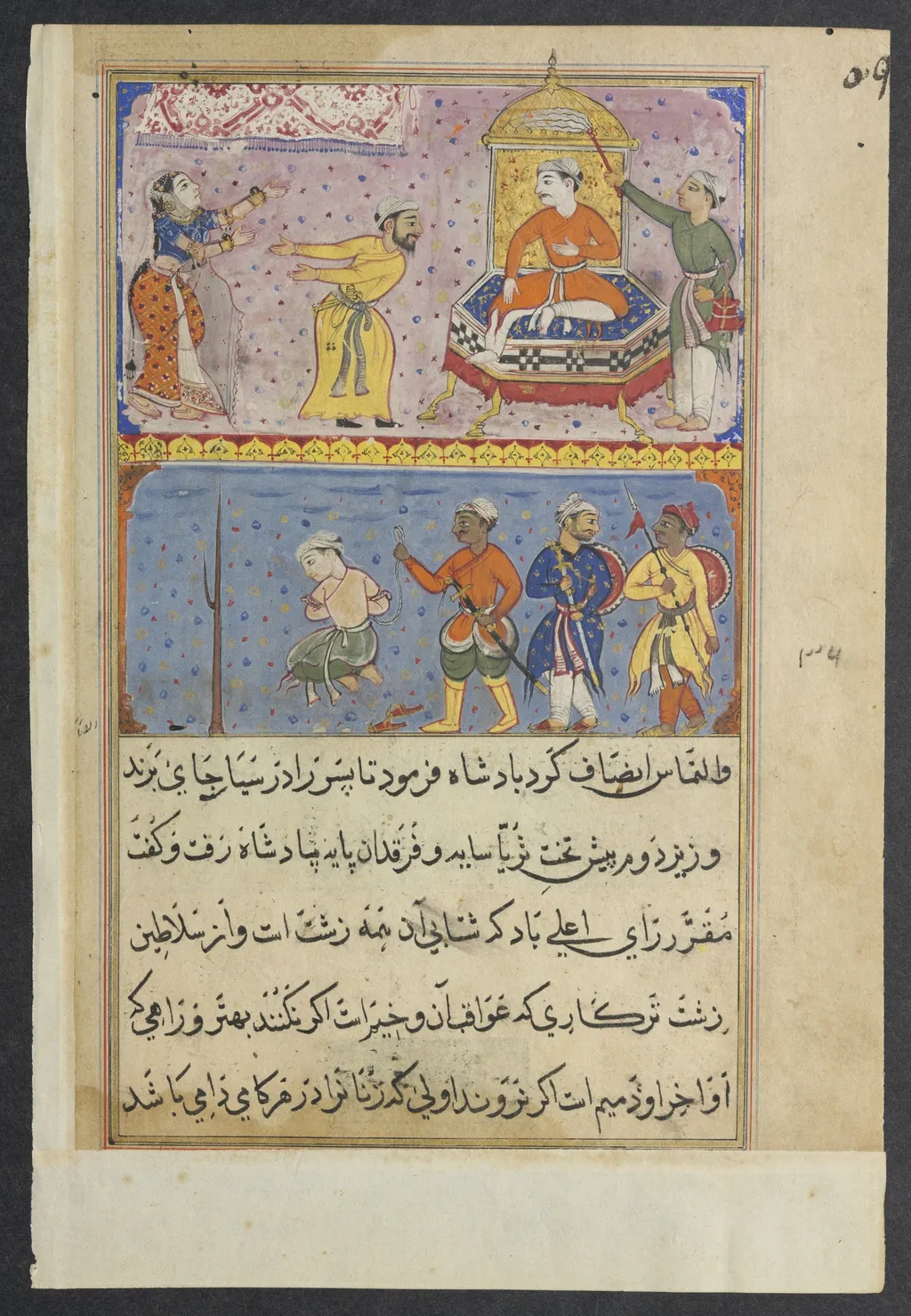
The prince, once reprieved, is returned to the palace of execution a second time on the plea of the king’s handmaiden, from a Tuti-nama (Tales of a Parrot): Eighth Night is an unspecified painting. It dates from 1560 and is held in the collection of the Cleveland Museum of Art. The work is a miniature painting illustrating a narrative from the Persian collection of tales known as the Tuti‑nama.
About this work
Overview
The work is a miniature painting illustrating a narrative from the Persian collection of tales known as the Tuti‑nama.
The work is a miniature painting illustrating a narrative from the Persian collection of tales known as the Tuti‑nama. It is divided into two registers: the upper scene depicts a king seated beneath a gilded canopy, attended by two courtiers, while the lower register shows a group of four figures outdoors, one on horseback and the others holding staffs or weapons. The composition is rendered in vivid pigments and intricate decorative motifs typical of manuscript illustration.
Subject & Meaning
The image visualizes a moment from the eighth night of the story, in which a prince who had previously been spared is again brought before the throne at the urging of the king’s handmaiden. The juxtaposition of the royal audience and the external procession underscores the tension between mercy and execution within the tale’s moral framework.
Technique & Style
Executed in the traditional Persian miniature manner, the painting employs fine brushwork, flat areas of saturated colour, and elaborate patterning on clothing and architectural elements. Gold leaf highlights the canopy and the horse’s tack, while the figures are outlined with delicate lines that define gestures and facial expressions without resorting to naturalistic shading.
History & Provenance
The piece originates from a manuscript of the Tuti‑nama, a collection of parrot‑told stories compiled in the medieval Islamic world. Although the exact date and patron are not recorded, the style aligns with courtly productions of the 15th‑century Persian artistic centers, suggesting it was created for an elite readership.
Context
Manuscript miniatures like this served both decorative and didactic purposes, enhancing the literary text with visual narration. The scene reflects the broader cultural interest in moral storytelling and the use of vivid imagery to engage readers in the ethical dilemmas presented by the tales.
Legacy
Works of this genre inform contemporary understandings of Persian narrative art and its influence on later Islamic visual traditions. The painting’s preservation offers scholars insight into the materials, iconography, and storytelling conventions of its period.
Artist & collection

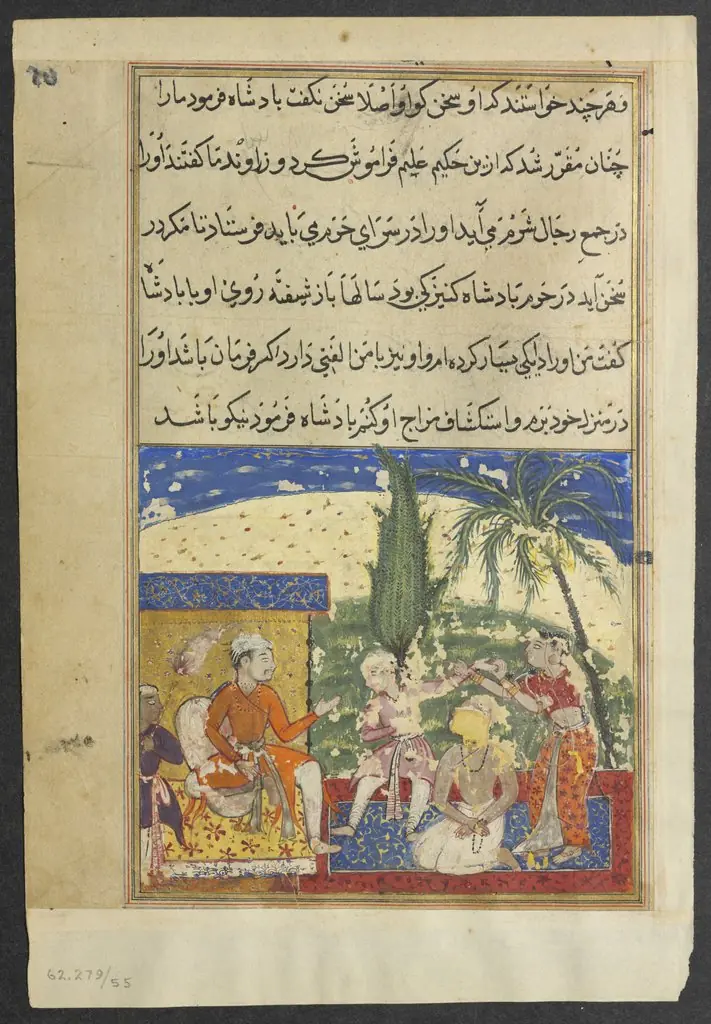 The king’s handmaiden takes the prince away to the harem, from a Tuti-nama (Tales of a Parrot): Eighth Night
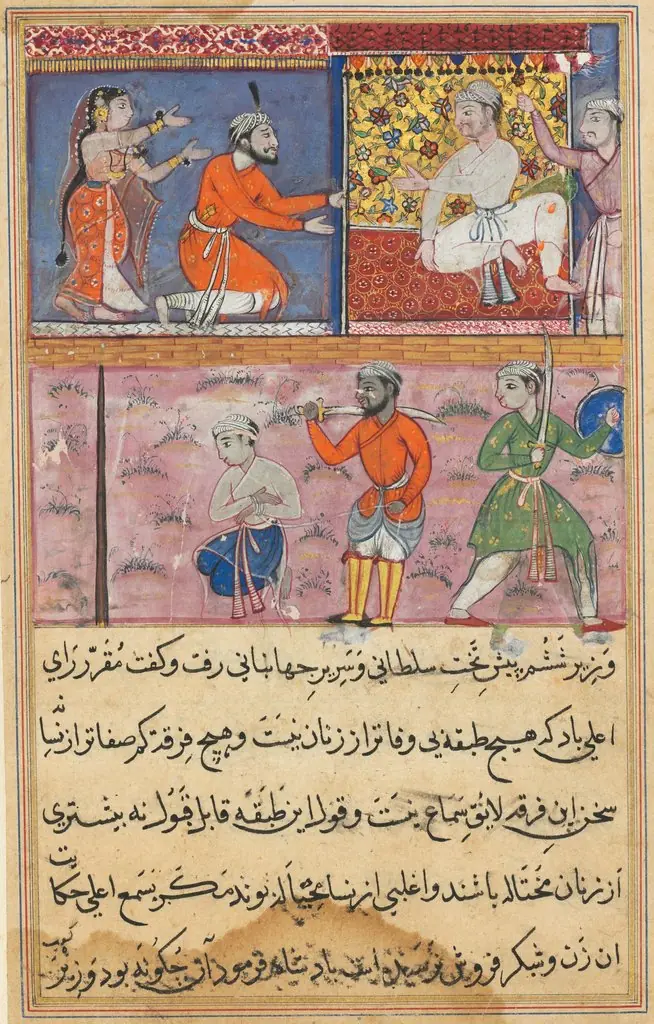 The prince sent back to the place of execution for the sixth time, from a Tuti-nama (Tales of a Parrot): Eighth Night
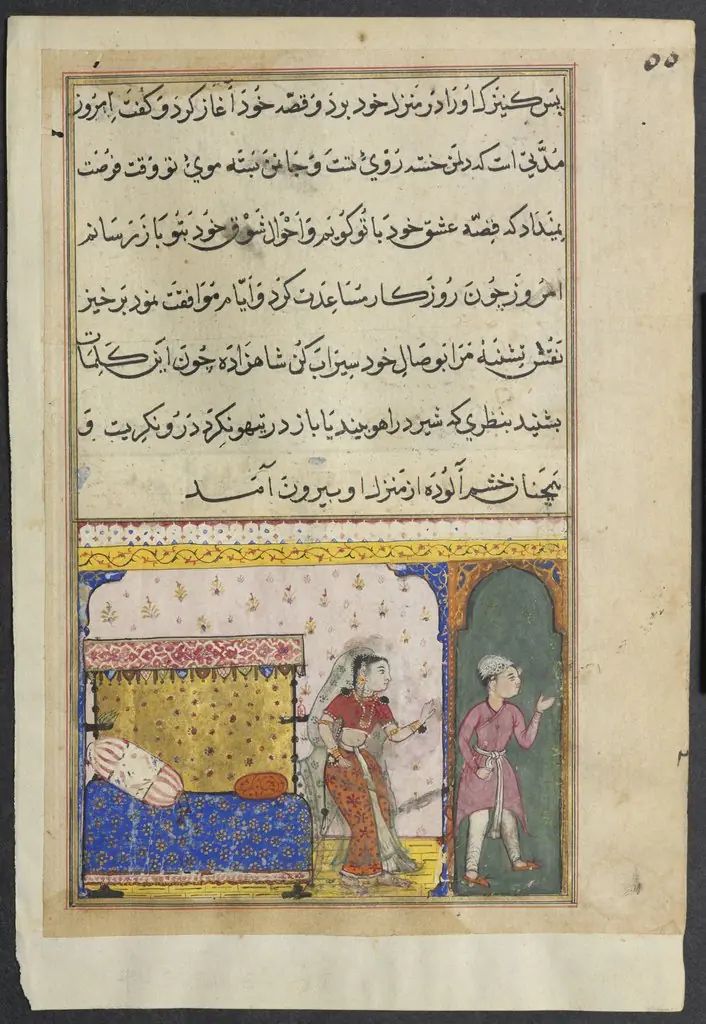 The prince rejects the amorous advances of the king’s handmaiden, from a Tuti-nama (Tales of a Parrot): Eighth Night
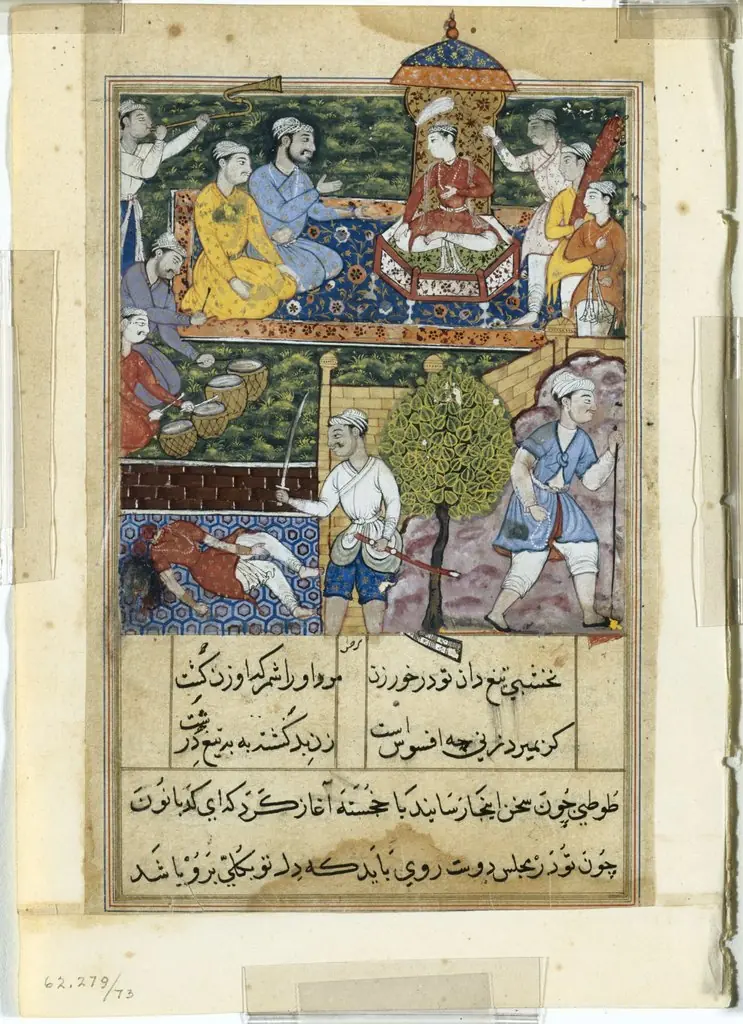 The young prince is crowned and the wicked handmaiden is executed, from a Tuti-nama (Tales of a Parrot): Eighth Night
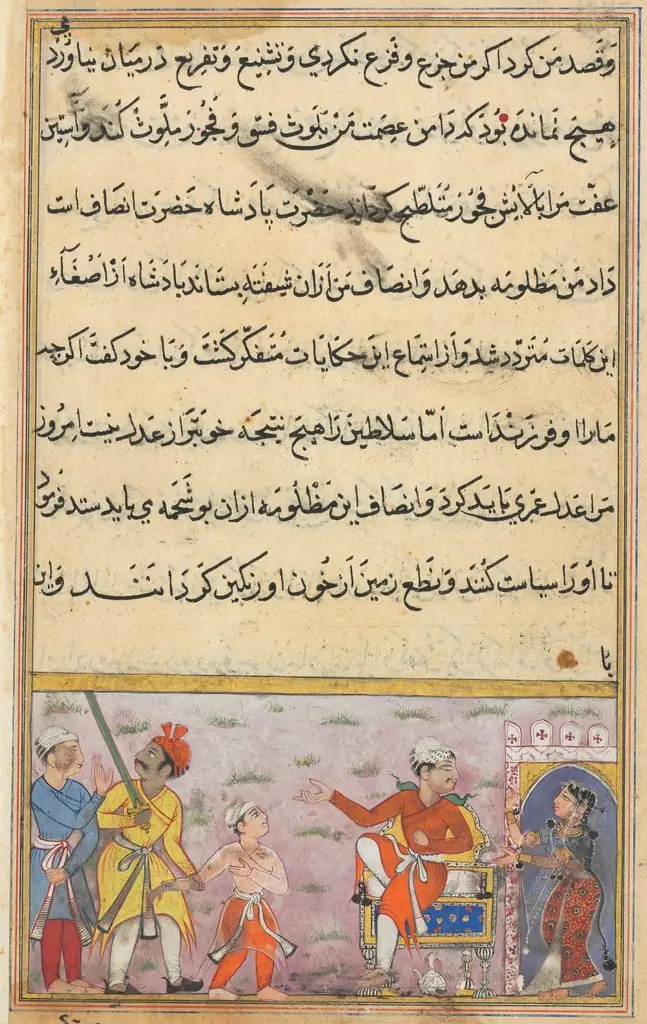 The prince being taken away for execution on the false complaint of the handmaiden, from a Tuti-nama (Tales of a Parrot): Eighth Night
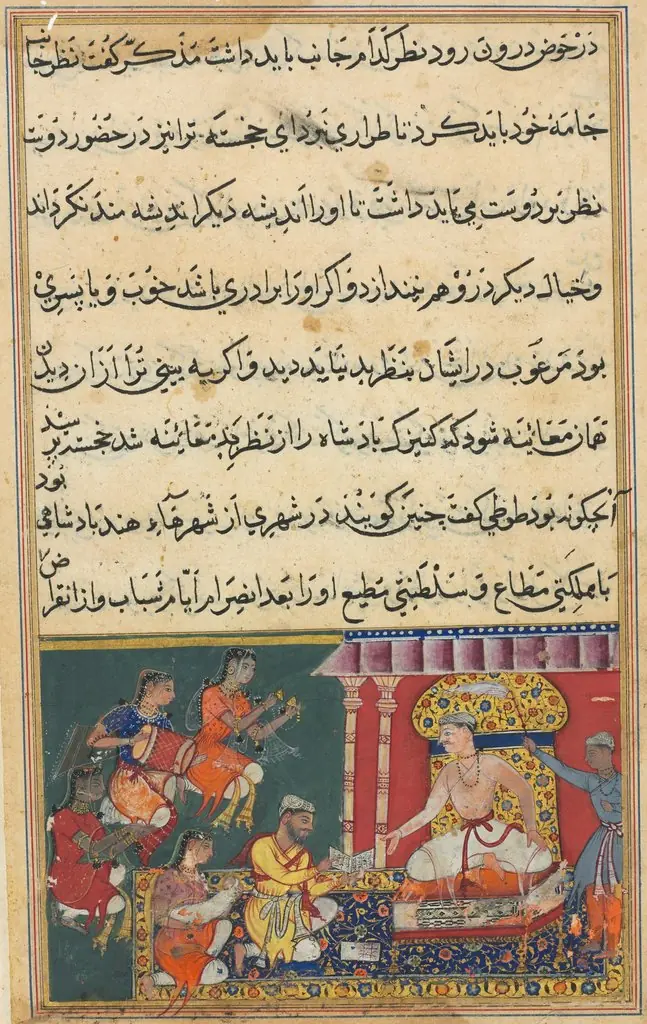 The astrologer predicts a calamity for the newly born prince in his thirteenth year, but one which he would be able to overcome, from a Tuti-nama (Tales of a Parrot): Eighth Night
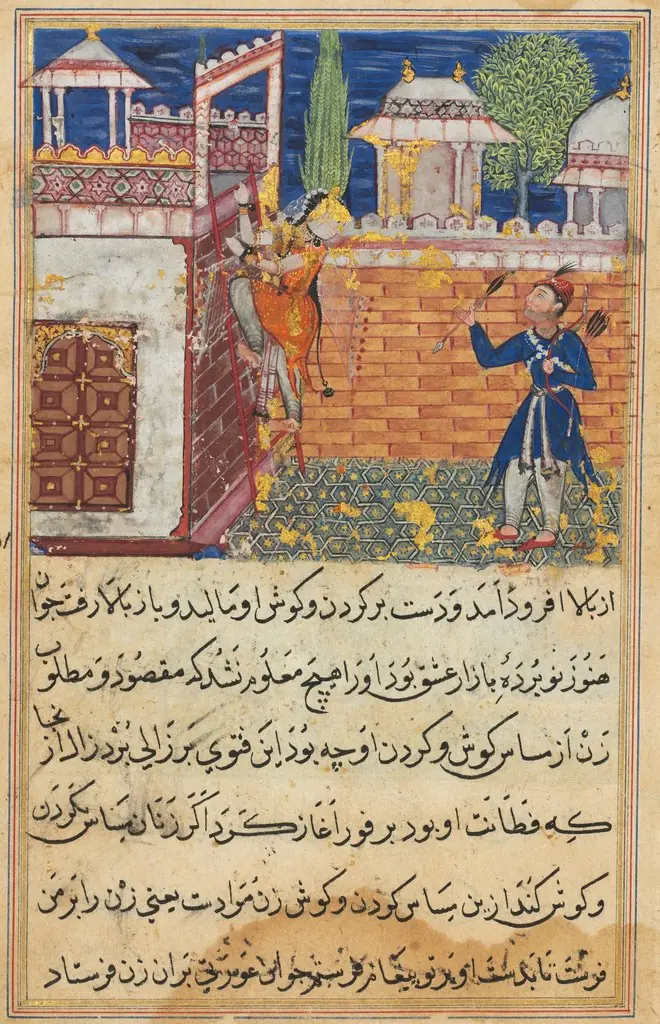 The deceitful wife returns to her terrace after caressing her lover, from a Tuti-nama (Tales of a Parrot): Eighth Night
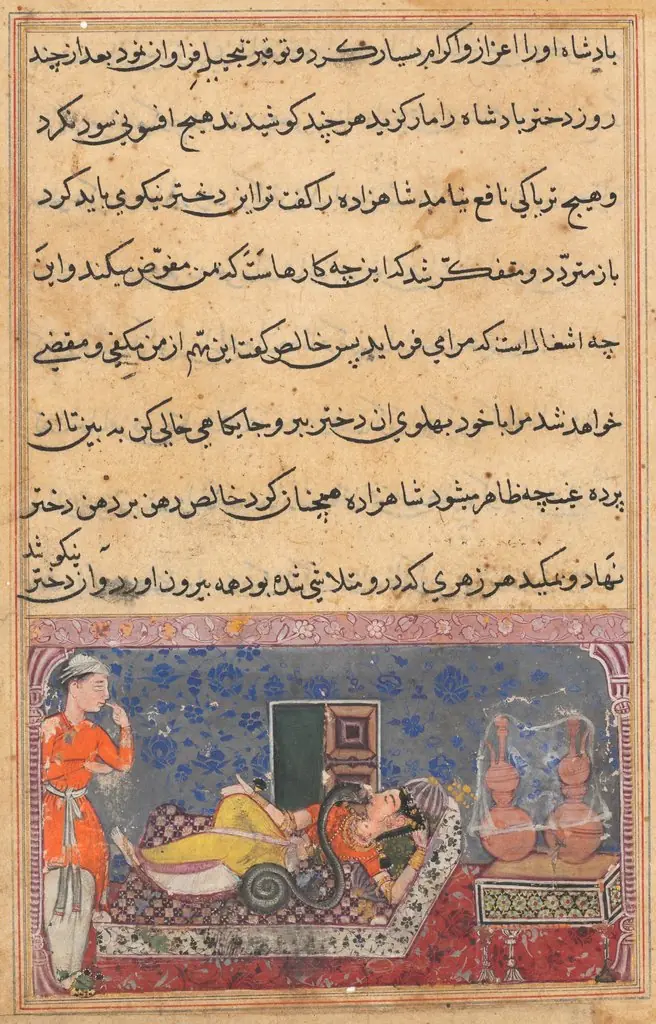 Khalis repays the prince for his kindness by changing into a snake and sucking the poison from the king’s daughter, from a Tuti-nama (Tales of a Parrot): Eighteenth Night
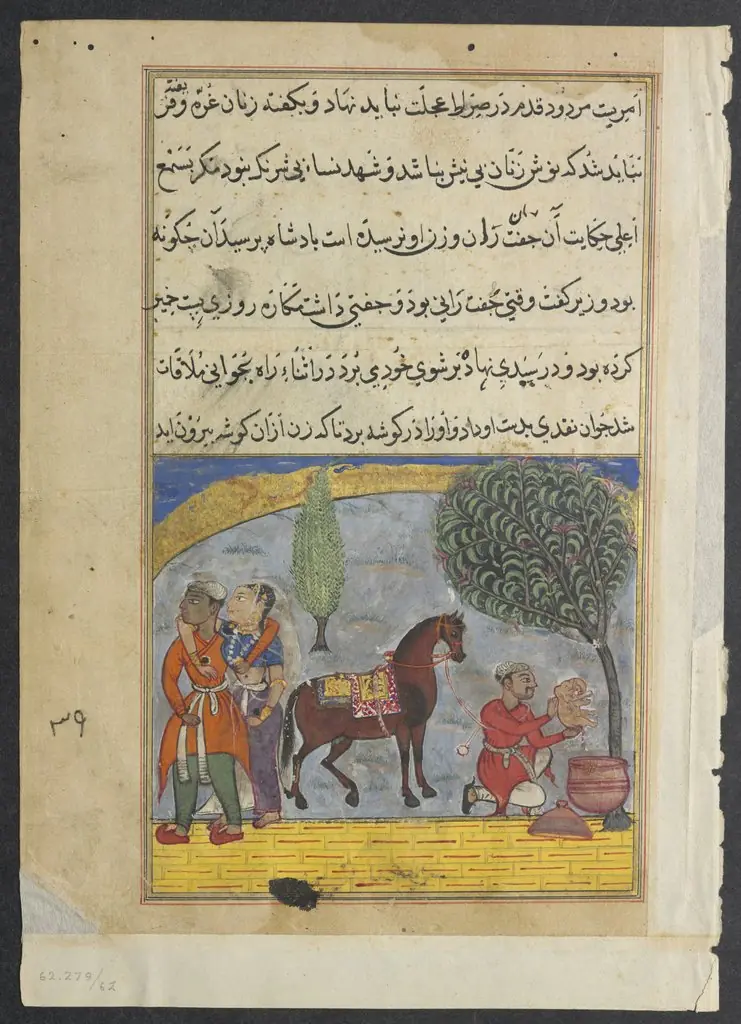 The lover’s son makes an elephant of the pastry dough carried by the unfaithful wife and puts it in her basket, from a Tuti-nama (Tales of a Parrot): Eighth Night
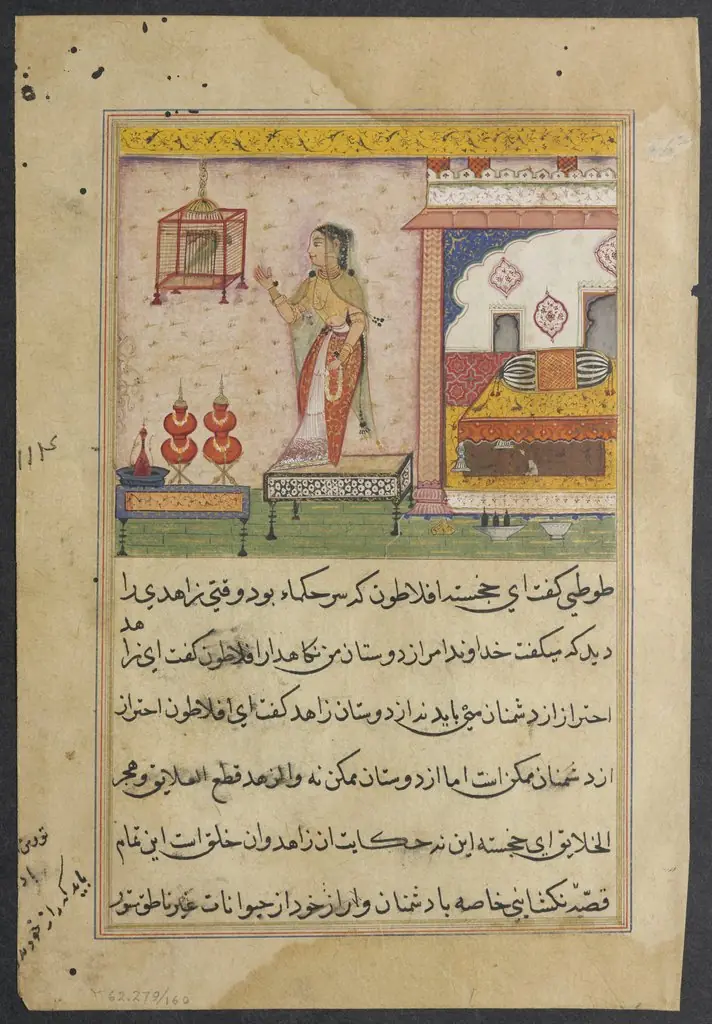 The Parrot Addresses Khujasta at the Beginning of the Twenty-third Night, from a Tuti-nama (Tales of a Parrot)
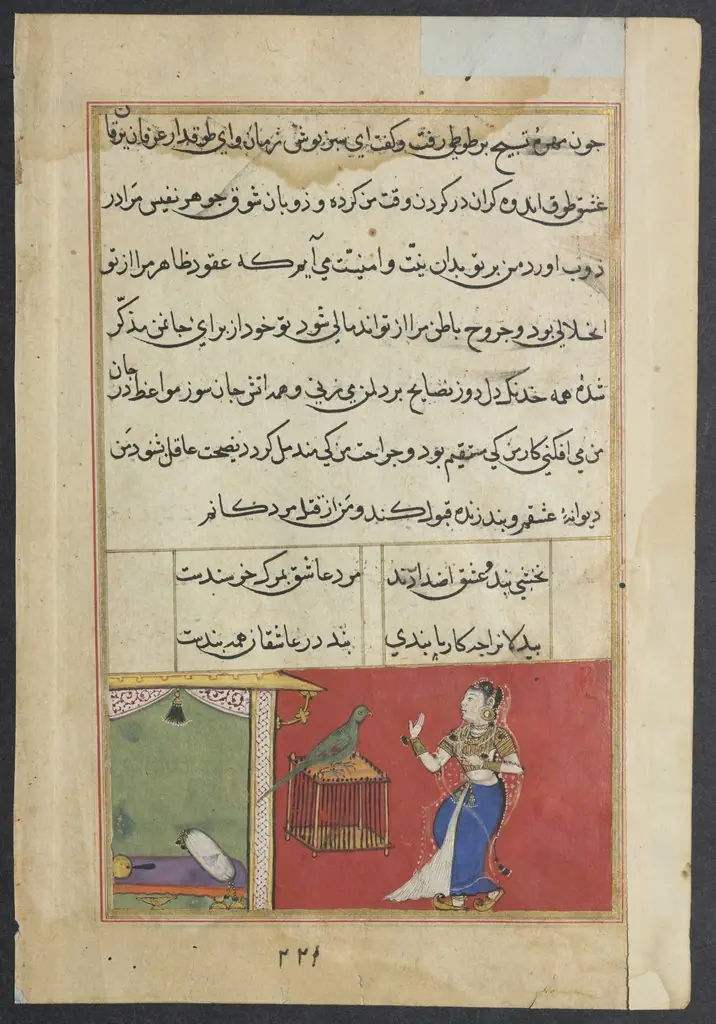 The parrot addresses Khujasta at the beginning of the forty-seventh night, from a Tuti-nama (Tales of a Parrot): Forty-seventh Night
 Page from Tales of a Parrot (Tuti-nama): text page