Artwork
Candlestand and holder (guéridon)
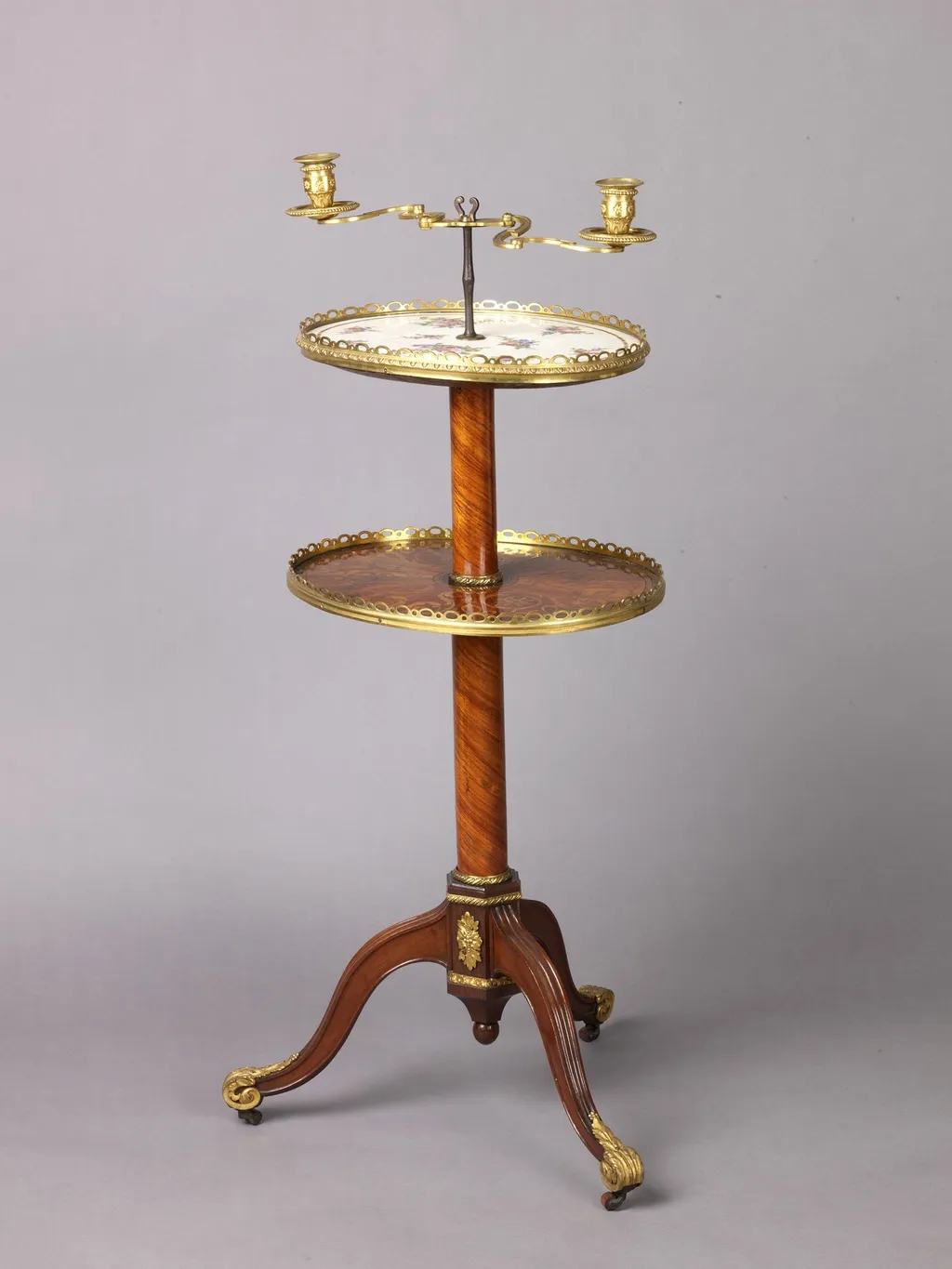
Candlestand and holder (guéridon) is an unspecified painting. It dates from 1730 and is held in the collection of the Metropolitan Museum of Art. The work depicts an elaborate candlestand, or guérillon, rendered in a painted format.
About this work
To learn more about the artistic techniques used in this piece, explore the technique of impasto.
The painting shows a tall, ornate candlestand with two tiers. The top tier has a white surface with gold trim and a floral pattern. It holds a small, golden candleholder with two arms. The bottom tier is made of dark wood with a marbled pattern and gold trim. The stand has three curved legs with golden feet.
The candlestand appears to be from the 18th century, with intricate carvings and ornate details. The use of gold and marble suggests a high level of craftsmanship.
To learn more about the artistic techniques used in this piece, explore the technique of impasto.
Overview
The work depicts an elaborate candlestand, or guérillon, rendered in a painted format. It presents a two‑tiered structure: an upper level finished in a white surface edged with gold and adorned with a floral motif, supporting a small, bifurcated golden candleholder; a lower level of dark wood simulated with a marbled pattern, also trimmed in gold. The base rests on three curved legs capped with gilded feet.
Subject & Meaning
The composition focuses on the candlestand as an object of decorative luxury, emphasizing its layered surfaces and ornamental details. By highlighting the interplay of light‑colored marble, dark wood, and gold accents, the painting underscores the status of such furnishings within 18th‑century interior design, where elaborate accessories signified wealth and refined taste.
Technique & Style
Executed in a painted medium, the artist employs careful modeling to suggest varied textures—smooth marble, polished wood, and gleaming metal. The rendering of gold trim and reflective surfaces suggests a subtle use of impasto to build up highlights, while fine brushwork conveys the intricate carvings and floral patterns characteristic of the period’s Rococo aesthetic.
History & Provenance
The candlestand portrayed is stylistically consistent with 18th‑century European furniture, noted for its elaborate carving and gilded embellishments. No specific provenance is recorded for the painting itself, but its subject reflects the decorative arts prevalent among aristocratic households of that era.
Context
During the 1700s, candlestands served both functional and decorative roles in salons and drawing rooms, often crafted from wood, marble, and gilt. The depiction aligns with contemporary interest in documenting interior objects, a practice that provided visual records of fashionable furnishings and their placement within elite domestic spaces.
Legacy
Works that render decorative objects in fine detail contribute to our understanding of material culture and aesthetic preferences of the period. By preserving the visual language of Rococo ornamentation, such paintings aid scholars in reconstructing the appearance and significance of luxury interiors in 18th‑century Europe.
Artist & collection