Artwork
Vishnu and Lakshmi on Garuda
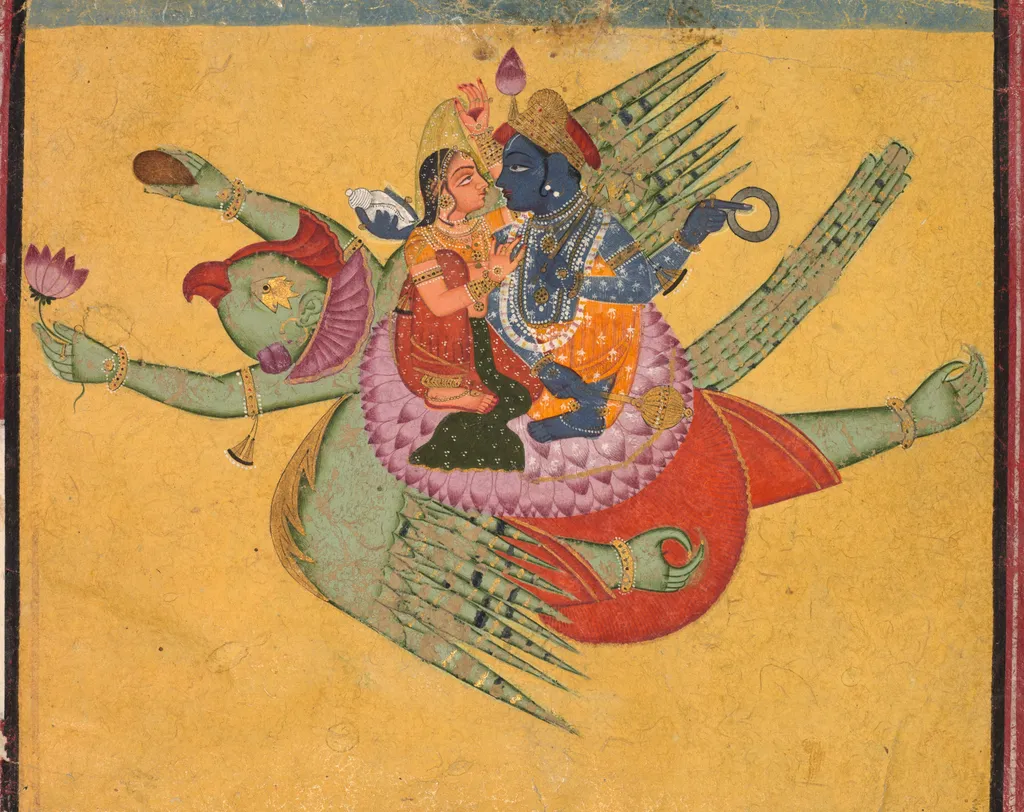
Vishnu and Lakshmi on Garuda is an unspecified painting. It dates from 1750 and is held in the collection of the Cleveland Museum of Art.
About this work
Overview
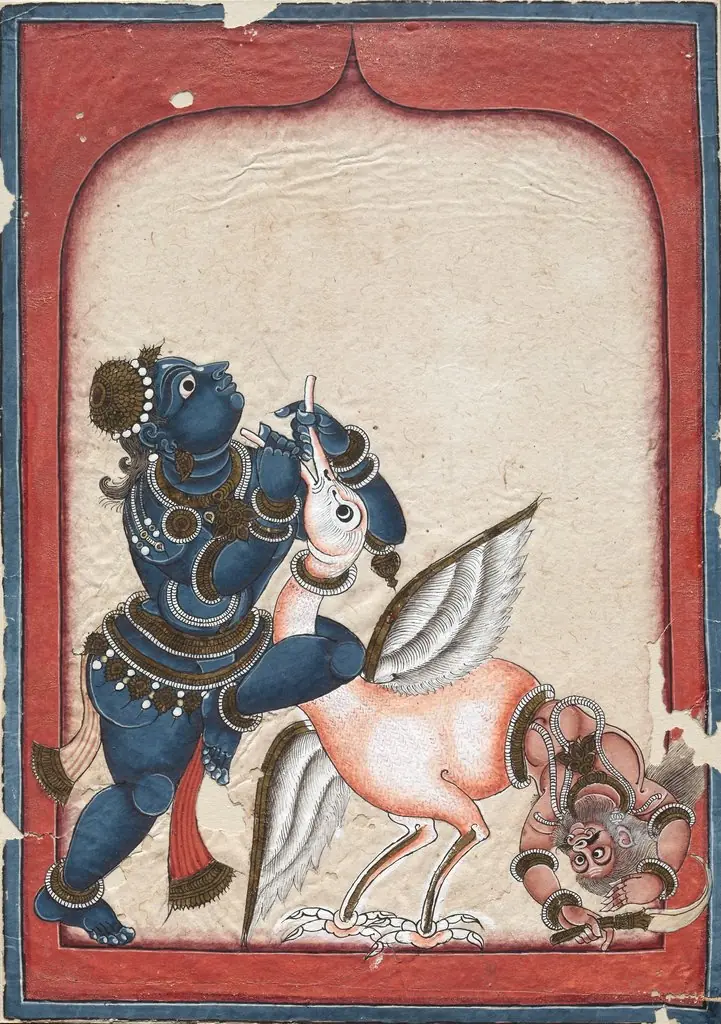
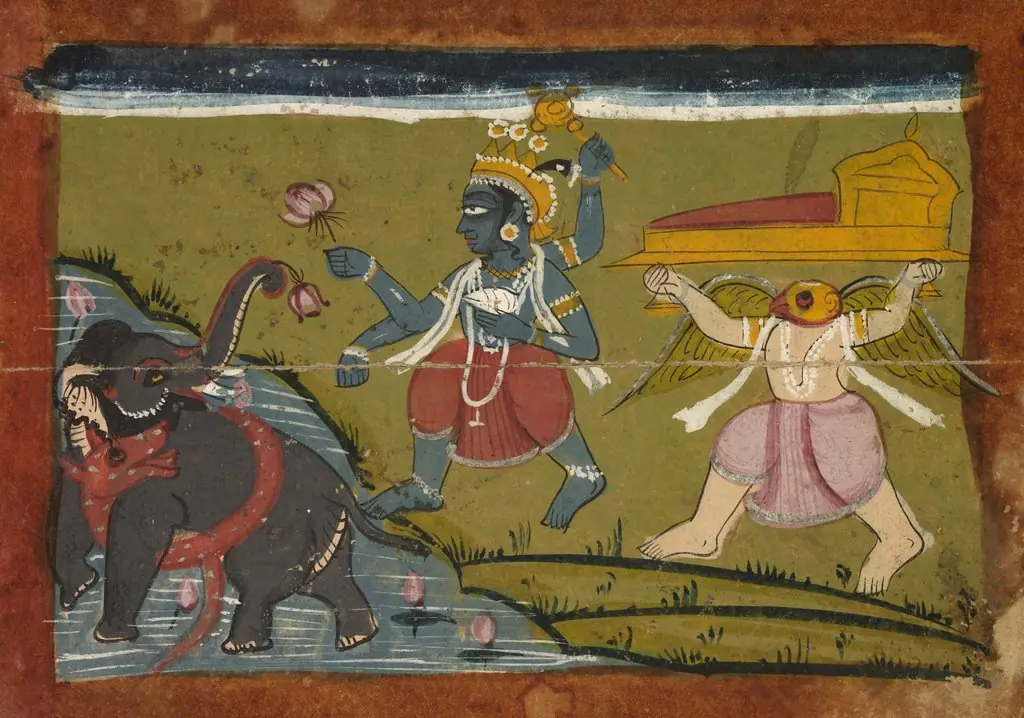
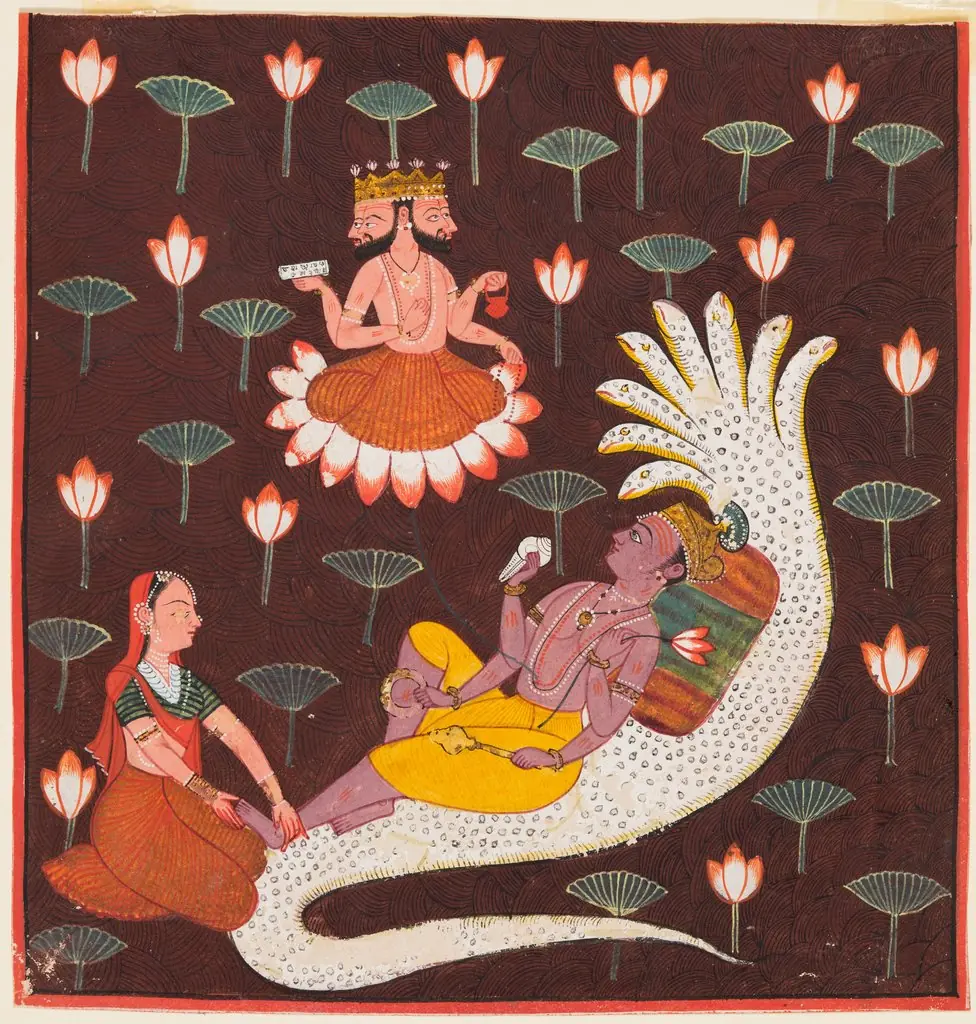
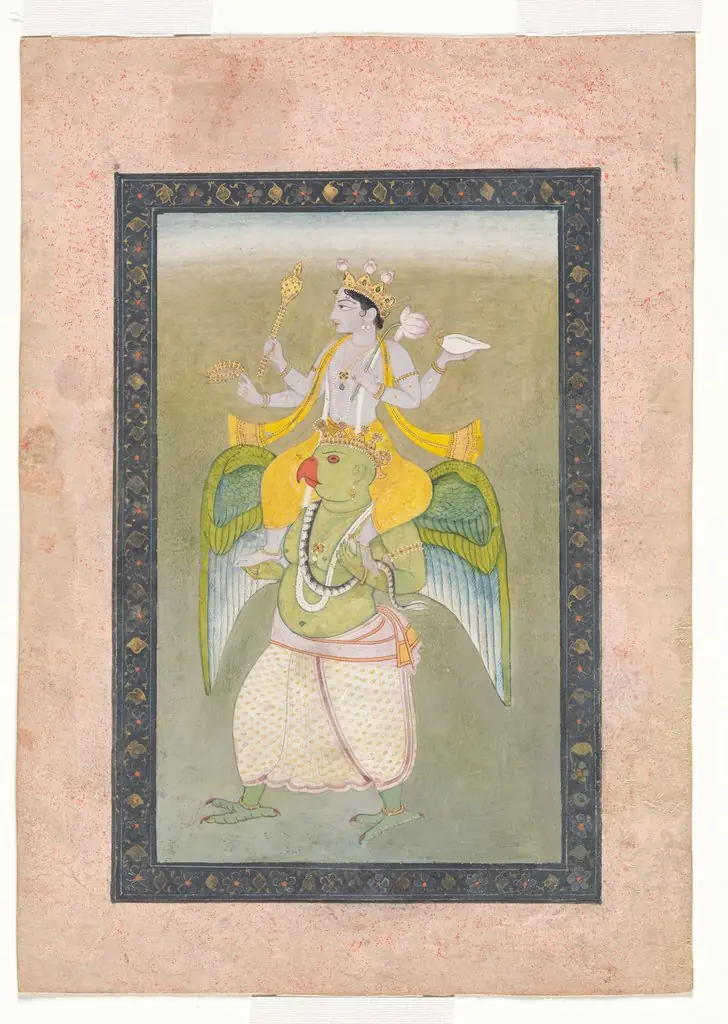
The work portrays a mythological tableau centered on a colossal bird‑like being, its wings outstretched, bearing a blue‑skinned male deity and a female figure upon its back. The duo face one another; the man holds a ring, while the woman clutches a flower, surrounded by additional floral motifs. The composition is set against a bright yellow field capped with a horizontal blue band.
Subject & Meaning
The male figure represents Vishnu, the preserver god, identifiable by his blue complexion and regal attire of orange and blue. The female companion is Lakshmi, his consort, distinguished by a red and gold garment and a flower, symbols of prosperity. Their placement on Garuda, the mythic eagle‑vehicle of Vishnu, underscores the divine partnership and the protective role of the mount.
Technique & Style
Executed in vivid pigments, the painting employs flat areas of saturated colour and intricate detailing of garments and flora. The stylised rendering of Garuda’s feathers and the figures’ outlines reflect a traditional Indian miniature aesthetic, while the bold background fields create a striking visual contrast.
History & Provenance
The piece originates from a South Asian artistic tradition that frequently depicted Hindu deities in narrative scenes. Though the precise date and workshop are not recorded, its iconography and stylistic traits align with works produced for devotional or courtly settings during the late medieval to early modern periods.
Context
Vishnu and Lakshmi on Garuda appear in numerous religious texts and temple art, symbolising the harmonious balance of cosmic order and abundance. The inclusion of ornamental flowers and a ring may reference specific mythic episodes or ritual offerings associated with the divine couple.
Legacy
Images of Vishnu astride Garuda with Lakshmi continue to influence contemporary visual culture, appearing in modern religious art, popular media, and decorative motifs, thereby sustaining the narrative’s relevance across centuries.
Artist & collection