Artwork
Tantric Manuscript "Sangrahani Sutra"
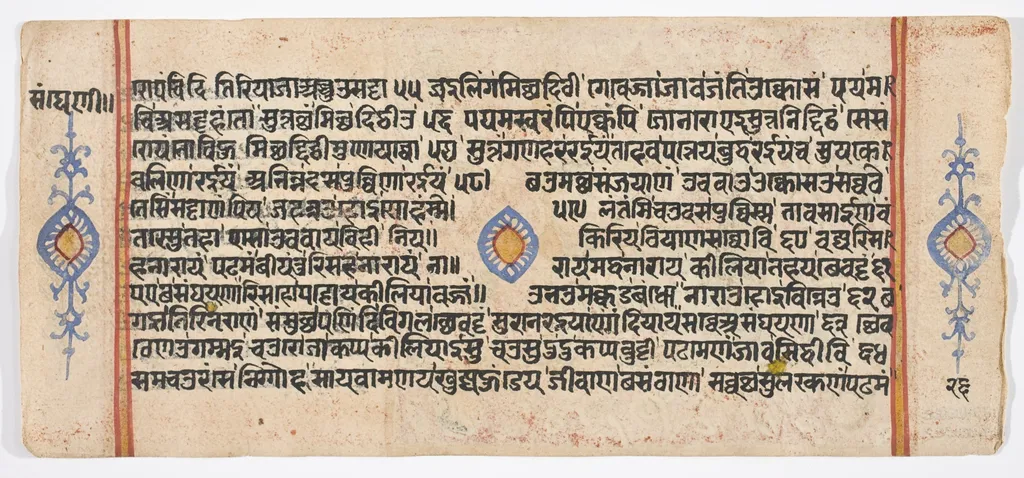
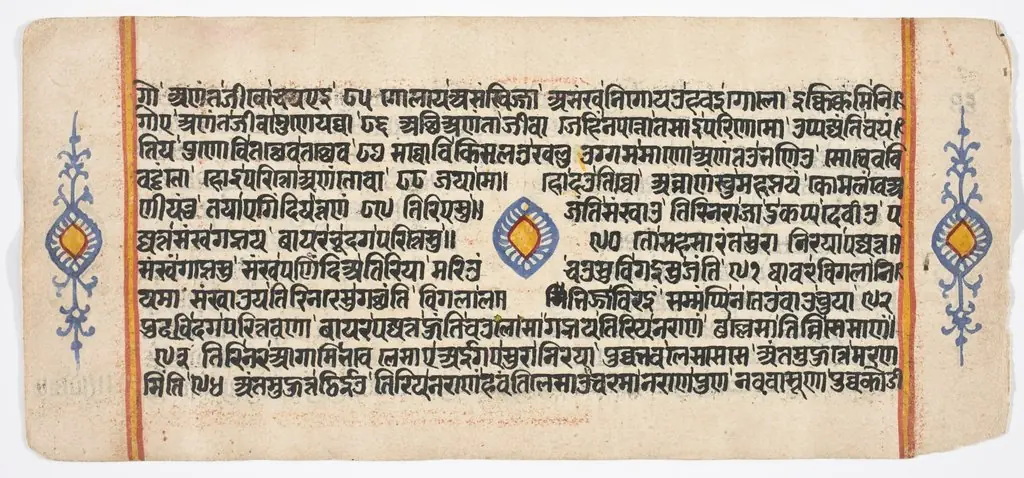
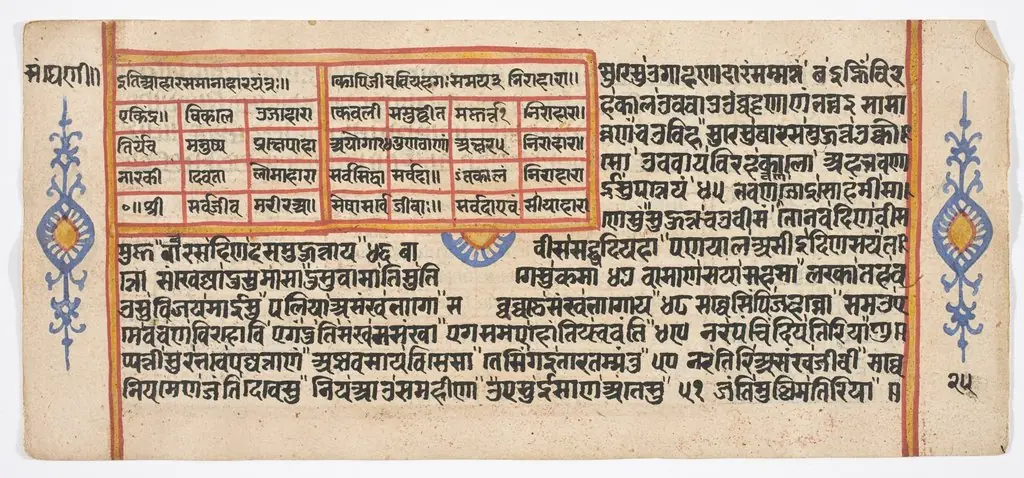
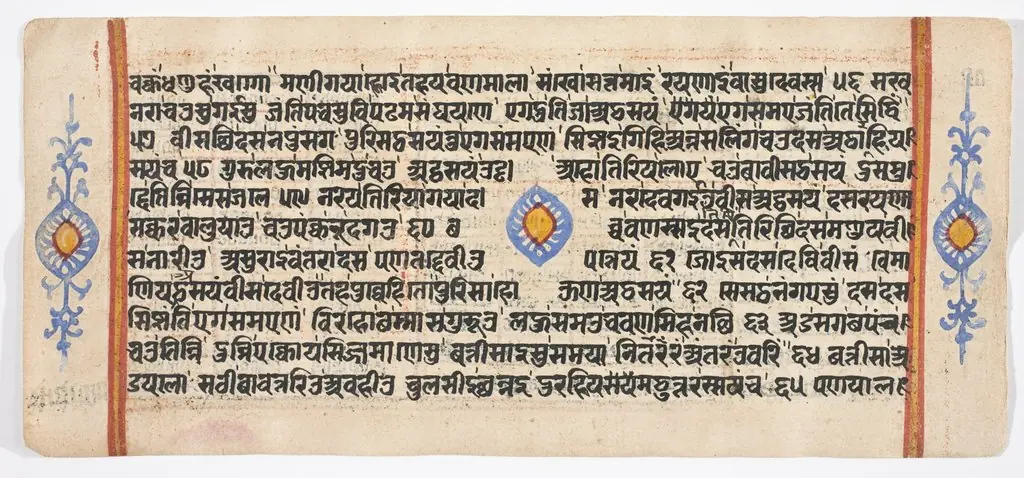
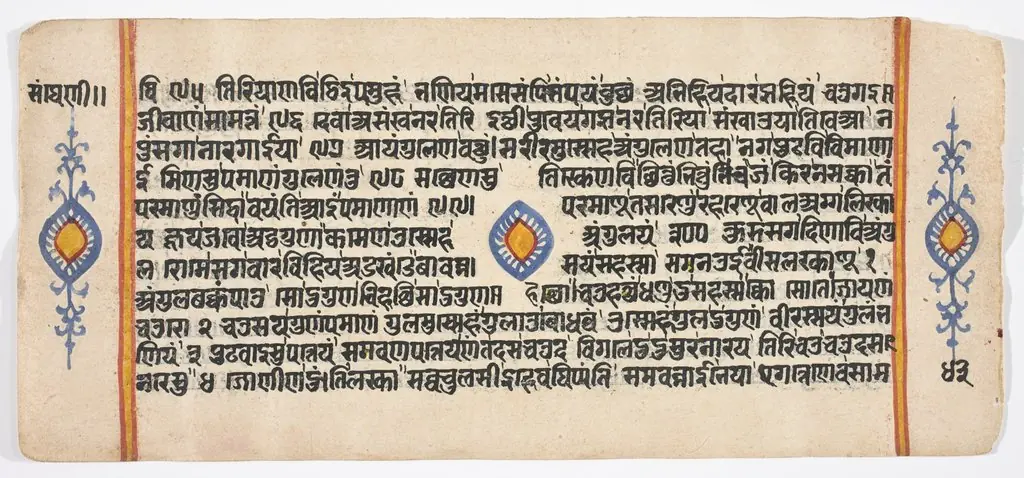
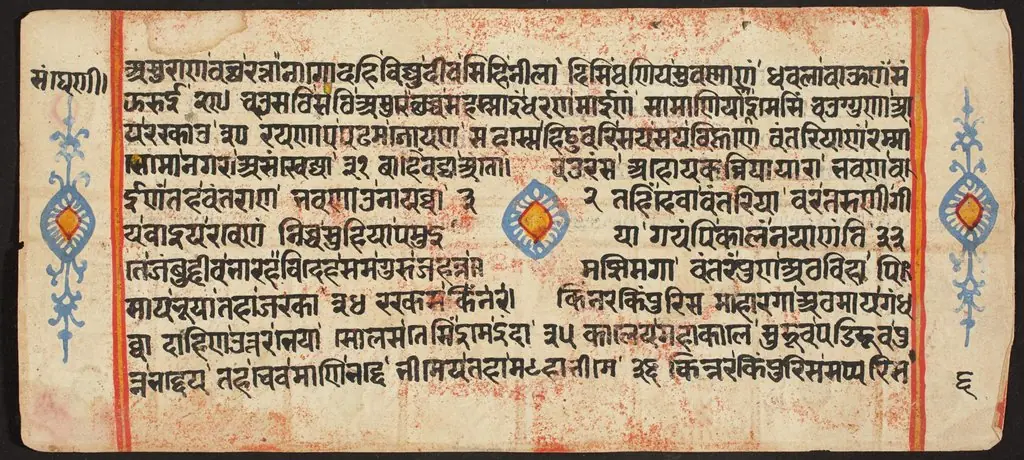
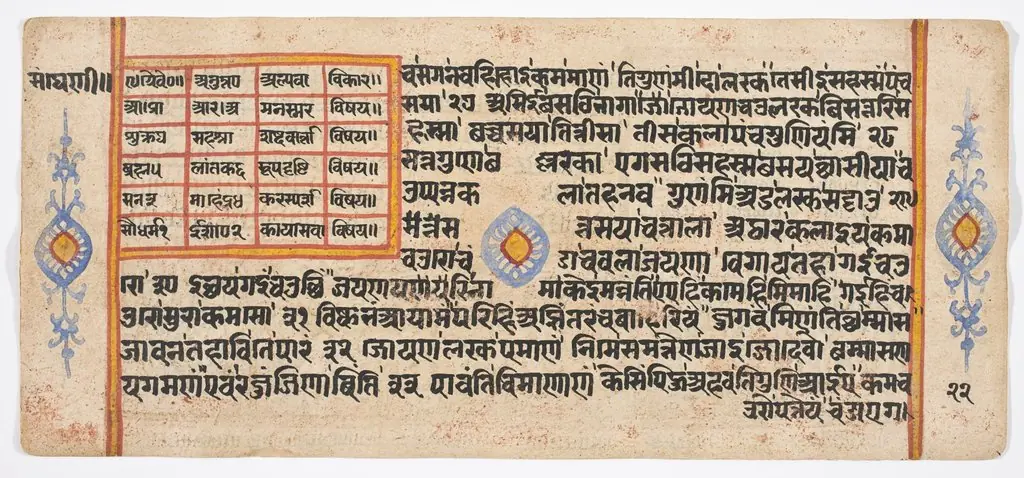
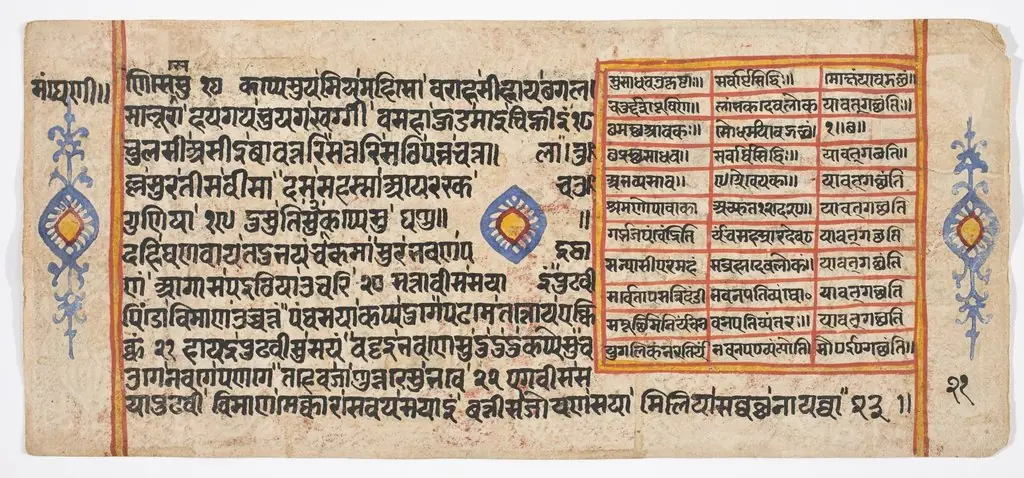
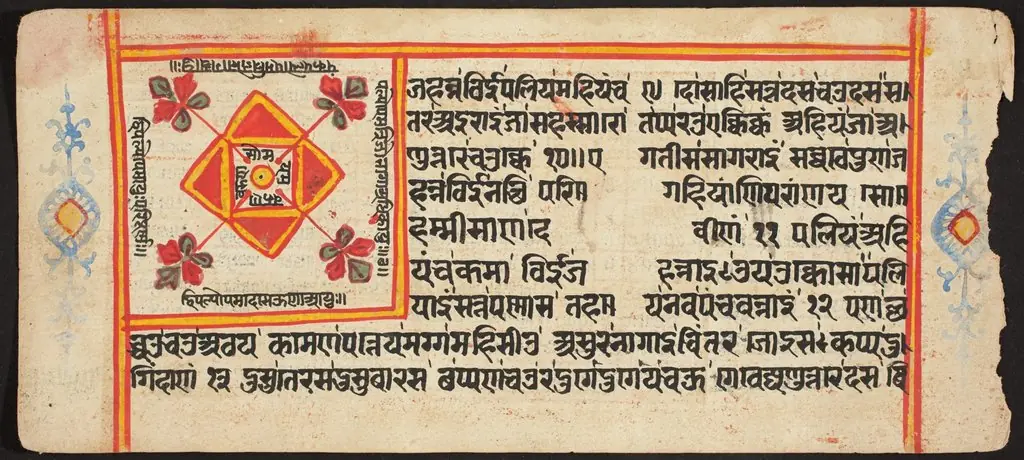
Tantric Manuscript "Sangrahani Sutra" is an unspecified painting by Unknown. It is held in the collection of the Detroit Institute of Arts. The work is a painted page from a historic manuscript identified as the Tantric text known as the Sangrahani Sutra.
About this work
Overview
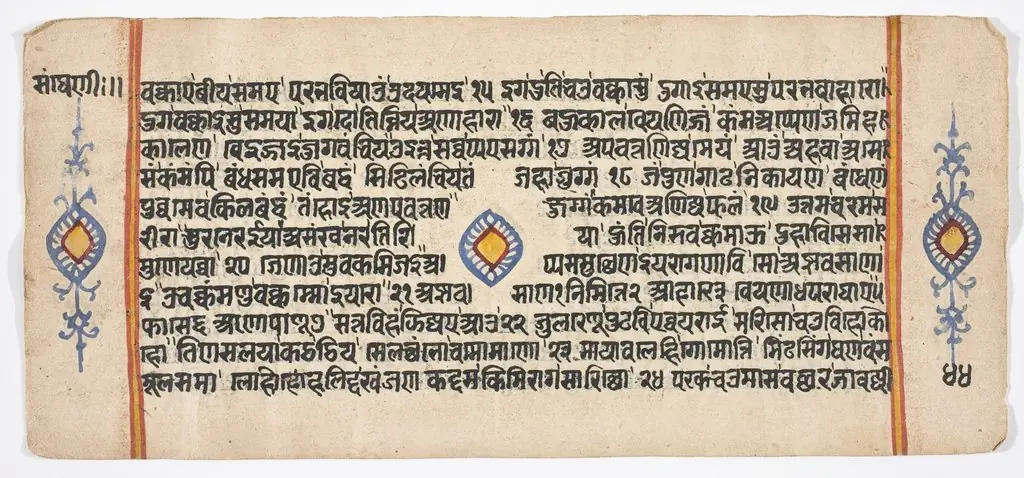
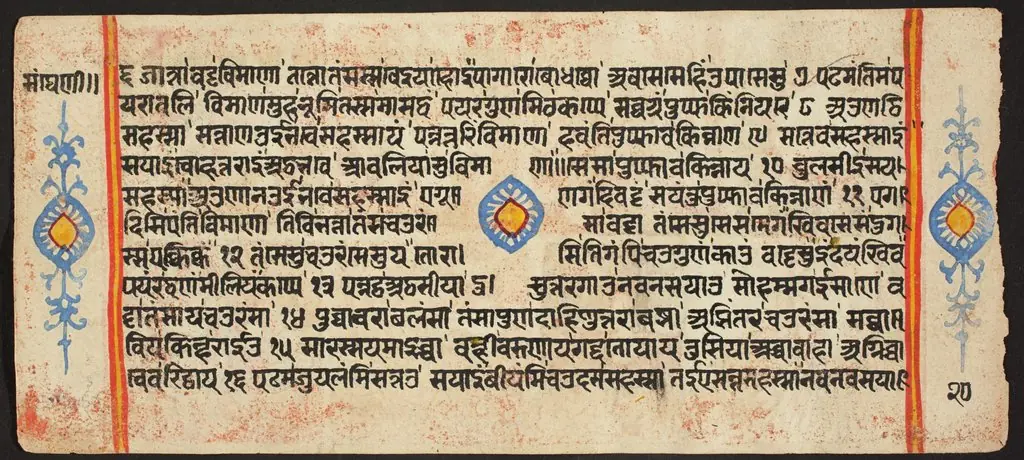
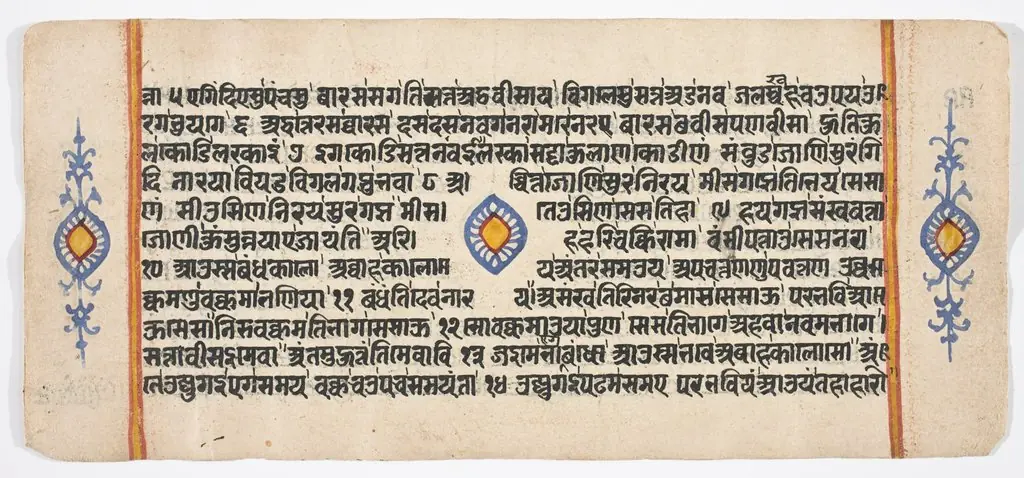
The work is a painted page from a historic manuscript identified as the Tantric text known as the Sangrahani Sutra. Rendered on a yellowed surface, the page features lines of Sanskrit-like script framed by modest decorative motifs in red and blue. The composition balances textual density with restrained ornamentation, typical of ritual manuscripts.
Subject & Meaning
The manuscript records a tantric sutra, a genre of esoteric Buddhist literature that outlines meditative practices and doctrinal teachings. While the precise verses are not legible here, the presence of the sutra indicates a purpose of instruction or liturgical use within a monastic or initiatory context.
Technique & Style
The page employs a traditional painting technique in which pigments are applied to a paper or parchment base, creating a muted yellow ground. Red ink delineates the script, while blue pigment forms simple geometric or floral designs that border the text. The script is executed in a formal, calligraphic hand, emphasizing clarity over decorative flourish.
History & Provenance
The manuscript originates from a period when tantric Buddhism was flourishing in South Asia, likely between the 8th and 12th centuries CE. It entered the collection of the Detroit Institute of Arts through acquisition, though the exact chain of ownership before its museum arrival remains undocumented.
Context
Tantric sutras such as the Sangrahani were often copied by monastic scribes for preservation and transmission of secret teachings. The modest decorative elements reflect a balance between the sacred nature of the text and the aesthetic conventions of manuscript production in the region.
Legacy
Pages like this provide scholars with material evidence of the visual culture surrounding tantric literature, illustrating how textual transmission was coupled with artistic practice. Their preservation in museum collections aids ongoing research into the interplay of script, pigment, and religious function.
Artist & collection

 Domestic Scene
 Giacomo and Cardinal Marco, investing Andrea, Abbot of San Zeno, with his Benefice
 The Nymph of Fontainebleau
 Portrait of a Woman
 Madonna and Child with Saints in the Enclosed Garden
 Venus and Minerva
 Family Group of Four on Sofa
 Wall painting from Room H of the Villa of P. Fannius Synistor at Boscoreale
 Tantric Manuscript "Sangrahani Sutra"
 Tantric Manuscript "Sangrahani Sutra"
 Tantric Manuscript "Sangrahani Sutra"
 Tantric Manuscript "Sangrahani Sutra"
 Tantric Manuscript "Sangrahani Sutra"
 Tantric Manuscript "Sangrahani Sutra"
 Tantric Manuscript "Sangrahani Sutra"
 Tantric Manuscript "Sangrahani Sutra"
 Tantric Manuscript "Sangrahani Sutra"
 Kalpa Sutra
 Tantric Manuscript "Sangrahani Sutra"
 Tantric Manuscript "Sangrahani Sutra"