Artwork
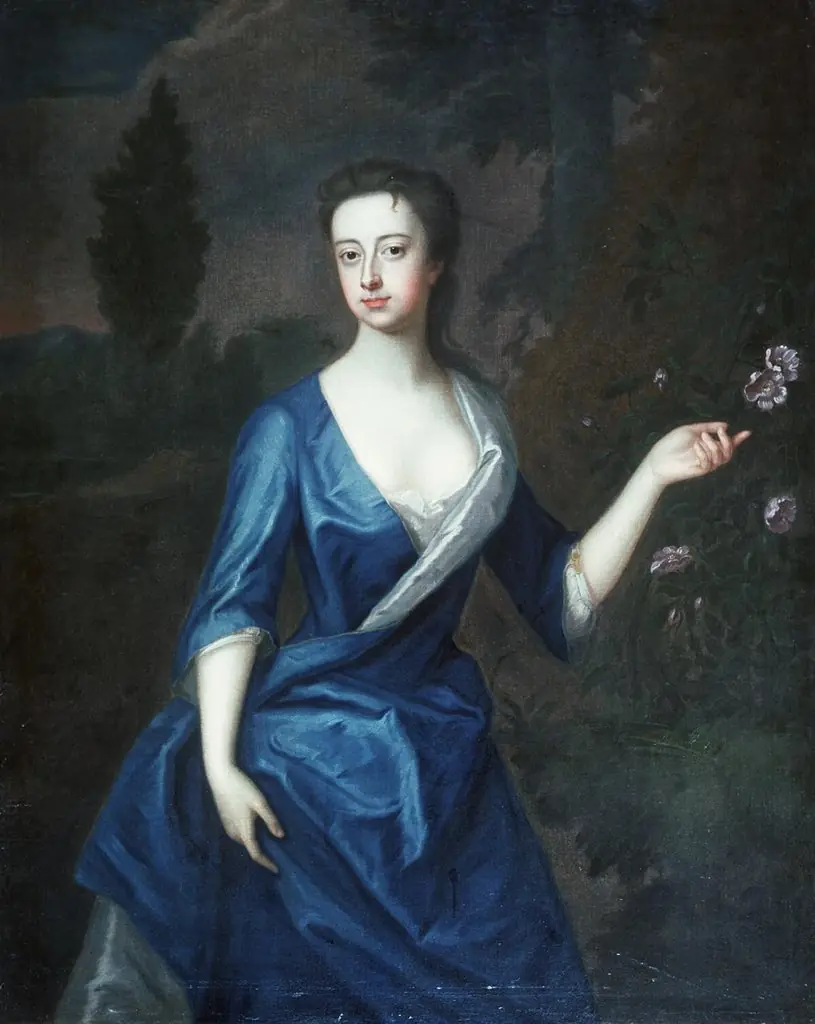
Miss Mary Middleton (1688–1747), of Plas Newydd, Wrexham
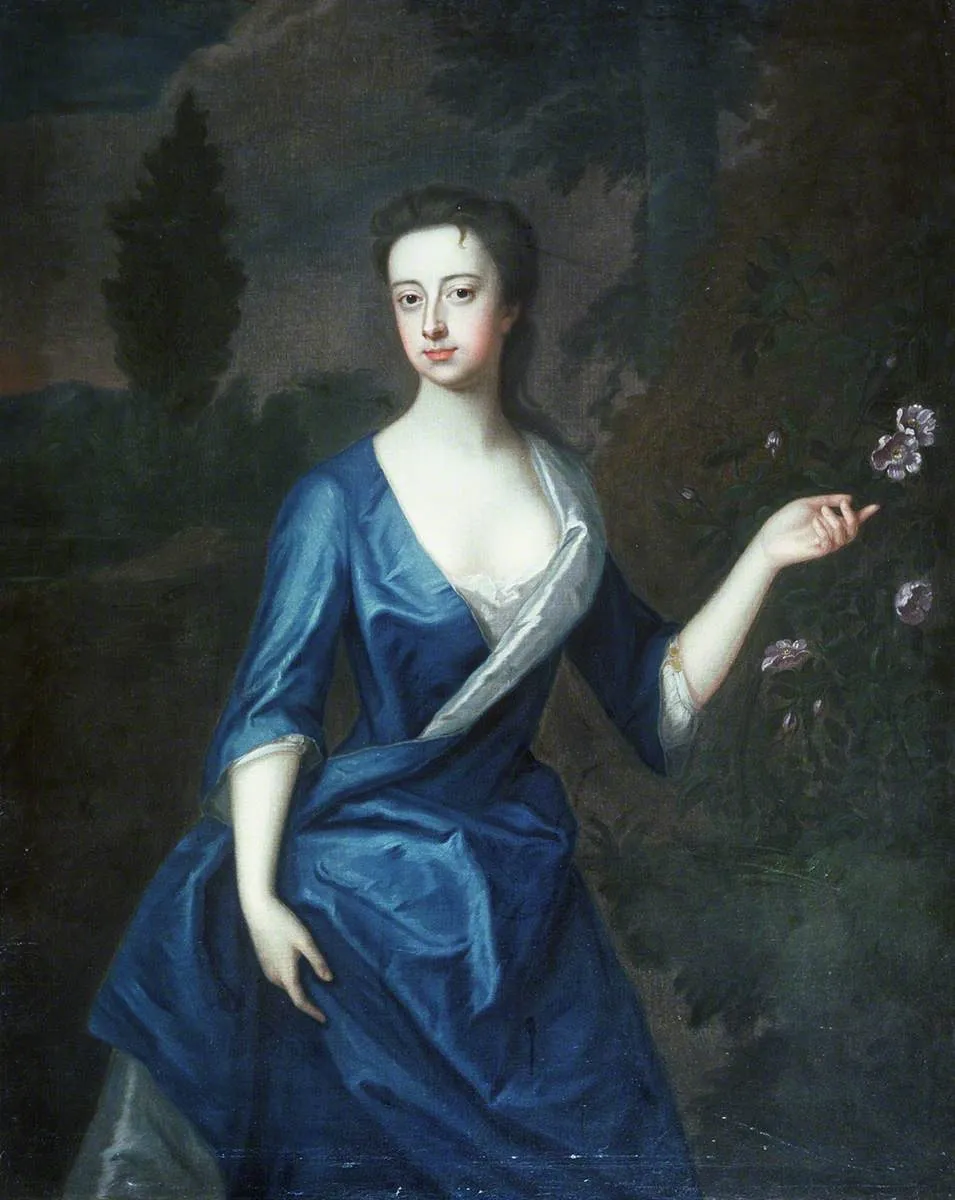
Miss Mary Middleton (1688–1747), of Plas Newydd, Wrexham is an oil painting by the Rococo painting artist Unknown. It dates from 1710 and is held in the collection of the National Library of Wales. The oil portrait presents Miss Mary Middleton, a Welsh gentlewoman of the early 18th century, rendered against a subdued, dark backdrop.
About this work
The painting is a portrait of a woman from the early 18th century, and it showcases the artist's skill in capturing the subject's likeness and expression.
This painting depicts a woman in a blue dress with a white sash, standing in front of a dark background. She is holding flowers in her right hand and has her left hand at her side. The woman's hair is pulled back, and she is wearing a white lace top underneath her dress. The woman is shown in a formal pose, with a serious expression on her face. The background of the painting is dark and muted, with some greenery visible behind the woman. The painting is a portrait of a woman from the early 18th century, and it showcases the artist's skill in capturing the subject's likeness and expression.
Overview
The oil portrait presents Miss Mary Middleton, a Welsh gentlewoman of the early 18th century, rendered against a subdued, dark backdrop. She is attired in a blue gown trimmed with a white sash, a delicate white lace underlayer, and holds a small bouquet in her right hand. Her hair is styled back, and her expression is composed, conveying the formal dignity typical of portraiture of the period.
Subject & Meaning
Mary Middleton (1688–1747) belonged to the prominent Middleton family of Plas Newydd, Wrexham. The inclusion of flowers, a common emblem of femininity and transience, alongside her poised stance, suggests an emphasis on virtue and social standing. The restrained palette and solemn gaze reinforce the portrait’s function as a record of lineage and personal respectability.
Technique & Style
Executed in oil on canvas, the work demonstrates a careful handling of light to model the subject’s features against the deep background. The artist employs a limited colour scheme, allowing the blue dress and white accents to stand out. Fine brushwork is evident in the rendering of lace and the delicate foliage hinted at behind the sitter, reflecting the early‑Georgian aesthetic of restrained elegance.
History & Provenance
The portrait was likely commissioned during Mary Middleton’s adulthood, possibly to commemorate marriage or family status. It has remained associated with the Middleton estate of Plas Newydd, passing through successive generations before entering a public collection. Documentation links the work to the family archives, confirming its authenticity and continuity of ownership.
Context
Portraits of women in the early 1700s often served both personal and political purposes, affirming alliances and property rights. The composition aligns with contemporary British portraiture, where dark, neutral backgrounds were used to focus attention on the sitter’s attire and demeanor, echoing the influence of artists such as Sir Godfrey Kneller.
Artist & collection

 Domestic Scene
 Giacomo and Cardinal Marco, investing Andrea, Abbot of San Zeno, with his Benefice
 The Nymph of Fontainebleau
 Portrait of a Woman
 Madonna and Child with Saints in the Enclosed Garden
 Venus and Minerva
 Family Group of Four on Sofa
 Wall painting from Room H of the Villa of P. Fannius Synistor at Boscoreale
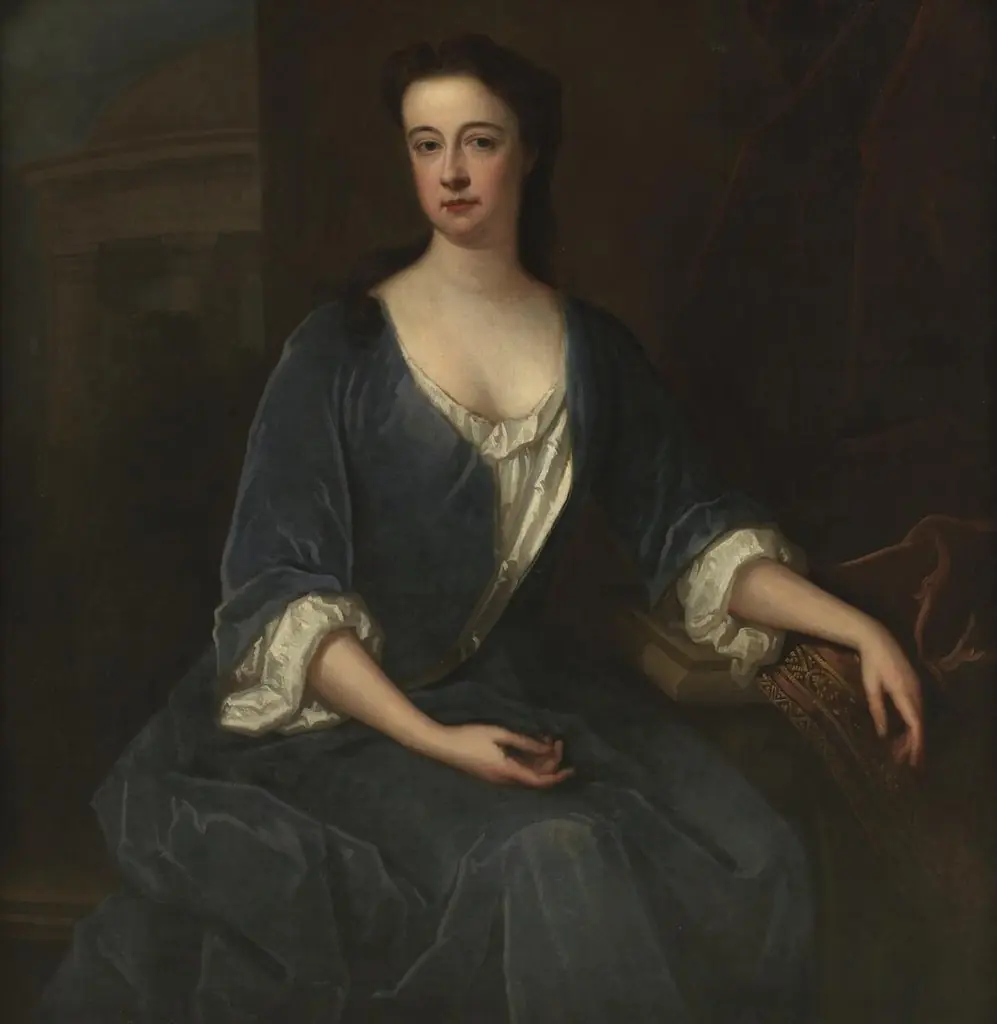 Barbara, Countess of Pembroke & Mont
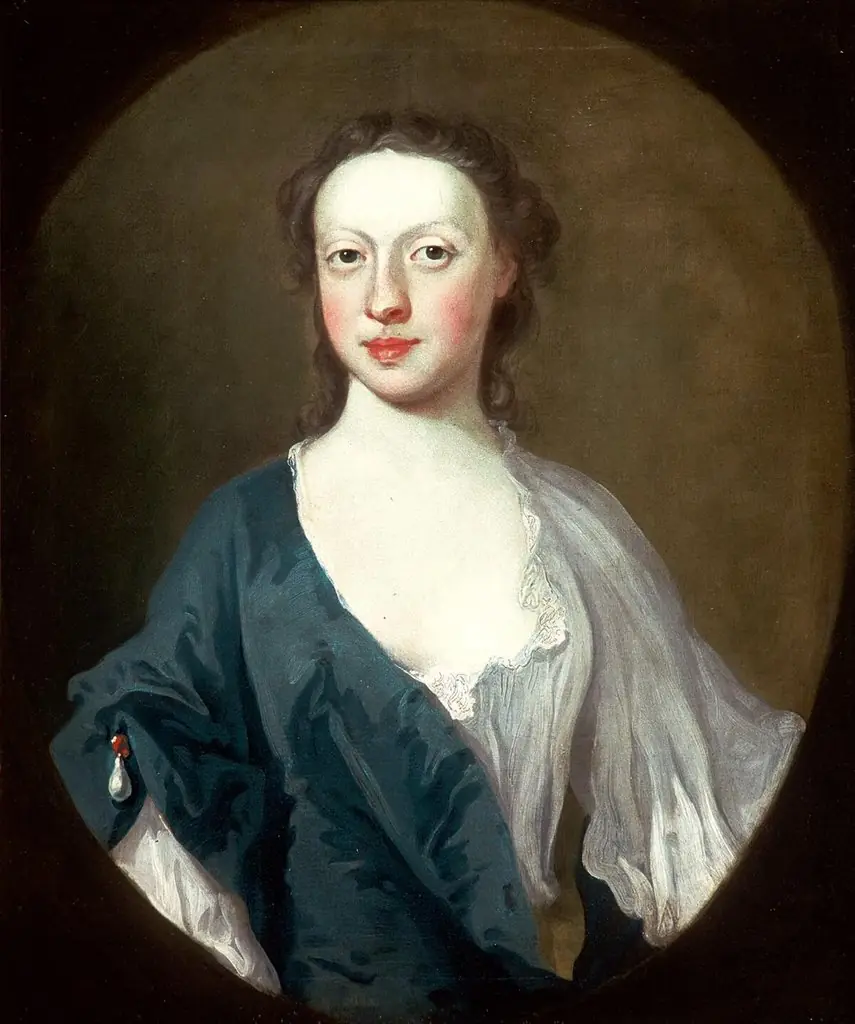 Ann Lloyd of Bryn Lluarth, Denbighshire
 Portrait of Lady Anne Conolly (née Wentworth) (1713-1797)
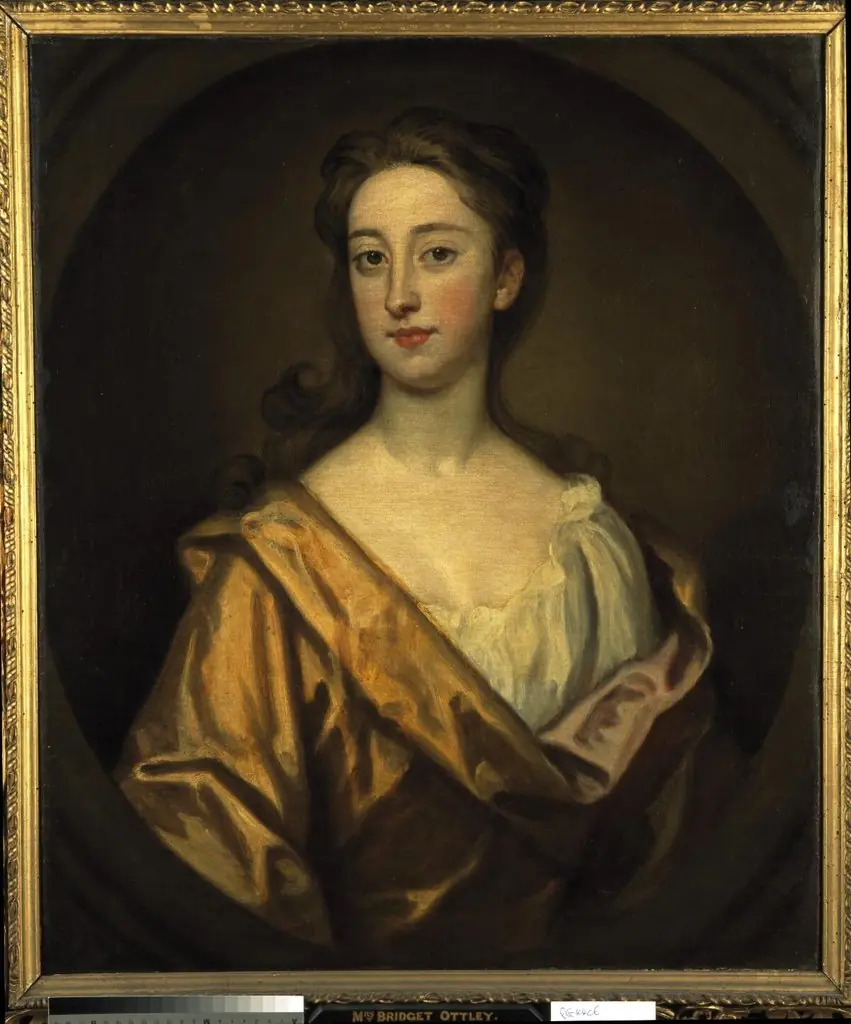 Mrs. Bridget Ottley
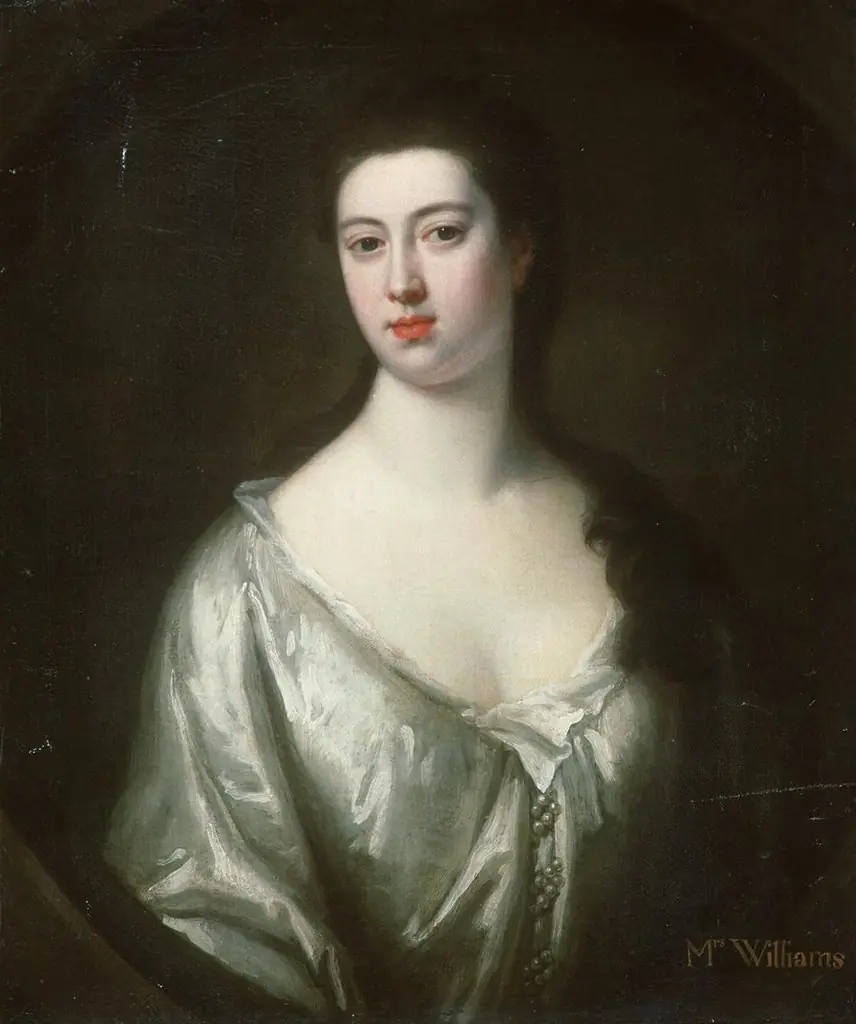 Mrs Williams
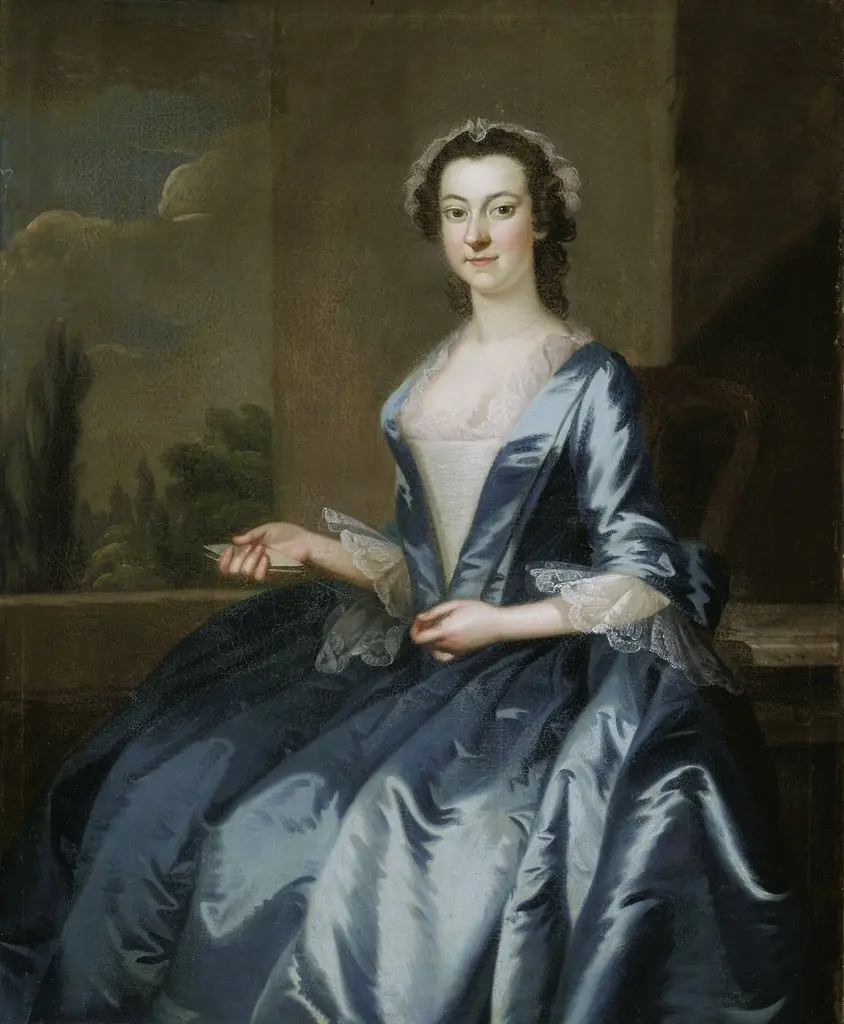 Portrait of a Woman
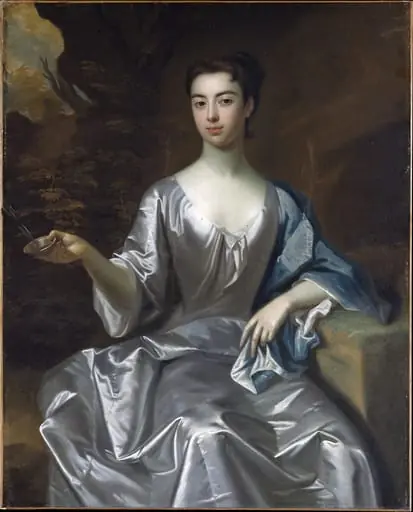 Portrait of a Woman, Called Maria Taylor Byrd
 Elizabeth Cunyngham, Mrs Daniel Cunyngham
 Diana Gostling
 Portrait of Mary Pemberton (1717–1763)
 Portrait of a Lady by a Fountain
 Miss Mary Middleton, Plas Newydd, Wrexham