Artwork
Preaching Sakyamuni Buddha
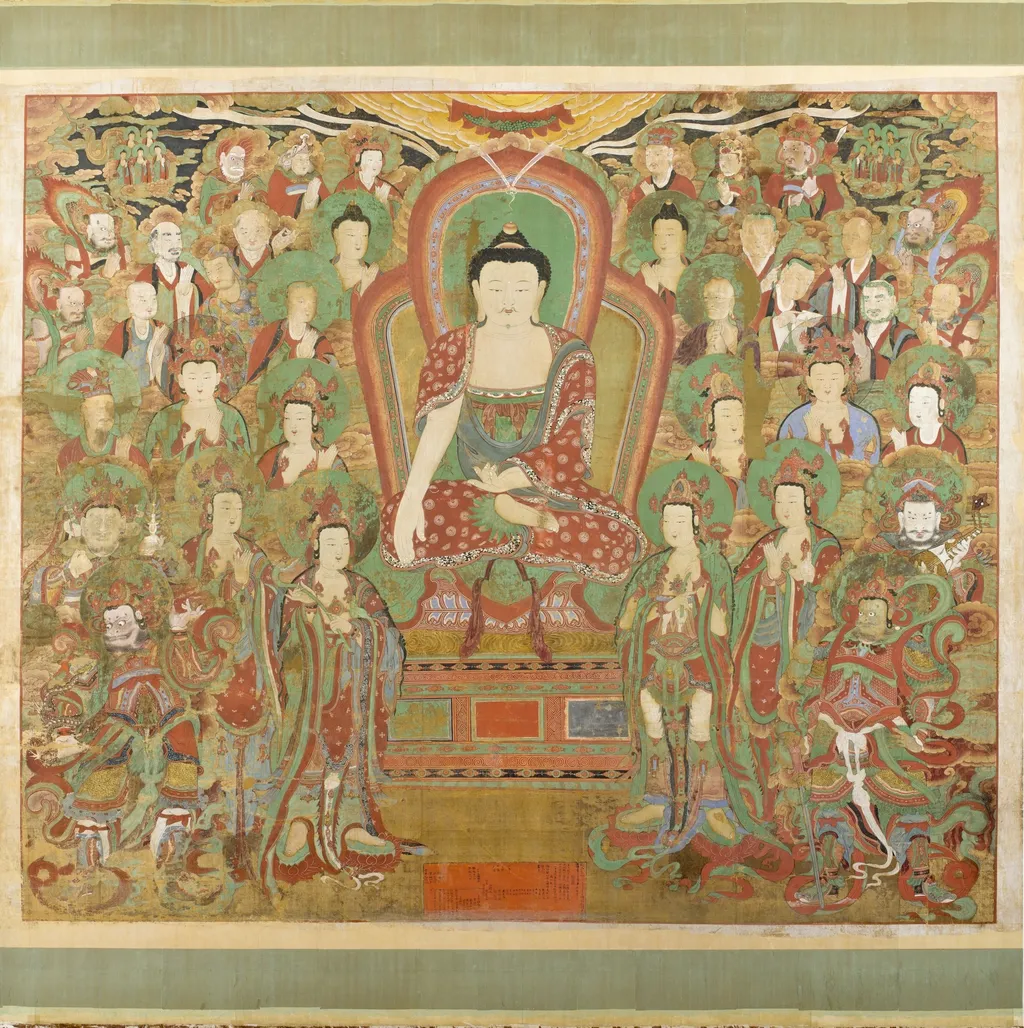
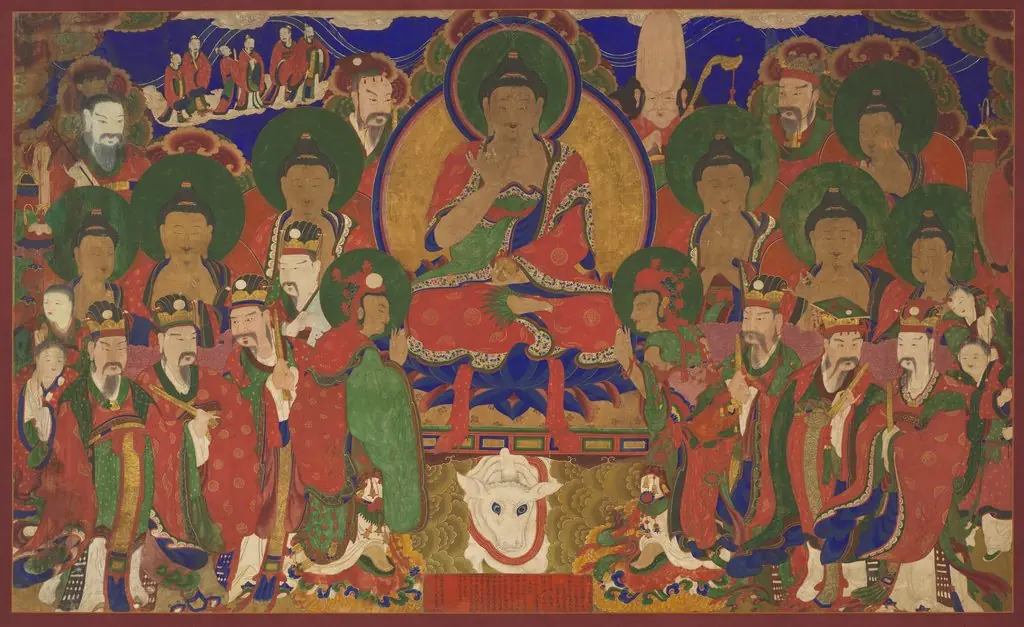
Preaching Sakyamuni Buddha is an unspecified painting by Unknown. It dates from 1755 and is held in the collection of the Los Angeles County Museum of Art. This painting depicts Sakyamuni Buddha in the act of teaching, a central theme in Buddhist devotional art.
About this work
Overview
This painting depicts Sakyamuni Buddha in the act of teaching, a central theme in Buddhist devotional art. Executed in traditional pigments on silk or paper, it follows iconographic conventions of East Asian Buddhist painting. The composition centers the Buddha as the focal point, surrounded by disciples and celestial beings, emphasizing his role as a spiritual guide.
Subject & Meaning
The scene illustrates Sakyamuni delivering a sermon, likely the Dhammacakkappavattana Sutta, his first teaching after enlightenment. Figures around him represent arhats, bodhisattvas, and deities, symbolizing the universal reach of his message. The serene posture and hand gesture (dharmachakra mudra) signify the turning of the Wheel of Dharma, conveying the transmission of wisdom to all beings.
Technique & Style
The style reflects late medieval East Asian monastic painting traditions, prioritizing symbolic clarity over naturalism.
The work employs fine brushwork and mineral pigments to render delicate facial features and flowing robes. Background elements are rendered with subtle ink washes, creating depth without distraction. Gold leaf accents highlight halos and ornamental details, enhancing spiritual luminosity. The style reflects late medieval East Asian monastic painting traditions, prioritizing symbolic clarity over naturalism.
History & Provenance
The painting likely originated in a temple or imperial workshop during the Song or Yuan dynasty, when Buddhist iconography flourished under royal patronage. Its survival suggests it was preserved in a monastic collection, possibly moved during periods of religious upheaval. No documented ownership before the 20th century is recorded, though stylistic analysis points to a 13th- to 14th-century origin.
Context
Created during a period when Chan (Zen) Buddhism gained prominence, the image aligns with devotional practices that emphasized direct transmission of the Dharma. While Chan favored simplicity, this painting reflects the continued importance of visual aids in ritual and meditation. Similar works adorned temple halls, serving both instructional and contemplative functions for monastic and lay audiences.
Legacy
This painting contributes to a broader tradition of Buddhist didactic art that influenced later East Asian religious imagery. Its iconography became a model for temple murals and printed woodblocks. Though not widely known outside scholarly circles, it remains a representative example of how Buddhist teachings were visually encoded for spiritual transmission across centuries.
Artist & collection

 Domestic Scene
 Giacomo and Cardinal Marco, investing Andrea, Abbot of San Zeno, with his Benefice
 The Nymph of Fontainebleau
 Portrait of a Woman
 Madonna and Child with Saints in the Enclosed Garden
 Venus and Minerva
 Family Group of Four on Sofa
 Wall painting from Room H of the Villa of P. Fannius Synistor at Boscoreale
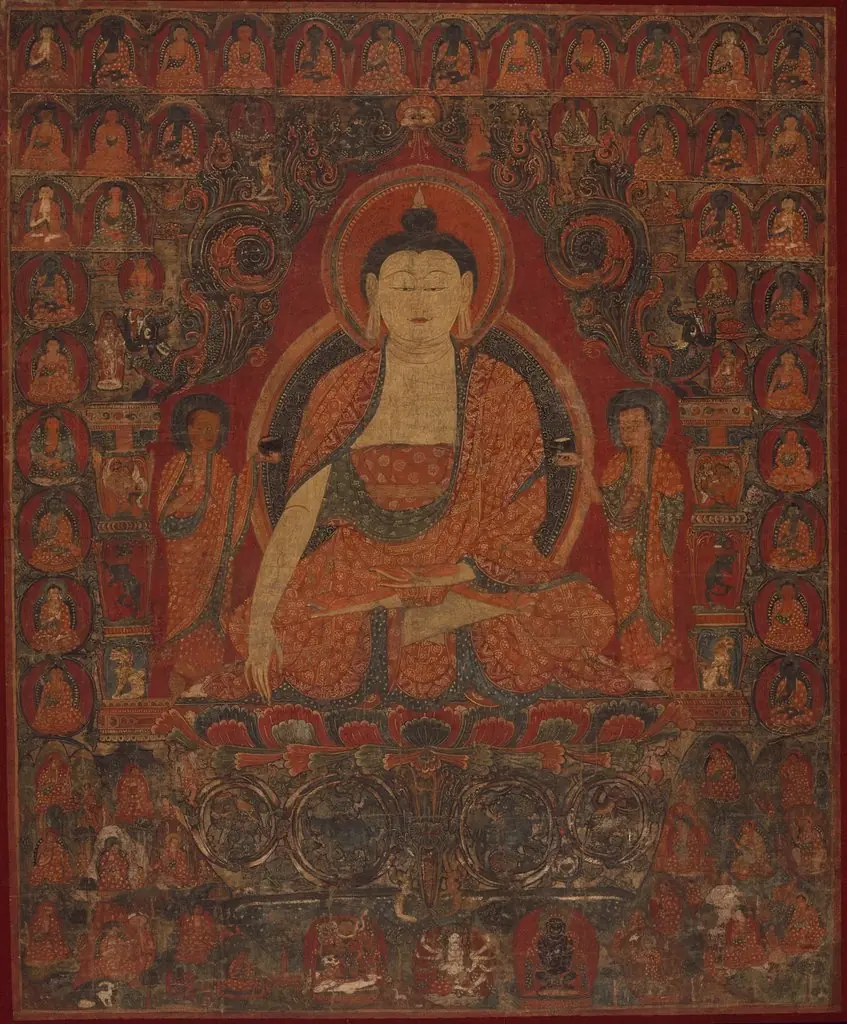 Shakyamuni with the Thirty-Five Buddhas of the Confession of Sins and the Eighteen Arhats
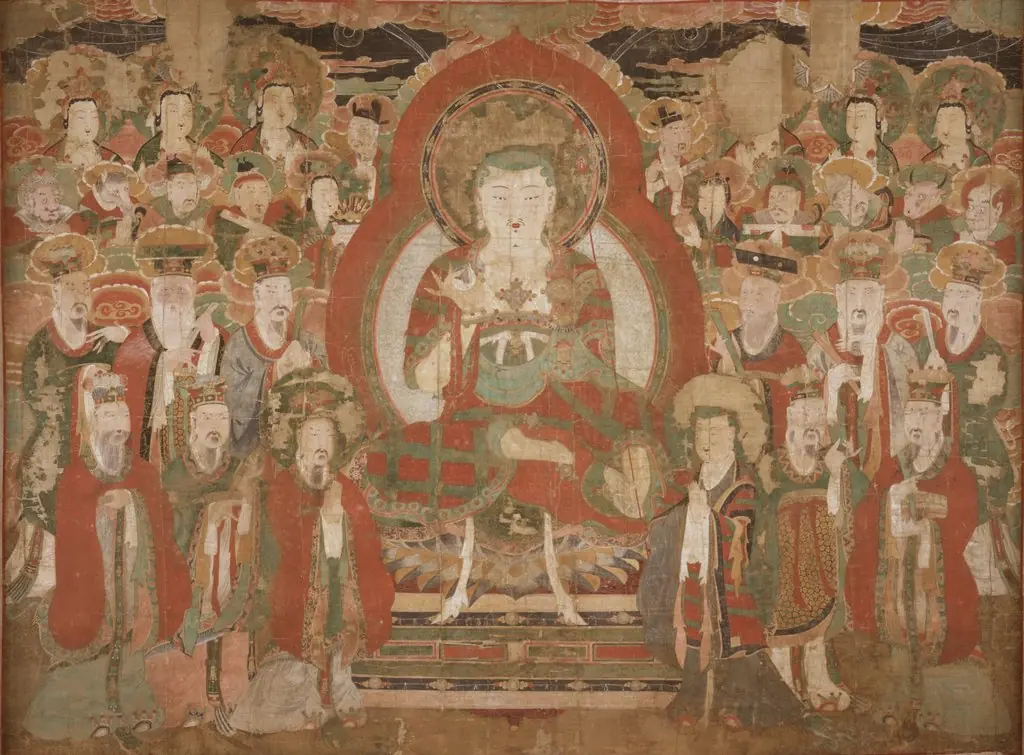 Ksitigarbha as Supreme Lord of the Underworld
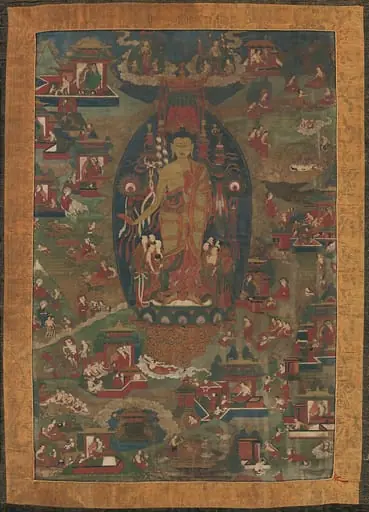 Untitled
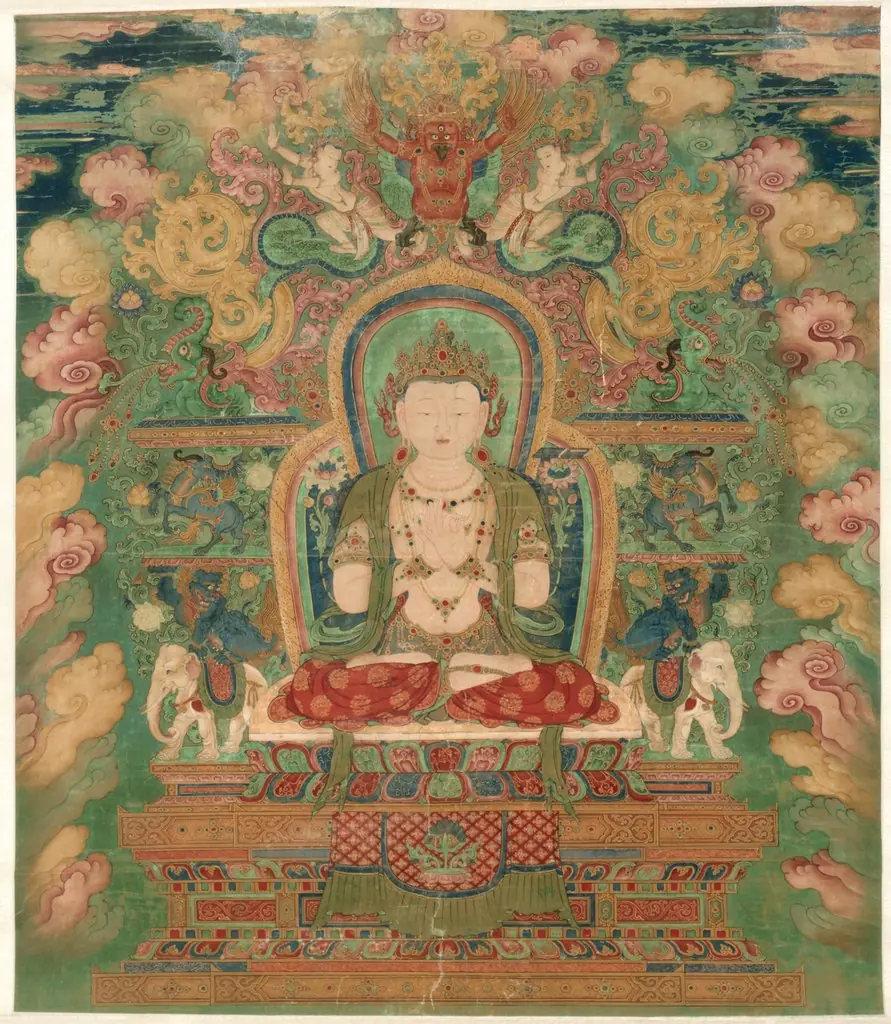 Manjushri
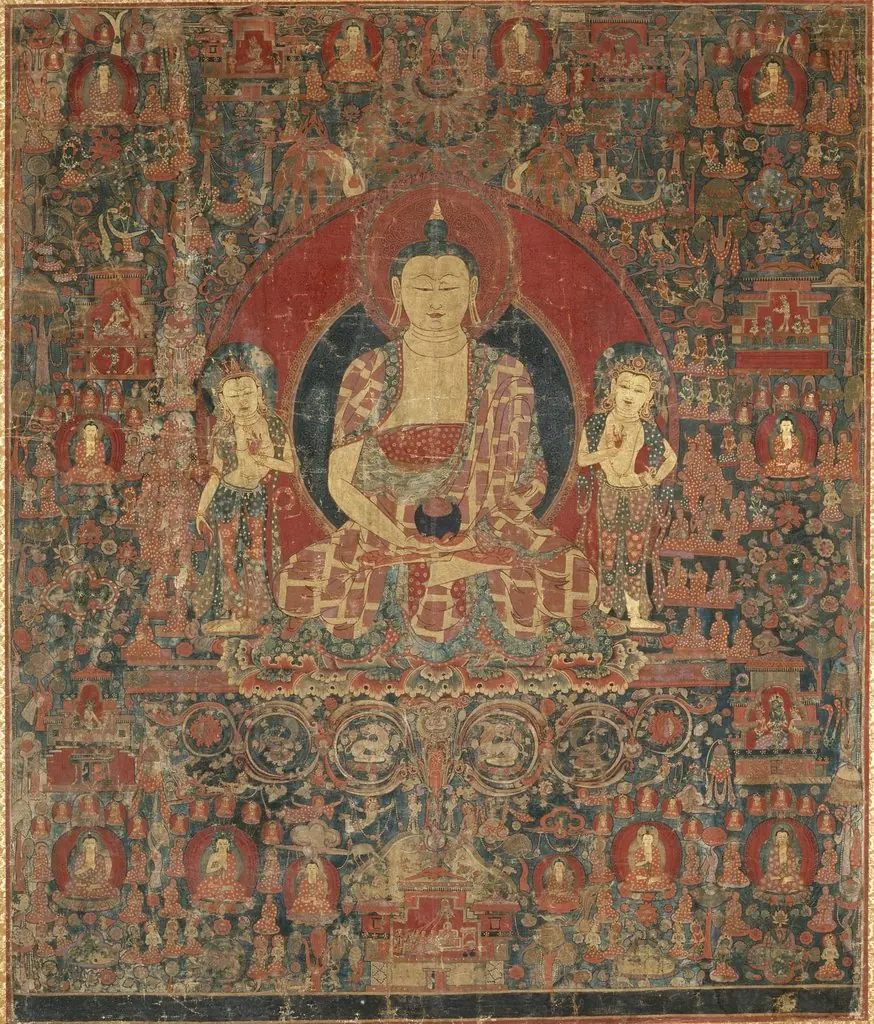 The Jina Buddha of Infinite Light (Amitabha) in His Pure Land Paradise (Sukhavati)
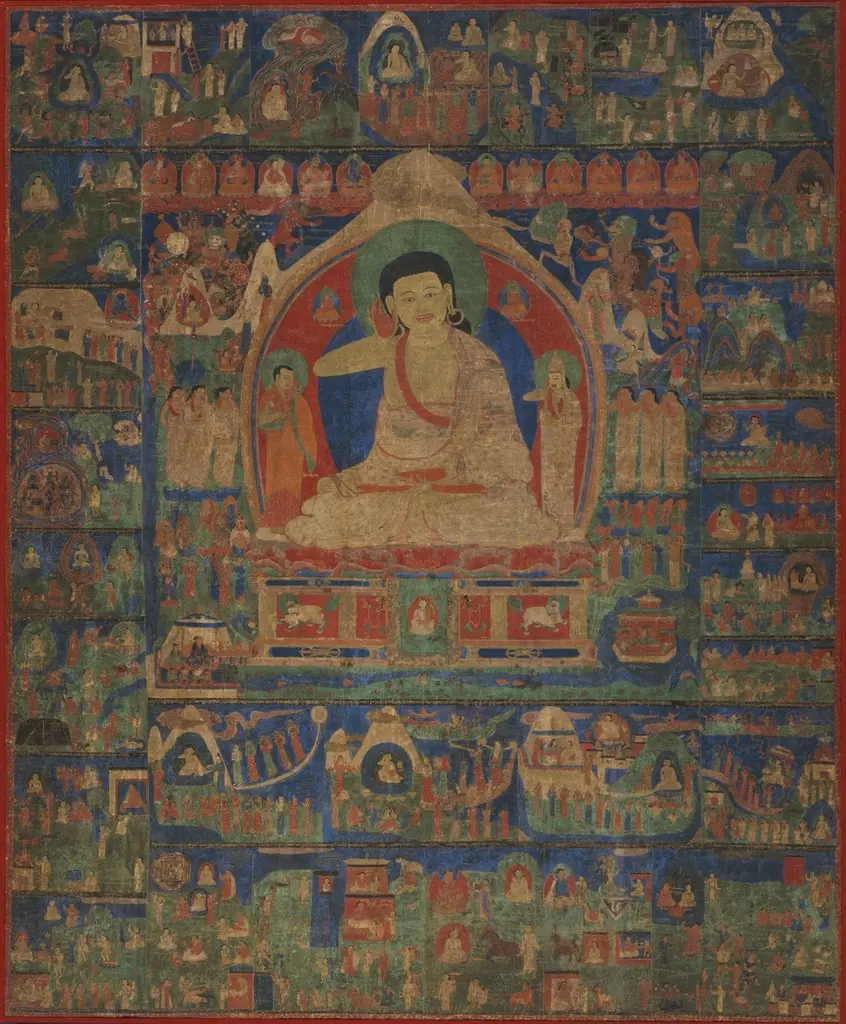 The Life of Milarepa (1040-1123)
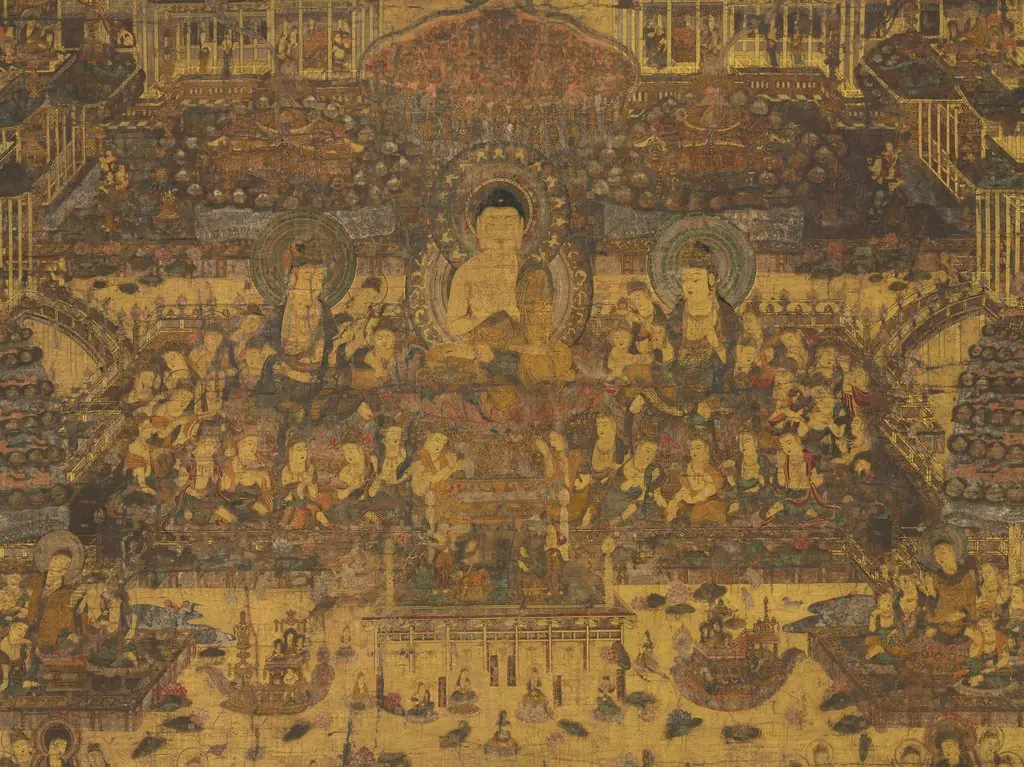 Taima Mandala
 The Assembly of Tejaprabha Buddha
 Medicine Master Buddha and the Twelve Divine Generals