Artwork
Portrait of Ivan A. Nabokov (1787-1852)
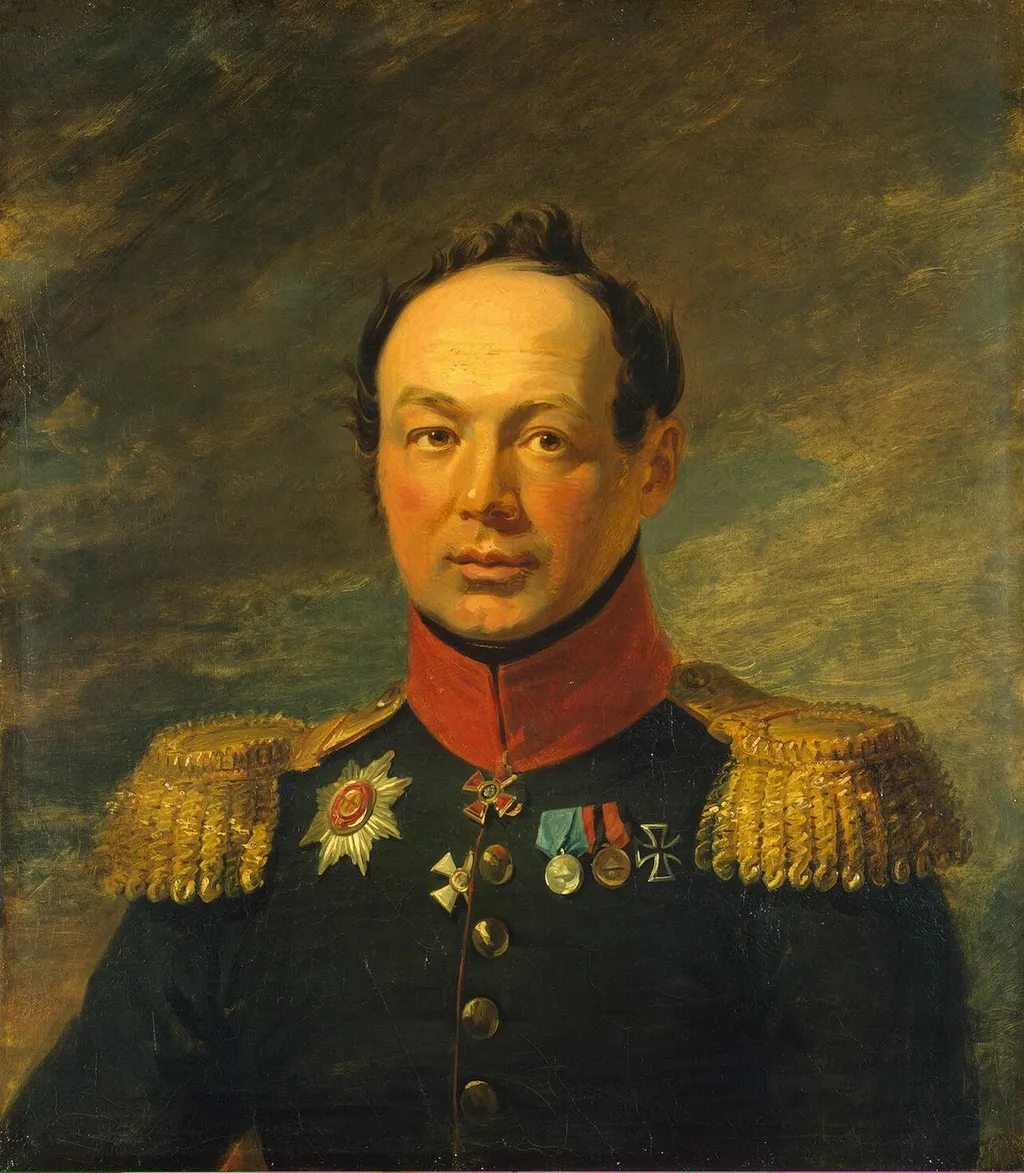
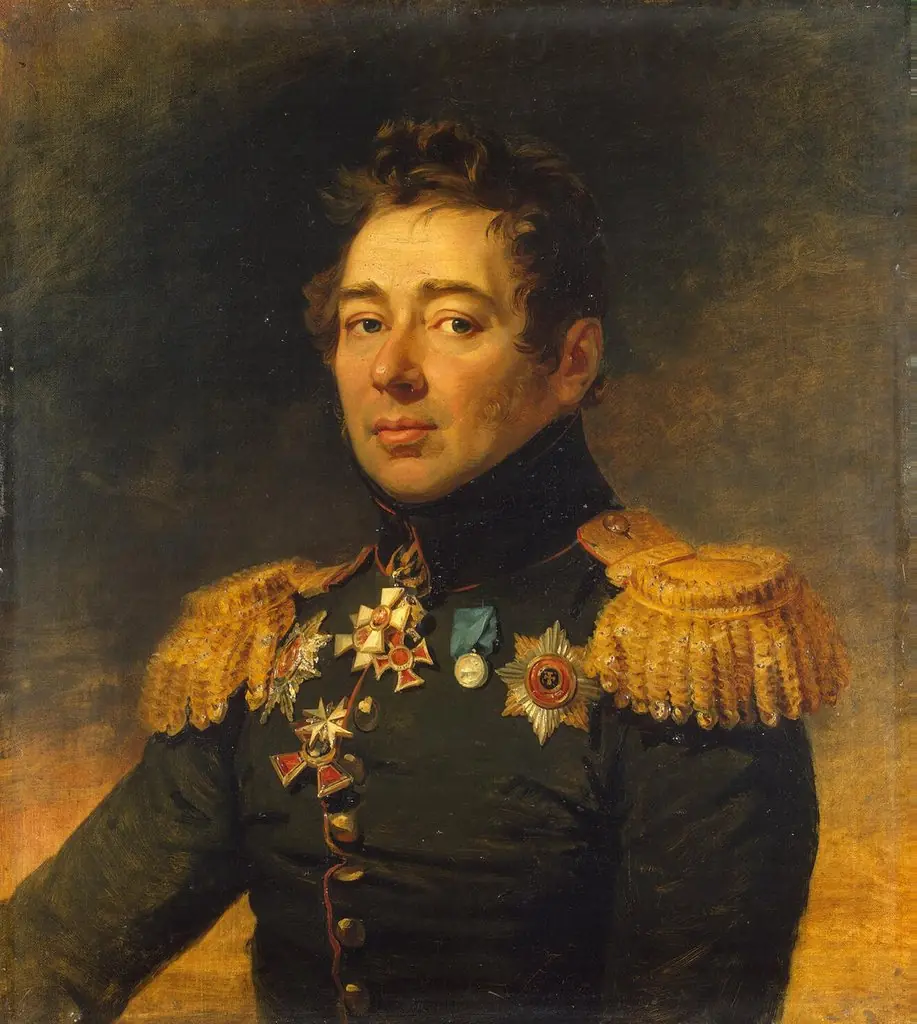
Portrait of Ivan A. Nabokov (1787-1852) is an oil painting by Unknown. It dates from 1822 and is held in the collection of the Hermitage Museum. The oil painting, executed in 1822, depicts Ivan A.
About this work
This portrait shows a man in a dark military uniform with bright red collar and gold epaulettes.
This portrait shows a man in a dark military uniform with bright red collar and gold epaulettes. His chest is covered in medals and ribbons, including a big star-shaped one. The background is a dark, swirly greenish-brown, keeping focus on his serious face.
The man’s uniform suggests he held a high rank, likely a military leader. The painting was made in 1822, showing off his honors at the time.
Check out the State Hermitage Museum to see more portraits like this.
Overview
The oil painting, executed in 1822, depicts Ivan A. Nabokov (1787–1852) dressed in a formal military uniform. He is presented against a dark, swirling background of greenish‑brown tones that isolates his solemn expression. The composition emphasizes his rank through the detailed rendering of medals and insignia.
Subject & Meaning
Nabokov is shown wearing a dark coat trimmed with a vivid red collar and gold‑embroidered epaulettes, indicating a senior officer’s status. The array of medals, including a prominent star‑shaped award, signals his distinguished service and the honors he had accumulated by the time of the portrait.
Technique & Style
The work employs a realistic approach typical of early‑19th‑century portraiture, with careful attention to the texture of fabric and metal. The artist uses a limited palette for the background, allowing the bright reds and golds of the uniform to stand out, while subtle chiaroscuro models the sitter’s face.
History & Provenance
Created in 1822, the portrait was likely commissioned to commemorate Nabokov’s military achievements. It later entered the collection of the State Hermitage Museum, where it is displayed among other contemporary portraits of Russian officials.
Context
The painting reflects the Russian Imperial tradition of honoring high‑ranking officers with elaborate dress and insignia. Such portraits served both as personal commemoration and as visual reinforcement of the hierarchical order within the empire’s armed forces during the early 19th century.
Artist & collection

 Domestic Scene
 Giacomo and Cardinal Marco, investing Andrea, Abbot of San Zeno, with his Benefice
 The Nymph of Fontainebleau
 Portrait of a Woman
 Madonna and Child with Saints in the Enclosed Garden
 Venus and Minerva
 Family Group of Four on Sofa
 Wall painting from Room H of the Villa of P. Fannius Synistor at Boscoreale
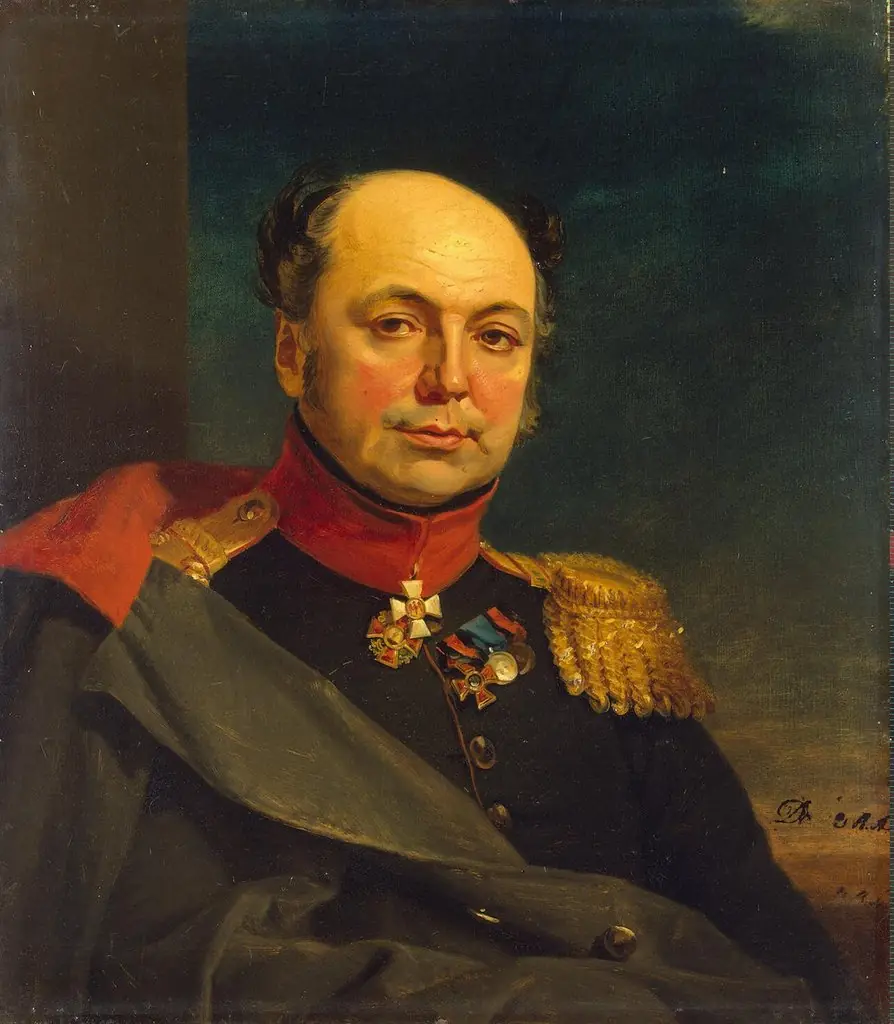 Portrait of Alexey V. Voyeykov (1778-1825)
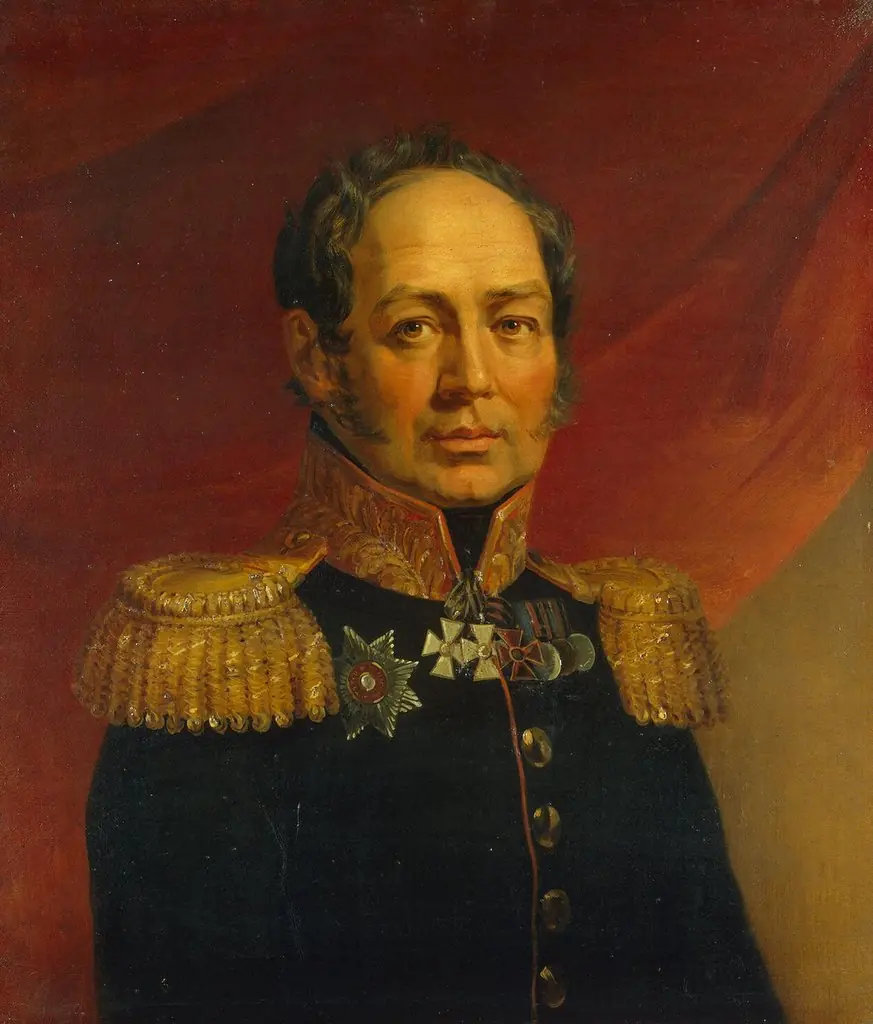 Portrait of Dmitry V. Lyalin (1772-1847/48)
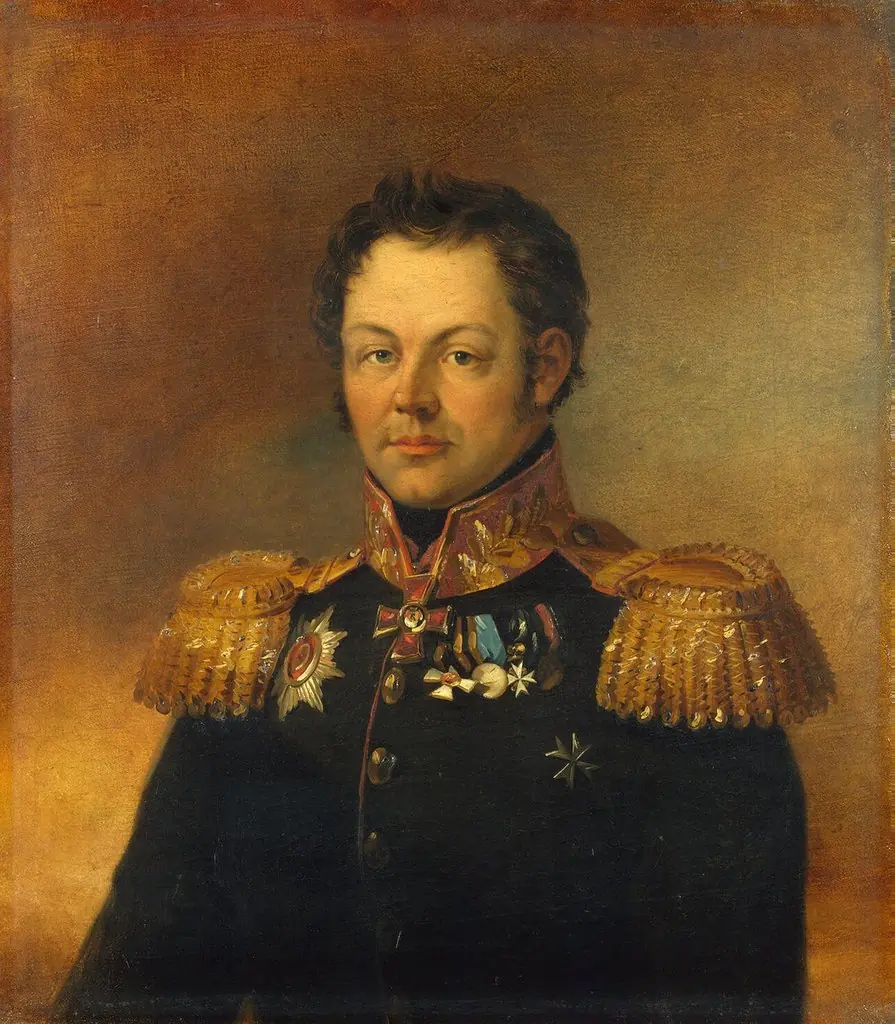 Portrait of Alexander E. Pyker (1776-1834)
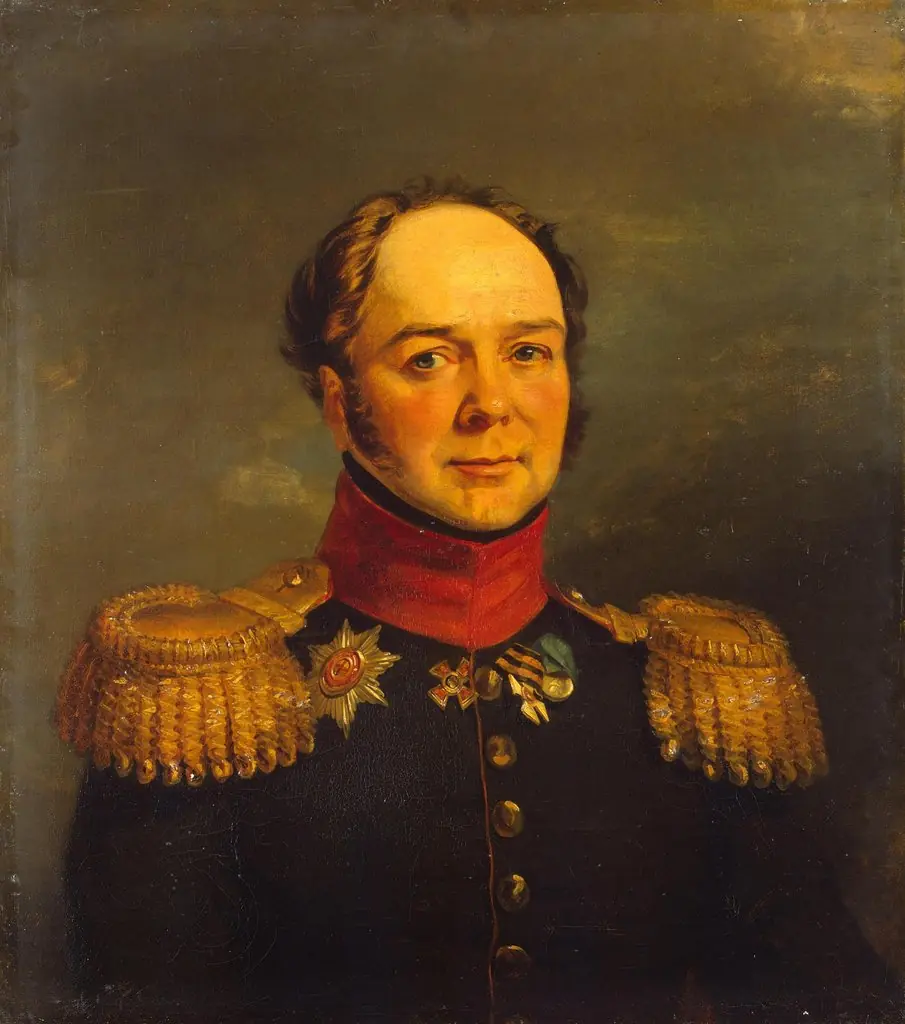 Portrait of Pavel N. Ushakov (1779-1853) (1st)
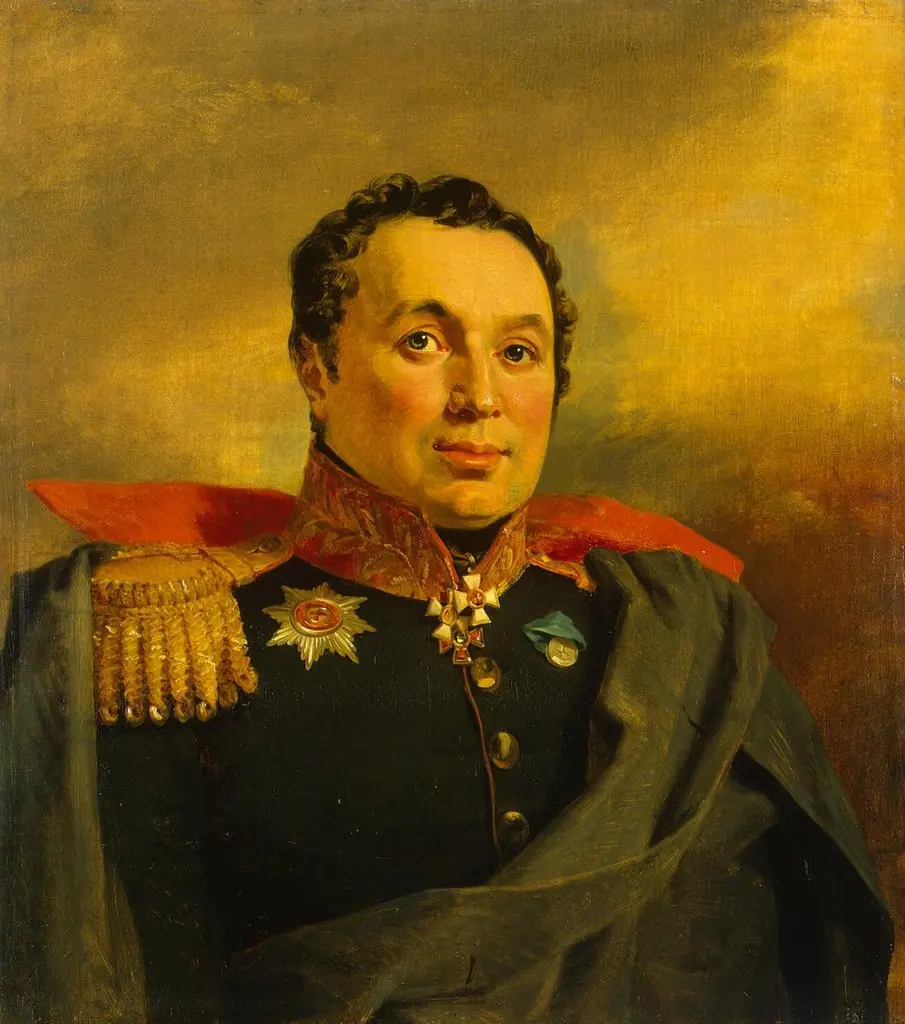 Portrait of Afanasy I. Krasovsky (1781-1843)
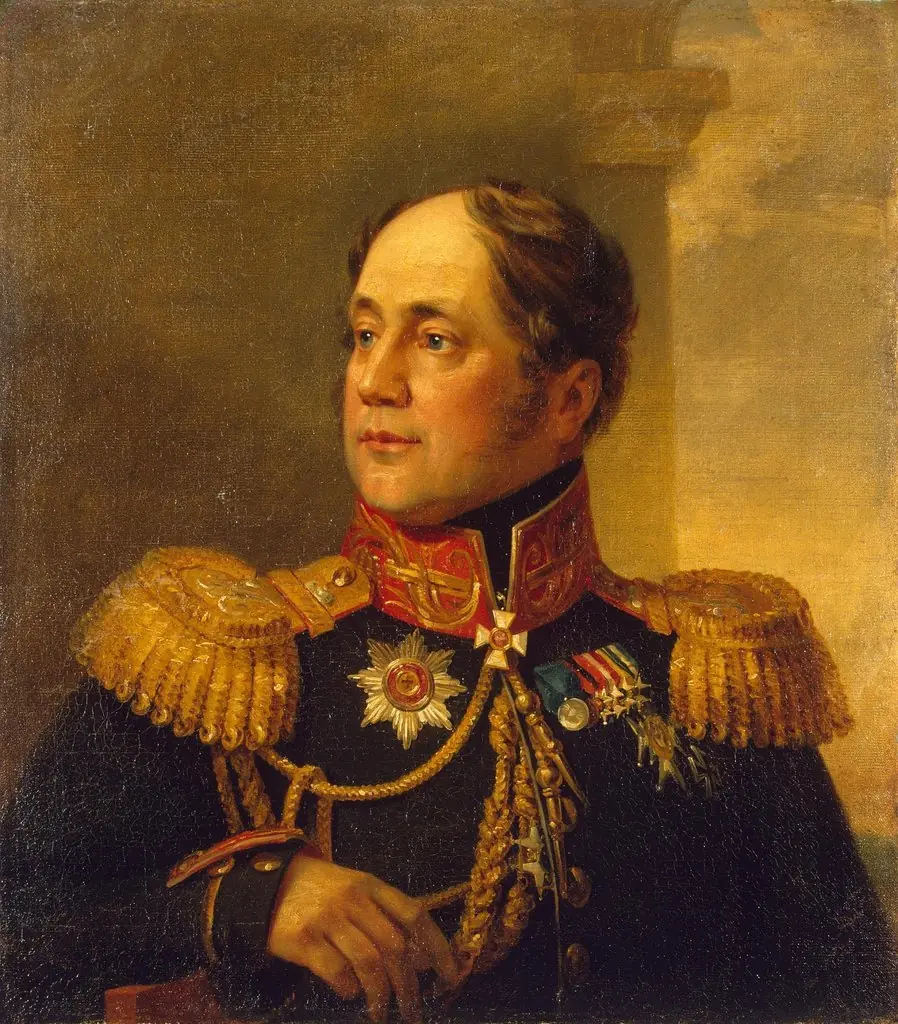 Portrait of Nikolai M. Sipyagin (1785-1828)
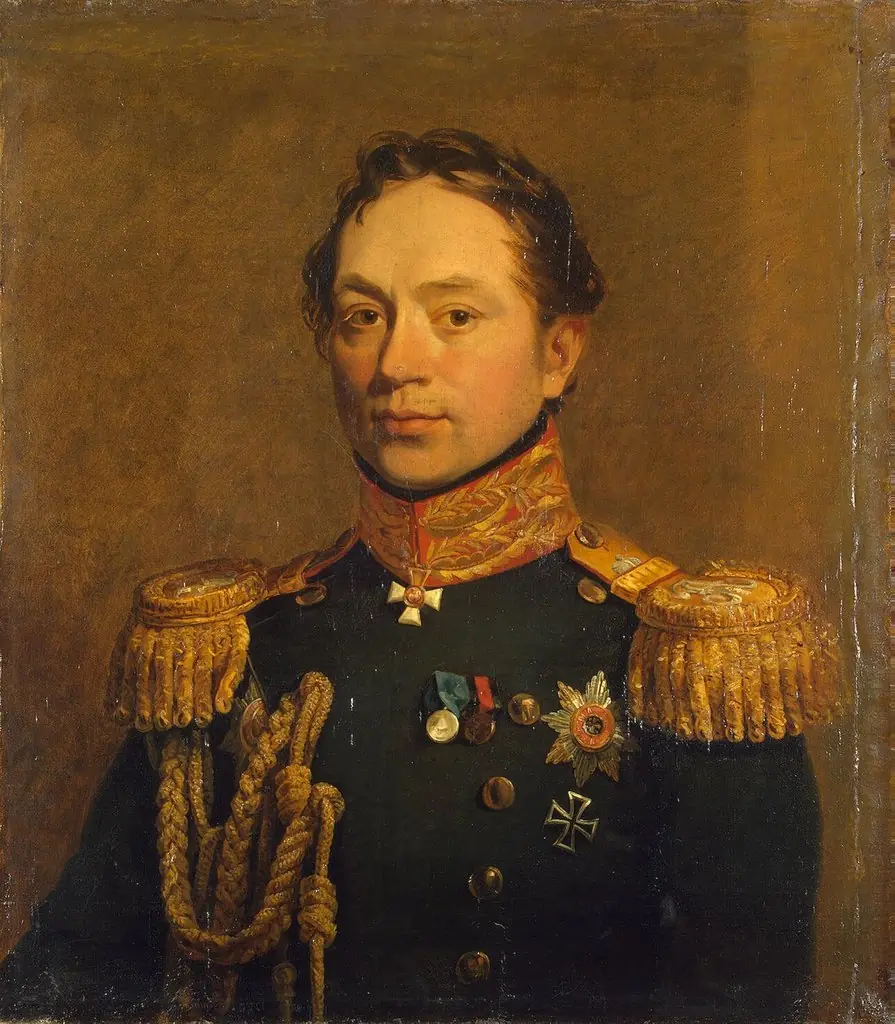 Portrait of Grigory V. Rosen (1782-1841) (1st)
 Portrait of Alexey P. Nikitin (1777-1858)