Artwork
Portrait of Alexey P. Nikitin (1777-1858)
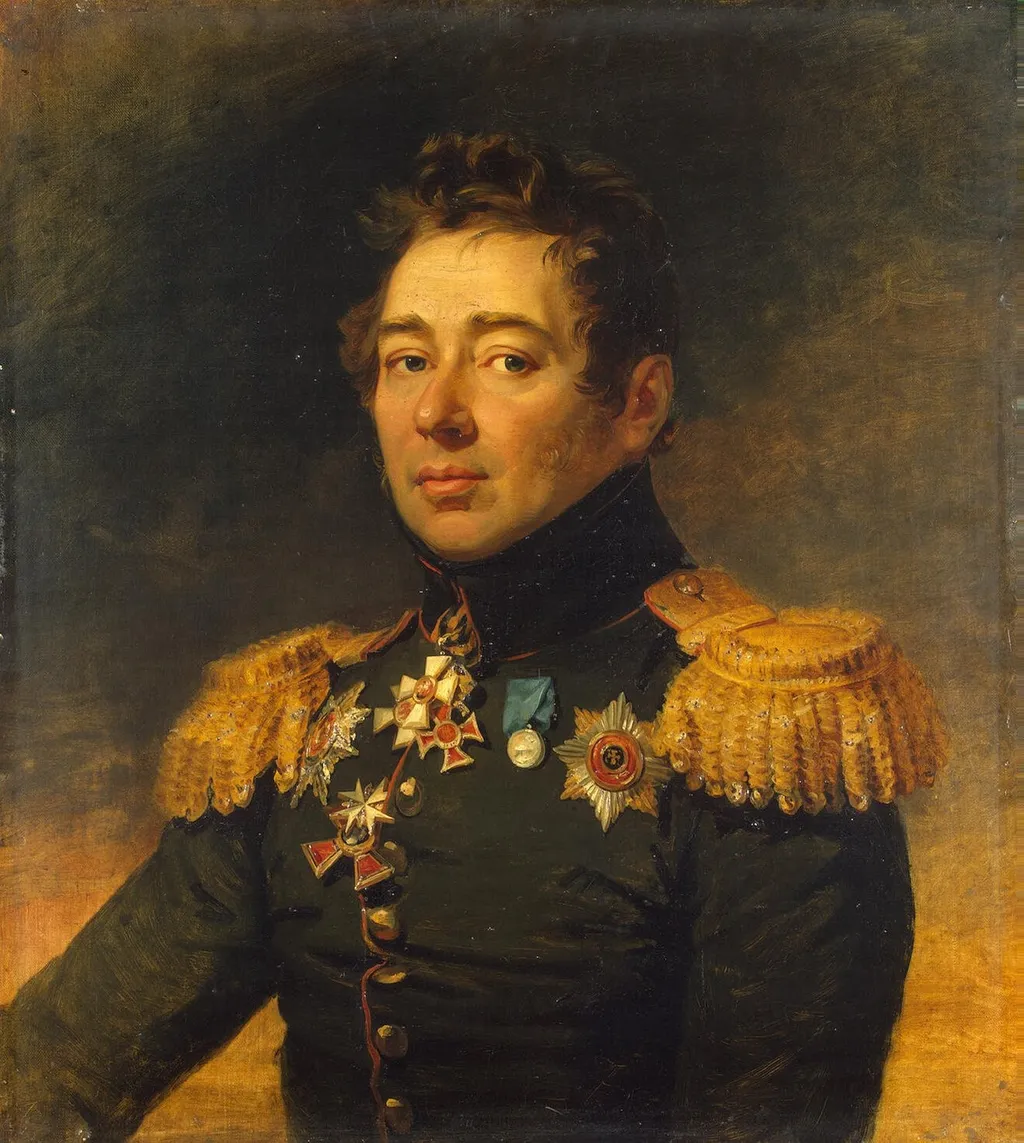
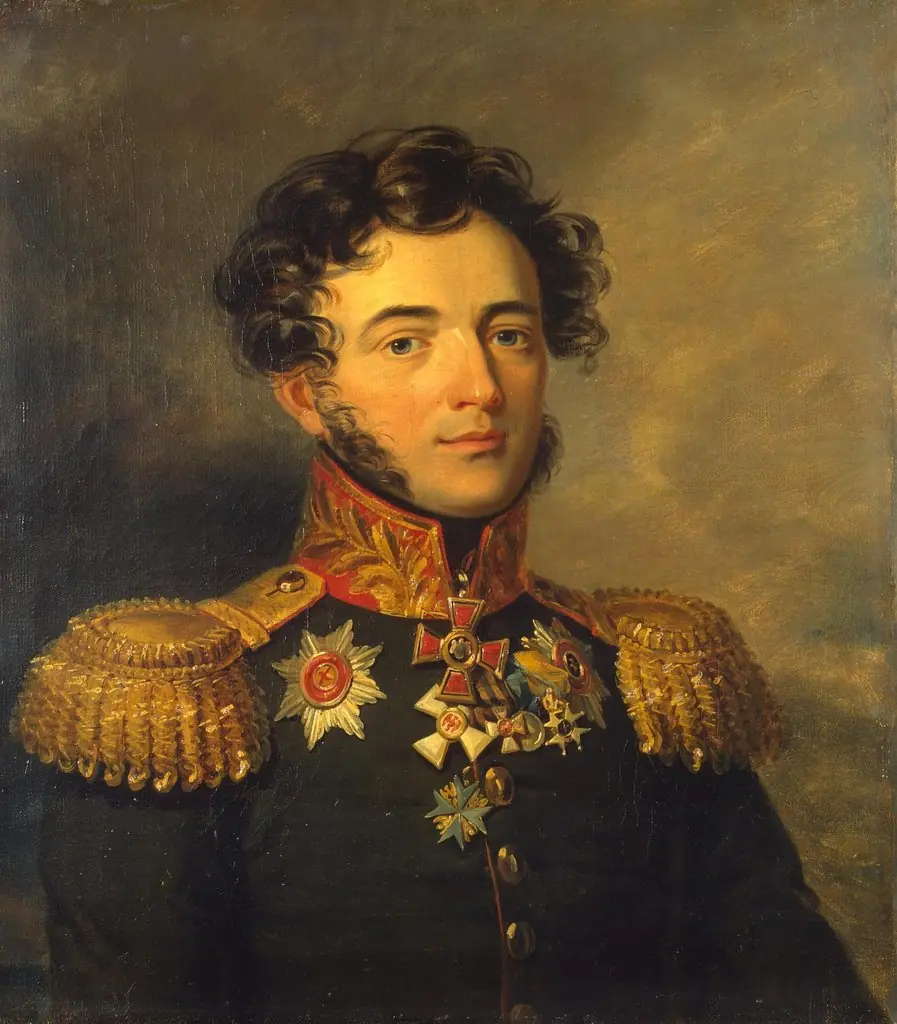
Portrait of Alexey P. Nikitin (1777-1858) is an oil painting by George Dawe. It dates from 1822 and is held in the collection of the Hermitage Museum.
About this work
Overview
Dawe, who relocated to Saint Petersburg in 1819, was commissioned to document military leaders for the Winter Palace’s Military Gallery.
Painted in 1822 by the English artist George Dawe, this oil portrait depicts Alexey P. Nikitin, a Russian general who served during the Napoleonic Wars. Dawe, who relocated to Saint Petersburg in 1819, was commissioned to document military leaders for the Winter Palace’s Military Gallery. The work is part of that broader project and remains in the State Hermitage Museum’s collection, where it contributes to a visual record of Russia’s wartime elite.
Subject & Meaning
Alexey Nikitin is portrayed as a disciplined military officer, his identity conveyed through uniform and insignia rather than gesture or setting. The gold epaulets and multiple medals signify his rank and service, while his direct gaze and composed expression convey authority and solemnity. The portrait functions not as a personal likeness alone but as a public emblem of duty, aligning with the state’s effort to honor its officers through formal imagery.
Technique & Style
Dawe employed a restrained realism, emphasizing texture and detail in the uniform’s fabric, metal embellishments, and hair. Chiaroscuro is used subtly to model the face and shoulders, drawing focus to the subject’s features against a deep, neutral background. The lighting enhances the three-dimensionality of the figure without theatricality, reflecting the academic tradition of portraiture favored in early 19th-century Russian court circles.
History & Provenance
Commissioned as part of the Military Gallery initiative, the portrait was created shortly after Dawe’s arrival in Russia and entered the Hermitage’s holdings early in its existence. It remained within imperial collections throughout the 19th century, surviving political upheavals with little alteration. Its continued presence in the museum underscores its role as a documented artifact of state-sponsored historical commemoration.
Context
The portrait emerged during a period when the Russian Empire sought to consolidate national identity through visual narratives of military valor. Dawe’s project, supported by Tsar Alexander I, aimed to immortalize officers who had fought Napoleon. Nikitin’s inclusion reflects his recognized service, though he was not among the most celebrated commanders—his depiction nonetheless affirms the broader cultural emphasis on collective military honor.
Legacy
As one of over 300 portraits in the Military Gallery, Nikitin’s image contributes to a systematic archive of Russian leadership during a pivotal era. While not widely exhibited outside the Hermitage, the work remains a representative example of state portraiture in the early Romantic period. Its preservation offers insight into how military merit was visually codified and institutionalized in imperial Russia.
Artist & collection
Artist
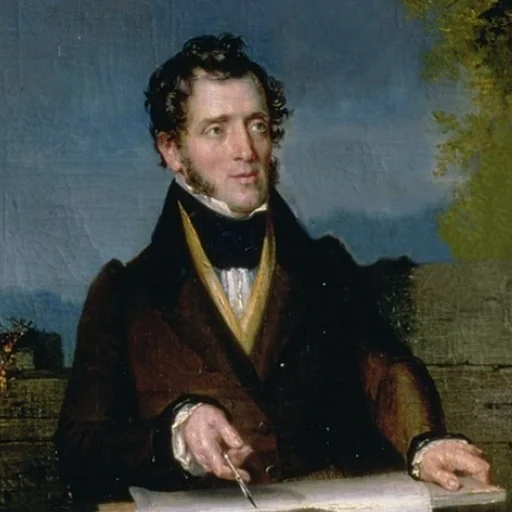
George Dawe (6 February 1781 – 15 October 1829) was an English portraitist who painted 329 portraits of Russian generals active during Napoleon's invasion of Russia for the Military Gallery of the Winter Palace.

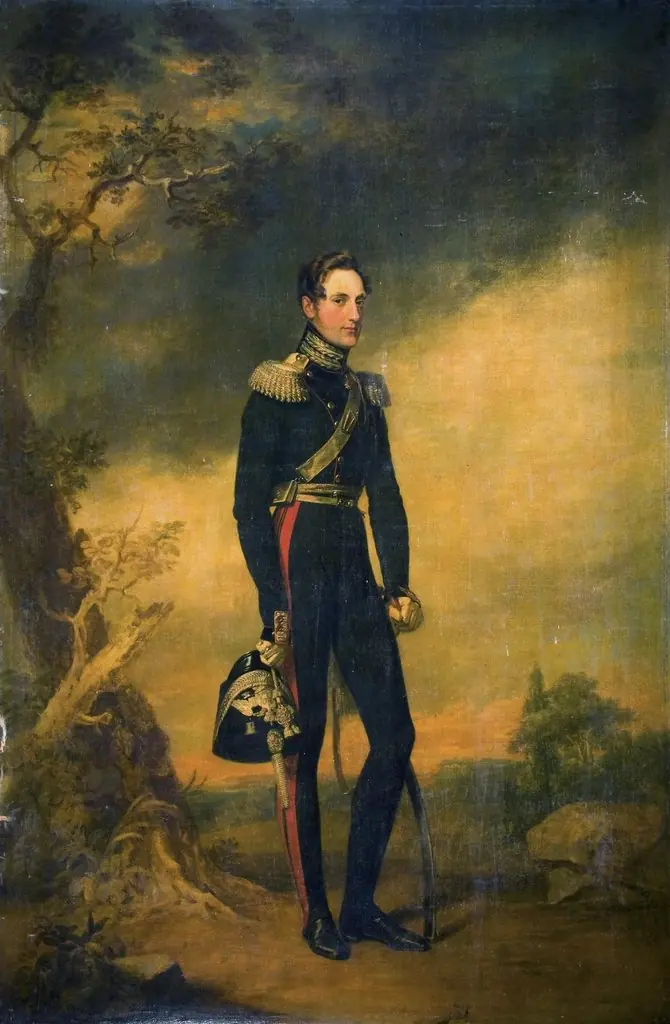 Portrait of Grand Duke Nikolai Pavlovich
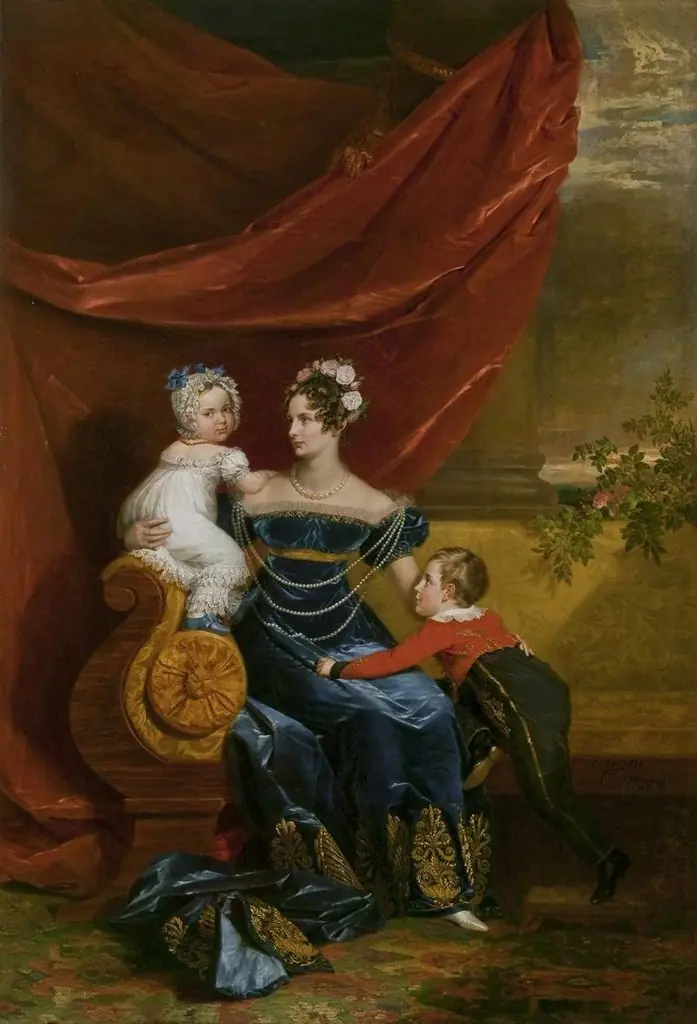 Portrait of Grand Duchess Alexandra Fiodorovna with Children
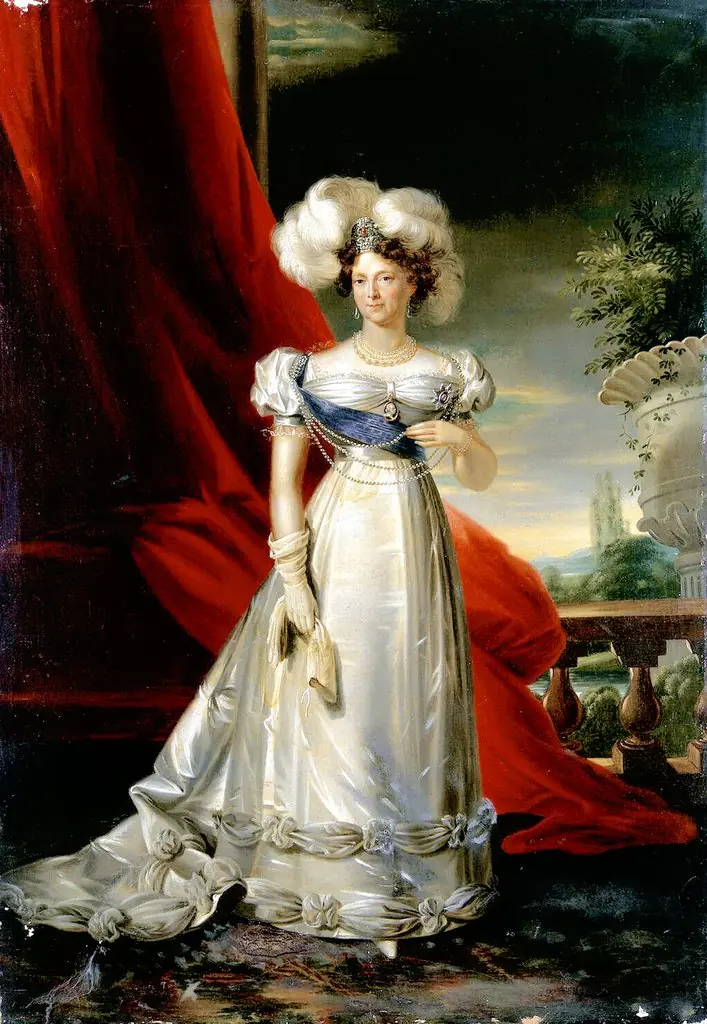 Portrait of the Empress Dowager Maria Feodorovna
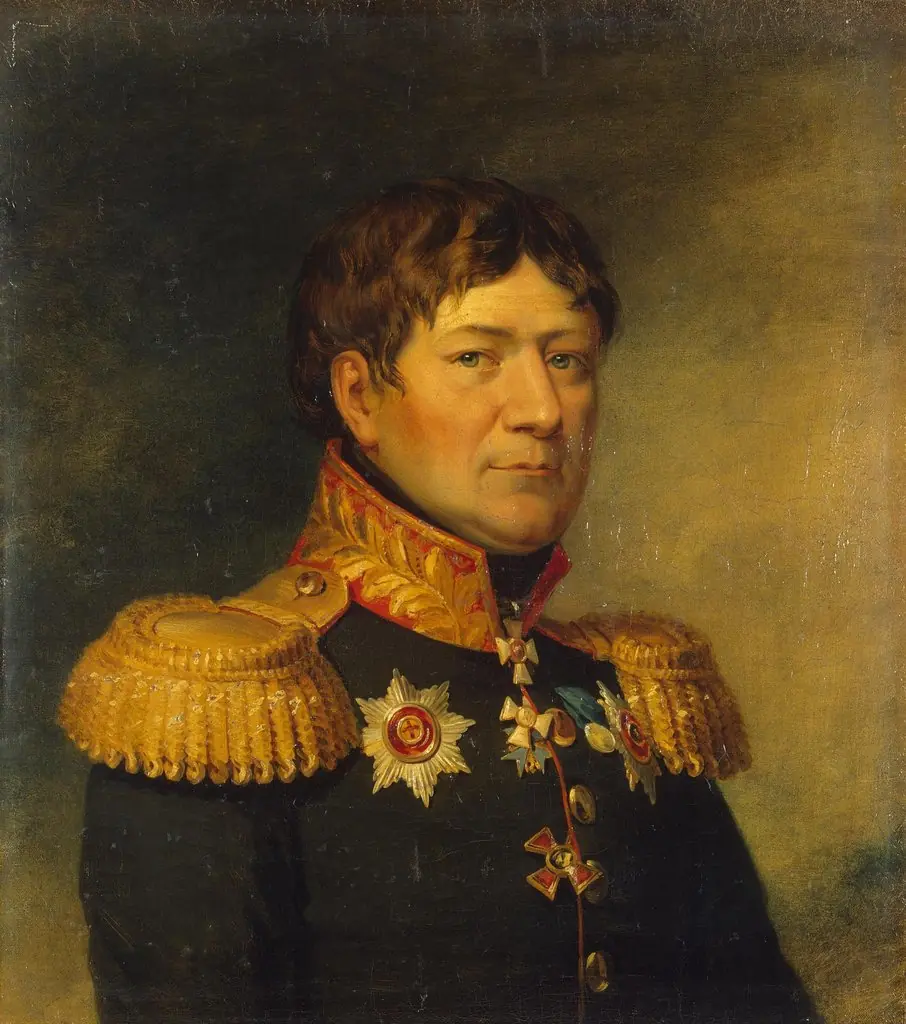 Portrait of Yegor M. Pillar (1767-1830)
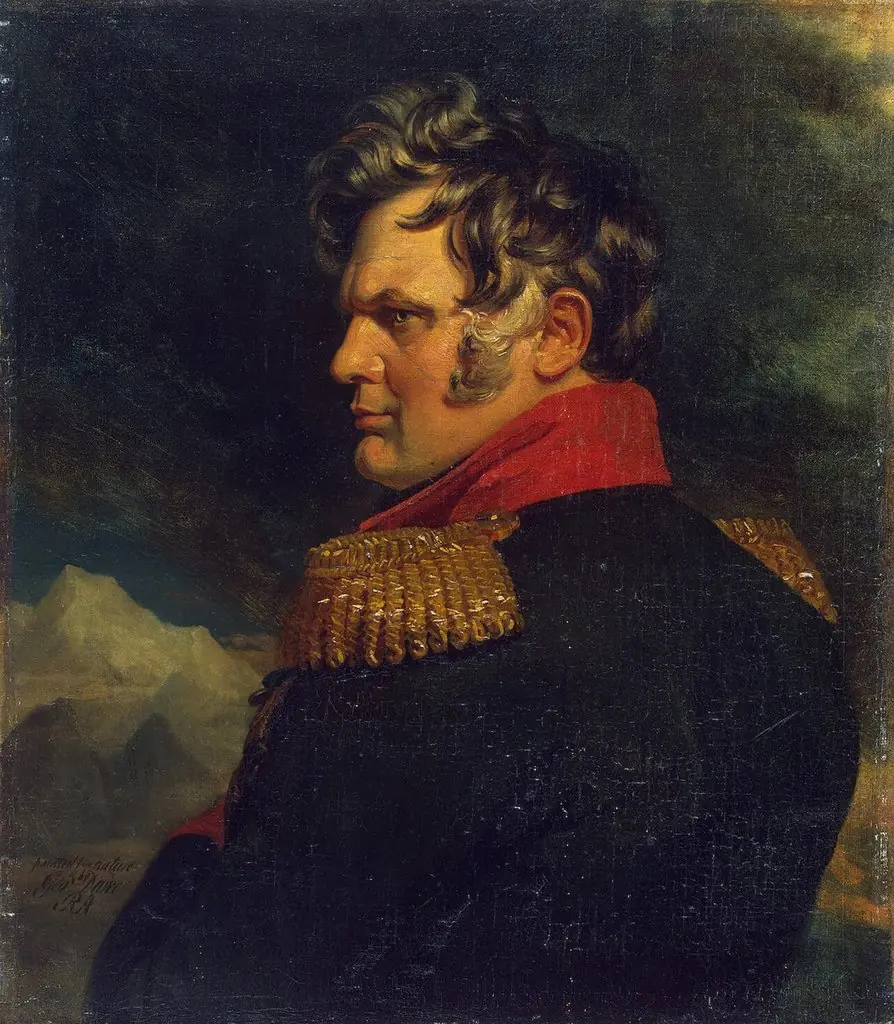 Portrait of Alexei P. Yermolov (1772/77-1861)
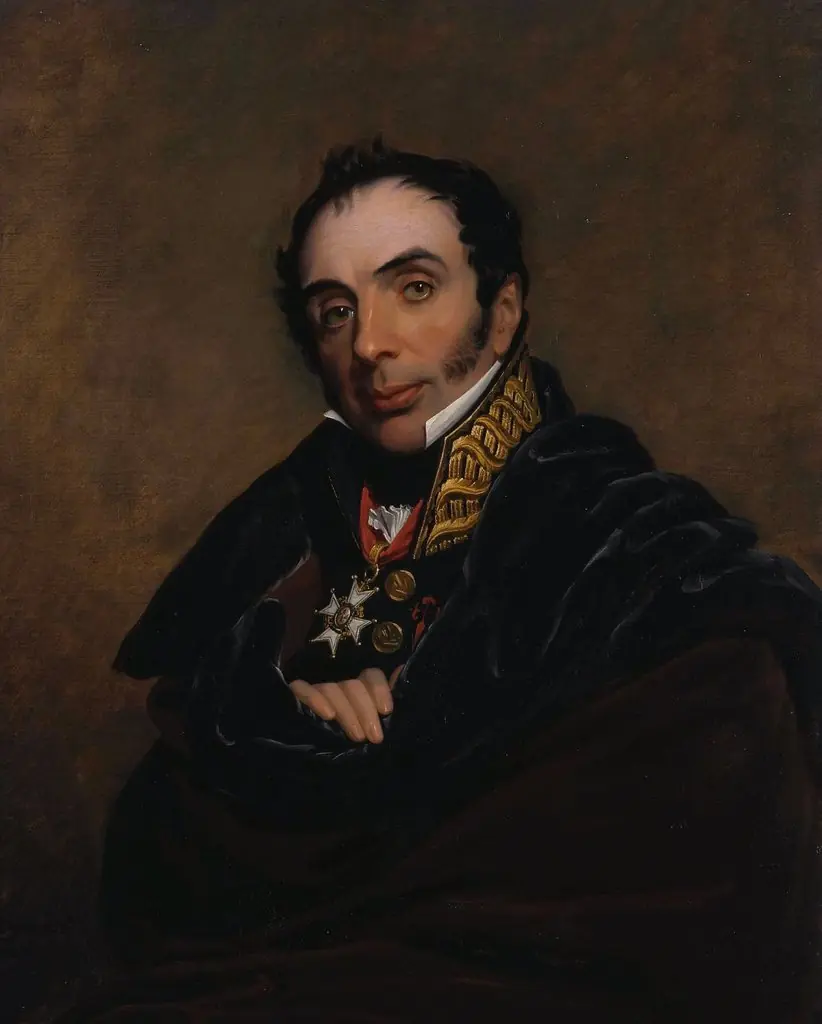 Portrait of Miguel Ricardo de Alava
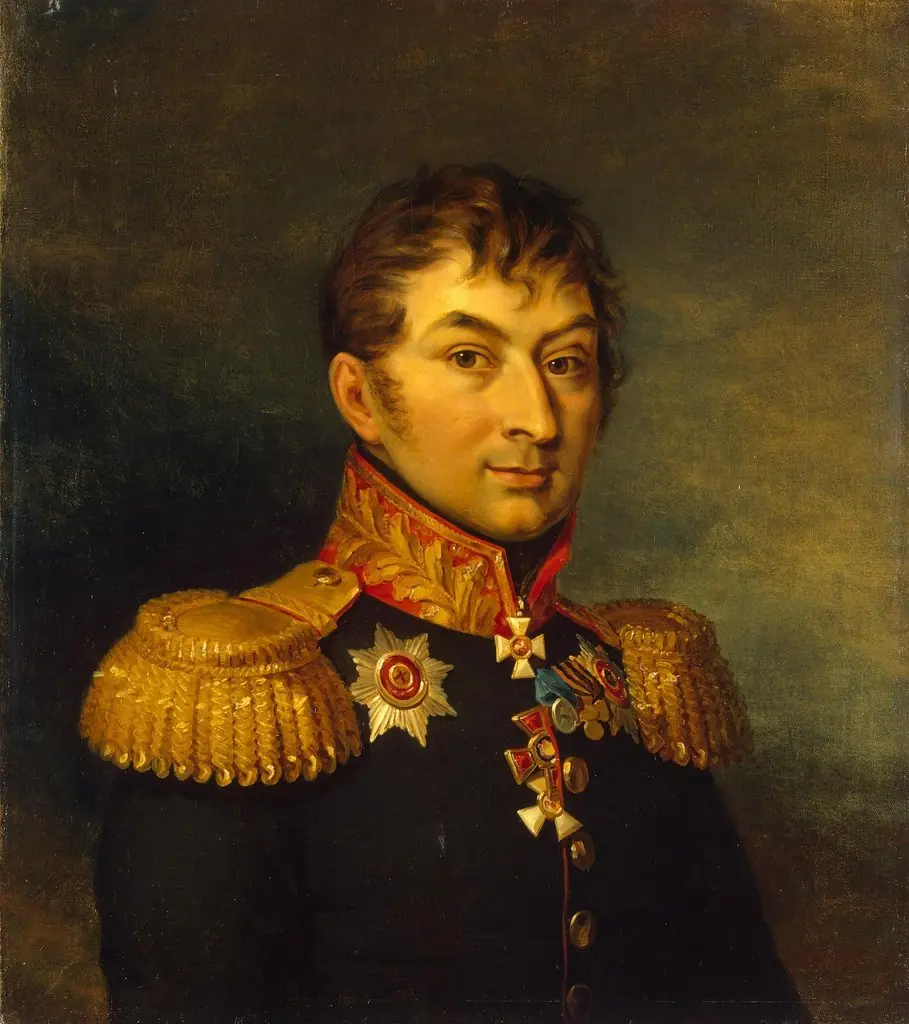 Portrait of Ivan D. Panchulidzev (1759-1815) (1st)
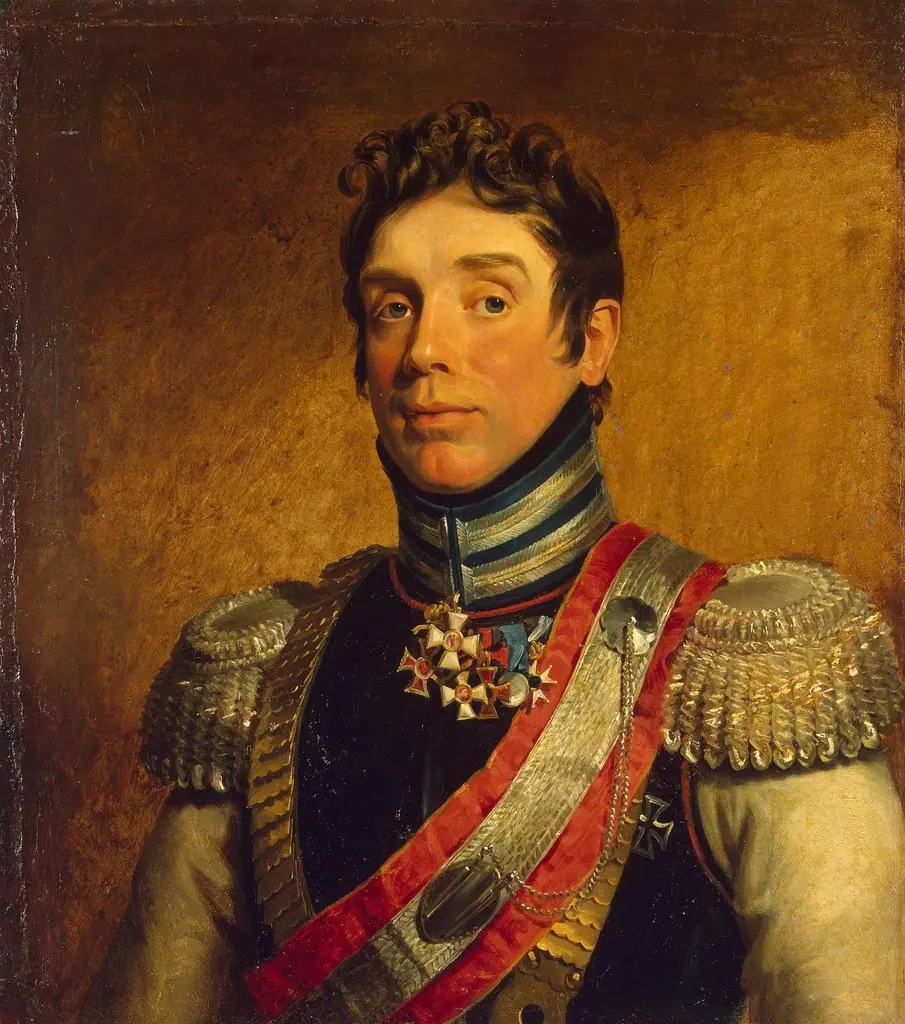 Portrait of Karl V. Budberg (1774-1829)
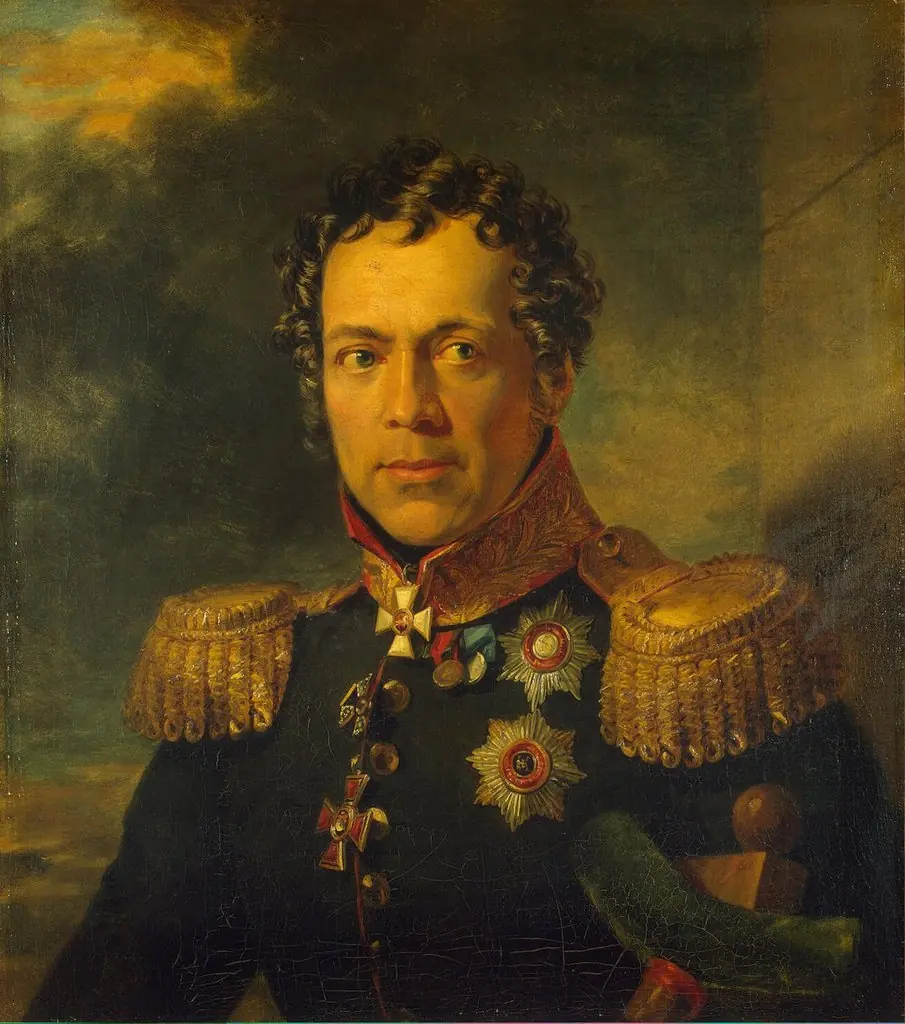 Portrait of Alexey N. Bakhmetev (1774-1841) (1st)
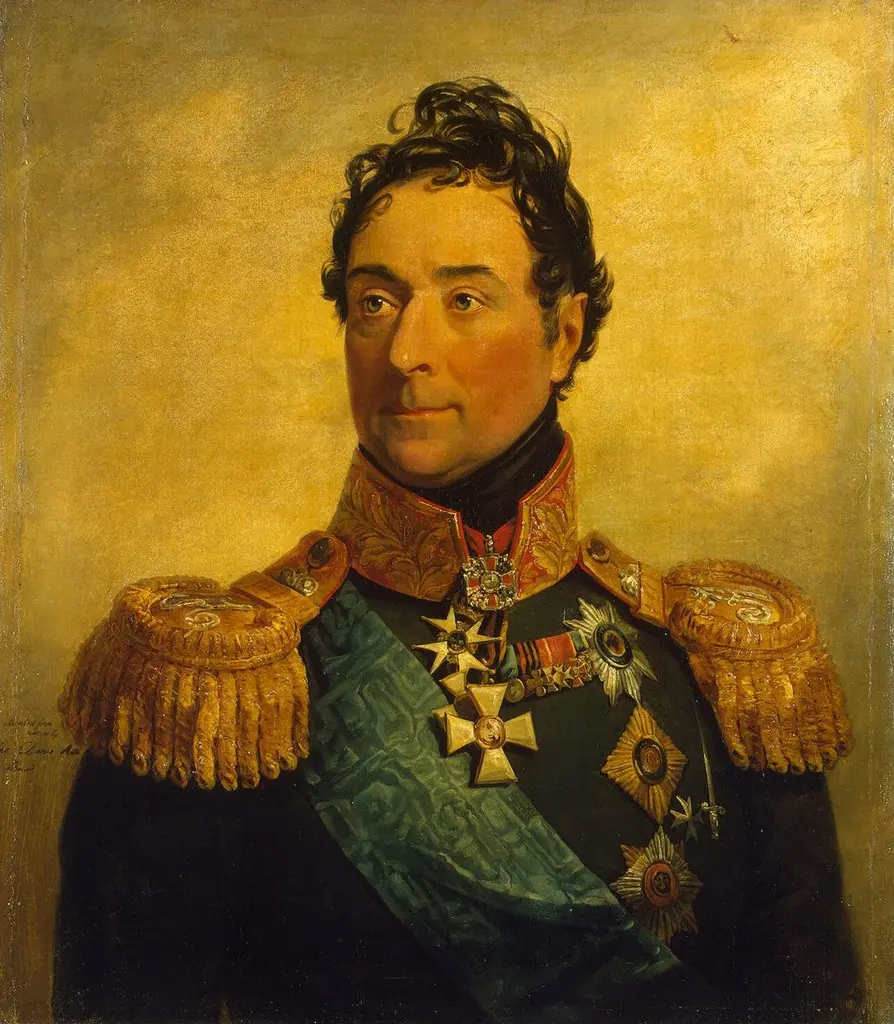 Portrait of Alexander F. Langeron (1763-1831)
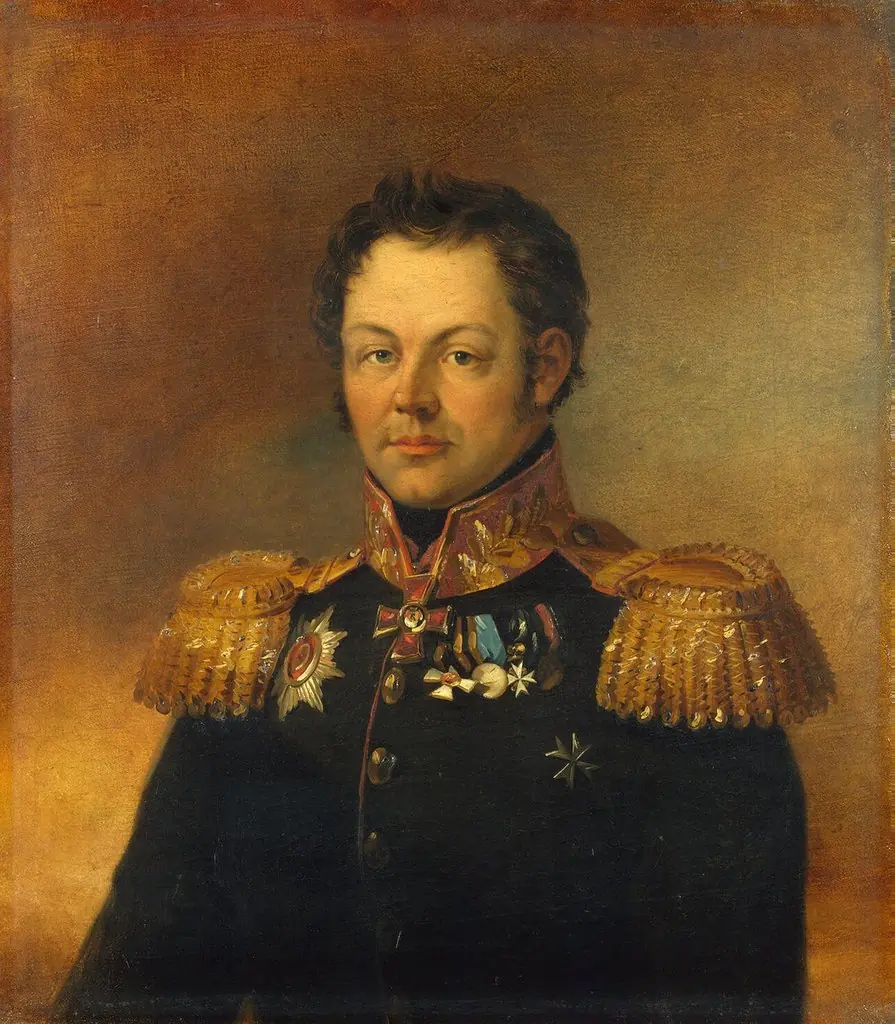 Portrait of Alexander E. Pyker (1776-1834)
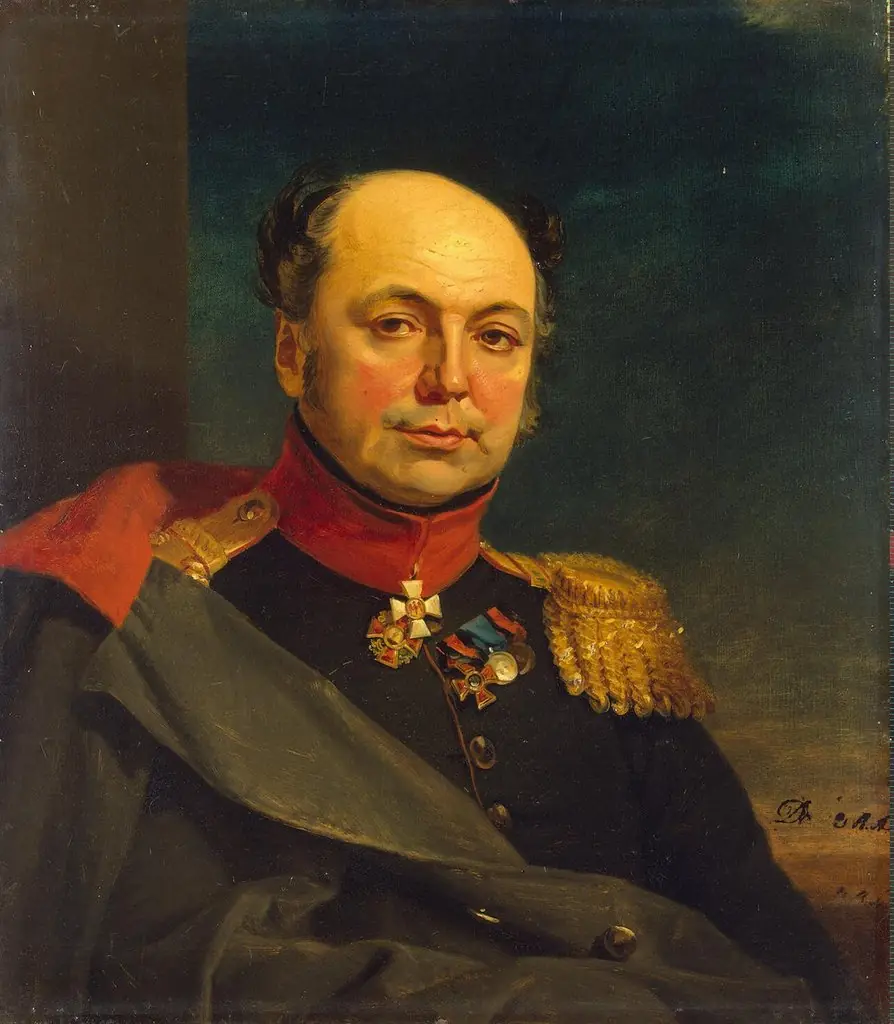 Portrait of Alexey V. Voyeykov (1778-1825)
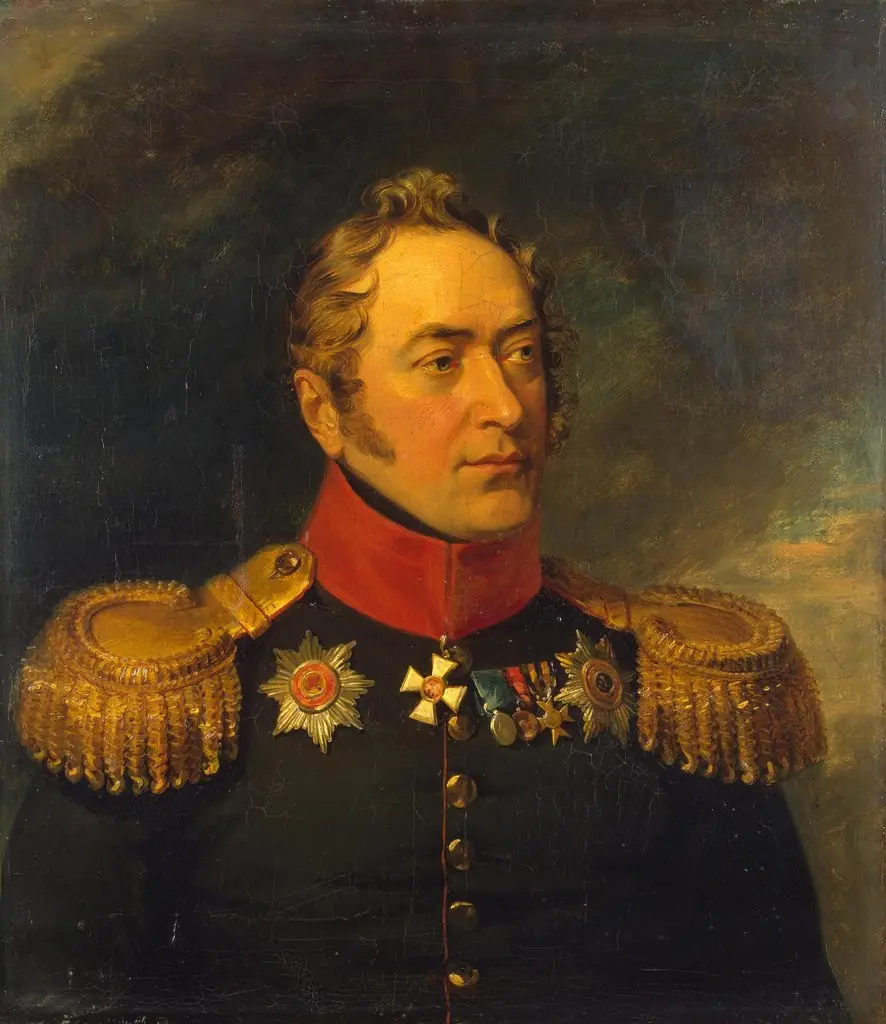 Portrait of Nikolai N. Khovansky (1777-1837)
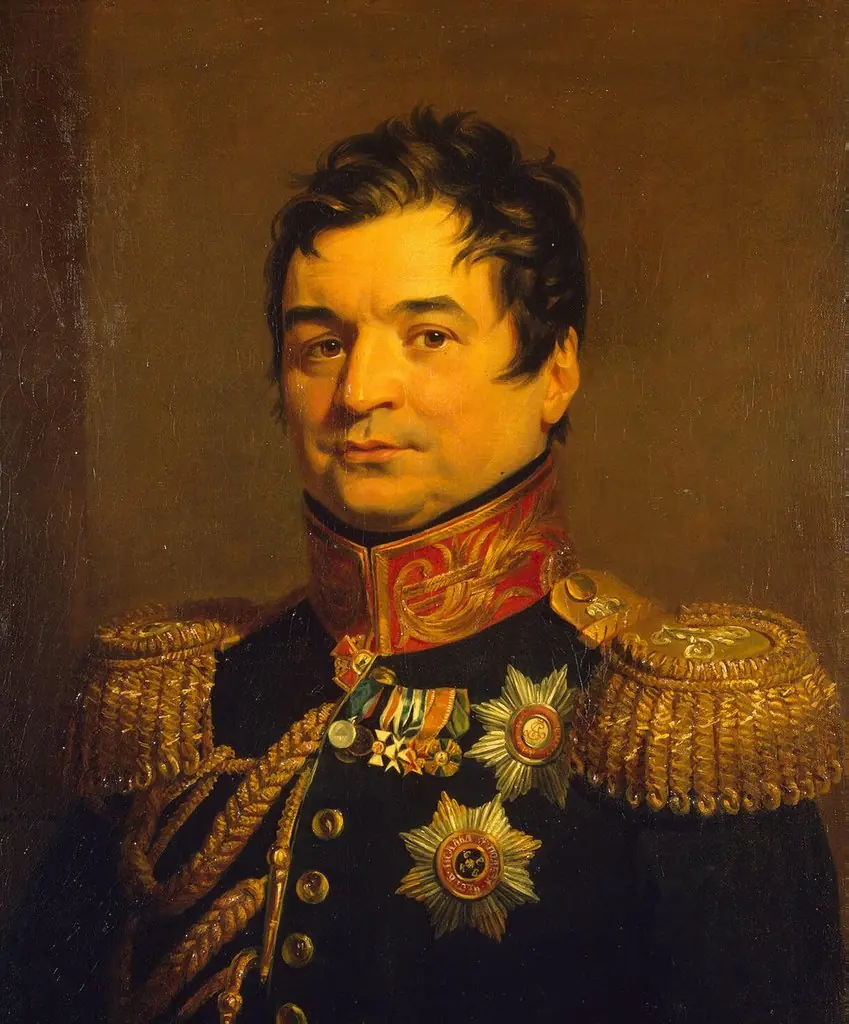 Portrait of Alexander D. Balashov (1770-1837)
 Portrait of Sergey F. Zheltukhin (1776-1833)