Artwork
Saint Jerome in His Study
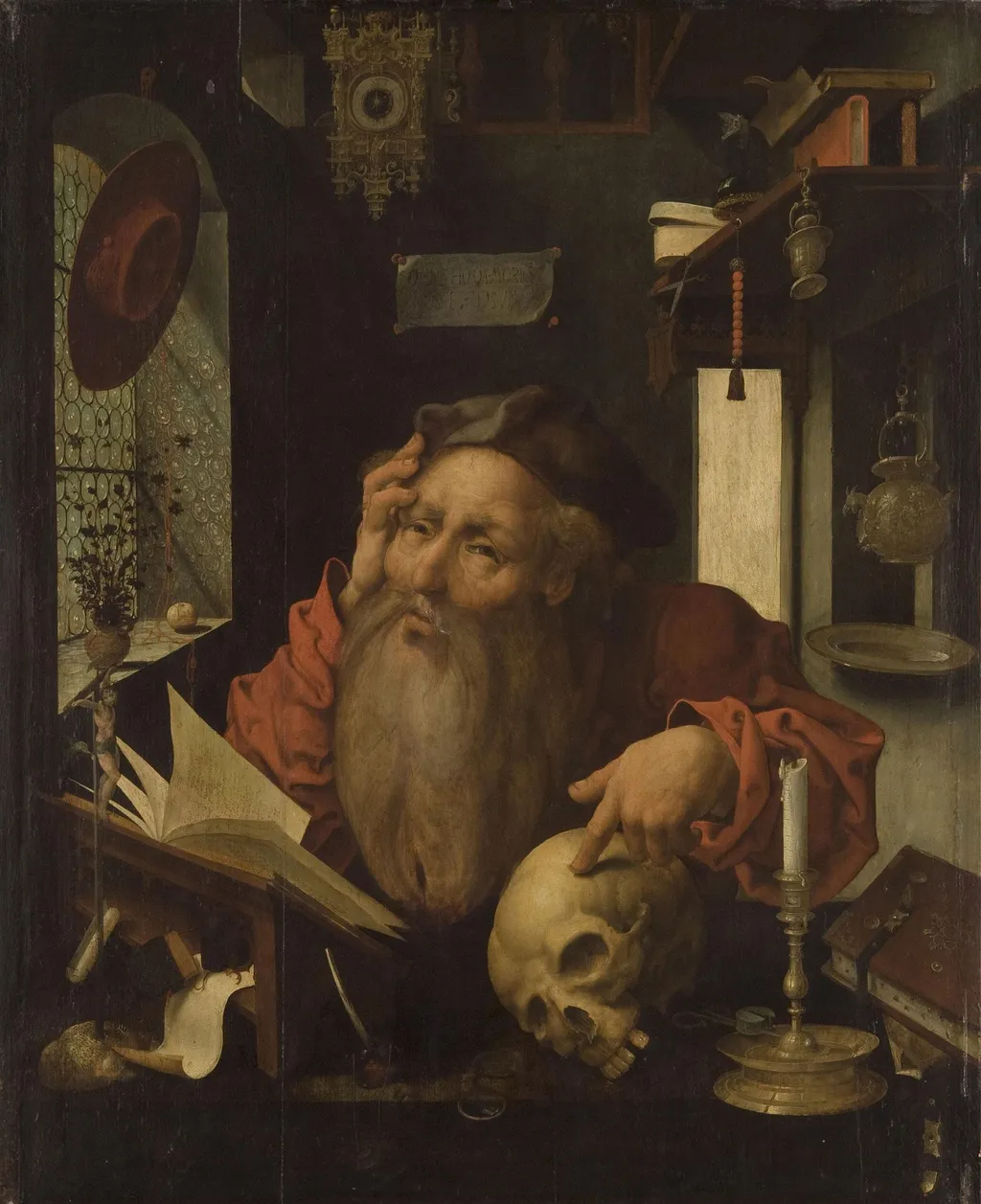
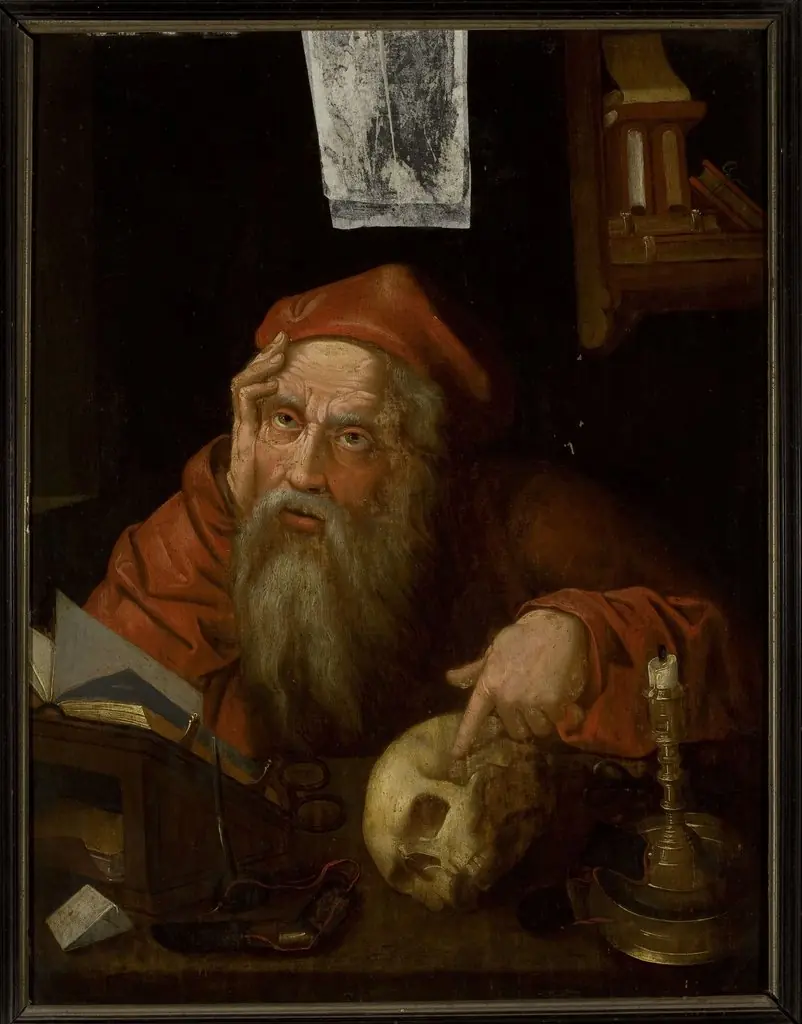
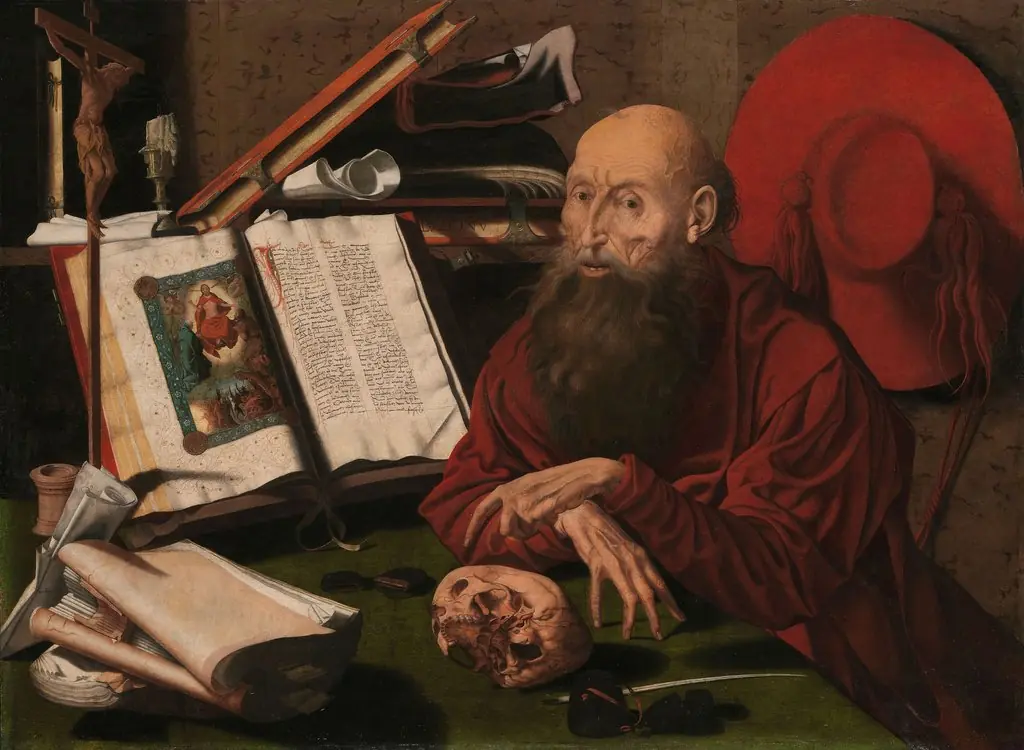
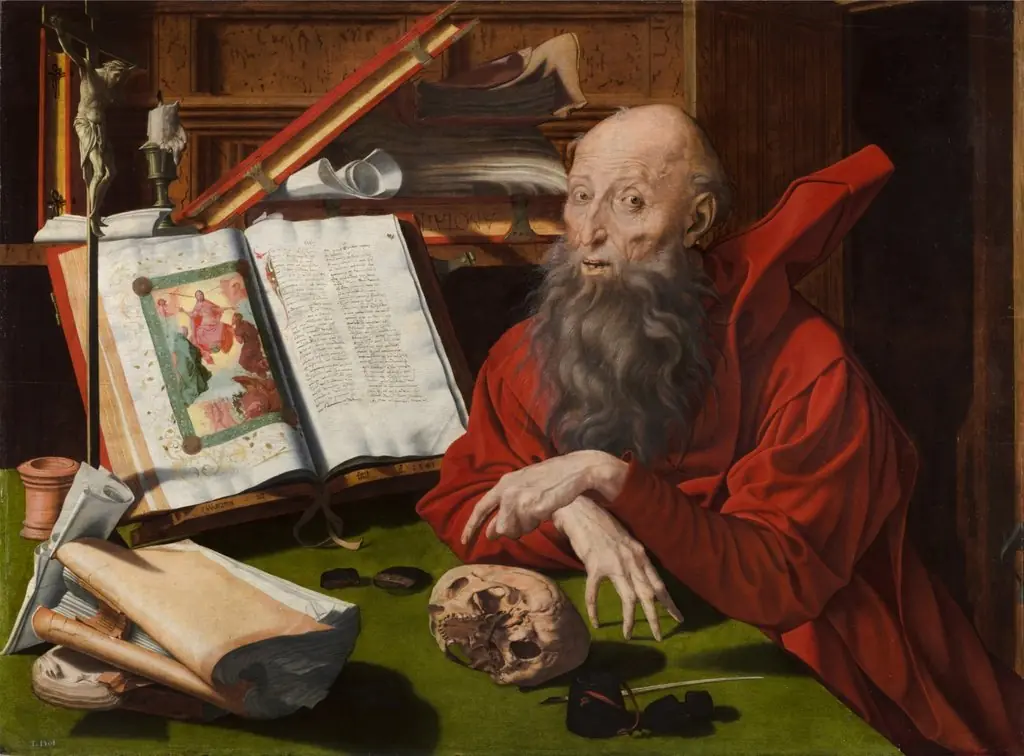
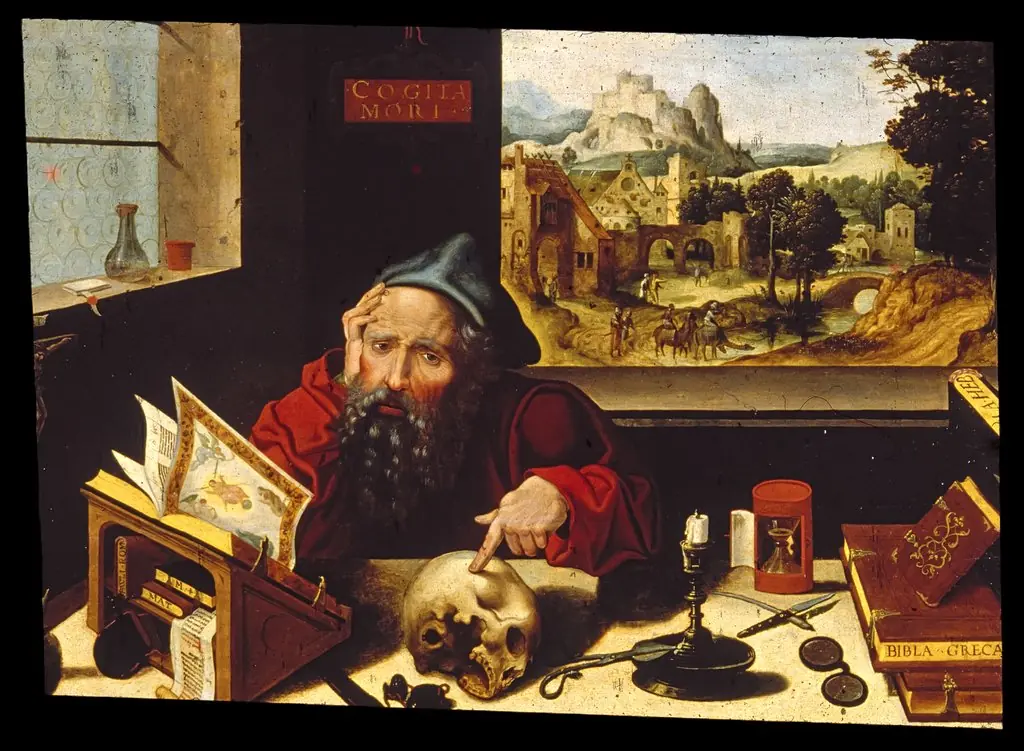
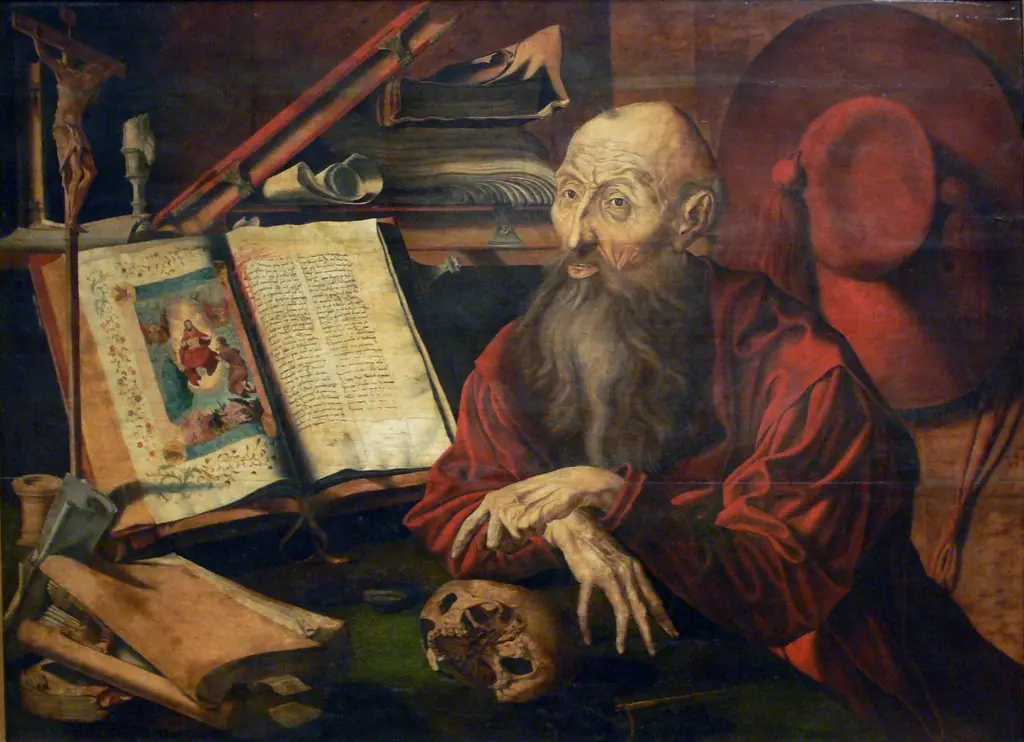
Saint Jerome in His Study is an oil painting by the Early Baroque Italian artist Unknown. It dates from 1560 and is held in the collection of the Philadelphia Museum of Art. This oil painting portrays Saint Jerome, a Church Father and biblical translator, in a quiet, dimly lit study.
About this work
Overview
The scene is illuminated by a narrow beam of light entering from the left, enhancing the spatial depth through careful chiaroscuro.
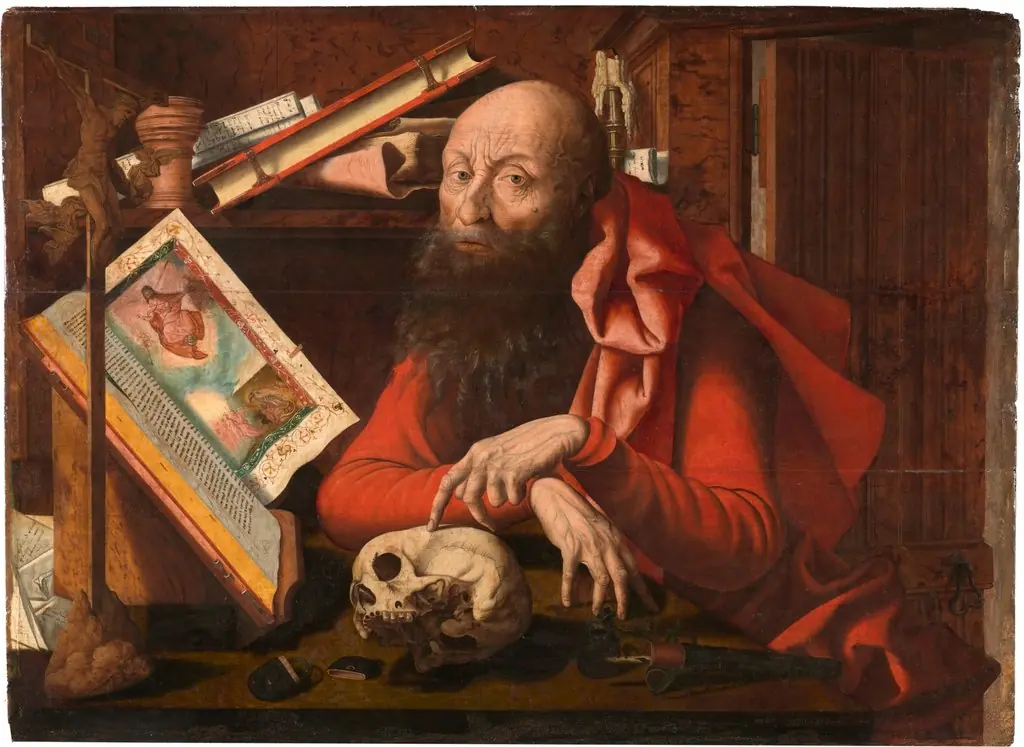
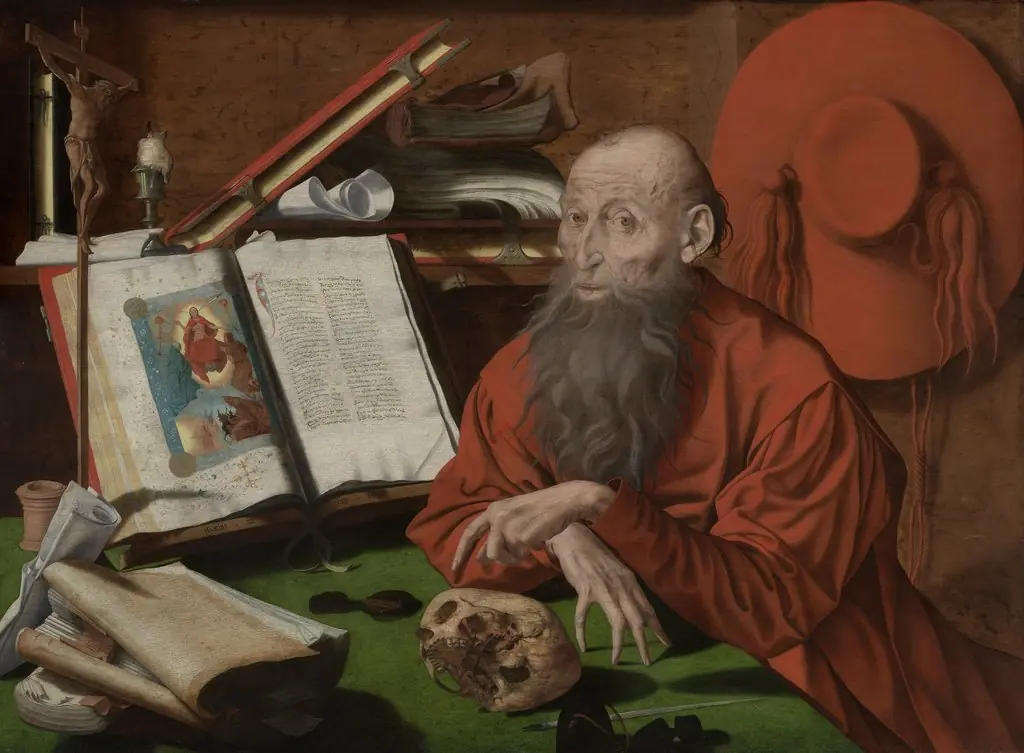
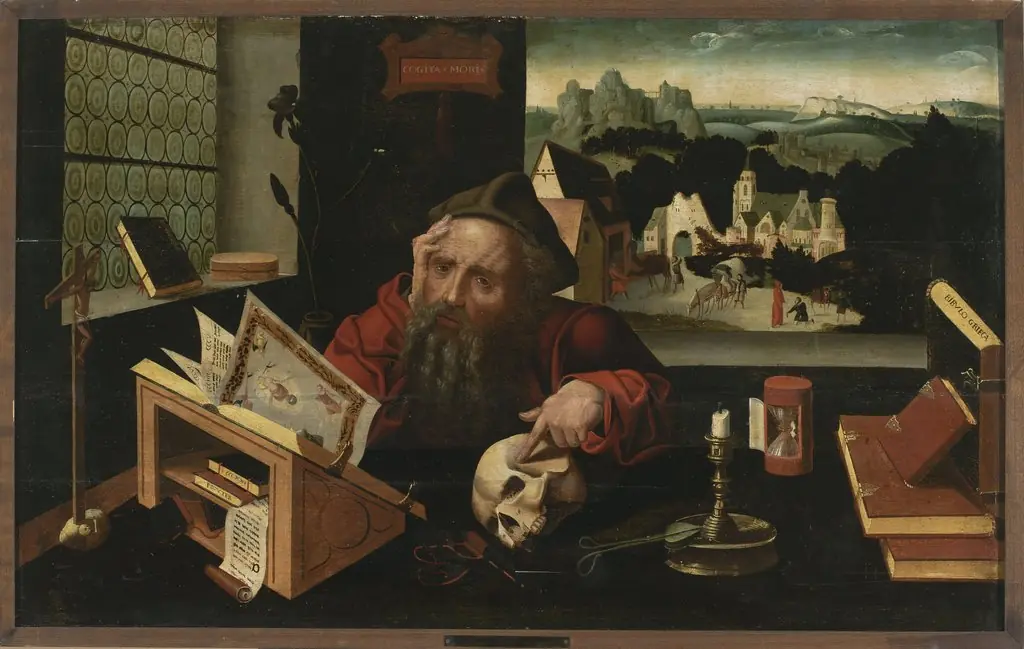
This oil painting portrays Saint Jerome, a Church Father and biblical translator, in a quiet, dimly lit study. He is seated at a cluttered desk, dressed in a red robe and brown hat, with a long white beard. His posture—hand resting on a skull, the other touching his forehead—suggests contemplation. The scene is illuminated by a narrow beam of light entering from the left, enhancing the spatial depth through careful chiaroscuro.
Subject & Meaning
Saint Jerome is depicted not as a preacher but as a scholar in solitude, emphasizing his role as the translator of the Bible into Latin. The skull symbolizes mortality and the transience of earthly pursuits, while the books and statue reflect his intellectual and spiritual labors. The quiet intensity of his gesture conveys inner reflection, aligning with his reputation for ascetic devotion and scholarly rigor.
Technique & Style
The artist employs chiaroscuro to model form and guide attention toward the saint’s face and hands. Light falls selectively, illuminating the skull, books, and candle while leaving corners in deep shadow. Brushwork is precise yet unobtrusive, rendering textures of fabric, parchment, and stone with quiet realism. The composition is tightly contained, reinforcing the intimacy of the moment and the solitude of study.
History & Provenance
The painting’s origins trace to the late 15th or early 16th century, likely from a Northern European workshop influenced by Early Netherlandish traditions. It was probably commissioned for private devotion, reflecting the period’s growing interest in personal piety and scholarly saints. Its early ownership remains undocumented, but its preservation suggests it was valued within ecclesiastical or learned circles.
Context
During the late Middle Ages and Renaissance, depictions of Saint Jerome in his study became popular among humanist patrons who admired his scholarly achievements. Such images merged religious devotion with intellectual ideals, mirroring the era’s reverence for textual study and monastic discipline. The inclusion of objects like the skull and statue reflects broader cultural themes of memento mori and the sanctity of learning.
Legacy
This work contributes to a sustained tradition of portraying saints as scholars, influencing later depictions in both religious and secular contexts. Its restrained composition and psychological depth reflect a shift toward interiorized spirituality in Northern art. Though not widely exhibited, it remains a quiet example of how devotional imagery could embody intellectual and moral contemplation without grandeur.
Artist & collection

 Domestic Scene
 Giacomo and Cardinal Marco, investing Andrea, Abbot of San Zeno, with his Benefice
 The Nymph of Fontainebleau
 Portrait of a Woman
 Madonna and Child with Saints in the Enclosed Garden
 Venus and Minerva
 Family Group of Four on Sofa
 Wall painting from Room H of the Villa of P. Fannius Synistor at Boscoreale