Artwork
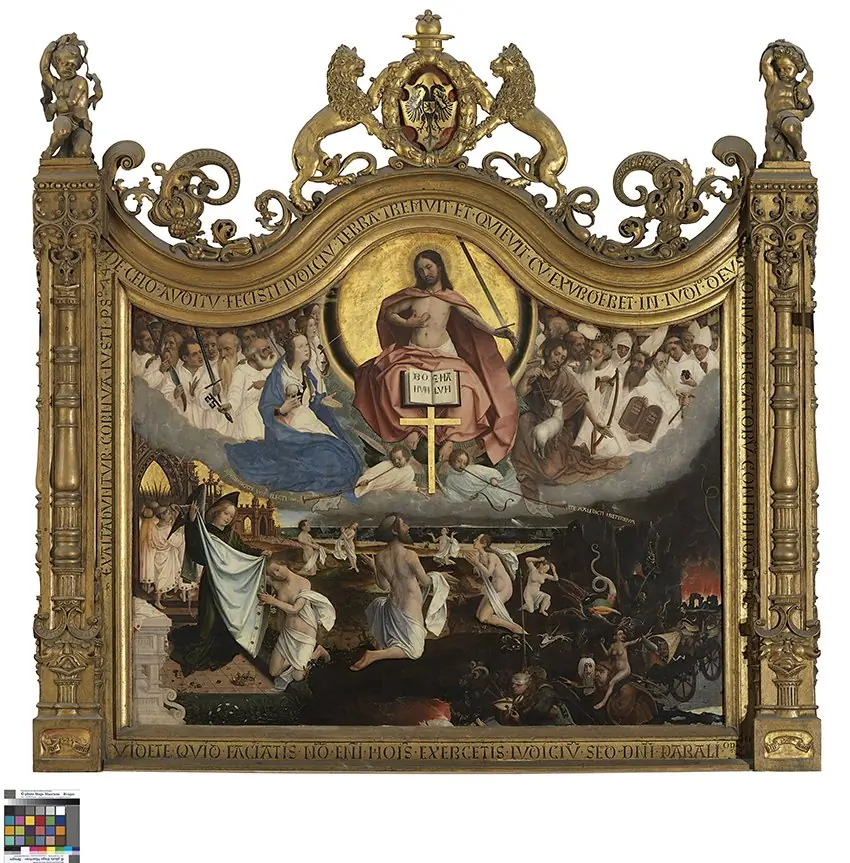
Memorietafel van de familie Dot-Ramaule
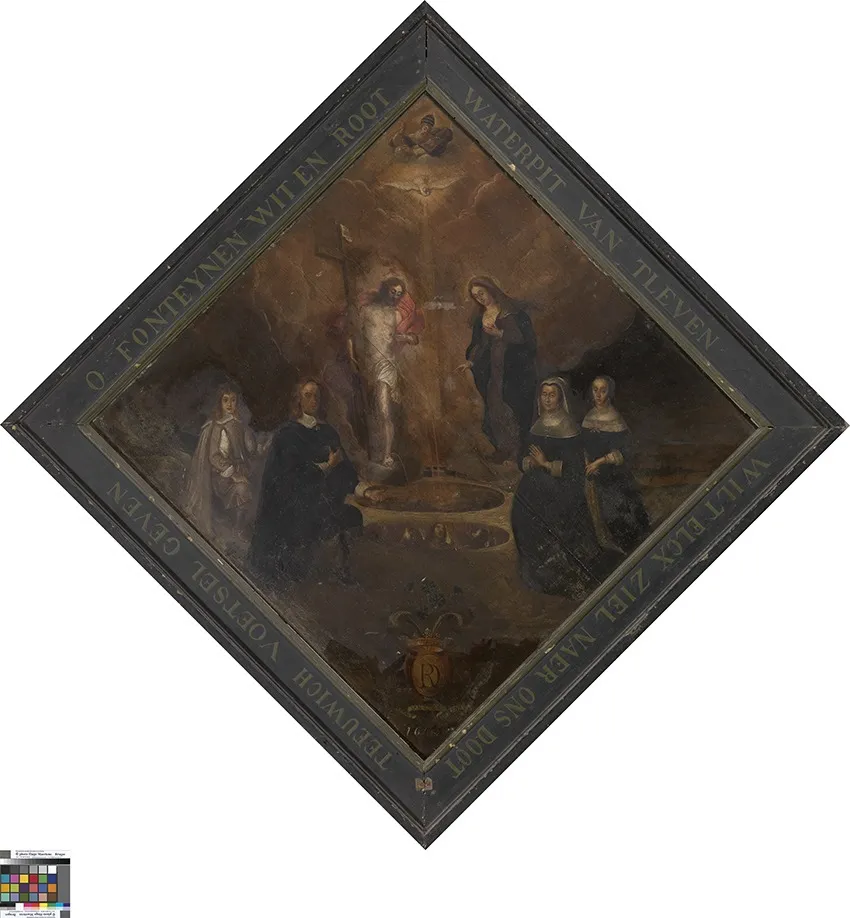
Memorietafel van de familie Dot-Ramaule is an oil painting by the Dutch Golden Age artist Unknown. It dates from 1660 and is held in the collection of the Groeningemuseum.
About this work
Overview
This oil painting, titled Memorietafel van de familie Dot-Ramaule, depicts a quiet, contemplative group of five figures in a dim interior space.
This oil painting, titled Memorietafel van de familie Dot-Ramaule, depicts a quiet, contemplative group of five figures in a dim interior space. A central figure in white stands beside a shallow pool, illuminated by a soft, directional glow. Surrounding figures are rendered in darker tones, creating a strong visual hierarchy. The composition is framed by Dutch inscriptions along the edges, suggesting a devotional or commemorative purpose.
Subject & Meaning
The scene likely portrays a moment of spiritual significance, possibly a baptism or sacred vision. The central figure’s luminous presence and the pool suggest ritual purification. The watching figures on the left may represent family or witnesses, while the women on the right, near a small crown, could symbolize heavenly recognition or martyrdom. The faint figure above the sky may indicate divine intervention, reinforcing the religious narrative implied by the Dutch text.
Technique & Style
The artist employs chiaroscuro to heighten emotional focus, contrasting the radiant central figure against the deep shadows of the surrounding figures and environment. Brushwork is restrained, favoring smooth transitions in skin tones and fabric folds. The cloudy sky above adds dramatic tension without distracting from the intimate group. Light functions not just as illumination but as a symbolic force, guiding the viewer’s attention to the sacred core of the scene.
History & Provenance
The painting was commissioned by the Dot-Ramaule family, likely as a memorial piece following a significant religious event or death. Its Dutch inscriptions and domestic scale suggest it was intended for private devotion rather than public display. Though its early ownership history is undocumented, its style aligns with early 17th-century Netherlandish devotional panels, indicating it was created in the Netherlands during a period of heightened religious introspection.
Context
Created during a time when Protestantism discouraged overt religious imagery, this work reflects a quiet, personal form of piety. Families commissioned such memorials to honor deceased relatives through symbolic, rather than literal, biblical scenes. The emphasis on light, ritual, and silent witness echoes broader trends in Dutch domestic art, where spirituality was expressed through subtlety and restraint rather than grandeur.
Legacy
Though not widely exhibited, the painting remains a rare example of intimate family devotion in early Dutch art. Its use of chiaroscuro and restrained symbolism influenced later private commissions in the region. Scholars value it for illustrating how religious sentiment persisted in Protestant households through coded visual language, offering insight into the private spiritual lives of ordinary families during a time of religious upheaval.
Artist & collection

 Domestic Scene
 Giacomo and Cardinal Marco, investing Andrea, Abbot of San Zeno, with his Benefice
 The Nymph of Fontainebleau
 Portrait of a Woman
 Madonna and Child with Saints in the Enclosed Garden
 Venus and Minerva
 Family Group of Four on Sofa
 Wall painting from Room H of the Villa of P. Fannius Synistor at Boscoreale
 Panel of a Brotherhood
 Răstignirea - schiță după van Dyck
 The Coronation of the Virgin
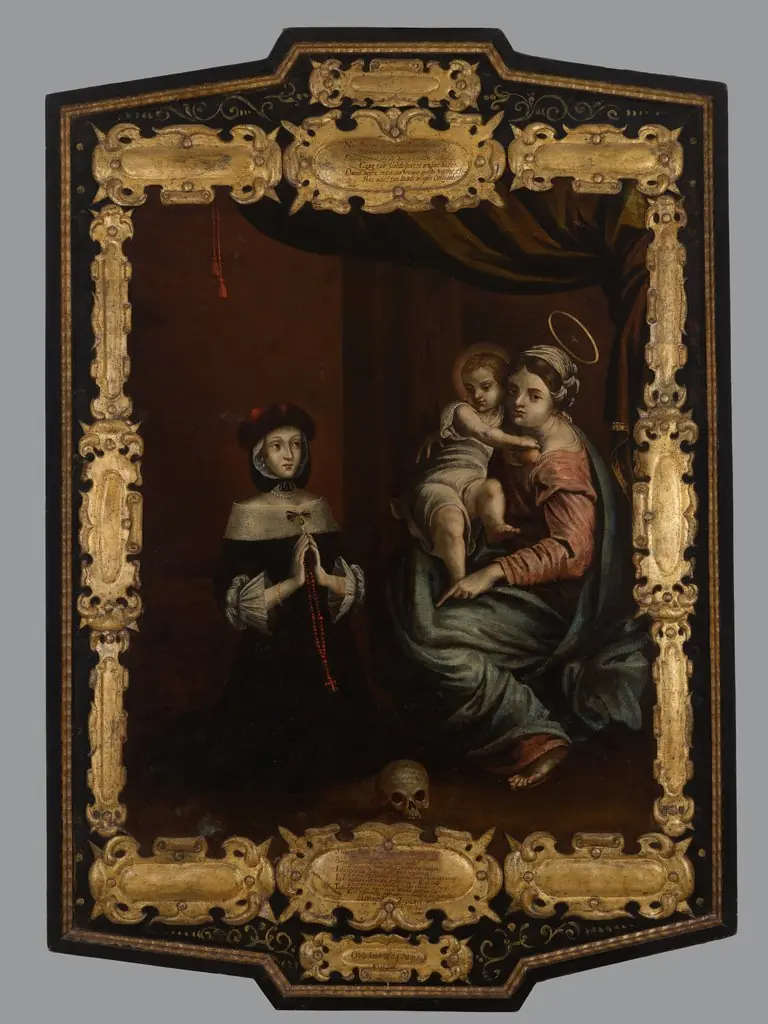 Epitaph of Katarzyna Jurgiewic, from the St Mary's Church in Krakow
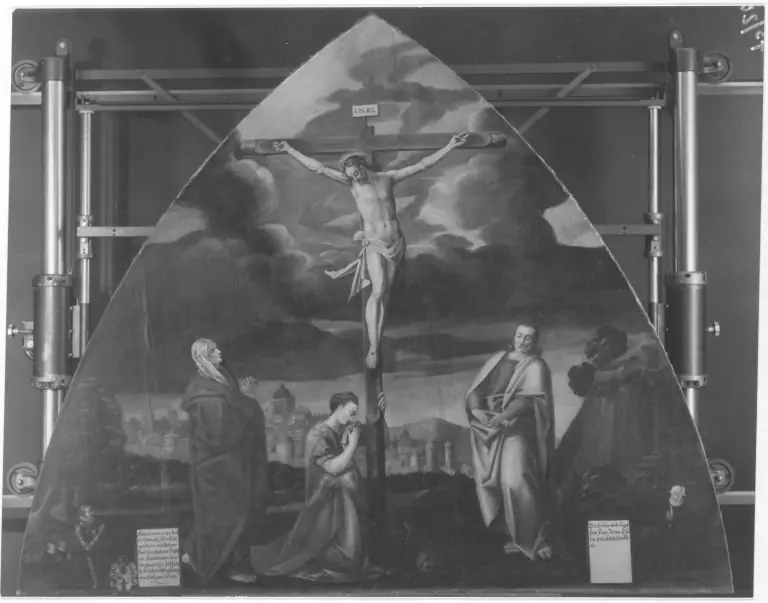 Christus am Kreuz mit Maria, Johannes und Magdalena (Epitaph Pfefferle)
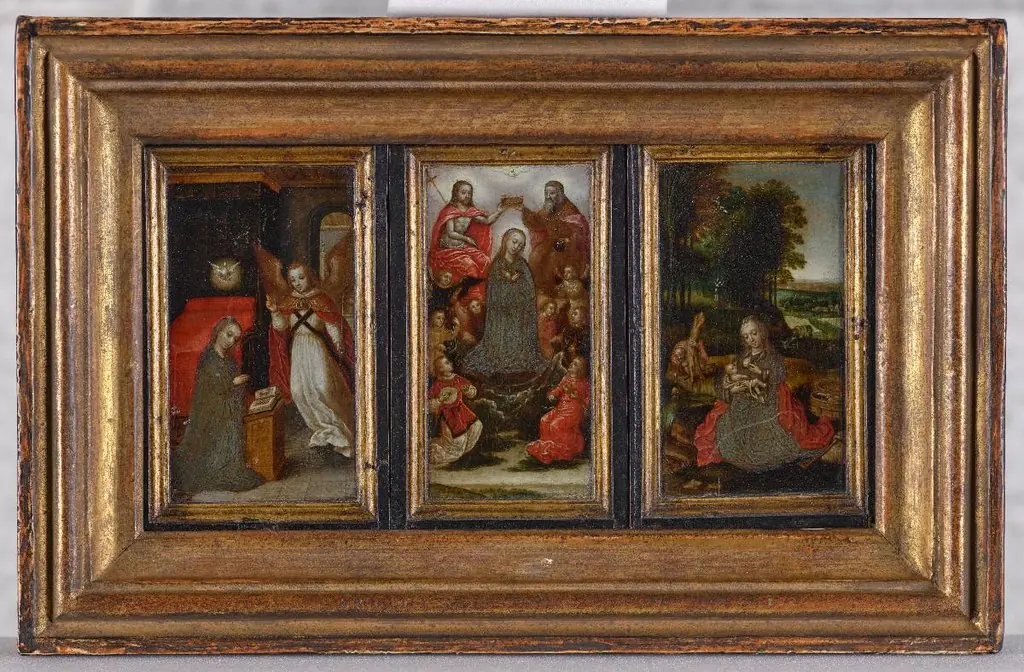 Drei Täfelchen aus dem Zyklus zum Leben Marias
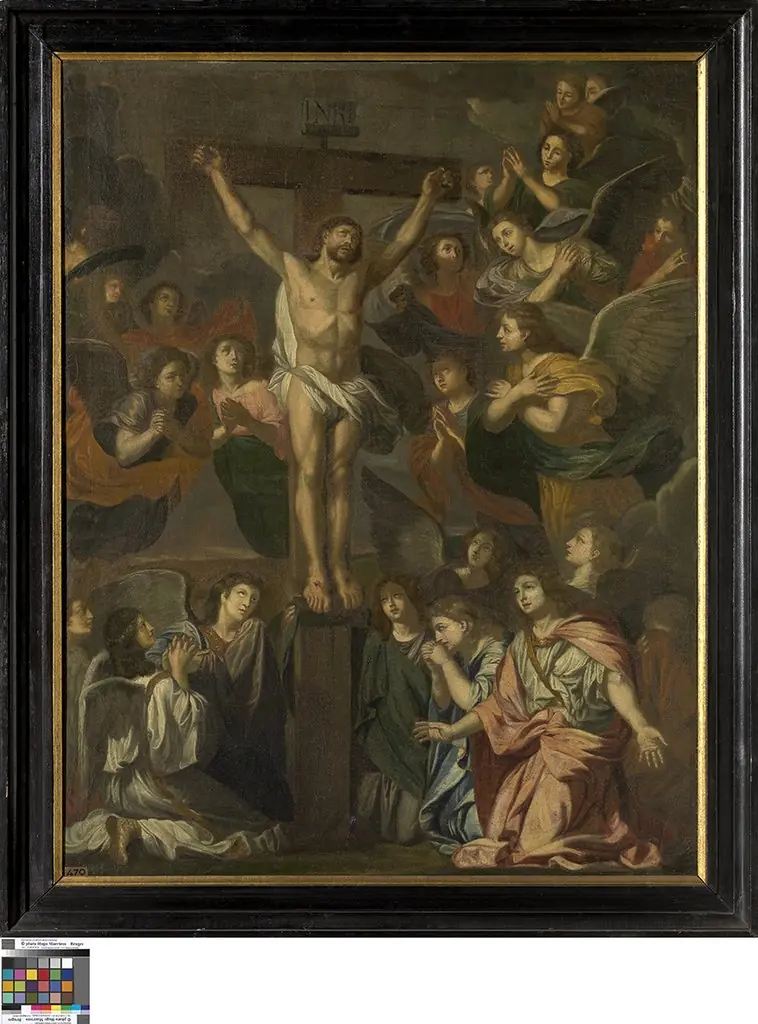 Christ on the cross surrounded by angels
 Absis van de kathedraal van Freiburg
 Last Judgement
 The Crucifixion, with a Bishop, a Saint, and a Donor in Armor