Artwork
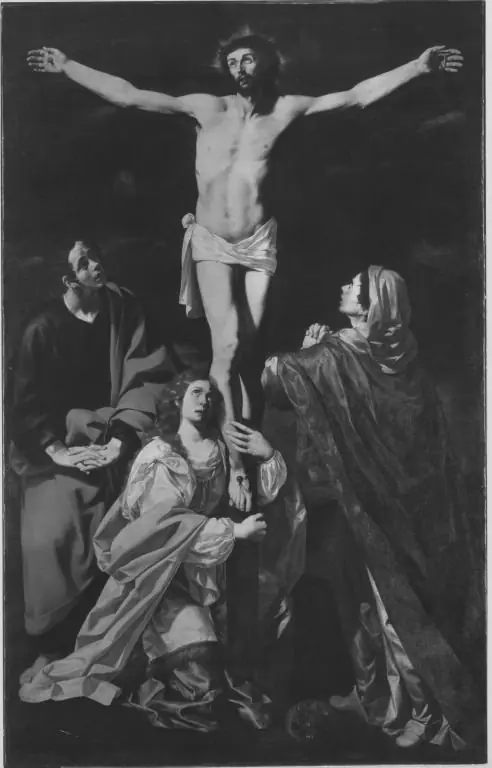
Christus am Kreuz mit Maria, Johannes und Magdalena (Epitaph Pfefferle)
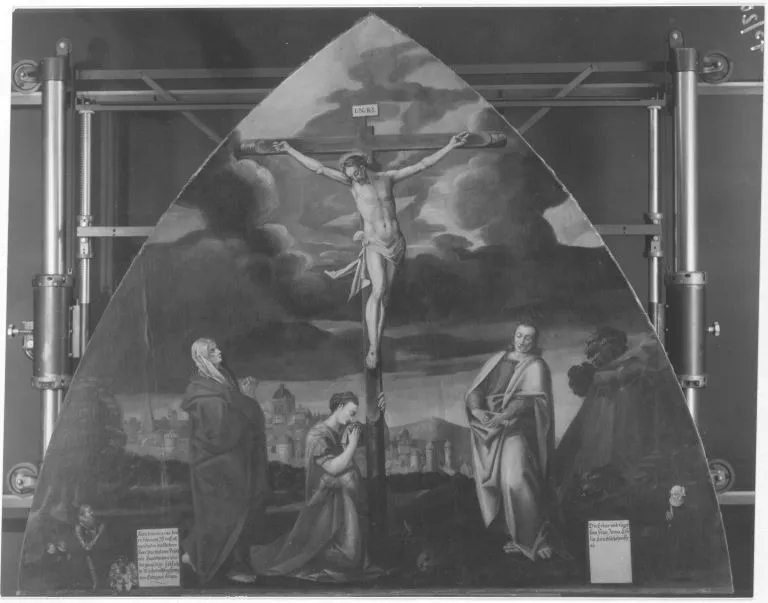
Christus am Kreuz mit Maria, Johannes und Magdalena (Epitaph Pfefferle) is an unspecified painting by the Early Baroque Italian artist Unknown. It dates from 1597 and is held in the collection of the Bavarian State Painting Collections.
About this work
Overview
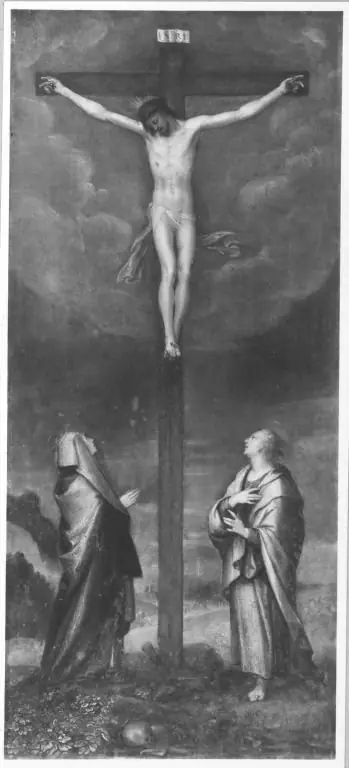
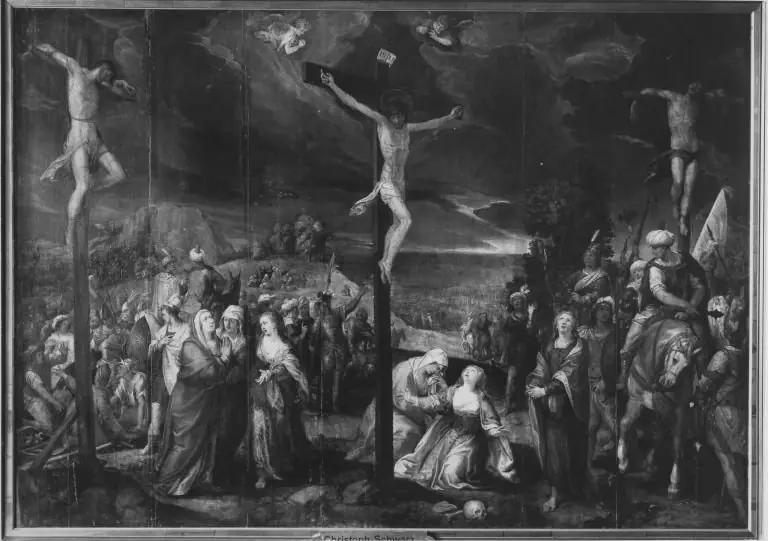
The work, titled *Christus am Kreuz mit Maria, Johannes und Magdalena*, presents the crucifixion scene centered on a luminous cross against a stormy sky. Below, three mourners—traditionally identified as the Virgin Mary, Saint John the Evangelist, and Mary Magdalene—are rendered in subdued tones, their gestures conveying grief and devotion.
Subject & Meaning
The composition emphasizes the theological triad of sorrow and redemption: Christ’s sacrifice is foregrounded by the anguished presence of his closest companions. Mary’s bowed head, John’s solemn expression, and Magdalene’s clasped staff symbolize penitence, fidelity, and the witness of the faithful.
Technique & Style
Employing a pronounced chiaroscuro, the painter contrasts the bright crucifix with deep shadows that envelope the surrounding figures and architecture. This dramatic lighting, coupled with a limited palette of grays and dark reds, heightens the emotional intensity and gives the scene a three‑dimensional presence.
History & Provenance
The painting is known as the “Epitaph Pfefferle,” suggesting it was commissioned as a funerary memorial, possibly for the Pfefferle family. Its provenance traces through regional church collections before entering the museum’s holdings in the early twentieth century.
Context
Created within the Germanic tradition of late Gothic to early Renaissance religious art, the work reflects contemporary devotional practices that placed the crucifixion at the center of personal and communal piety, often displayed in chapels associated with burial rites.
Legacy
While not widely reproduced, the piece remains a reference for scholars studying the use of chiaroscuro in Northern European crucifixion imagery and the visual conventions of epitaph paintings in the pre‑Baroque period.
Artist & collection

 Domestic Scene
 Giacomo and Cardinal Marco, investing Andrea, Abbot of San Zeno, with his Benefice
 The Nymph of Fontainebleau
 Portrait of a Woman
 Madonna and Child with Saints in the Enclosed Garden
 Venus and Minerva
 Family Group of Four on Sofa
 Wall painting from Room H of the Villa of P. Fannius Synistor at Boscoreale
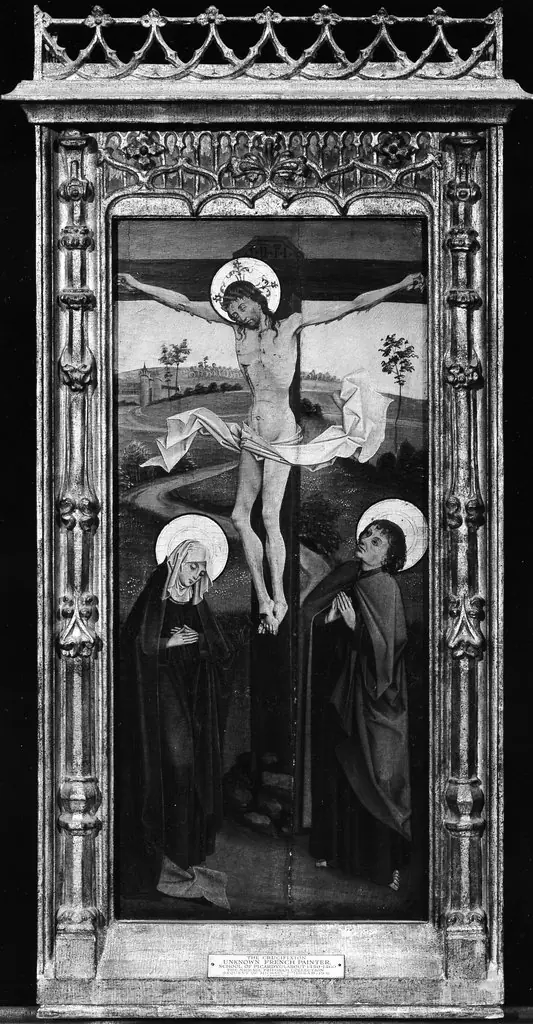 The Crucifixion, (reverse) Saint Francis of Assisi; The Resurrection, (reverse) An Abbot Saint, Possibly Saint Benedict
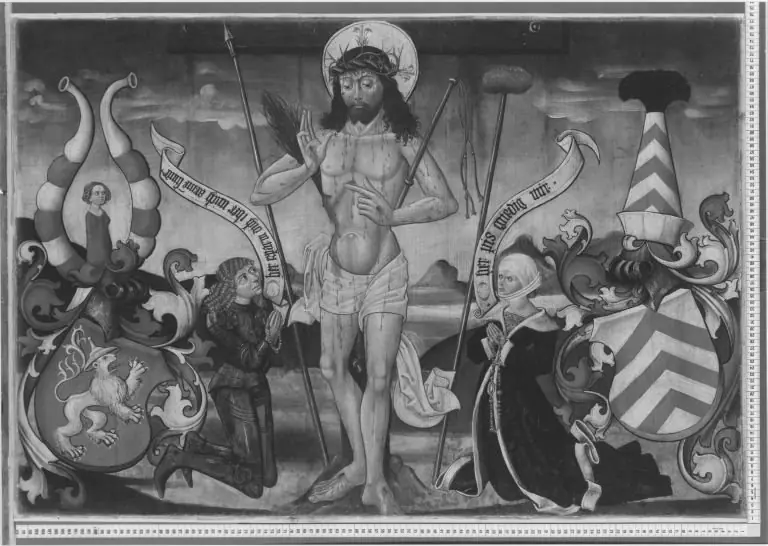 Epitaphe of Blasius von Laimberg (?-?) and his wife Sophie von Röhlingen (?-?)
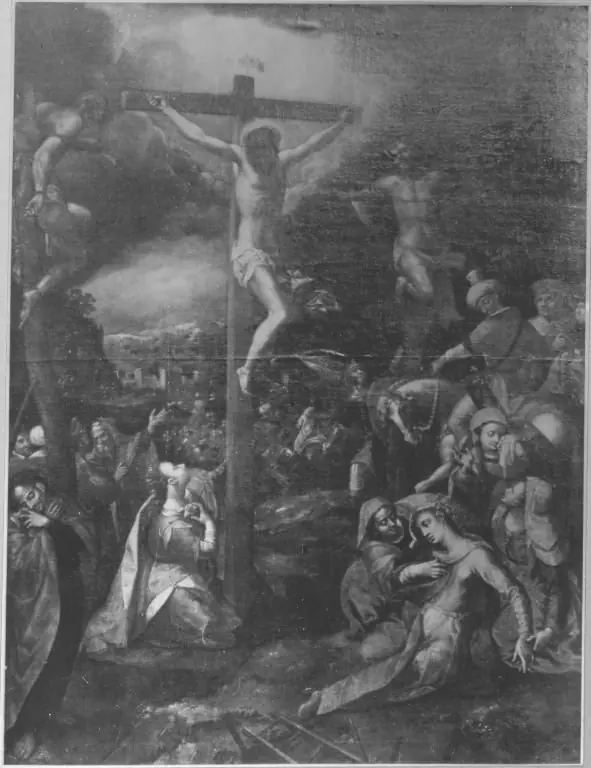 Kreuzigung Christi (Kopie nach)
 Christus am Kreuz
 Polyptych of Assumption
 Christ on the Cross
 Marienkrönung
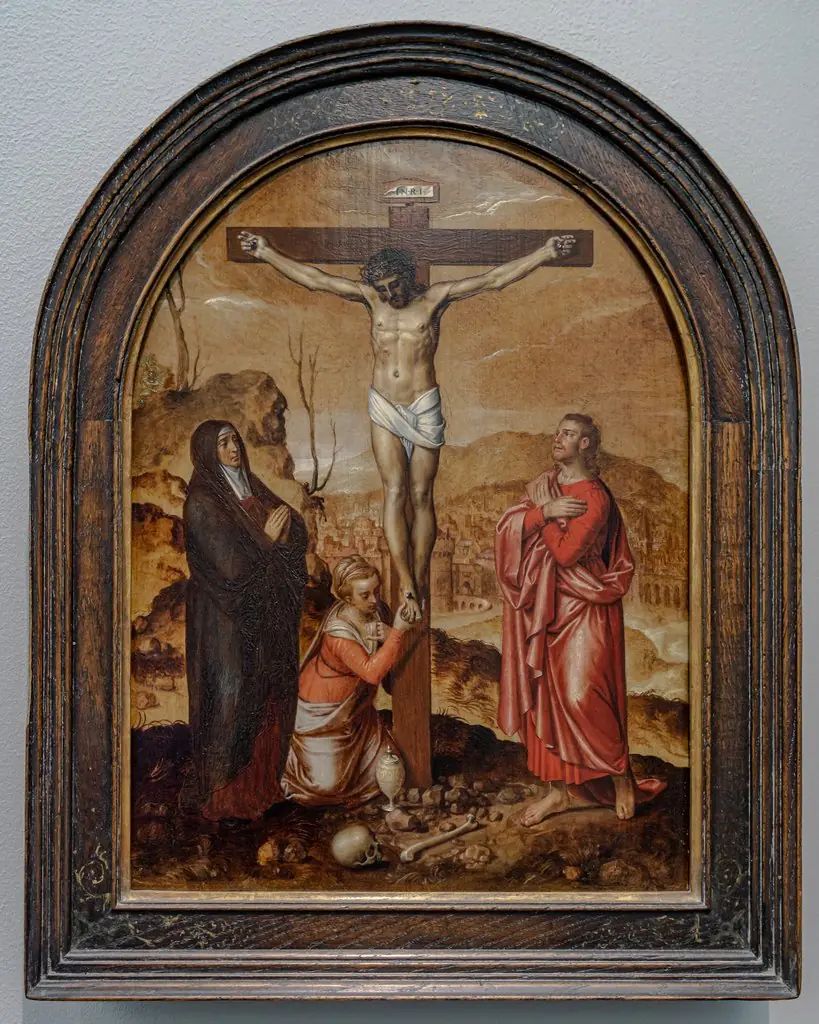 Crucifixion
 Christus am Kreuz (?)
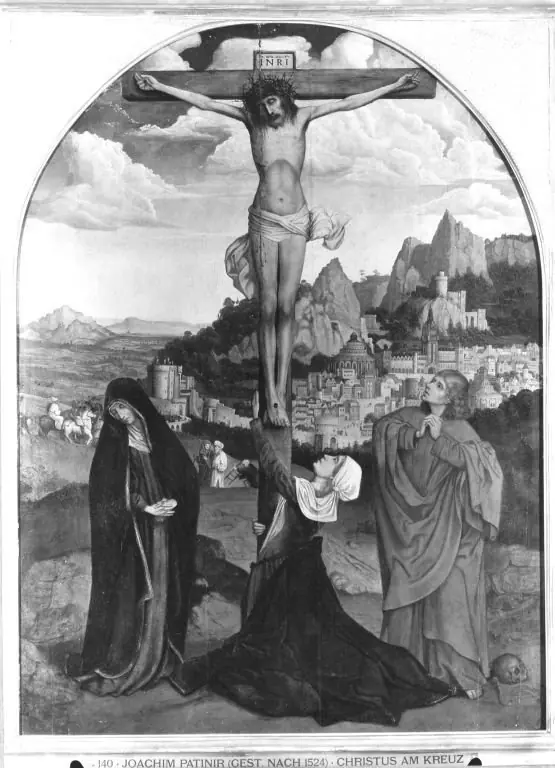 Christ on the cross
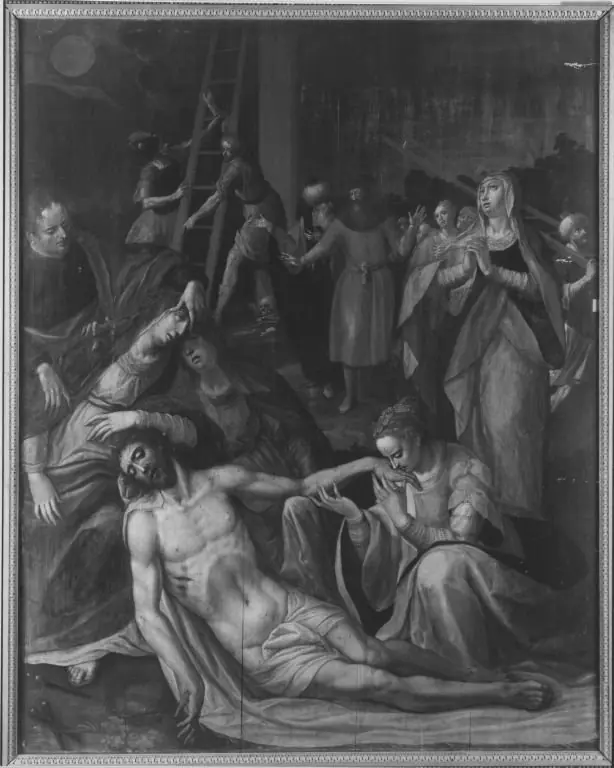 Lamentation of Christ
 Christus am Kreuz