Artwork
Portrait of Adam Ignacy Komorowski ? (1699–1759), bishop of Livonia, primate from 1748
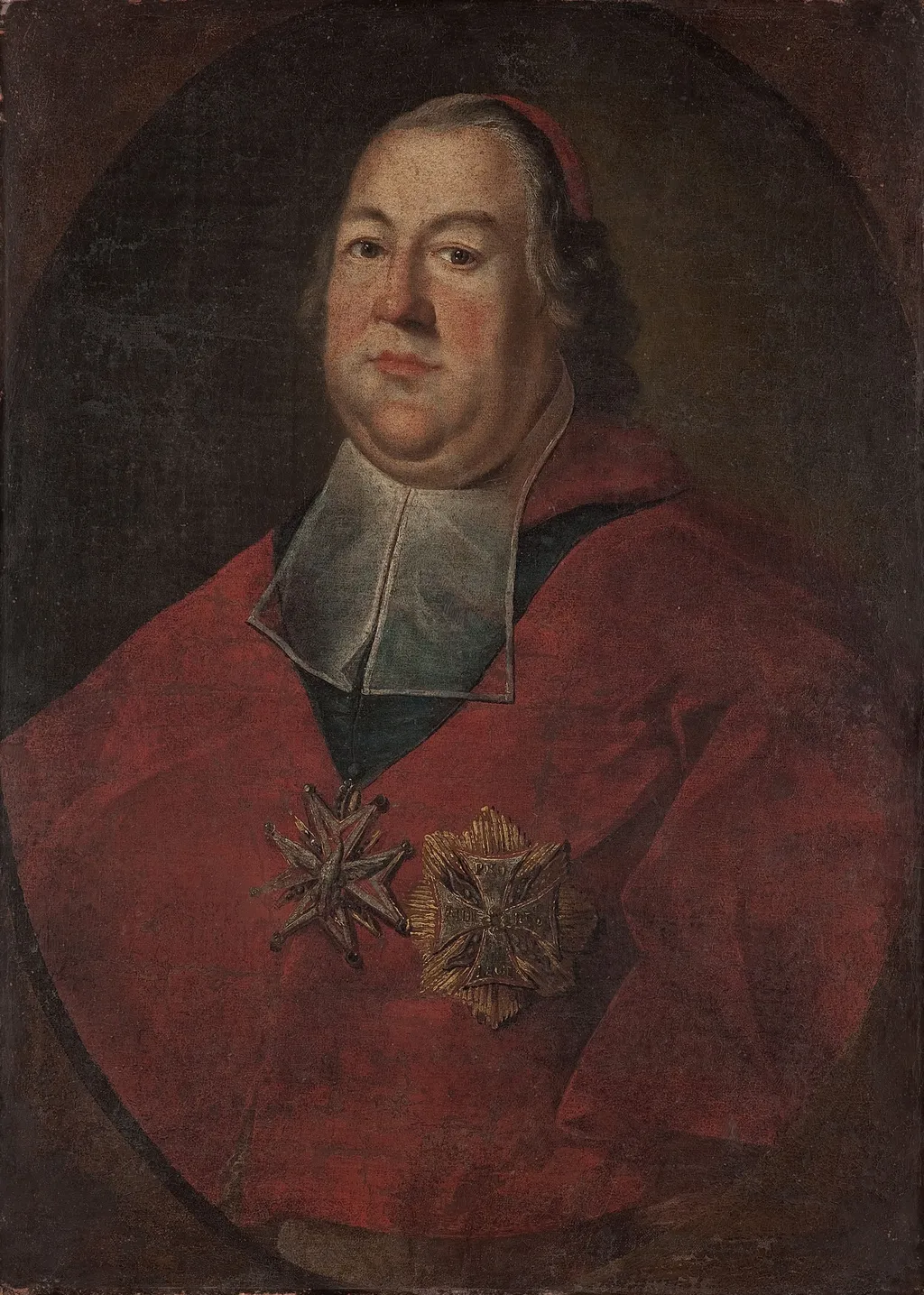
Portrait of Adam Ignacy Komorowski ? (1699–1759), bishop of Livonia, primate from 1748 is an oil painting by the Rococo painting artist Unknown. It dates from 1739 and is held in the collection of the National Museum in Warsaw. The canvas presents Adam Ignacy Komorowski, a high-ranking ecclesiastic of the early eighteenth century, rendered in oil.
About this work
Overview
Two star‑shaped medals adorn his chest, signalling his official status, while a dark, unadorned backdrop isolates the figure and emphasizes his solemn demeanor.
The canvas presents Adam Ignacy Komorowski, a high-ranking ecclesiastic of the early eighteenth century, rendered in oil. He is attired in a scarlet ecclesiastical robe trimmed with a white ruff, his visage rendered with meticulous detail beneath a crimson hat. Two star‑shaped medals adorn his chest, signalling his official status, while a dark, unadorned backdrop isolates the figure and emphasizes his solemn demeanor.
Subject & Meaning
Komorowski, who served as bishop of Livonia and was appointed primate in 1748, is depicted with an expression that balances calm authority and contemplative restraint. The composition underscores his clerical rank through the lavish garments and insignia, suggesting both spiritual leadership and the temporal power vested in high church offices of the period.
Technique & Style
Executed in oil, the work employs a pronounced chiaroscuro, contrasting the illuminated facial features and richly colored attire against a deep, muted background. The brushwork varies from fine, almost photographic detailing on the face and medals to broader, more gestural strokes in the drapery, creating a tactile sense of the heavy fabric.
History & Provenance
Created in the mid‑1700s, the portrait likely originated as a commission for ecclesiastical or noble patrons to commemorate Komorowski’s elevation to primate. Though specific ownership records are sparse, the painting has remained within collections associated with Baltic church history, reflecting its function as a visual record of clerical hierarchy.
Context
The portrait belongs to a broader tradition of clerical portraiture in the Polish‑Lithuanian Commonwealth, where bishops were often portrayed in sumptuous vestments to convey both religious devotion and political influence. Its visual language aligns with contemporary Baroque sensibilities, emphasizing drama through light, texture, and the dignified presentation of authority.
Artist & collection

 Domestic Scene
 Giacomo and Cardinal Marco, investing Andrea, Abbot of San Zeno, with his Benefice
 The Nymph of Fontainebleau
 Portrait of a Woman
 Madonna and Child with Saints in the Enclosed Garden
 Venus and Minerva
 Family Group of Four on Sofa
 Wall painting from Room H of the Villa of P. Fannius Synistor at Boscoreale
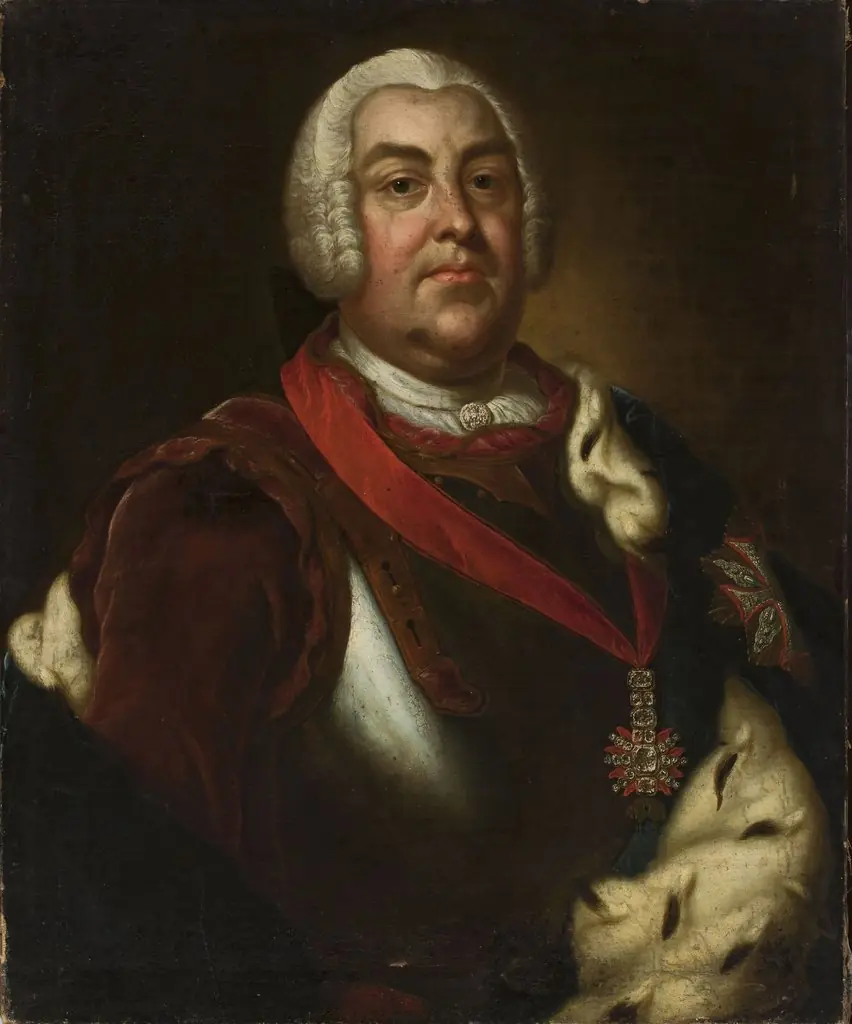 Portrait of Augustus III the Saxon, King of Poland
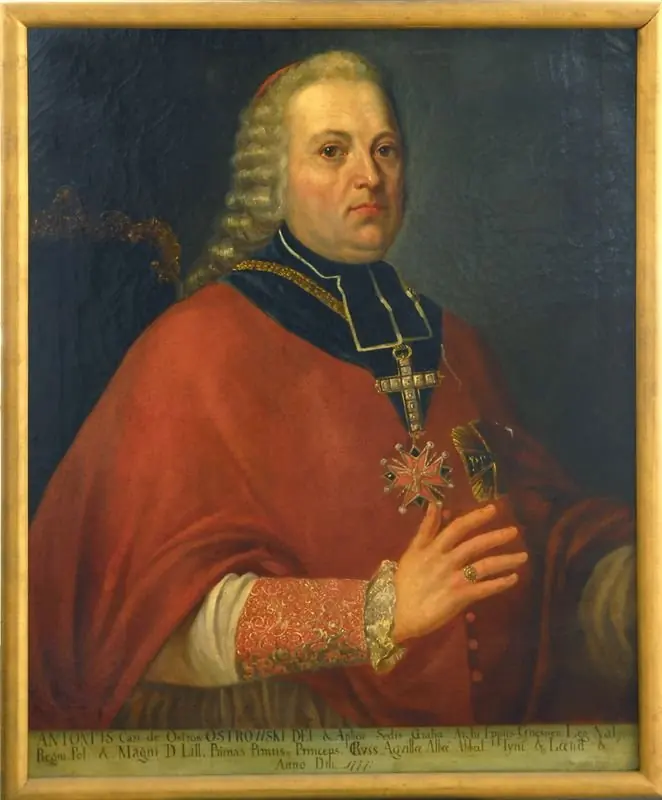 Portrait of Antoni Ostrowski, archbishop of Gniezno
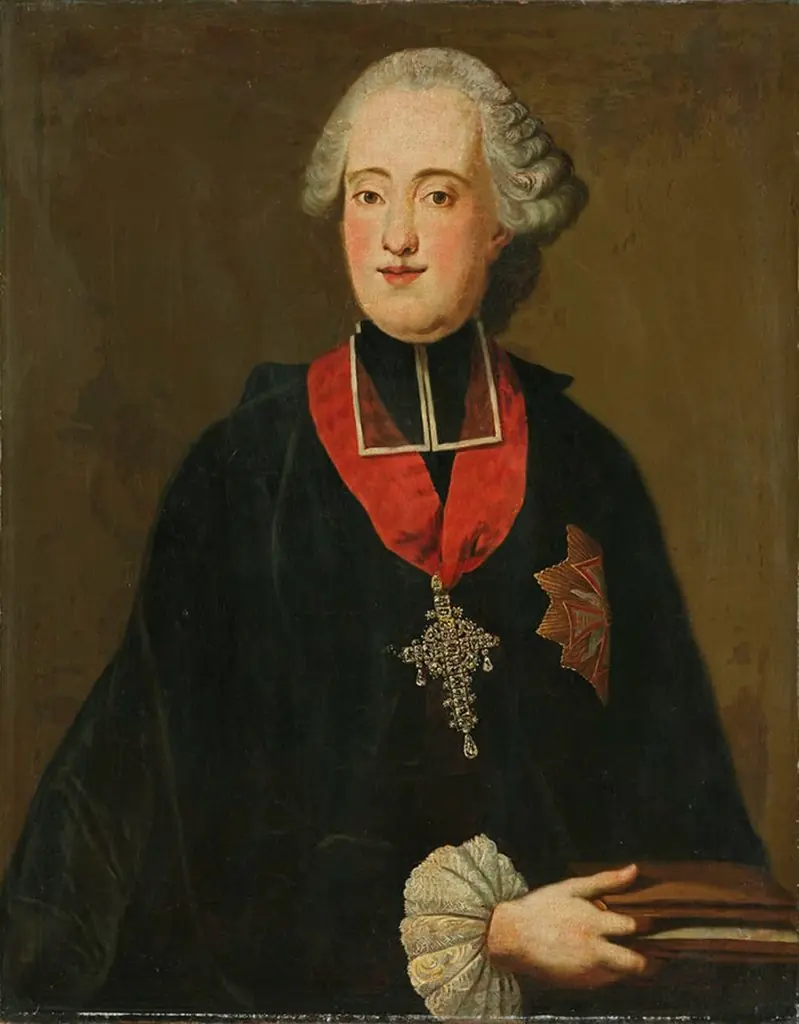 Bildnis des Clemens Wenzeslaus, Bischof von Freising, Regensburg und Augsburg
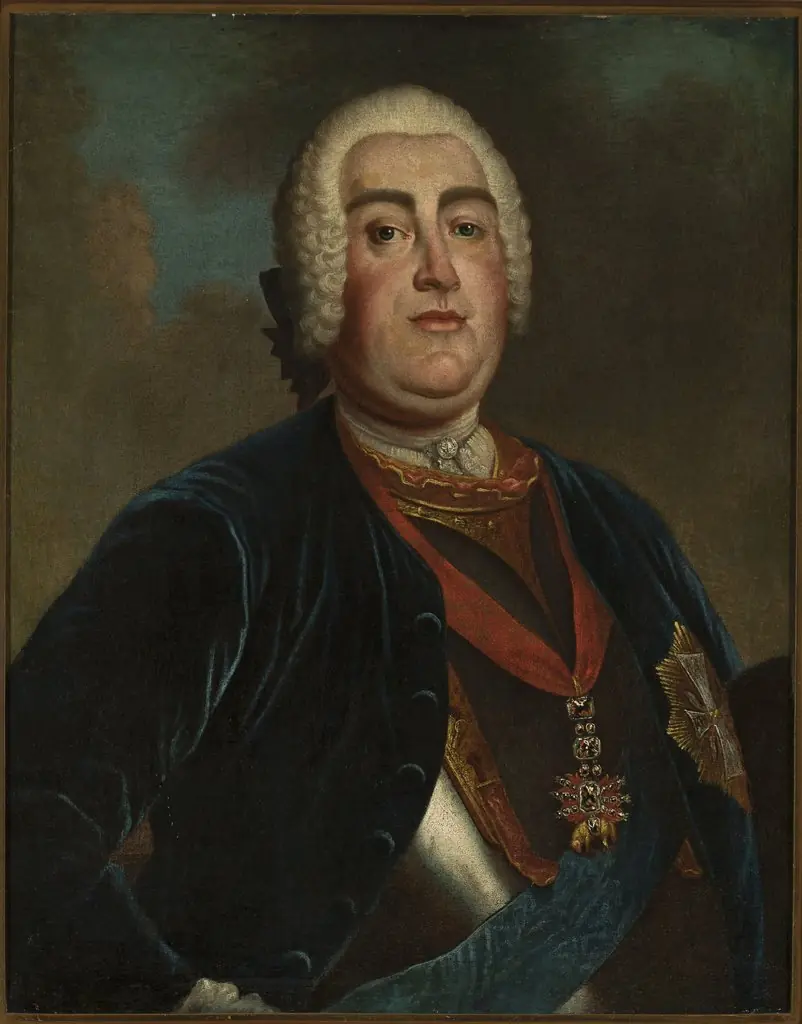 Portrait of Augustus III
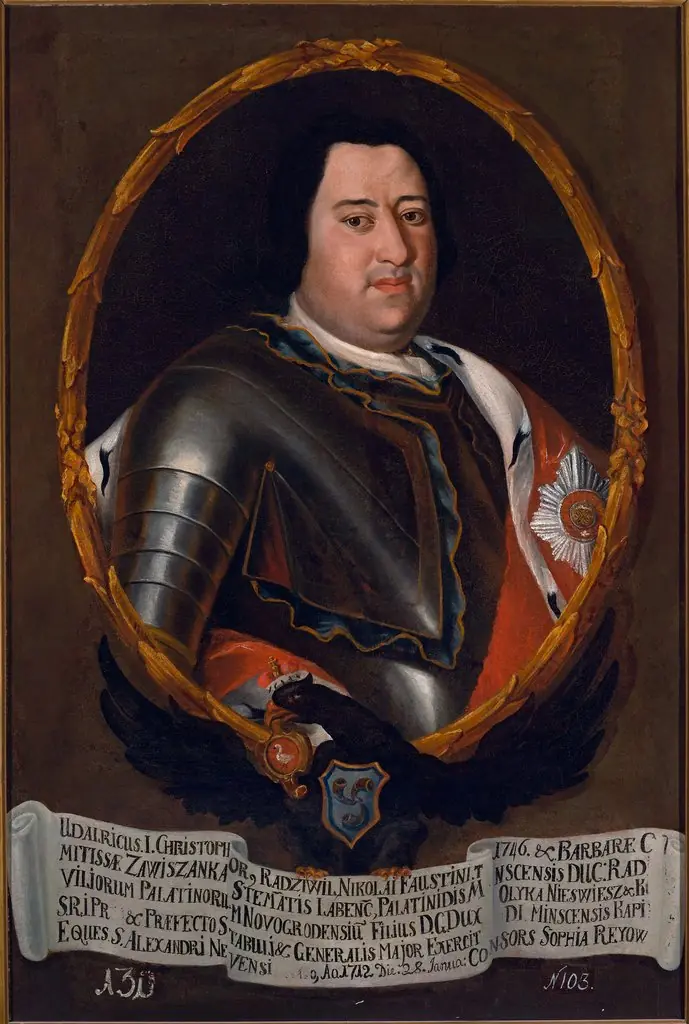 Portrait of Udalryk I Krzysztof Radziwiłł (1712–1770)
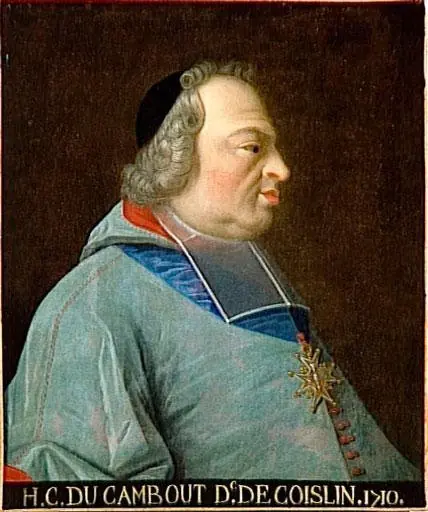 Henri-Charles du Cambous (1665-1732), duc de Coislin (1710), prélat français
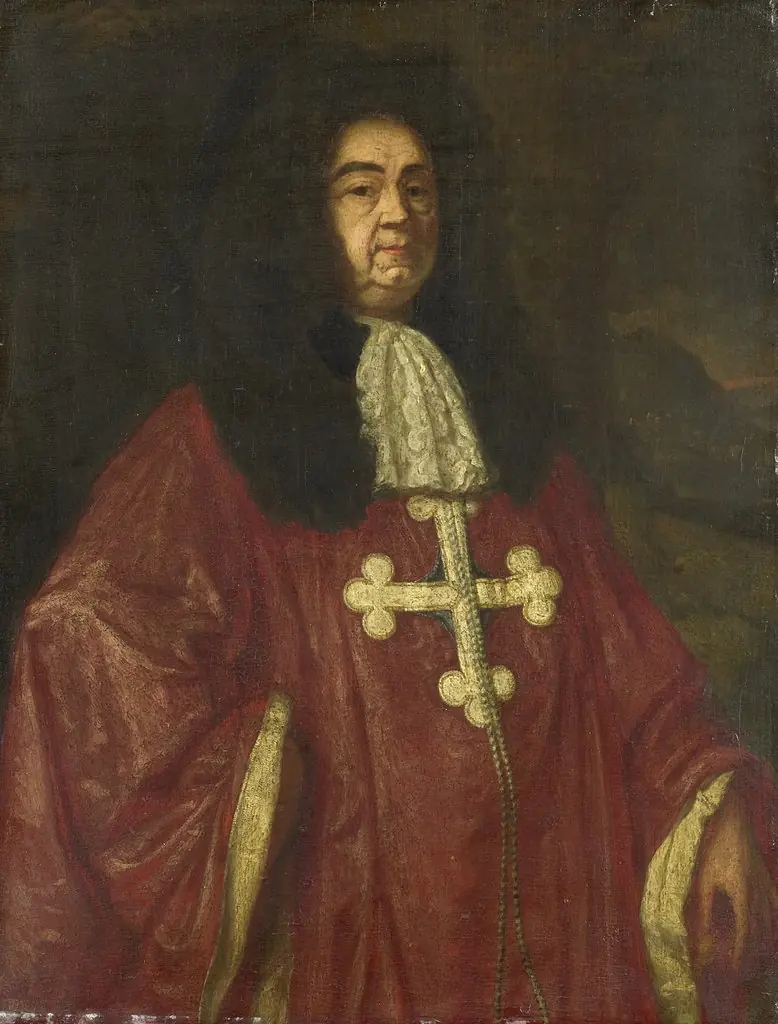 Portrait of Johannes Camprich van Cronefelt, Knight of the Order of St. Maurice and St. Lazarus, Imperial German Ambassador to The Hague