Artwork
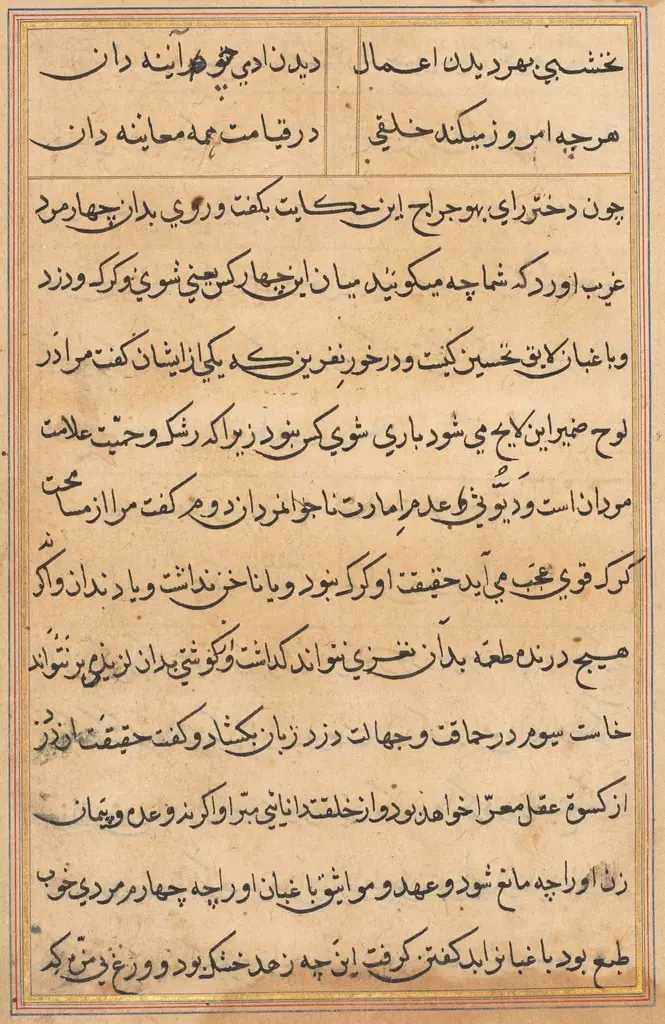
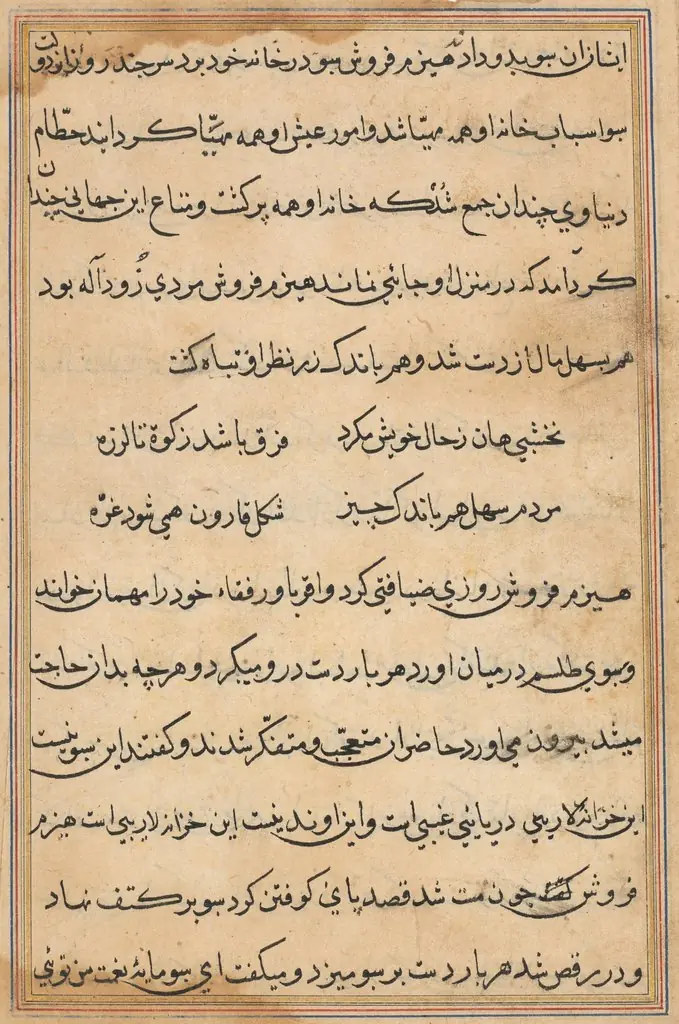
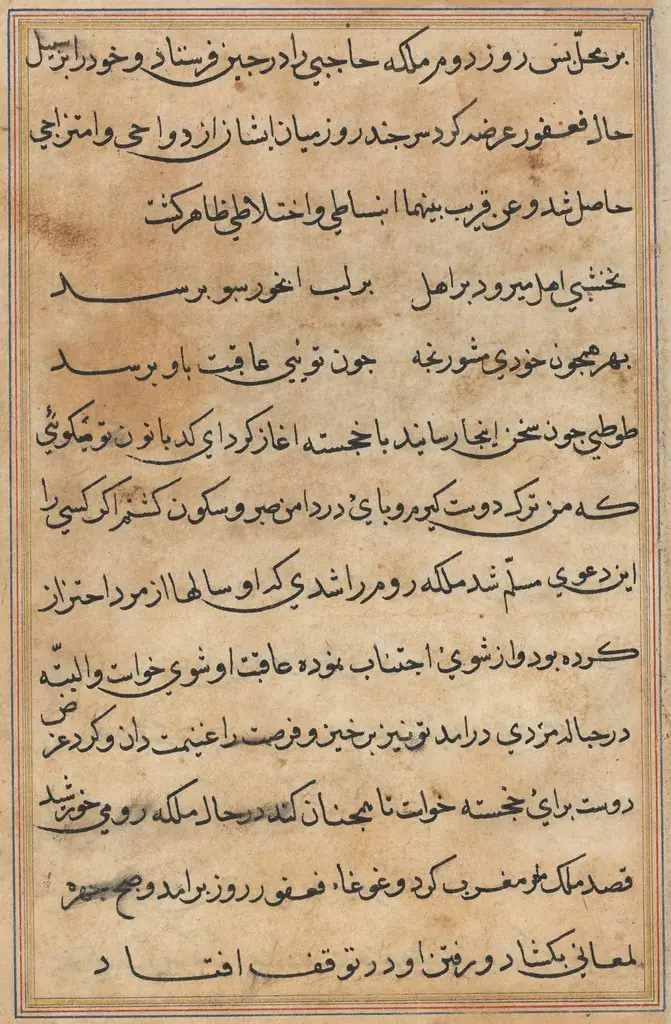
Page from Tales of a Parrot (Tuti-nama): text page
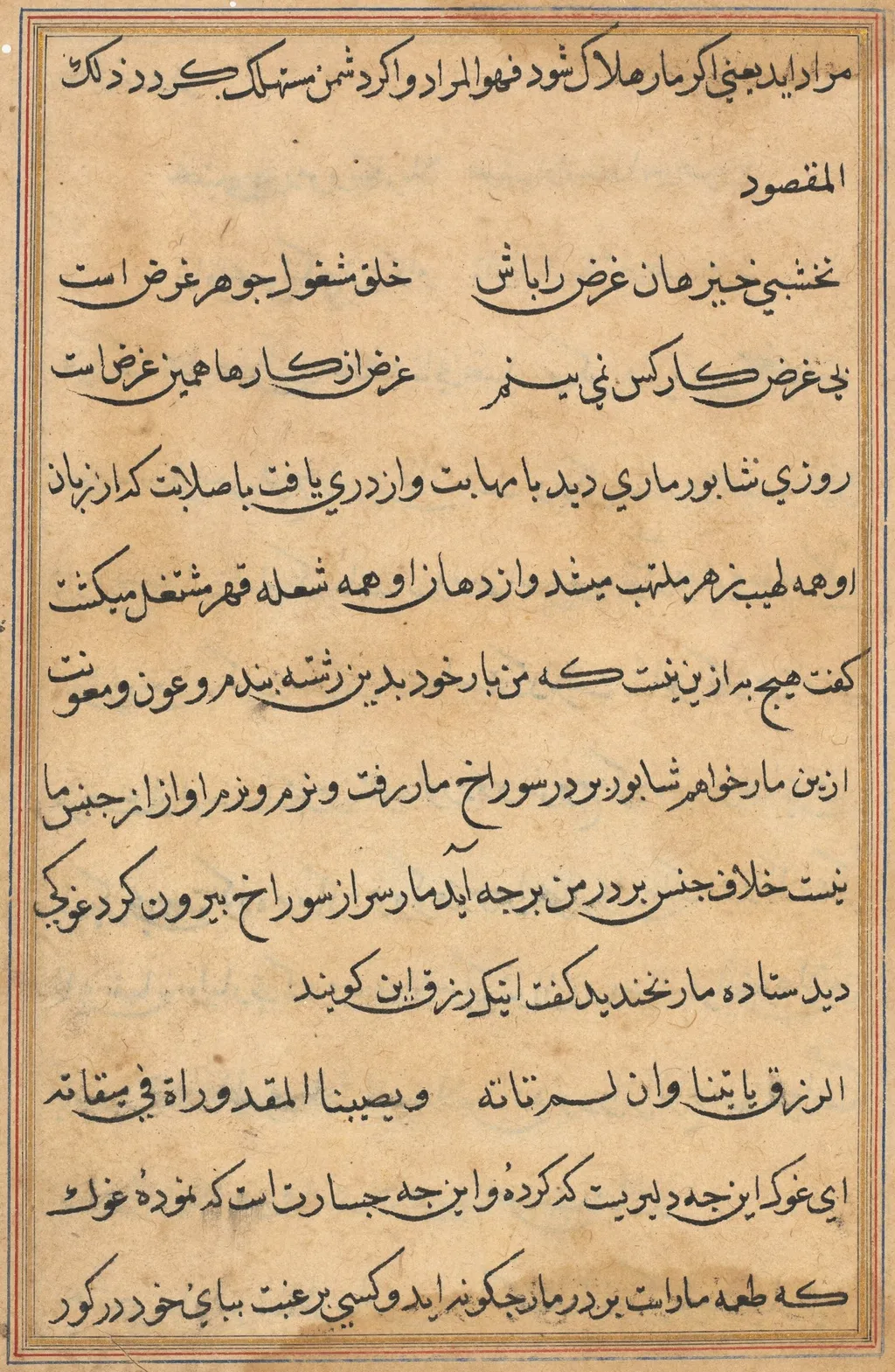
Page from Tales of a Parrot (Tuti-nama): text page is an unspecified painting. It dates from 1560 and is held in the collection of the Cleveland Museum of Art. This object is a single sheet from the illustrated manuscript known as *Tuti‑nama* (Tales of a Parrot).
About this work
Overview
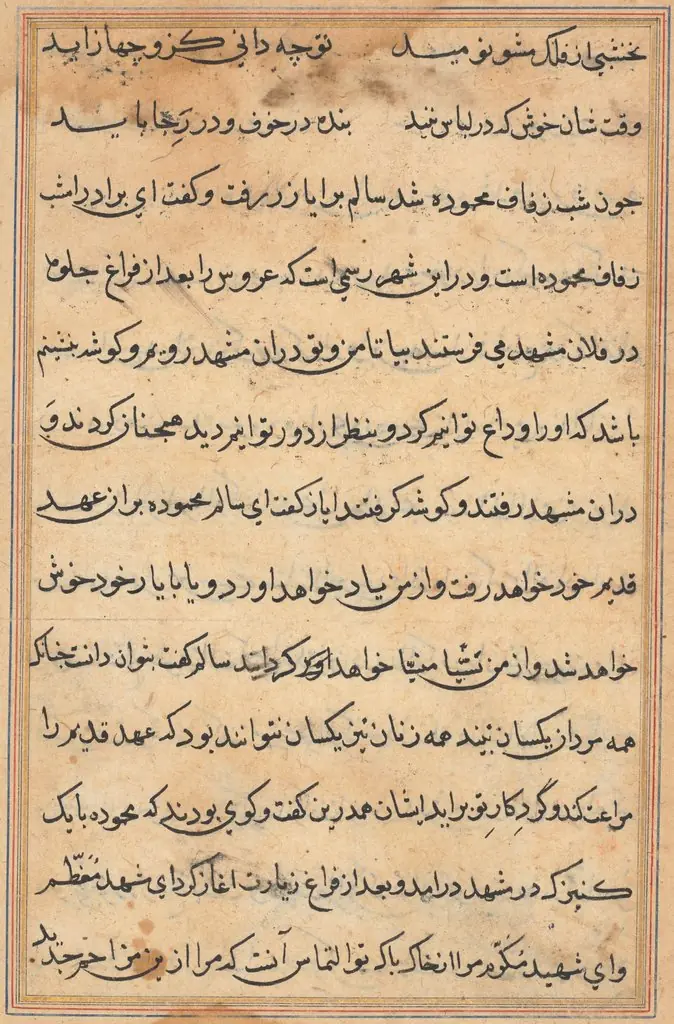
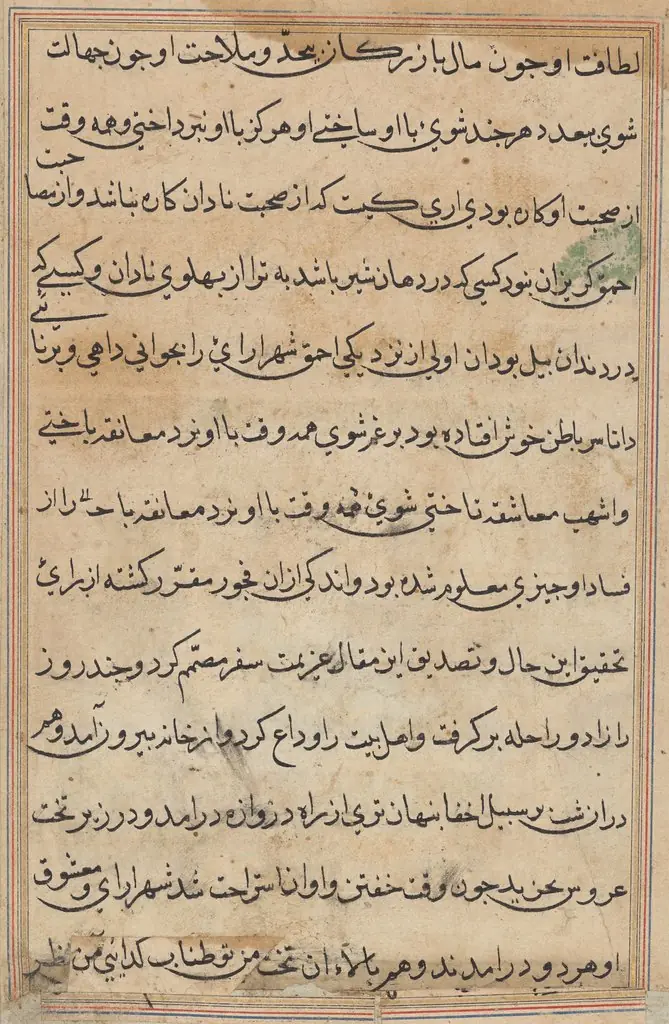
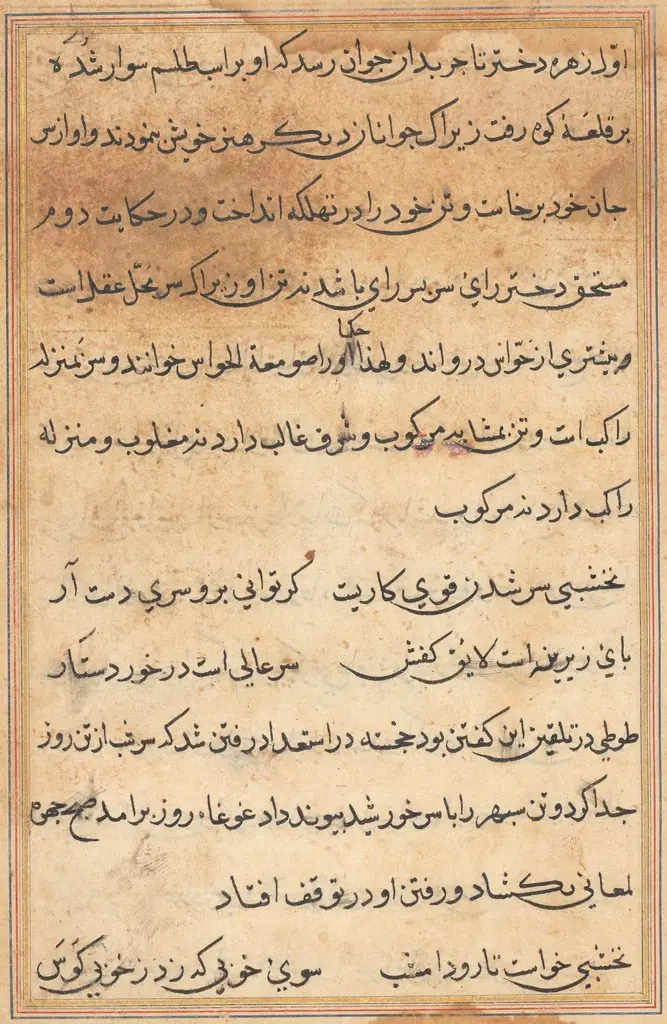
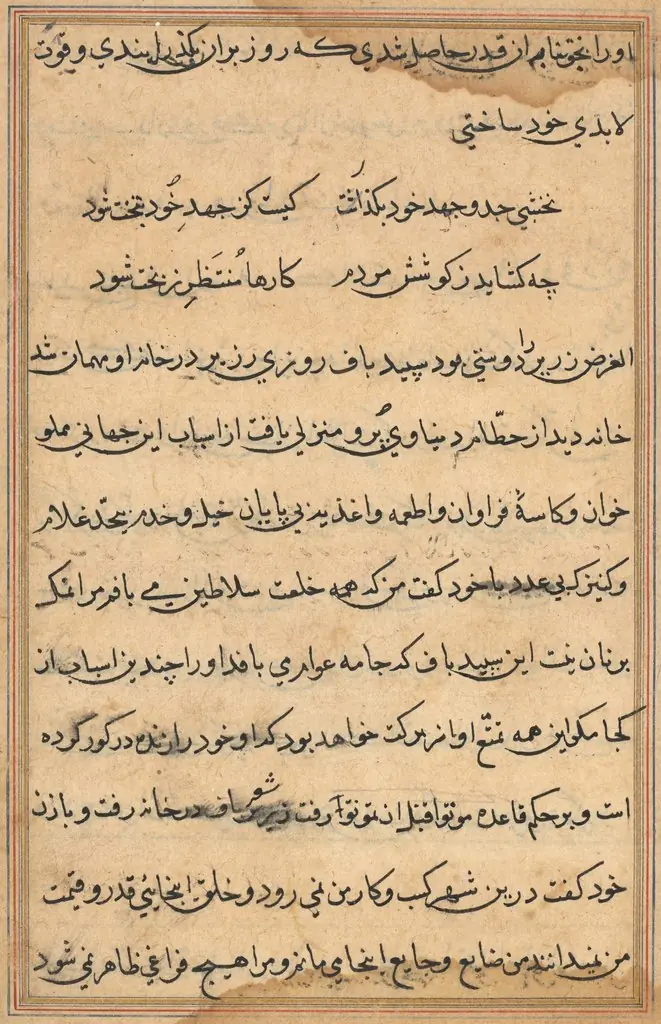
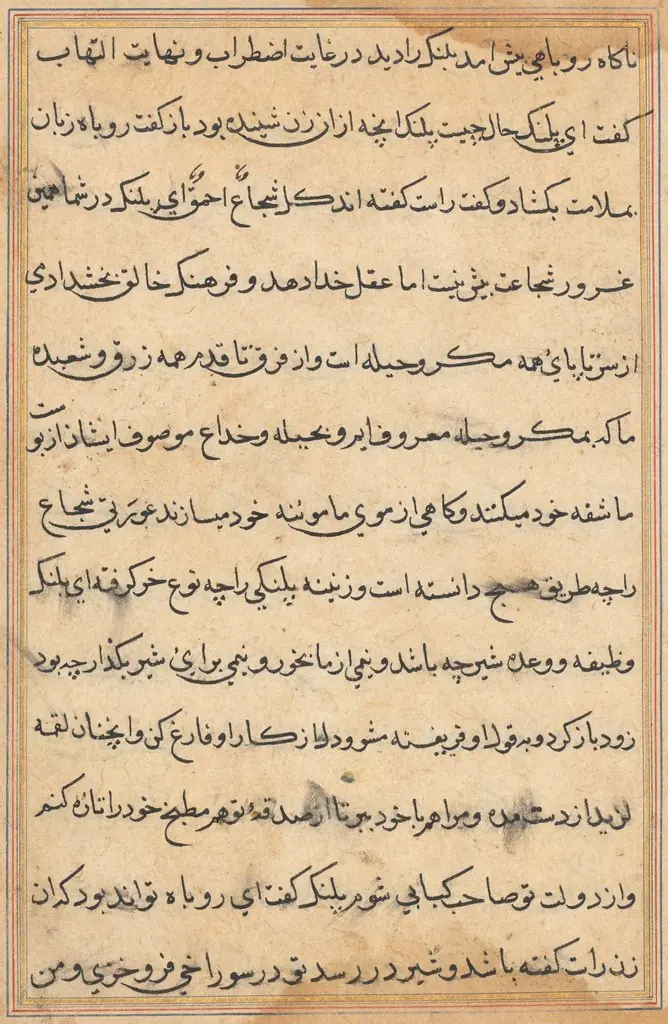
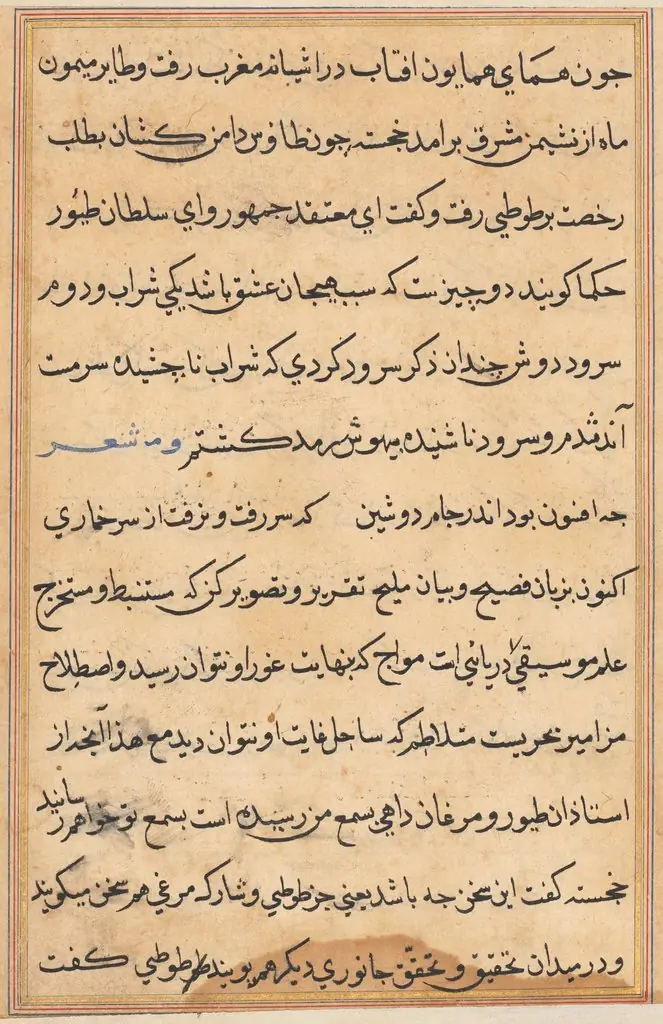
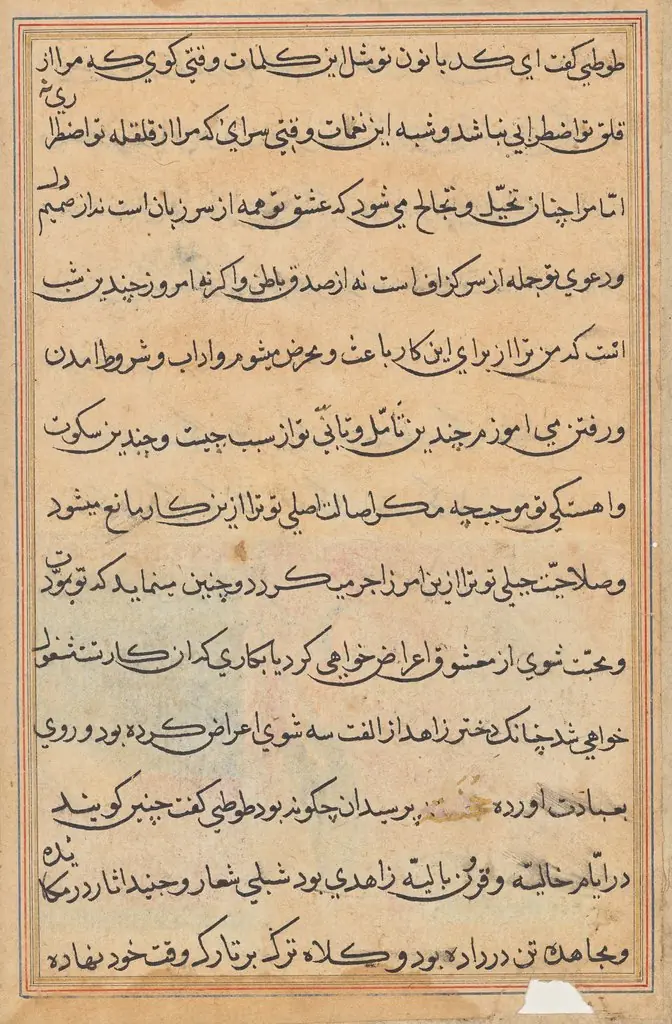
The page consists solely of black calligraphic text, arranged in orderly lines across the surface, and is bordered by a thin red line that frames the script.
This object is a single sheet from the illustrated manuscript known as *Tuti‑nama* (Tales of a Parrot). The page consists solely of black calligraphic text, arranged in orderly lines across the surface, and is bordered by a thin red line that frames the script. The paper exhibits a warm, slightly yellowed tone, suggesting age, while the ink shows subtle variations in line weight, giving the impression of hand‑written work.
Subject & Meaning
The Persian text on the sheet forms part of a larger collection of moral and didactic stories, traditionally attributed to the legendary parrot that narrates fables to impart ethical lessons. The absence of illustrative imagery focuses attention on the narrative content, emphasizing the literary function of the manuscript.
Technique & Style
The calligraphy is executed in a flowing black script, characteristic of Persian manuscript traditions, with careful spacing and uniform alignment. The thin red border, applied with pigment or ink, provides a visual contrast that delineates the textual area without obscuring the page’s surface. The slight irregularities in ink thickness suggest a skilled scribe rather than mechanical printing.
History & Provenance
The sheet originates from a manuscript compiled in the Persian cultural sphere, likely dating to the early modern period when such story collections were popular. It entered the collection of the Cleveland Museum of Art through acquisition, where it is now displayed as part of the museum’s holdings of Islamic art and manuscripts.
Context
*Tuti‑nama* belongs to a genre of Persian literature that blends entertainment with moral instruction, often circulated in courtly and scholarly circles. Manuscripts of this type were typically produced in workshops where scribes and illuminators collaborated, though this particular page lacks decorative illumination, reflecting a utilitarian approach to the text.
Artist & collection

 Page from Tales of a Parrot (Tuti-nama): text page
 Page from Tales of a Parrot (Tuti-nama): text page
 Page from Tales of a Parrot (Tuti-nama): text page
 Page from Tales of a Parrot (Tuti-nama): text page
 Page from Tales of a Parrot (Tuti-nama): text page
 Page from Tales of a Parrot (Tuti-nama): text page