Artwork
Page from Tales of a Parrot (Tuti-nama): text page
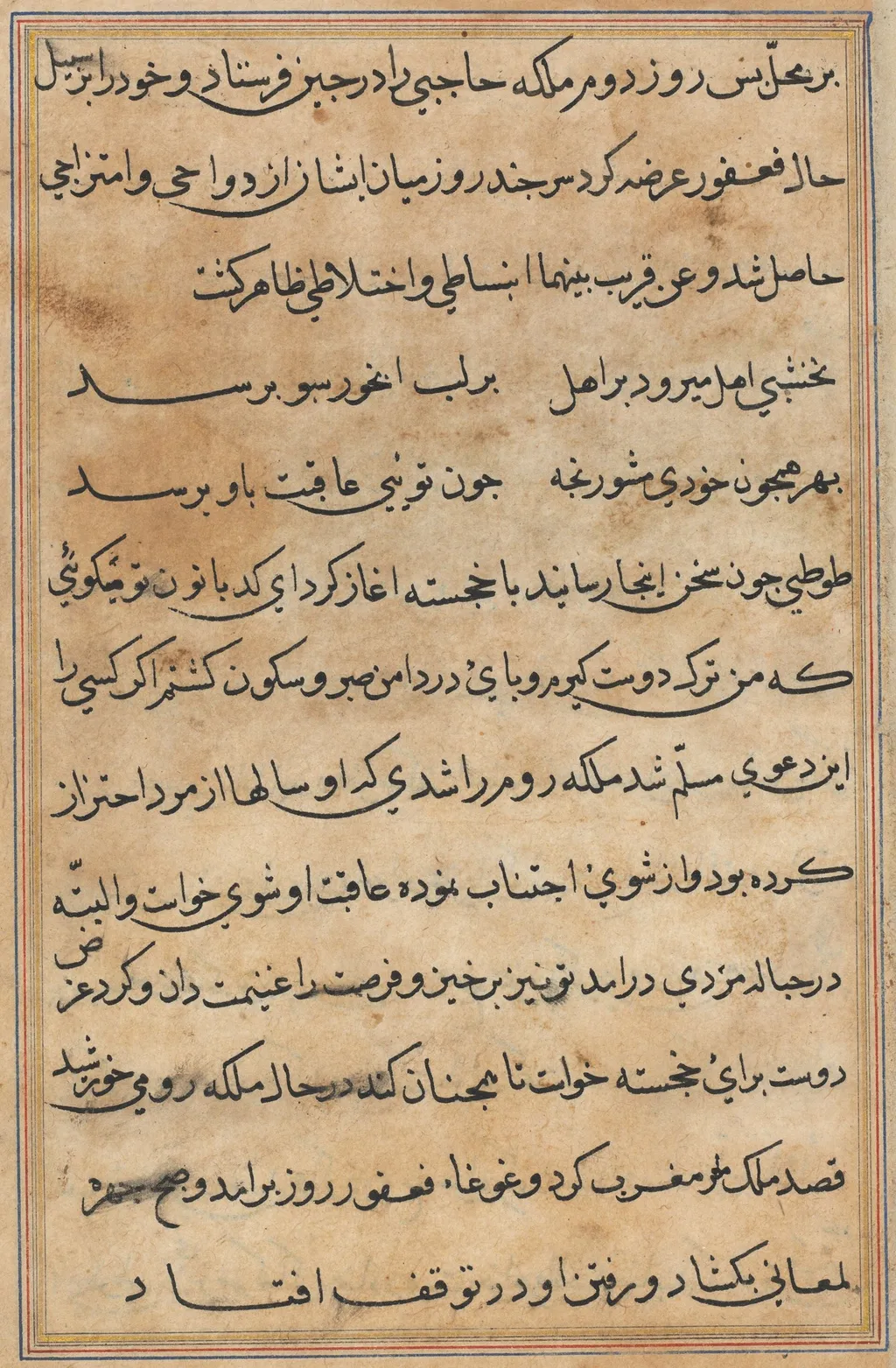
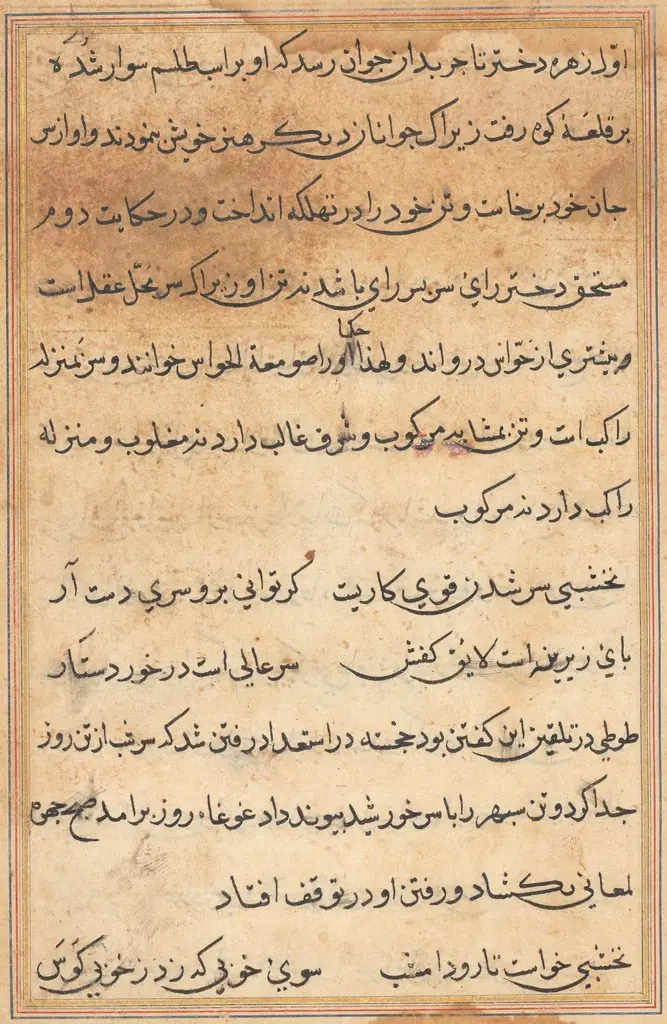
Page from Tales of a Parrot (Tuti-nama): text page is an unspecified painting. It dates from 1560 and is held in the collection of the Cleveland Museum of Art. This object is a single folio from the Persian manuscript *Tales of a Parrot* (Tuti‑nama), created for Prince Salim.
About this work
Overview
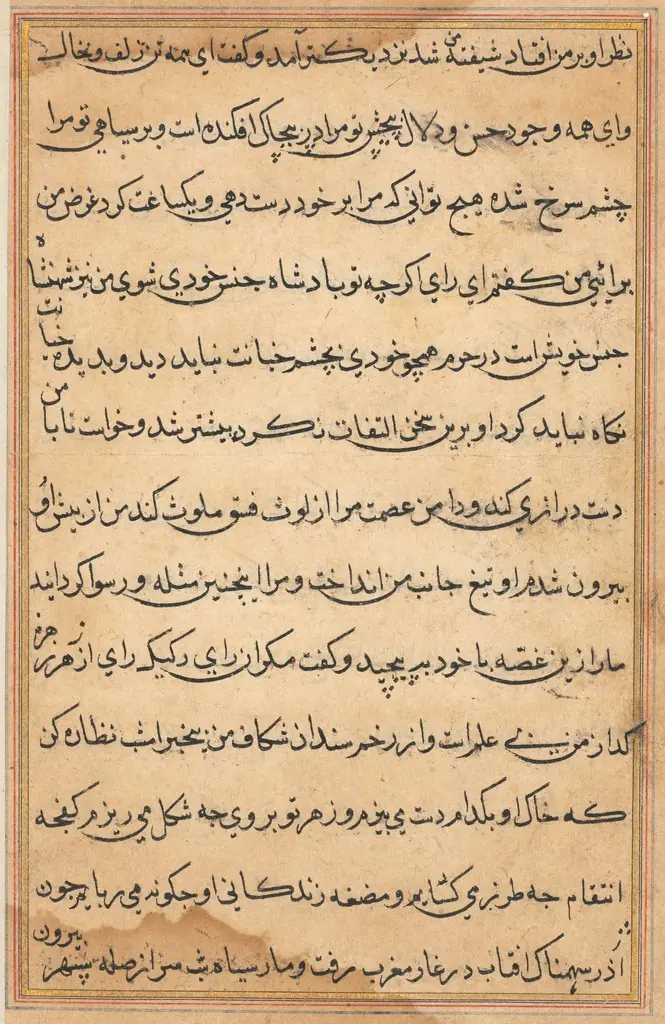
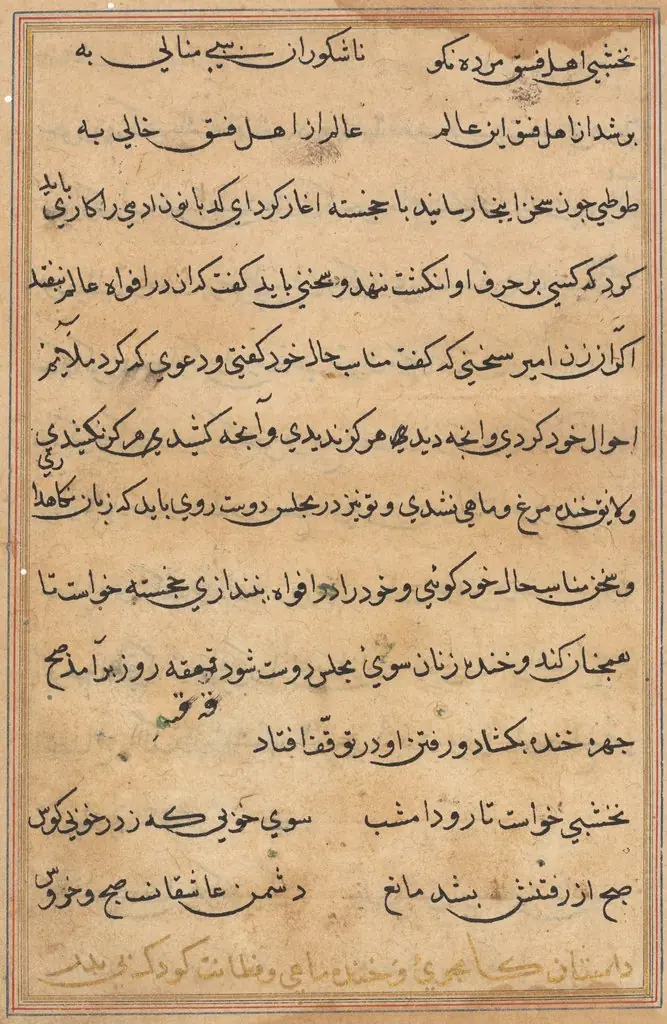
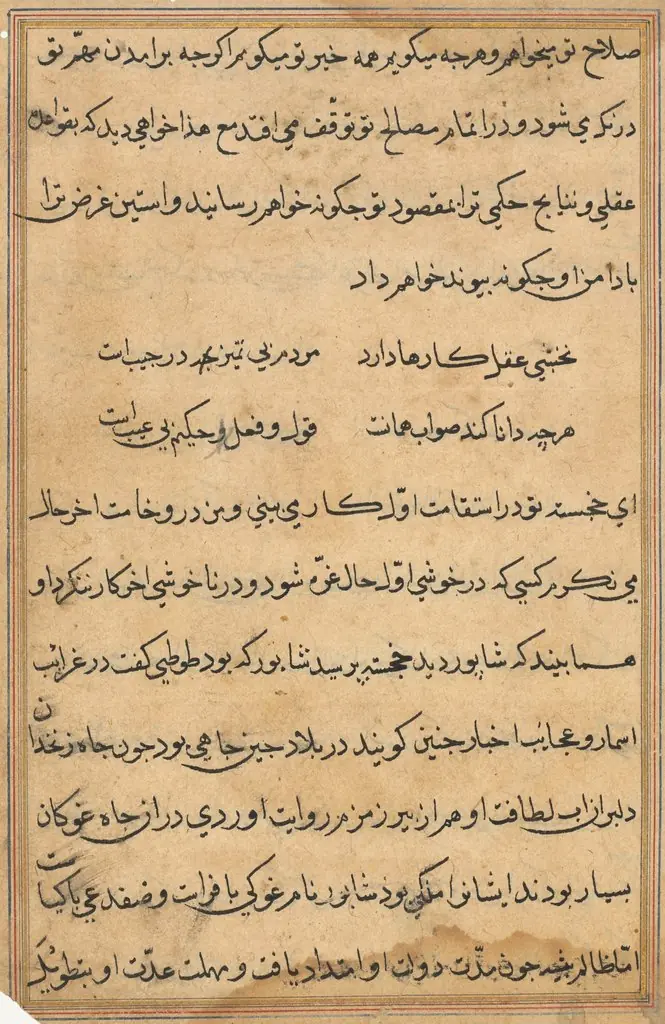
This object is a single folio from the Persian manuscript *Tales of a Parrot* (Tuti‑nama), created for Prince Salim. The page measures roughly the size of a standard sheet of paper and is composed of a warm, slightly browned parchment. Black ink fills the surface in tightly spaced, horizontal lines of elegant script, while a thin red band outlines the margin.
Subject & Meaning
The folio contains a portion of the narrative that follows the adventures of a talking parrot, a popular motif in Persian literature symbolizing wisdom and courtly intrigue. Addressed to Prince Salin, the text exemplifies the didactic and entertaining purposes of royal storytelling, reinforcing moral lessons through the bird’s clever discourse.
Technique & Style
The calligraphy is executed in a refined, flowing hand characteristic of 17th‑century Persian scripts, with smooth connections between letters and consistent spacing. Ink, likely iron‑gall, provides a deep black contrast against the aged paper, while a narrow red pigment—possibly vermilion—frames the page, highlighting the manuscript’s decorative conventions.
History & Provenance
Commissioned for a Safavid court patron, the manuscript remained in royal collections before entering the Cleveland Museum of Art’s holdings in the early 20th century. The museum acquired it through a purchase from a European dealer specializing in Islamic manuscripts, and it now forms part of the museum’s Persian literary corpus.
Context
*Tales of a Parrot* belongs to a broader tradition of Persian illustrated books that combined poetic prose with moral instruction. Produced during a period of flourishing courtly patronage, such works were intended for elite audiences, reflecting both the literary tastes and the political aspirations of the Safavid elite.
Artist & collection

 Page from Tales of a Parrot (Tuti-nama): text page
 Page from Tales of a Parrot (Tuti-nama): text page
 Page from Tales of a Parrot (Tuti-nama): text page
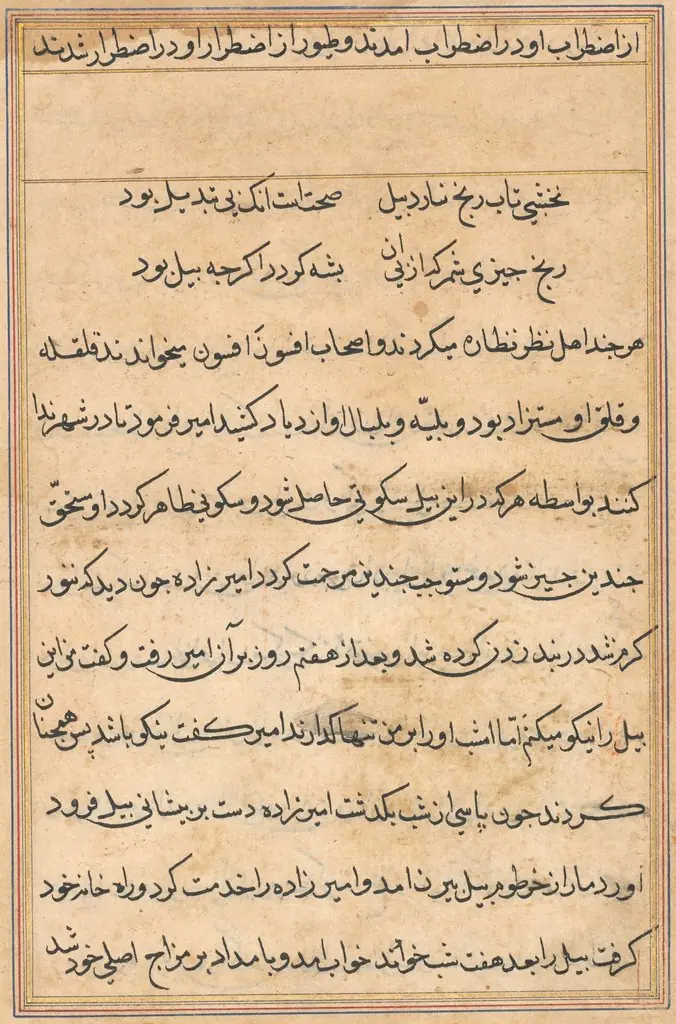 Page from Tales of a Parrot (Tuti-nama): text page
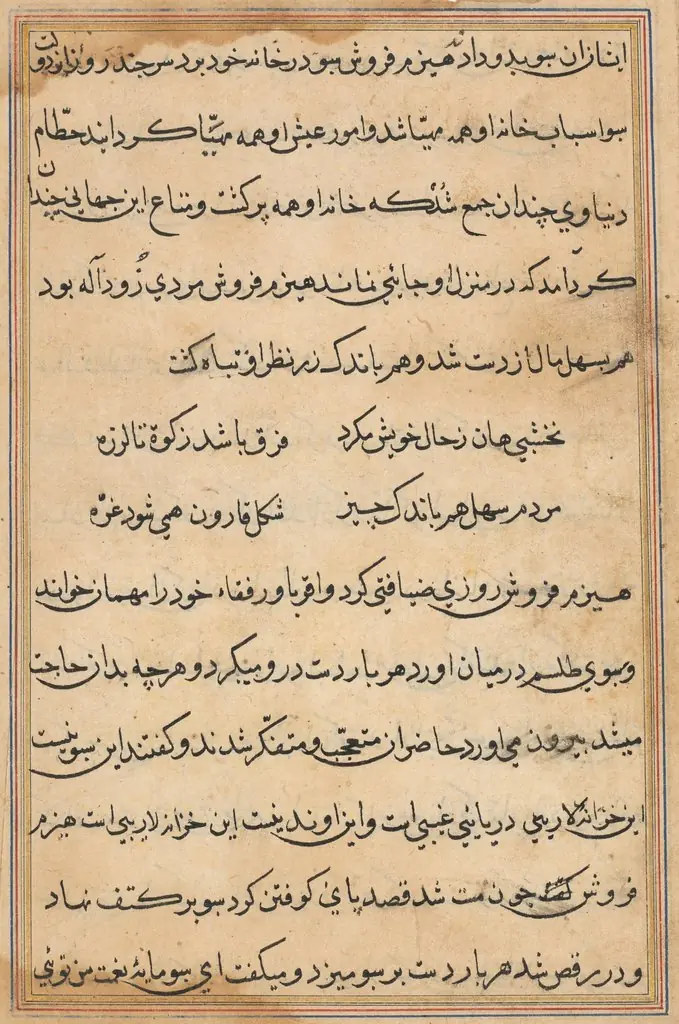 Page from Tales of a Parrot (Tuti-nama): text page
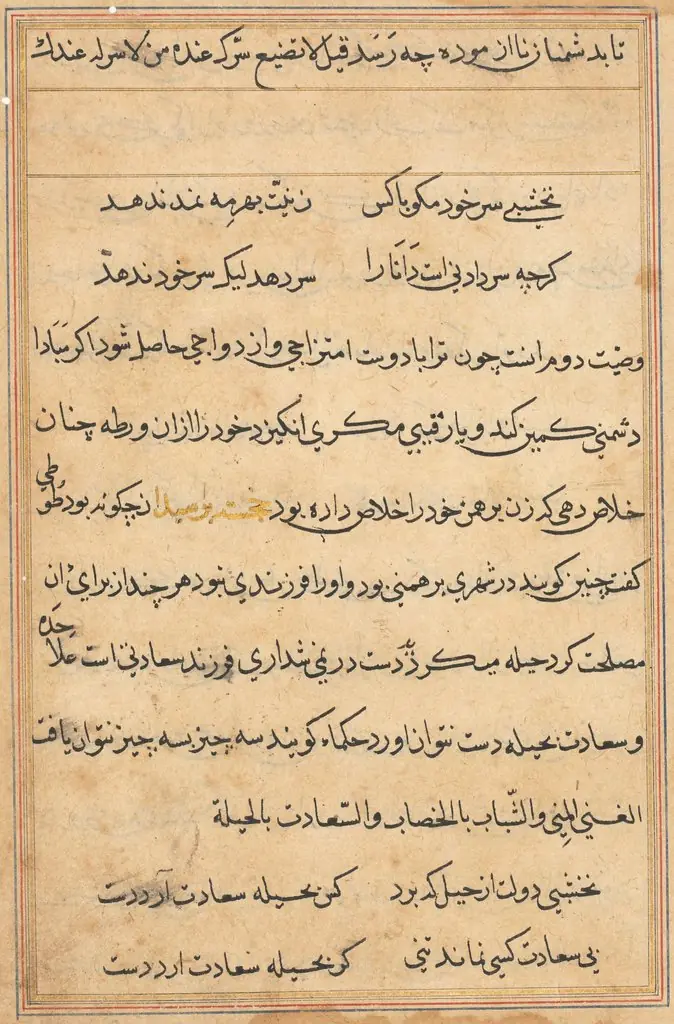 Page from Tales of a Parrot (Tuti-nama): text page
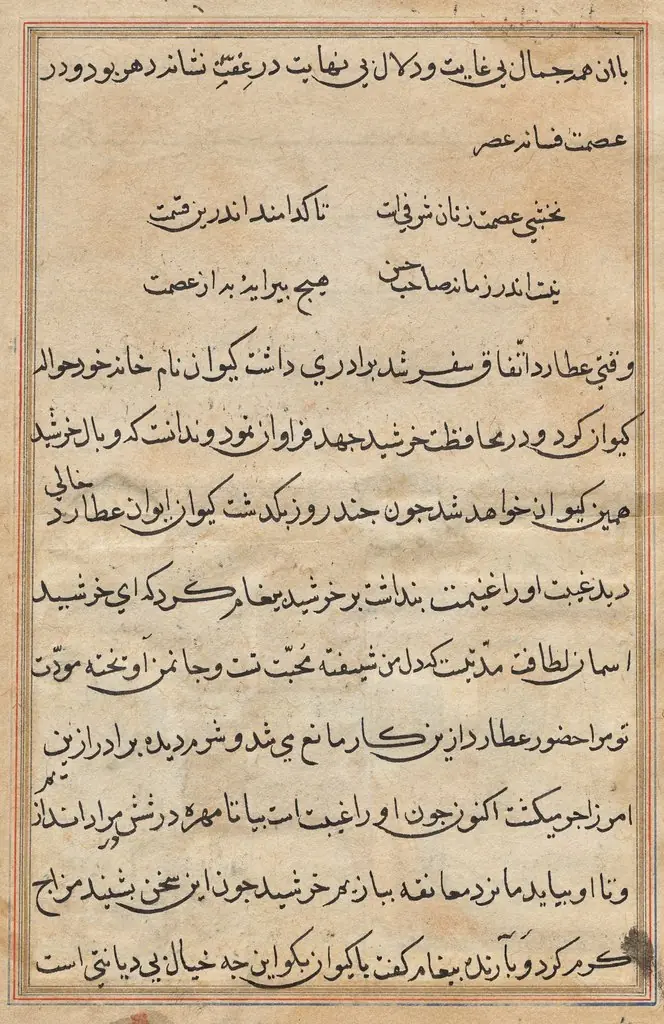 Page from Tales of a Parrot (Tuti-nama): text page
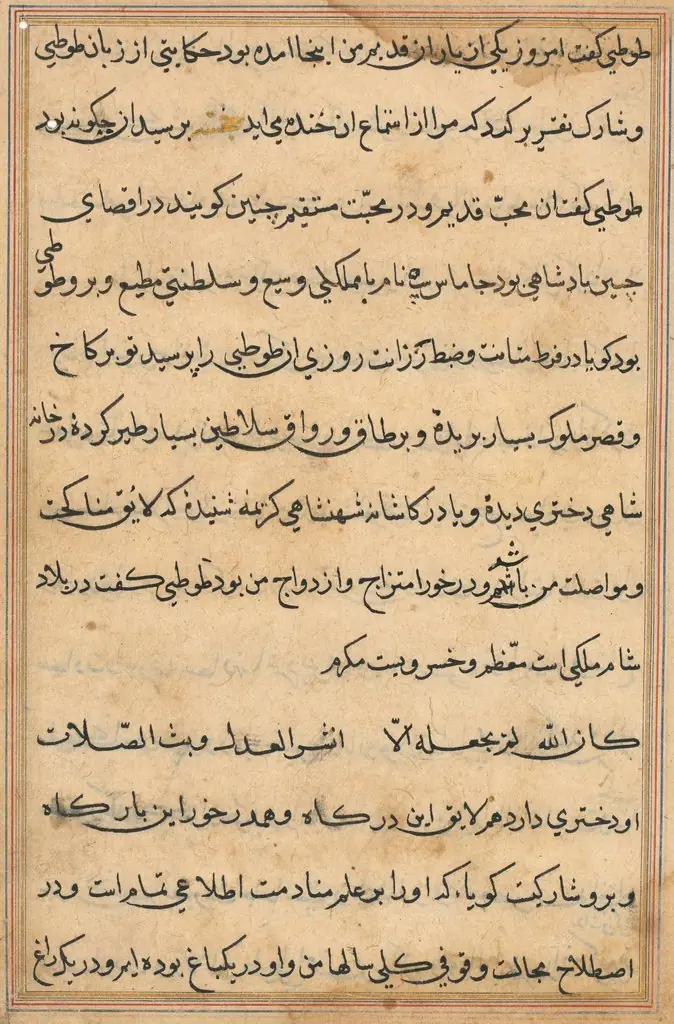 Page from Tales of a Parrot (Tuti-nama): text page
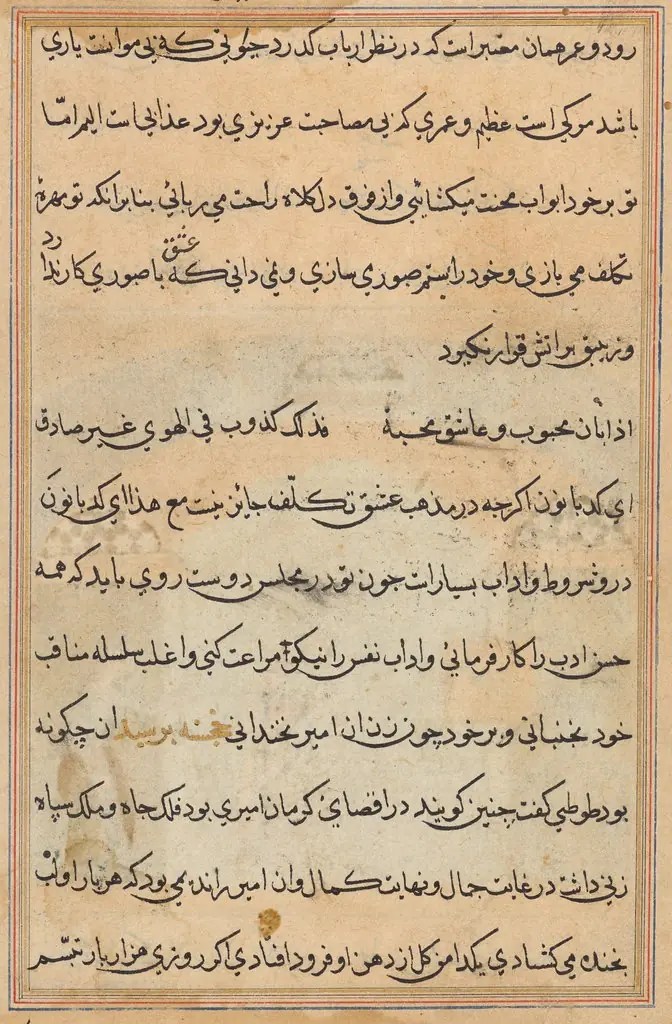 Page from Tales of a Parrot (Tuti-nama): text page
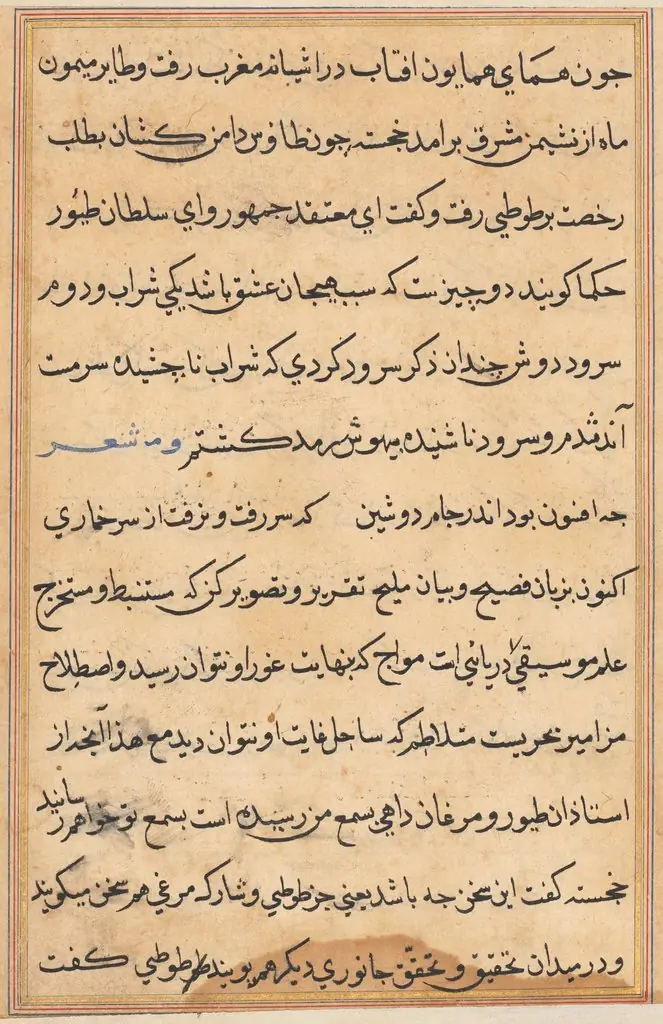 Page from Tales of a Parrot (Tuti-nama): text page
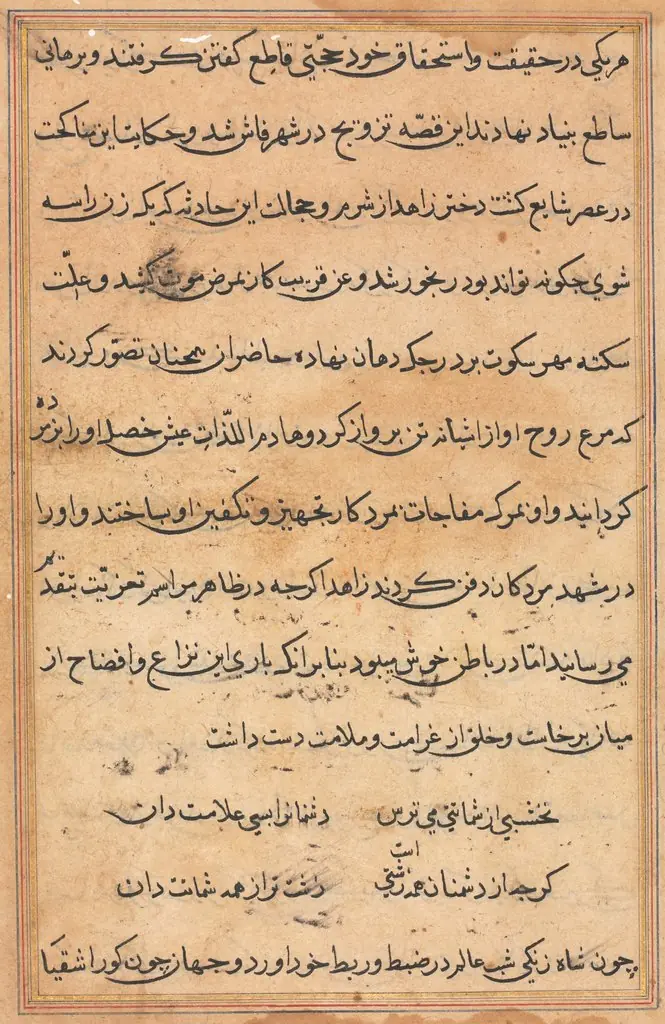 Page from Tales of a Parrot (Tuti-nama): text page
 Page from Tales of a Parrot (Tuti-nama): text page